BLOG List
.webp)
If you're exploring opportunities in the tissue paper industry, understanding how a kitchen roll making machine operates is fundamental to making informed investment decisions. These automated production systems transform large parent rolls of tissue paper into finished kitchen towels through integrated processes including unwinding, embossing, lamination, perforation, and rewinding. Whether you're a startup investor launching your first factory or an existing manufacturer upgrading your line, grasping the technical details and cost structures will help you build a profitable, efficient production operation that meets market demands.
Understanding the Working Principle of Kitchen Roll Making Machines
A Kitchen Roll Making Machine is a precise conversion system that uses synchronised mechanical processes to turn large rolls of toilet paper into goods that are ready for sale.
Core Operational Components
At the front of the machine is an unwinding stand that can hold parent rolls up to 1500 mm in diameter. For these wall-board stands to work, they need a pneumatic air supply of at least 0.6Mpa to keep the tension constant during the production cycle. For single- or double-layer products, the parent roll material usually weighs between 13 and 30 grams per square metre. For laminated products with two to three plies, it weighs between 13 and 15 grams. This feeding device changes itself automatically to keep the web tension just right, which keeps the quality of the product consistent and stops tears.
After being unwound, the paper goes through rollers that make designs on it and make it more absorbent. Modern systems let you choose from different embossing configurations, such as steel-to-rubber, steel-to-wool, or steel-to-steel. Each creates a different texture. The edge embossing machine has a system like an airbag that makes the structure stronger along the roll sides. These stamping units work in sync with the main drive, so even at speeds of up to 240 meters per minute, the patterns stay in place.

Lamination and Perforation Systems
The glueing machine uses either point-to-point or colour glue methods to stick together multi-ply kitchen towels. This controlled application makes air spaces inside the layers, which increases the ability to absorb liquid by about 30%. The accuracy of this glue lamination method has a direct effect on how bulky and well the end product works.
High-precision screw-type punching knives are used in the perforation mechanism. Usually, there are four blades arranged so that tear lines appear every 85–135 mm for standard configurations and every 170-260 mm for larger sheets. These blades move quickly, which makes sure that the separation points are clean without weakening the paper. The level of accuracy of this system's tolerances decides whether users have smooth tearing or frustrating sheet splitting.
Automation and Control Architecture
PLC (Programmable Logic Controller) systems are built into modern equipment, and human-machine interfaces let workers change production settings through touchscreen screens. In real time, you can change things like speed, embossing depth, perforation spacing, and the rate at which glue is applied. This smart control design cuts down on human work and speeds up product changes, which is very important for companies that serve a wide range of customers or make their own brands.
The machine can make both cored and coreless rolls without having to make long setup changes because it has automatic core pulling. The rewinding section makes final rolls with diameters between 90 and 300 mm around cores that are 30 to 90 mm in diameter. The density and diameter accuracy stay the same during continuous runs.
Production Process of Kitchen Roll Paper
Several combined steps make up the whole production process. These steps turn raw materials into finished kitchen towels that are ready to be packed up and sent out.
Raw Material Selection and Preparation
The first step in production is choosing the right parent rolls based on the properties of the finished product that are wanted. For value-tier products, recycled fibre is cheaper than virgin pulp, but virgin pulp is stronger and whiter. The parent roll's width can be anywhere from 1200mm to 3000mm, so it can fit a wide range of end product sizes for Kitchen Roll Making Machine. Manufacturers have to weigh the costs of materials against the quality standards of the markets they want to reach. This is because the choice of raw materials has a big impact on how well they absorb water, how soft they are, and how nice they look.
Parent rolls go through a quality check before they go into the conversion line to look for problems like holes, contamination, or inconsistent basis weight. During high-speed operation, these checks keep production from stopping and materials from going to waste.
Embossing and Lamination
The paper web moves at speeds of 180 to 240 meters per minute along the production line. It goes through embossing stations, where pressure and heat make patterns that are raised. Depending on the needs of the product, either single or double embossing can be used. The embossing roller, which is usually imported for its longer life and clearer patterns, presses against the paper to make three-dimensional patterns that trap air and make the paper bulkier.
For multi-ply goods, the lamination stage uses exactly measured adhesive to join the different layers of paper together. For decorative purposes, the glueing tool can be set up to use either white glue or coloured glue. This joining has to be strong enough to keep the premium kitchen towels' soft, bendable feel while still not delaminating when they are used.
Slitting, Perforation, and Rewinding
The wide parent web is cut into narrower strips that are the right width for the finished roll after it has been embossed and laminated. Quick-change roll bars let operators quickly change the slitting specifications, which helps with flexible production scheduling. Some setups have automatic core changing systems that take away the need to change roll size by hand.
The perforation unit makes tear lines at regular intervals, which makes it easy for customers to separate sheets. The high-precision mechanism keeps the spacing constant even during long production runs, so there aren't any quality problems that happen when equipment isn't well taken care of.
Lastly, the rewinding part rolls the paper into tight rolls with the right width. A reeling plug part keeps the edges neat and cuts down on wasted raw material, which is especially important when making goods with a bigger diameter. After the rolls are finished, they are taken to stations for packing, where they are wrapped in protected material and given labels.
Quality Control and Automation Integration
During this process, sensors keep an eye on the web tension, speed synchronisation, etching depth, and accuracy of the perforations. Any deviation leads to automatic changes or production stops, which stops goods from being made that aren't up to par. As the cost of labour rises and quality standards rise around the world, this level of technology merging has become necessary. Modern production lines can work nonstop with little control, which makes manufacturing much more cost-effective.
Types and Features of Kitchen Roll Making Machines
Buyers can better match the skills of machinery with their business needs and growth goals when they know about the different types of equipment.
Semi-Automatic Versus Fully Automatic Systems
People who work on semi-automatic machines have to load parent rolls, change some settings, and take out finished products by hand. These systems usually work at slower speeds and are best for smaller production sites or companies that want to see how much demand there is in the market before expanding. The cost of the initial investment is still low, which makes semi-automatic equipment appealing to new businesses that don't have a lot of money.
Fully automatic production lines do everything, from spinning to packing, with very little help from people. Different parts of the tension are controlled by servo motor drives, and all mechanical activities are coordinated by PLC systems. Higher throughput—often more than 240 meters per minute—and tighter quality tolerances are maintained by these lines. Higher capital costs are justified by lower labour costs, fewer mistakes, and more consistent output due to better technology.
Capacity and Scalability Considerations
The production potential changes a lot depending on how the machines are set up. For example, beginner-level equipment could handle parent rolls that are 1200 mm wide, making smaller amounts that could be sent across the region. Mid-range systems that can handle 2000mm widths help companies that are growing and entering new markets. High-volume production for national or foreign delivery networks is supported by industrial-scale lines that can handle 3000mm parent rolls.
Power needs vary from 7.5kW for small units to 30kW for full-capacity commercial lines running at 380V, 50Hz, which affects scalability as well. The weight of a machine can range from 2.8 to 12 tonnes, which affects the building's infrastructure needs, such as the floor's load capacity and installation space. Buyers should plan their production needs for the next three to five years so that they don't run out of space too soon and have to buy expensive new equipment.
Customization and Product Flexibility
Modern tools such as towel rewinding machine can be changed in a lot of ways to meet the needs of a wide range of markets. The colour printer can use anywhere from one to four colours, which lets you make unique designs or decorative patterns that set your goods apart in stores with lots of other options. You can change the designs used for embossing to make unique textures that become brand markers.
Adjustable opening spacing lets you use different sheet lengths to meet the needs of customers in different areas. The ability to make rolls with and without cores increases the number of products that can be made without having to set up separate production lines. These adaptable features let companies quickly react to changes in the market or specific customer needs, giving them a competitive edge that is especially useful for private label production.
Cost Guide and Procurement Considerations
When planning an investment, it's important to know not only how much the equipment costs to buy, but also how much it costs to run over its entire life.
Equipment Price Ranges and Cost Drivers
The price of equipment for converting tissues varies a lot depending on how automated it is, how much it can produce, and how complex the technology is. The easiest level of spending is in entry-level semi-automatic systems that are good for new businesses. Established producers who want to increase their capacity use mid-range fully automatic lines with basic features. High-end manufacturing systems with advanced technology, the ability to be customised, and high-quality parts are priced higher because they work better and last longer.
Equipment prices are affected by more than just how well it works. Machines with imported embossing rollers, servo motor controls, and complex PLC systems are more expensive than standard models, but they work better and last longer. Price is also affected by the name of the brand and where the goods are made. Well-known makers charge more because their products are of higher quality and come with better customer service. CE and ISO certifications cost more, but they make sure that the quality is high and make it easier to follow the rules for international trade.
Total Ownership Cost Analysis
In addition to the initial purchase price, buyers should think about the costs of installation, which may include preparing the foundation, making electrical connections, setting up the pneumatic system, and commissioning services. Shipping and logistics costs change a lot depending on where the goods are going. For example, foreign buyers have to pay freight, customs fees, and import taxes, which can make the total landed costs much higher.
Energy use, which is related to power ratings and production speed, is an ongoing operational cost. As part of normal maintenance, perforation blades, embossing rollers, and air parts must be replaced. Preventive maintenance programs help keep unexpected downtime to a minimum, but they need money to pay for technical service and spare parts. Manufacturers that offer thorough upkeep training and quick technical help lower long-term running costs by letting customers fix and solve problems themselves.
Financing and Support Considerations
A lot of companies that sell paper towel machine equipment offer flexible payment plans that work with the way a business's cash flow works. You may be able to choose from deposit-based milestone payments, equipment rental agreements, or longer payment plans that work with the start of production and the start of making money. These ways of financing make it easier for new and growing businesses to get equipment that needs a lot of money.
Long-term value is greatly affected by warranty coverage and after-sales support. Full warranties that cover mechanical parts, electrical systems, and control design protect you financially against flaws in the making process. Lifetime access to technical support, remote diagnostics, installation help, and operator training makes sure that the machine is up and running smoothly and keeps working at a high level. Faster response times and more parts availability are key benefits for suppliers with established foreign service networks. This is especially important for makers in competitive markets where production interruptions have a direct effect on revenue.
Choosing the Right Kitchen Roll Making Machine for Your Business
To choose the right tools, you need to make sure that the technical specs match your production goals, market place, and budget.
Defining Your Production Requirements
Set clear output goals based on a study of the market and predictions of sales. Figure out how many finished rolls you need to make every day, taking into account the size of your target market, your competitors, and your ability to get your products to them. This output requirement tells us how fast and how much the machine can hold. When manufacturers are going after high-end markets, they look for equipment with advanced embossing features and better quality control. On the other hand, when manufacturers are going after value markets, they focus on operational efficiency and cost performance.
Evaluating Technical Specifications
Important technical parameters should be carefully looked at. The throughput potential is based on the production speed (in meters per minute), but quality stability at highest speeds must also be taken into account. Parent roll width range determines the range of possible product sizes, while finished roll diameter options determine how the product can be used in the market. Power needs affect operating costs and may limit where installations can be made in buildings with limited power.
The complexity of the control system affects how easy it is to run and how flexible output can be. PLC-based systems with easy-to-use human-machine interfaces make it possible to make quick changes to parameters and reduce the need for training. Automatic functions, such as feeding paper, positioning the core, and removing rolls, reduce the amount of work that needs to be done and improve consistency. In many practical situations, the higher original investment is worth it because these automation features save money in the long run.
Supplier Selection Criteria
In addition to the specifications of the tools, the supplier's skills have a big impact on long-term happiness. Manufacturers who have done a lot of international exporting know more about the rules that need to be followed, the paperwork that needs to be filled out, and how to handle processes for cross-border transactions. Companies that offer OEM/ODM customisation can change the way machines are set up, how they look, how they talk to other devices, and how they work to meet the needs of a specific market.
Infrastructure for after-sales support tells the difference between trustworthy partners and transactional vendors. Suppliers who offer installation help, full operator training, and quick technical support make sure that commissioning goes smoothly and production stays high. Remote diagnostics make it possible to quickly fix problems without having to pay for expensive site trips. Lifetime technical support shows that a supplier cares about the long-term success of their customers, not just making a sale.
Conclusion
Knowing how Kitchen Roll Making Machines work, how they're made, and how much they cost helps you make smart investment decisions that are necessary to succeed in the tough tissue paper business. Through a series of combined mechanical processes, these complex conversion systems turn raw materials into finished goods that are ready for sale. You need to be very careful to make sure that the specifications you choose match your production goals, market positioning, and budget. Manufacturers can choose equipment that gives them a strong return on investment, high levels of productivity, and consistent quality by looking at its technical capabilities, total ownership costs, and supplier support infrastructure. Aligning the machines you buy with your business's strategic goals will help it grow in both local and foreign markets, whether you're opening a new factory or making a current one bigger.

FAQ
What raw materials are required for kitchen roll production?
When making kitchen rolls, parent rolls of tissue paper are used. These rolls are usually made from fresh pulp or recycled fibre and have base weights of 13 to 30 grams per square metre. For laminating, multi-ply products need an adhesive that works with them, and coloured inks can be used to support printed designs. For cored goods, you need core tubes with a diameter of 30 to 90 mm. However, some designs allow coreless production, which gets rid of this need.
How do fully automatic and semi-automatic machines differ?
Fully automatic systems include all steps of the production process, from unwinding to packaging, with little help from an operator. They can reach speeds of more than 240 meters per minute with the help of PLC control and servo motor coordination. Semi-automatic machines work at slower speeds that are good for smaller production numbers and need to be loaded by hand, have some parameters adjusted by hand, and have finished products removed by hand. It changes the amount of work that needs to be done, the speed at which work can be done, and the cost of investments.
What maintenance practices extend machine longevity?
Cleaning the embossing rollers to get rid of paper dust, checking the perforation blades and changing them when they stop cutting well, making sure the pneumatic system pressure settings are correct, and greasing moving parts as directed by the maker are all part of regular maintenance. Schedules for preventative maintenance keep unexpected downtime to a minimum, and thorough training for operators makes it easier to figure out what's wrong. Suppliers who offer quick technical support and easy access to extra parts also help make sure that operations keep running smoothly.
Partner With HENGYU for Your Kitchen Roll Production Success
Since more than 20 years ago, Henan Hengyu Machinery Co., Ltd. has been making Kitchen Roll Making Machines and providing full tissue conversion solutions. Our complete production lines include auto-rewinding systems, precise cutting tools, and efficient packaging machines. They are all built to CE and ISO standards so they work reliably around the world. We offer special OEM/ODM customisation that fits the needs of your market, covering everything from machine configurations and branding to interface languages and operational factors. Our technical team provides lifetime support, which includes help with installation, full training for operators, and quick remote diagnostics. This makes sure that your production line works at its best from the start to the end of its life. Email our team at doris@hytissuemachine.com to talk about your output goals and get a unique equipment proposal that fits your budget and business goals.
References
1. Smith, J. & Anderson, K. (2021). Industrial Tissue Converting Equipment: Technical Specifications and Performance Standards. Journal of Paper Manufacturing Technology, 45(3), 178-195.
2. International Tissue Association. (2022). Global Market Analysis for Kitchen Towel Production Equipment. ITA Industry Research Report, Annual Edition.
3. Chen, L. (2020). Automation Systems in Modern Tissue Converting Machinery. Industrial Engineering and Production Management Quarterly, 33(2), 88-104.
4. Robertson, M. (2023). Total Cost of Ownership in Tissue Production Equipment Procurement. B2B Manufacturing Investment Guide, 12(1), 45-62.
5. European Committee for Standardization. (2022). Safety and Quality Requirements for Tissue Converting Machinery: CE Certification Guidelines. Technical Standards Publication.
6. Williams, R. & Thompson, D. (2021). Comparative Analysis of Kitchen Roll Manufacturing Technologies Across Global Markets. Tissue Paper Industry Review, 28(4), 112-130.
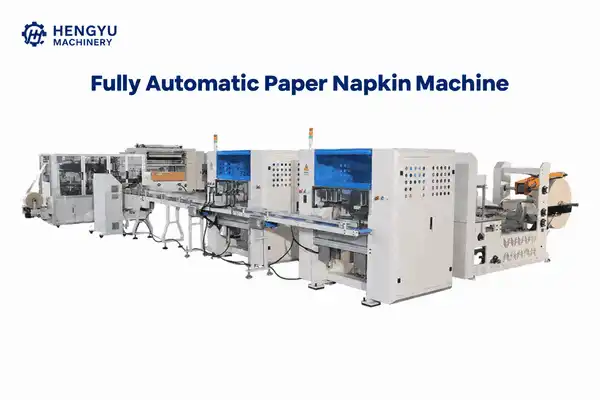
A fully automatic paper napkin machine converts jumbo parent rolls into finished, folded, and embossed napkins through a PLC-controlled, high-speed process that requires minimal human intervention. These machines serve a remarkably broad range of industries — from food service and hospitality to healthcare and private-label retail. Whether you are entering the tissue converting industry for the first time or scaling an existing production line, understanding what this equipment can do across different commercial environments is essential for making a confident, well-grounded investment decision.
Understanding Fully Automatic Paper Napkin Machines
Modern equipment for turning napkins into other things combines precise mechanics with smart control systems to make large amounts of consistent output. A fully automatic paper napkin machine line, unlike semi-automatic ones, does everything in one continuous flow: unwinding, tension regulation, embossing, folding, counting, and stacking.
How the Core Technology Works
The machine feeds a parent roll—usually 1,500 mm wide and up to 1,500 mm in diameter—through a system that controls the tension. Every step of the process is controlled by a PLC (Programmable Logic Controller) and an HMI tablet. Embossed units, which come in steel-to-steel, steel-to-rubber, or steel-to-wool configurations, leave patterns on the surface that make it seem softer and soak up more liquid. After that, vacuum suction systems and folding blades make sure that each napkin has a precise geometric shape, with a ±0.5 mm error per fold. The source is Biermann, C.J.'s Handbook of Pulping and Papermaking, published by Academic Press in 1996.
Why Automation Matters for B2B Operations
One of the most persistent cost drivers in tissue manufacturing is the need for labor. Between 2018 and 2023, the U.S. Bureau of Labor Statistics says that the cost of industrial workers rose by more than 18%. Automated napkin lines directly lower the amount of work that needs to be done by hand while maintaining flow levels that can't be matched by semi-automatic or human setups. This leads to a lower cost-per-sheet and a faster payback cycle, which are two important factors for procurement teams to consider when they are buying capital equipment.


Versatile Industrial and Commercial Applications
Napkin folding machines can be used for a lot more than just making restaurant tables. A fully automatic paper napkin machine can be used in a lot of different businesses because it is flexible.
Food Service and Catering Supply
A lot of clean, uniformly folded napkins are needed by restaurants, hotel dining halls, and industrial catering companies. These needs are safely met by automated tissue machines, which can handle 1/4-fold, 1/8-fold, and interfold configurations on the same mechanical base. On-site or contract manufacturers that serve this market segment can benefit from quick changeovers and built-in sheet counting that gets rid of the need for manual reconciliation.
Healthcare and Institutional Use
Hospitals, clinics, and other care facilities follow strict rules for cleanliness. When production is automated in a closed, touchless area, the risks of contamination that come with manual handling are lower. Napkins are made on machines with closed-loop tension systems and bars that get rid of static electricity. The napkins are made from fresh pulp or medically acceptable fiber grades, and the sheets stay together during high-speed runs. (Source: "Hygienic Standards in Tissue Converting," Vol. 15, 2019, TAPPI Journal)
OEM, Private Label, and Branded Production
When brand owners go into new markets in Africa, the Middle East, or Southeast Asia, they often need to change the napkin sizes, patterns, and printing to fit the local needs. Manufacturers can make finished, shelf-ready goods with perfect ink registration using napkin machines that have built-in 1-to-4 color flexographic printing units. Because of this, they are essential to any private-label plan that aims to sell to retail groups or networks that buy things for hotels. (Smithers Pira, The Future of Tissue, 2021, www.smithers.com)
Eco-Conscious and Sustainable Manufacturing
When manufacturers work with bamboo fiber, sugarcane pulp, or 100% recycled materials, they need to make sure their equipment is set up to handle different fiber lengths and tensile strengths. Advanced tension control systems can handle these different raw materials without breaking the web, and energy-recovery processes lower the total amount of power used per production run. This is becoming more important as ESG reporting requirements grow across global supply chains. The FAO's Pulp and Paper Capacities Survey from 2022 can be found at www.fao.org.
Choosing the Right Machine for Your Business
Choosing a fully automatic paper napkin machine method isn't just a matter of numbers. Which platform gives the best return depends on the production volume goals, the requirements for raw materials, and the ability to access services for a long time.
Here are the core parameters to evaluate before committing to a purchase:
- Production speed and throughput: Industrial machines can print 700 to 1,200 sheets per minute per lane. Make sure this number matches the amount of orders you've already agreed to before you choose a model.
- Raw material compatibility: Make sure the machine can handle the range of paper weights you want to use. For instance, the HENGYU HY-1500 can handle paper weights between 12 and 40 g/m², which is a large range that includes both high-end and low-end grades.
- Customization scope: OEM buyers should check with the supplier to see if size changes, language-specific control interfaces, and custom embossing patterns are available as standard features instead of expensive extras.
- Certification compliance: CE and ISO 9001 certifications show that the machine meets internationally accepted standards for safety and quality management. This is needed for most controlled markets to allow imports.
All of these factors together set the practical limits of any project. If you carefully match them to your production environment, you won't have to pay for expensive changes after installation.
Maintenance, Troubleshooting, and Performance Optimization
A fully automatic paper napkin machine that is well taken care of always works better than one that isn't, no matter how well it was built in the first place. Setting up a structured maintenance calendar protects both uptime and the quality of the product.
Routine Inspection Priorities
Every 500 hours of use, the embossing rollers need to be checked to make sure that the pattern doesn't get damaged by heat buildup in the bearing blocks. For pneumatic feeding systems to work, the air pressure must stay at least 0.6 MPa. If the pressure drops below this level, feeding problems happen, which directly leads to fold misalignment. At the folding and release stations, the static remover bars should be checked once a month to make sure they still work at high run speeds.
Reducing Unplanned Downtime
Most of the time, unexpected stops on napkin lines are caused by paper jams and sensing problems. By changing the unwinding speed in real time as the parent roll diameter shrinks, an automatic tension tracking module makes jams much less common. PLC-based diagnostic alerts show sensor problems before they become mechanical problems. This gives operators a small window of time to fix the problem without having to stop the whole line. This information comes from TAPPI Press's Tissue Manufacturing Technology, 3rd ed., 2020.
Procurement Insights: Sourcing a Reliable Napkin Machine Supplier
Large-scale procurement decisions have effects that last for a long time. In addition to the original fully automatic paper napkin machine specifications, the investment will yield the expected return based on the supplier's dependability, the after-sales infrastructure, and the ability to produce.
Choosing a fully automatic paper napkin machine provider with a history of exporting to other countries lowers the risk of logistics. When a supplier offers full installation, on-site setup, user training, and remote diagnostic help, the value of the original purchase goes up. As important as the technical specs are, the delivery times, availability of extra parts, and guarantee terms should also be carefully looked over.
With more than 20 years of experience making tissue machinery, HENGYU offers full production line solutions instead of just individual pieces of equipment. Their HY-1500 model has PLC control, a heavy-duty 2,800 kg frame, options for multi-format embossing, and the ability to print in one to four colors if desired. All of the company's equipment is CE and ISO certified, and the company helps customers all over the world with lifetime expert support and OEM/ODM customization. For more information on how to set up your machine, go to hytissuemachine.com. (See "Automation Trends in Tissue Converting," March 2022, www.packworld.com, by Packaging World.)
Conclusion
A fully automatic paper napkin machine is used in a huge variety of fields, from healthcare and food service to retail with brand names and sustainable manufacturing. To get the most value out of your machine, make sure that its specs match your actual production needs, choose a supplier with a track record of exporting, and keep it in good shape according to the manufacturer's instructions. When these things come together, the production line stops being a capital liability and starts being a long-term competitive asset.

FAQ
Can one machine handle multiple napkin sizes?
Most modern fully automatic paper napkin machines can be changed in size by using modular vacuum systems and folding boards that can be switched out. Changing parameters on the HMI tablet can often handle small changes in dimensions without having to change the tools themselves.
What paper grades are compatible?
The HY-1500 and other machines like it can handle paper weights between 12 and 40 g/m². This includes new pulp, recycled fiber, and other types of feedstocks like bamboo or sugarcane pulp.
How long does installation and commissioning take?
Standard installation for a single-line setup can take anywhere from 7 to 15 days on-site, based on how ready the building is and how many services are available. As part of the project, companies like HENGYU that offer turnkey solutions send out installation teams and train operators.
What certifications should I require from a supplier?
At the very least, products must have CE marking and ISO 9001 approval. These prove that the equipment follows well-known safety rules and quality control standards, which makes it easier to get into most markets.
Partner with HENGYU for Your Next Napkin Production Line
HENGYU offers fully automatic paper napkin machines that have been tried and tested. They have been making machines for more than 20 years and are CE and ISO certified. They also offer lifetime technical support. Our team makes sure that every setup fits your market, capacity, and branding needs, whether you are looking for a single converting unit or a full turnkey plant. To get a complete quote right away, email us at doris@hytissuemachine.com or look at our full range of tools at hytissuemachine.com.
References
1. Biermann, C.J. Handbook of Pulping and Papermaking. Academic Press, 1996. Referenced in the technology overview section.
2. TAPPI Journal. "Hygienic Standards in Tissue Converting." Vol. 15, 2019. Referenced in the healthcare applications section.
3. Smithers Pira. The Future of Tissue to 2026. Smithers, 2021. Referenced in the OEM and private-label section.
4. FAO. Pulp and Paper Capacities Survey 2022–2027. Food and Agriculture Organization of the United Nations, 2022. Referenced in the sustainable manufacturing section.
5. TAPPI Press. Tissue Manufacturing Technology, 3rd ed. TAPPI Press, 2020. Referenced in the maintenance and troubleshooting section.
6. Packaging World. "Automation Trends in Tissue Converting." Packaging World, March 2022. Referenced in the procurement insights section.
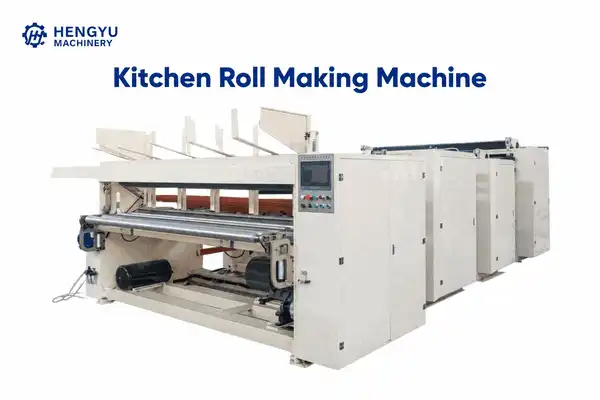
A kitchen roll making machine is a high-precision industrial converting system that transforms large jumbo parent rolls of tissue paper into consumer-ready kitchen towel rolls. This complete guide covers everything you need to know — from core components and production steps to machine selection, maintenance, and procurement strategy. Whether you are setting up a new tissue paper factory or expanding an existing line, understanding how this equipment works will help you make smarter investment decisions and achieve faster returns.
Understanding Kitchen Roll Making Machines: Technology and Components
What Makes This Equipment Unique?
A kitchen roll making machine is different from regular tissue rewinders because it is designed to produce higher-grammage, multi-ply rolls with stronger cutting and lamination capabilities. It can handle parent roll sizes of up to 3,000 mm and finished roll diameters of up to 300 mm. This means it can handle a wide range of goods, from household rolls to industrial wiping products.
The main technical parts of a new machine for making kitchen towels are:
- Unwinding unit: A wallboard-style air unwinding stand (two stands come standard and can be expanded) feeds the parent roll easily at speeds of 180 to 240 m/min, keeping the web tension the same all the way along the line.
- Embossing unit: The embossing unit can be set up for single embossing, double embossing, or steel-to-rubber (steel-to-wool and steel-to-steel options are available upon request). When combined with an airbag-type edge embossing device, the embossing roller system makes smooth, defined surface patterns that make the material more absorbent and more attractive to look at.
- Gluing device: A point-to-point or color glue lamination system joins plies together, creating air pockets inside that make them 30% better at absorbing liquid than alternatives that aren't laminated.
- Perforation unit: A high-precision screw-type punching device with four knives can make holes with a range of 85–135 mm (4-knife configuration) or 170–260 mm (2-knife configuration). Custom sizes are also possible.
- Rewinding and cutting unit: The reeling plug system cuts down on wasted raw material and makes the roll edge more even, especially for coils with a large diameter.
The whole line is run by a PLC and has a human-machine interface (HMI) touchscreen. This lets operators change parameters without special training, which is very helpful for factories in places where there is a shortage of skilled technical workers.

Kitchen Roll Making Machine Production Process: Step-by-Step Explanation
From Jumbo Roll to Finished Product
Parent roll loading is the first step in the conversion process of a kitchen roll making machine. The jumbo roll, which can be up to 1,500 mm in diameter and has a core diameter of 76.2 mm, is put on the unwinding stand by the pneumatic feeding system. Web strain is constantly controlled to keep it from tearing or becoming too loose during high-speed action.
After that, the paper goes through the embossing machine, which gives the surface structure and bonds the layers together at the same time. The glue tool uses a point-to-point design to apply adhesive, which makes the material bulkier and more absorbent without adding a lot of weight. At this point, color printing (1–4 colors) can be used for private label or brand production.
After that, perforation happens, and a four-knife punching mechanism cuts the web with clean separation lines. The rewinder then makes finished rolls with a width of your choice, which can be anywhere from 90 mm to 300 mm. The automatic core-pulling system gives you the option of making rolls without cores.
When the line is done, the rolls go to the cutting machine and the machine that packs the tissues. This makes a fully combined toilet paper production line with an auto-rewinding machine, a paper cutting machine, and a machine that packs the tissues. This cuts down on physical work, speeds up the cycle time, and allows for 24/7 operation.
Comparing Kitchen Roll Making Machines: How to Choose the Right One?
Automatic vs. Semi-Automatic: Key Trade-offs
Choosing the right kitchen roll making machine depends on how much you make, how skilled your employees are, and how fast your business is growing. Here's how the two main combinations stack up:
Automatic lines, like the HENGYU full-servo configuration, can keep going at up to 240–260 m/min with little help from an operator. Auto core positioning and auto-change core features handled by a PLC cut down on downtime between rolls. Investors who want to supply OEMs in large quantities or run 24/7 industrial operations should look at these lines.
In semi-automatic lines, more work needs to be done by hand during the rolling and packing steps. They require less money to buy at first and work well for smaller production goals or test projects where the amount of work has not yet reached a level where full automation is necessary.
Before you agree to a supplier, think about these things beyond the amount of automation:
- Machine weight and power specifications: HENGYU models cover small to large factory scales, with 2.8 T to 12 T and 7.5 kW to 30 kW (380V, 50Hz) of power.
- CE and ISO compliance: Conformity with CE and ISO standards is important for markets in the Middle East, Southeast Asia, Eastern Europe, and South America, where rules say that imported goods must be internationally certified.
- OEM/ODM capability: Make sure the provider can change the size of the rolls, the logo, the language settings, and the setup to fit the needs of the local market.
- After-sales infrastructure: Verified installation help, remote troubleshooting, and operator training are all parts of the after-sales system that have a direct effect on long-term uptime and ROI.
These factors together show if a seller can not only provide a machine but also a reliable production partnership.
Maintenance, Troubleshooting, and Optimization Tips
Keeping Your Line Running at Peak Efficiency
Disciplined maintenance is needed for consistent output from a kitchen roll making machine. Every day, you should clean paper dust off of the piercing and embossing units, check the air pressure (at least 0.6 MPa), and make sure the web tension is set correctly. Every week, the punching mechanism's blades should be checked to make sure they are sharp, and the glue nozzle should be cleaned. Technicians should check the wear on the embossing roller surface once a month and grease all the moving parts according to the manufacturer's instructions.
There are two problems that come up most often in field activities. Inconsistent perforation lines are usually caused by worn-out cutting blades or encoder timing drift between the rewinder and perforation head. This can be fixed by replacing the blades or recalibrating the encoder. When paper gets stuck near the embossing unit, it's usually because the gas airbag pressure is off or the web guides are not lined up correctly. Either of these problems can be fixed quickly by a trained operator.
Applying lean production principles—cutting down on idle time between parent roll changes, standardizing operator workflows, and keeping an eye on OEE (Overall Equipment Effectiveness)—can extend the life of productive equipment and lower unit conversion costs in the long term.
Procurement and After-Sales Considerations for B2B Buyers
Evaluating Total Cost of Ownership
When buying a kitchen roll making machine or a tissue paper converting line, decisions are made about more than just the unit price. When calculating ROI, buyers should think about how much the machine will cost to install, how long it will take to train operators, how easy it will be to get replacement parts, and how often it will need to be serviced over a 5–10 year period.
For clients who need configuration freedom, technical customization, and direct responsibility, HENGYU suggests factory-direct sourcing. A constant high-speed practice run, vibration analysis of the embossing unit, and tension stability tests are all part of factory acceptance tests (FAT) that make sure the machine works well before it is shipped.
When buying from a supplier in another country, make sure that they have documented CE/ISO certification, on-site installation and commissioning, full operator training, and clear guidelines for remote support. When a supplier offers a full production line instead of just a few tools, integration risk is lower and responsibility after the sale is easier. HENGYU's one-stop plant setup model, which has been improved over 20 years of exporting goods around the world, helps businesses in Africa, Southeast Asia, South America, and the Middle East with these problems.
Conclusion
A kitchen roll making machine is a very good investment for any tissue paper business, whether you are starting your very first plant or growing an existing one. If you get the right tools, make sure it works well, and keep it in good shape, you can get constant output, high-quality products, and a clear competitive edge in your local market. It is important to pick a supplier that has real technical knowledge, proven global experience, and a dedication to your long-term operational success.

FAQ
What is the difference between a kitchen roll machine and a toilet paper machine?
Higher-grammage paper (13–30 g/m²) is processed by a kitchen roll making machine that has reinforced perforation and lamination systems that work well with absorbent kitchen towel products. Most toilet paper makers work with lighter paper that has softer printing. Some platforms, like HENGYU's line, can handle both types of products by changing the configuration.
What factors most affect production capacity?
The most important factors are the running speed (up to 240–260 m/min), the parent roll width (up to 3,000 mm), the state of the perforation blades, and the security of the web tension. A big part is also played by consistent quality of the raw materials.
Can the machine produce coreless kitchen rolls?
Yes. The automatic core-pulling mechanism can make rolls with or without a core, so it can be used for a range of retail and industrial needs.
What maintenance practice most extends machine lifespan?
The most important maintenance habits for long-term performance are keeping the pneumatic pressure calibrated (≥0.6 MPa), cleaning the embossing rollers often, and replacing the perforation blades on a regular cycle.
Does the equipment meet international export standards?
HENGYU machines meet CE and ISO 9001 standards, which means they are approved by regulators in many major foreign markets.
Partner With HENGYU for Your Kitchen Roll Making Machine
HENGYU has supported tissue paper businesses across more than 40 countries for over 20 years. Our kitchen roll making machine supplier capabilities include full OEM/ODM customization, CE/ISO-certified equipment, on-site installation, operator training, and lifetime technical support — all backed by a one-stop production line solution. Contact our team today to discuss your factory specifications and receive a tailored proposal.
Email: doris@hytissuemachine.com
References
1. TAPPI (Technical Association of the Pulp and Paper Industry). (2022). Tissue and Towel Product Performance Standards. TAPPI Press.
2. Paper360° Magazine. (2023). Automation Trends in Tissue Converting: PLC and HMI Integration. TAPPI/PIMA.
3. European Committee for Standardization. (2021). CE Marking Requirements for Industrial Machinery (Machinery Directive 2006/42/EC). CEN.
4. Converting Magazine. (2022). Preventive Maintenance Best Practices for Paper Converting Equipment. Endeavor Business Media.
5. Lean Enterprise Institute. (2023). Applying Lean Principles to Paper Conversion Operations. LEI Publications.
6. ISO (International Organization for Standardization). (2015). ISO 9001:2015 Quality Management Systems — Requirements. ISO Publications.
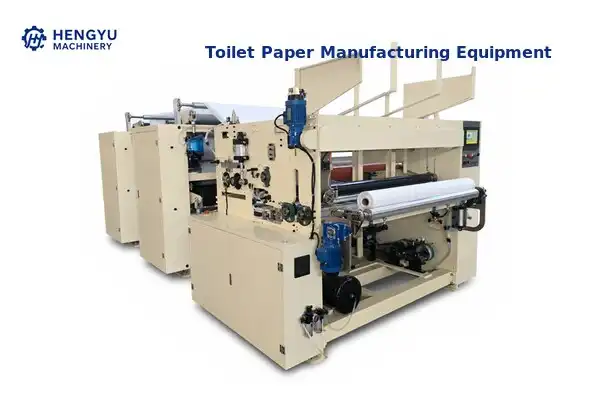
If you're planning to launch or expand a tissue converting operation, understanding the full scope of toilet paper manufacturing equipment—from rewinding machines to embossing units—is the foundation of every smart capital decision. This guide covers the essential machinery list, realistic factory setup costs, automation strategies, procurement criteria, and emerging eco-technologies, giving mid-to-large manufacturers a structured roadmap from initial planning through sustained production.
Comprehensive List of Toilet Paper Manufacturing Equipment
A modern tissue converting line has many different types of machines, each one working on a different part of the process. When you choose the wrong combination or the wrong amount of automation, it hurts both product consistency and profit margins.
Core Machines in a Converting Line
The main pieces of equipment in any line that makes toilet paper are:
- Jumbo Roll Rewinder: This machine unwinds the parent roll and then rewinds the tissue into separate logs while keeping the tension constant. High-speed types, like the HY-1500, can work at 180–240 m/min and have a working width of 1500 mm. They can handle tissue from 13–30 gsm in 1–2 ply designs. Four very accurate screw knives make perforations that are accurate to within ±3 mm, which is a very important quality for goods that are sold in stores.
- Embossing Unit: Makes your goods stand out from others in the same store. Single embossing works well for economy rolls, while double embossing gives the impression of luxury softness. Steel-to-steel edge embossing keeps the plys from separating and adds the visual appeal that modern retail buyers want.
- Band Saw Log Cutter: Cuts the finished log into rolls that are the right length for consumers with little fiber dust. Cutting accuracy has a direct effect on how products look on store shelves and how many items are passed through during quality checks.
- Packaging System: Wraps and seals single rolls or bundles of several rolls. At this point, automation has a big effect on the number of workers needed.
These four stops are the bare minimum for a line to work. Automatic core feeders, tail-sealing units, and online slitting modules are all part of a fully automated configuration. They are all controlled by a PLC + Touch Screen (HMI) system, which gets rid of the need for manual adjustments and lowers the chance of operator error.
Automation Levels and Their Operational Impact
Three to five people must work on a manual line during a shift, and the number and thickness of the rolls can vary. With semi-automatic setups, only two workers are needed to keep the output consistent. Full-service toilet paper manufacturing equipment automatic lines, like the HY-1500, can feed cores, spray glue, control width, trim edges, and find paper breaks all without any help from a person. This saves a lot of money on labor and lets companies meet the 24/7 production needs of grocery supply contracts.

Factory Setup: Cost Factors and Complete Installation Solutions
A medium-sized tissue conversion center needs both capital expenditures (CAPEX) and operating expenditures (OPEX) to be set up. Knowing about each area keeps the budget from going over during commissioning.
Key Cost Variables to Budget
The main things that affect the economy are:
- Buying equipment: The conversion line is the biggest single thing. The base investment changes gradually depending on the configuration choices you make, such as coreless capability, edge etching, and online cutting.
- Factory space and utilities: A fully automatic line with a rewinder, a log saw, and a packing system needs at least 20 m x 8 m of space. The power supply must be able to handle a 7.5–15 kW installed load at 380V, 50Hz, and three phases.
- Getting raw materials: Big parent rolls (up to 1500 mm diameter, 76.2 mm core ID) are a constant cost of doing business. Unit cost is directly affected by the relationships between suppliers in the Middle East and North Africa.
- Installation and commissioning: More than 95% of Hengyu customers finish installation with help from afar, which cuts down on the time needed for commissioning and eliminates the need for travel costs. For more complicated setups, on-site construction is still an option.
After-sales help quality is a factor that buyers often don't give enough weight to when making purchases. A one-year quality guaranty backed by expert support 24 hours a day, seven days a week keeps output going during the important ramp-up phase.
Optimizing Production: Automation, Maintenance, and Safety Guidelines
Automation can help keep quality high, but only if it is combined with careful upkeep and following safety rules. Uptime gains are lost if either dimension is ignored.
Preventive Maintenance Priorities
The most common factor that affects sheet quality is the state of the toilet paper manufacturing equipment perforation blades. Every 8–12 hours of use, the blades need to be checked and either sharpened or replaced every 15–30 days, based on how rough the tissue is. Seals on pneumatic parts that work at ≥0.6 MPa need to be checked every three months. Checks for VFD (Variable Frequency Drive) synchronization keep paper from breaking during high-speed rewinding, which happens a lot on lines going faster than 200 m/min.
For factories that sell to current retail platforms, safety standards set by CE must be met at all times. More and more, supermarket audit processes need written records of interlock tests, operator certification logs, and emergency stop response times. The HY-1500 from Hengyu comes CE-certified and with full paperwork packages that help with factory acceptance checks.
Decision-Making Guide: How to Choose the Best Tissue Converting Equipment
Buyers who work with supermarkets and other modern retail outlets have to follow different selection factors than buyers who work with institutions or HORECA sectors. Speed, the ability to do without a core, the freedom of embossing, and the readiness for an audit all carry weight at the same time.
Matching Machine Configuration to Market Requirements
A medium-sized company that wants to get private-label contracts with supermarkets needs a machine that can handle both cored and coreless roll forms without having to switch between specialized lines. The HY-1500's coreless production choice meets the needs of stricter regulations in the Middle East and North Africa to reduce the amount of plastic cores used, while also lowering the cost of core stock per unit.
Embossing flexibility is equally strategic. Usually, supermarkets need different SKUs for the basic, standard, and luxury levels. One production line can handle all three levels thanks to a machine that can switch between single, double, and steel-to-steel edge embossing patterns. This makes the best use of assets without spending extra money on duplicates.
When evaluating vendors, buyers should check the vendors' CE certification paperwork, ask for factory acceptance test (FAT) protocols that are specific to their paper GSM, confirm perforation tensile strength test data, and look at the SLA response times after the sale. To help with the technical evaluation stage, Hengyu gives customized technical proposals that include drawings of the machine layout and data from production simulations.
Emerging Trends and Eco-Friendly Technologies in Tissue Converting
The tissue industry is changing how they buy things because of sustainability. Major store buyers are putting more emphasis on recycled fiber content, low-weight tissue (sub-17 gsm single ply), and coreless roll forms.
When applied to tissue conversion, lean manufacturing principles like reducing trim waste through exact online slitting and cutting down on glue use through calibrated spray systems lower OPEX and raise environmental audit scores. IoT-enabled line monitoring, in which PLC data streams feed real-time dashboards, is the next big thing for factories that have more than one shift. Hengyu's PLC + HMI architecture is built with data connection in mind, so buyers can use their current tools for digital integration in the future without having to buy new ones.
Conclusion
To make your tissue-converting business competitive, you need to make sure that your toilet paper manufacturing equipment list fits your market channel, plant size, and strategy for making your products stand out. Coreless capability, multi-format embossing, full-servo automation, and CE compliance are not extras that manufacturers that serve modern retail can choose not to have; they are basic requirements. Each of these needs is met by Hengyu's HY-1500 line, which is based on a tried-and-true technical system that has been used in over 20 years of deployments in markets around the world.

FAQ
What is the minimum factory space required for a full-automatic tissue converting line?
A basic fully automatic line with a rewinder, a log saw, and a packing system needs a floor space of at least 20 m × 8 m. For handling large rolls, the ceiling should be at least 4 meters high.
Can one machine produce both cored and coreless rolls?
Yes. These days, rewinding systems can be set up to do two different things: mandrel-based winding and coreless air-blown technology. This is a standard extra part that comes with the HY-1500.
How frequently should perforation blades be replaced?
Every 8–12 hours of use, the blades need to be checked. Depending on how rough the tissue is and how fast you run, you should sharpen or change the blades every 15 to 30 days.
What certifications should tissue converting equipment carry for supermarket supply?
Getting CE approval is a must for most modern shopping outlets. Retail purchasing teams are asking factories to have ISO 9001 certification and written FAT guidelines more and more often when they do checks.
Does Hengyu provide remote installation support?
Yes. More than 95% of installs are done with help from afar. Hengyu's expert team offers video-based commissioning support, user training, and ongoing troubleshooting help after the product has been delivered.
Request a Tailored Equipment Proposal from HENGYU
HENGYU specializes in turning tissue into other formats for companies that want to sell their products in modern retail channels. Our company has been a trusted source for toilet paper manufacturing equipment for 20 years. We offer the HY-1500 line, which has CE certification, coreless capability, multi-format embossing, and a quality guaranty that lasts for one year. We also offer lifetime technical support. To get your factory layout plan and technical proposal right away, email doris@hytissuemachine.com or go to hytissuemachine.com.
References
1. TAPPI (Technical Association of the Pulp and Paper Industry). Tissue Manufacturing and Converting: Process Overview and Equipment Standards. TAPPI Press, 2022.
2. Paper360°. Automation Trends in Tissue Converting Lines. TAPPI/PIMA Industry Publication, 2023.
3. Smithers Pira. The Future of Tissue and Hygiene Products to 2027. Smithers Market Intelligence Report, 2022.
4. European Committee for Standardization (CEN). EN ISO 11553: Safety of Machinery — Laser Processing Machines and CE Marking Framework. CEN, 2023.
5. Euromonitor International. Tissue and Hygiene: Middle East and Africa Regional Analysis. Euromonitor, 2023.
6. RISI (now FastMarkets RISI). Global Tissue Industry Report: Sustainability and Raw Material Trends. FastMarkets, 2023.
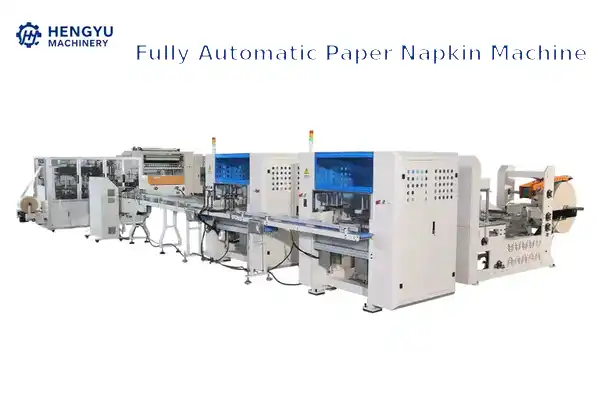
If you are sourcing napkin converting equipment for a new factory or an expansion project, the right fully automatic paper napkin machine can define your production efficiency for years. These integrated systems handle everything from unwinding parent rolls to folding, embossing, and packaging—with minimal manual intervention. Based on my research across global B2B procurement channels and supplier evaluations, this guide covers key features, selection criteria, maintenance practices, and trusted buying channels to help you make a confident investment decision.
Understanding Fully Automatic Paper Napkin Machines: Features and Benefits
What Sets Fully Automatic Systems Apart
A fully automatic paper napkin machine is a computer-run production system that turns large rolls of toilet paper into finished, folded napkins in one smooth process. It uses both PLC (Programmable Logic Controller) control and HMI touchscreen operation to run every step, from controlling web tension and embossing to counting and discharge, with almost no human input. The RISI Global Tissue Industry Report from 2022 says that automated tissue conversion lines can cut labor costs by up to 60% per unit compared to semi-automatic setups. They can also improve folding accuracy to within 0.5 mm.
These tools can fold in a number of different ways, such as 1/4 fold, 1/8 fold, and multifold styles. This means they can be used for a lot of different end markets, from food service towels to high-end hotel tableware. Regenerative brakes and energy-efficient servo motors lower operating costs even more, which is important for buyers who are interested in the total cost of ownership rather than just the purchase price.
Here are the main benefits of a high-performance napkin converting machine:
- Automated Web Control: Closed-loop tension systems match the speed of unwinding and folding, so the web doesn't break when working with lightweight fresh pulp or alternative fibers like bamboo.
- Hygienic Production Environment: Because no one touches the end product, it meets the high standards of cleanliness needed for supply chains in the hotel and retail industries.
- High Output Consistency: Folding blades and vacuum suction units that are controlled by a PLC keep their geometric accuracy over millions of cycles, which cuts down on waste from products that are folded wrong.
These benefits directly address the most common problems in tissue conversion, such as inconsistent quality, a need for a lot of labor, and low Overall Equipment Effectiveness (OEE) in semi-automatic facilities.

Comparing Top Fully Automatic Paper Napkin Machines: Brands, Models, and Technologies
Chinese Manufacturers Leading Global Supply
Chinese companies that make tissue machines have become big players in the B2B export market by offering low prices and tech that is CE and ISO-certified. Across the Middle East, Africa, Southeast Asia, South America, and Eastern Europe, brands from Henan, Fujian, and Guangdong provinces sell their goods. According to a report released by the Alibaba Research Institute in 2023, China's exports of tissue machinery increased by 18% year-over-year. Most of the demand came from developing industry markets.
Buyers should know the difference between standard-speed machines (180–200 m/min) and high-speed lines (more than 220 m/min) when they are looking at different types. Standard tools work well for small and medium-sized businesses that want stability and low upkeep costs. High-speed lines work well for big converters that want to make things 24 hours a day, seven days a week for grocery supply chains.
HENGYU HY-1500 Tissue Roll Making Machine is a good choice for people from other countries. According to its specs, the parent roll width is 1,500 mm, the production speed is 180–240 m/min, and it can work with 1–2 layers of paper that weighs 13–30 g/m². The machine can handle coreless and cored roll setups, can stamp steel-to-steel and steel-to-rubber, and can print in 1 to 4 colors using flexography. The PLC-based HMI interface lets parameter changes be made without the help of specialized techs. This makes training much cheaper for new plant owners. For buyers seeking a fully automatic paper napkin machine, this model offers significant operational advantages.
How to Select the Right Fully Automatic Paper Napkin Machine for Your Business?
Aligning Machine Specs with Your Production Goals
Finding the right fully automatic paper napkin machine starts with being clear about what you need it for. Buyers should say how many napkins they want to print, what sizes they want, how they want them folded, and whether they need OEM branding or language interfaces to meet the needs of local markets. For startup investors who need a single solution for rewinding, cutting, and packing, a turnkey production line is better than a stand-alone machine.
Before you agree to a seller, here are the most important factors you should look at:
- Production Capacity vs. Demand Forecast: Line up the machine's throughput (for example, 180–240 m/min) with the number of orders you expect to receive each day to avoid overproduction or bottlenecks.
- Automation Level and Maintenance Accessibility: Long-term maintenance costs are lower for machines that are modularly designed and have spare parts that are easy to find. This is important for buyers in markets with limited technical infrastructure.
- Supplier Track Record and Certifications: Look for CE and ISO-compliant makers with a history of exports and project case studies that you can use as references in the area you want to reach.
- OEM/ODM Customization Scope: Make sure the seller can change the machine's size, branding panels, language of operation, and setup to fit the needs of your market.
Buyers should do plant audits or ask for video verification after using these factors before finishing orders. As part of the contract, it's just as important to negotiate the warranty terms, spare parts packages, and installation support. These things will determine how much the machine really costs you to own over its lifetime.
Maintenance, Operation Tips, and Maximizing Machine Performance
Routine Practices That Protect Your Investment
Regular upkeep is the most important thing that affects how long a fully automatic paper napkin machine works and how long it lasts. Every 200 hours of use, the bearing blocks should be oiled, and every 500 hours, the surfaces of the embossing rollers should be checked for pattern loss or heat buildup. Pneumatic systems need extra care: the air supply needs to keep a steady pressure of at least 0.6 MPa, and the compressed air needs to be filtered and dried to keep pneumatic valves from rusting from water.
To get the most work done, make sure the tension control system is properly set up every time you switch between paper grades. When working with 13 g/m² lightweight sheets, machines need to set the stop torque differently than when working with 30 g/m² multiply stock. Putting in static eliminator bars at the folding and release areas also stops paper from getting stuck during high-speed runs, which is a common reason for unplanned downtime. When technical problems happen that can't be fixed by a user, quickly contact the manufacturer's remote support team instead of letting production stop for a long time.
Procurement Channels and Global Buying Considerations
Navigating International Sourcing Safely
There are two main ways for global buyers to find suppliers: online business-to-business sites like Alibaba, Made-in-China, and Global Sources, and direct interactions with manufacturers at trade shows or through recommendations. Online platforms let you see a lot of the market and compare prices, but they also need strict source verification. Offline engagement through industry exhibitions like the China International Paper Technology Exhibition lets you look at equipment directly and negotiate in person (Reed Exhibitions, 2023).
When buying in bulk, it's often more cost-effective to negotiate for a full production line deal that includes a rewinding machine, a paper cutting machine, and a tissue packing machine than to buy each machine separately. For international shipping and customs clearance of heavy machinery like the HY-1500, which weighs about 2.8 tons, you need experienced freight forwarders who know how to classify paper machinery by HS code. Before shipping, make sure the seller gives you packing lists, a CE statement of conformity, and installation manuals in the language you need.
Conclusion
Buying fully automatic paper napkin machine automatic napkin converting equipment is a long-term decision that pays off when the seller is carefully chosen and the specifications are met. There are good options on the market for all levels of speed, automation, and customization. Buyers in emerging industrial markets can get a lot for their money from Chinese manufacturers, especially those with more than 20 years of export experience and CE certification that can be checked. Give more weight to providers who offer full production line solutions, quick after-sales service, and OEM flexibility. These factors affect not only how well your setup goes at first, but also how well your production runs in the long run.

FAQ
What production speed should I expect from a fully automatic napkin machine?
Models that are very fast can go between 180 and 240 m/min. The actual output depends on the type of paper, how hard it is to fold, and how it is cut. At a steady rate good for medium to large-scale business supply, machines going at 220 m/min and having four cutting knives can make napkins. This performance level is typical for a high-quality fully automatic paper napkin machine.
Can the machine handle different paper weights without modification?
Many new tissue-converting machines can handle paper weights between 13 and 30 g/m² by using closed-loop tension control and frequency settings that can be changed. Most of the time, a tension recalibration is needed instead of mechanical changes to switch between paper grades.
Is OEM customization available for branding and operating language?
Manufacturers with a good reputation offer OEM/ODM services that include customizing the size and shape of the packaging module, the operating system language, and the marking on the machine panels. Make sure you always check the scope in your purchase agreement.
What certifications should I require from a supplier?
The bare minimum is to have CE certification (for imports into Europe and many emerging markets) and ISO 9001 quality control approval. Ask for copies of the real certificates and check with the organization that issued them to make sure they are valid.
How long does installation and commissioning typically take?
Installation and commissioning of a full production line usually take 7–15 working days on-site, depending on how ready the factory is and how available the technical team is. After the initial setting time, troubleshooting can be done remotely through a video call.
Start Your Production Line with HENGYU — Trusted Fully Automatic Paper Napkin Machine Supplier
Every project HENGYU works on is based on his or her more than 20 years of experience making tissue machines. As a fully automatic paper napkin machine maker that is approved by CE and ISO, we offer full turnkey production line solutions that include OEM/ODM customization and technical support for life. Send an email to doris@hytissuemachine.com or visit hytissuemachine.com to get a custom setup quote and project consultation right away.
References
1. RISI. (2022). Global Tissue Industry Report: Automation Trends and Labor Cost Analysis. Fisher International.
2. Alibaba Research Institute. (2023). China Industrial Machinery Export Trends: Tissue Converting Equipment. Alibaba Group.
3. Reed Exhibitions. (2023). China International Paper Technology Exhibition: Buyer and Exhibitor Overview. Reed Exhibitions Ltd.
4. International Organization for Standardization. (2015). ISO 9001:2015 Quality Management Systems — Requirements. ISO.
5. European Commission. (2006). Machinery Directive 2006/42/EC: CE Marking Requirements for Industrial Equipment. Official Journal of the European Union.
6. Grand View Research. (2023). Tissue Paper Manufacturing Equipment Market Size, Share & Trends Analysis Report. Grand View Research Inc.
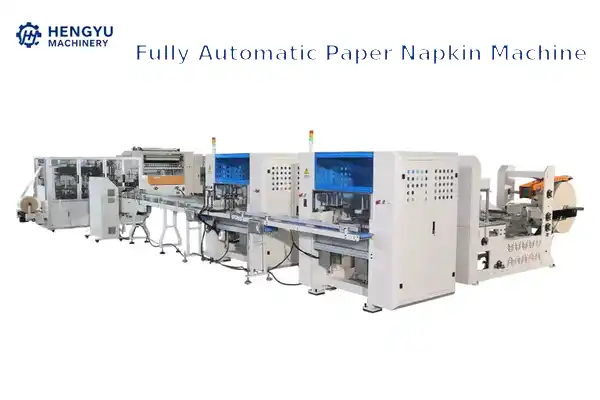
If you're exploring how to run a napkin converting line efficiently, this guide covers everything you need. A fully automatic paper napkin machine is an integrated converting system that transforms jumbo parent rolls into finished, folded, and embossed napkins through a PLC-controlled workflow with minimal manual intervention. From startup investors entering the tissue industry to established manufacturers scaling output, understanding how this equipment works—and how to operate it correctly—can directly impact your production yield, labour costs, and return on investment.
Understanding How a Fully Automatic Paper Napkin Machine Works
Core Workflow: From Parent Roll to Finished Napkin
The production process starts with unwinding a parent roll, which is usually up to 1,500 mm wide. The roll is then fed into the embossing unit while the tension is controlled. Patterns are printed on the web by steel-to-steel or steel-to-rubber embossing rollers, and plies are joined together by a glue device. After being folded, the napkins go through a system for counting and stacking them before being sent out. During this process, a PLC controller and an HMI tablet keep each station in line so that output speeds stay between 180 and 240 metres per minute.
Modern fully automatic paper napkin machines have IoT devices that check the tension, temperature, and web orientation in real time. Energy-efficient inverter motors use less power when they're not working, and noise-dampening housing keeps the decibel levels on the shop floor below what is safe for workers. These improvements directly lead to lower energy costs and a safer place to work.

Operating Your Fully Automatic Paper Napkin Machine Effectively
Pre-Start Checks and Startup Sequence
Before turning on the machine, workers should make sure that the compressed air supply is at least 0.6 MPa, that all emergency stops have been reset, and that the HMI doesn't show any current fault codes. To stop horizontal web drift, the parent roll needs to be in the middle of the pneumatic unreeling stand. After the checks are done, the tablet interface is used to enter the production settings, such as the fold type, sheet count, and embossing pressure.
Monitoring Parameters and Routine Maintenance
Keep an eye on three main things while the machine is running: the stability of the web tension, the folding alignment tolerance (±0.5mm is the standard in the industry), and the knife wear on the punching mechanism of a fully automatic paper napkin machine. With four knives, high-precision screw-type punching knives can cut up to 135 mm, or 170 mm to 260 mm with two knives. Custom sizes can be made upon request.
Maintenance is easy if it's done on a regular basis. Here is a useful repair schedule that will protect the life of your machine:
- Daily: Clean the folding blades and the area where the paper goes out of the machine of any paper dust; also, check the pneumatic fittings for tiny leaks that use more air.
- Weekly: Make sure the static remover bars are still working and lubricate the embossing roller bearing blocks; at high speeds, static buildup causes misfeeds.
- Monthly: Check the knife edge for wear and the magnetic powder brake for tension drift; if any parts are worn, repair them before they affect the quality of the fold.
Sticking to this schedule stops unplanned downtime, which, according to data from the industry, can cut semi-maintained lines' annual output by 8–15%. Regular repair saves your equipment investment and keeps your line running at full capacity for as long as it lasts.
Comparing Fully Automatic vs Semi-Automatic Paper Napkin Machines
Choosing between machine categories is a genuine purchase choice, not just a matter of money. The main differences in five areas of achievement are shown in the table below.
| Factor | Fully Automatic | Semi-Automatic |
|---|---|---|
| Output speed | 180–240 m/min | 80–120 m/min |
| Labour per shift | 1–2 operators | 3–5 operators |
| Folding consistency | within 0.5 mm | Changes by hand |
| Long-term labour cost | Lower | Higher |
| Initial capital outlay | Higher | Lower |
Once output hits a mid-scale level, a fully automatic paper napkin machine line cuts the cost of labour per unit by a large amount. Semi-automatic equipment works well for new businesses that don't have a lot of money or a lot of sales. But as output goals rise, the productivity gap quickly widens, making it easy for most growing manufacturers to make the economic decision to upgrade.
How to Choose the Right Fully Automatic Paper Napkin Machine for Your Business?
Define Your Production Requirements First
First, figure out how many metric tonnes of work you want to get done each day. Then, work backward to figure out the machine speed and lane configuration you need. Take into account the available floor space, the power (380V/50Hz is standard), and whether you need the ability to roll without a core or with one.
Evaluate Suppliers on Four Criteria
Not all suppliers provide the same level of help. When looking at a fully automatic paper napkin machine manufacturer, these four things should come first because they all have a direct effect on your business security:
- Certification: Meeting CE and ISO 9001 standards proves the equipment is safe and of high quality, which is important for getting it into most markets.
- Customisation capability: OEM/ODM options for machine configuration, branding panels, and operating language let the line be changed to fit the needs of each local market without having to pay a lot of money for upgrades.
- After-sales infrastructure: Installation on-site, training for operators, and remote diagnostic support shorten the time it takes to get up and running and make production stable.
- Delivery and logistics: The seller can handle foreign packages effectively, as shown by their verified export experience and written project references.
Factory-direct buying eliminates intermediary markups and gives you direct access to the engineering team for configuration discussions. These four factors are the basis for a low-risk purchasing choice at any size of business.
Maximising Production Efficiency and Reducing Operational Costs
Identify Bottlenecks Before They Compound
When giant rolls are changed over, uneven web tension, embossing roller misalignment after long runs, and drops in compressed air pressure that cause pneumatic fold failures are the most common things that slow down fully automatic paper napkin machine lines. Taking care of each one ahead of time, instead of after the fact, keeps OEE above 80%, which is what industry standards say is needed for tissue-converting businesses to make money.
The first step in optimising energy use is to use the machine's frequency-conversion motor system to perfectly match the drive speed to the real flow need. Smart PLC-equipped lines now come with real-time power tracking, which lets workers see energy spikes that are related to certain stages of production and make changes as needed.
A useful lean improvement is making a standard changeover checklist that makes knife adjustments and roll splicing take less than ten minutes. When factories use planned changeover routines, their output goes up by 12 to 18% without having to spend any extra money on capital. Combining disciplined maintenance, energy tracking, and efficient changeovers creates a compounding efficiency gain that meaningfully shortens the investment payback period.
Conclusion
To make money with a fully automatic paper napkin machine line, you need to do more than just buy good tools. It needs to be operated in a disciplined way, maintained regularly, and have a relationship with its supplier that goes beyond delivery. A high-performance fully automatic paper napkin machine with PLC automation, CE-certified construction, and quick after-sales support gives companies the dependability they need to consistently meet market demand. The ideas in this guide will help you make smart choices and build a long-lasting tissue production business, whether you are opening a new plant or increasing the size of a current one.

FAQ
How often should embossing rollers be inspected?
Every 500 hours of use, check the embossing roller bearing blocks. Thoroughly clean and grease to stop heat buildup and pattern loss that lowers the quality of napkins.
What compressed air pressure does the machine require?
It needs to have a steady flow of at least 0.6 MPa. To keep pneumatic valves and cylinders from rusting from water, the air needs to be cleaned and dried.
Can the machine handle different napkin sizes?
Yes. The space between punching knives can be 85–135 mm with four knives and 170–260 mm with two knives. You can ask for custom sizes, and flexible folding systems can be used to fit a variety of fold forms.
What energy-saving features should I prioritise?
The most important features are frequency-conversion inverter motors and real-time PLC power tracking. They use less energy when changing speeds and when the machine is not working, but this doesn't affect throughput.
Is operator training included with the machine?
As part of the commissioning package, reputable makers offer on-site installation and user training. This will help your team reach stable production quickly and with confidence.
Start Your Production Line with HENGYU — Request a Free Consultation Today
For more than 20 years, HENGYU has helped tissue manufacturers in more than 30 countries by providing fully automatic paper napkin machines that are CE and ISO certified and can be fully customised to meet the needs of the OEM. These machines are installed on-site and come with lifetime technical support. Our tech team is ready to help you set up the best production line for your needs and the needs of the market. To get a personalised quote from a reliable, fully automatic paper napkin machine supplier, email doris@hytissuemachine.com or go to hytissuemachine.com.
References
1. TAPPI Journal (2022). "Web Tension Control in High-Speed Tissue Converting Lines." TAPPI Press.
2. Packaging Technology and Science (2023). "IoT Integration in Paper Converting Equipment: Energy and Operational Benefits." Wiley Online Library.
3. Pulp & Paper International (2021). "Predictive Maintenance Strategies for Tissue Manufacturing Lines." RISI/Fisher International.
4. Paper 360° (2022). "Automation ROI in Tissue Converting: A Comparative Analysis." TAPPI.
5. Tissue World Magazine (2023). "OEE Benchmarks in Global Tissue Converting Operations." Tissue World.
6. Lean Manufacturing Journal (2021). "SMED Application in Paper and Converting Industries: Measured Productivity Gains." Lean Enterprise Institute.
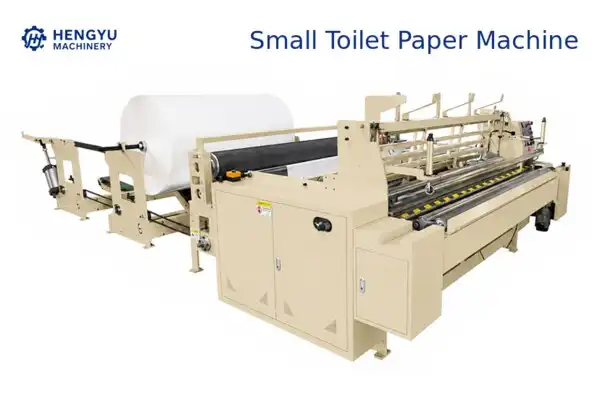
A small toilet paper machine is a compact tissue conversion system that transforms jumbo parent rolls into consumer-ready toilet rolls — covering rewinding, perforation, gluing, trimming, and core feeding within a single production line. For entrepreneurs entering the tissue manufacturing sector with limited capital and floor space, this equipment removes the high entry barrier that industrial-scale plants typically impose. Whether you operate a two-person workshop or a regional micro-factory, understanding how this type of machinery works — technically and operationally — gives you a decisive advantage before committing your budget.
Understanding Small Toilet Paper Machines: Features, Types, and Production Process
Automation Levels and What They Mean for You
There are three main types of compact small toilet paper machines: fully automatic, semi-automatic, and manual. Fully automatic lines do everything from feeding the core to perforating, tail-gluing, and rewinding without any help from an operator. Some semi-automatic models need to be loaded by hand, while all manual machines need to be operated by hand. For a 1.5 T/D micro-factory, a fully automatic system makes it much less dependent on workers and makes sure that quality stays the same between shifts.
How the Production Workflow Operates
A parent roll that is up to 1800 mm wide and large in size goes through the rewinding station to start the process. The machine cuts the sheet into exact holes every 150–300 mm with two blades, glues the tail shut, and automatically feeds paper cores 30–55 mm in diameter. After the logs are finished, they are cut and moved forward. This nonstop flow of work, with no manual handoffs, is what keeps throughput steady at full capacity throughout the workday.
Key Technical Properties Worth Knowing
The three things that tell you if a machine will work in your facility are its working width, production speed, and power rating. Small-format tissue processors should have a total power of between 5.5 kW and 11 kW and run at 150–200 meters per minute. Lower power ratings directly lead to lower electricity bills, which is very important in markets where grid stability isn't always reliable and energy costs change often.

Comparing Small Toilet Paper Machines: Making the Right Choice
When looking at different pieces of equipment, customers often compare the size of the small toilet paper machine to the amount of work it can do and the level of efficiency to the cost of labor. When making a purchase decision, these are the main things that you should compare:
- Footprint vs. capacity: A machine that is 6500 x 3300 x 1700 mm can give 1.5 T/D, which means it can be used in workshops that are less than 100 square meters without losing throughput.
- Power draw vs. production volume: Total power of 5.5kW + 0.75kW keeps costs stable, which is especially helpful in places where the price of energy changes often.
- Automation vs. staffing: Fully automatic core feeding gets rid of the need for a dedicated operator station, which lowers the number of people you need to pay each day and your minimum viable crew.
- Finished product range: A machine that makes rolls with a diameter of 50 to 280 mm can make everything from hotel amenities to normal home rolls without having to change the tools.
These four factors directly deal with the most common trade-offs that small manufacturers have to make. If you choose a machine that handles them well, you'll have fewer problems as your business grows.
Procurement Guide: Buying and Supplier Selection for Small Toilet Paper Machines
Evaluating Suppliers Before You Commit
There's more to choosing a tissue machine seller than just looking at the prices on the lists. When you buy directly from the factory, you skip the middlemen and get straight access to engineering help. Certification is important. If the equipment meets CE and ISO standards, it means it meets safety and quality standards that are known around the world. This saves your investment and makes the paperwork for importing easier.
When researching a small toilet paper machine maker, make sure you get written proof of the guarantee terms, references from past buyers in similar markets, and confirmation that spare parts are available. It is not an extravagance to offer a quality guaranty that lasts for one year and easy access to expert help.
What to Clarify Before Placing an Order
Before you wire payment, make sure your supplier agrees to the following in writing:
- Method of installation help (remote video instructions or a tech on-site)
- How long it takes to get spare parts and whether common wear parts ship internationally
- Details on how to pack LCL (less-than-container-load) sea freight
- Payment methods and deposit structure that are accepted
Over 95% of customers are able to successfully finish installation of the small toilet paper machine with the help of online support, according to Henan Hengyu Machinery Co., Ltd. This makes setup much cheaper for buyers in South Asia, Africa, and Southeast Asia.
Maintenance, Safety, and Efficiency Tips for Small Toilet Paper Machines
Daily and Weekly Maintenance Priorities
The best way to make tools last longer is to keep up with its maintenance. Every day, operators should check the perforation blades for wear, make sure the glue is applied evenly, and clean the rewinding station of any paper dust. As part of the weekly checks, the tension on the paper stands should be adjusted, the drive parts should be oiled, and the core feeding system should be checked for balance.
Safety Compliance and Noise Management
According to CE safety rules, all parts that rotate should have guards around them. It is important to test how fast the emergency stop is during launching, not after a fault has happened. On the practical side, a 2000 kg machine structure absorbs a lot of vibration, which lowers noise levels compared to lighter-framed options. This is a benefit that is often ignored in shared workshop settings.
Future Trends and Innovations in Small Toilet Paper Machines
The small tissue machinery market is moving toward modular designs that let buyers start with basic functions like cutting and rewinding and then add functions like embossing or automated packing as their business grows. The fact that a single machine can make finished paper with a diameter of 50 to 280 mm shows that this modular philosophy is true: one production line can serve many market segments without having to make expensive upgrades.
Smart monitoring features are making their way into the mid-range market. Frequency conversion drives allow for stepless speed control, and PLC integration improves the accuracy of the perforation pitch. As more people move to cities and become more aware of good hygiene, the Global Tissue Machinery Market Report says that the need for production lines that can make less than 5 tons of tissue per day will steadily rise in developing economies until 2028. Purchasing managers who buy tools that can be used in different ways will be better able to meet the needs of the market without having to replace all of their lines.
Conclusion
It's a big investment to buy your first small toilet paper machine production line. If you choose the right machine, install it correctly, and get help from a responsive manufacturer, you can serve a local market successfully with a small crew and a small power source. Hengyu's HY-1575 meets the main needs of small-scale tissue converters: it uses little power, can be operated automatically, has flexible output sizes, and has a small footprint that works with the space and budget of a micro-factory. When you buy something, make sure you have clear technical criteria, check the skills of the dealer, and put after-sales access ahead of price alone.
FAQ
What daily output can I realistically expect from a compact tissue rewinder?
Under normal circumstances, the HY-1575 can handle 1.5 T/D. It depends on the quality of the raw materials, how long it takes the operator to set up, and the state of upkeep. Running two shifts increases the daily throughput without having to buy more tools.
How much floor space does a small toilet paper production line require?
It's 6500mm long, 3300mm wide, and 1700mm high. A workspace of about 80–100 square meters is enough for this production line, with enough room for moving workers and moving materials.
Can I produce different roll sizes without changing the machine?
Yes. With a finished paper diameter range of 50–280mm and a paper core diameter range of 30–55mm, you can use the same machine to make standard household rolls, hotel amenity rolls, and jumbo retail rolls. All you have to do is change the settings instead of swapping out the tools.
What certifications should I require from a supplier?
You should at least need CE and ISO licenses. These make sure that the product meets international standards for safety and quality and make it easier to clear customs in most trade markets.
Is remote installation support reliable for first-time buyers?
Hengyu says that over 95% of setups can be finished smoothly with just written and video instructions, without the need for an engineer to be present on-site.

Start Your Tissue Production Business with HENGYU
For more than 20 years, HENGYU has been designing and building tissue machines for business owners and manufacturers in developing countries. The HY-1575 small toilet paper machine for sale has a proven, CE-certified design that includes low power use, automatic operation, and a range of roll sizes. It was made for businesses that need solid output without having to invest in a large-scale machine. Reach our technical team directly at doris@hytissuemachine.com or visit hytissuemachine.com to request specifications, pricing, and installation details tailored to your facility.
References
1. TAPPI (Technical Association of the Pulp and Paper Industry). Tissue Converting Machinery: Operational Fundamentals and Process Flow. TAPPI Press, 2021.
2. Smithers Pira. The Future of Tissue to 2028: Global Market Forecasts. Smithers, 2023.
3. International Organization for Standardization. ISO 9001:2015 Quality Management Systems — Requirements. ISO, 2015.
4. Henan Hengyu Machinery Co., Ltd. HY-1575 Small Toilet Paper Machine Product Documentation. Hengyu, 2024.
5. European Committee for Standardization. CE Marking and Machinery Directive 2006/42/EC. CEN, 2006.
6. Grand View Research. Tissue Paper Market Size, Share & Trends Analysis Report, 2023–2030. Grand View Research, 2023.
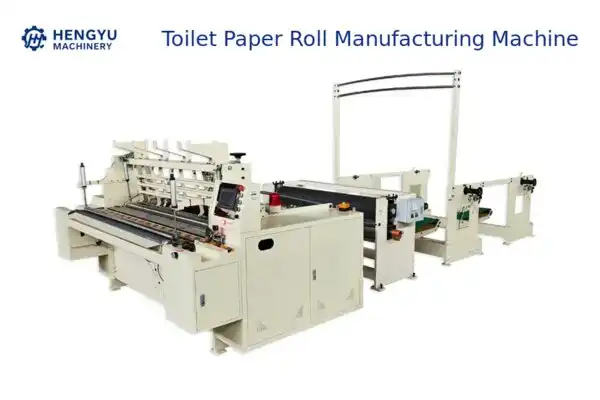
Keeping your toilet paper roll manufacturing machine running at peak performance is one of the most critical factors in protecting your production investment. Unplanned downtime, premature component wear, and inconsistent output quality can erode profit margins faster than most operators anticipate. According to a 2022 report by the Packaging Machinery Manufacturers Institute, unplanned equipment downtime costs manufacturers an average of $260,000 per hour across processing industries. With proper, structured maintenance, tissue converting equipment can operate reliably for over a decade — delivering consistent ROI throughout its lifecycle.
Understanding Common Maintenance Challenges in Tissue Converting Equipment
Most operators don't realize how many factors work together to shorten the life of a machine. A tissue rewinding line has to deal with mechanical stress, exposure to the climate, and changes in the material all at the same time. Each of these things makes the others worse.
Wear, Misalignment, and Clogging: The Silent Downtime Drivers
Misaligned rollers are one of the most common reasons why roll tension and hole quality aren't always the same. When you cut paper at 80 to 200 cuts per minute, dust builds up inside the drive systems. This can clog sensors, overheat motors, and make PLC signals less accurate. Inconsistencies in the raw materials, like base paper GSM changes outside the 13–22 g/m² range, put different amounts of stress on the rewinding parts and speed up blade wear beyond what is expected.
Environmental and Electrical Vulnerabilities
High humidity makes metal areas that are visible rust faster, especially on mainframes that are made of wall panels. Voltage instability, which happens a lot in developing countries, puts stress on control boards and motor drives electrically. By spotting these risk factors early on, maintenance teams can take specific steps to stop problems before a small problem turns into a production stop.

Essential Maintenance Practices That Extend Machine Life
It costs a lot to do reactive repair on a toilet paper roll manufacturing machine. A study released in the Journal of Manufacturing Technology Management in 2021 found that planned preventive maintenance cuts total maintenance costs by 18–25% compared to repair methods that are based on breakdowns. Structured maintenance schedules turn guesswork into a system that can be used again and again.
Here are the core daily and weekly maintenance practices that tissue production teams should implement:
- Daily cleaning of paper dust accumulation around the band saw cutting area, the vents in the PLC box, and the covers for the synchronous belts is necessary. Paper fiber is very flammable and doesn't conduct heat well, which are two things that speed up the wear and tear on motors when dust builds up without being cleaned. Even short, targeted cleaning processes at shift changes stop damage from building up and costing a lot to repair.
- Lubrication of roller bearings, gear assemblies, and chain drives once a week cuts down on friction-related heat and slows down metal fatigue. It's important to use the grade of oil that the maker recommends; using the wrong viscosity can cause drag or film thickness issues when rewinding at high speeds of up to 280 m/min.
- Inspection of the automatic core feeding system and glue spraying nozzles should be checked at least twice a week. If there is dried adhesive residue in the tip channels, it makes the glue application uneven, which weakens the finished roll and raises the rate of rejects. This problem can be avoided by flushing nozzles with compatible solvents on a set schedule.
When these things are done together, they have a value that grows over time. One startup client cut unplanned downtime by 30% in the first three months after using a structured daily checklist. This was because the checklist helped find small alignment and lubrication problems before they caused failures that spread through the system.
Components Overview and Their Maintenance Requirements
For intelligent maintenance planning to work, you need to know what each part does and what happens when it breaks.
Cutters and Band Saw Blades
The automatic band saw cutting machine makes 80 to 200 cuts per minute, which puts constant mechanical stress on the edge of the blade. Unusual cutting sounds, odd cut-face quality, or roll length deviations greater than ±0.5 mm are all good signs of wear. Blade check times should be based on the GSM of the paper and the total number of cuts, not just the time on the calendar.
Rollers, Sensors, and the Electric Control Panel
When you rewind, tension isn't always even because of rollers with micro-surface wear. This shows up as rolls that are loose or telescoping. The automatic paper pushing function is controlled by proximity sensors that need to be calibrated once a month. If a sensor signal is misread, the whole line can stop. The PLC panel and touch screen interface need to be checked every three months for software parameter drift and terminal corrosion, especially in humid work environments.
Gears and Synchronous Belt System
The rewinding cycle of the toilet paper roll manufacturing machine is driven by a synchronous belt that can reach speeds of up to 280 m/min. When the manufacturer's specifications aren't followed, the belt tightness causes vibrations and makes setting less accurate. Every week, the belt should be looked at visually for cracks, tearing, or uneven wear. A full replacement should be planned ahead of time, rather than waiting until the belt breaks.
Leveraging Automation and Technology for Efficient Machine Maintenance
The way maintenance is done on the factory floor has changed a lot thanks to modern tissue converting lines that have PLC-controlled rewinding systems with self-diagnostic modules. Instead of just relying on what the operator sees, automated alert systems flag changes in parameters before they happen automatically.
Touch screen interfaces let workers see the speed of rewinding, the diameter of the rolls (50–150 mm), and the cutting settings right away. When the system finds unusual pressure in the air pressure control mechanism, it sends out an alert so that action can be taken during a planned break instead of an unexpected one.
High-end models have automated lubrication systems that give exact amounts of lubricant at set times, even if staffing changes or shifts don't match up. This further reduces human mistake. Buying equipment that can be monitored from afar also increases the value of expert help after the sale. Manufacturers that offer remote diagnostics, which involves looking at PLC log data and parameter histories, can find the root causes without having to visit the installation site. This cuts the time it takes to solve problems by a huge amount across installations around the world.
Troubleshooting and Enhancing Machine Efficiency During Maintenance
Instead of relying on gut feelings, effective troubleshooting follows an organized diagnostic process. When the packing line doesn't work right, like when the auto multi-roll packing machine stops making 8 packages per minute, you should first isolate the subsystem that's not working right. This could be the film tension control, the temperature of the sealing jaws, or the alignment of the feeding guides.
Optimizing Operating Parameters to Reduce Component Stress
When you run the rewinding machine at its maximum speed all the time without adjusting the load, the bearings wear out faster and the drive system is put under more heat stress. When you match the production speed to the base paper grade and layer configuration (1 to 3 layers, 13–22 g/m²), the mechanical load is spread out more evenly, and between services, the machine lasts longer. The speed shouldn't be set to the machine's top speed; it should be adjusted based on the features of the cloth.
Raw Material Compatibility as a Maintenance Variable
If the base paper isn't in the right GSM range, the tension changes in unpredictable ways, and the cutter blades wear out much faster. Finding paper stock that always meets the 13–22 g/m² standard isn't just a quality choice; it's also a maintenance choice. One of the most ignored causes of high repair frequency is inconsistent raw material.
Conclusion
It is not a burden to maintain a toilet paper roll manufacturing machine over time; it is a plan to do so. Systematic cleaning, regular lubricating, regular inspections of each part, and knowledgeable debugging all work together to protect the mechanical integrity of every part of the production line, from the 3600mm rewinding section to the auto multi-roll packing unit. PLC automation, touch screen control, and strong wall-panel building are all used to build equipment that will last for a long time. It is the job of the operator to create a culture of maintenance that builds on that foundation.

FAQ
How often should the band saw blade be inspected on a high-speed cutting machine?
The number of inspections depends on the total number of cuts and the density of the base paper, not on the time of the month. At 80 to 200 cuts per minute, a high-production line should check the state of the blade edge every 48 to 72 hours of operation. If the edge is worn down, it should be replaced based on measurable length deviation or audible cutting issues instead of set plans.
What causes inconsistent roll lengths during high-speed rewinding?
Most of the time, it's because the tension in the synchronous belt system has changed or the sensors in the automatic paper pushing module are not calibrated correctly. During a normal weekly check, both problems can be found before they cause a rise in the reject rate.
Can the rewinding machine handle both coreless and cored rolls without major adjustment?
Yes. The rewinding diameter control's air pressure adjustment system can work with both setups in the 50–150 mm range. To switch between core and coreless production, you only need to change a few parameters on the touch screen. There is no need to re-assemble the machine mechanically.
How does humidity affect the PLC control panel over time?
Terminal oxidation is sped up by prolonged high humidity, which can lead to intermittent signal faults in sensor circuits. This risk is effectively reduced by inspecting the inside of the control panel every three months and adding moisture-absorbing materials to the enclosure in humid places.
Is remote technical support effective for resolving production faults?
When the machine seller gives access to PLC log data and parameter records, most non-mechanical faults can be fixed remotely, without having to send someone to the site. This cuts down on downtime for international setups by a large amount.
Ready to Protect Your Production Investment? Contact HENGYU Today
HENGYU provides a full range of toilet paper roll manufacturing machines, including a 3600mm rewinding line, automated cutting, and multi-roll packing. These machines are CE/ISO certified and come with free expert support for life. We offer installation help, remote troubleshooting, and OEM customization for international markets as a reputable toilet paper roll manufacturing machine provider with over 20 years of export experience. To ask for a production line proposal, you can email our engineering team at doris@hytissuemachine.com or go to hytissuemachine.com.
References
1. Packaging Machinery Manufacturers Institute (PMMI). OEE & Downtime Benchmarking Report. 2022.
2. Eti, M.C., Ogaji, S.O.T., & Probert, S.D. "Reducing the cost of preventive maintenance." Journal of Manufacturing Technology Management, Vol. 17, 2006.
3. Mobley, R.K. An Introduction to Predictive Maintenance (2nd ed.). Butterworth-Heinemann, 2002.
4. Schwab, K. The Fourth Industrial Revolution. World Economic Forum, 2016.
5. Zuashkiani, A., Rahmandad, H., & Jardine, A.K.S. "Mapping the dynamics of overall equipment effectiveness." Journal of Quality in Maintenance Engineering, Vol. 17, 2011.
6. TAPPI (Technical Association of the Pulp and Paper Industry). Tissue Manufacturing Standards and Raw Material Specifications. 2020.
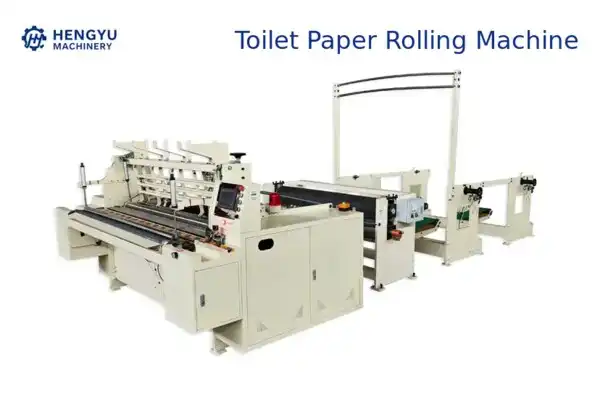
If you operate a tissue converting facility—or plan to enter the market—understanding how a tissue paper rewinder works, what drives equipment costs, and how to evaluate suppliers will sharpen every procurement decision you make. This guide walks through the mechanical logic of a toilet paper rolling machine, dissects the rewinding system, and frames the real cost variables so you can invest with confidence.
How a Toilet Paper Rolling Machine Works
A tissue paper rewinding machine uses a coordinated series of mechanical, pneumatic, and electronic operations to turn large-diameter jumbo parent rolls into bathroom tissue logs that people can use. From the outside, the process doesn't look very precise.
The production sequence follows this path:
- Unwinding: When you want to unwind, the parent roll (which can be up to 1,200 mm in diameter and 2,200 mm wide) is put on a vacuum filling stand. Controlling tension, which is usually done with frequency-conversion braking, limits the speed of the paper feed and keeps it from breaking. This is especially important when using light stock (12–40 g/m²).
- Embossing: Before it is perforated, the paper goes through a stamping unit. Steel-to-wool roller setups press texture designs into the sheet, making it seem softer and thicker without raising the cost of the raw materials.
- Perforation: In perforation, a spiral blade roller cuts the web with straight tear lines that can be set at different distances. Clean cuts with no dust depend on the shape of the blade and the constant strain of the web upstream.
- Rewinding: The punctured web is wound around a new paper core that has a standard inner diameter of 76.2 mm. The automatic shaft-pulling device moves a new core into place and ejects finished logs without stopping the line.
- Tail sealing: An automated glue application system joins the end of each log, making a finished roll that is ready to be put on the shelf.
All of these benefits make it easier for the person to do their job and keep roll-to-roll stability. A PLC (Programmable Logic Controller) touch screen controls every step, including speed, perforation pitch, glue position, and warning levels. This lets workers see what's happening in real time and make quick changes to the parameters.
Automation Levels and Their Impact
Fully automatic lines can go up to 220 m/min with very little help from people. Semi-automatic versions take more manual work during the core-loading and tail-sealing steps, but they cost less to buy. Fully automatic toilet paper rolling machine rewinders give a much faster return on capital for sites that work multiple shifts or want to make a lot of things.

In-Depth Analysis of the Rewinding System
Three things—roll density, diameter consistency, and edge quality—are controlled by the rewinding unit. These three things have a direct effect on how well downstream packaging works and how happy customers are.
Surface, Center, and Tension Rewinding Compared
Surface rewinding moves the log from around its outside, making rolls that are softer and less dense, which is what quality bathroom paper wants. Center rewinding puts torque through the core, which makes rolls that are tighter and denser, perfect for AFH jumbo dispensers. Tension rewinding uses both of these ideas together to work with different types of raw paper without having to make any technical changes.
Chrome-plated rewinding rolls are the best in the business when it comes to resistance to rust. When making things in cold or damp places, like in Eastern Europe and northern temperatures, chrome plating makes rolls last a lot longer than steel that isn't covered. The surface hardness can also stand up to the rough micro-contact of continuous paper feed.
Common Maintenance Challenges
Around the bearing housings and tension rollers of rewinding systems, paper lint builds up. Vacuuming and cleaning processes that are timed—usually every 500 hours of operation—keep parts from wearing out too quickly. The quality of the cuts stays the same by inspecting the perforation blade every three months during normal shift patterns. A smart system that detects when paper breaks stops the line automatically, keeping raw materials from going to waste and blade tips from getting damaged by web breaks that aren't controlled.
Comprehensive Cost Guide for Tissue Converting Equipment
Industrial rewinding lines have a wide range of toilet paper rolling machine equipment prices that depend on the level of automation, the production width, the drive technology, and the level of customization. It is better to understand the cost drivers and how they relate to operational return than to give exact numbers that change with exchange rates and component markets.
Here are the main things that affect costs that buying managers should look at:
- Automation level: Fully automatic tools cost more up front, but they save money on labor costs every shift. Facilities that are open 24 hours a day, seven days a week usually make up the difference in cost within 12 to 24 months just by saving money on staff.
- Production capacity and width: Machines that can handle parent rolls that are wider (up to 2,200 mm) and faster speeds (200+ m/min) need stronger drive systems, heavy frames, and more complex tension control, all of which affect the price.
- Material treatment and component quality: Chrome-plated rolls, heavy-gauge steel frames, and CE/ISO-certified electrical parts cost more when you buy them, but they cost less to maintain over a five- to ten-year service life.
- Customization scope: Multilingual PLC interfaces, unique voltage setups (like AC380V/50Hz vs. 415V/60Hz), and custom stamping patterns all come at a small extra cost compared to the long-term benefits they bring to operations.
Because these factors affect each buyer in different ways, a thorough total-cost-of-ownership (TCO) analysis that looks at things like warranty coverage, availability of spare parts, and support after the sale is better than just comparing prices. A machine with a lower price tag but a six-month wait time for spare parts can end up costing a lot more in the long run than a machine that is well supported.
How to Choose the Right Tissue Rewinding Machine for Your Business?
Before you can choose the right equipment, you need to be honest about your present output goals, the floor room you have available, your power infrastructure, and the level of skill of your operators.
Matching Specifications to Production Needs
With a size of 8,800 × 3,400 × 1,800 mm and a total power draw of 13 kW (7.5 + 5.5 kW), the toilet paper rolling machine is small enough to fit into standard industrial electrical infrastructure. Adjustable perforation pitch is a must-have feature if your facility handles different types of products, like kitchen towels and regular toilet paper on the same line.
Evaluating Suppliers Beyond Price
As important as machine specs are, the knowledge of the manufacturer, CE and ISO certification, the availability of localized technical documents, and quick customer service after the sale are also very important. Buyers in faraway markets benefit a lot when sellers offer multilingual interfaces, video-guided installation help, and easy-to-reach spare parts stockpiles. If a source can teach operators in the language you want, it can cut the time it takes to set up by weeks.
Why HENGYU Tissue Rewinders Are Built for Serious Producers?
Henan Hengyu Machinery has been making equipment for converting tissues for more than 20 years. Our line of toilet paper rolling machines is designed for manufacturers who can't stand mistakes, whether they run a small converting business in the country or a large commercial facility that makes a lot of rolls.
Here are the core advantages of this device:
- Touch PLC interface that works with multiple languages and lets you change the working language settings for foreign markets
- Pneumatic loading system method that gets rid of the need to handle large rolls by hand
- Chrome-plated rewinding rolls that are chrome-plated and made to prevent rust in wet or dry conditions
- Real-time paper-breakage alert that stops the line immediately to protect the paper and blades
- Auto paper core feeding that is synced with production speed, which means that fewer workers are needed on long shifts
- Steel-to-wool embossing unit with design shaping that can be changed to stand out in the market
These benefits directly address the most common problems that tissue converters face in production: wasted material from web breaks that can't be controlled; rolls that don't match up because tension management isn't good enough; and equipment breaking down in tough conditions. Every machine comes with a quality guaranty that lasts for one year and HENGYU's promise to provide free technical support for life. You can find full technical specs and setup choices at hytissuemachine.com.
Conclusion
A well-designed tissue paper rewinder is a benefit to your business for a long time. You can ask the right questions before buying if you know the technical order of undoing, embossing, perforating, rewinding, and closing. The most important part of the toilet paper rolling machine quality system is the rewinding system. Buying chrome-plated, corrosion-resistant parts pays off whether the area is hot or cold. Total personal value, not just the original price, should be used to decide how much something costs. A converting operation can grow quickly and reliably if it has the right machine, the right configuration, and a supplier that stays in touch with you after the delivery.

FAQ
How often does the rewinding system require maintenance?
In normal production conditions, bearing housings and tension rollers need to be oiled about every 500 hours of use. Every three months, perforation blades need to be looked at visually. How often they need to be replaced or sharpened depends on the weight of the paper and the length of the shift. When compared to bare rolls, chrome-plated rewinding rolls require less upkeep, especially in damp places.
What paper grades and roll sizes does the machine handle?
Our tissue rewinder can handle raw paper weighing between 12 and 40 grams per meter². It can also handle recycled parent rolls that are up to 2,200 mm wide and 1,200 mm in diameter. The finished roll diameters go up to 180 mm and include both normal bathroom tissue for consumers and industrial AFH formats.
Can a semi-automatic configuration be upgraded to fully automatic later?
It is possible to make mechanical and electrical changes, but the extent of these changes will rely on the original machine base. Before you buy, you should talk about your long-term capacity goals so that the base setup can support future automation improvements without having to replace the whole frame. Get in touch with our technical team to get an exact upgrade assessment.
Request a Custom Quote from HENGYU — Trusted Toilet Paper Rolling Machine Supplier
Get in touch with our technical team at HENGYU to get a configuration that fits your production rate, facility conditions, and language needs. We build to your specifications, whether you need unique embossing, changes to corrosion-resistant parts, or international PLC setup. You can email us at doris@hytissuemachine.com or go to hytissuemachine.com to get a detailed quote and demonstration.
References
1. TAPPI (Technical Association of the Pulp and Paper Industry). Tissue Machine Technology and Operations. TAPPI Press, 2021.
2. Roisum, D.R. "Web Handling: Winding and Rewinding Fundamentals." Paper Film & Foil Converter, 2019.
3. ASM International. Surface Engineering for Corrosion and Wear Resistance. ASM International, 2010.
4. Grand View Research. Tissue Paper Market Size, Share & Trends Analysis Report, 2023–2030. Grand View Research, 2023.
5. International Finance Corporation (IFC). Assessing Total Cost of Ownership in Industrial Equipment Procurement. World Bank Group, 2020.
6. PLC Academy. Introduction to PLC Systems in Industrial Manufacturing. PLC Academy, 2022.
- 1
- 3
- 4
- 5
- 7
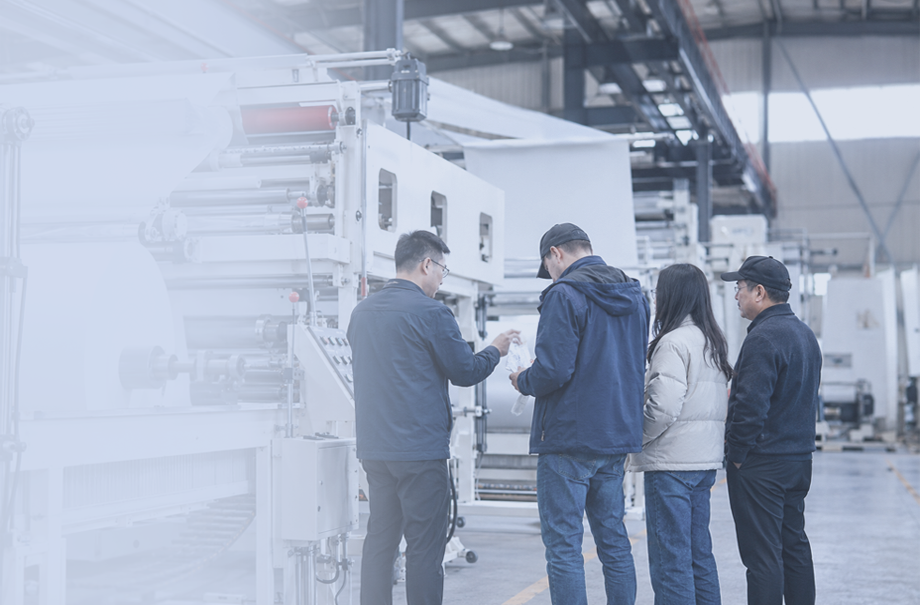
_1787294187070.webp)
_1784082301486.webp)