Essential Product Knowledge for Mini Tissue Paper Making Machine
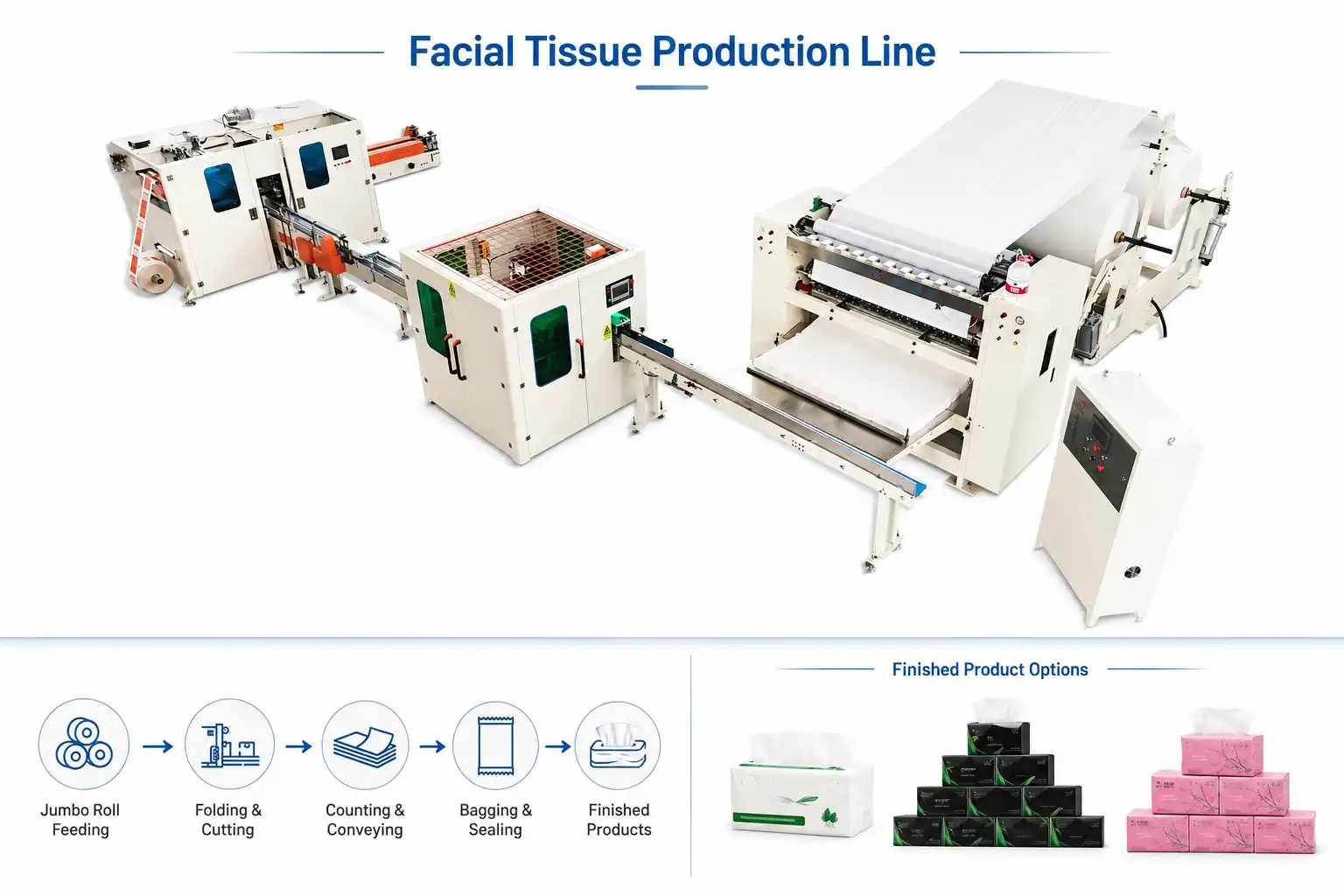
A mini tissue paper making machine is a compact, fully automatic converting system that transforms jumbo parent rolls into finished facial tissue products. Unlike industrial-scale mills, this equipment integrates rewinding, embossing, folding, cutting, and packaging into a single streamlined workflow. It lowers the entry barrier for entrepreneurs in emerging markets by reducing capital expenditure and floor space requirements. HENGYU's facial tissue production line reaches speeds up to 100 m/min with a 3–5.5 kW main power draw, delivering industrial-grade output in a footprint as small as 150–200 square meters.
How Does a Mini Tissue Paper Making Machine Work?
To make a smart purchasing choice, you need to know how the creation process works. A big parent roll, up to φ1100 mm in diameter and with a 76.2 mm core, goes into the unwinding station to start the process. The web then goes through the stamping unit, the folding area, the cutting station, and finally the system that automatically bags and seals the packages. Through this integrated mini tissue paper making machine, businesses can streamline their entire production.
Core Components and Their Functions
Each part is essential to the quality of the output. The electromagnetic frequency driver controls the web speed from 0 to 100 m/min, so workers can match the speed of production to the type of paper. The edge embossing unit uses steel-on-steel blank lines with separate regulators to make sure that the pattern depth is the same across the whole width of the web. The 610 mm diameter knife is driven at 980 rpm by a pneumatic point-cut system. This makes clean perforations that don't leave paper dust or fray. The PLC-based touchscreen controls all stages at the same time, so tension, speed, and cut pitch stay in sync without any help from a person.
Power and Space Requirements
The main drive of a mini tissue paper making machine only uses 3–5.5 kW of power, while the vacuum system needs 7.5–11 kW of power, depending on how it is set up. The total installed power for the whole line works with most normal industrial electricity sources, such as the 380V/50Hz grids that are popular in Asia, Africa, and Latin America. The cutting machine is 3,500 mm long, 1,700 mm wide, and 2,500 mm high. The auto-bagging unit is 5,600 mm long, 2,500 mm wide, and 1,200 mm high, and its height can be changed. Both units can easily fit in a plant layout that is 150–200 m².
Benefits and Applications of Compact Facial Tissue Production Lines
There are clear operational benefits to selecting a small converting line over a large system. Here are the main benefits of this type of equipment that make it appealing to new manufacturers:
- Low capital threshold with fast ROI: one integrated line does all the folding, cutting, and packaging, so you don't need as many separate machines. When entrepreneurs in Nigeria, Kenya, Vietnam, and Bangladesh sell to local stores and kiosks, they usually get their money back in 12 to 18 months.
- Space efficiency for micro-factories: the whole line fits in a small rented workshop that's 150–200 m², so the company doesn't have to spend a lot of money on expensive custom-built facilities before it starts making money.
- Output speed matched to local demand: A 100 m/min production speed and a packing capacity of 20–25 packs per minute are just right for the volume needs of local retail channels and medium-sized institutional buyers.
- Versatile product range from one line: the process height can be changed from 30 mm to 130 mm, and the paper width can be changed from 70 mm to 110 mm. This means that operators can switch between soft pack facial tissue sizes without having to buy extra tools.
These benefits help first-time tissue plant owners deal with the problems they most often face, such as high start-up costs, limited floor space, and the need to serve a wide range of store customers right away. Depending on the type of paper and level of automation, one eight-hour shift of operators can probably make 1.5 to 2.5 tons of finished tissue per day.
How to Choose the Right Tissue Converting Equipment for Your Business?
In this category, decisions about purchases are based on five useful factors. By making sure that each one fits your needs, you can avoid costly mismatches between what the machine can do and what the market actually wants.
Automation Level vs. Labor Cost
More people need to work on semi-automatic lines each shift, but they cost less at first. Fully automatic systems like HENGYU's integrated line cut down on staffing needs and raise hygiene standards, which is important for buyers who serve hospitals, hotels, or packed retail chains. Payback time may be shorter for semi-automatic machines if trained and cheap local labor is available. If training operators is a problem, full automation with PLC controls makes day-to-day work easier.
Certification and Electrical Compatibility
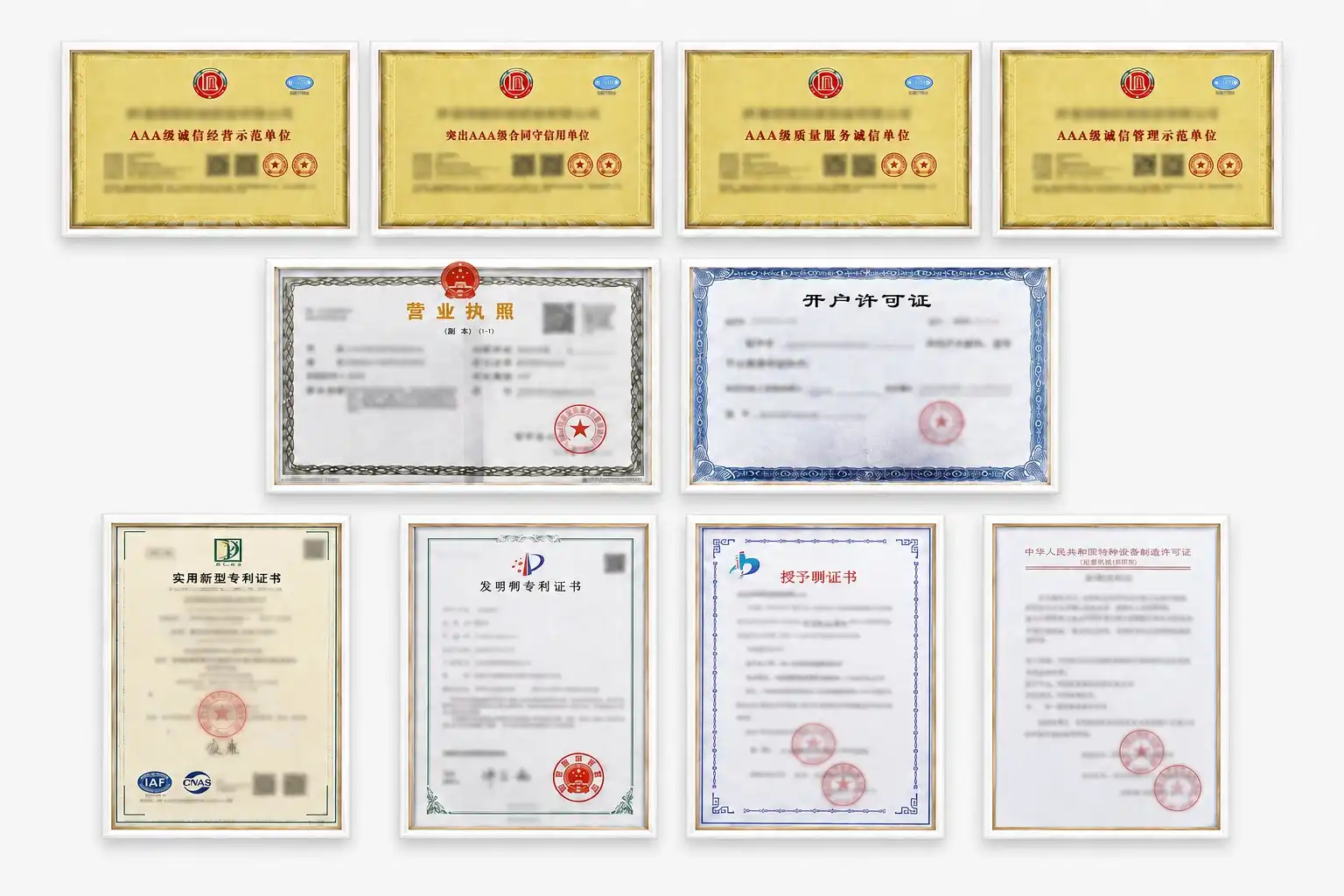
The CE and ISO 9001 certifications show that the machine meets safety and quality standards that are known all over the world. Buyers in Central Asia, Europe, and any other market that requires official import checks must have these certifications. It's also important that the electrical systems work well together. HENGYU's line works with 380V/50Hz and can be set up with voltage controllers for African areas where power grids often change.
After-Sales Support and Spare Parts Access
The thing that scares first-time buyers the most is getting a mini tissue paper making machine that won't turn on. Give more weight to sellers who offer video installation guides in English, remote commissioning support, and a beginning kit with important wear parts like embossing rollers, cutting blades, and solenoid valves that come with the first shipment. More than 95% of the time, HENGYU's remote guidance program can complete an installation without the need for technicians to be present.
Maintenance and Troubleshooting Tips for Long-Term Uptime
How long your tissue changing line works at full capacity is directly related to how often you do preventative maintenance. A strict routine will protect your investment and keep your production from stopping, which can cost a lot of money.
Routine Inspection Schedule
Check the pneumatic system once a month by comparing the output of the air compressor to the minimum 5 kg/cm² level. Every 500 hours of use, grease all the bearing points on the embossing rollers and the knife blade. Tungsten steel perforation blades should be checked every three to six months and should be replaced or sharpened after twelve months of normal use. To keep the web moving at high speeds, clean the vacuum suction tubes once a week of any paper waste.
Common Electrical Faults and Fixes
In places where the power source isn't stable, PLC parameters tend to drift because of unstable grid voltage. Putting in a separate voltage adjuster before the control panel fixes most problems with speed and tension that aren't stable. Most of the time, an encoder connection that is too loose is to blame when the electromagnetic frequency controller shows error codes. Always check the continuity of the wiring before ordering replacement parts.
Trusted Suppliers and Sourcing Insights for Tissue Machinery
There are suppliers in China, Italy, and Taiwan that make tissue machinery. Most of the compact converting lines that are sent to emerging markets are made by Chinese companies. CE and ISO 9001 approval are the basic quality standards that are used to judge sellers. In addition to certification, you should check to see if the seller offers OEM customization, bilingual operation instructions, PLC program backups, and fumigated wooden shipping containers that meet ISPM-15 standards.
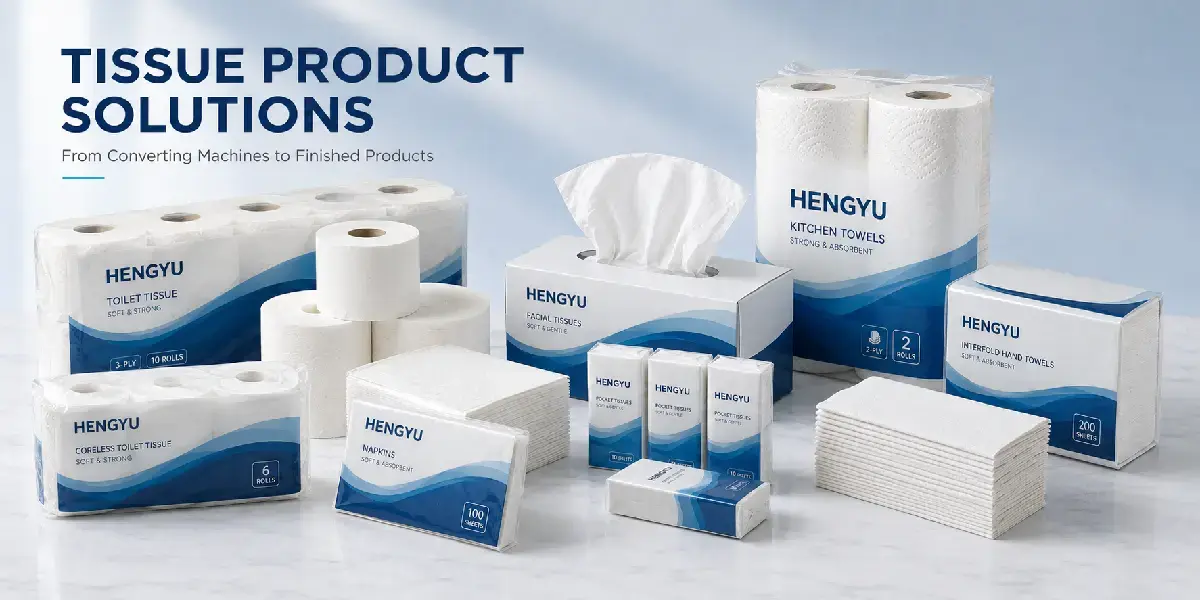
Henan Hengyu machines Co., Ltd. has been in the business of tissue turning machines for more than 20 years. The company offers full production line options that include tools for toilet paper, facial tissue, napkins, and kitchen towels. They are very good at customizing ODM and OEM orders. HENGYU's machines are shipped from Chinese ports with full documentation support, and all of their customers get free online help from their expert team for life. When buyers find leads on Alibaba International, Google, or hytissuemachine.com, they can get in touch with the factory directly and get pricing and configuration options.
Conclusion
A well-designed mini tissue paper making machine compact facial tissue production line makes it easy for new companies in emerging markets to start making their own products without taking too many risks. Before signing any contract, it's important to make sure that the machine's speed, power connection, level of automation, and ability to get extra parts are all in line with what's available in your local market. With its 100 m/min speed, built-in folding and packing, and proven remote installation support, HENGYU's fully automatic facial tissue line takes care of the real concerns of first-time factory owners better than any brochure claim. Before making a purchase, check the certifications, see if the remote support works, and make sure the electrical compatibility.
FAQ
Can this machine process recycled paper stock?
Yes, as long as the large roll has enough tensile strength (usually more than 13 gsm) to keep its shape while being rewound. For economy-grade retail tissue, virgin wood pulp works just as well, but recycled furnish works better for embossing details.
What daily output can I realistically expect?
The line makes about 1.5 to 2.5 tons of finished soft pack facial tissue in an eight-hour shift. The exact amount depends on the weight of the paper and the number of packaging configurations that are run during the shift.
How often do you need to get new cutting blades?
Every three to six months, you should look over good tungsten steel blades. When output is regular, the blades need to be sharpened or replaced about once every twelve months.
Is remote installation genuinely feasible?
The organized video commissioning program from HENGYU helps more than 95% of customers complete the installation process without having techs come to their location. It does this by using step-by-step English video guides and live WhatsApp support sessions.
What certifications should I require from any supplier?
For machinery to be exported internationally, it must have at least CE marking and ISO 9001 certification. These include safety with electricity, the purity of machines, and following the rules for quality control systems.
Start Your Tissue Production Line with HENGYU
With HENGYU's mini tissue paper making machine, you can set up a fully certified production line that can be done from afar. It was designed to work with the needs of emerging markets. We stand behind every machine we sell with a 12-month warranty, a starter spare parts kit, and technical support for life. We've been in business for more than 20 years and are a trusted brand. To get a custom quote today, email doris@hytissuemachine.com with the size of your plant and the amount of tissue you want to produce, or go to hytissuemachine.com.
References
1. Food and Agriculture Organization of the United Nations. Pulp and Paper Capacities: Survey 2022–2027. FAO, 2023.
2. TAPPI — Technical Association of the Pulp and Paper Industry. Tissue Manufacturing Process Standards and Best Practices. TAPPI Press, 2022.
3. Smithers Pira. The Future of Tissue to 2027: Market Forecasts and Technology Trends. Smithers, 2022.
4. International Organization for Standardization. ISO 9001:2015 Quality Management Systems — Requirements. ISO, 2015.
5. European Committee for Standardization. CE Marking and Machinery Directive 2006/42/EC: Compliance Guide for Manufacturing Equipment. CEN, 2021.
6. Grand View Research. Tissue Paper Market Size, Share & Trends Analysis Report by Product, by Region, and Segment Forecasts, 2023–2030. Grand View Research, 2023.
_1787294187070.webp)
_1784082301486.webp)