How to Choose the Right Toilet Paper Rolling Machine for Your Business?
Choosing the right toilet paper rolling machine is one of the most consequential decisions a tissue converting business can make. The equipment you select directly shapes your production capacity, labor costs, product quality, and long-term profitability. A well-matched rewinding machine handles your raw paper specifications, runs at your required speed, and holds up reliably in your specific facility environment — whether that means humid winters, continuous 24/7 shifts, or multilingual operator teams. This guide walks you through every factor that matters, so you invest with confidence.
Defining Your Business Needs and Decision Scenarios
Before you compare the specs of different machines, you should be honest about how you run your business. The size of production is what all other decisions are based on. A regional converting plant that only handles a few tons of material each week has very different needs than a business facility that processes a lot of material all the time.
The level of automation is also worth planning ahead of time. Manually adding and feeding the cores saves money up front, but it makes you more dependent on workers. Setups that are semi-automatic are a good compromise. Fully automatic systems, like those with pneumatic jumbo roll loading, auto core feeding, and automatic tail sealing, cut down on the need for staff and mistakes made by people. TAPPI industry data shows that 30–40% of the costs of converting tissues are related to labor. This means that automation is not a luxury but a financially measurable variable.
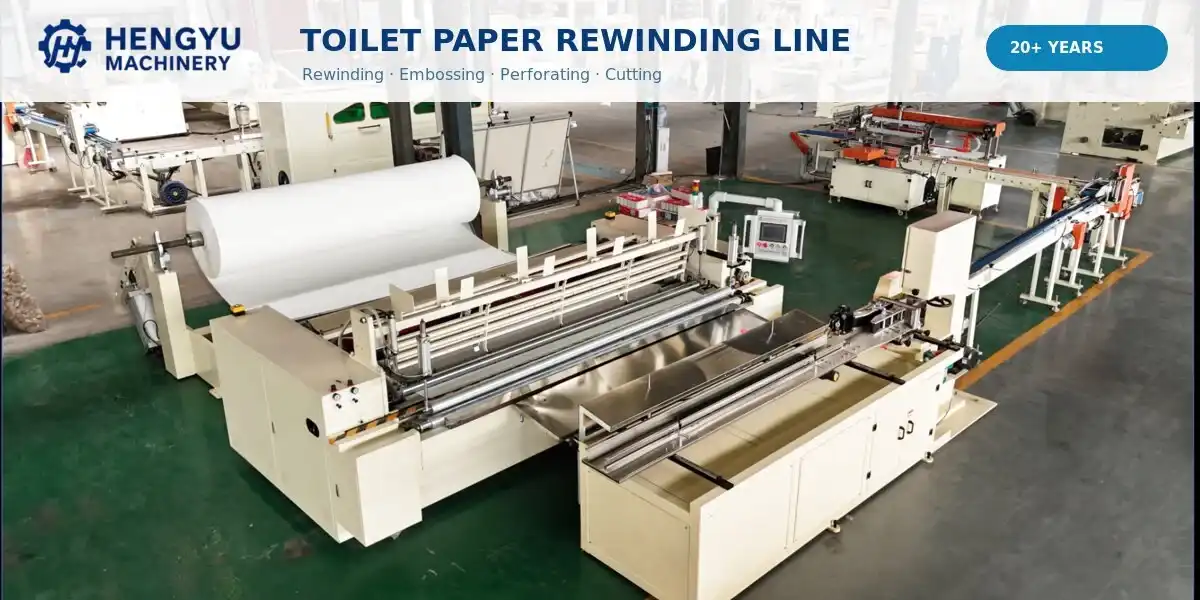
You should also give your physical footprint some thought. The industrial rewinder from HENGYU is 8,800 mm long, 3,400 mm wide, and 1,800 mm high, and it weighs 4,000 kg. Knowing your floor space, power supply infrastructure (AC380V/50Hz is standard for industrial-grade equipment), and workflow routing before narrowing down the models you want to buy will help you avoid expensive surprises after the fact.
Core Metrics and Features to Evaluate
Not every piece of tissue rewinding tools is made the same way. Focus on the measures that directly affect product quality and operational stability when you are weighing your choices.
Speed of production and suitability of raw materials are the basics. The HENGYU machine can go up to 220 m/min and can handle raw paper weights of 12 to 40 g/m². It can also handle parent rolls that are up to 2,200 mm wide and 1,200 mm in diameter. These ranges need to be around your real inputs.
Here are the main technical differences between industrial toilet paper rolling machines that work well and ones that don't:
- PLC Control System: The PLC control system has a touch-screen interface that lets workers exactly set the roll width, perforation pitch, and winding force. Because settings are saved and retrieved instantly, there is no need to calibrate by hand, which can be inconsistent. The bilingual touchscreen interface of HENGYU is especially useful for tasks where people don't speak Mandarin or English as their first language.
- Chrome-Plated Rewinding Rolls: In wet or cold places, corrosion protection is a must. Chrome-plated rolls keep their surface hardness even when they are constantly in contact with paper. This directly extends the life of the machine and lowers the number of times it needs to be serviced.
- Precision Perforation System: Spiral perforation technology makes tear lines that are the same on every sheet. Blade roller design keeps paper dust from building up in the cutting zone, which protects the structure of the sheets and the look of the final roll.
- Intelligent Paper Break Alert: If a sheet of paper breaks, the real-time tracking system notices right away and stops the machine automatically. This stops material waste and protects parts further down the line.
- Customizable Embossing Unit: The steel-to-wool roller embossing configuration lets pattern customization happen, which gives converting businesses a way to set their products apart that meets the needs of local customers.
These features work together to fix the most common problems in production: inconsistent roll quality, unplanned downtime, and relying too much on manual labor. This makes them the best criteria to use when judging.
Comparing Market Options and Brand Reliability
Supplier dependability goes beyond the machine itself. When equipment has CE and ISO 9001 certifications, you can be sure that it meets world quality and safety standards. Check the supplier's after-sales infrastructure, such as how quickly they respond, whether they have extra parts, and whether they offer expert help in more than one language.
The total cost of ownership is more important than the price of the item itself. Spare part cycles, energy use, and possible shutdown costs should all be taken into account. The HENGYU machine has a combined power setup of 7.5+5.5KW, which makes it efficient compared to its output. It also comes with a one-year quality guarantee and a promise to provide technical support for life.
Henan Hengyu Machinery Co., Ltd. has been making tissue paper machines for more than 20 years and can customize the machine's language of operation, the patterns on the embossing rollers, and the way the chrome anti-rust treatment is set up. The steel-frame construction and chrome-plated rewinding rolls are not standard features; they were chosen by engineers to work well in cold or humid environments.
Maintenance, Troubleshooting, and Longevity
The difference between a 10-year machine and a 4-year machine is preventative upkeep. In usual 8-hour shifts, tungsten steel perforation blades need to be inspected every three months and replaced or sharpened every six to twelve months, based on the paper GSM. Embossing wheels are replaced in a flexible way, which means that pattern changes and wear upkeep don't need a lot of downtime.
Daily and Weekly Maintenance Priorities
Every day, operators should check the tension, clean the cutting zone of paper dust, and look at the state of the chrome roll's surface. Most unexpected stops can be avoided by checking the pneumatic lines and alignment of the conveyor belt once a week.
When to Escalate to Professional Service
Minor sensor failures and parameter drift can be fixed at the user level with the PLC interface of a toilet paper rolling machine. Problems with the structure, the motor, or the rewinding roll surface need to be fixed by a professional. HENGYU offers technical support for life, and the one-year quality guarantee covers replacing parts during the warranty period.
Spare Parts and Supply Continuity
For businesses in Eastern Europe or other faraway places, making sure that extra parts are available and wait times are known before buying them is very important. For uninterrupted production, it is standard practice to keep at least a few perforation blades, embossing rollers, and pneumatic seals on hand at all times.
Matching Solutions to Business Needs: Personalized Recommendations
Small and Startup Converting Operations
When a business wants to get into the tissue converting business, HENGYU's PLC interface makes it easy for operators to learn quickly. The auto core feeding system and pneumatic loading get rid of the two hardest manual tasks, so a small team can start working right away.
Regional and Mid-Scale Converters
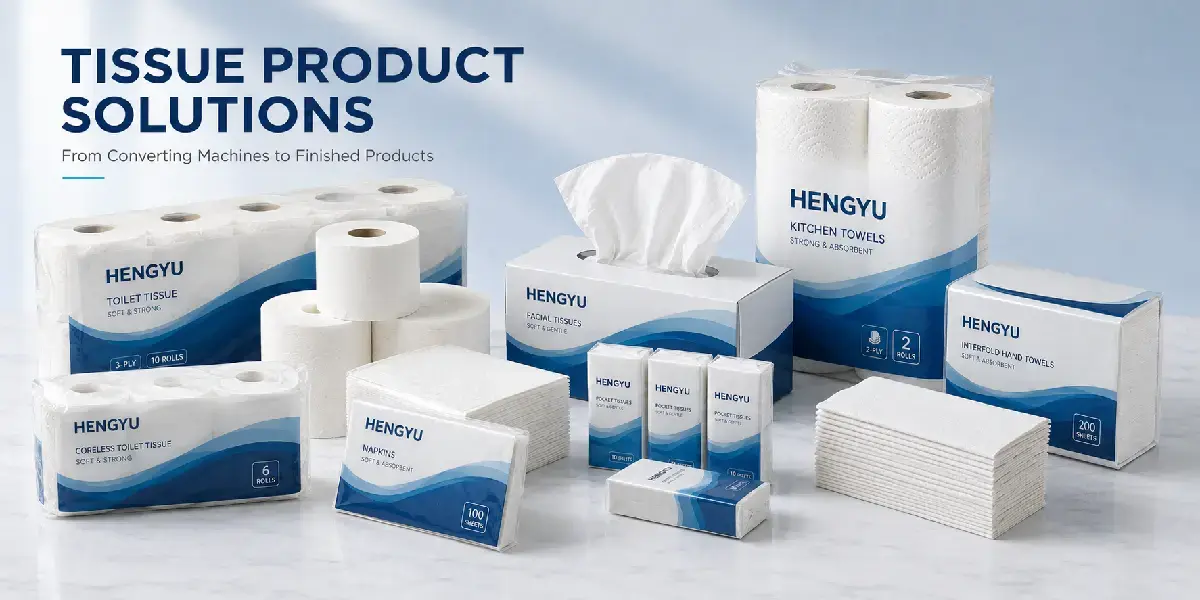
Medium-sized businesses that want to make their products stand out can use the adjustable embossing unit to make patterns that are specific to their market. Because the perforation pitch can be changed, the same machine can make both normal bathroom tissue and kitchen towels, making the best use of the tools across all product lines.
High-Volume Industrial Facilities
With a maximum input width of 2,200 mm and a speed of 220 m/min, HENGYU's industrial rewinder can keep up with 24/7 production schedules without any structural damage. The steel-frame design with vibration dampening keeps the precision parts in good shape even when they are running at high speeds all the time. This is an engineering fact that determines long-term ROI.
Conclusion
When choosing a tissue rewinding machine, such as a toilet paper rolling machine, you need to make sure that the technical specs, amount of automation, durability in harsh environments, and provider reliability all fit your needs. Chrome-plated rolls, PLC control, clever break detection, and customizable embossing are not extras that cost a lot of money; they are what make or break your equipment's ability to work regularly over years of use. Because HENGYU has been making products for 20 years and can make any changes you want, you can trust it to help you move businesses of all sizes.
FAQ
What is the difference between semi-automatic and fully automatic tissue rewinders?
Semi-automatic machines need workers to load large rolls and feed paper cores by hand, which adds to the work and makes things less consistent. Fully automatic systems, like the one made by HENGYU, use pneumatic loading and auto core feeding that are timed with the speed of production. This lets the machine work in shifts without much supervision and keep the quality of the rolls more consistent.
How often should perforation blades be replaced?
High-speed perforation blades usually need to be inspected every three months when they are used for eight hours a day. The time between sharpening or replacing tools is between 6 and 12 months, depending on the GSM of the raw paper. Paper types with a higher density make blade wear happen faster.
Can one machine produce multiple product formats?
Yes, HENGYU's rewinder has an adjustable perforation distance that lets workers switch between normal toilet paper and kitchen towel specs without having to make a lot of changes to the machine. This gives producers who make a lot of different products more ways to use their machines and lowers the cost of capital.
What does the one-year quality guarantee cover?
The guarantee covers replacing parts that were made wrong and are found within the first year of use. HENGYU also offers technical support for life, after the warranty period is over. This helps ensure long-term operations.
Partner With HENGYU for Your Next Tissue Converting Investment
HENGYU makes industrial-grade tools for converting tissues that is designed to last, work accurately, and be quick to use. As a reliable company that has been making toilet paper rolling machines for over 20 years, we help our customers with everything from the initial technical consultation to installation, training, and long-term service after the sale. Our machines are CE and ISO-certified and can be fully customized to fit your needs in terms of language, location, and product. To get a personalized machine recommendation, email doris@hytissuemachine.com or go to hytissuemachine.com.
References
1. TAPPI — Tissue Manufacturing Technology Report, 2022
2. Paper, Film & Foil Converter (PFFC) — Industrial Rewinder Performance Benchmarks, 2021
3. Smithers Pira — The Future of Tissue to 2027, 2022
4. Packaging Digest — Automation Trends in Tissue Converting Operations, 2023
5. ISO 9001:2015 Quality Management Systems — Requirements, International Organization for Standardization, 2015
6. Converting Quarterly — Total Cost of Ownership in Tissue Machinery Procurement, 2023
_1787294187070.webp)
_1784082301486.webp)