Facial Tissue Paper Machine: A Complete Guide for Manufacturers
A facial tissue paper machine is an industrial converting system that transforms large jumbo rolls of tissue base paper into finished, folded facial tissues ready for retail or wholesale distribution. These machines integrate unwinding, embossing, vacuum folding, slitting, and counting into a continuous automated process. For manufacturers at any scale—from growing family businesses to established converting plants—choosing the right tissue folding equipment directly determines your cost per pack, output consistency, and long-term competitiveness. This guide walks you through everything you need to make a confident, well-informed investment.
Understanding Facial Tissue Paper Machines: Components and Working Process
These days, machines that change the shape of tissue are much more complex than simple folding machines. Knowing what each part of the production line does mechanically helps you make an informed decision about machines instead of just listening to what a supplier has to say.
Key Components You Should Know
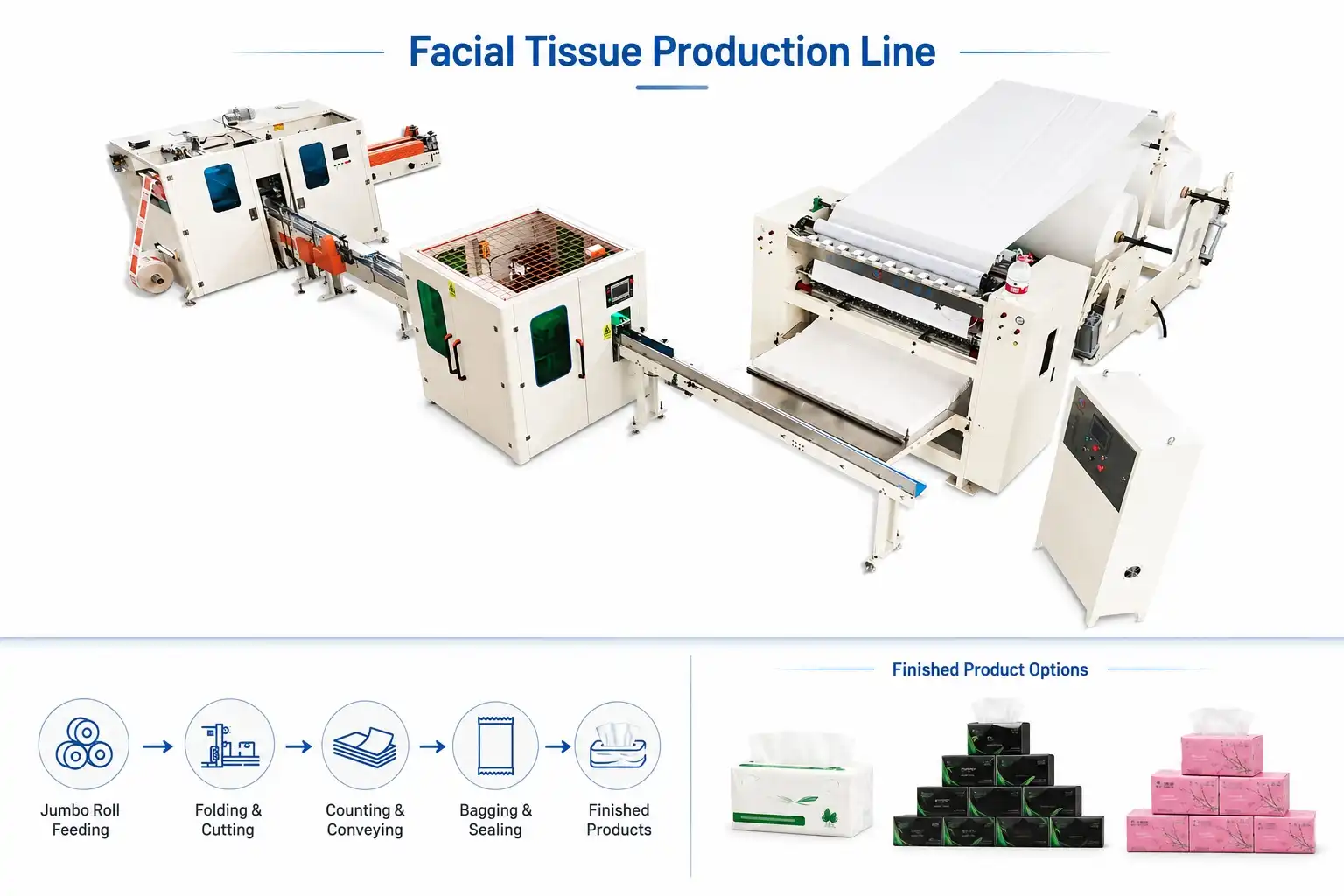
The production process starts at the unwinder, where the giant rolls are put on and fed into the machine while being carefully twisted. This is why closed-loop tension control systems are important: uneven tension at this stage leads to paper breaks and waste. The base paper is then put through the embossing unit, where steel rollers make designs on the sheet that are either artistic or useful. A 4+4 embossing configuration on the HY-1300—four front sets and four back sets—lets makers make different emboss patterns without having to buy extra equipment. This directly lowers the costs of changing out tools while also letting you add more products to your store.
The paper goes into the vacuum adsorption folding unit after being embossed. This is the most important part of the facial tissue paper machine from a technical point of view. Vacuum folding is different from older mechanical finger-fold systems that use physical touch to place each sheet. Instead, controlled suction guides and holds tissue layers precisely. This makes sure that the V-fold, N-fold, and flat-fold shapes are the same on every sheet. Misaligned folds and odd stacks, two problems that cause retailers to reject items, are pretty much gone at this point.
After being folded, the sheets go through a station that performs slitting and counting. Finally, they get to the output conveyor, where stacks are made at a rate of 500–1000 sheets per minute per row. This speed range works for both moderate and high-demand production settings, so you don't need to have separate machines for each level of output.
Choosing the Right Facial Tissue Paper Machine for Your Business
There is a wide range of tissue equipment on the market, from small semi-automatic units that are good for starting up to full-scale industrial lines that package and palletize the products automatically. Find the right machine for where the business is now and where it will be in three to five years. That's the hard part for most mid-sized manufacturers, not finding a facial tissue paper machine.
Automatic vs. Semi-Automatic: A Practical Comparison
Some parts of semi-automatic tissue boxes need to be loaded, stacked, or counted by hand. They cost less up front, but over time, they require more labor per pack. Most makers that are growing say that semi-automatic lines become a bottleneck 18 to 24 months after the business starts to grow, which forces them to reinvest in capital right away.
Fully automatic machines like the HY-1300 process large rolls up to 1600 mm in diameter and 900 mm wide without any help from a person during the main steps of production. Only 4 KW of power is used by the main unit, so it can work with normal workplace electrical systems in most places, such as those that use 220V or 380V supplies at 50/60 Hz. The machine's dimensions—6000 × 2100 × 1900 mm—make it fit into most plant floor plans. The pneumatic system needs pressure from the user above 4 kg/cm², which is a requirement that most current compressor sets already meet.
The HY-1300 is placed on purpose between entry-level devices and full production lines. That's on purpose: companies that are growing from one line to two or four lines need equipment that can produce high-quality work without the high costs of a full-scale converting complex.
Maintenance and Troubleshooting for Facial Tissue Paper Machines
A facial tissue paper machine that gives you a return on your investment and one that takes your money are separated by regular upkeep. Most unexpected downtime in tissue conversion processes is caused by three areas that aren't taken care of: lubrication plans, consistent vacuum system pressure, and misaligned embossing rollers.
Building a Practical Maintenance Routine
A structured maintenance plan should include lubricating the drive chains and bearing housings once a week, checking the vacuum distributor seals and suction channels once a month, and setting the embossing roller pressure and timing belt tension every three months. Depending on how many hours they are used, tungsten steel slicing blades usually need to be sharpened or replaced every 15 to 20 days when they are in constant production.
Most electrical problems, like PLC response errors and motor protection trips, are caused by unstable voltage rather than broken parts. Installing a voltage stabilizer ahead of the main power input saves both the servo drives and the PLC unit from damage that builds up over time. This is something you should make sure your production manager is aware of before installation.
A normal after-sale service from HENGYU is remote video technical help. Also, more than 95% of customers are able to finish installation and initial commissioning without needing an on-site expert. This is a huge benefit for makers who work in places where getting expert visas is hard or takes a long time.
Leading Facial Tissue Paper Machine Manufacturers and Suppliers
China currently ships more tissue converting tools than any other country. Buyers in Southeast Asia, South Asia, the Middle East, Eastern Europe, and Latin America can get their goods from factories in Henan, Guangdong, and Zhejiang provinces. In premium-segment markets, European suppliers, especially those from Italy and Germany, have strong positions. However, their prices are much higher and their lead times are longer for a facial tissue paper machine.
What to Look for in a Supplier?
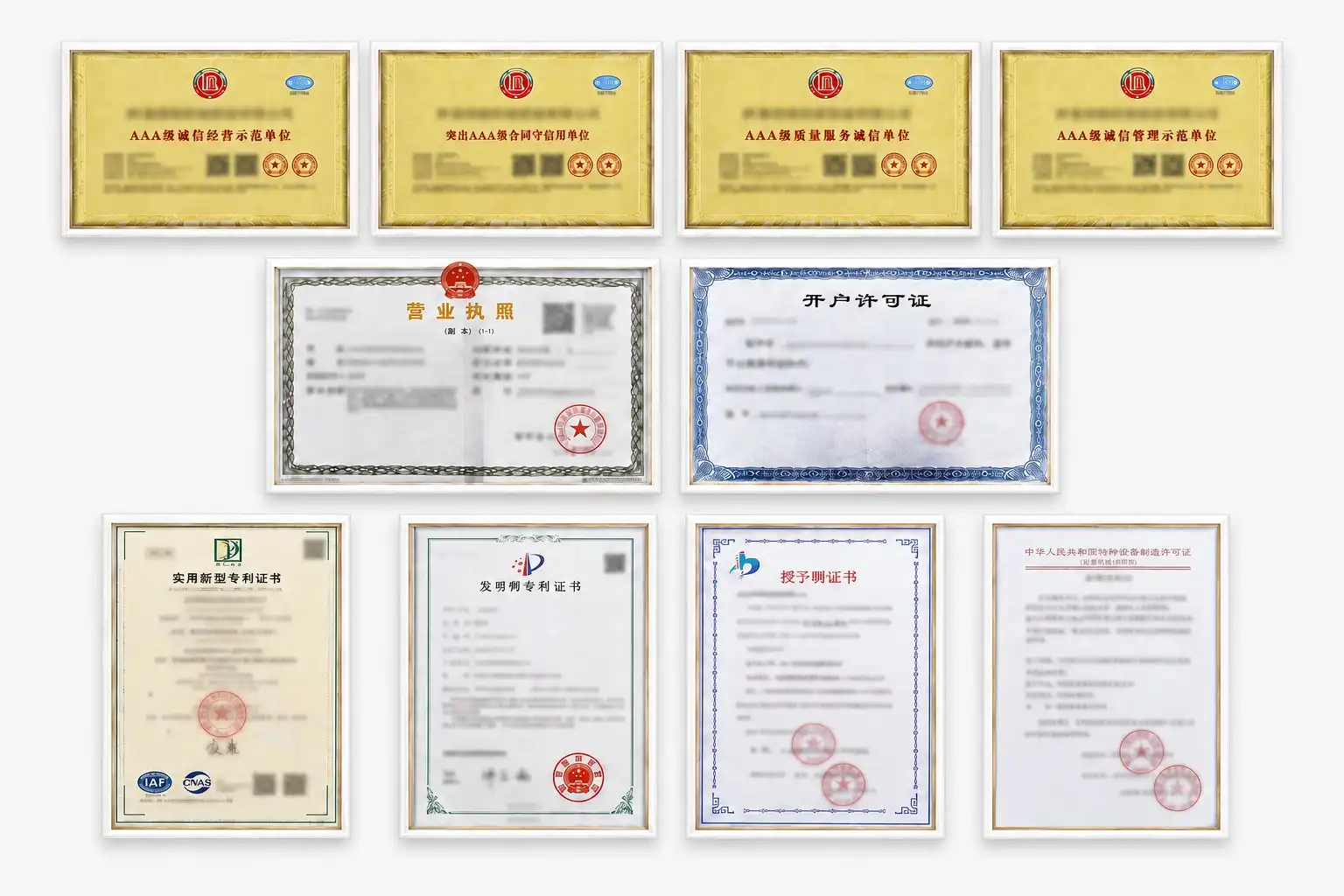
Certifications are useful for more than just the marketing brochure. Suppliers who are CE and ISO compliance verified have had their equipment checked for structural and electrical safety by a third party. Your local finance advisor or compliance officer will ask for proof of this during the procurement review. A confirmed spare parts program is also very important. Before making a purchase agreement with a potential seller, make sure they can give you a detailed list of spare parts and let you know how long it will take to get them in stock.
Henan Hengyu Machinery Co., Ltd. has been selling equipment for turning tissues into other materials for more than 20 years. Their customers are manufacturers in Vietnam, Indonesia, Bangladesh, Saudi Arabia, Brazil, Romania, and other places. Operator interfaces that are available in multiple languages, CE and ISO paperwork, and a structured 12-month guarantee with lifetime remote technical help are all things that the company offers.
Procurement Guide: How to Buy a Facial Tissue Paper Machine
This method of buying a facial tissue paper machine works better when done in stages instead of all at once. Start by figuring out what you need to make the product: how many packs you want to make each day, how much floor room you have, how you will get electricity, and how much you can spend. Once you know those factors, you can use objective criteria instead of just marketing words to judge quotes.
Here are the core procurement checkpoints worth verifying with every supplier:
- Production speed and lane configuration — Make sure you know if the speed given is per row or for the whole machine, as the two numbers are very different.
- Voltage compatibility — check that the normal settings on the machine work with the power source from the factory (220V or 380V, 50 or 60 Hz).
- Embossing mold availability — Find out if replacement rollers for the mold are kept in stock or made when you place an order.
- Remote installation success rate — Ask for references or video case studies that you can check, not just a percentage claim about the success rate of the remote installation.
- Spare parts lead time — Find out how quickly important parts like vacuum belts and cutting blades can be sent to your location.
These checks can successfully weed out suppliers early on in the process and keep costs from going up after the equipment arrives. For foreign transactions involving tissue equipment, a 30% deposit is usually required upon order approval, and the remaining 70% must be paid before the shipment. Depending on the agreed Incoterms, either side can arrange the ocean freight.
Conclusion
Choosing a facial tissue paper machine isn't just a matter of how much money you want to spend; it's also a matter of how your production will work. The machine you pick will cap the quality of your work, the types of products you can make, and how much you can save on costs for the next few years. The HY-1300 fills a specific need that growing manufacturers have: they need industrial-grade folding accuracy and the ability to make a lot of different products without having to invest in full-scale industrial infrastructure. With vacuum adsorption folding, a 4+4 embossing system, and wide voltage compatibility, it's a good technology choice for companies that want to grow from one to four production lines in different markets.
FAQ
How often does a facial tissue folding machine need servicing?
A good starting point is to grease the moving parts once a week, check the vacuum seal once a month, and calibrate the embossing roller every three months. Every 15 to 20 days, slitting blades that are always in use need to be fixed. The actual intervals depend on the production hours and the weather in the area.
What is the difference between vacuum folding and mechanical folding?
When you use mechanical folding, fingers or guides to fold each sheet, which can be messy at high speeds and make stacking go wrong. Vacuum adsorption folding uses controlled suction to place and hold each tissue layer. This makes the fold shape the same for V-fold, N-fold, and flat-fold forms with a lot fewer breaks in the paper.
Can the HY-1300 produce multiple tissue formats on the same line?
Yes. The same tools are used to make boxed tissues, V-fold, N-fold, and soft-pack face tissues. With the 4+4 configuration, mold changes can be made quickly, so manufacturers can switch between types of products and emboss patterns without having to buy new equipment for a facial tissue paper machine.
What voltage configurations does the HY-1300 support?
The machine can work with both 220V and 380V supplies at 50 Hz and 60 Hz. This means that it can be used in most manufacturing markets in Southeast Asia, South Asia, the Middle East, Eastern Europe, and Latin America.
Upgrade Your Production Line with HENGYU's HY-1300 Facial Tissue Paper Machine
HENGYU adds more than 20 years of experience to every order when it comes to tissue machinery. The facial tissue paper machine known as the HY-1300 has a 4+4 embossing system, vacuum-precision folding, and is CE/ISO compliant. It also comes with lifetime online help and an organized spare parts program. If you are looking for a provider for the first time or want to replace old semi-automatic equipment, our team is ready to help. You can email us at doris@hytissuemachine.com or go to hytissuemachine.com to get specs and talk about your business needs.
References
1. TAPPI — Tissue Manufacturing: Process Technology and Equipment Overview, TAPPI Press, 2021.
2. Smithers Pira — The Future of Global Tissue to 2026, Smithers, 2022.
3. Food and Agriculture Organization of the United Nations — Pulp and Paper Capacities Survey, FAO, 2023.
4. European Committee for Standardization — CE Marking Requirements for Industrial Machinery: Directive 2006/42/EC, CEN, 2020.
5. RISI (now Fastmarkets RISI) — World Tissue Report: Demand, Capacity and Trade Analysis, Fastmarkets, 2023.
6. International Organization for Standardization — ISO 9001:2015 Quality Management Systems — Requirements, ISO, 2015.
_1787294187070.webp)
_1784082301486.webp)