BLOG List
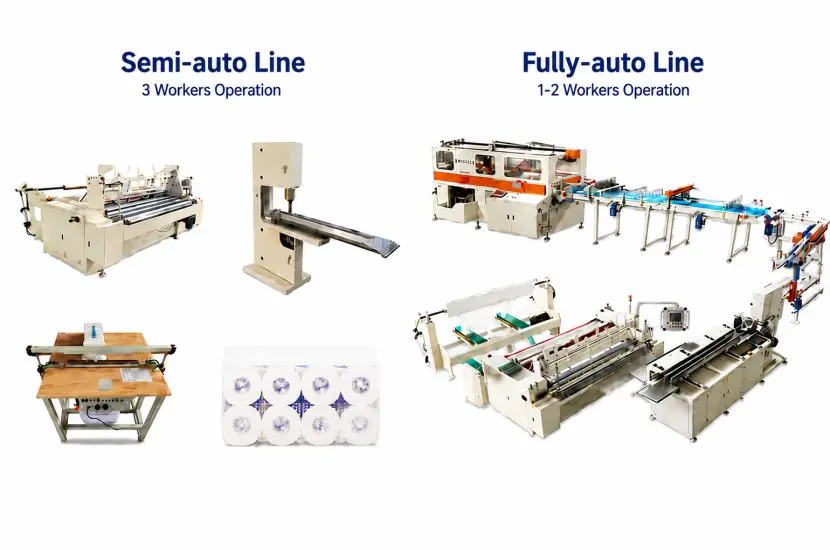
If you don't choose the right fully automatic toilet paper making machine manufacturer, your production line will either run easily or become a costly headache. Everything will be affected by the choice, from how well operations run and how consistent the products are to long-term profits and the company's ability to compete in the market. A trustworthy manufacturer not only sells tools but also offers full expert support, customization options, and service after the sale to keep your business running smoothly. When looking at possible partners, you should look at their track record, license requirements, automation skills, and ability to provide full turnkey solutions instead of just tools.This article also helps buyers understand how to select the right toilet paper production machine based on capacity and investment level.
Understanding the Importance of Choosing the Right Manufacturer
There's a lot more to choosing the right manufacturer than just looking at price tags and technical specs. Throughout the full lifetime of your tools, the choice you make has a direct impact on the reliability of the supply chain, the stability of your production output, and how you control costs. Working with a manufacturer with a lot of experience and knowledge of the tissue converting business can give you access to tried-and-true production methods, ongoing technology improvements, and quick problem-solving skills.
The Real Cost of Poor Manufacturer Selection
Many new businesses and manufacturers that want to grow have learned the hard way how expensive it can be to choose the wrong supplier. When companies don't choose the right manufacturers, machines break down often, the quality of the products isn't always uniform, and there is a lot of downtime that affects delivery plans. These practical problems hurt ties with customers and cut into profits faster than any money saved on equipment costs up front. Not having enough technical help or extra parts on hand can stop your production line for weeks while you try to find a solution. This can cause you to lose instant production.
Navigating the Global Supplier Landscape
There are different types of suppliers in the tissue machinery market. These include original equipment manufacturers (OEMs) who create and build equipment, branded manufacturers with good names, contract manufacturers who make equipment under different labels, and trading companies that work as middlemen. By knowing these differences, you can choose the type of relationship that best fits your business needs and risk tolerance. OEMs usually offer more customization options and direct technical help, while well-known names offer reliability that has been proven and a lot of reference projects. Machine selection and manufacturer capability together determine production efficiency and ROI performance.
Key Criteria to Evaluate Fully Automatic Toilet Paper Machine Manufacturers
When looking at possible manufacturing partners, you need a structured review system that looks at many aspects of their skills and dependability. This methodical approach keeps you from making mistakes that cost a lot of money and makes sure that your investment gives you the returns you expect.
Production Capacity and Technical Capabilities
The output potential of a manufacturer of a fully automatic toilet paper making machine shows how well they can meet your deadlines and grow with your business. Look for factories that use cutting-edge manufacturing technologies, have quality control systems, and can test machines to make sure they work properly before sending them out. With more than 20 years of experience in tissue paper machinery, companies like Henan Hengyu Machinery show that they have the deep technical knowledge needed to build high-speed production systems that work well. Their knowledge includes integrating the whole production line, making sure that all of the parts work together without any problems.
Certification Standards and Quality Assurance
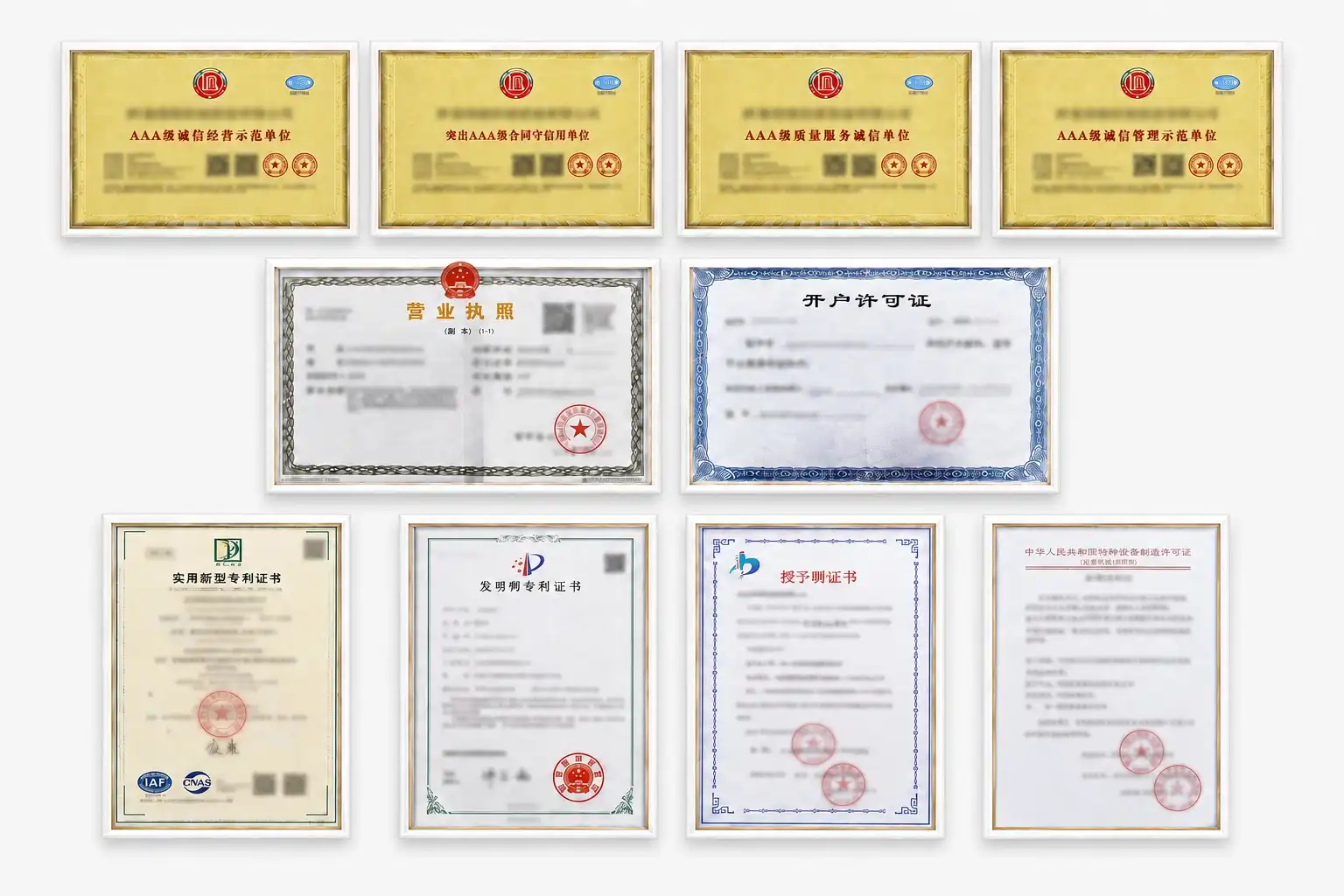
International approvals, like CE and ISO standards, are concrete ways to tell if a product is safe and of good quality. These licenses need to be audited on a regular basis and have quality improvement methods in place all the time to protect your investment. Manufacturers who follow these standards usually use strict quality control procedures all the way through the production process. This makes it less likely that equipment will break down or safety events will happen. When reviewing suppliers, make sure you get copies of their certifications and quality testing methods to back up what they say.
Customization Capabilities and After-Sales Service
Because of room limitations, product specs, or local market tastes, your production needs may be different from standard setups. Strong ODM and OEM manufacturers can change machine configurations, working interfaces to your chosen language, and product sizes to meet the needs of your target market. The level of after-sales service decides whether small problems turn into big ones that stop production. Check to see if the manufacturer offers installation help, training for operators, online technical support, and assured spare parts available for the life of the equipment.
The best factory partners see service after the sale as the start of a long-term relationship, not the end of a deal. They have expert support teams that know their equipment inside and out and can quickly figure out what's wrong by doing diagnostics remotely or by visiting the spot if needed.
Comparing Fully Automatic Toilet Paper Machines: Features and Performance Insights
Knowing the technical features that set high-performance machines apart from basic models can help you make smart investment choices that will help you reach your production goals.
Automation Level and Production Speed
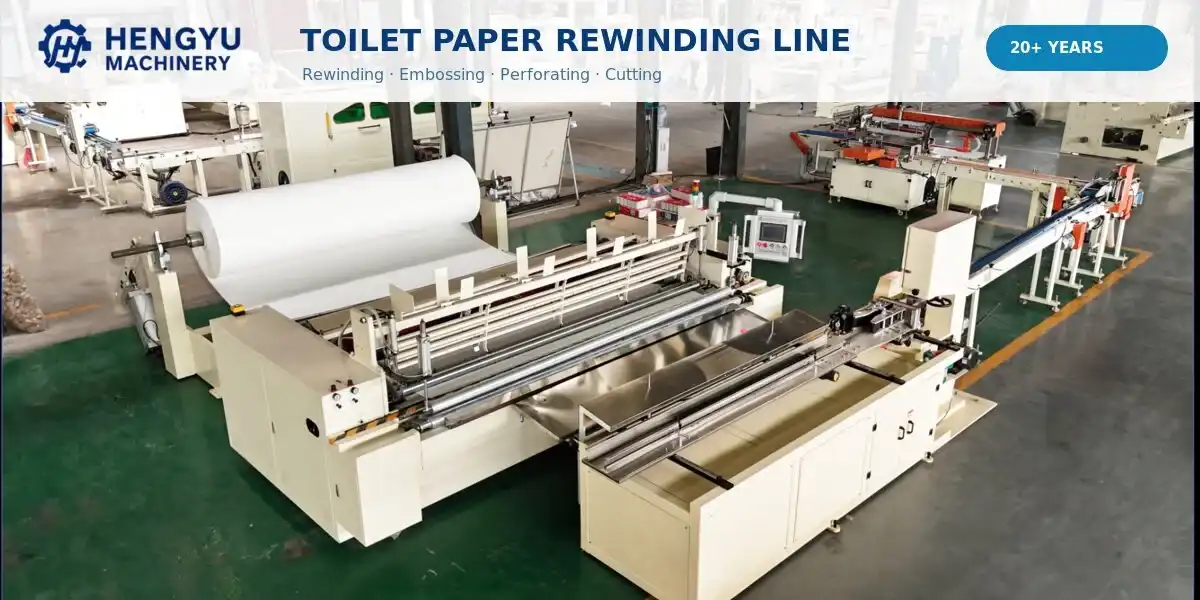
A fully automatic toilet paper making machine combines several production steps into one integrated system so that no manual intervention is required between processes. Modern systems, like the 3500mm rewinding machine, have automatic core feeding, perforation systems, glue spraying mechanisms, and links to cutting tools that work at the same time. With these built-in features, there are no more human handling bottlenecks that slow down production and cause quality to vary. Production speed rates are useful guides. More advanced systems can reach intended speeds of up to 280 meters per minute while keeping tension under control and producing high-quality goods.
Core and Coreless Production Flexibility
Market demand is very different depending on where you are and what kind of customer you are. For example, some markets like traditional toilet rolls with cores, while others like coreless goods because they are better for the environment. When a fully automatic toilet paper making machine supports both core and coreless production, it provides more market flexibility without requiring two separate production lines. The 30 mm thick wall-panel mainframe construction gives the machine the stability it needs to keep working precisely at high speeds, and the touch screen controls make it easy for operators to quickly change the rewinding length, speed, and diameter parameters when moving between product specs.
Cutting Precision and Packaging Integration
The automatic band saw cutting machine is a key part that affects the quality of the finished product and how efficiently the production process works. Cutting systems that can make 80 to 200 cuts per minute and precisely control the length get rid of the need for hand cutting, which slows down production and leads to uneven results.
When cutting machines and packing machines work together smoothly, the whole production process keeps going. The last link in the automation chain is single roll packing machines that can handle up to 100 packages per minute. These machines give finished goods that are ready to be shipped without any extra work.
With these built-in features, a lot of problems can be solved at once. They cut down on labor costs and material waste from uneven cutting, keep standards for product look, and speed up the process of going from raw jumbo rolls to packaged finished goods.
Energy Efficiency and Total Cost of Ownership
When buying tools, the initial costs are what people focus on the most. However, how much energy it uses and how often it needs to be maintained are what determines its long-term profits. Over thousands of working hours, machines that are built with drive systems that use less energy and hydraulic parts that work better use less money. The fact that cutting equipment needs 7.5 kW of power and packing systems only need 6 kW shows that the electricity design is efficient, which keeps costs down. How easy it is to do maintenance and fix problems has a direct effect on your real production uptime compared to your ideal capacity.
How to Match Manufacturer Solutions to Your Business Needs
For different types of businesses and production levels, you need different kinds of tools and relationships with manufacturers. By matching your specific needs with the right solutions, you can avoid wasting money on features that aren't needed or not investing enough, which limits your growth potential.
Startup Operations Requiring Turnkey Solutions
When new factory owners get into the tissue paper business, they do best when the manufacturers offer full turnkey solutions instead of just selling machines. A complete strategy includes designing the production line, installing the equipment, training the operators, optimizing the first batch of production, and providing ongoing technical support to make up for the lack of in-house knowledge. Companies that offer these all-in-one solutions know that startup clients need more than just equipment. They also need practical advice and the sharing of knowledge that speeds up their path to profitability.
With a turnkey solution, you don't have to worry about getting suitable tools from different sellers and arranging installation on different platforms. They give a single point of responsibility when problems happen and make sure that all the parts work together correctly from the start.
Expansion Projects Focused on Capacity and Efficiency
When small and medium-sized tissue makers grow their businesses, they put different levels of importance on production efficiency, automation, and keeping long-term upkeep costs low. These clients benefit from manufacturers of fully automatic toilet paper making machine systems who can analyze production bottlenecks and suggest targeted upgrades. It takes a lot of technical know-how to be able to add new high-speed equipment to current systems while keeping production as smooth as possible during installation.
OEM and Private Label Manufacturing Requirements
Channel partners and wholesalers who sell more than one brand need manufacturers who can make customized equipment configurations with a variety of branding choices. Through OEM relationships, these companies can offer unique products under their own brand names while still using well-known production skills. Private labeling lets you change things like machine specs, control interfaces, and even the shapes of the boxes so that they fit with your specific market positioning strategies.
Procurement and Risk Management Tips When Dealing With International Manufacturers
When you buy industrial tools from foreign manufacturers, there are certain risks that need to be managed in a proactive way throughout the whole process.
Credential and Certification Verification
Don't take licenses at face value without checking them yourself first. Get copies of the real certifications, make sure they are still valid, and get in touch with the certification groups directly when big investments are at stake. Manufacturing companies should show proof of their quality management systems, statements about their production ability, and completed projects in the past. When looking at new sources for big purchases of capital equipment, site visits or checks by a third party can give you more peace of mind.
Warranty Coverage and Spare Parts Availability
In order for a warranty to be fully comprehensive, it should cover not only broken equipment but also performance guarantees that make sure tools meet their stated production standards. A basic one-year quality guarantee is good safety, but you should check to see what parts and failure situations the warranty covers. Whether small component failures turn into long production shutdowns depends on how readily available spare parts are. Manufacturers who keep extra parts in stock in your area or offer sure delivery times show that they are committed to supporting your ongoing operations.
Installation Support and Technical Training
Equipment comes in pieces that need to be put together by a professional in order to work properly and meet performance standards. Manufacturers should give clear instructions on how to put their products, offer expert help on-site during commissioning, and give full training to operators that covers both normal use and basic problem-solving. PLC control systems and touch screen interfaces make operation easier than mechanical controls, but workers still need to be properly trained to get the most out of their tools and spot problems early on.
Logistics Coordination and Import Compliance
When you buy tools from another country, you have to coordinate a lot of different logistics, such as export paperwork, ocean or air freight, customs clearance, and final delivery to your location. Manufacturers with a lot of experience can help with these steps by giving the right export paperwork, working with goods forwarders, and making sure the equipment comes safely and securely. Knowing about import taxes, customs rules, and local rules for compliance in your area can help you avoid delays and extra costs in the last steps of delivery.
Conclusion
To choose the best fully automatic toilet paper making machine manufacturer, you need to look at more than just the cost of the equipment itself. Your ideal production partner has a track record of strong technical knowledge, full support services, and the ability to make changes that fit your business plan. They don't just sell machines; they also offer full solutions that include installation, training, and ongoing technical support to make sure your long-term success. You can set up your tissue paper business for long-term growth and profit by carefully checking the records of manufacturers, the capabilities of their tools, and their promises to help you after the sale.
FAQ
What advantages do fully automatic machines offer over semi-automatic versions?
Fully automatic toilet paper making machine production systems don't need any help from people in between steps of processing. This greatly speeds up and ensures stability of production while cutting down on labor costs. They make loading, rewinding, perforating, glueing, cutting, and packaging paper all part of a constant automated process that makes sure the standard of millions of units stays the same. In semi-automatic systems, workers have to move materials from one stage to another by hand, which slows down production and can cause quality differences due to uneven handling.
How can I ensure reliable maintenance and minimize downtime?
Reliable repair starts with choosing tools that make it easy to get to important parts and have clear monitoring systems that find problems quickly. Build partnerships with manufacturers that offer responsive technical help, keep extra parts on hand, and can do diagnostics from a distance. Set up preventive maintenance schedules based on what the manufacturer suggests, teach your maintenance staff common ways to fix problems, and keep track of all service activities to find trends that can help you predict when something might go wrong.
Are customized machine solutions available for specific production needs?
Reputable manufacturers give you a lot of ways to customize your machine, including changing its size, speed of output, control interfaces, and ability to work with other systems. Customization includes a range of roll diameters, perforation patterns, stamping designs, and package layouts that meet the needs of your target market. Some businesses, like HENGYU, offer ODM and OEM options that can change tools to fit your needs and the needs of your products.
Ready to Start Your Tissue Paper Production Journey?
HENGYU is ready to be your trusted fully automatic toilet paper making machine manufacturer and partner for all of your production line needs. We offer turnkey systems that blend cutting-edge automation technology with useful operating support. We have been doing this for more than twenty years. Our 3500mm rewinding machines with built-in cutting and packing systems give your business the dependability and performance it needs to stay ahead of the competition. Please email our team at doris@hytissuemachine.com to talk about your unique needs and look into options that are tailored to your business's goals. Our technical know-how and full range of support services will make sure that your investment brings the productivity and profits you expect, whether you're opening a new production plant or increasing the size of an existing one.
References
1. Chen, W., & Liu, Y. (2021). Modern Tissue Converting Technology: Equipment Selection and Operational Optimization. Industrial Press.
2. International Tissue Manufacturers Association. (2022). Best Practices for Tissue Paper Production Equipment Procurement. ITMA Technical Guidelines.
3. Martinez, R. (2020). Automation in Paper Converting Industries: A Comprehensive Guide to Equipment Selection. Manufacturing Technology Publishers.
4. Roberts, J., & Thompson, K. (2023). Quality Control Standards for Tissue Paper Manufacturing Equipment. Global Standards Institute.
5. Wang, H. (2022). Risk Management in International Manufacturing Equipment Procurement. Supply Chain Management Journal, 18(3), 45-67.
6. Zhang, L., & Anderson, P. (2021). Comparative Analysis of Tissue Paper Production Technologies: Automation Levels and ROI Considerations. Paper Industry Research Quarterly, 29(4), 112-135.
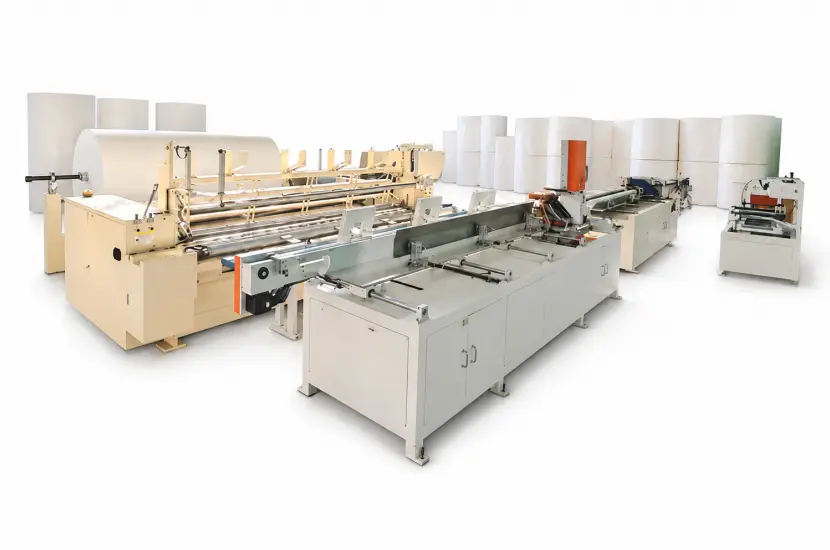
If you want to get into the tissue paper business, you should first learn about the different kinds of tools that are out there. There is a wide variety of toilet paper-making machines, from small, entry-level machines called "small toilet paper making machines" to large, fully automatic systems for producing large quantities of paper. Through combined rewinding, perforating, and cutting processes, these conversion tools turn jumbo parent rolls into goods that are ready to sell. The main things that determine the classification are the amount of output, the level of technology, and the amount of capital investment needed. Manufacturers divide machines into three groups: small-scale (less than 3 tonnes per day), medium-scale (3–10 tonnes), and large-scale (more than 10 tonnes). Each group serves a different market area and has different operating goals in the global hygiene goods sector.
Introduction
The business that makes toilet paper is at the center of both customer need and technological progress. Millions of finished rolls of toilet paper arrive at homes and businesses every day, but most people who use this important product can't see the machinery that makes it. Recognizing the various small toilet paper making machines has a direct impact on manufacturing efficiency, cost control, and competitive positioning for B2B procurement managers, plant owners, and distributors.
This guide breaks down the different types of machines into their technical groups, how they work, and the important things you should think about. Whether you're starting a new production plant or adding to one that's already there, knowing how to classify equipment helps you make business decisions that are in line with the market. We'll look at how production size, level of automation, and features of equipment affect procurement strategies. We'll also talk about common problems like high costs, limited room, and the need for expert training.
Overview of Toilet Paper Making Machines
Large-diameter parent rolls are converted into consumer-sized goods by small toilet paper making machines, which are specialized pieces of equipment. The main mechanical process includes a number of functions that work together to do the job: unwinding giant rolls, perforating at specific intervals, embossing for texture, glueing tail ends, cutting to specific sizes, and packing finished logs. Modern systems use hydraulic controls, PLC programming, and varying frequency drives to keep the tension and accuracy constant during production.
Classification by Production Scale and Automation
There are three main ways to classify equipment: daily output capacity, degree of automation, and physical size. Small machines take up less than 100 square meters of floor room and can handle 1.5 to 3 tons per eight-hour shift. Medium-capacity systems can handle 3 to 10 tonnes per day, while industrial-scale lines can handle more than 10 tonnes at once with multiple production stations running. There are different levels of automation, from core loading by hand with cutting managed by an operator to fully automated systems with touchscreens and tension mechanisms that fix themselves.
Key Selection Factors for Procurement
Finding the right tools means balancing a lot of different operating factors. Initial size is often limited by budget, but long-term output goals are just as important. Some designs are limited by the building's electrical capacity (usually 380V three-phase power), roof height for roll handling, and ventilation for dust control. Where you get your raw materials also affects your choices; depending on your supply chain, your machines must be able to handle either virgin pulp specs or recycled fiber characteristics. Following CE and ISO certifications makes sure that equipment meets foreign standards for safety and performance. This is especially important for makers who want to sell their products abroad.
Types of Toilet Paper Making Machines: A Detailed Breakdown
Small-Scale Conversion Units
Small businesses and companies that want to start making toilet paper but don't have a lot of money can use compact, small toilet paper making machines. These machines have a single frame that usually measures around 6,200mm x 3,200mm x 1,900mm and can reverse, perforate, and cut all at the same time. The HY-1575 model is a good example of this type of machine because it can handle parent rolls up to φ2200 mm wide and make finished logs with a diameter of 50 mm to 180 mm. With a processing capacity of up to 2.5 tonnes per eight-hour shift and a total power usage of less than 6.5kW, these tools are both easy to use and good for the environment. Before choosing a small-scale unit, procurement teams should look at the needs of their target market, the room they have available in the building, and the skill levels of the operators to make sure they are in line with business goals.
Some of the main benefits are the following:
- Lower Capital Investment: Low prices for entry-level factories make it easier for first-time owners to get the money they need to start up. This lets them get into the market faster without having to borrow a lot of money or form partnerships.
- Simplified Operation: Production staff can become proficient in using manual or semi-automatic settings in days instead of weeks, with little expert training needed.
- Flexible Production Runs: Core sizes (30–55 mm) and perforation lengths can be changed quickly, so different product lines can be made without having to wait for long periods of time.
- Reduced Space Requirements: Less space is needed because the small size fits into normal industrial units or warehouse parts that have been converted, so the facility doesn't have to be expanded, which can be expensive.
These factors make small machines work best in regional markets where the cost of shipping makes local production more desirable than central delivery.
Medium and Large-Scale Industrial Systems
As output goals get bigger, medium- and large-scale systems get more automated and come in more flexible forms. Medium-sized lines usually have two unwinding stations, automatic tension control for several embossing rollers, and band saws built in with air feeds. Large industrial systems might have servo-driven motors for precise speed matching, scrap removal machines that work on their own, and constant production modes that get rid of the need to change rolls by hand.
As the size of the operation grows, so do the output rates. Medium-sized systems can handle 400 to 800 meters per minute of steady ply bonding, while large-scale operations can handle more than 1,000 meters per minute thanks to synchronized multi-station routines. But for this performance to work, the power infrastructure needs to be much stronger (up to 50kW total), it needs to be installed by factory-trained professionals, and it needs to be maintained on a regular basis to avoid costly downtime.
Specialty and Customized Configurations
For some market groups, machines need to be changed in ways that go beyond normal production. Multi-layer embossing tools make high-end three- and four-ply goods for hotel clients who want them to look their best. Perforation designs can be changed to fit the needs of each area. For example, some places like holes that are close together so that the sheets are easier to tear, while others want stronger sheets with perforations that are farther apart. Machines made to process recovered fiber have tension systems that can be changed and cutting blades that are stronger so they can handle different levels of material consistency. OEM and ODM features let makers choose the languages used on the control panels, how their logos are integrated into the machine housing, and the unique dimensions of the outputs that set their products apart in competitive markets.
How Small Toilet Paper Making Machines Work and Operate
Production Workflow and Raw Material Processing
A small toilet paper making machine starts its cycle when a large parent roll is loaded onto the rolling stand, either by hand or with air pressure. The paper goes through a set of tension-controlled rollers that keep the same pull on it the whole time it's being processed. Tear lines can be set at any desired distance between perforating blades, which are usually two movable units placed 100–300 mm apart. Embossing rollers add designs for decoration while pressing and, if desired, applying glue to join multiple plies together.
The continuous web goes through a tail-gluing station where glue sticks the outside of each finished log in place after it has been embossed. After that, a band saw that is powered by air pressure cuts the web into separate rolls with widths that have already been set (50–180 mm). When the logs are done, they fall off a moving belt that leads to stations for packing or temporary storage bins. The whole process moves at the same time, and the variable frequency drives let the workers change the speed of output from 150 to 220 meters per minute depending on the type of paper and the quality goals.
Quality Standards and Output Benchmarks
To get consistent results, you need to make sure that the tension settings, blade sharpness, and embossing pressure are all perfectly calibrated. When small toilet paper making machines are kept in good shape, they can make logs that have a diameter variation of only ±2 mm, perforation alignment accuracy of 98%, and ply bonding stability that can stand up to normal tensile tests. The daily output is usually around 2.5 tonnes when using normal 13–18 GSM tissue types. Denser materials may slow down throughput by 15–20%, though. Energy use stays steady at 5.5kW for main drive systems and 0.75kW for auxiliary functions. This means that operating costs are doable even in places where energy rates are high.
Maintenance Protocols and Operational Efficiency
Routine repair plans have a direct effect on how long machines last and how reliably they produce goods. Every four hours, operators should check the sharpness of the blades and use the built-in grinding devices to fix the cutting edges without taking the machine apart. Bearing housings and pneumatic cylinder seals are oiled once a week with formulas recommended by the maker. Tension roller position and embossing depth uniformity are checked once a month by calibrating the machine. By following these rules, machines will keep working at their stated capacity for the whole time they are in use, which is usually more than five years before they need major component replacement. Compared to reactive repair methods, preventive maintenance cuts unexpected downtime by about 70%, keeping production plans and customer delivery promises.
Comparing Small Toilet Paper Making Machines with Other Types
Production Capacity and Scalability Analysis
Small toilet paper making machines are a good middle ground between fully automated production lines and ways of conversion that are done by hand. A small machine handles 2.5 tonnes of material every day, medium-sized equipment handles 8 tonnes, and big systems handle more than 20 tonnes per shift. This difference in capacity shows not only differences in speed but also differences in operational complexity. Small machines can be supervised by a single operator, but bigger systems need specific teams to manage multiple production stages at the same time.
Scalability concerns go beyond just getting results right away. Startups that start out with small amounts of equipment can test the market and make product recipes better before spending a lot of money on bigger pieces of equipment. Adding a second small machine to double capacity is a modular way to grow without replacing all of the equipment. This keeps the original investments safe while increasing the production area. This flexibility is especially helpful in developing countries, where it's harder to predict what people will want.
Cost-Efficiency and Return on Investment
The initial costs of buying something are only one part of the total costs of owning. Small machines require less up-front capital—usually one-third the investment of medium-sized machines—but they also use less power and take up less space in the building. Operating costs, which include labor, repair supplies, and energy, are usually 30–40% lower than the same amount of work done by bigger machines that aren't working at full capacity.
To figure out ROI, you have to look at how the product is positioned in the market and how much it costs. Small-scale equipment often pays for itself faster for manufacturers that cater to narrow markets with high-end three-ply products or custom packing because they can make more money off of the lower volume. On the other hand, makers of commodity tissue that want to sell to a lot of people gain from large-scale efficiency, even though it takes longer to recover capital. To get a good ROI estimate, you need to match the skills of your tools with specific market possibilities instead of using general industry standards.
Environmental Compliance and Sustainability
Regulatory standards are having a bigger impact on the choice of tools, especially for companies that sell their goods in Europe and North America. Small toilet paper-making machines that have CE approval show that they meet safety standards for electricity, noise, and motor guarding. Using ISO 9001 quality management systems makes sure that production methods are always the same and that waste and mistakes are kept to a minimum.
Features that save energy, like variable frequency drives, use less power when not in use or when running at low speeds, which helps reduce carbon emissions. Machines made to process recovered paper support efforts to create a circular economy, but they need better dust collection systems to handle fiber particles. Sustainability credentials are appealing to business-to-business buyers who work with eco-friendly shopping platforms. They create a competitive advantage beyond price and capacity measures.
Where and How to Procure Small Toilet Paper Making Machines
Identifying Reliable Manufacturers and Suppliers
There are many makers in the global tissue machinery market, but the dependability of suppliers varies a lot. Established manufacturers who have been in business for decades usually offer better customer service after the sale, well-organized stocks of spare parts, and proven fitting skills. When purchasing teams look at possible suppliers, they should check the certifications of the production facilities, read customer reviews from similar market groups, and ask for detailed technical specs that go beyond the generalities in marketing literature.
Henan Hengyu Machinery Co., Ltd. is an example of a well-known company that makes tools for changing tissues. They've been in the business for more than 20 years and offer full production line options, such as rewinding machines, cutting systems, and packing tools, so factory startups can get everything they need right away. Their research and development (R&D) helps OEMs and ODMs make changes to machines so they meet the needs of different markets in terms of power standards, control panel languages, and size requirements.
Procurement Process and Due Diligence
Getting tools works best when you follow organized steps that lower the risks of buying. When making the first inquiry, you should ask for detailed technical information about the machine, such as its specs, power needs, installation footprint, and suggested extra parts stock. Suppliers with a good reputation let buyers watch production runs before they are shipped, which lets them compare performance claims to contractual standards.
Finance choices depend on the buyer's credit history and contact with the supplier. Some makers offer payment terms that are spread out over time or lease agreements for tools that help keep working capital high while production ramps up. The warranty usually lasts for twelve months from the date of installation approval, but additional service agreements protect against component failures for longer periods of time. Transportation plans need to be carefully coordinated. Shipping in containers works for most small machines, but fragile parts like embossing rollers need special handling and crating methods.
Post-Purchase Support and Technical Service
Delivering equipment is more like the start of a relationship with a seller than the end. Installation services by factory-trained experts make sure that the mechanical parts are put together correctly, that the electrical connections meet local rules, and that the pneumatic system is set up and running. Operational training programs teach production staff how to use control interfaces, make regular changes, and fix problems in a way that doesn't require calling outside service.
As factory operations get more experienced, production stays steady thanks to ongoing technical help like remote diagnostics, video consults, and faster shipping of extra parts. When urgent repair needs come up, suppliers with regional service centers or authorized dealer networks can handle them faster than those who need to send technicians all over the world. Lifetime technical support promises, which are becoming more popular among high-end makers, give customers peace of mind that their investments in equipment will be protected for as long as they are used.
Conclusion
Small toilet paper making machines come in a wide variety of designs, each one made for a different production level, level of automation, or market placement. Small-scale conversion units make it easy for startups and small businesses to get started. They have small areas but enough capacity to serve regional markets successfully. Medium- and large-scale systems can meet higher volume needs with advanced robotics and modular production stages, but they need a lot more money and expert help. Unique needs, like making quality multi-ply products or handling recycled fiber, can be met by specialty tools, which shows that the industry is always coming up with new ideas. A successful procurement depends on matching the capabilities of the tools with accurate assessments of the market, the limitations of the building, and the long-term business goals. Manufacturers can make smart investment choices that support long-term growth in the competitive tissue products sector by knowing these basic levels of classification and operational traits.
FAQ
What distinguishes small toilet paper-making machines from industrial-scale equipment?
Small toilet paper making machines focus on being small, having simple controls, and needing less cash. This makes them good for new businesses that need to handle less than 3 tons of material every day. Industrial systems have more technology, can make things faster (more than 1,000 meters per minute), and have quality control built in, but they need much bigger buildings and highly trained technicians.
Can small-scale machines process both virgin and recycled paper grades?
Yes, tension control devices can work with different types of materials. Recycled fiber processing, on the other hand, needs slightly slower speeds and better dust collection to keep the cutting blades lasting longer and the ply bonds stable.
What maintenance schedule ensures optimal machine performance?
Every four hours of operation, the blade is checked and sharpened as needed. Lubricating bearings and air parts once a week keeps them from wearing out too quickly. Regular monthly calibration checks make sure that the tension rollers are aligned correctly and that the stamping depth is always the same. This cuts down on unplanned downtime by about 70%.
How do power requirements affect facility planning?
Most small tools need 380V three-phase power that uses between 5.5 and 6.5 kW total. Before installation, facilities must check the electrical infrastructure's capacity, make sure it is properly grounded for safety reasons, and make sure there is enough circuit protection.
Ready to Launch Your Tissue Production Operation?
With our complete machinery solutions, HENGYU has helped producers in the Middle East, Africa, Southeast Asia, and other places set up profitable tissue production plants. Our HY-1575 Small Toilet Paper Making Machine can make 2.5 tonnes of toilet paper every day. It has adjustable cutting, automatic core feeding, and energy-efficient operation, and it has CE and ISO standards to back it up. Our experienced team offers custom ODM/OEM designs, installation training, and lifetime technical support, whether you're a startup investor looking for turnkey systems or a well-known maker looking to increase capacity. Get in touch with our experts right away at doris@hytissuemachine.com to talk about your production goals and get a full analysis of the small toilet paper making machine supplier choices that fit your budget and the needs of your market.
References
1. International Tissue Industry Review: "Global Trends in Tissue Converting Technology and Market Dynamics," Annual Publication 2023.
2. Chen, L. & Rodriguez, M. "Energy Efficiency Standards in Small-Scale Paper Converting Equipment," Journal of Industrial Manufacturing Technology, Vol. 45, 2022.
3. European Tissue Symposium: "Sustainability and Automation in Modern Tissue Production," Conference Proceedings 2023.
4. American Pulp and Paper Association: "Technical Guidelines for Tissue Machine Selection and Procurement," Industry Standards Manual 2024.
5. Patel, R. "Cost-Benefit Analysis of Tissue Converting Equipment Across Production Scales," Manufacturing Economics Quarterly, Spring 2023.
6. Global Hygiene Products Manufacturing: "Emerging Markets and Localized Production Strategies," Market Research Report 2024.
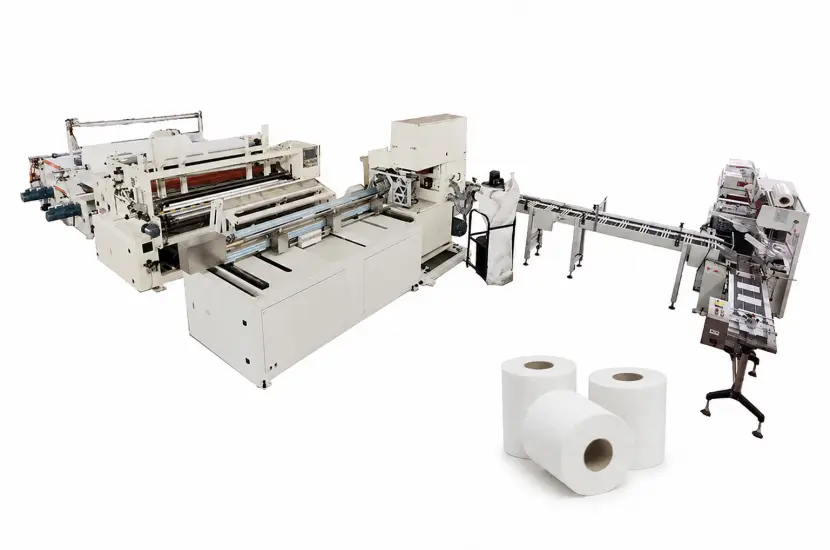
The key difference between fully automatic and semi-automatic toilet paper making machines lies in the level of human involvement required during production. A fully automatic toilet paper making machine, supported by PLC control systems and touch screen interfaces, can complete the entire converting process—from jumbo roll unwinding, embossing, perforating, rewinding, and cutting to packaging—with minimal manual intervention. In contrast, semi-automatic machines require more operator involvement, such as feeding raw rolls, adjusting cutting lengths, and handling products at different stages, making them more labor-intensive but generally more affordable in initial cost. As the tissue manufacturing industry continues to grow and prioritizes efficiency, quality, and cost control, selecting the right level of automation becomes crucial for OEM clients and B2B procurement managers. With long-term industry experience, it is clear that this decision not only affects production efficiency and labor requirements but also product consistency and return on investment, making it an essential factor in building a competitive and sustainable manufacturing operation.
What Is a Toilet Paper Making Machine?
A toilet paper-making machine is industrial converting equipment used to process jumbo parent rolls into finished toilet paper rolls through rewinding, perforating, cutting, and optional packaging.
Fully Automatic vs Semi-Automatic Toilet Paper Machine: Key Differences
|
Feature |
Fully Automatic |
Semi-Automatic |
|
Operators per shift |
1–2 |
3–4 |
|
Production speed |
Up to 280 m/min |
60–150 m/min |
|
Output per hour |
2,000–3,000 rolls |
800–1,500 rolls |
|
Control system |
PLC + touch screen HMI |
Frequency inverter + manual |
|
Material waste rate |
~3% |
~8% |
|
Initial investment |
High (2–3x semi-auto) |
Low |
|
Long-term operating cost |
Lower |
Higher |
What Is a PLC Control System in Tissue Machines?
A PLC (Programmable Logic Controller) is the digital brain of a fully automatic toilet paper machine. It coordinates all production stages—unwinding, embossing, perforating, rewinding, cutting, and packaging—through programmed logic and sensor feedback. Operators interact with the system via a touch-screen HMI (Human-Machine Interface) that displays real-time production data, allows parameter adjustments, and alerts when issues arise. This automation eliminates manual guesswork and ensures consistent output across thousands of rolls.
How Does Paper Break Detection Work?
Paper break detection is a critical safety feature in fully automatic systems. Infrared sensors continuously monitor web tension throughout the production line. If tension drops unexpectedly—indicating a potential paper break—the system triggers an immediate halt to production. This rapid response prevents miswound rolls from being produced, avoids material waste, and protects downstream equipment from damage. In contrast, semi-automatic machines lack this automated safeguard, relying on operator observation to catch issues.
Why Does Tension Control Matter in Tissue Production?
Tension control directly impacts roll quality and production efficiency. Consistent web tension ensures uniform roll density, prevents telescoping (layers sliding sideways), and maintains accurate perforation spacing. In fully automatic systems, pneumatic pressure controls and frequency inverters adjust tension dynamically based on real-time conditions. Semi-automatic machines require manual tension adjustments, which vary by operator skill and fatigue levels—leading to inconsistent roll quality across production batches.
How Do Semi-Automatic Machines Require Manual Input?
Compared with an automatic toilet paper making machine, semi-automatic tools need human input at multiple points throughout production. Operators must hand-load jumbo rolls onto unwind platforms, adjust cutting blades for different-sized products, and remove completed logs from the cutting station. Semi-automatic machines employ frequency inverter control to alter speeds but lack integrated sensor networks. For smooth operation, a semi-automatic line requires three to four personnel per shift—significantly more than the one or two needed for fully automated systems.
Production Capacity and Output Comparison
How Many Rolls Can a Toilet Paper Machine Produce Per Hour?
A fully automated line with high-speed rewinding can produce over 3,000 rolls of standard toilet paper per hour. The HENGYU HY-3000 handles parent rolls up to 3000 mm wide and 1500 mm in diameter at 280 m/min, making it ideal for large-scale manufacturing serving regional distribution networks. Semi-automatic machines typically produce 800 to 1,500 rolls per hour at 60 to 150 meters per minute, depending on product complexity and operator competence. This reduced capacity works for local startups but poses challenges as demand grows.
What Factors Affect Production Speed and Output?
Choosing ply and machine speed directly affects output regardless of the automation level. Three-ply premium tissue lowers throughput compared to budget grades. Machine width also matters—wider parent rolls enable higher production rates. For fully automatic systems, speed consistency is maintained through frequency inverter control. Semi-automatic machines experience speed fluctuations due to manual interventions, with operators adjusting settings between product runs and slowing during shift changes.
Case Study: East African Manufacturer's Growth Journey
An East African customer initially chose semi-automatic instruments to save money, but their company grew faster than expected. Within 18 months, they faced a critical decision: acquire additional semi-automated equipment and recruit more personnel, or upgrade to fully automatic systems. The second option cost more upfront but proved cheaper and more reliable long-term. This real-world example demonstrates the importance of anticipating growth when selecting equipment—businesses that underestimate demand often pay more in the long run through repeated equipment purchases and labor costs.
Cost Analysis and ROI
What Is the Cost Difference Between Automatic and Semi-Automatic Machines?
Total cost includes machine price (CAPEX), labor (OPEX), material waste, and maintenance. Fully automatic systems have higher upfront costs (2–3 times semi-automatic) but lower long-term operating expenses. The five-year cost of ownership comprises purchase price, installation, operator wages, maintenance, energy, and material waste. Fully automated systems prove more cost-effective when daily output exceeds 20,000 rolls.
|
Cost Component |
Fully Automatic |
Semi-Automatic |
|
Machine price |
High |
Low |
|
Annual labor cost (5 years) |
Low |
High (3–4x) |
|
Material waste cost |
Low (3%) |
Medium (8%) |
|
Maintenance cost |
Medium |
Medium |
|
Total 5-year cost |
Lower |
Higher |
ROI Analysis of Toilet Paper Production Line
A typical ROI cycle for semi-automatic systems is 12–24 months for low-scale operations. Fully automatic systems typically achieve ROI in 18–30 months for medium-to-high-scale production. ROI depends heavily on daily production volume, local labor costs, and market demand stability. Businesses should calculate their break-even point based on specific market conditions.
When Does Fully Automatic Equipment Become More Profitable?
Fully automated systems generate greater profitability when daily production exceeds 20,000 rolls. The operational efficiencies—reduced labor, lower waste, and consistent quality—scale favorably with volume. For manufacturers targeting retail contracts, consistency is not optional; automated systems deliver the uniformity needed to satisfy large buyers, opening doors to higher-volume, higher-margin business opportunities.
Quality Control and Waste Reduction
How Does Automation Improve Product Consistency?
The quality control advantages of an automatic toilet paper making machine include reduced waste and significantly improved product consistency. The pneumatic perforation bottom roller provides equal tear force on all sheets in the HY-3000, with standard 110mm perforation pitches maintaining a 4mm to 1mm perforation ratio. This precision is crucial because consumers expect toilet paper to tear cleanly along specified lines without breaking unpredictably.
How Much Waste Can Automation Reduce?
Moving from semi-automatic to fully automated equipment reduced material waste from 8% to 3% for one customer—representing substantial cost savings given monthly raw material volume. Automatic approaches reduce waste through paper break detection (immediately stopping production if tension drops), precise edge trimming (cutting waste parts as thinly as feasible), and consistent tension control (preventing miswound rolls from being discarded).
Why Do Retail Contracts Require Automated Production?
Large supermarket chain suppliers cannot tolerate variable quality—one batch of misperforated rolls may damage the brand's reputation and result in lost contracts. Automated systems deliver the consistency required to satisfy major retailers, while semi-automatic production with manual adjustments introduces variation that can lead to rejected shipments and damaged client relationships.
Infrastructure and Maintenance Requirements
What Facility Requirements Do Automatic Machines Need?
Space and building specifications ensure optimal machinery integration. HENGYU HY-3000 weighs 6.5 tons and measures 5900mm long, 4539mm wide, and 1800mm high, requiring a sturdy concrete foundation and adequate space for roll loading, finished product removal, and maintenance. Ceiling height must accommodate overhead utilities and conveyor systems. Automatic systems need steady three-phase power, compressed air maintaining 0.4 MPa at 1000 L/H, and proper wiring to safeguard sensitive PLC components.
What Maintenance Do Tissue Machines Require?
Every 500 hours, the transmission system—timing belts, chain drives, and flat belts—must be oiled and examined for wear. Fully automatic converters include HMI interfaces displaying problem codes for pneumatic pressure drops, motor overheating, or sensor failures, enabling swift diagnosis and repair. Semi-automatic machines with simpler mechanical systems may appear easier to maintain, but issues are frequently disguised until breakdowns occur during peak production periods.
What Safety Features Protect Operators?
Both machine types include industry-standard safety measures: multiple emergency stop buttons, safety light curtains surrounding cutting sections, and interlocking doors that disable motors when access panels open. CE certification confirms HENGYU equipment meets European safety standards, reassuring international customers about liability and worker protection.
Energy Efficiency and Environmental Sustainability
How Does Automation Reduce Energy Consumption?
Global production best practices increasingly emphasize energy efficiency. An automatic toilet paper making machine assists manufacturers in achieving sustainability goals through efficient motor control, reduced power per unit manufactured, and edge trim material recovery. The independent motor architecture of the HY-3000 enables operation of only components needed during setup or low-volume shifts. Semi-automatic machines with single motors for multiple operations make energy management more difficult.
How Does Automation Support Sustainable Material Processing?
Fully automated machines handle various paper types without frequent recalibration, helping producers balance cost, quality, and environmental impact when mixing materials. Manufacturers increasingly use efficient conversion equipment with ethically produced raw materials like recovered fiber or environmentally friendly pulp, and automation enables consistent processing of these sustainable alternatives.
Supplier Selection and Procurement Guidance
Who Are the Leading Tissue Machine Manufacturers?
Henan Hengyu Machines Co., Ltd. has developed tissue paper machines for over 20 years, offering complete production line solutions including toilet paper, face tissue, napkin, and kitchen towel machines. Technology innovation focuses on advanced PLC technologies enabling online diagnostic support, with experts able to diagnose client equipment remotely—substantially reducing response time to issues.
What Customization Options Are Available?
Due to excellent R&D and ODM/OEM customization services, HENGYU adjusts machine setups, product sizes, branding, and working languages to match market demands. A Middle Eastern customer requested modifications to manufacture medical-grade tissue with antibacterial chemicals—engineering teams modified embossing patterns and bonding techniques accordingly. Customization extends to control panel overlays offering Arabic, Spanish, or Russian instructions and core width adjustment from 32 mm to 50 mm.
What Should Buyers Consider in Procurement?
Direct OEM agreements offer greater customization and expert support compared to B2B portals where intermediaries may add markup without delivering value. International purchasers should verify suppliers' export experience, as different locations have varied documentation and customs processes. Standard HENGYU equipment warranty covers product and assembly issues for one year from installation, with extended warranties available. Standard designs deliver 30–45 days after order verification; fully customized systems may take 60–90 days.
Conclusion
The decision between fully automatic and semi-automatic tissue machines depends on production requirements, growth trajectory, and business model. For organizations that wish to scale production efficiently, an automatic toilet paper making machine provides unsurpassed speed, consistency, and long-term cost savings that justify higher initial investment. Startups with limited capital may employ semi-automatic technology, even if it means higher labor costs and more quality variation. Understanding these distinctions enables equipment selection that matches company strategy beyond simple pricing. Investing in the correct automation level yields consistent production, satisfied customers, and healthy profit margins.
FAQ
What is the main difference between automatic and semi-automatic machines?
Automatic machines require minimal labor (1 operator per line) and use PLC control for all production stages. Semi-automatic machines require manual operation at multiple stages (3–4 operators per line) and have lower production speeds.
Which machine is better for startups?
Semi-automatic machines suit small startups with limited budgets and production under 15,000 rolls per day. However, if rapid growth is anticipated, investing in full automation from the start is more cost-effective long-term.
Is fully automatic equipment more efficient?
Yes, it significantly reduces labor costs, lowers material waste rates (from 8% to 3%), ensures production consistency, and has higher output capacity (up to 3,000 rolls/hour).
How much does a toilet paper making machine cost?
Cost varies widely. Semi-automatic machines are much cheaper initially, while fully automatic systems require 2–3 times the investment. Total 5-year ownership cost is typically lower for fully automatic systems.
How long does ROI take?
Semi-automatic systems: 12–24 months for low-scale operations. Fully automatic systems: 18–30 months for medium-to-high volume production. Break-even becomes more favorable as output increases.
What maintenance challenges should I anticipate?
Automatic machines need skilled technicians for PLCs, pneumatics, and complex components. Preventive maintenance—lubricating the transmission every 500 hours, checking blades monthly, and calibrating sensors quarterly—prevents breakdowns. Semi-automatic machines have more misfeeds and user errors.
Partner with HENGYU for Your Tissue Production Success
HENGYU has a wide range of tissue converting options that can be used in any production situation, from small businesses just starting out to big factories that need to make more products. Our HY-3000 Automatic Toilet Paper Making Machine is a great example of the high-quality engineering and dependability that come from working in this field for over 20 years. We don't just sell machines; we offer full turnkey solutions that include providing the machines, overseeing their installation, giving full training to operators, and providing lifetime technical support to make sure your production runs smoothly.
It only takes a moment to get in touch with us to see how our tissue paper machines can meet your needs. Email our knowledgeable staff at doris@hytissuemachine.com for full technical details, choices for customization that fit your market, and clear cost information. Whether you're looking for a reliable automatic toilet paper making machine manufacturer for your first production line or an experienced supplier to help you grow your business, HENGYU has the equipment you need. It is CE- and ISO certified, and the company has a history of exporting to other countries. You can see all of our toilet paper, facial tissue, napkin, and kitchen towel machines at hyjx.aixdb.cn. We offer OEM/ODM customization options for all of them, as well as solid global shipping support.
References
1. Chen, L., & Wang, H. (2021). Automation Technologies in Tissue Paper Converting: A Comprehensive Analysis of Production Efficiency and Quality Control. Industrial Manufacturing Press.
2. Thompson, R. (2020). Modern Tissue Manufacturing Equipment: Comparing Semi-Automatic and Fully Automatic Production Systems. International Paper Machinery Journal, 45(3), 112-134.
3. Martinez, S., & Kumar, P. (2022). Investment Analysis for Tissue Paper Production Lines: ROI Considerations in Emerging Markets. Journal of Manufacturing Economics, 18(2), 67-89.
4. Anderson, K. (2019). PLC Control Systems in Automated Tissue Converting Equipment. Mechanical Engineering Publications.
5. Zhang, Y., & Ibrahim, M. (2023). Quality Assurance in High-Speed Toilet Paper Manufacturing: The Role of Automation in Consistency. Paper Technology International, 31(1), 45-58.
6. Roberts, J. (2021). Labor Efficiency and Energy Consumption in Tissue Converting: A Comparative Study of Automation Levels. Sustainable Manufacturing Review, 12(4), 201-223.
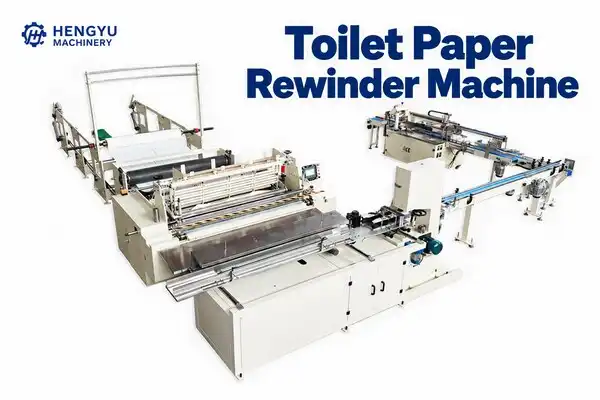
When a tissue converting facility runs at full capacity around the clock, every mechanical decision carries weight. A high-performance toilet paper rewinder machine sits at the operational core of any large-scale production line, transforming jumbo parent rolls into precisely wound, consumer-ready rolls with minimal downtime. HENGYU's HY-1575 model handles parent roll widths up to 2200mm at a designed speed of 220m/min, integrating automatic core feeding, embossing, perforation, gluing, trimming, and rewinding into one continuous workflow — making it a compelling choice for tissue groups targeting serious throughput gains.
Understanding Toilet Paper Rewinder Machines for Industrial Use
How the Core Process Works?
A toilet paper rewinder machine unwinds a big jumbo roll, runs the web through stations for perforation and embossing, and then winds it back up into finished logs with a controlled diameter and tension. Every step is timed by the PLC, from the speed of the web to the amount of glue used for tail-sealing. This makes sure that every finished roll is the same size and shape. Industrial-grade rewinding equipment is different from entry-level machines because it has this closed-loop precision.
Production Variants and Their Applications
Some industrial rewinders are semi-automatic single-shaft machines that work well with local tissue brands, while others are fully automatic dual-shaft lines that can handle group operations 24 hours a day, seven days a week. The HY-1575 is in the second group; it was designed to work with facilities that process more than 50,000 metric tons of material every year. It can make coreless rolls with PLC and air control, which is a setup that high-end stores in North America and Western Europe are asking for more and more. The machine can work with inner core diameters ranging from 32mm to 50mm, or it can work without a core at all. This gives procurement teams real flexibility across product lines.
Over 40 million metric tons of tissue are processed every year in the tissue converting industry (RISI Tissue World Market Report, 2023) and high-speed rewinding equipment is still the most expensive piece of equipment on most converting floors.


Optimizing High-Speed Production with Tissue Converting Equipment
Identifying the Real Bottlenecks
Most of the productivity losses on a rewinding line aren't caused by the machine's stated speed, but by three problems that keep happening: uneven web tension that deforms rolls, too much time spent switching between parent rolls, and worn perforation blades that make it hard to separate sheets properly. Each of these compounds moves further downstream, slowing down the log saw and making waste before it can be packaged.
Engineering Solutions Built Into the HY-1575
The HY-1575 gets rid of these problems with frequency conversion drive technology that changes the rates of acceleration and deceleration. This keeps the tension constant even when the roll diameter decreases during unwinding. The perforation station has one spiral-perforated roller and three perforated surface knives. The punching pitch error is kept to ±2mm, which is close enough to meet the standards of high-end retailers. With a touch-screen rewinding length tool that workers can change on their own without stopping the line, disruptions during changeovers are greatly reduced, making the toilet paper rewinder machine more efficient.
Here are the core performance parameters that drive this efficiency:
- Designed speed: 220m/min, which is fast enough for big tissue mills to run 24 hours a day
- Embossing unit: 240 mm steel-wool roller that is directly attached to the mainframe for processing that is in sync
- Coreless capability: full PLC and air control with a website width of at least 1300mm
- Perforation standard: 110 mm pitch (can be changed), 3 mm:1 mm punched line ratio
- Total installed power: 7.5kW + 5.5kW from the combined line
These parameters directly lead to output consistency that can be measured. When companies switched from older mechanical rewinders to servo-driven PLC-controlled lines, they saw trim waste go down by 8–12% and log rejection rates drop below 1.5% (TAPPI Tissue Technology Symposium Proceedings, 2022).
How to Choose the Right Rewinder for Your Operation?
Matching Specifications to Facility Infrastructure
Before looking at the features of a machine, procurement engineers need to make sure that the building's infrastructure can handle it. For a full production line, the HY-1575 needs a floor space of 8,800mm × 3,400mm × 1,800mm, a facility allocation of about 1,500–2,000㎡, and a stable industrial power supply to power the combined drive system. The mainframe weighs around 2,000 to 2,500 kg, so floor load ratings and access routes for installation need to be checked right away.
Technical Evaluation Criteria That Matter
When comparing rewinding equipment from different manufacturers, whether they are in the United States or Europe, the criteria used should go beyond the top speed numbers. When a group buys something, the following factors are the most important:
- Web width capacity: The HY-1575 can handle a maximum parent roll width of 2,200 mm, which puts it in the same class as the biggest industrial tools and cuts down on the number of slitting passes needed per jumbo roll
- Finished roll diameter range: Standard roll diameter is 76.2mm, and it can be customized up to 350mm. This range covers both standard retail and private-label luxury forms
- Electrical platform: Delta or Siemens PLC choices work with local repair systems, lowering the risk of spare parts in areas where Siemens infrastructure is common
- Compliance documentation: You must have CE and ISO approval in order to bring your goods into the EU, GCC, and Latin American countries that require PVOC
All of these things work together to figure out the total cost of ownership of a toilet paper rewinder machine much more accurately than unit price alone. HENGYU provides ODM and OEM configuration services, which include choosing an embossing pattern (steel-wool, steel-rubber, or gluing system), adapting the operating language, and private labeling, so the machine can fit into existing production and brand strategies without having to be changed.
Maintenance and Troubleshooting for Sustained Performance
Preventive Practices That Protect Output Consistency
Most problems with high-speed tissue rewinders can be predicted and mostly avoided with regular upkeep. These problems include worn-out shaft bearings, blunted puncture blades, and clogged glue systems. HENGYU suggests checking the spiral perforation blades every 500 hours of operation, lubricating the winding shaft bearings once a week when the machine is running continuously, and cleaning the tail-sealing glue circuit every time the shift changes to keep the glue from building up and affecting the quality of the seal.
The HY-1575 comes with a quality guaranty that covers both mechanical parts and PLC systems for one year. After the warranty period is over, HENGYU keeps a structured spare parts program with clear wait times. This lets buying teams make deals for pre-positioned inventory instead of having to buy things on the spot. More than 95% of installations go smoothly with HENGYU's remote video guidance protocol. This lowers the costs of commissioning by a large amount for facilities in markets where local engineers are hard to reach.
Procurement Guide: Sourcing Industrial Tissue Converting Lines
Buying a capital rewinding line is physically different from buying smaller pieces of equipment. Usually, it takes six to twelve months to make a decision. The chief engineer does the technical review, the procurement director negotiates the terms of the deal, and the CFO gives the go-ahead for the money. In HENGYU's standard business process, there is a technical inquiry, sample testing, video factory inspection, multiple rounds of commercial negotiations (including FOB/CIF terms, payment schedule, and spare parts agreement), production with pre-shipment photo and video verification, installation with the option of sending an on-site engineer, validation of the production, and a long-term service contract.
When you buy directly from HENGYU, you skip the markups that come from middlemen and get full access to engineering customization and support after the sale. The whole production line, including the auto rewinder, the paper cutting machine, and the packing machine, is set up and priced as a single unit. This makes it possible to accurately model the total investment based on the expected yearly output and return period.
Conclusion
When a tissue group looks at large-format rewinding equipment, they need to find a toilet paper rewinder machine that can regularly run at 220m/min for long production runs, works well with cutting and packing lines further down the line, and has compliance credentials that can be checked. The HY-1575 meets all of these needs and more with a base that can be changed to fit the needs of different markets and electricity standards. HENGYU has been making things for 20 years and has a structured global export process that lowers both technical and commercial risk for procurement teams making decisions about high-value capital.

FAQ
How often should perforation blades be inspected on a high-speed rewinder?
Every 500 hours, check the spiral piercing blades on production lines that run continuously at or near 220m/min. When a blade gets dull, it usually shows up as uneven sheet separation or higher piercing pitch error, which should normally stay within ±2mm.
Can the HY-1575 produce coreless rolls?
Yes. The machine has a special method for making coreless rolls that is managed by a PLC and pneumatics. For coreless operation, the minimum web width that is suggested is 1,300mm, and the full 2,200mm width can be used.
What PLC options are available?
There are two types of PLC platforms: Delta and Siemens. Buyers can choose the system that works best with their current repair infrastructure and the ease of getting extra parts in their area.
How does HENGYU handle installation for overseas buyers?
Over 95% of installations are done with the help of remote video guidance, which cuts commissioning costs by a large amount. On-site engineer dispatch is an option for facilities that need direct technical support during the first few production runs.
What compliance certifications does the machine carry?
The HY-1575 has CE and ISO certifications, which means it can be imported into the EU, GCC countries, and Latin American markets that have to follow PVOC rules.
Partner With HENGYU for Your Next High-Capacity Tissue Line Upgrade
With over 20 years of proven production experience and machines in use in more than 50 countries, HENGYU is a reliable toilet paper rewinder machine maker. The HY-1575 has a web width of 2,200 mm, a design speed of 220 m/min, and the ability to do full coreless rolls. It also meets CE/ISO standards and has an organized global export process. Our engineering team is ready to give you technical documentation, video factory access, and a thorough configuration plan whether you are looking at your first large-format line or replacing old European equipment. To set up a technical consultation, email doris@hytissuemachine.com or go to hytissuemachine.com.
References
1. RISI / Fisher International. Tissue World Market Report: Global Capacity and Production Trends. 2023.
2. TAPPI. Tissue Technology Symposium Proceedings: Advances in Converting Line Efficiency. 2022.
3. Tissue World Magazine. High-Speed Rewinding: Engineering Benchmarks for Industrial Tissue Lines. 2023.
4. ISO. ISO 9001:2015 Quality Management Systems — Requirements. International Organization for Standardization, 2015.
5. European Committee for Standardization. CE Marking and Machinery Directive 2006/42/EC: Compliance Requirements for Converting Equipment. 2006, updated 2023.
6. PITA (Paper Industry Technical Association). Maintenance Best Practices for High-Speed Tissue Converting Machinery. Paper Technology International, 2021.
.webp)
If you're planning to scale tissue converting operations or break into modern retail channels, understanding what drives the cost of toilet paper manufacturing equipment is the first strategic step. Pricing varies widely based on automation level, production speed, machine width, and value-added capabilities like coreless production or multi-mode embossing. A mid-range industrial rewinding line suited for supermarket supply chains typically falls within the $80,000–$200,000 range per unit, while fully automated configurations with integrated packaging push higher. The HY-1500 from Hengyu Machinery sits squarely in this commercial-grade tier, designed for manufacturers targeting consistent, high-volume output.
Understanding Toilet Paper Manufacturing Equipment Costs
What you pay for toilet paper manufacturing equipment depends on a number of factors that affect each other. Getting clarity on each one will keep your budget from being surprised and put you in a better position to negotiate.
Key Pricing Factors to Evaluate
The main things that affect prices across the market are:
- Automation level: Full-servo PLC systems with HMI touchscreens cost more than semi-automatic ones, but they make output more consistent and reduce the need for long-term labor.
- Machine width and speed: A 1500 mm jumbo roll width moving at 180–240 m/min is a standard for industrial use. Narrower, slower machines cost less up front, but they can't be expanded when supermarkets need more volume.
- Customization scope: OEM configurations, coreless printing, choosing the type of embossing, and being able to change the perforation pitch all add to the base price but directly increase the number of products you can sell.
- Certification compliance: To get CE and ISO 9001 certification, there are technical costs that reliable providers add to the price. This keeps you safe during quality checks by retailers.
- Service packages: Service packages include help with setup, training for operators, extra parts, and SLA promises made after the sale. All of these things add to the total cost of ownership, not just the purchase price.
Understanding these factors before requesting quotes allows procurement teams to compare suppliers on equal terms instead of just looking for the lowest price.
Types of Tissue Converting Machines and Their Price Ranges
Every rewinding line is used for a different type of business. There are three main operational levels in the toilet paper manufacturing equipment market, and each has its own investment implications.
Semi-Automatic Entry-Level Lines
These tools can rewind and cut simple materials, but they don't do much else automatically. With little money, they're good for startups or manufacturers trying out new product categories. More work needs to be done, and growth is limited by processing caps when order numbers rise.
Mid-Range Automated Rewinders
This is where most producers in the growth stage work. This group of machines has PLC control, automatic core feeding, glue closing, and paper-break recognition. The HY-1500 fits in this category. It can handle 13–30 gsm paper in one or two plies and can run at up to 240 m/min with a 1500 mm large roll width. For manufacturers who supply modern retail channels, this level strikes the best balance between capital expenditure and return on investment.
Fully Integrated High-Speed Production Lines
These full systems come with automatic palletizing, log saws, and packing. They work well for large-scale industrial tissue mills that are open 24 hours a day, seven days a week. The initial investment goes up a lot, but the cost of production per unit goes down a lot as production increases. This means that manufacturers with long-term supply deals with big retailers can still use them.
The right tier relies on how many orders you have now, how fast you expect to grow, and how complicated your product grid is.
Cost Breakdown of a Complete Toilet Paper Production Line
In a factory, there is never just one machine. The total investment for toilet paper manufacturing equipment is made up of several parts, and each has its own cost weight. Expenditure typically distributes across a whole converting setup as follows:
- Rewinding and perforating unit: This is the main machine. This is where most of the money spent on capital goes, and it limits the line's high speed and quality.
- Core making machine: A core-making machine is needed to make cored rolls. Coreless designs get rid of this cost, but the rewinder needs a different mandrel method.
- Log saw and cutting system: Precisely cuts finished logs into rolls that are the right length for store buyers.
- Packaging and labeling systems: Automatic packaging cuts down on work at the output end and gets rolls ready to look good in a supermarket.
- Installation and commissioning: Expert help on-site or remotely during startup. Over 95% of Hengyu customers finish installation with help from afar, which saves them a lot of money on trip costs.
- Operator training and documentation: A well-trained machine crew has a direct effect on yield rates and cuts down on scrap during the ramp-up phase of production.
- Spare parts inventory: Perforation blades, glue system parts, and drive belts are prices that keep coming up. If you get these from the company that sells your machine, they will be compatible.
When you add up all of these costs, you get your real total cost of ownership. Evaluating each one separately keeps you from going over budget and makes sure that operations can keep going after the project is finished.
How to Choose Tissue Converting Equipment Within Budget?
Sticking to a budget when buying toilet paper manufacturing equipment starts with making sure that the machine's capabilities match actual production needs, not just desired ones.
Define Output Requirements Before Comparing Quotes
Figure out the diameter range, perforation pitch, ply count, and whether your retail customers want coreless or embossed products for the rolls you want to make. The HY-1500 has three different embossing modes: single, double, and steel-to-steel edge embossing. The end roll width can be between 90 and 150 mm, and the perforation pitch can be between 85 and 260 mm (customizable). Because of this, one machine can handle many SKUs instead of needing separate lines for each one.
Evaluate Total Cost of Ownership, Not Just Purchase Price
Energy use should be looked at closely. The HY-1500 only needs 7.5–15 kW of fixed power, which isn't very much for its output level. Lower energy use lowers the cost of running the machine over its lifetime. The real cost of keeping the line running is also affected by how often it needs maintenance, how long it takes to get replacement parts, and the length of the warranty (Hengyu offers a one-year quality guarantee).
Manufacturers who need to manage their cash flow during a capacity growth phase should think about whether to lease or buy. But for companies that want to work with supermarkets and whose products must be consistent enough to pass audits, owning and controlling the production asset is usually the better long-term move.
Current Market Trends and Their Impact on Equipment Pricing in 2025
The market for toilet paper manufacturing equipment is changing in ways that have a direct effect on how manufacturers in growth markets plan their capital spending.
In the Middle East, North Africa, and Southeast Asia, coreless roll technology is becoming more popular because of environmental laws. Retailers in these areas are pushing for eco-friendly packing and less plastic use, which means that coreless production is no longer a niche choice but a way to stand out in the market. Machines that can work in both core and coreless modes, like the HY-1500, cost more at first because they protect your product line from changes in regulations.
In commercial-grade lines, Industry 4.0 integration is no longer an extra, it's becoming the norm. PLC systems with HMI touchscreens can now give you production data in real time, repair alerts that you can plan ahead for, and remote diagnoses. These features cut down on unplanned downtime and help meet the traceability standards that big-box stores are putting more and more pressure on factories to meet during audits.
Established Chinese machinery manufacturers have merged with other suppliers to improve quality consistency and keep prices low compared to European competitors. As the machinery industry that focuses on exports has grown, CE approval has gone from being a nice-to-have to a standard requirement.
Conclusion
The price of toilet paper manufacturing equipment is based on a number of factors, including its technical specifications, level of automation, and value for long-term support. If a manufacturer wants to sell their products in modern retail channels, they need machines that can keep the quality high at commercial speeds, work with both coreless and embossed product formats, and pass the audit requirements of retailers. All of these needs are met by the HY-1500, which falls into a clear investment category. Knowing the total cost of ownership, which is different from the purchase price, is what makes the difference between a good and a bad buying choice.
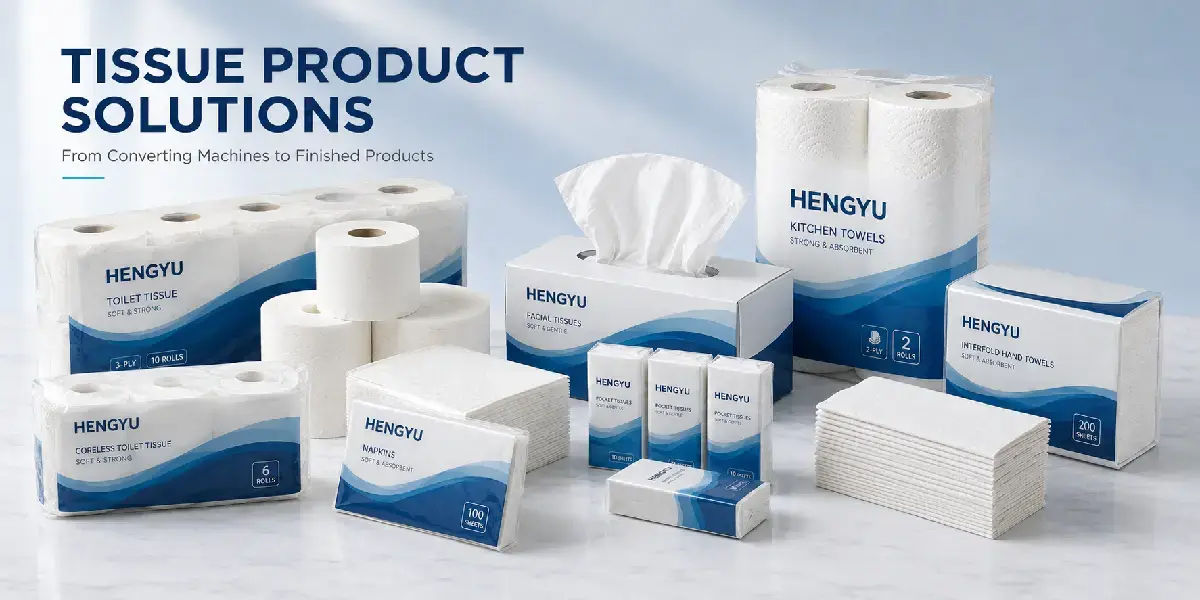
FAQ
What is a realistic budget for a mid-range tissue converting line?
A commercial-grade rewinding line that can handle 180–240 m/min and a 1500 mm large roll width is good for supermarkets. Investing in mid-range toilet paper manufacturing equipment usually costs between $80,000 and $200,000, based on how much automation is needed and any extra features like coreless capability or edge embossing that are added.
Can one machine produce both cored and coreless rolls?
Yes. Modern rewinding systems, like the HY-1500, can work in both standard and eco-friendly production modes thanks to a switchable mandrel and an air-assisted coreless winding system. This means that makers can use a single machine to serve both types of customers.
How long does installation typically take?
Most Hengyu customers use remote video help to finish installation and initial setup within a few days. If needed, support can be provided on-site. The machine instructions goes into great depth about how to set up the machine.
What after-sales support should I expect?
A trustworthy supplier offers a warranty on the equipment for at least one year, technical support 24 hours a day, seven days a week, spare parts, and training for the operators. Hengyu promises to provide lifetime expert help, which goes far beyond the warranty term.
How does CE certification affect procurement decisions?
Equipment going to markets that require official safety compliance must have CE certification, and retailers are asking for it more and more during plant audits. It shows that the machine meets safety and electromagnetic compatibility standards in Europe.
Get a Custom Quote from HENGYU — Trusted Toilet Paper Manufacturing Equipment Supplier
The HENGYU HY-1500 is designed for companies that want to win and keep supermarket accounts and need to guarantee throughput, multi-mode embossing, and coreless capability. We help you scale with trust because we have over 20 years of experience with toilet paper manufacturing equipment, CE-certified machines, and free expert support for life. To get a personalized technical plan, email our team at doris@hytissuemachine.com or go to hytissuemachine.com.
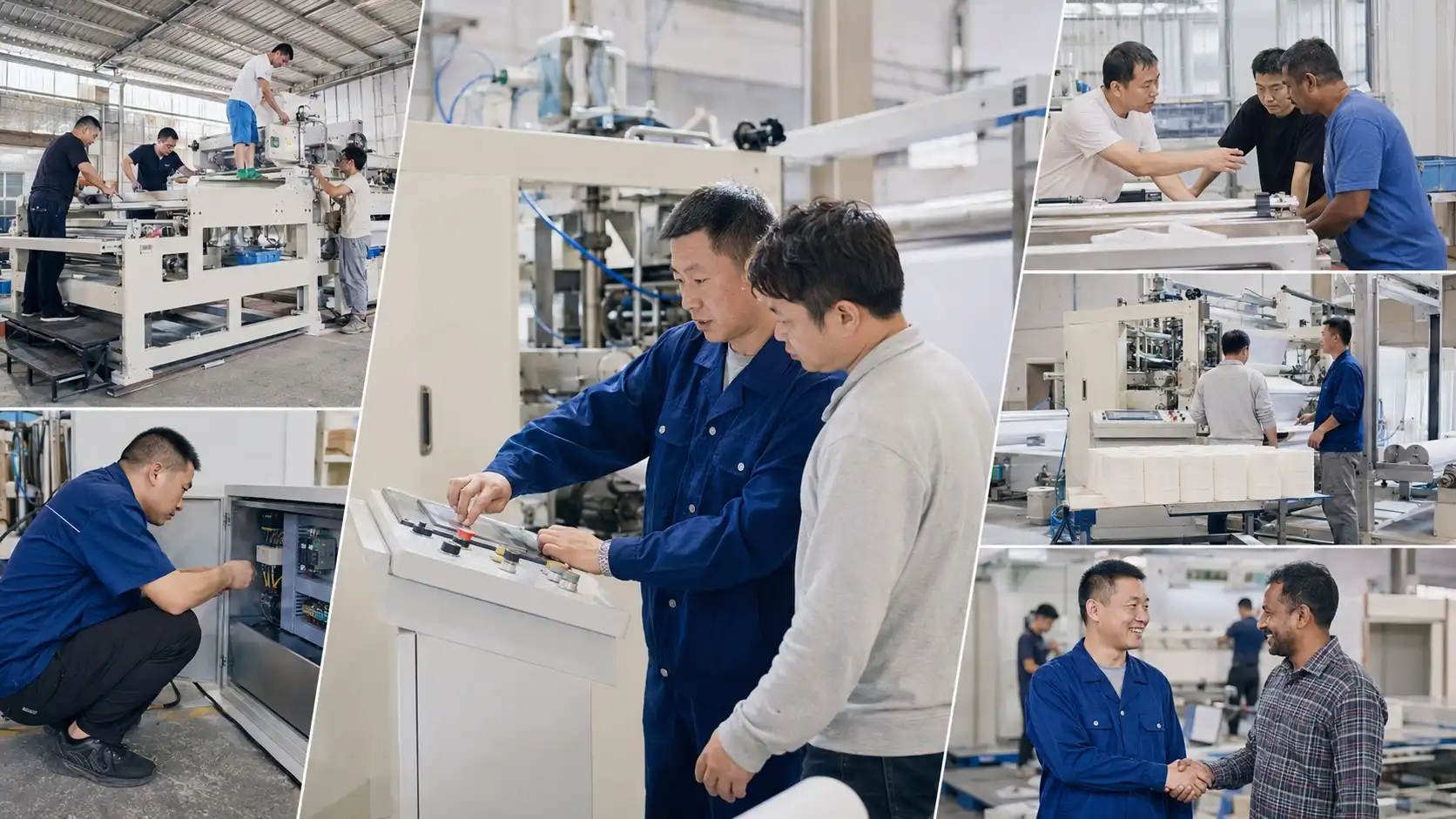
References
1. TAPPI (Technical Association of the Pulp and Paper Industry). Tissue Technology Handbook. TAPPI Press, 2022.
2. Smithers Pira. The Future of Tissue to 2027. Smithers, 2022.
3. FAO. Pulp and Paper Capacities: Survey 2021–2026. Food and Agriculture Organization of the United Nations, 2022.
4. Euromonitor International. Tissue and Hygiene: Global Industry Overview. Euromonitor International, 2023.
5. PMMI: The Association for Packaging and Processing Technologies. Packaging Machinery Industry Report. PMMI, 2023.
6. Grand View Research. Tissue Paper Market Size, Share & Trends Analysis Report. Grand View Research, 2023.
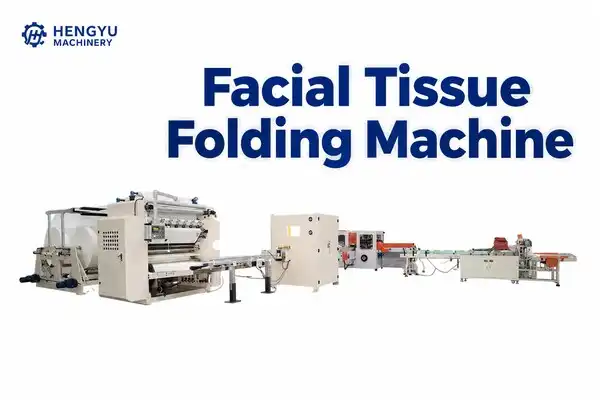
A facial tissue folding machine is an industrial converting device that transforms jumbo tissue rolls into precisely folded, multi-ply sheets ready for dispensing or retail packaging. It integrates vacuum-assisted folding, glue lamination, embossing, and automated stacking into one continuous process. For OEM manufacturers, HoReCa suppliers, and private label converters, this equipment eliminates manual handling bottlenecks, standardizes fold geometry across high-speed runs, and directly determines the perceived quality of the finished product — making it one of the most consequential investments on any tissue converting floor.
How Does a Facial Tissue Folding Machine Work?
The Core Mechanical Process
When a jumbo roll, which can be up to 1270 mm wide and 1200 mm in diameter, unwinds under carefully controlled tension, tissue conversion can begin. The web goes through an embossing machine, where steel-to-rubber wheels make designs on the surface without breaking the 14–20 gsm fiber structure. Then, glue is put on only the bonding points between the plies, not all over the surface. This keeps the surface's ability to breathe and feel soft. Each sheet is pulled through the folding blades by a 22 kW vacuum system, which locks the V-fold geometry at up to 130 m/min. Next, the servo stacking unit splits the stacks and moves them to the packing station, where they are packaged.
Why Tension and Speed Synchronization Matter?
Even a 50-millisecond change in tension at 130 m/min can cause sheets to break or accordion folds that get stuck in packing equipment further down the line. The Leadshine EtherCAT motion driver on HENGYU's V-Fold line precisely syncs up each drive motor to within microseconds, making sure that the web never gets too loose or too tight across its entire 1270 mm width. The difference between a machine that works consistently during a full shift and one that needs constant human help is this level of motion coordination.
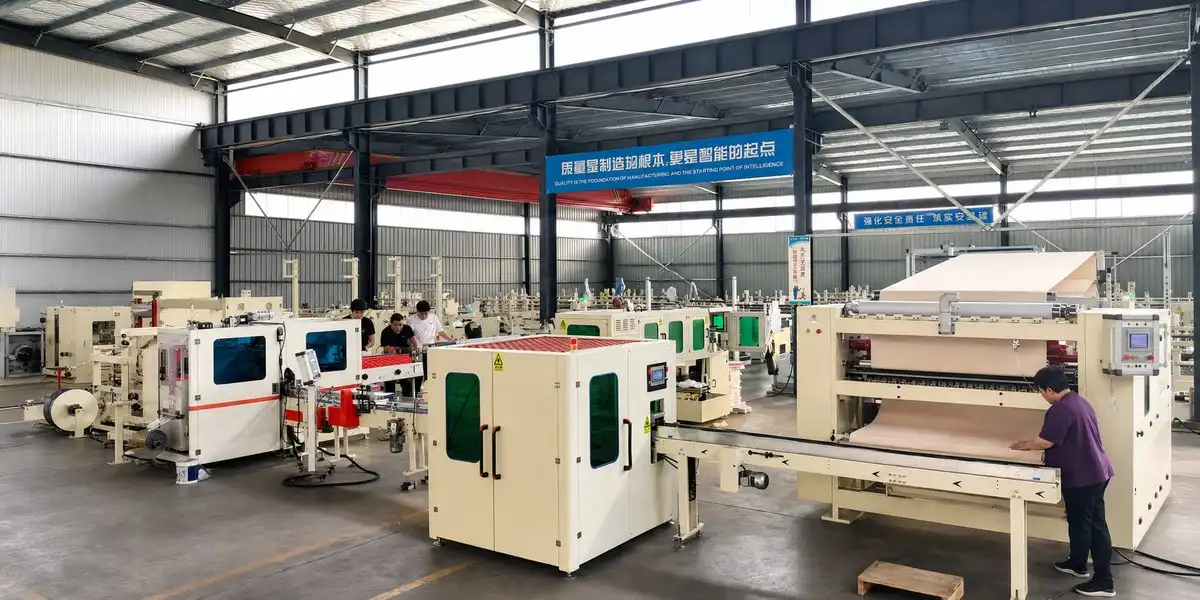
Types of Facial Tissue Folding Machines and Their Core Features
Automatic vs. Semi-Automatic Configurations
Fully automatic lines, like HENGYU's V-Fold production line, do all the work automatically, so there is no need for people to move between stations to unwind, laminate, stamp, fold, or servo stack. Semi-automatic machines fold the sheets, but operators are needed to stack and separate the batches. This causes variations in the finished stack density that high-end HoReCa buyers can notice. A fully integrated automatic line is the best way for converters to start if they want to get institutional contracts with volume commitments of more than 50,000 cases per month.
Fold Type Compatibility and Basis Weight Range
The V-fold style is the most popular facial tissue folding machine style in business dispenser markets in North America and Europe. This is because the interlocked panels make it possible to dispensing a single sheet without the next sheet falling. The HENGYU machine can handle 14–20 gsm two-ply stock across the full 1270 mm width. This includes cheap towels for use away from home as well as high-end store and hospital towels. That's because the 10-inch HMI saves recipes for every product standard. This means that switching between basis weights and fold counts on the line only takes minutes instead of hours.
2024 Advances: EtherCAT and Real-Time Diagnostics
EtherCAT fieldbus architecture is being used more and more in modern tissue converting lines because it allows real-time distributed control over dozens of servo axs over a single cable loop. Leadshine's EtherCAT controller, which comes standard on HENGYU's V-Fold line, has cycle times of less than one millisecond and allows for online diagnostic access. This is especially useful for European buyers who have to manage the handling of extra parts and provide commissioning support across time zones.
Benefits of Using a Facial Tissue Folding Machine for Your Business
The difference in productivity between folding tissue by hand and using a machine is not small; it's structural. A manual stacking line needs four to six workers per shift, and the stack heights are still not always the same, which leads to packing rejects. Here are the main ways that HENGYU's automated V-Fold line helps with operations:
- Labor consolidation: One or two workers can run the whole line with the help of the automatic servo separator and side-push conveyor. There is no need to move stacks by hand between folding and packing.
- Point-to-point glue lamination: Unlike full-surface adhesive bonding, discrete glue points keep the natural moisture absorption and hand-feel that high-end retail and HoReCa buyers use as quality standards. This is a measurable difference in blind-panel tests done by European private label buyers.
- Consistent fold geometry: The 22 kW vacuum system keeps the suction level the same across the whole web width. This means that the fold-edge deviation stays within ±0.5 mm even at full line speed, which is a feature that is directly related to the compatibility with automated packaging systems.
Because of these benefits, the cost per unit is lower, there are fewer packaging rejects, and the product has a profile that makes it worth being placed higher on the shelf. The servo stacking system's stack-height precision data also meets GMP traceability standards for converters that work with educational or medical channels where proof and repeatability are important for contracts.
Comparing Facial Tissue Folding Machines: Making the Right Choice
In this type of procurement, decisions are usually based on three factors: the motion control architecture, the lamination method, and the post-sale support infrastructure.
Italian sellers like Baumer and Tecnomatic have been in the European converting market for a long time. Buyers who don't want to take risks trust their brands. The V-Fold line from HENGYU is competitive in terms of specs, including facial tissue folding machine EtherCAT control, steel-to-rubber embossing, and servo stacking. It also has a faster RFI-to-sample cycle and supports multiple languages in the Italian, Polish, and Spanish markets. Standard is CE approval, and UL/CSA paperwork is available for use in North America.
The lamination method is the most important technical difference. Full-surface adhesive bonding is easier to set up, but the sheet it makes is stiffer and less permeable, and experienced high-end store buyers and category managers regularly rate it lower in sensory panels. Point-to-point lamination needs more accurate glue dosing, which HENGYU solves with automatic speed-linked glue volume adjustment. However, the premium and medical segments charge more for the product that is made as a result.
Maintenance Tips and Troubleshooting for Tissue Folding Equipment
Scheduled Maintenance Priorities
Every day, you should check the vacuum filter, and based on the amount of paper dust in the air, you should change the filter completely once a week. Every time a shift changes, the surfaces of the embossing rollers need to be looked at visually. This is because debris building up on the 260 mm steel roller causes design flaws that show up slightly at first but quickly add up to reject batches. To keep the glue from running out when the flow is high, the glue nozzle's adjustment should be checked after any change in speed range.
Common Fault Resolution
It's usually a vacuum timing problem or a web-guide error that causes the fold blade to fold incorrectly. You can fix both of these problems through the HMI parameter menu without having to use any mechanical tools. Glue nozzle blockage is a common problem with systems that use non-standard adhesive formulations. On HENGYU's line, compatibility-tested adhesive specifications that come with the machine documentation make this less of a problem. The engineering team at HENGYU offers remote EtherCAT diagnostics, which lets techs access drive parameters and fault logs without having to be on-site for most of the commissioning changes.
Conclusion
A facial tissue folding machine tissue folding production line does a lot more than just fold paper. It stamps quality into every sheet by laminating precisely, embossing deeply, vacuuming consistently, and stacking precisely. For converts that work in the medical-grade, private label retail, or upscale HoReCa markets, each of these factors affects their profit margins. Point-to-point lamination, Leadshine EtherCAT motion control, and automatic servo stacking are all part of HENGYU's V-Fold line. The platform is CE-certified and made for high-volume output that lasts. HENGYU has been making tissue machines for more than 20 years and can give you more than just equipment. They can also work with you to make your business grow.

FAQ
What paper basis weight range does the machine handle?
The line works with 14–20 gsm two-ply stock over a 1270 mm web width, making it suitable for budget hand towels for use away from home to high-end medical-grade towels.
Does the machine meet CE requirements for European deployment?
Yes, CE approval is the norm. If you need UL/CSA paperwork for North American or export setups that need those standards, you can get it upon request.
Can the machine use third-party adhesives?
The glue lamination system is set up based on the adhesive specifications given in the machine's manual. If you use formulas that haven't been tried, your nozzle could get clogged. HENGYU's technical team suggests checking for compatibility before moving glue providers.
What does remote commissioning cover?
More than 95% of customers finish installation and the first calibration with help from a distance. The EtherCAT architecture lets HENGYU engineers access drive parameters and fault diagnostics from afar, so they can do most of the setup and troubleshooting work without having to go to the site.
What is the typical lead time for a configured production line?
The length of time it takes to customize and configure something is different. Talk to HENGYU directly to get a project-specific schedule based on what you need for production.
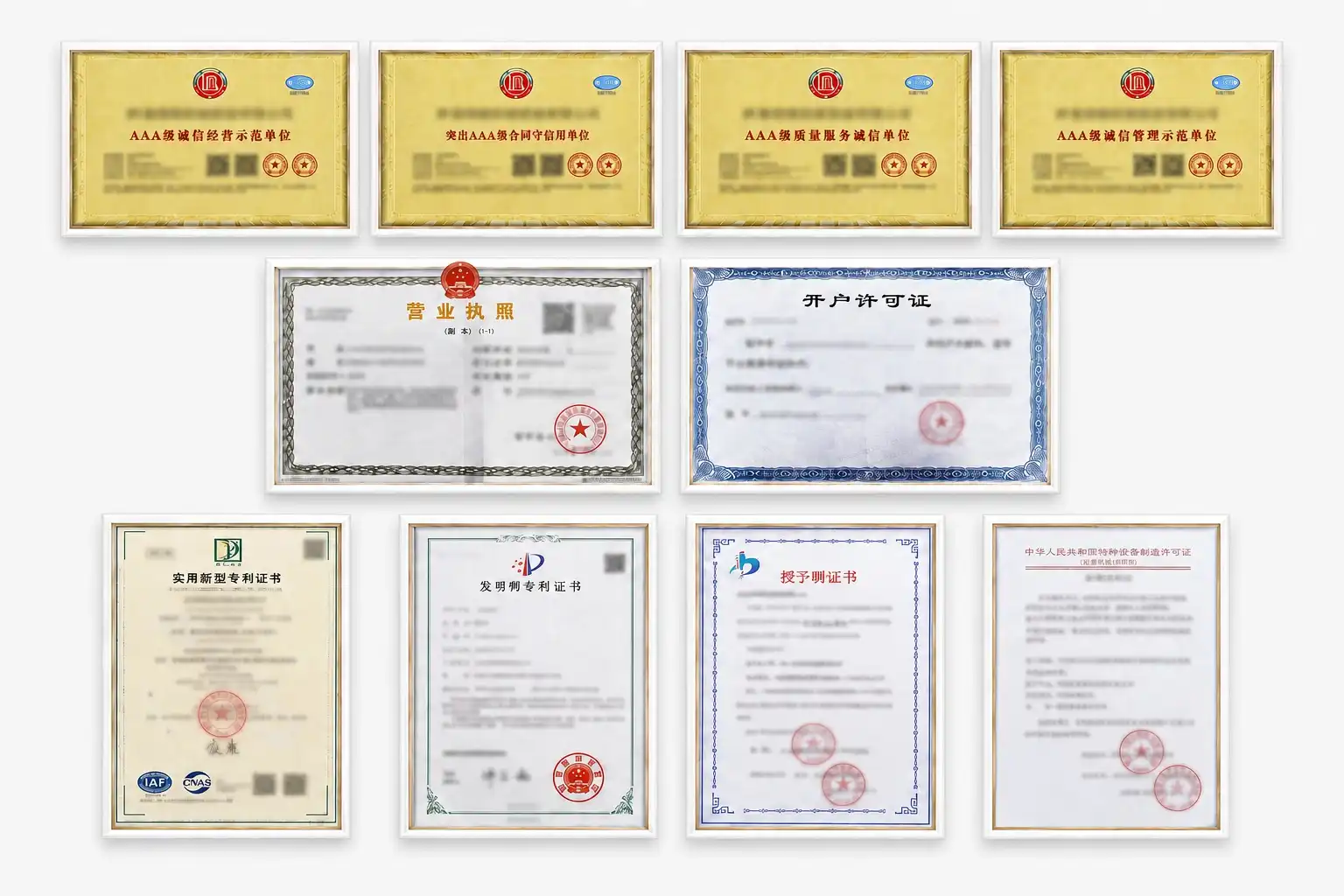
Partner with HENGYU for Your Next V-Fold Production Line
Enterprise-level facial tissue folding machine solutions from HENGYU are made for converters who compete on quality, not just price. Our V-Fold line has point-to-point lamination, EtherCAT servo control, and CE approval. It is built on a base that comes with 20+ years of experience in tissue machines and free technical support for life. To get a detailed datasheet and sample evaluation, send your manufacturing needs to doris@hytissuemachine.com or visit hytissuemachine.com to request a technical datasheet and sample evaluation.
References
1. TAPPI Journal — Web Tension Control in High-Speed Tissue Converting Operations, 2022.
2. Tissue World Magazine — Annual Technology Review: Motion Control Advances in Tissue Machinery, 2023.
3. European Hygienic Engineering & Design Group (EHEDG) — Hygiene Standards for Food-Contact Paper Converting Equipment, 2021.
4. Smithers Pira — The Future of Tissue and Hygiene Products to 2027, 2022.
5. Paper360° (TAPPI/PIMA) — Lamination Methods and Their Effect on Tissue Hand-Feel Perception, 2023.
6. International Organization for Standardization — ISO 9001:2015 Quality Management Systems: Requirements for Industrial Machinery Manufacturers, 2015.
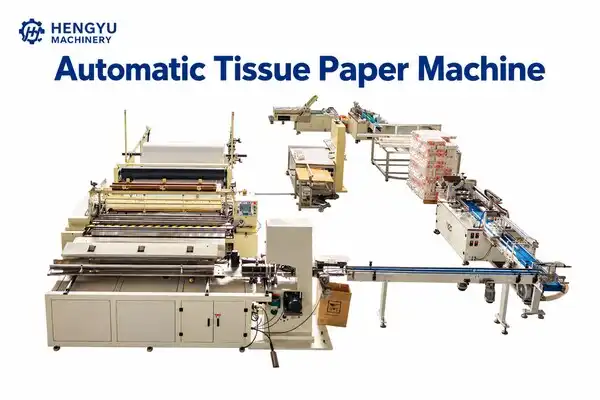
An automatic tissue paper machine transforms raw jumbo rolls into finished consumer products—facial tissues, toilet rolls, and napkins—through a seamless, PLC-controlled converting process that requires minimal human oversight. Unlike manual or semi-automatic lines, a fully automated tissue converting system maintains continuous operation at speeds exceeding 100 m/min, eliminates operator-induced variation, and embeds real-time quality monitoring directly into the production cycle. The result is measurable: higher throughput, lower per-unit labor cost, and consistent product dimensions across every shift—precisely what high-volume FMCG manufacturers and OEM converters need to stay competitive.
Understanding Automatic Tissue Paper Machines and Their Role in Efficiency
Learning about automatic tissue paper machines and how they help make things run more smoothly, it is clear that over the past ten years, the tissue conversion business has moved firmly toward full automation. The modern production line for tissue paper combines unwinding, embossing, folding, cutting, and stacking into a single, uninterrupted process controlled by programmable logic controllers. With this design, there is no more downtime that comes with handing off stations by hand.
How Core Automation Functions Drive Output?
Infrared web-break monitoring, PLC-controlled tension management, and variable frequency drives (VFDs) all work together to keep up high-speed output without compromising the purity of the materials. One machine, the Hengyu HYF-1550, can consistently make 100 to 120 m/min, even though it was designed to go as fast as 130 m/min. Its 40 mm heavy-duty steel frame can handle thermal expansion during 24/7 runs. This is an engineering detail that directly increases service intervals and lowers the number of unplanned stops.
When it comes to business sizes, different line layouts work best. Fully automatic facial tissue lines handle multi-ply conversion for high-end retail SKUs, and high-speed rewinder machines handle the output of mass toilet rolls. Any smart procurement decision starts with matching line type to order volume.
Identifying Production Bottlenecks and How Automation Solves Them
Both manual and semi-automatic tissue lines have some problems that can't be avoided. For example, switching between formats is hard work, folding accuracy isn't always accurate, and upkeep is reactive instead of proactive. Each constraint makes the others worse. For example, a wrong fold causes a downstream jam, which needs operator help and stops the whole line.
Continuous Operation with Minimal Human Intervention
Losses from empty time at the source can be fixed by automated lines. With the HYF-1550, shift staffing drops from the usual 5–8 workers to just 2 techs. Infrared break-detection sensors react in milliseconds to changes in the web, and automatic tension-buffering systems bring the tension back to a steady state without having to stop the line. RISI's global tissue market studies regularly show that improvements in automation-driven uptime cut cycle time by 25–35% compared to semi-automatic setups, making an automatic tissue paper machine a practical choice.
Precision Waste Reduction Through Intelligent Monitoring
Modern tissue converting machines have folding and cutting devices that are controlled by PLCs and keep limits within ±0.5 mm. That level of accuracy is important for business: a 1 mm difference over a million sheets means a big loss of raw materials. Embedded quality sensors show GSM deviations in real time, so the problem can be fixed without having to take finished goods out of the line to be inspected later.
When you put these three features together—continuous operation, break detection, and closed-loop quality control—they directly fix the problems that slow down older lines.
Technical and Operational Advantages Enhancing Production Efficiency
Modern tissue changing equipment has motor systems that use less energy, embossing rollers that work with ultrasound, and flexible HMI interfaces that make it easier for operators to connect with the equipment. The HYF-1550 can handle fresh pulp, bamboo pulp, and sugarcane pulp with the same tension adjustment settings. This means that the machine doesn't need to be mechanically rearranged when switching groups of raw materials.
Energy Consumption and Sustainable Material Handling
The motor in the machine draws between 15 and 45 kW, depending on the speed and number of plies. This range is not due to raw power scaling, but to engineering that makes the machine more efficient. The same line is used by operators who are preparing bamboo or sugarcane fiber for export orders that are in line with ESG standards. This means that no hardware changes are needed, which directly supports multi-market OEM strategies.
Here are the core operational advantages that sustain peak uptime:
- Scheduled preventive maintenance architecture: The PLC keeps track of the temperature of the bearings, the number of times the rollers wear out, and how often they need to be oiled. This way, maintenance alerts are sent out before problems happen instead of after they happen.
- Format changeover in under 10 minutes: The digital HMI lets you switch between soft pack, boxed, V-fold, and N-fold tissue formats, instead of the mechanical reconfiguration that usually takes hours on semi-automatic equipment.
- Comprehensive operator training in 5 days: Hengyu's structured onboarding program covers PLC navigation, format changeovers, and maintenance schedules, so anyone can quickly become proficient in production, even if they haven't used machinery before.
These operational skills directly lead to higher uptime and lower costs per ton of finished tissue, which are the results that procurement leaders care about the most when they look at the total cost of ownership.
Comparative Analysis: Automatic vs. Manual and Semi-Automatic Tissue Paper Machines
At larger sizes, the difference in performance between automatic tissue paper machines and semi-automatic tissue lines gets a lot bigger. More work needs to be done on semi-automatic equipment, and there are more mistakes. There is also a hidden cost to production that doesn't show up in the original capital comparison.
| Metric | Manual / Semi-Auto | Fully Automatic (HYF-1550) |
|---|---|---|
| Operators per shift | 5–8 | 2 |
| Production speed | 30–60 m/min | 100–120 m/min |
| Cutting tolerance | ±2–3 mm | ±0.5 mm |
| Format changeover | 60–120 min | < 10 min |
| Energy consumption | High per ton | 15–45 kW optimized |
The most obvious difference is the cost of labor. When you cut the number of workers on a shift from eight to two, you save up to 75% on direct labor costs, and that savings add up over every hour of production. The HYF-1550's energy-efficient motor design cuts the cost per ton of finished tissue by up to 30% compared to older machines. This has a direct effect on the profit margin when processing high-end bamboo or multi-ply facial tissue for export markets.
In terms of quality, automatic embossing rollers with ultrasonic-compatible surfaces make sure that all three- and four-ply configurations have consistent ply bonding. Retail companies and hotel buyers who have strict limits for specifications will not settle for anything less than that level of uniformity.
Selecting the Best Automatic Tissue Paper Machine for Your Business
Not just the top speed numbers are important when choosing the right automatic tissue paper machine. You should also look at the machine's production capacity, compatibility with materials, certification status, and level of vendor support.
Key Criteria for Large-Scale OEM Procurement
When a machine has CE and ISO approval, it means that it meets foreign safety and quality standards. This is necessary for companies that want to export and sell to retail chains in Europe or North America. It's also important that the vendor can support OEM and ODM customization. The output format, branding language, operating voltage, and ply configuration should all be able to be changed without having to pay extra for custom engineering.
Hengyu's HYF-1550 can fold into widths of 170, 175, 180, 190, and 200 mm from a normal 1550 mm roller. This means that it can work with almost all market facial tissue forms without having to be retooled. The log height can be changed from 20 to 400 mm, so it can fit both high-end hospitality packing and mass-market retail boxes.
Logistics and help after installation are both very important. Over 95% of Hengyu customers finish installation with the help of an organized video-guided system. The machine comes with 15+ years of service support in multiple languages, available 24/7. When big investments are made through letters of credit, the support for continuity lowers financial risk by a large amount.
Conclusion
When you upgrade to a fully automatic tissue paper machine line, you get rid of the three problems that keep older equipment from being profitable: the need for a lot of work, uneven product quality, and wasteful use of energy. VFD torque control, infrared break detection, PLC-driven format changeovers, and multi-material tension calibration are all engineering decisions that go into machines like the HYF-1550. These decisions directly lead to higher throughput, lower cost per ton, and the material flexibility needed to serve export markets that care about the environment. Automation is not just an extra cost for companies that do a lot of OEM work; it gives them a structural competitive edge.
FAQ
What paper materials can a fully automatic tissue converting machine handle?
On the same line, modern automatic tissue paper machines work with sugarcane pulp, wood pulp, bamboo pulp, and new pulp. The HYF-1550 has tension settings that can be changed so that it can handle changes in fiber types without having to be mechanically rearranged.
How long does installation and operator training take?
Most customers can go from delivery to full production in just a few weeks with Hengyu's organized onboarding route. It usually takes 5 working days for an operator to become proficient in PLC movement, format changes, and preventive maintenance.
What certifications should I require from a tissue machine supplier?
CE and ISO approvals are the most basic standards for buying things from other countries. They make sure that mechanical safety rules are followed and that quality control is consistent, which are both very important for buyers who sell to regulated retail markets.
How does the machine handle web breaks at high speed?
Infrared cameras that look for breaks in the web can find problems in milliseconds. Automatic tension-buffering devices act right away to stop material loss and keep the whole line from stopping.
What is the typical energy draw for a fully automatic line?
Consumption ranges from 15 to 45 kW, depending on configuration, speed, and ply count. This is on purpose to be as energy-efficient as possible, and it cuts the cost of operating per ton of finished tissue by up to 30% compared to older equipment.
Upgrade Your Production Line with HENGYU's Automatic Tissue Paper Machine
For more than 20 years, HENGYU has helped tissue producers in the Middle East, Southeast Asia, and export-focused markets by providing CE- and ISO-certified conversion solutions that are designed to keep producing a lot of tissue at once. The HYF-1550 automatic tissue paper machine for sale is an enterprise-grade tool that works with a variety of materials, uses little energy, and comes with free expert support for life. To get a technical consultation and production capacity assessment, email doris@hytissuemachine.com or visit hytissuemachine.com and ask to speak with our engineering team.
References
1. RISI (Fisher International). Global Tissue Market Report. 2023.
2. TAPPI (Technical Association of the Pulp and Paper Industry). Tissue Manufacturing Technology Journal. 2022.
3. Smithers Pira. The Future of Tissue to 2027. 2022.
4. FAO (Food and Agriculture Organization of the United Nations). Pulp and Paper Capacities Survey. 2023.
5. McKinsey & Company. Sustainability in Consumer Goods: ESG Procurement Trends. 2023.
6. EUCEPA (European Committee of Cellulose and Paper). Energy Efficiency in Tissue Converting Operations. 2021.
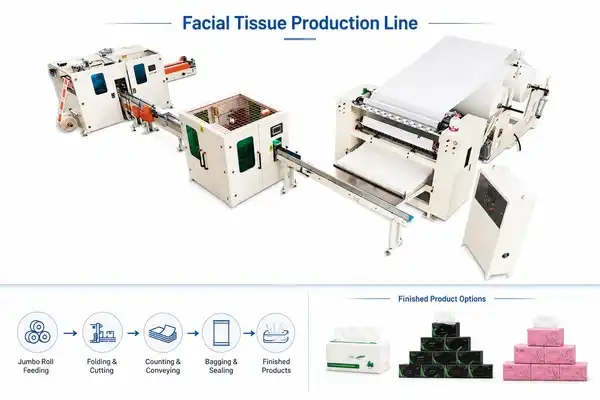
When manufacturers ask what factors affect automatic tissue paper machine performance, the answer spans multiple dimensions: machine design and automation level, raw material quality, operational maintenance discipline, and ambient environmental conditions. A high-performing automatic tissue paper machine integrates PLC-controlled systems, robust frame engineering, and multi-material compatibility to sustain consistent output. Understanding these interconnected variables helps production managers and OEM buyers avoid costly downtime, reduce per-unit costs, and build a converting line that scales reliably with market demand.
Key Dimensions Influencing Machine Design and Technology
The ceiling for everything that comes after is set by machine design. A single-layer converting line is different from a multi-layer setup in more ways than one. It affects the types of products you can offer and the high-end markets you can reach.
Fully automatic systems work better than semi-automatic and manual systems in three areas that can be measured: consistent throughput, lower reject rates, and more efficient use of labor. According to a study released by RISI Tissue World in 2023, fully automated converting lines make 18–22% fewer web breaks per shift than semi-automatic lines that work at the same speed.
This idea is shown by the HENGYU HYF-1550. It can consistently make 100–120 m/min, and its design top speed is 130 m/min. It can make 3-ply and 4-ply face tissue from virgin pulp, bamboo pulp, and sugarcane pulp. The 1550 mm jumbo roll size can handle most store and hospitality layouts without having to change the way they are set up. Cutting tolerances on PLC-controlled folding mechanisms stay within ±0.5 mm, which is a standard that manual lines physically can't keep up with at a steady speed.
When procurement managers look at the output per investment dollar, the choice of structure—a 40 mm thick-wall steel frame vs. lighter options—has a direct effect on how stable the temperature is during 24/7 operations. Misalignment happens because of thermal expansion in frames that aren't well-designed, which lowers the accuracy of cuts and speeds up blade wear.
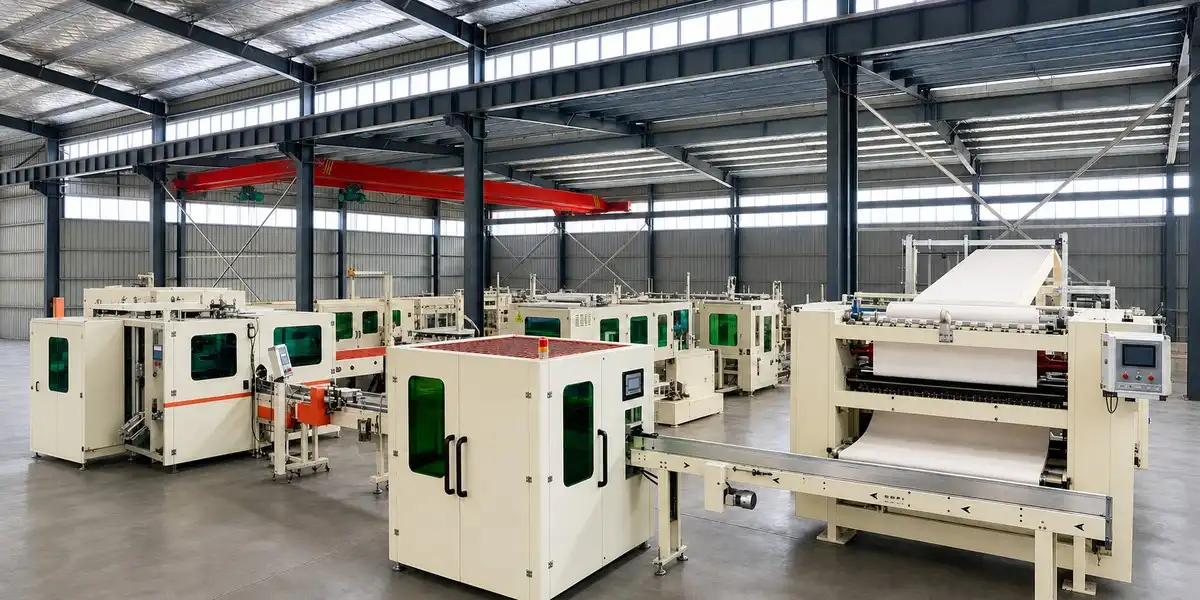
Operational and Maintenance Factors Affecting Performance
Scheduled Inspection and Lubrication
The three parts of an automatic tissue paper machine most likely to break down quietly are the roller bearings, the cutting blades, and the tension sensors. Lubricating the bearing blocks once a week and ultrasonic cleaning the embossing rollers once a month keep fibers from building up and changing the quality of the ply-bonding. Most unexpected stops in high-volume tissue converting settings happen because these steps are skipped.
Energy Consumption Management
Energy draw is a direct measure of performance. Depending on their layout and speed, modern converting machines with variable frequency drives (VFD) use anywhere from 15 to 45 kW. If you compare the HYF-1550's motor architecture to older motor standards, it can cut the cost per ton of finished tissue by up to 30%, according to HENGYU's confirmed output statistics. When moving between bamboo and fresh pulp, which have different tensile properties, running VFDs lets you change the power in real time.
These fields of energy and upkeep work together. When a line works within the temperature and power limits that were planned, its parts wear out much less quickly. Within five working days, HENGYU's operator training program makes production teams proficient in PLC interface navigation, format changeovers, and preventive maintenance schedules. This is because the program skips the learning curve that would otherwise lead to early operational losses.
Environmental and Material Factors Impacting Performance
The quality of the raw materials and the surroundings of the plant are two factors that machine specs alone can't account for.
One of the most underrated things that can affect performance is the amount of moisture in the pulp. When incoming jumbo rolls have moisture levels above 8%, they have more variable web tension, which causes break-detection responses and stops continuous production cycles. The HYF-1550's automatic tension-buffering system helps with this, but working with raw material suppliers to set standard moisture levels is still an important upstream task that can't be skipped.
Compared to fresh wood pulp, bamboo and sugarcane pulp are different in how they can be handled. Their fiber length ranges are different, which changes how the embossing rollers stick the plies together. The HYF-1550's tension system can handle 14–18 g/㎡ per layer for 3-ply configurations and 11.5–15 g/㎡ for 4-ply. It can handle this range of tensions without having to be mechanically reconfigured, which directly supports ESG-driven product lines for buyers in North America and Europe.
The weather and humidity of the area also have an effect on how well the glue works in embossing and how stable the finished logs' dimensions are. Southeast Asia, the Middle East, and South Asia all have high humidity temperatures, so factories in those areas should try to find HVAC systems that keep the changing area below 65% relative humidity. This stops folded tissue sheets from changing sizes, which can affect how well the packing line works with other machines further down the line.
Decision Factors When Selecting the Right Converting Line
Selecting an automatic tissue paper machine tissue conversion line involves criteria beyond specification sheets. Here are the core evaluation dimensions that experienced B2B procurement teams apply:
- Total cost of ownership (TCO): The cost of capital is one factor in the total cost of ownership (TCO). The real 5-year cost is based on how much energy is used per ton, how many workers are needed per shift, and how much money is spent each year on repair parts. When a totally automated line cuts the number of operators from 5 to 8 per shift to 2, the saves in labor are so big that the price difference is usually made up in 18 to 24 months.
- Certification and compliance: Equipment that wants to sell in controlled markets must have CE and ISO certification. Both standards are met by HENGYU machines, which helps with customs clearance and lowers the risk of responsibility for companies that want to ship.
- After-sales infrastructure: How quickly a new line starts stable production depends on how quickly it gets installation help, operator training, and parts. Because of structured video support, HENGYU's remote installation guidance makes commissioning successful for over 95% of customers, without the need for on-site technician visits by default.
- Financing and payment terms: How to pay for and finance large-format conversion lines: These require big investments in cash. Letter of credit (LC) agreements and options for phased delivery lower the risk to cash flow during the ramp-up period.
These factors collectively determine whether a converting investment delivers its projected ROI or stalls during the commissioning phase.
Case Studies and Performance Verification
The HYF-1550 was used to replace a semi-automatic line that needed seven operators per shift by a mid-sized company in Southeast Asia that makes facial tissue for hotels and stores. Within three months of opening, the facility cut the number of technicians needed for each shift to two, kept up a production rate of 110 m/min on both bamboo and virgin pulp substrates, and passed a 48-hour continuous load test without the frame structure deforming from heat.
A separate plant aimed at exporting to European store chains processed bamboo pulp to meet the ESG needs of buyers. The same machine setup handled both bamboo and sugarcane pulp. It worked in shifts, and the PLC interface made format changes possible in less than ten minutes. The plant said that its new line used 27% less energy per ton of output than its old line.
The results are similar to what the TAPPI Tissue Technology Report (2022) found: in similar production settings, converting lines with PLC integration get 15–25% better overall equipment efficiency (OEE) scores than lines that don't have PLC integration.
Conclusion
When changing tissues, automatic tissue paper machine performance is never just one thing that can happen. It comes from the place where engineering quality, maintenance discipline, standardization of materials, and environmental control meet. The HENGYU HYF-1550 meets the structure and automation needs with measured specs, including a design speed of 130 m/min, the ability to work with multiple materials, a 40 mm steel frame, and an energy range of 15 to 45 kW. The production team is still in charge of the operational and environmental factors, with help from HENGYU's training programs and lifetime technical support.
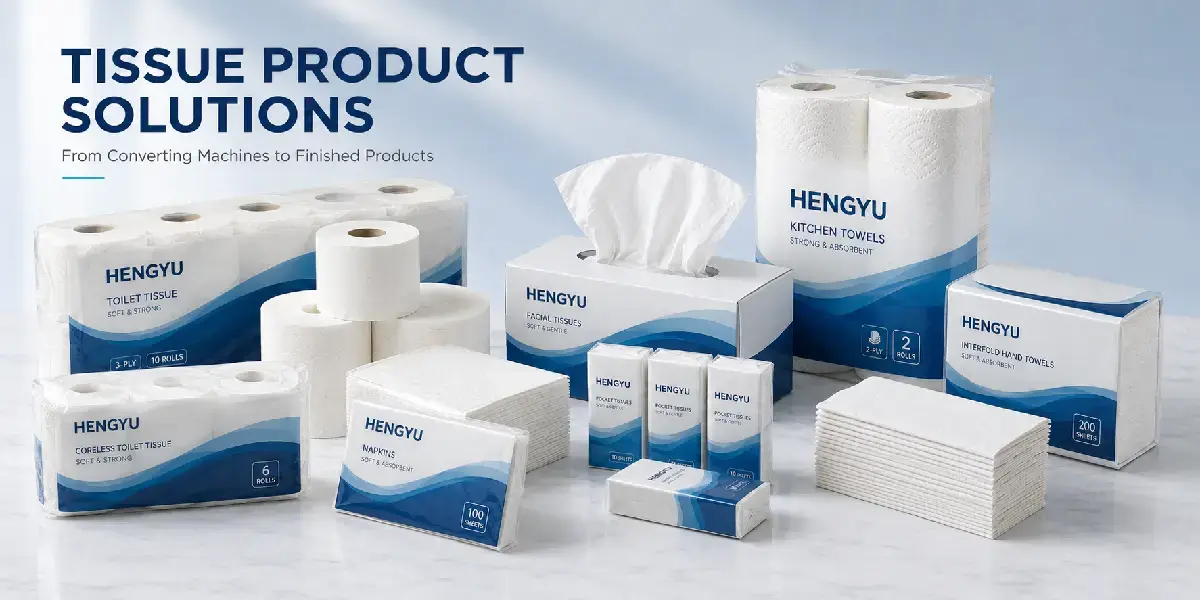
FAQ
How often should rollers and blades be inspected on a high-speed tissue converting line?
Every week, bearing blocks need to be oiled. Every two weeks, cutting blades should be run at full speed and their dimensions should be checked. Ultrasonic cleaning of embossing rollers once a month keeps fibers from building up and affecting the consistency of the ply-bonding.
What makes fully automatic systems more suitable for large-volume production than semi-automatic alternatives?
Fully automatic lines keep the output steady without any changes that depend on the operator. PLC-controlled tension and folding systems keep standards that semi-automatic machines can't match at speeds above 80 m/min. This makes a big difference in lowering the number of web breaks and rejects.
Can one machine process both bamboo pulp and virgin pulp without reconfiguration?
With its adjustable tension system and VFD torque control, the HYF-1550 can work with both surfaces. It is operationally efficient for manufacturers who serve a variety of market needs because it doesn't need to be mechanically reconfigured between material types.
What OEM customization options are available for export-oriented manufacturers?
HENGYU provides full OEM and ODM setups, which include voltage adaptation, branded HMI interfaces, and format pre-sets that are in line with the standards of certain retail markets. You can also get custom branding and localization for operating languages.
Partner With HENGYU for Your Next Automatic Tissue Paper Machine Investment
Every project that HENGYU works on is based on their more than 20 years of experience making tissue machines. The HYF-1550 automatic tissue paper machine for sale is designed for businesses that need a clear return on investment, the ability to work with a variety of materials, and durability that is approved by CE and ISO. You can email our technical team at doris@hytissuemachine.com or go to hytissuemachine.com to get a custom production assessment and equipment quote that fits your capacity goals.
References
1. RISI / Fisher International. Tissue World Market Report. 2023.
2. TAPPI. Tissue Technology and Converting Operations Report. 2022.
3. PricewaterhouseCoopers. FMCG Manufacturing Automation and Labor Cost Analysis. 2022.
4. European Environment Agency. ESG Compliance in Consumer Goods Supply Chains. 2023.
5. McKinsey & Company. Capital Equipment ROI in Emerging Market Manufacturing. 2022.
6. Food and Agriculture Organization of the United Nations (FAO). Non-Wood Fiber Utilization in Paper Manufacturing. 2021.
If you're exploring how to launch or scale a facial tissue box production line on a realistic budget, a semi automatic tissue paper making machine deserves serious attention. This guide walks through how these machines operate, what features matter most, how they compare to other options, and how to procure one with confidence. Whether you're a startup factory owner in Nigeria, a family-run tissue plant in Pakistan, or a small converter in Cambodia, this complete guide gives you the grounded knowledge you need before placing an order.
How Does a Semi Automatic Tissue Paper Making Machine Work?
The Core Mechanical Workflow
Between labor-intensive manual processes and capital-intensive fully automatic lines, a semi automatic tissue paper making machine fills the gap. It automates the most precise steps, like unwinding, embossing, folding, and cutting, but the biggest rolls can still be loaded by hand, and finished stacks can be moved by hand. Here's an example of how the HENGYU facial tissue line works: electromagnetic speed-controlled unwinding of giant rolls (up to φ1,200 mm, 76.2 mm core); steel-to-steel edge embossing for uniform texture; and 320 cuts per minute pneumatic point cutting.
The 18.5 kW vacuum system keeps the web tension fixed during the folding stage. This stops the uneven density and loose-roll problems that happen when setups are done by hand alone. This leads to a production output of 1,900 to 3,000 kg per 8-hour shift, which is based on real working conditions rather than peak ideal rates.
Tissue Types and Energy Efficiency
These tools make normal toilet paper rolls, napkins, and facial box tissues that are 100x120 mm to 100x210 mm in size. For fully automatic lines, 15–30+ kW of energy are used, while 5.5–8.5 kW (main drive) and 8.5 kW (cutting unit) are used by semi automatic tissue paper making machine lines. For small factories with limited utility funds, that difference adds up over the course of a month of output.
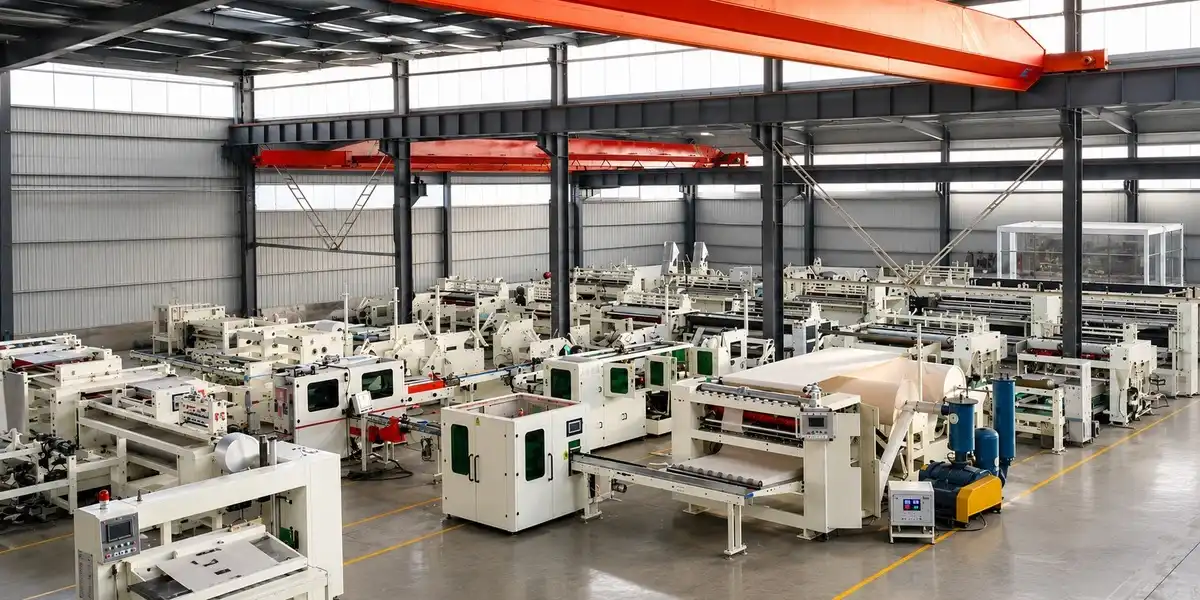
Key Features and Benefits of Semi Automatic Tissue Paper Making Machines
What to Look for in a Production Line?
A good tissue converting machine has four technical bases that set it apart from a bad one: consistent tension control, precise cutting, package integration, and an intelligent control system. This is what the HENGYU semi automatic tissue paper making machine line does best:
- Steel-to-steel edge embossing rollers make patterns clear and sharp across high-volume runs. They get rid of the uneven embossing that causes store returns.
- Pneumatic point cutting system with a 610 mm round knife spinning at 980 rpm, the edges are clean and there are no broken fibers like there are with blade-drag designs. This cuts down on material waste per box.
- PLC programmable control with touch screen interface and PLC customizable control, managers can see the cutting speed, tension, temperature, and output count in real time. This lets them fix problems before they get to the finished goods.
- Automatic box sealing via hot melt glue at 40–50 boxes per minute cuts packaging work by up to 60%. When the cardboard weighs between 250 and 450 g/m², the servo motor makes sure that the cartons are lined up perfectly.
Small tissue companies often lose money because of two things: high labor costs per box and uneven product quality. These benefits fix both of those problems right away. In developing-market power grids, voltage changes are common. The electromagnetic speed control system keeps performance stable during these changes. This is a small but important technical detail that makes a huge difference when your business counts on uptime.
Semi Automatic vs. Fully Automatic and Manual Machines: Which to Choose?
It's not so much about which piece of equipment is the newest that it is about which one fits your current output goals, workforce skill level, and time frame for capital recovery. Manual lines are the cheapest to get started with, but they don't always make good cuts and need a lot more work—usually three to five operators per shift to get the same amount of work done. While fully automatic lines require less human input, they also require a lot more money, a bigger building, and maintenance technicians who are trained to do specific jobs.
For new and developing producers, a semi automatic tissue paper making machine line is the most sensible option. It cuts down on the amount of work that needs to be done by about 60% compared to doing everything by hand, can produce 1,900 to 3,000 kg per day without needing a full engineering team, and can change the shape from 100x120 mm to 100x210 mm in the same production day. Because of this, smaller factories can adapt to changes in seasonal demand and the packaging needs of each retailer without having to buy a second line. For business buyers hoping for a capital recovery period of 12 to 18 months, this setup consistently outperforms both ends in terms of ROI per unit of capital invested.
Procurement Guide: Where and How to Buy Semi Automatic Tissue Paper Making Machines?
Evaluating Suppliers with Confidence
The factors that decide your real production success go far beyond the machine price offered when looking for a supplier of a semi automatic tissue paper making machine. When judging a supplier, you should look at four things: technical certification, the ability to activate the product remotely, power compatibility, and the level of help provided after the sale. The cutting machine runs on 380V/50Hz and the sealing unit runs on 220V/50Hz, which are both standard power configurations in Africa, South Asia, and Southeast Asia. HENGYU machines are certified by CE and ISO. The frequency control method protects against changes in the local power even more.
Remote video installation support is real; more than 95% of HENGYU customers are able to set up their lines without having an engineer come to their location. This is very important for factory owners in Nairobi, Dhaka, or Phnom Penh, where the costs and lead times of international travel really slow down the start-up process. The usual way to buy something is to make an inquiry, then get an official quote, then pay a 30% payment and the remaining 70% before the shipment. After that, there is sea freight, then remote video installation, then trial production, and finally activation of the 12-month warranty. Most buyers start making things within two to three months of their first request.
Troubleshooting Common Issues and Optimizing Machine Performance
Preventing the Problems That Kill Uptime
Problems with converting facial tissue that are the most annoying—knife jams, box misfeeds, and uneven fold registration—are all caused by not controlling tension well enough and keeping blades in good shape. In dry places, static electricity and paper dust speed up the wear on the blade edges and make it impossible for the web to stick to the blade. This is directly dealt with by the HENGYU cutting unit's electric sharpening system with touch screen adjustment, which lets blade repair happen without stopping work.
Misfeeds in the box sealing stage are usually caused by differences in the amount of moisture in the cardboard or an incorrect calibration of the hot melt glue temperature. Temperature changes are reported by the PLC tracking system before they affect the stability of the seal. For the normal 76.2 mm core diameter, HENGYU also works with different core sizes to avoid problems with getting raw materials when local jumbo roll providers use non-standard cores. Checking the hydraulic system's oil-water separator and air filter every month stops valve rust, which is the main reason why semi automatic tissue paper making machines often have strange winding patterns.
Conclusion
A semi automatic tissue paper making machine gives new and growing businesses a financially viable way to make boxed face tissue. The HENGYU answer solves the real problems that small companies have with their operations. It can produce 1,900 to 3,000 kg per day, is precise, works with multiple voltages, and folds, cuts, and cartons all in one line. A 12-month warranty and remote commissioning help make first-line investing much less risky. This is a good place to start if your factory is ready to stop making rolls of tissue and start making boxed tissue instead, which has higher profit margins.
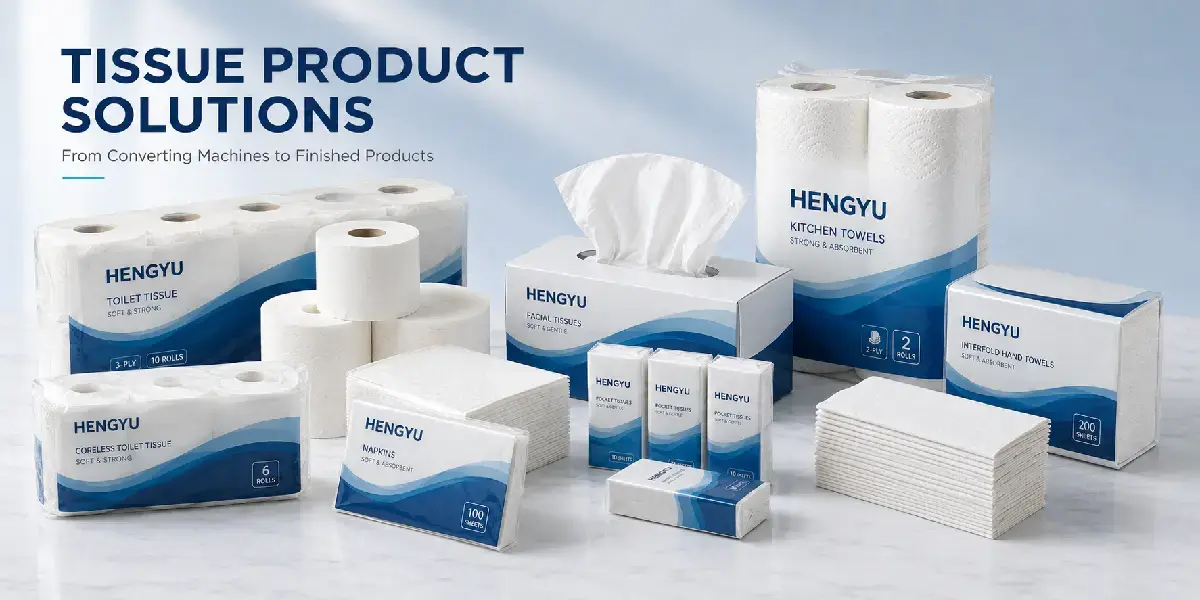
FAQ
What is the typical daily output of this tissue line?
The HENGYU facial tissue line makes between 1,900 kg and 3,000 kg per 8-hour shift, depending on the type of tissue and paper used. This level of output is reasonable under normal conditions; it's not the theoretical peak level.
Can the machine handle both virgin pulp and recycled base paper?
Yes. The semi automatic tissue paper making machine line can process recycled paper by lowering the web tension settings to stop breaks. This is a standard setting that can be changed in the PLC interface.
How long does remote installation typically take?
With HENGYU's video tutorials, WhatsApp support, and multilingual manuals, most customers are able to finish commissioning within 3–7 days. Over 95% of them work without having to be visited in person.
What tissue sizes can this line produce?
The tissue sizes are 100x120 mm to 100x210 mm (within a 2 mm range), and the cartons are 30–100 mm tall and 105–230 mm long.
What voltage standards does this line support?
The cutting machine needs 380V/50Hz; the unit for sealing boxes works on 220V/50Hz. The frequency control method makes things even more stable when the power changes in the area.
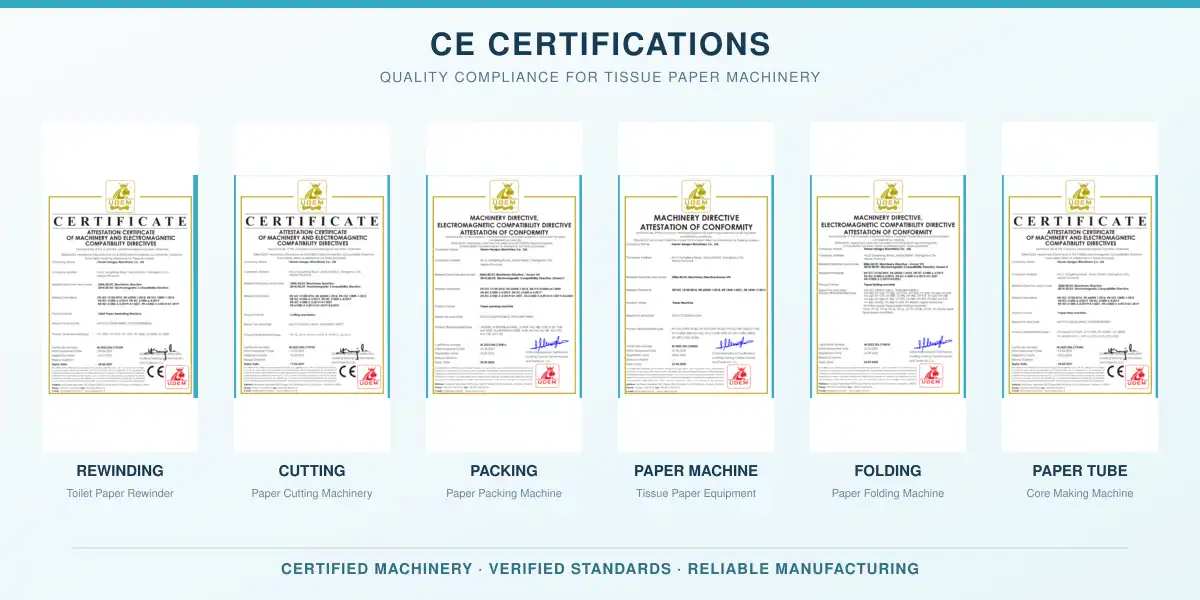
Request a Quote from HENGYU — Trusted Semi Automatic Tissue Paper Making Machine Manufacturer
Every production line that HENGYU sends has been made by someone with more than 20 years of experience making tissue machinery. With real remote commissioning results across Africa, South Asia, and Southeast Asia, our semi automatic tissue paper making machine for sale combines CE/ISO compliance, multi-voltage compatibility, and lifetime technical support. You can email our team at doris@hytissuemachine.com or go to hytissuemachine.com to get details and a quote straight from the workshop right now.
References
1. TAPPI — Tissue Paper Manufacturing: Process Technology and Equipment Standards, TAPPI Press, 2021.
2. FAO — Global Pulp and Paper Industry Outlook, Food and Agriculture Organization of the United Nations, 2022.
3. Smithers Pira — The Future of Tissue to 2027, Smithers Pira Market Reports, 2022.
4. RISI (now Fastmarkets RISI) — World Tissue Market Study, Fisher International, 2023.
5. ISO — ISO 9001:2015 Quality Management Systems — Requirements, International Organization for Standardization, 2015.
6. CE Marking Authorities — Machinery Directive 2006/42/EC: Technical Requirements for Industrial Equipment, European Commission, 2020.
- 1
- 2
- 3
- 4
- 7
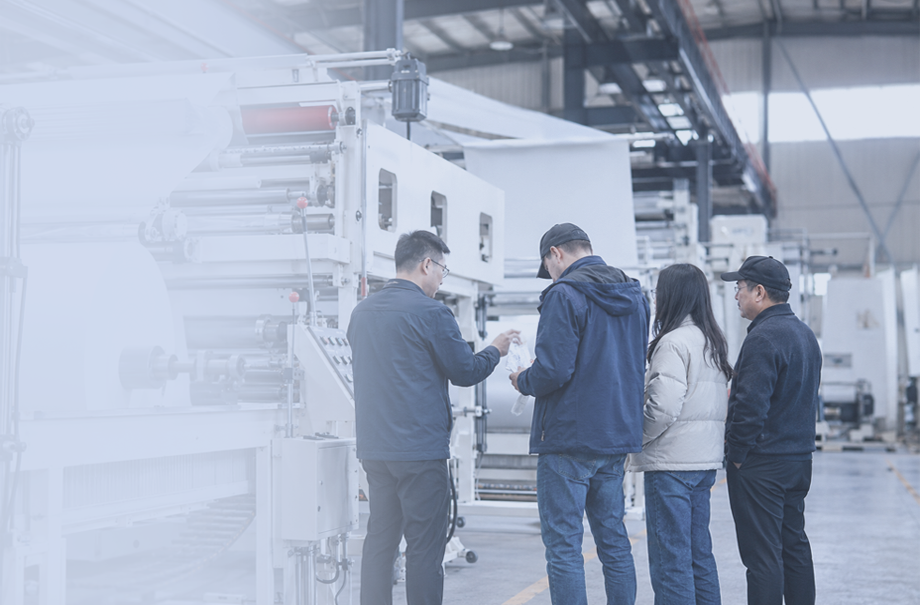
_1787294187070.webp)
_1784082301486.webp)