How Does a Toilet Paper Rolling Machine Work?
A toilet paper rolling machine works by turning large jumbo tissue rolls into finished household-size rolls. The jumbo roll sits on an unwinding stand, and the paper travels through guide rollers under controlled tension. The machine can emboss, laminate, and perforate the sheet, then wind it onto a paper core. A cutter slices the long log into individual rolls, glue seals the tail, and the finished rolls move out for inspection and packaging. In this guide, I explain each step, the main parts, the machine types, and how to judge capacity before you buy.
How a Toilet Paper Rolling Machine Works
What Is a Toilet Paper Rolling Machine?
There is a machine that cuts big rolls of toilet paper into smaller rolls. This machine is also called a toilet paper rolling machine. It's used by stores, hotels, and government buildings. It's made by companies that make tissue, sell it, make OEM products, and make private-label products. It is possible to set the roll width, thickness, sheet length, and ply count. The machine can also use standard or special cores. It is sometimes part of a bigger line that changes the shape of tissue. Right after it is equipment for packaging. For more than 20 years, Henan Hengyu Machinery has been making machines that change cells. We know how people use these machines every day.
The Step-by-Step Rewinding Process
The steps are clear and follow the right order. Someone helps put the big roll on the rolling stand first. The machine keeps the tension even while the web moves forward on guide rollers. It is then run through a stamping unit to give it texture. If there are two layers that need to be joined, the paper is laminated. The machine that makes holes also cuts tear lines to certain lengths. The part that rewinds the sheet carefully works its way around a core until the roll's width is just right. Finally, a tool splits the log in half and glues the tail shut. The rolls are then taken out to be looked at. The sheet doesn't get wrinkly or break because it is well aligned and under even pressure.
Main Components and What Each One Does
The machine has many parts, and each one does a specific job. The unwinding unit lines up the jumbo roll and changes the tension on it. The sheet can be shaped to fit your product needs with modules for stamping, sealing, and perforating. When the roll is wound, the rewinding section controls the core feeding, winding pressure, roll density, and final diameter. A PLC and a touchscreen control all of the drives, sensors, alarms, and safety gear. At the end of the cycle, there are cutting, release, and transport units. One can then add a packing section if they want to. Make sure you know how easy it is to clean and fix each part before you choose a style. It takes longer to do repairs when people can't get to it. Also, the parts need to be good, since a single bad part can stop the whole line.
Production Flow, Machine Types, and Capacity
From Jumbo Roll to Finished Roll
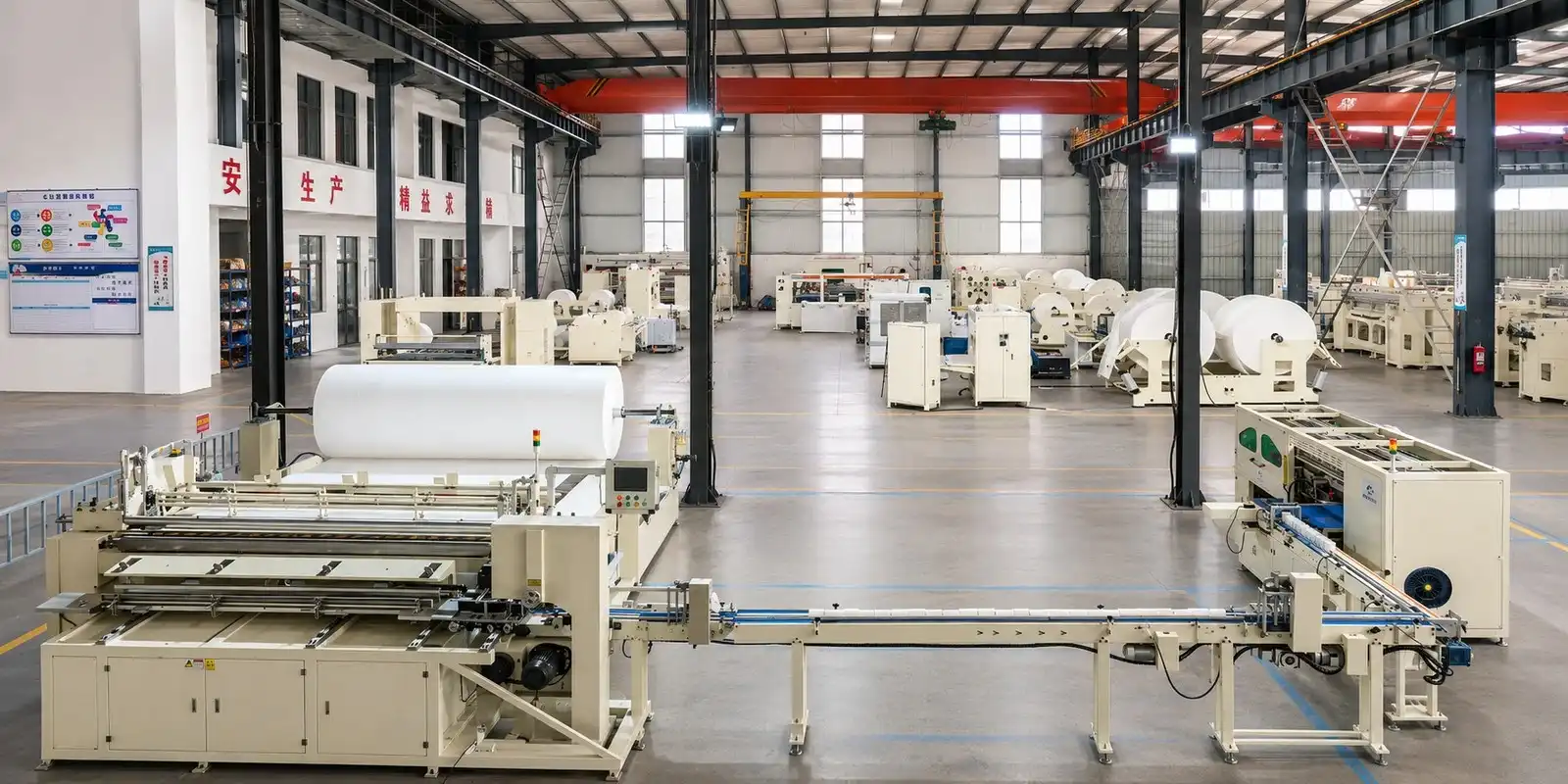
The first step to a good end is to make sure that two things work well together. Big paper, cores, glue, and packing supplies need to be matched with the toilet paper rolling machine. The person who works with the machine loads and threads the roll, then sets the speed, tension, perforation, engraving, and turning. The machine takes in cores, forms the rolls, cuts them, and then sends them out. Staff should write down output, roll width, sheet length, glue application, waste, and alarms so they can keep an eye on it while it's working. I believe you should write these numbers down each shift. Over the course of a few weeks, the records show faults that keep happening. They also let you compare actual output to rated capacity, plan maintenance, and give customers more accurate delivery dates.
Machine Types and Configuration Options
There are different ways to set up machines. Operators don't have to do as much work when using automatic systems. Half-automatic methods, on the other hand, might work better in smaller shops or places where salaries are lower for workers. There is less space on the floor for a machine with only one lane. There are more things that double-lane machines can make, but they are harder to use and need a lot of work. There are also models that work at standard or high speeds and settings that are custom-made for your roll size, voltage, private-label goods, or box format. You can also choose patterns that are burned or not. Before you ask for quotes, ask the supplier if they have a full converting line or just a rewinder. How big the project is changes based on what they offer.
Specifications and Real Capacity
Compare the width and diameter of the biggest jumbo roll, as well as the finished roll size, the number of plies, the core size, the functions of embossing and perforation, the footprint, the power that needs to be installed, and the amount of compressed air that is needed. Keep in mind that the daily return is not the same as the top speed. This is because of things like roll length, product width, changes in materials, downtime, waste, and the skill level of the user. Don't forget to add up the costs of running the business, such as rent, staff, energy, compressed air, glue, new parts, and upkeep. Make sure there is enough floor space, clearance for utilities, electricity, grounding, airflow, and a clear path to load jumbo rolls where they need to go. Most of the time, the job is well planned when a provider asks about these things early on.
HENGYU Toilet Paper Rolling Machine: Features and Specifications
Automation That Saves Labor
A pneumatic system on our toilet paper rolling machine lifts big rolls of paper so that workers don't have to do it by hand. The auto paper core feeding method cuts down on the number of people needed and keeps up with the speed of the line. An operator can use a touch PLC screen to change settings and save them. The screen can also be used in many languages. Things move along in a steady stream on a synchronous conveyor, and the wrapping device is taken care of by an automatic gear-pulling system. The intelligent alarm stops the machine when paper breaks, so less paper is wasted. They keep the machine focused on steady output and cut down on the number of tasks that need to be done by hand over and over again.
Rolls and Frame Built for Long Service Life
When there are a lot of changes, it's important that things last. The rewinding rolls are chrome-plated and made of steel. They won't rust even in damp production areas where they come into contact with paper all the time. In short, the biggest width for raw paper is 2200 mm, the biggest diameter for base paper is 1200 mm, the biggest diameter for the core of raw paper is 76.2 mm, and the biggest diameter for the finished roll is 180 mm. It can go as fast as 220 m/min with 7.5+5.5 kW of power. The machine is 8800 mm long, 3400 mm wide, and 1800 mm high. It weighs 4000 kg. AC380V, 50Hz is what it needs to work. For one year, you can be sure of the quality. Before you place your order, please let us know about the different power sources your business uses.
Embossing, Perforation, and Tail Sealing
What happens to the sheet affects how good the result is. Our pressing machine has a steel-to-wool roller system that lets you change the patterns to fit the tastes of people in the area. Both sides have more texture when point-to-point embossing is used. Spiral cutting makes even tear lines, and the blade roller design makes clean cuts that don't let paper dust pile up. The distance between the holes can be changed, so the toilet paper and dish towel can both be made on the same machine. Glue lamination holds the layers together, and an automatic glue system covers the tail in several places. This gets the rolls ready to be packed.
Operating and Choosing the Right Machine
Safe and Efficient Operation
Before every shift, do a pre-start check. Check the emergency stops, lubrication, glue, belts, rollers, blades, sensors, lubrication, air pressure, guards, and emergency stops. Also, make sure the rolls are lined up correctly and the cores are the right size. Set the tension, embossing, perforation, spring pressure, sheet length, roll diameter, and roll diameter. Then, start the machine at a modest speed. Check the first rolls to see how big they are, how tight they are, how they look, how well the holes are made, and how well the tails are sealed. Most of the time, the settings are off, the parts are old, or the paper isn't right when there are missing rolls, broken paper, uneven perforation, and a lot of waste. Operators need to be properly trained and have the right safety gear, guards, and ways to lock out machines. Both ISO 12100 and the lockout/tagout rule are good safety rules.
Choosing the Best Machine for Your Business
The best choice will depend on the amount of work, the factory room, the workers, and the growth plans. The way I see it, our toilet paper rolling machine is like three other sizes:
- Commercial manufacturing: For business use, the 220 m/min speed and form make it good for people who need to make a lot of things all the time. Paper widths up to 2200 mm can meet a lot of different market needs. Make sure that your packaging line, core stock, and jumbo rolls can all keep up. That way, nothing will slow down the machine.
- Regional converting: For small businesses, automation and low costs go hand in hand. The machine needs a floor that is about 8800 mm long, and it can be powered by normal equipment used in factories. First, measure the walls, doors, and service clearance in your building. Then, look at our machine models and see how your plan matches up. You can ask any questions you want before you sign off.
- Startup tissue businesses: New companies that make tissue get the real tools they need to make things. With the PLC interface, workers don't have to be trained for as long, so work can start faster than with manual tools. Before the machine comes, make sure you have enough jumbo paper, packaging materials, storage space, and someone who knows how to use it. Most of the time, these things will tell you when you can start selling.
You should know what roll size, ply, embossing, core design, and output you want before you look at different prices.
Verifying Performance Before Purchase
You should ask for proof that fits the way you make things. Ask for full information, like electrical diagrams, layouts, and videos of how the stated setup is fed, wound, cut, and discharged. If you can, send your own big tissue for a test run. Check the switch time, steady output, waste, roll size, quality of winding, embossing, perforation, and how well the package fits. Next, write down the conditions that must be met in order for the contract to be accepted. These could include the slowest speed, the most waste, the range of sizes, safety features, how well the alarm works, paperwork, and training. You are less likely to buy a machine that doesn't work for you if you do it this way.
Supplier, Installation, and After-Sales Support
What to Expect From a Supplier
If you want to find a trusted provider, make sure they have experience making things, engineering skills, knowledge of exports, quality control processes, and all the paperwork they need. Henan Hengyu Machinery makes machines that make toilet paper, facial tissue, napkins, and kitchen towels. As well as R&D, they offer ODM/OEM customization for things like configuration, product size, branding, and language of operation. Following CE and ISO standards makes it easy for us to export our machines. A professional quote should include details about the model, its setup, its proven capacity, its spare parts and accessories, as well as the terms of shipping and installation, the guarantee, any extra modules that can be added, and any items that can be customized. Use that list to look at deals one by one.
Installation, Commissioning, and Training
Before shipping, the seller should look at how your business is set up, what services it has, and what materials it needs. Installation can include setting up from afar or on-site, making samples, training operators, and testing to make sure everything works as it should. We can set up the plant for you; you can plan the machine, the layout, and the start-up all at the same time. The person running the machine, the person in charge of repair, and the owner or technical boss all need to be trained at the same time. Everybody has a job to do. The person who uses it keeps an eye on the settings, the tech on the wear, and the boss on the work done and the waste. If you need to know more about the service later, the acceptance report is a good place to start.
Language, Documentation, and Spare Parts
People from other countries who want to buy something should check to see if it meets electrical standards, comes in export packaging, has spare parts available, can be diagnosed remotely, has quick help response times, and has instructions written in more than one language. This touch screen can work with more than one language, and we can change it. We offer help with logistics around the world and expert service for life. We also guarantee the quality of the machine for one year. During the technical consultation, just let us know if your plant is in cold or wet weather. That way, we can check the layout and make sure that the key rolls have enough cover on the outside. When you place your order, ask for a list of suggested extra parts. This way, you can make sure you have blades and other parts on hand before you run out.
Conclusion
A toilet paper rolling machine unwinds the big rolls of paper, adjusts the tension, perforates, feeds the core, rewinds, cuts, seals the tail, and sends out the last rolls. You can choose to emboss or laminate. To get good results, you need to use the right paper, keep the tension steady, line everything up properly, and set everything up correctly. Every main part does its own job. How much you make should match the type of machine, the number of lanes, and the level of automation. There is more to real capacity than just rated speed. Waste and downtime are also taken into account. A sample test, safe operation, planning for the workplace, and written acceptance standards are all things that make buying less risky. It's important to know what the machine can do, but what's even more important is how much it will cost to run, keep up, fix, and get expert help.

FAQ
1. What's the difference between a rewinder and a full conversion line?
A rewinder makes the rolls. Make sure that the scope that was given includes shaping, drilling, feeding cores, cutting, and releasing.
2. How fast does the HENGYU machine work?
It can go 220 m/min. The real output depends on the length and width of the roll, as well as changes in the material, slowing, and loss.
3. What kind of plain paper does it need?
It can be up to 2200 mm wide, and the base paper can be up to 1200 mm across. The raw paper can weigh anywhere from 12 to 40 g/m².
4. What happens when the paper tears?
The smart alarm stops the machine when the paper breaks so that too much paper is not wasted.
Contact HENGYU for a Toilet Paper Rolling Machine Quotation
Want to find a business that makes tools for toilet paper rolling machines and can build parts to fit your plant? The company HENGYU has been making tissue tools for over 20 years and has passed CE and ISO tests. They also offer customization, help with shipping around the world, and lifetime expert service. Our team will help you choose the right setup if you email hengyu@hytissuemachine.com with the output you want, the paper specs, roll sizes, and operating language.
References
1. Handbook of Paper and Board, Wiley-VCH, 2006
2. ISO 12625-1 Tissue paper and tissue products, International Organization for Standardization, 2019
3. ISO 12100 Safety of machinery: General principles for design, International Organization for Standardization, 2010
4. Machinery Directive 2006/42/EC, European Parliament and Council, 2006
5. ISO 9001 Quality management systems: Requirements, International Organization for Standardization, 2015
6. Control of Hazardous Energy (Lockout/Tagout), 29 CFR 1910.147, Occupational Safety and Health Administration, 1989