What is the difference between fully automatic and semi-automatic tissue machines?
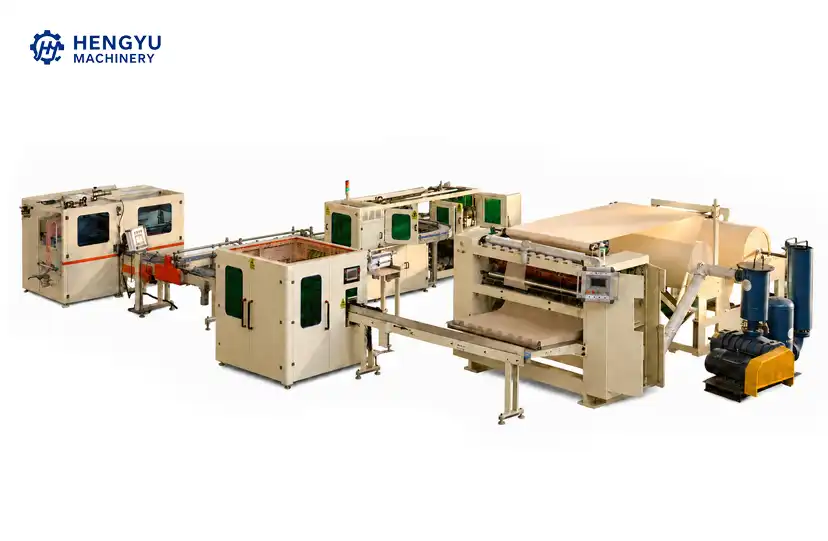
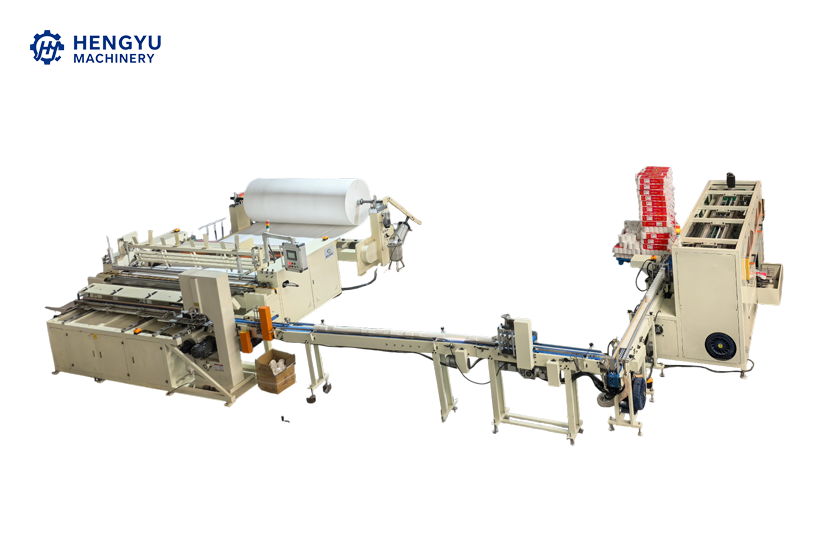
The key difference between fully automatic and semi-automatic toilet paper making machines lies in the level of human involvement required during production. A fully automatic toilet paper making machine, supported by PLC control systems and touch screen interfaces, can complete the entire converting process—from jumbo roll unwinding, embossing, perforating, rewinding, and cutting to packaging—with minimal manual intervention. In contrast, semi-automatic machines require more operator involvement, such as feeding raw rolls, adjusting cutting lengths, and handling products at different stages, making them more labor-intensive but generally more affordable in initial cost. As the tissue manufacturing industry continues to grow and prioritizes efficiency, quality, and cost control, selecting the right level of automation becomes crucial for OEM clients and B2B procurement managers. With long-term industry experience, it is clear that this decision not only affects production efficiency and labor requirements but also product consistency and return on investment, making it an essential factor in building a competitive and sustainable manufacturing operation.
What Is a Toilet Paper Making Machine?
A toilet paper-making machine is industrial converting equipment used to process jumbo parent rolls into finished toilet paper rolls through rewinding, perforating, cutting, and optional packaging.
Fully Automatic vs Semi-Automatic Toilet Paper Machine: Key Differences
|
Feature |
Fully Automatic |
Semi-Automatic |
|
Operators per shift |
1–2 |
3–4 |
|
Production speed |
Up to 280 m/min |
60–150 m/min |
|
Output per hour |
2,000–3,000 rolls |
800–1,500 rolls |
|
Control system |
PLC + touch screen HMI |
Frequency inverter + manual |
|
Material waste rate |
~3% |
~8% |
|
Initial investment |
High (2–3x semi-auto) |
Low |
|
Long-term operating cost |
Lower |
Higher |
What Is a PLC Control System in Tissue Machines?
A PLC (Programmable Logic Controller) is the digital brain of a fully automatic toilet paper machine. It coordinates all production stages—unwinding, embossing, perforating, rewinding, cutting, and packaging—through programmed logic and sensor feedback. Operators interact with the system via a touch-screen HMI (Human-Machine Interface) that displays real-time production data, allows parameter adjustments, and alerts when issues arise. This automation eliminates manual guesswork and ensures consistent output across thousands of rolls.
How Does Paper Break Detection Work?
Paper break detection is a critical safety feature in fully automatic systems. Infrared sensors continuously monitor web tension throughout the production line. If tension drops unexpectedly—indicating a potential paper break—the system triggers an immediate halt to production. This rapid response prevents miswound rolls from being produced, avoids material waste, and protects downstream equipment from damage. In contrast, semi-automatic machines lack this automated safeguard, relying on operator observation to catch issues.
Why Does Tension Control Matter in Tissue Production?
Tension control directly impacts roll quality and production efficiency. Consistent web tension ensures uniform roll density, prevents telescoping (layers sliding sideways), and maintains accurate perforation spacing. In fully automatic systems, pneumatic pressure controls and frequency inverters adjust tension dynamically based on real-time conditions. Semi-automatic machines require manual tension adjustments, which vary by operator skill and fatigue levels—leading to inconsistent roll quality across production batches.
How Do Semi-Automatic Machines Require Manual Input?
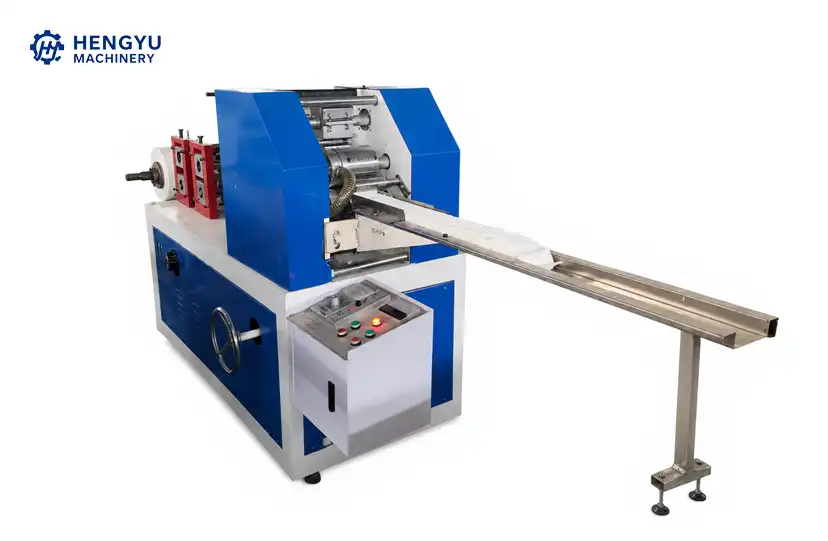
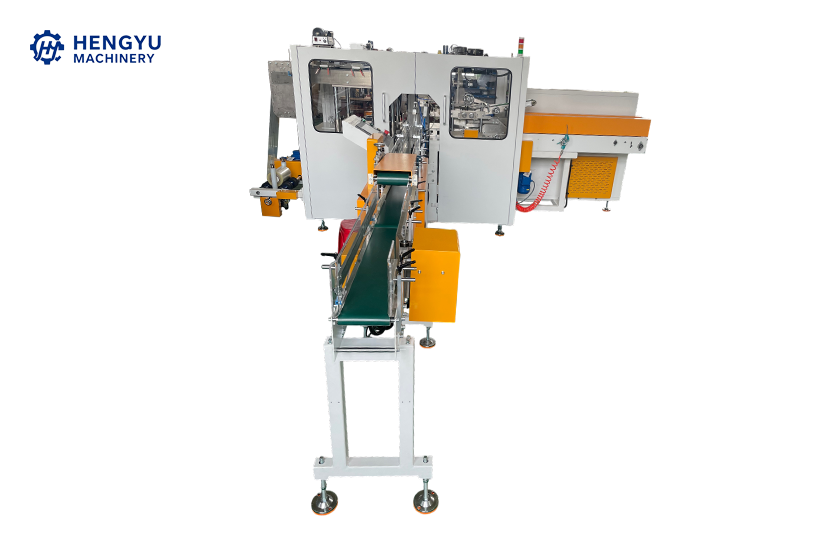
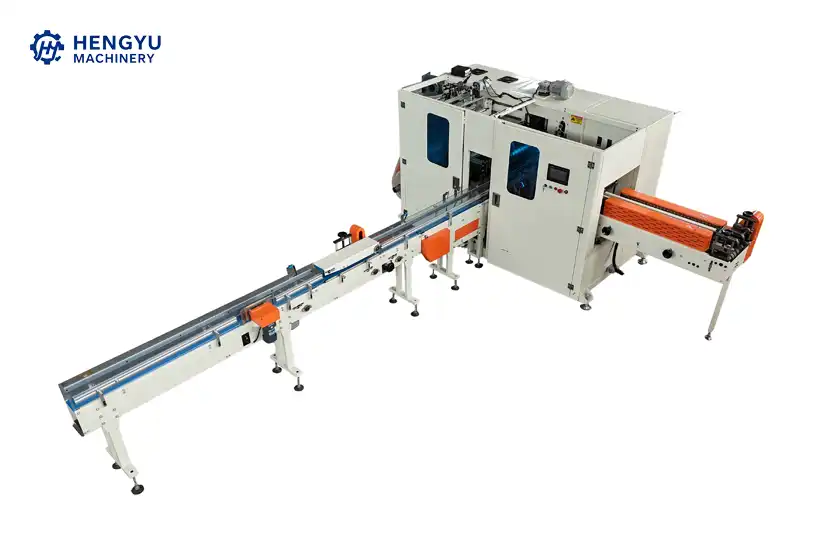
Compared with an automatic toilet paper making machine, semi-automatic tools need human input at multiple points throughout production. Operators must hand-load jumbo rolls onto unwind platforms, adjust cutting blades for different-sized products, and remove completed logs from the cutting station. Semi-automatic machines employ frequency inverter control to alter speeds but lack integrated sensor networks. For smooth operation, a semi-automatic line requires three to four personnel per shift—significantly more than the one or two needed for fully automated systems.
Production Capacity and Output Comparison
How Many Rolls Can a Toilet Paper Machine Produce Per Hour?
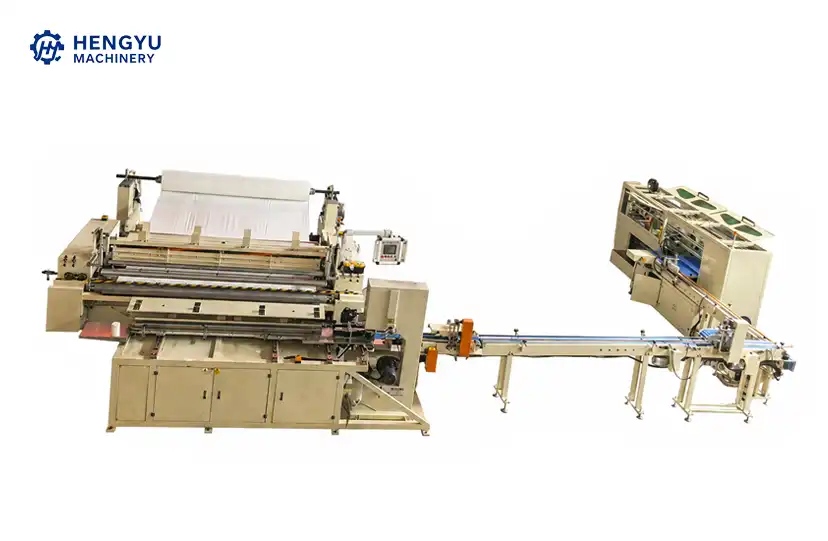
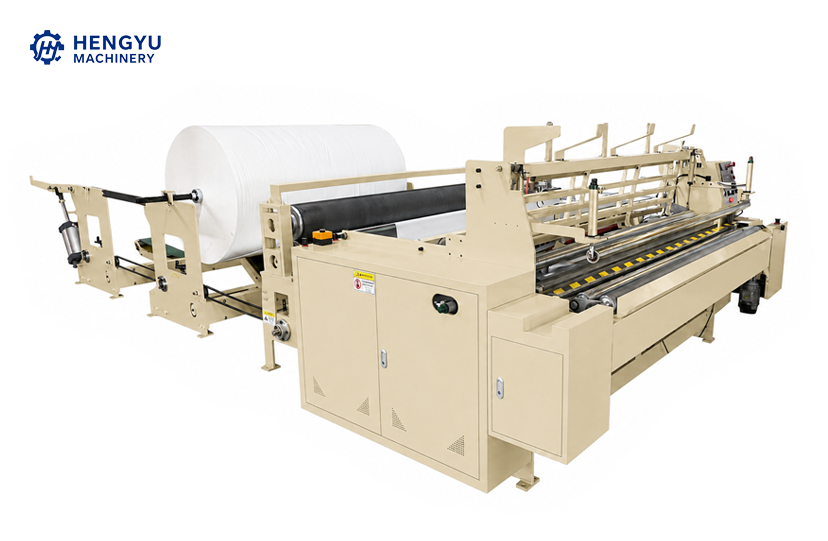
A fully automated line with high-speed rewinding can produce over 3,000 rolls of standard toilet paper per hour. The HENGYU HY-3000 handles parent rolls up to 3000 mm wide and 1500 mm in diameter at 280 m/min, making it ideal for large-scale manufacturing serving regional distribution networks. Semi-automatic machines typically produce 800 to 1,500 rolls per hour at 60 to 150 meters per minute, depending on product complexity and operator competence. This reduced capacity works for local startups but poses challenges as demand grows.
What Factors Affect Production Speed and Output?
Choosing ply and machine speed directly affects output regardless of the automation level. Three-ply premium tissue lowers throughput compared to budget grades. Machine width also matters—wider parent rolls enable higher production rates. For fully automatic systems, speed consistency is maintained through frequency inverter control. Semi-automatic machines experience speed fluctuations due to manual interventions, with operators adjusting settings between product runs and slowing during shift changes.
Case Study: East African Manufacturer's Growth Journey
An East African customer initially chose semi-automatic instruments to save money, but their company grew faster than expected. Within 18 months, they faced a critical decision: acquire additional semi-automated equipment and recruit more personnel, or upgrade to fully automatic systems. The second option cost more upfront but proved cheaper and more reliable long-term. This real-world example demonstrates the importance of anticipating growth when selecting equipment—businesses that underestimate demand often pay more in the long run through repeated equipment purchases and labor costs.
Cost Analysis and ROI
What Is the Cost Difference Between Automatic and Semi-Automatic Machines?
Total cost includes machine price (CAPEX), labor (OPEX), material waste, and maintenance. Fully automatic systems have higher upfront costs (2–3 times semi-automatic) but lower long-term operating expenses. The five-year cost of ownership comprises purchase price, installation, operator wages, maintenance, energy, and material waste. Fully automated systems prove more cost-effective when daily output exceeds 20,000 rolls.
|
Cost Component |
Fully Automatic |
Semi-Automatic |
|
Machine price |
High |
Low |
|
Annual labor cost (5 years) |
Low |
High (3–4x) |
|
Material waste cost |
Low (3%) |
Medium (8%) |
|
Maintenance cost |
Medium |
Medium |
|
Total 5-year cost |
Lower |
Higher |
ROI Analysis of Toilet Paper Production Line
A typical ROI cycle for semi-automatic systems is 12–24 months for low-scale operations. Fully automatic systems typically achieve ROI in 18–30 months for medium-to-high-scale production. ROI depends heavily on daily production volume, local labor costs, and market demand stability. Businesses should calculate their break-even point based on specific market conditions.
When Does Fully Automatic Equipment Become More Profitable?
Fully automated systems generate greater profitability when daily production exceeds 20,000 rolls. The operational efficiencies—reduced labor, lower waste, and consistent quality—scale favorably with volume. For manufacturers targeting retail contracts, consistency is not optional; automated systems deliver the uniformity needed to satisfy large buyers, opening doors to higher-volume, higher-margin business opportunities.
Quality Control and Waste Reduction
How Does Automation Improve Product Consistency?
The quality control advantages of an automatic toilet paper making machine include reduced waste and significantly improved product consistency. The pneumatic perforation bottom roller provides equal tear force on all sheets in the HY-3000, with standard 110mm perforation pitches maintaining a 4mm to 1mm perforation ratio. This precision is crucial because consumers expect toilet paper to tear cleanly along specified lines without breaking unpredictably.
How Much Waste Can Automation Reduce?
Moving from semi-automatic to fully automated equipment reduced material waste from 8% to 3% for one customer—representing substantial cost savings given monthly raw material volume. Automatic approaches reduce waste through paper break detection (immediately stopping production if tension drops), precise edge trimming (cutting waste parts as thinly as feasible), and consistent tension control (preventing miswound rolls from being discarded).
Why Do Retail Contracts Require Automated Production?
Large supermarket chain suppliers cannot tolerate variable quality—one batch of misperforated rolls may damage the brand's reputation and result in lost contracts. Automated systems deliver the consistency required to satisfy major retailers, while semi-automatic production with manual adjustments introduces variation that can lead to rejected shipments and damaged client relationships.
Infrastructure and Maintenance Requirements
What Facility Requirements Do Automatic Machines Need?
Space and building specifications ensure optimal machinery integration. HENGYU HY-3000 weighs 6.5 tons and measures 5900mm long, 4539mm wide, and 1800mm high, requiring a sturdy concrete foundation and adequate space for roll loading, finished product removal, and maintenance. Ceiling height must accommodate overhead utilities and conveyor systems. Automatic systems need steady three-phase power, compressed air maintaining 0.4 MPa at 1000 L/H, and proper wiring to safeguard sensitive PLC components.
What Maintenance Do Tissue Machines Require?
Every 500 hours, the transmission system—timing belts, chain drives, and flat belts—must be oiled and examined for wear. Fully automatic converters include HMI interfaces displaying problem codes for pneumatic pressure drops, motor overheating, or sensor failures, enabling swift diagnosis and repair. Semi-automatic machines with simpler mechanical systems may appear easier to maintain, but issues are frequently disguised until breakdowns occur during peak production periods.
What Safety Features Protect Operators?
Both machine types include industry-standard safety measures: multiple emergency stop buttons, safety light curtains surrounding cutting sections, and interlocking doors that disable motors when access panels open. CE certification confirms HENGYU equipment meets European safety standards, reassuring international customers about liability and worker protection.
Energy Efficiency and Environmental Sustainability
How Does Automation Reduce Energy Consumption?
Global production best practices increasingly emphasize energy efficiency. An automatic toilet paper making machine assists manufacturers in achieving sustainability goals through efficient motor control, reduced power per unit manufactured, and edge trim material recovery. The independent motor architecture of the HY-3000 enables operation of only components needed during setup or low-volume shifts. Semi-automatic machines with single motors for multiple operations make energy management more difficult.
How Does Automation Support Sustainable Material Processing?
Fully automated machines handle various paper types without frequent recalibration, helping producers balance cost, quality, and environmental impact when mixing materials. Manufacturers increasingly use efficient conversion equipment with ethically produced raw materials like recovered fiber or environmentally friendly pulp, and automation enables consistent processing of these sustainable alternatives.
Supplier Selection and Procurement Guidance
Who Are the Leading Tissue Machine Manufacturers?
Henan Hengyu Machines Co., Ltd. has developed tissue paper machines for over 20 years, offering complete production line solutions including toilet paper, face tissue, napkin, and kitchen towel machines. Technology innovation focuses on advanced PLC technologies enabling online diagnostic support, with experts able to diagnose client equipment remotely—substantially reducing response time to issues.
What Customization Options Are Available?
Due to excellent R&D and ODM/OEM customization services, HENGYU adjusts machine setups, product sizes, branding, and working languages to match market demands. A Middle Eastern customer requested modifications to manufacture medical-grade tissue with antibacterial chemicals—engineering teams modified embossing patterns and bonding techniques accordingly. Customization extends to control panel overlays offering Arabic, Spanish, or Russian instructions and core width adjustment from 32 mm to 50 mm.
What Should Buyers Consider in Procurement?
Direct OEM agreements offer greater customization and expert support compared to B2B portals where intermediaries may add markup without delivering value. International purchasers should verify suppliers' export experience, as different locations have varied documentation and customs processes. Standard HENGYU equipment warranty covers product and assembly issues for one year from installation, with extended warranties available. Standard designs deliver 30–45 days after order verification; fully customized systems may take 60–90 days.
Conclusion
The decision between fully automatic and semi-automatic tissue machines depends on production requirements, growth trajectory, and business model. For organizations that wish to scale production efficiently, an automatic toilet paper making machine provides unsurpassed speed, consistency, and long-term cost savings that justify higher initial investment. Startups with limited capital may employ semi-automatic technology, even if it means higher labor costs and more quality variation. Understanding these distinctions enables equipment selection that matches company strategy beyond simple pricing. Investing in the correct automation level yields consistent production, satisfied customers, and healthy profit margins.
FAQ
What is the main difference between automatic and semi-automatic machines?
Automatic machines require minimal labor (1 operator per line) and use PLC control for all production stages. Semi-automatic machines require manual operation at multiple stages (3–4 operators per line) and have lower production speeds.
Which machine is better for startups?
Semi-automatic machines suit small startups with limited budgets and production under 15,000 rolls per day. However, if rapid growth is anticipated, investing in full automation from the start is more cost-effective long-term.
Is fully automatic equipment more efficient?
Yes, it significantly reduces labor costs, lowers material waste rates (from 8% to 3%), ensures production consistency, and has higher output capacity (up to 3,000 rolls/hour).
How much does a toilet paper making machine cost?
Cost varies widely. Semi-automatic machines are much cheaper initially, while fully automatic systems require 2–3 times the investment. Total 5-year ownership cost is typically lower for fully automatic systems.
How long does ROI take?
Semi-automatic systems: 12–24 months for low-scale operations. Fully automatic systems: 18–30 months for medium-to-high volume production. Break-even becomes more favorable as output increases.
What maintenance challenges should I anticipate?
Automatic machines need skilled technicians for PLCs, pneumatics, and complex components. Preventive maintenance—lubricating the transmission every 500 hours, checking blades monthly, and calibrating sensors quarterly—prevents breakdowns. Semi-automatic machines have more misfeeds and user errors.
Partner with HENGYU for Your Tissue Production Success
HENGYU has a wide range of tissue converting options that can be used in any production situation, from small businesses just starting out to big factories that need to make more products. Our HY-3000 Automatic Toilet Paper Making Machine is a great example of the high-quality engineering and dependability that come from working in this field for over 20 years. We don't just sell machines; we offer full turnkey solutions that include providing the machines, overseeing their installation, giving full training to operators, and providing lifetime technical support to make sure your production runs smoothly.
It only takes a moment to get in touch with us to see how our tissue paper machines can meet your needs. Email our knowledgeable staff at doris@hytissuemachine.com for full technical details, choices for customization that fit your market, and clear cost information. Whether you're looking for a reliable automatic toilet paper making machine manufacturer for your first production line or an experienced supplier to help you grow your business, HENGYU has the equipment you need. It is CE- and ISO certified, and the company has a history of exporting to other countries. You can see all of our toilet paper, facial tissue, napkin, and kitchen towel machines at hyjx.aixdb.cn. We offer OEM/ODM customization options for all of them, as well as solid global shipping support.
References
1. Chen, L., & Wang, H. (2021). Automation Technologies in Tissue Paper Converting: A Comprehensive Analysis of Production Efficiency and Quality Control. Industrial Manufacturing Press.
2. Thompson, R. (2020). Modern Tissue Manufacturing Equipment: Comparing Semi-Automatic and Fully Automatic Production Systems. International Paper Machinery Journal, 45(3), 112-134.
3. Martinez, S., & Kumar, P. (2022). Investment Analysis for Tissue Paper Production Lines: ROI Considerations in Emerging Markets. Journal of Manufacturing Economics, 18(2), 67-89.
4. Anderson, K. (2019). PLC Control Systems in Automated Tissue Converting Equipment. Mechanical Engineering Publications.
5. Zhang, Y., & Ibrahim, M. (2023). Quality Assurance in High-Speed Toilet Paper Manufacturing: The Role of Automation in Consistency. Paper Technology International, 31(1), 45-58.
6. Roberts, J. (2021). Labor Efficiency and Energy Consumption in Tissue Converting: A Comparative Study of Automation Levels. Sustainable Manufacturing Review, 12(4), 201-223.
_1786504312779.webp)
_1787294187070.webp)
_1784082301486.webp)