How Does a Toilet Paper Production Machine Work?
When you grab a roll of toilet paper, you're carrying the end of a very well-planned manufacturing process. A toilet paper production machine takes big rolls of tissue paper and turns them into ready-to-sell items using a system that includes rolling, embossing, rewinding, cutting, and packing. This toilet paper production machine solves some of the biggest problems in manufacturing, like cutting waste, making sure the quality of the rolls stays the same, and using less labor while still producing things quickly. Modern machines use advanced technology to make sure that every roll meets quality standards while keeping production costs low. This makes them necessary for companies that want to stay ahead in the market today.
Understanding the Toilet Paper Production Machine: Process and Components
From raw materials to finished goods, there are several steps that are all linked and work well together.
The Core Components Working in Harmony
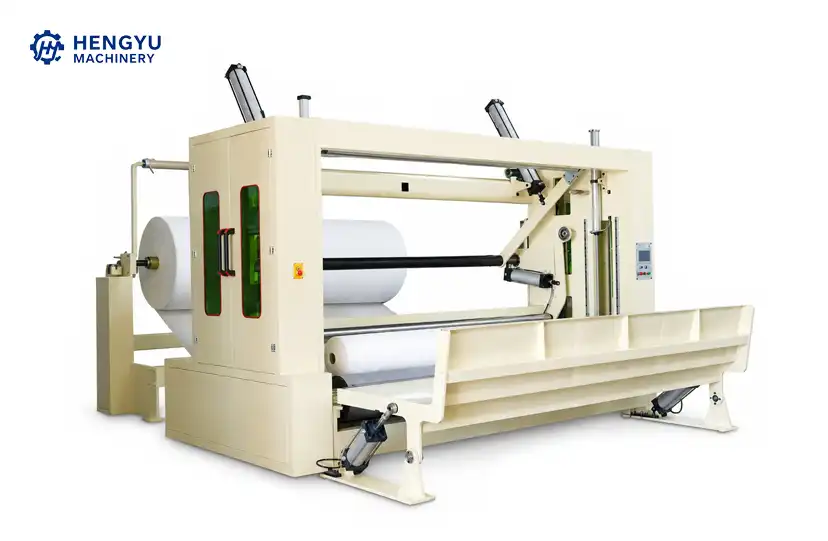
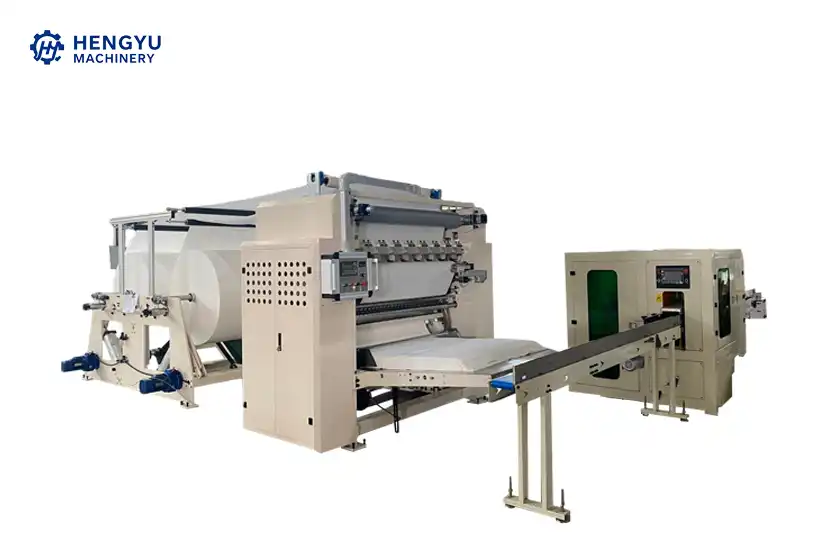
At the center of every toilet paper production machine is the unwinding stand, which holds the parent jumbo roll. These are usually bought from paper mills that make tissue from new pulp, recovered fibers, or bamboo, which is becoming more popular as an option. Tension control systems in the unwinding process keep the paper feed rates steady, which keeps the low-GSM (grams per square meter) paper from tearing. As production goes on, magnetic powder brakes or servo motors make changes in real time as the width of the giant roll shrinks.
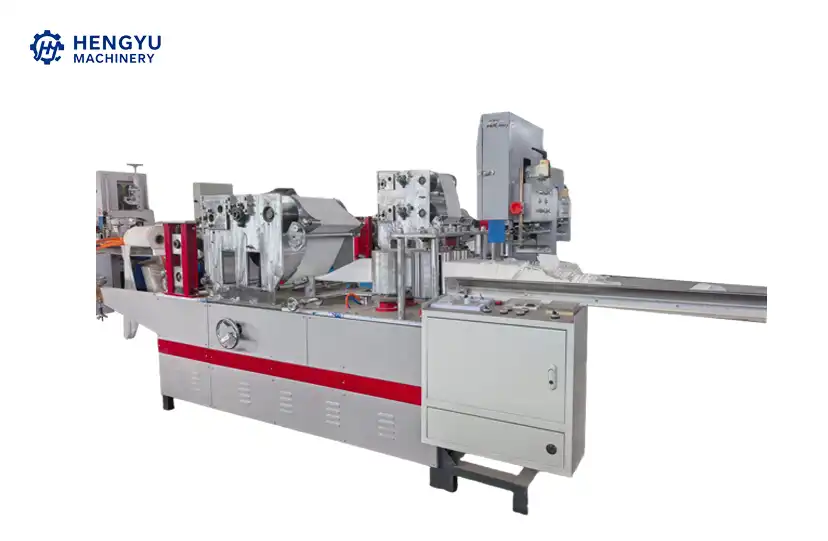
The next part is the embossing unit, which has steel wheels with patterns etched into them that press images into the paper. Embossing isn't just for looks; it makes the fabric bulkier and more absorbent by making air holes between the plies. For even designs, some machines offer point-to-point embossing. For extra softness, layered embossing is also available. It's important to get the pressure just right—too much will crush the fibers, and too little will not bond multi-ply goods well.
From Rewinding to Final Product
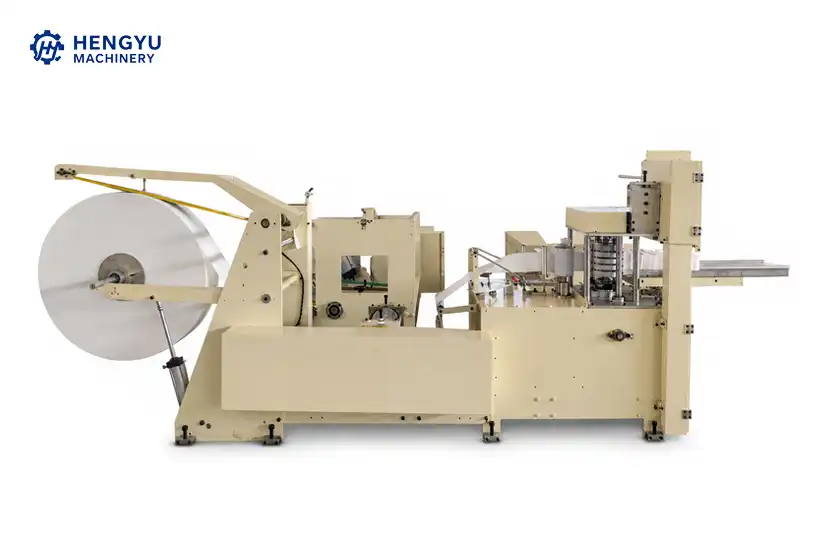
The final rolls are made by the rewinding head after the stamping head. The HENGYU Model HY-1575 is an example of current rewinding technology because it can handle original paper thicknesses of up to φ2200 mm. This machine automatically feeds cardboard cores with a diameter of 30 to 55 mm, applies glue strips for ply bonding, perforates sheets at set intervals, cuts the edges for smooth finishes, and winds the paper into logs with a diameter of 50 to 350 mm. The whole process goes on all the time, and each eight-hour shift can produce up to 2.5 to 3 tonnes.
At the cutting station, air or servo-driven saws cut these logs into individual rolls. Cutting with a range of within ±0.5mm makes sure that rolls fit standard machines and look the same on store shelves. Ventilation systems remove the paper dust that builds up to keep the workplace clean and protect the health of workers.
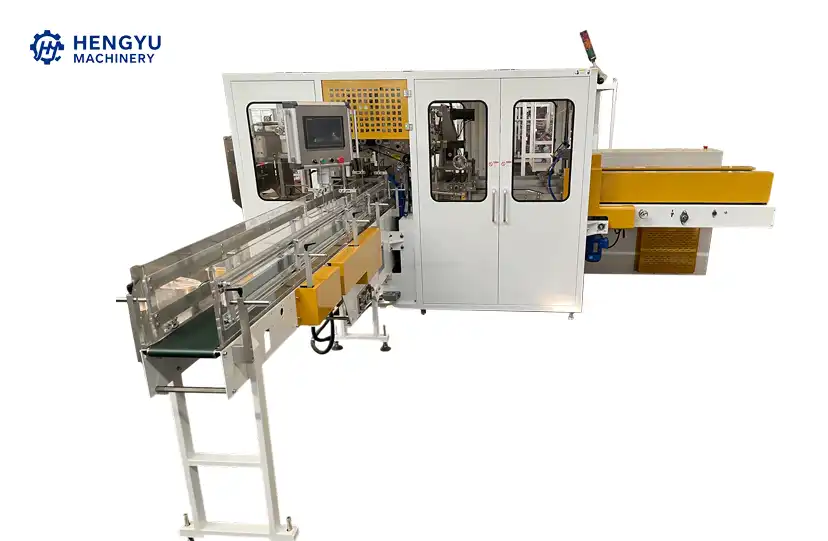
Packaging machines put labels on final rolls, wrap them in plastic film or paper bags, and arrange the items so they can be packed in bulk. Toilet paper production machines cut down on human work, speed up production, and keep up with hygiene standards that are important for consumer goods.
Machine Types for Different Production Scales
Based on how much they want to make, manufacturers pick from automatic, semi-automatic, and high-speed options. Semi-automatic machines need workers to add cores and take out finished logs by hand. These machines are good for businesses that want to test the market or make small batches of specialty products. Toilet paper production machines, like HENGYU's full production system, can feed cores, reverse, cut, and pack with little help from a person. This makes them perfect for established makers who want to expand their operations.
Toilet paper production machines can go faster than 280 meters per minute and are made for large factories that serve big store chains. The toilet paper production machine can handle different needs, like extra-soft luxury tissues, recycled paper with shorter fiber lengths, or big rolls for businesses. Each type of machine is designed to handle different types of raw materials and end products.
A complete business environment is made up of these parts that work together. Machine settings are affected by the type of material used. For example, recycled wood needs to be handled more gently than fresh fibers, and the perforation spacing on bamboo-based paper may need to be changed. Manufacturers can choose equipment that fits their quality standards and market placement better when they know how each part affects the end product.
Advantages and Performance Factors of Automatic Toilet Paper Production Machines
Moving to automation changes the costs of production and the consistency of the products in ways that can be measured.
Efficiency Gains That Impact Your Bottom Line
Toilet paper production machines are much better for operations than the old ways of doing things. When core filling, glue application, and log removal are done by machines without constant control, labor costs drop by a huge amount. Through centralized HMI touchscreens, a single operator can keep an eye on multiple stages of production. This frees up workers to do more valuable jobs like quality control or maintenance.
Because toilet paper production machines don't have to worry about people's pace, throughput goes up. With a total power consumption of only 5.5kW + 0.75kW, the HY-1575 is a very energy-efficient machine that can make up to three tonnes of steel every day while keeping electricity costs low. This efficiency directly leads to competitive prices in markets where profit margins are always getting smaller.
When machines handle important factors, the quality of the product is always the same. Automated tension systems stop wrapping from being too loose or too tight, which can damage rolls. Precisely applying glue makes sure that the plies stay together during shipping and handling. Customers can always count the same number of sheets when the hole spacing is the same. This builds trust in the brand.
Performance Metrics Manufacturers Monitor
The most important thing for buyers to look at is production ability. Small to medium-sized businesses can use toilet paper production machines with 2.5T to 3T per day to get a foothold in the market or test out new product lines. For larger businesses to meet distribution needs easily, they need tools that can make five tons or more.
The amount of energy used has a big effect on ongoing operating costs. Modern machines have variable frequency drives that change the speed of the motors based on the needs of the production line at any given time. This cuts down on waste during start-up, slowdown, and product changes. Compared to older fixed-speed models, energy-efficient designs can save thousands of dollars over the course of a year of continued use.
Precision in the machine is needed for good rolls. Chrome-plated rollers don't rust in wet factories and keep their smooth surfaces so they don't leave marks on paper. Frames made of reinforced steel keep vibrations from happening that could lead to uneven winding or bad cutting. When buyers do factory acceptance tests, they make sure that the dynamic balance on the high-speed rollers is correct, that the stamping depth is the same across the whole web width, and that the cutting precision meets the required standards.
Maintenance Practices That Extend Equipment Life
Maintaining machines on a regular basis keeps them running well and avoids costly downtime. Paper dust and glue residue build up on embossing rollers, which need to be cleaned once a week to keep the pattern clear. Every 500 hours of use, mechanical bearings need to be oiled so that heat doesn't build up and speed up wear. For pneumatic systems to work consistently, seals and pressure controls need to be checked on a regular basis.
During maintenance times, help from suppliers is very important. You can feel safe with HENGYU's one-year quality promise and lifetime expert service, but how quickly production can start up again after a part fails depends on how easy it is to get spare parts. Manufacturers that do business in markets that are far from their suppliers' offices should check where their parts inventory is kept and how long it usually takes to ship during the buying talks.
In terms of money, preventative upkeep is better than reactive fixes. Planning to repair parts based on what the maker says is cheaper than stopping production lines in the middle of an emergency. By teaching workers to spot early warning signs like strange noises, changes in vibration, or quality differences, you can take quick action that causes as little trouble as possible. Because of these benefits, toilet paper production machines are more like strategic investments than just capital costs. This is especially true for companies that want to grow over the long run.
How to Choose the Right Toilet Paper Production Machine for Your Business
To choose the right toilet paper production machine, you need to carefully look at your current wants and your plans for growth in the future.
Assessing Production Scale and Budget Parameters
The machine's specs depend on how much power you want. When new companies join the market, they often start with semi-automatic machines that make 1-2 tons of goods every day. This helps them keep their original investment low while they learn how to run the machines properly. As the market grows, switching to automatic systems like the HY-1575 improves output without having to completely redesign the facility. Its small footprint of 6200 x 3200 x 1900 mm makes it easy to fit into existing plant spaces.
Budget planning includes more than just the price of the item. Figure out the total cost of ownership, which should include installation, training for operators, energy use, repair materials, and a collection of spare parts. It's possible that machines that cost more up front but use less energy will be worth more in the long run than cheaper machines that use too much power. Suppliers' financing choices can help you spread out your capital needs over time, which makes it easier to handle your cash flow during the start-up phase.
Reliability of suppliers should be carefully checked out. HENGYU has been making things for more than 20 years, and their CE and ISO certifications show that they follow set quality standards. Ask current users in similar markets for references. Their operating experiences can tell you a lot about how reliable the machine is, how quickly support responds, and any hidden costs that the specs don't show.
Evaluating Customization and Value-Added Services
As market needs change, production needs to be able to adapt. Manufacturers can adapt to changing customer tastes without having to buy new equipment when their machines have changeable roll diameters, perforation spacing, and core sizes. OEM/ODM features allow customization of branding elements like control panel languages, safety signs, and machine colors. This is useful for companies that sell equipment or do business in areas with a lot of different languages.
Time-to-production is cut down by installation and training services. Full packages come with setting up the equipment, teaching the user how to use it, and test production runs to make sure everything works well before the seller leaves. Video troubleshooting, software updates, and diagnostic help are all examples of remote support that can be very helpful when technology problems happen outside of normal business hours or in places where there isn't a lot of local knowledge.
The built-in features of the HY-1575 make this value offer very clear. Auto core giving gets rid of the need to handle cores by hand, which slows down production and puts stress on the body. Multiple process steps can be done in one machine thanks to built-in perforation, glueing, and cutting functions. This saves floor room and makes operator training easier. This kind of all-in-one smart operation speeds up work processes for companies that don't have a lot of experience with manufacturing.
Balancing Performance with Long-Term Support
Total ownership costs are greatly affected by how long a machine lasts. The HY-1575 weighs 2500 kg, which shows that it is built to last and be used continuously in industry. Heavy-gauge steel frames can handle practical loads better than lighter frames that may need to be fixed more often or replaced too soon.
Different sellers have very different ways of providing service after the sale. Some give a basic warranty and help for a fee later, while others, like HENGYU, offer free technical support for life. For new factory investors who don't have their own repair staff, full ongoing help is worth the extra cost because it lowers business risks and speeds up problem-solving.
Professionals in charge of buying things should ask for full specs, output samples from demo machines, and clear information on when the goods will be delivered. Global transportation skills make sure that equipment comes on time, which is very important when planning when to build a facility, hire workers, and start a new product on the market. These choice factors work together to make tools either a competitive benefit or a source of operational frustration.
Sustainable and Waste Management Practices in Toilet Paper Manufacturing
Environmental duty affects buying choices and following the rules more and more.
Eco-Friendly Machine Features Reducing Resource Consumption
Modern toilet paper production machines use technologies that have less of an effect on the world. Motors that are energy-efficient use less electricity. The HY-1575's small 6.25kW total power is a good example of this. Instead of running at full capacity all the time, variable speed controls change the output to match the demand. This cuts down on waste during product changes or repair times.
Processing recycled wood directly helps reach environmental goals. Machines made to work with 100% recycled content can handle shorter fibre lengths that tear more easily than fresh pulp. Specialized tension controls and kinder handling systems keep the material from breaking, which would otherwise turn it into scrap. Using salvaged materials lowers the need to cut down on trees and often lowers the cost of raw materials, which is good for both the environment and the economy.
Upstream paper production uses a lot of water and chemicals, which has a big effect on total sustainability. However, turning machinery only uses a small amount of liquids. Systems that exactly control the amount of glue used stop extra glue from being used that doesn't help the joining process. When less glue is used, costs go down and volatile organic compound pollution in factories goes down as well.
Managing Production Waste Effectively
Even processes that are very efficient make trash that needs to be dealt with properly. Edge trimming makes narrow paper strips that make up 2 to 4 percent of the material that goes in, based on the width of the jumbo rolls and the requirements for the finished product. Reliable makers collect these waste materials and send them back to paper mills to be re-pulped and used in new production processes.
Defective rolls—those that aren't rolled correctly, cut correctly, or pass quality checks—need to be thrown away or recycled in a planned way. Setting up quality control checkpoints helps find problems quickly, which keeps waste from building up. Some companies find secondhand markets for goods that don't meet their standards and sell them at lower prices to customers with less strict requirements instead of throwing away usable material.
Core loss is another thing to think about. After rolls are used up, cardboard tubes end up in the trash, though more and more makers are using core materials that can be recycled or broken down naturally. It's important to make sure that machines can work with eco-friendly cores because some alternative materials have different surface properties that can affect how they feed and how well they stick to glue.
Compliance and Certification Advantages
Environmental laws are different around the world, but they are becoming tougher over time. CE approval shows that a product meets the safety and environmental standards of the European Union. This lets you sell your products in markets with stricter rules. The ISO 14001 environmental management certification shows organized ways to reduce the damage to the environment. This is a valuable badge that boosts a company's image and attracts customers who care about the environment.
Energy efficiency ratings and carbon footprint paperwork help companies show their commitment to sustainability to customers who are making more and more buying decisions based on environmental factors. Machines that support green production methods have benefits for both operations and marketing. This is especially true in developed markets where demands for sustainability are growing. These practices help manufacturers be good corporate citizens while also taking care of real business issues. This makes it possible for environmental responsibility and wealth to go hand in hand.
Conclusion
Manufacturers can make smart equipment investments when they know how a toilet paper production machine turns raw materials into finished goods. Modern automatic systems offer measured benefits such as higher output, uniform quality, less reliance on manual labor, and better use of resources. The process of making a choice takes into account the needed production size, the budget, the dependability of the supplier, and the ability to provide long-term assistance. As sustainability becomes both a legal requirement and a business expectation, environmental factors become more important in choosing tools. In a field where quality and efficiency are key to success, picking the right production line—whether it's a semi-automatic system for new businesses or a fully integrated automatic solution for established ones—has a direct effect on how competitive a company is, how much it costs to run, and where it stands in the market.
FAQ
What production capacity should I target for a new tissue manufacturing facility?
New businesses usually start out with a toilet paper production machine that can produce 2.5 to 3 tonnes per day, which is the same amount that the HY-1575 can. This amount lets you test the market without building up too much inventory, and it keeps the original investment manageable. Adding second jobs or changing to machines with more capacity is a systematic way to increase output as demand rises.
How much factory space does a complete production line require?
The HY-1575 is 6200×3200×1900 mm in size, so it needs about 20 square meters of floor space, plus extra space for storing materials, placing finished goods, and moving the user. Depending on the amount of automation and the way the storage is set up, a full facility with packing tools usually needs 200 to 300 square meters.
What after-sales services should I expect from equipment suppliers?
Full support includes overseeing the installation, teaching operators, helping with test production, and ongoing expert advice. HENGYU offers expert support for life and a one-year quality warranty that covers problems with the way the products were made. During the buying process, make sure you know about reaction times, remote help, and the availability of spare parts in your area.
Partner with HENGYU for Your Toilet Paper Production Success
With more than twenty years of engineering expertise, HENGYU is a reliable toilet paper production machine manufacturer. Our full production line solutions, including the efficient HY-1575 auto rewinding system and cutting and packing tools, meet the needs of both new businesses looking for turnkey factory sets and existing businesses wanting to increase their capacity. We make sure that the machine setups, running languages, and branding elements we use are exactly what your market needs. Our equipment is CE and ISO approved, so you can be sure it will work well. It also comes with global logistics support and full expert service. Our team gives you the advice you need to get the most out of your investment, whether you're starting a new business or improving an old one. Get in touch with doris@hytissuemachine.com right away to get full specs, production samples, or to set up a meeting that will help you find equipment that fits your manufacturing goals.
References
1. Thompson, R. (2022). Industrial Tissue Converting: Modern Equipment and Process Optimization. Manufacturing Technology Press.
2. Chen, L. & Martinez, P. (2023). "Automation Impact on Tissue Product Quality and Manufacturing Costs." Journal of Paper Technology and Industrial Processing, 45(3), 178-194.
3. Global Tissue Association. (2024). Tissue Manufacturing Equipment Standards and Best Practices Guide. Industry Publication Series.
4. Anderson, K. (2023). Sustainable Manufacturing in the Tissue Paper Industry: Equipment Selection and Waste Reduction Strategies. Environmental Industrial Press.
5. Zhao, W. & Johnson, M. (2022). "Comparative Analysis of Automatic versus Semi-Automatic Tissue Converting Equipment Performance." International Manufacturing Review, 38(2), 112-129.
6. European Paper Machinery Consortium. (2023). Technical Specifications for Toilet Paper Rewinding and Converting Machinery. Standards Documentation Volume 12.
_1786963242593.webp)
_1786962638392.webp)
_1787014344903.webp)
_1787294187070.webp)
_1784082301486.webp)