The Benefits of Investing in a High-Quality Tissue Roll Making Machine
A high-quality tissue roll making machine pays you back through steadier output, fewer rejected rolls, lower labor needs, and faster response to new orders. Precise tension control and consistent perforation protect roll quality, which matters most when you run private-label jobs for several brands. OEM and wholesale producers feel these gains first. Automatic loading, core feeding, and glue spraying cut manual handling and idle time, while sturdy components mean fewer surprises on the floor. In this guide, I walk you through the production process, the main benefits, configuration and cost comparisons, and what to check before you choose a supplier.
Why Machine Quality Matters in Tissue Roll Production
Growing Demand Across Retail, Institutional, and Private-Label Markets
When it comes to toilet paper, kitchen towels, facial tissue, and toilet paper, it goes through stores, hospitals, offices, wholesale channels, and private-label programs. All of these people want rolls that have the same look and feel and are easy to tear. A tissue roll making machine can take big jumbo rolls and cut them into finished logs and rolls that are the right size for stores. The finished product shows how accurate the machine is. People who want to buy under their own brand often look at the tools and quality records of the supplier before agreeing to work with that seller. So, stable output, even roll quality, safe operation, and quick help after the sale are just as important as raw speed when choosing a machine.
The Hidden Cost of Choosing Only the Lowest Purchase Price
Bad things that cost a lot of money can be hidden by a low price tag. If you don't keep the tension in check, the paper will break, wrinkle, and wind in an uneven way. The paper you paid for is on every piece that was turned down. A line moving at 280 meters per minute loses 280 meters of paper every minute it is not in use. This is even worse when the line is moving quickly. It takes longer to do these stops if you can't get extra parts, and missing shipping dates can cost you a premium customer. When I compare quotes, I don't just look at the buy price. I also look at how much they can sell, how much maintenance they need, and how quickly they can do the work I need done.
Key Factors to Review Before Requesting Quotations
I look at three places before you send me questions.
- Output and consistency: You should find out what the fastest speed is, how much it can hold, and how you can test it on your own paper. Throughout the whole run, make sure that the distance between the holes and the number of turns per inch stay the same. Brand owners will judge you on how often you make rolls, not on which roll is the best that day. Make sure you get the answers in writing.
- Changeover and flexibility: You should find out what kinds of rolls, sheets, embossing designs, and packaging the machine can handle when it comes to transfer and adaptability. If you work with more than one brand, ask the supplier how to change a test specification. Write down how long it takes operators to do everything, including any test rolls.
- Support and compliance: To get help and follow the rules, ask about the guarantee, the plan for extra parts, the training that will be given, and whether service can be done remotely or on-site. What rules does the machine follow, like ISO and CE? Brand owners may ask for proof of this when they check out the factory. Answers that are easy to understand show how a seller acts before and after a sale.
These checks make it clear what the exact comparison is when someone asks for a price.
Understanding the Tissue Roll Making Machine Production Process
From Jumbo Roll to Finished Log
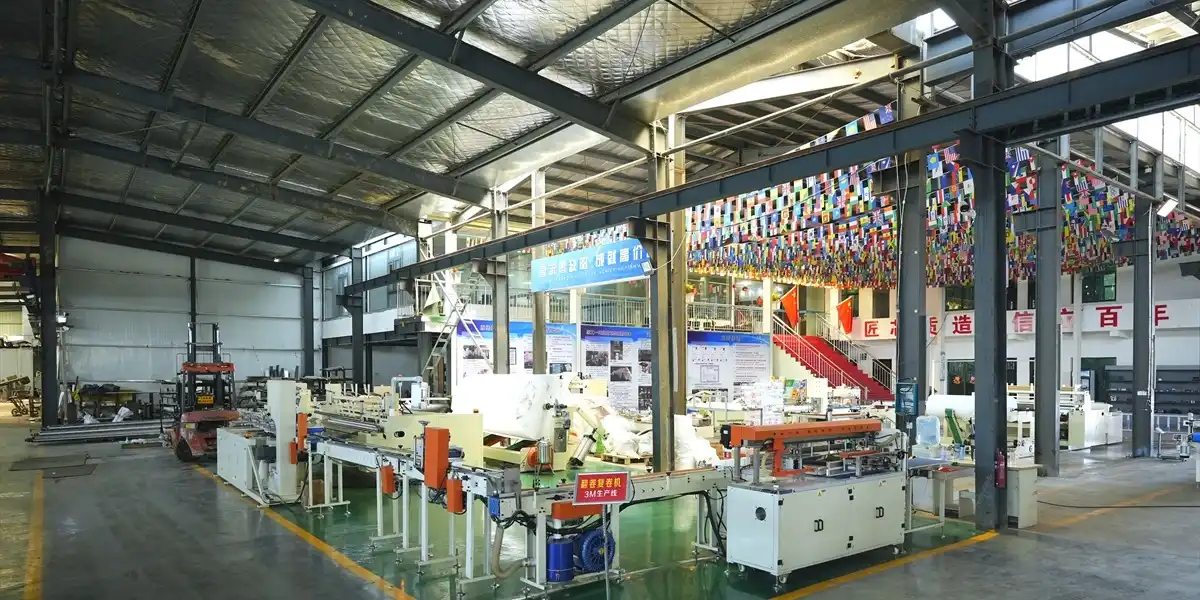
The first step in converting is to put a big roll on the stand. A controlled tension is used to unwind the paper. It then goes through perforation, embossing, or lamination, depending on how the machines are set up. Finally, it winds around a paper core. When the log is sent to a machine, it is cut into rolls that are ready to sell. The tail is then sealed with glue. Staff on the HENGYU line don't have to handle large giant rolls by hand because they are loaded automatically by air. When one of the three giant roll stands runs out of rolls, it moves on to the next one. The automatic core feeding system brings paper tubes to the rewinding station. After the paper is pushed automatically, the logs are moved to where they will be cut and packed.
Rewinder, Converting Machine, or Complete Line?
I'll describe what these words mean because they sound alike. A rewinder unwinds the big roll with holes in it and winds the logs back up. A tissue roll making machine does more than just cut. It also rolls up logs. Also, they are stacked in a straight line. There are three parts to the HENGYU method. The machine that automatically winds up rolls of paper is 7500 mm long, 4200 mm wide, and 1800 mm high. It takes 12.5 kW of power and weighs about 4,500 kg. The cutter can make 80 to 100 cuts per minute at 7.5 kW. If you turn on the 3.5 kW multi-roll machine, it can pack eight to fifteen packages every minute. Choose the view that fits your needs, roll sizes, and packing needs the best.
Controls and Raw Materials That Shape Results
The driven parts move together with the help of a PLC and a synchronized belt. From the big roll to the last log, this keeps the stress safe. It's still important that you turn in raw paper. The rewinder can handle regular paper rolls that are up to 2800 mm wide and large rolls that are up to 1300 mm across. It can also roll things out to be 60 to 200 mm wide when they are done. The base weight, level of moisture, quality of the core, and type of glue all affect how the paper moves. Different things happen with heavy GSM grades, like kitchen towels, and light GSM grades, like toilet paper. To be sure, I believe you should test the machine with your own paper first.
The Major Benefits of Investing in a High-Quality Tissue Roll Making Machine
Higher Saleable Output and Roll Consistency
The HENGYU line can move up to 280 m/min and works in eight-hour shifts to move about 3 to 3.5 tons of steel every day. Speed is important, but it's not enough to pay the bills. How much can be sold depends on how steady the line is. All the moving parts work together as a simultaneous belt system. This keeps the tension from changing, which would otherwise cause the paper to break and the wrapping density to be uneven. All of the tear places on each roll are the same because the opening system is controlled by a PLC. This means that each roll has the same number of sheets and is easy to tear. Since you can repeat things when you do OEM work, the owner of a brand can't tell the difference between one release and the last.
Less Labor, Less Waste, and Safer Operation
Automation has made your crew's work easier. Workers don't have to move big giant rolls because the machine loads and switches rolls automatically. Work can still be done while the machine goes to the next stand. These units measure out just the right amount of glue to use to fix the ends of rolls, so you don't lose any. A semi-automatic process needs three to five people per shift to feed and pack items by hand. This fully automated line, on the other hand, only needs two or three trained workers to keep an eye on quality and the flow of products. If you don't have to lift or feed things by hand as much, you won't have to touch moving parts as much. Before I buy something, I always make sure there are enough safety guards and features.
Flexibility for OEM and Private-Label Orders
You can get more work as a contract maker if you can change specs quickly without lowering quality. Rolls with a diameter of 60 to 200 mm are made on this line. To meet the needs of the market, HENGYU can change the sizes of the rolls, the containers, and the patterns that are embossed. When set up for glue lamination, it can bind kitchen towel layers together and work with GSM paper that is thicker. A PLC lets workers set up each product in a certain way. When you're testing, I suggest you ask for an example of a spec change. The fact that HENGYU tools meet CE and ISO standards means that brand owners don't have to worry about the equipment when the plant is audited.
Comparing Configurations and Evaluating Total Cost
Automatic Versus Semi-Automatic Lines
It will depend on your budget, the amount you need, and the amount of work you can do. Semi-automatic lines cost less up front, but workers have to feed paper and pack by hand, so each shift needs three to five people. The amount of work each person can do depends on how skilled they are. Lines that are fully automated, like the HENGYU system, automatically load, feed the cores, glue, cut, link, and pack. This means that only two or three people are needed to watch the flow. When you run steady orders, that change usually speeds up the return. Even if sales aren't steady, a small store could still choose to go semi-automatic at first and then update later. Take a look at each price and compare the time it takes to switch, the number of workers needed, and the control systems.
New Versus Used Machinery
There are risks when you buy used tools, even though they may seem like a good deal. It's possible that some features don't work anymore, spare parts aren't easy to find, guarantees aren't very good, and it's not always clear what upkeep has been done. You can get free professional help for life and a one-year quality guarantee when you buy a new line from HENGYU. You'll know who to call if you need help. Before you buy the machine, you should ask to see service records, have a live test run, and find out how many hours it has been used. Making a sample with similar raw paper is important no matter what you decide. This way you can be sure that the roll diameter, perforation, and winding density meet your customers' needs.
Calculating Total Cost and Realistic Output
One line in a bigger budget is the price to buy. Costs for shipping, setting up, utilities, labor, materials, repairs, extra parts, downtime, and goods that were turned down should be included. Then give a good guess of how much will be made. At a speed of 280 meters per minute, eight hours would be equal to 134,400 meters of paper. That number goes down, though, because of things like changes, scrap, and repair breaks. It's not the speed of the nameplate that matters; what matters is how many rolls can be sold. Total useful maintenance is a way to keep track of things like availability, performance, and quality. Overall equipment efficiency is a way to keep track of these things. Even if the tissue roll making machine costs more, it can still win if it makes more things that can be sold and fewer things that can't be sold.
Choosing a Supplier and Planning for Long-Term Performance
How to Evaluate a Tissue Roll Making Machine Manufacturer
Check to see if the company has worked with changing equipment before, has a plant that can do what you need, has engineering resources, has exported in the past, has clear technical papers, and knows about CE and ISO standards. I think you should look at the factory's address, ask for videos of the machine being tested, call customer references, look at the part brands, and make sure there are spare parts available. Also, see how well the team can answer difficult questions. That will show you how they will serve you in the future. It's been more than 20 years since HENGYU made a tissue roll making machine. We have machines that make toilet paper, facial tissue, napkins, and kitchen towels, among other things. We do research and development and offer ODM and OEM customization for things like how the machine is set up, the size of the product, the brand name, and the language used for work.
Installation, Facility Planning, and Operator Training
Each part of the line needs 150 to 200 square meters to store raw materials, keep track of what's being made, and make sure there are safe ways to get out. Industrial three-phase power with a steady voltage should be sent to the 12.5 kW main unit and other equipment. Also, put 0.6 MPa of compressed air into the machines that cut and pack. It is important to check the paths that a rewinder that weighs about 4,500 kg can take and make sure there is room for future growth and equipment that can handle big rolls. During training, your crew should learn how to start and stop the line, thread paper, changeovers, follow safety rules, check quality, and keep records of output. This way, they can run the line with confidence from the first week on.
Maintenance Habits and Common Purchasing Mistakes
The goal of preventive care is to make sure that the result is reliable. Check the rollers, blades, chains, bearings, and pneumatic parts often. Do what the cleaning and lubrication schedules say to do. Check the alarm history to see if the issues happen again and again. Breaks in the paper, wrinkling, expanding rolls, and uneven cutting are often signs that something is wrong with the tension, the alignment, or the blades. Your team can quickly find these problems. People usually make these mistakes when they are shopping: they choose the cheapest option, they mix up theoretical speed with output that can be sold, they don't do compatibility tests, and they forget to plan for things like electrical capacity, installation access, or spare parts. With a written technical standard, a test run, and a clear guarantee, none of these things will happen.
Conclusion
When you buy a good tissue roll making machine, you don't just use it once. Putting money into it will pay off in the end. What it said was about how a conversion line turns jumbo rolls into finished rolls. It talked about how automatic loading, core feeding, gluing, tension control, and synchronous transmission help keep output steady, cut down on waste, and lower the need for workers. When you compare different types of lines (automatic and semi-automatic), new and used equipment, and the total cost of ownership, you can see that output that can be sold is more important than speed or price. To protect that return, you must carefully check out the supplier, test samples, plan the facility, train operators, and do regular maintenance. Buyers can avoid making the most common mistakes if they first describe the goods and make sure there is enough space before they place an order.

FAQ
1. Is a higher-priced tissue roll making machine worth it?
Yes, it's possible. If a better tissue roll making machine makes more things that can be sold, rejects fewer rolls, and needs less work, it pays for itself. You should compare more than just the price of the machine. You should also look at the tested capacity, installed power, component names, guarantee terms, installation, training, and help for spare parts.
2. How is tissue roll converting different from tissue paper manufacturing?
The big roll is made from pulp or fiber that has been used in the paper business before. After being unrolled, punched, rerolled, cut, and packed, that big roll is turned into final rolls. Your machine will do the second step for you.
3. Can one machine produce toilet tissue and kitchen towels?
Yes, as long as you do it right. The HENGYU line makes rolls that are 60 to 200 mm wide when they are done. It can also handle higher GSM paper and has a glue lamination system that joins kitchen towel layers together. Take a practice test first to see how you did on the paper.
4. How should a small business choose capacity?
Make sure that your capacity is in line with your proven sales, available workers, and floor space. This will leave you with very little room for growth. Do not get empty space. Instead of asking about the fastest speed at low, medium, and high production loads, ask for numbers based on rolls that can be sold.
Request a Quotation for a High-Quality Tissue Roll Making Machine
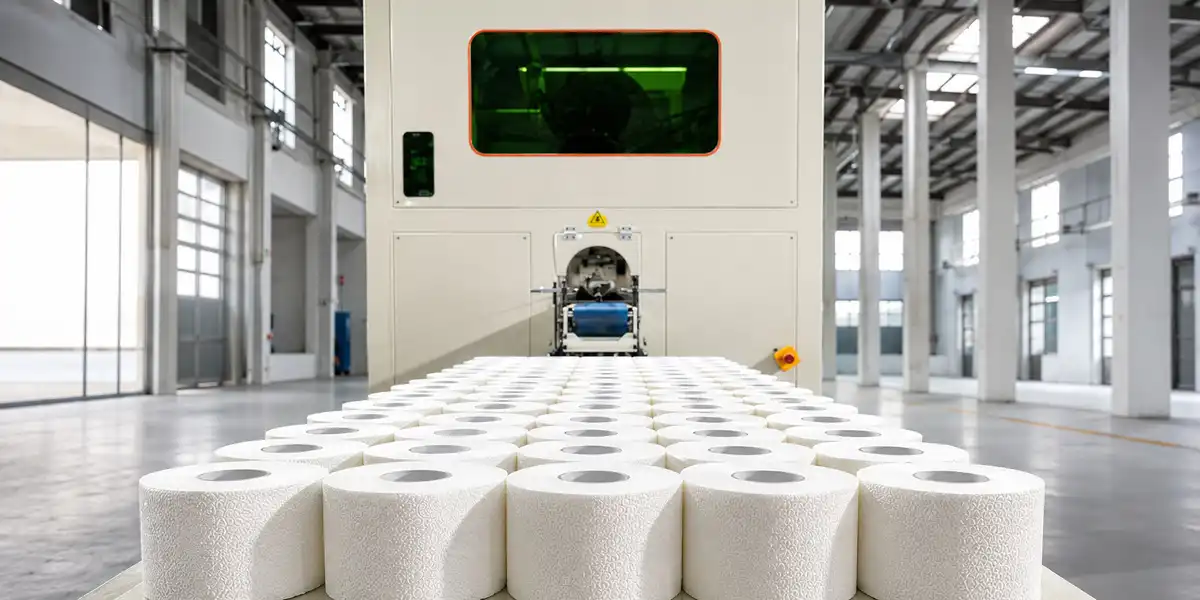
Are you ready to buy a good tissue roll making machine? HENGYU (hengyu@hytissuemachine.com) needs to know the type of tissue, roll size, ply, output goal, and electrical standard in the area. Because our machines are CE- and ISO-compliant and we've been making machines for over 20 years, we can give you good advice on how to set it up. We also offer skilled help for life. Please ask for a personalized quote and production evaluation on a machine that makes tissue rolls right now.
References
1. Handbook of Paper and Board, Wiley-VCH, 2013
2. Handbook of Pulping and Papermaking, Academic Press, 1996
3. Introduction to TPM: Total Productive Maintenance, Productivity Press, 1988
4. ISO 9001:2015 Quality Management Systems — Requirements, International Organization for Standardization, 2015
5. Directive 2006/42/EC on Machinery, European Parliament and Council, 2006
6. Safeguarding Equipment and Protecting Employees from Amputations, OSHA, 2007