BLOG List
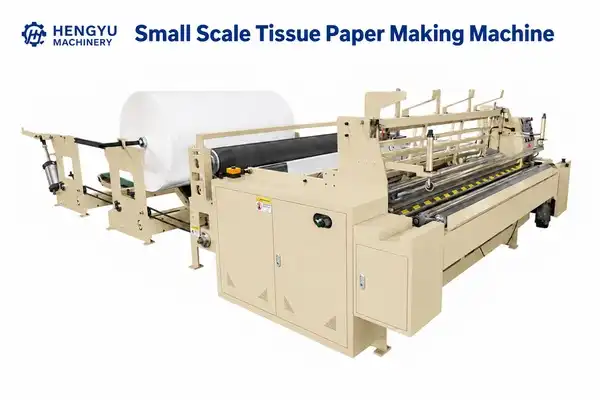
Starting a tissue paper business is one of the most accessible manufacturing ventures available today. A small scale tissue paper making machine typically requires an initial equipment investment that fits within a startup budget, covering a complete converting line — auto rewinding, paper cutting, and packing — while fitting inside a 300–600 square meter workspace. With the right equipment partner, turnkey setup, and market strategy, new factory owners can enter production quickly, control their own supply chain, and build a profitable local brand from day one.
Understanding Tissue Paper Machine Specifications and Real Costs
What Makes a Small-Scale Converting Line Different?
A compact tissue conversion line is not a paper mill that has been stripped down. This system was specifically designed to turn pre-made parent rolls into finished consumer goods like toilet paper, kitchen towels, and facial tissues, without the need for a Yankee dryer or pulping infrastructure. This difference makes it much easier to get in.
This HENGYU Model HY-1575/2200 shows what a professional entry-level line can do. It can take parent rolls that are up to 2200 mm wide and 1500 mm in diameter. It can work at a speed of 200 m/min and give out finished rolls that have outer sizes of 32 mm to 50 mm. A touch-screen interface and a PLC control system make it possible for one person to set the rewinding speed, perforation pitch, and width without any special training. The total fixed power is 5.5 kw plus 0.75 kw, which is enough for most commercial buildings.
Cost Components Every Buyer Should Know
The price of an item on the shelf is only one part of the story. This is what a reasonable budget should cover when it comes to costs:
- Machinery: The main changing line, which includes the rewinder, the log saw (a machine for cutting paper), and the tissue packing machine, costs the most. The wall-panel core structure and 2,500 kg weight of the machine show that it was built to last in an industrial setting.
- Embossing configuration: The costs of the tools for steel-wool and steel-rubber embossing units are different. Picking the right configuration at the start saves a lot of money in retooling costs later on.
- Installation and commissioning: HENGYU's remote installation program has a success rate of 95% or higher, which means there is no need to travel internationally and setup costs are much lower.
- Raw materials (parent rolls): The rolls that are used over and over again are either virgin pulp rolls or rolls made from recycled fibers. Standard tissue grades are covered by a gramage range of 13–22 g/m².
- Spare parts and maintenance: The machine comes with a quality guaranty that lasts for one year. It's smart to plan ahead for doctor blades, core glue, and closing parts after that time.
Large-scale paper machines need a lot of money and a team of engineers who work on them full-time. The small scale tissue paper making machine transforming model keeps costs low while still producing more than 3,000 rolls per hour, which is a rate that can be used in area markets.

How to Start a Profitable Small-Scale Tissue Factory: A Practical Roadmap?
It takes more than just buying machinery to turn it into a profitable business. The following order shows what experienced plant owners always put first.
Market research comes first. Figure out whether the people you want to sell to are store sellers, hotels, hospitals, or other institutions. Each segment has different expectations for roll size, ply choice, and packaging. Realizing this before choosing equipment keeps expensive reconfigurations from happening. Grand View Research says that the global tissue paper market will reach USD 95.6 billion by 2030. The fastest growth rates will be seen in developing economies in the Middle East, Africa, and Southeast Asia.
Site selection and utility readiness. The whole production line and storage for raw materials and produced goods can fit on an area of 300–600 square meters. For safety and quality reasons, you must have stable three-phase industrial power, enough air, and the right lights.
Equipment specification aligned to output goals. The HY-1575/2200 can make coreless rolls with PLC and pneumatic control, which makes it possible for private-label hospitality businesses to start up. The perforation pitch can be changed to standard lengths of 110 mm or to other lengths; the inner core diameter can be changed from 32 mm to 50 mm to fit almost all consumer formats.
Workforce and operational training. A two- to three-person team can run continuous production because the machine does the core feeding, perforation, gluing, trimming, and rewinding. HENGYU offers technical training through videos and online troubleshooting 24 hours a day, seven days a week to make sure workers meet quality goals quickly and consistently.
Quality control from day one. Regular checks should be made on the consistency of cross-direction grammage, the uniformity of the emboss pattern, and the accuracy of the perforations (±2mm punch pitch error). These factors have a direct effect on how customers see things and how retailers accept them.
Evaluating Suppliers: What Separates a Reliable Partner from a Risk
Choosing the right supplier has more long-term effects than just the price of the machine. A trustworthy company that makes tissue machines needs to show that they follow CE and ISO certification rules and have organized data for installation support and an after-sales procedure.
HENGYU has been making small scale tissue paper making machine tissue machines for more than 20 years and sells them in Southeast Asia, Africa, and the Middle East. The company offers light OEM customization, such as putting a name on the machine body and offering multilingual touch-screen displays (Arabic, Spanish, and Russian), which is very important for buyers who want to create regional brands.
When you're comparing suppliers, give more weight to those who offer remote video plant checks, easy payment plans for first-time buyers, and warranties with clear terms. Spare part lead times stay short thanks to a 1-year parts guaranty backed by a company that can make them in-house.
Maximizing ROI: Efficiency and Maintenance Priorities
The wall-panel core design keeps vibrations to a minimum during high-speed operation, which increases the life of the bearings and blades. The most common causes of downtime can be avoided by keeping the sides of the embossing rolls clean and the tension on the parent roll unwinds at the right level.
The construction of the HY-1575/2200 is designed to use less energy. The per-ton energy cost of converting stays low at 5.5 kw total power, but not for making paper. Heat recovery steps at the plant level can increase margins even more. Two operating habits that save a lot of money over time are checking the grammage settings often and cutting down on trim waste.
Sustainable Production: Building a Responsible Brand
Making tissue comes with environmental responsibilities that are becoming more and more important to institutional buyers when they make buying decisions. The HY-1575/2200 can handle parent rolls made from bamboo pulp, bagasse, or agricultural straw, which are non-wood fibers that leave behind less carbon dioxide than new wood pulp.
Using local raw materials in local production cuts down on emissions caused by freight and protects against imports. This has been turned into a brand story that works for both regular people and big buying teams by many buyers in developing markets. When you align your factory's practices with ISO 14001 environmental management standards, you build trust with B2B clients who are interested in exports.
Conclusion
A small scale tissue paper making machine gives entrepreneurs in emerging markets a realistic, low-barrier way to start making things. Clear cost clarity, an automated and operator-friendly design, and a structured support environment from a maker like HENGYU make the process from asking for a quote to making something much less risky than it used to be. If you want to get a private-label hotel supply contract or a regional retail brand, you need the right tools and the right partner to lower your risk and speed up your return on investment. Do some good study on the market first, then pick a CE-certified provider with a history of helping with remote installation.

FAQ
How much space does a tissue converting line require?
A full production line, including a place to store raw materials and finished goods, can fit in an area of 300 to 600 square meters. This makes it possible for new factories to be set up in industrial zones or areas close to cities.
Can one machine produce multiple tissue product types?
Yes. The HY-1575/2200 can handle different types of toilet paper, kitchen towels, and facial tissue. The touch-screen interface lets you change the rewinding diameter, hole pitch, and core diameter settings.
What is the machine's lifespan?
Tissue converting tools made to industrial standards can usually last 15 years or more with regular upkeep. The first year of the HENGYU quality guaranty is covered by the warranty.
Is remote installation genuinely feasible?
HENGYU says that more than 95% of remote installations go well. They back this up with video instructions, full documentation, and expert help available 24/7. Most buyers finish setup without having experts come to their site.
What raw materials does the machine accept?
The machine works with parent rolls that weigh between 13 and 22 grams per meter². These rolls can be made from new pulp, recycled fiber, bamboo pulp, or bagasse.
Start Your Tissue Business With HENGYU — Request a Custom Quote Today
HENGYU is a trusted small scale tissue paper making machine manufacturer with over 20 years of international export experience, CE and ISO approval, and a proven 95%+ remote installation success rate. You can order just one unit of our HY-1575/2200 complete converting line, and OEM customization options are available. Get in touch with our team right away to get a custom configuration proposal and reasonable prices. Reach us at doris@hytissuemachine.com or visit hytissuemachine.com to explore the full product range.
References
1. Henan Hengyu Machinery Co., Ltd. — HY-1575/2200 Technical Specification Sheet (2024).
2. Henan Hengyu Machinery Co., Ltd. — After-Sales and Remote Installation Service Overview (2024).
3. Grand View Research — Tissue Paper Market Size, Share & Trends Analysis Report (2023).
4. TAPPI — Energy Conservation in Tissue Manufacturing: Best Practices Guide (2022).
5. FAO — Non-Wood Forest Products and Fiber Alternatives in Papermaking (2021).
6. ISO — ISO 14001:2015 Environmental Management Systems — Requirements (2015).
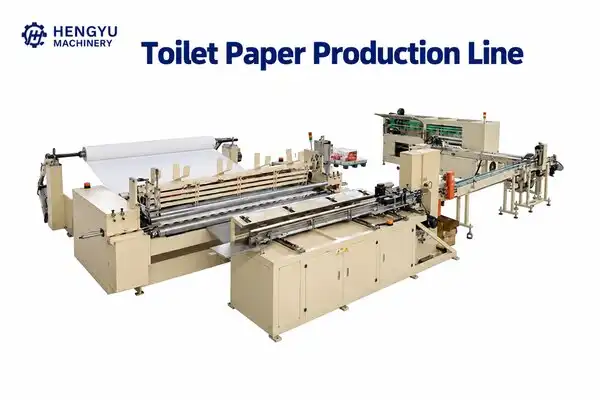
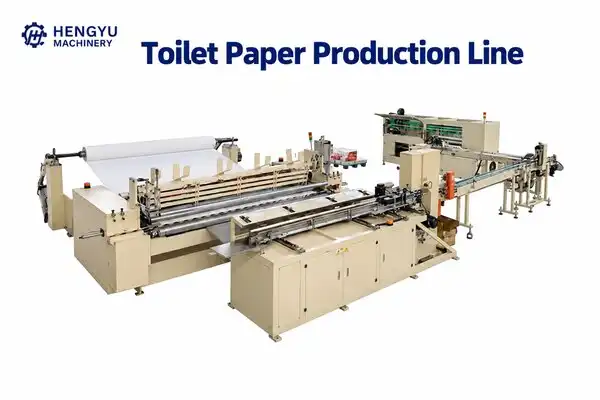
A toilet paper production line is an integrated industrial system that converts large jumbo rolls of base tissue into finished, consumer-ready rolls through a sequence of automated steps. For manufacturers looking to scale operations, understanding this system is essential. This guide covers everything from core machinery and process flow to equipment selection, maintenance, and procurement strategy—giving you the practical knowledge needed to make confident investment decisions and build a high-output tissue converting operation.
Understanding the Toilet Paper Production Line: Overview and Key Components
Many factory owners don't realize how modular and easy to get modern equipment for turning tissues into other things is. An auto-rewinding machine, a paper cutting machine, and a tissue packing machine are the three main tools that make up a full toilet paper production line. These steps are done in order to turn a large parent roll into goods that are individually wrapped and ready to be put on the shelf.
Core Machinery and Process Flow
The parent paper width for the HENGYU HY-2400 model is up to 2400mm, and the thickness of the large roll is up to 1500mm. It can move at a speed of 200 meters per minute and can process 3 tons of material in an 8-hour shift. From 40mm to 180mm in diameter, the machine can handle finished rolls, and from 30mm to 55mm in diameter, it can handle paper cores. Key automated tasks include feeding the core, perforating, gluing, cutting, and rewinding. All of these tasks are managed by a PLC tablet interface. It only uses 6.25kw of power all together, so it is energy-efficient for constant use.
Production Line Types: Semi-Automatic vs. Fully Automatic
Your present output goals and work structure will help you decide between semi-automatic and fully automatic setups. Cutting and packing stations on semi-automatic lines need to be operated by hand, so they are best for smaller sites or activities where labor costs are low. Fully automatic lines have few places where people have to touch the material because the system feeds, rewinds, cuts, and packages itself. Full automation gives factories that want to sign commercial supply contracts with supermarkets or wholesale distributors the consistency and volume that buyers want.

Advantages of Automated Tissue Converting Equipment and Capacity Insights
When the number of orders goes up, processes that are done by hand become slow. That limitation is directly dealt with by automation.
Here are the core advantages that a fully integrated toilet paper production line tissue roll production system delivers:
- Throughput stability: The line can go as fast as 200m/min and has PLC-controlled tension management, so it keeps producing the same amount of paper even during long shifts. This means that there are fewer stops in the middle of runs because of paper breaks or misalignment.
- Labor efficiency: Only two to three people are needed to watch and check the quality of a fully automatic setup, but three to five people are needed for a semi-automatic setup. This difference adds up to big savings on pay and training costs over the course of a year.
- Defect reduction: Off-spec rolls are cut down at the source by automated hole spacing, glue application, and log-cutting accuracy of ±0.5mm. This cuts down on waste before it gets to the packing stage.
These benefits directly fix the problems with production that growth companies have when they try to serve bigger retail accounts. A 2022 TAPPI industry report says that within the first year of operation, tissue mills that switched to automated converting lines saw a 25–40% drop in the cost of labor per unit.
Comparing Toilet Paper Production Lines: How to Choose the Right Equipment?
To choose the right setup, you need to be honest about your building, the number of orders you receive, and your growth plans. The 3,000-kilogram 20-mm steel plate wall panel frame that the HENGYU HY-2400 is built on gives it the strength it needs for high-speed nonstop runs. With a size of 7500 x 3650 x 2100 mm, it fits into most mid-size factory layouts.
Semi-Automatic vs. Fully Automatic: A Direct Comparison
A semi-automatic line lowers the amount of money needed up front and works well for companies that are still getting new customers. A fully automatic line works best for situations where orders have already been placed and consistent output is a must. Both of these methods can be used with the HENGYU system's modular design, which lets you start at a lower level and add on as your sales increase.
Domestic vs. Imported Equipment
ISO-certified technology from well-known brands has clear quality standards, parts that can be tracked, and support networks that can be checked after the sale. Factory acceptance test (FAT) paperwork, CE compliance, and the availability of real spare parts should be at the top of your list when looking at suppliers. HENGYU machines have CE and ISO certifications and go through a strict quality check before they are shipped. They also come with a 1-year guarantee that covers parts that don't hurt people.
Maintenance Best Practices and Longevity of Tissue Roll Making Equipment
How long something lasts depends just as much on how well it was built as on how well it is maintained. Unexpected slowdown on a toilet paper production line conversion line not only costs money in repair time, but it also delays deliveries and hurts relationships with customers.
Practical maintenance priorities for your production line include the following:
- Embossing roller care: Clean the rollers once a week to keep paper fibers from building up and messing up the designs. Every 500 hours of use, lubricate mechanical bearings to stop wear caused by heat.
- Blade and perforation unit inspection: Check the cutting blades and perforation pins every 30 working days. When perforators get worn, they make tear lines that aren't straight, which makes customers unhappy.
- Tension system calibration: The servo- or magnetic powder-controlled tension system should be checked once a month to make sure it correctly adjusts for the giant roll width getting smaller as it unwinds.
These habits for maintenance will keep your investment safe and the quality of your output stable over time. HENGYU offers online technical help 24 hours a day, seven days a week, as well as video operation tutorials and lifetime technical advice. This means that your team can talk to engineers directly when problems arise, without having to wait for service schedules.
Procurement Guide: How to Source a Toilet Paper Production Line?
When buying tissue-converting equipment from a business to business (B2B), there is usually a set process that goes like this: defining the needs, evaluating suppliers, checking with the plant, negotiating, setting up payments, transportation, installation, and a test run. For a line in the HY-2400 class, it takes 3–6 months from the first question to the line being put into service.
Evaluating Suppliers and Lead Times
Before agreeing to terms with a manufacturer of a toilet paper production line, make sure they have an ISO certification, look at installation case studies from similar markets, and ask for video or in-person factory tours. Over 95% of HENGYU's customers were able to complete the installation successfully with remote help, which is a useful standard when on-site visits aren't possible.
New vs. Used Equipment Considerations
New equipment from a certified maker comes with a guarantee, clear instructions, and up-to-date information on where to find parts. Used lines can lower the cost of entry, but it's hard to know how much they've been used and where to get parts. For factories that want to sign long-term contracts for production, new equipment gets rid of the factors that could cause delays in meeting those contracts.
Conclusion
To make a tissue paper business bigger, you need to do more than just add more tools. You need to build a line where every step, from unwinding to packing, works efficiently under production pressure. That need is met by the HENGYU HY-2400 toilet paper production line, which has proven automation, the ability to work with wide jumbo rolls, PLC precision control, and a support system that goes far beyond delivery. The right integrated line can help you get rid of a capacity bottleneck or stop relying on outside packing services. It can also make the difference between chasing orders and easily finishing them.

FAQ
What raw materials does a toilet paper production line require?
Big parent rolls of tissue base paper, usually weighing 13–22g/m² per piece, are the main thing that goes into the machine. The HENGYU HY-2400 can handle rolls that are up to 2400 mm wide and 1500 mm in diameter. Paper cores (30–55 mm in diameter), adhesive for bonding ply, and packaging film for packing are some of the extra materials that are needed.
How do I choose between semi-automatic and fully automatic equipment?
Make the choice based on the orders you already have and how much work costs. Semi-automatic machines work well for small businesses in their early stages. When you have proven supply agreements with stores or wholesalers and need consistent, high-volume output with little operator involvement, fully automatic lines are the way to go.
What maintenance steps protect long-term machine performance?
Cleaning the rollers once a week, lubricating the bearings every 500 hours, calibrating the tension system once a month, and checking the piercing pins and cutting blades regularly should all be top priorities. Using extra parts that came from the original maker helps keep the machine's precise tolerances.
Partner With HENGYU for Your Next Tissue Production Line Upgrade
Every project HENGYU works on is based on his more than 20 years of experience with tissue machinery. When you buy our toilet paper production line, it comes with a 1-year warranty and free technical support for life. It is CE and ISO certified. Each line is set up to meet your large roll size, output goals, and packing needs. You can email our team at doris@hytissuemachine.com or go to hytissuemachine.com to ask for a custom production plan.
References
1. TAPPI (Technical Association of the Pulp and Paper Industry). Tissue Manufacturing Technology and Automation Trends. TAPPI Press, 2022.
2. FAO (Food and Agriculture Organization of the United Nations). Pulp and Paper Capacities Survey 2022–2027. FAO Forestry Division, 2023.
3. RISI (now Fastmarkets RISI). Global Tissue Industry Report: Converting Equipment and Market Trends. Fastmarkets RISI, 2023.
4. European Committee for Standardization (CEN). EN ISO 9001:2015 – Quality Management Systems: Requirements. ISO, 2015.
5. Pira International. The Future of Tissue: Technology, Sustainability and Market Evolution. Smithers Pira, 2022.
6. PMMI – The Association for Packaging and Processing Technologies. 2023 Trends in Packaging Automation and Integration. PMMI Business Intelligence, 2023.
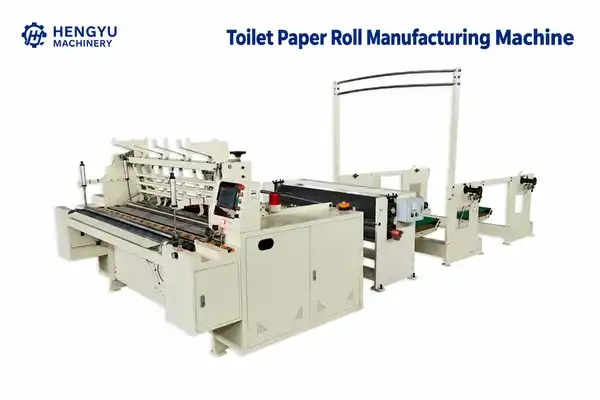
If you are running or planning a tissue converting operation, one question keeps coming back: how do you get more rolls out the door while spending less per unit? The answer lies in choosing and operating the right toilet paper roll manufacturing machine. Whether you are a startup investor building your first line or an established manufacturer looking to scale, optimizing your equipment setup, workflow, and maintenance practices can dramatically cut operational costs and push your output to a new level.
Understanding the Key Challenges in Toilet Paper Roll Production
Most inefficiencies in production have the same root causes: old equipment, broken processes, and repair habits that are reactive instead of proactive. A 2022 study by RISI (now FastMarkets RISI) on trends in the tissue manufacturing industry says that unplanned downtime is to blame for up to 20% of lost production capacity in mid-size converting plants. That number directly leads to orders being held up, raw materials being lost, and profit margins being cut.
Where the Losses Actually Happen
The stages where costs go up the most are usually the rewinding stage, where uneven tension leads to roll flaws; the cutting stage, where worn blades cause uneven lengths and dust buildup; and the packaging stage, where slow or manual bagging stops the whole line. The first step to real efficiency gain is to figure out which stage is your weaker link.
Optimizing Your Toilet Paper Roll Machine for Higher Throughput
Getting better isn't just about going faster. It has to do with running better. For a performance review to be useful, it should look at things like machine speed, yield rate, scrap percentage, and average downtime per shift. Once those numbers are clear, it's easy to make changes that are meant to help.
Key Optimization Levers Worth Applying
The most consistent returns come from automating upgrades. For example, replacing human core loading with an automatic core feeding system gets rid of a common source of wasted labor and lowers the number of problems caused by mismatch. When workers upgrade to PLC-based control systems, they can set the length and speed of rewinding directly from a tablet, which gets rid of the need for mistakes made by hand. Schedules for preventive maintenance, like lubricating once a week, inspecting the blades once a month, and calibrating the sensors every three months, keep the average time between failures high without having to hire expensive expert techs.
A study in the Journal of Cleaner Production in 2021 found that tissue converters that added automated control systems cut the amount of energy they used per unit by an average of 14% in the first year they were in use. When you increase that number by the number of hours worked in a shift, it makes sense.

Choosing the Right Toilet Paper Roll Manufacturing Machine to Reduce Operational Costs
Every plant is different and needs a different answer. When new businesses go into Southeast Asia, Africa, or the Middle East, they often need a full line that is easy to use and takes little time to train, including a toilet paper roll manufacturing machine. Small and medium-sized businesses that have been around for a while usually need faster speeds, more automation, and lower long-term support costs. The right selection matrix takes these things into account along with your budget and the amount of production you will be doing.
What to Compare Before You Buy
When looking at changing lines, keep these things in mind:
- Automation level: A fully automatic line with PLC control, auto core loading, auto glue sealing, and an integrated cutting-to-packing connection gets rid of the need for slowing down manual handoffs.
- Speed and capacity match: A machine with a rewinding speed of 280 m/min and a band saw cutting unit that can make 80–200 cuts per minute work together to make sure the line runs smoothly and without any delays between stages.
- Certification compliance: CE and ISO-certified equipment makes it easier to get through customs in markets with a lot of exports and shows that the quality of the build has been checked.
- Supplier after-sales service: Warranty coverage, spare parts availability, online diagnostics help, and training for installation on-site are as important as the machine specs themselves.
These criteria are useful whether you are looking for a supplier for your own factory or for a supplier of a toilet paper roll manufacturing machine to resell or work with on a project.
A full production line with rewinding, cutting, and packaging all under one control design always works better than a bunch of tools that were bought separately. Just the benefit of synchronization cuts down on waste and makes roll-to-roll consistency better.
Implementing Maintenance and Safety Practices to Sustain Optimal Performance
A machine that is available 95% of the time is much more useful than one that is faster but only 75% of the time. That gap is closed by maintenance routines.
Building a Maintenance Routine That Holds
Every day, you should clean the dust off of the blade housings and sensors, check the air pressure (0.6 MPa is the normal working pressure for most cutting and packing units), and check the PLC alarm logs. As part of your weekly chores, you should grease the synchronous belt drives, check the state of the sealing wires, and make sure the tension on the film delivery rollers is correct. Blade sharpness, the integrity of the pneumatic system, and the accuracy of the touchscreen calibration should all be checked once a month.
Safety rules are important for everyone using a toilet paper roll manufacturing machine. Operators should get structured training on how to stop in an emergency, check the guarding, and use their safety gear correctly. You have to follow CE mechanical safety standards; not doing so will put your employees and your equipment at risk.
According to industry statistics from the Tissue World Magazine (2023), facilities that have documented preventive maintenance plans have 30% fewer unplanned stoppages than those that only use reactive repair.
Leveraging Advanced Technologies to Drive Cost Reduction and Productivity
The tissue converting business is going toward production areas that are smarter and more linked. With IoT-enabled sensors, you can now check the load on a machine, the wear on its blades, and the consistency of its diameter in real time. This data can be used to make predictive maintenance alerts that can lower the cost of emergency repairs by pointing out problems before they stop the line.
Drive motors that use less energy, controls that change frequency, and air systems that work better all work together to lower electricity costs per shift. Sustainable handling of raw materials, such as precise GSM control across the 13–22 g/m² range, cuts down on large roll waste and makes the consistency of the final product better.
Looking at the HENGYU 3600mm Full Automatic Converting Line, you can see how these ideas are put together. One of the best things about this system is that it:
- The rewinding speed is very fast up to 280 m/min, and the mainframe is made of wall panels (30 mm thick) to make it rigid and reduce vibrations.
- Flexible roll design that can handle cored and coreless forms, finished tube diameters ranging from 32 to 50 mm, roll lengths ranging from 100 to 200 mm, and unique layers of 1 to 3 plys per order.
- Cutting and packing happen at the same time with a band saw making 80 to 200 cuts per minute and automatically connected to a double-row multi-roll packing unit that makes 8 to 15 packages per minute.
- Full PLC automation includes automatic core filling, automatic glue spraying, automatic pneumatic paper loading, precise perforation, and length and speed adjustments for rewinding that can be made on a tablet.
These benefits directly fix the three main problems in production: inconsistent rewinding, gaps in cutting output, and bottlenecks in packing. As a result, the line works with little help from a person and keeps producing high-quality goods over long production runs.
Conclusion
Finding out where your line loses speed and material, choosing equipment that combines rewinding, cutting, and packaging into a single automated system, and keeping that equipment in good shape with regular routines are the three things that will make your tissue converting more efficient and lower your costs. The data constantly shows that investing in automation and routine maintenance is the best thing that tissue producers of any size can do. It is not a cost center; rather, it is your major source of profit if you have a well-designed toilet paper roll manufacturing machine that is well-kept and fully integrated.

FAQ
What is the typical production speed of a modern toilet paper rewinding machine?
These days, very fast rewinding tools can go as fast as 280 meters per minute. The real speed relies on the GSM of the base paper, the number of layers, and the roll diameter choices. For all linked steps to run at the intended speed, the PLC must be in sync with each other.
Can one converting line handle both cored and coreless toilet rolls?
Yes, both forms can be used with modern rewinding systems that let you change the rewinding settings and adjust the air pressure around the diameter. This means that you can switch setups without having to make any major mechanical changes.
How does automation reduce per-unit production costs?
Automation cuts down on the need for workers, lowers the number of mistakes that happen when things are handled by hand, and keeps output speeds steady across shifts. PLC-controlled lines also collect operational data that helps with preventative maintenance, which lowers the costs of unplanned downtime even more.
What certifications should I look for when buying tissue converting equipment?
For foreign markets, CE and ISO licenses are the most important standards. CE certification shows that the product meets EU standards for mechanical safety and electromagnetic safety. ISO 9001 certification shows that the manufacturing level quality management system has been checked.
What causes inconsistent roll lengths in the cutting stage?
Most of the time, it's because the feeding channel log slips or the servo motors lose their sync. Band saw cutting machines with servo-driven feeding and PLC control can keep length errors to within ±0.5 mm when they are working normally.
Ready to Build a More Efficient Production Line? Contact HENGYU Today
It has taken HENGYU more than 20 years to create full tissue conversion solutions for companies in the East, Southeast Asia, South America, the Middle East, and Africa. We offer full-line integration, CE/ISO-certified equipment, OEM/ODM customization, and lifetime technical support as a reputable toilet paper roll manufacturing machine manufacturer. Reach us at doris@hytissuemachine.com or visit hytissuemachine.com to discuss your production goals.
References
1. FastMarkets RISI. (2022). Global Tissue Industry Outlook: Capacity, Efficiency, and Market Trends.
2. Muñoz, I., et al. (2021). "Energy optimization in tissue paper converting lines." Journal of Cleaner Production, 284, 124690.
3. Tissue World Magazine. (2023). Maintenance Benchmarking Report: Uptime Strategies in Tissue Converting.
4. TAPPI (Technical Association of the Pulp and Paper Industry). (2022). Tissue Converting Technology Handbook.
5. McKinsey & Company. (2022). Industry 4.0 in Consumer Goods Manufacturing: Automation and Cost Reduction.
6. Paper360° Magazine. (2023). Automation Trends in Tissue Paper Production Lines.
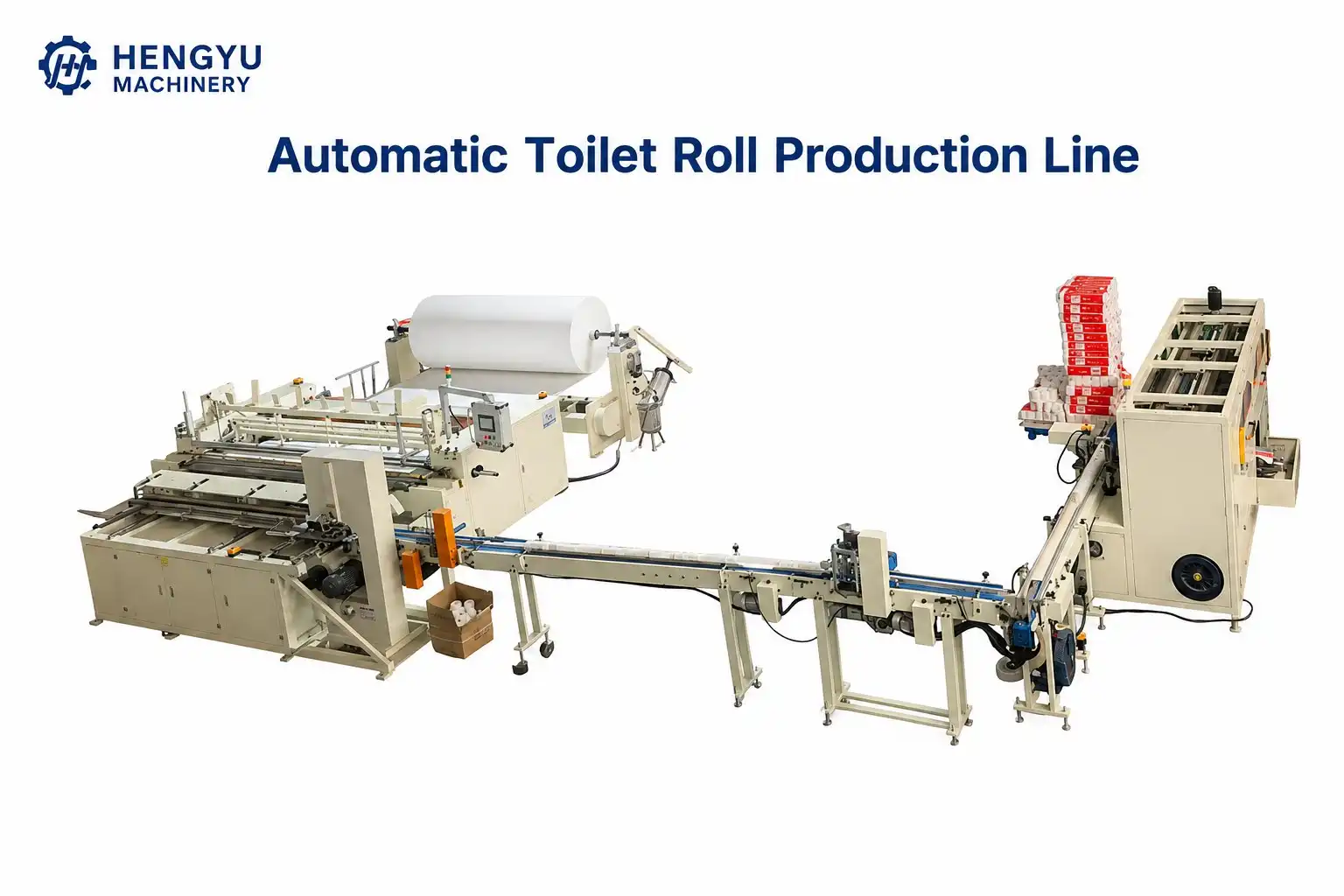
A toilet paper production line is an integrated converting system that transforms large jumbo rolls of base tissue into finished, consumer-ready rolls through sequential automated stages. The complete workflow covers unwinding, embossing, perforating, gluing, rewinding, log cutting, and packaging. When all three core machines — the auto rewinding machine, paper cutting machine, and tissue packing machine — operate in sync, manufacturers achieve consistent output quality, reduced labor dependency, and measurable capacity gains. Understanding how each stage connects directly helps procurement decision-makers evaluate whether a given line matches their expansion targets
Understanding the Toilet Paper Production Process
From Jumbo Roll to Finished Product
Choosing the right raw materials affects everything downstream. Most businesses that turn tissue into other products source jumbo rolls made from virgin fiber, recycled pulp, or bamboo fiber, with gram weights typically ranging between 13–22 g/m². Softness, tensile strength, and absorbency are all affected by the type of fiber used—qualities that end retailers and supermarket buyers scrutinize closely.
The HY-2400 handles jumbo rolls up to 1500mm in diameter and 2400mm in width. Once mounted on the unwinding stand, a servo-controlled tension system feeds the web at a steady resistance. After passing through the embossing rollers, the paper receives a texture design that improves aesthetics and absorbency. A perforation unit scores tear lines at operator-specified intervals, allowing each sheet to detach easily.
The paper tail is bonded to the finished log with glue, and edges are smoothed by side-trimming units before the rewinding head completes the log. Finally, the log saw cuts individual rolls to length within ±0.5mm tolerance, and the packing machine seals each roll for distribution. The entire sequence on HENGYU's line delivers 3 tons per 8-hour shift at speeds up to 200 m/min — meaningful throughput for a mid-scale converting plant targeting supermarket or wholesale accounts. (See Reference 1 for tissue converting process standards.)

Key Machines in a Toilet Paper Production Line
Any tissue converting setup is defined by three machine categories. Understanding the role of each clarifies where efficiency gains come from.
Here are the three core equipment categories and what each one does:
- Auto Rewinding Machine (HY-2400): This is the mechanical heart of the toilet paper production line. It handles auto core feeding, embossing, perforation, gluing, trimming, and rewinding in a single pass. Built on a 20mm steel-plate wall-panel frame, the 3,000 kg structure dampens vibration during continuous high-speed runs. PLC and pneumatic control manage both cored and coreless roll production, with roll diameter adjustable from 40mm to 180mm via the touchscreen HMI — no hardware swaps needed. (See Reference 2.)
- Paper Cutting Machine (Log Saw): After rewinding, tissue logs pass to the cutting station. The log saw slices each log into individual rolls at the operator's specified length, maintaining ±0.5mm precision across the full cut. Photoelectric sensors and emergency stops at every station meet standard CE safety requirements.
- Tissue Packing Machine: The downstream packing unit wraps finished rolls and bundles them for outbound logistics. Integrating this stage in-house eliminates subcontracting dependency — a direct cost and lead-time benefit for factories scaling toward larger retail clients.
These three stations, operating as a coordinated line, reduce manual touchpoints significantly compared to isolated single-machine setups. Operators transitioning from single-machine experience to full-line production must understand how this coordination works before committing to a configuration. (See Reference 3 for automation benchmarks in tissue converting.)
Routine maintenance keeps the line productive. Embossing roller bearings require lubrication every 500 operating hours; blade clearance on the log saw should be verified weekly; and PLC firmware should be backed up monthly. Maintaining a small inventory of wear parts — perforation blades, glue nozzles, and conveyor belts — prevents unplanned downtime.
Benefits of Automating Toilet Paper Production
Output, Labor, and Quality Compared
The economics of the factory floor change when transitioning from a semi-automatic setup to a fully automated system. A semi-automatic line typically requires 3–5 operators handling feeding, cutting, and wrapping manually. A fully automatic line reduces that to 2–3 people whose primary role is monitoring and quality checks.
Beyond headcount, automation raises throughput consistency. Manual handling introduces variability in roll diameter, sheet count, and edge quality — variations that retail buyers penalize with rejected batches. PLC-driven control on machines like the HY-2400 locks parameters once set, ensuring every roll in a production run matches specifications. (See Reference 4 for quality control methodology in paper converting.)
Energy efficiency is another measurable advantage. The HY-2400 line runs on a combined 6.25 kW total power draw (5.5 kW + 0.75 kW), which is modest for a 3T/day output machine. Lower energy consumption per ton of output directly improves margins, particularly in regions where industrial electricity costs are rising.
How to Choose the Right Toilet Paper Production Line for Your Business?
Matching Configuration to Capacity Goals
Selecting a toilet paper production line starts with an honest output target. If your current bottleneck is the rewinding or packing stage, adding only the missing machines to your existing setup may suffice. If you are scaling from single-machine converting to a full integrated line, specifying the entire system from one supplier reduces integration risk and simplifies after-sales support.
Key decision criteria worth evaluating:
- Jumbo roll compatibility: Confirm the maximum parent roll width. The HY-2400 accepts rolls up to 2400mm — wider than many entry-level machines — which reduces splicing frequency and boosts uptime.
- Automation level vs. labor cost: In markets where labor costs are moderate, a semi-automatic configuration preserves capital. In markets with rising wages or strict quality mandates from retail chains, full automation delivers faster ROI.
- Supplier certification and support: CE and ISO compliance are baseline requirements for export-oriented factories. Evaluate whether the supplier offers on-site installation, video-guided commissioning, and accessible spare parts.
- Warranty and after-sales depth: HENGYU provides a 1-year quality guarantee covering free replacement of non-human-damaged parts, plus 24/7 online technical support and lifetime guidance — terms that reduce risk for buyers running continuous shifts.
When comparing suppliers, look at verified client references and factory acceptance test (FAT) protocols. Dynamic balancing tests on high-speed rollers, cutting precision checks, and 24-hour load testing are standard FAT items that reliable manufacturers conduct before shipment. (See References 5 and 6.)
Conclusion
A well-configured toilet paper production line toilet paper converting line connects raw jumbo rolls to retail-ready product through five tightly sequenced stages. The machines themselves — rewinder, log saw, and packer — each carry distinct performance parameters that determine actual output, labor footprint, and reject rate. Automation level, jumbo roll compatibility, energy draw, and supplier support depth are the practical levers that define whether a line investment pays off on your production floor. Evaluating these factors against your specific capacity targets and market obligations gives you a clear basis for supplier selection and capital planning.

FAQ
What daily output can I expect from a mid-scale tissue converting line?
The HENGYU HY-2400 line delivers 3 tons per 8-hour shift at speeds up to 200 m/min, handling jumbo rolls up to 2400mm wide. Actual output depends on paper gram weight and roll diameter settings.
How often do embossing rollers need maintenance?
Roller surfaces should be cleaned weekly. Mechanical bearings require lubrication every 500 operating hours to prevent heat buildup and maintain embossing pattern uniformity.
What is the real difference between semi-automatic and fully automatic lines?
Semi-automatic lines need 3–5 operators at manual stations; fully automatic lines need 2–3 people for monitoring. The fully automatic system locks parameters via PLC, producing more consistent roll dimensions and fewer rejected batches — which matters when supplying supermarkets or wholesale distributors with strict specifications.
Can the machine produce coreless rolls?
Yes. The HY-2400 supports coreless roll production through PLC and pneumatic control, adjustable via the touchscreen without hardware changes.
Request Your Custom Line Configuration from HENGYU
HENGYU delivers complete toilet paper production line solutions built for manufacturers ready to scale. With over 20 years of machinery manufacturing experience, CE- and ISO-certified equipment, and lifetime technical support, we remove the guesswork from line expansion. Whether you need a matched rewinding-cutting-packing system or a customized configuration for 2400mm jumbo rolls, our team designs around your output targets. Contact us today: doris@hytissuemachine.com or visit hytissuemachine.com to request a tailored quote.
References
1. TAPPI (Technical Association of the Pulp and Paper Industry). Tissue Converting Process Guidelines, TAPPI TIP 0404-20, 2021.
2. Henan Hengyu Machinery Co., Ltd. HY-2400 Toilet Paper Production Line Technical Specifications, 2023.
3. Paper, Film & Foil Converter (PFFC). Automation Benchmarks in Tissue Converting Operations, 2022.
4. PaperAge Magazine. Quality Control Methodology in Paper Converting: Roll Precision and Consistency Standards, 2021.
5. Pulp & Paper International (PPI). Factory Acceptance Testing Protocols for Tissue Machinery, 2022.
6. Packaging Digest. Supplier Evaluation Criteria for Converting Equipment: Certifications, References, and After-Sales Support, 2023.
If you're expanding your tissue-converting operation and asking what it truly costs to set up a complete toilet paper production line—including installation, factory layout, and equipment configuration—this guide answers exactly that. A fully integrated line combining an auto-rewinding machine, a paper cutting machine, and a tissue packing machine represents a capital commitment that varies by automation level, facility readiness, and output target. Understanding each cost layer upfront helps you avoid budget overruns, select the right machinery, and launch production on schedule.
Understanding Toilet Paper Production Line Costs
What Drives Your Equipment Investment?
The main factors that affect costs are the amount of automation, the speed of production, and the consistency of the parent roll. When cutting and packing, a semi-automatic rewinder needs more manual work. A fully automatic toilet paper production line, like the HENGYU HY-2400, does all of these tasks automatically, including feeding the core, perforating, gluing, trimming, and rewinding. The Confederation of Paper Industries (2023) says that companies that invest in more automation usually get their money back within 18–24 months by cutting down on waste and labor.
The cost of raw materials (like jumbo rolls, core tubes, and packing film), the factory's power equipment, and shipping the machine to your site all add up to a lot more than the price of the machine itself. For machines that need 5.5 kW + 0.75 kW of power all the time, you have to have a stable industrial power supply.
Another thing that should be carefully looked at is energy efficiency. The HY-2400 can work at up to 200 m/min while using only 6.25 kW of power. This is done on purpose to save power, which lowers monthly energy costs compared to older machines with the same speed.
Here are the core cost categories every buyer should map before committing capital:
- Machinery and configuration: Configured with auto-rewinding, cutting, and packing units; coreless or cored rolls; and a PLC touch-screen control system for precise speed and length.
- Infrastructure and utilities: The factory floor can hold a 3,000-kilogram machine with a footprint of 7,500 x 3,650 x 2,100 mm; there are dedicated electrical circuits and air flow to control paper dust.
- Installation and commissioning: Prices include freight, material costs for a practice run, and expert help on-site or remotely.
- Staffing and training: A fully automatic line only needs two to three operators to keep an eye on things and make sure they're done right. This cuts down on ongoing salary by a large amount, compared to a semi-automatic setup that needs three to five workers.
By mapping these areas early on, you can get a better idea of the real total cost of ownership, not just the price of the machine.


Step-by-Step Guide to Toilet Paper Production Line Installation
Pre-Installation Preparation
Before the equipment comes, make sure that your floor plan allows for the 7,500mm length of the machine and that there are clear paths for operators on both sides. Making sure that your electrical supply meets industrial standards and that your building can support 3,000 kg of static machinery weight is important for the toilet paper production line. At this point, safety rules should be approved, which should include having an emergency stop at every station and enough lights.
Assembly and Calibration Workflow
Following the production flow, the installation steps are done in order: unwinding stand → embossing and perforation unit → gluing and trimming module → rewinding head → log saw cutting machine → packing unit. Before a full-speed test run, each roller, cutter, and tension sensor needs to be calibrated on its own. The PLC touch-screen on the HY-2400 lets techs set the sheet length, perforation distance (40–180 mm), and rewinding width (40–180 mm) without having to take the machine apart mechanically.
After installation, run a continuous load test for 24 hours while keeping an eye on the motor's thermal signatures and the consistency of the roll's dimensions. HENGYU says that over 95% of customers are able to successfully finish installation with the help of remote video coaching. This cuts down on trip costs and greatly speeds up the commissioning process.
Complete Factory Setup Process for Toilet Paper Manufacturing
Layout, Sourcing, and Automation Integration
The unwinding stand should be next to the jumbo roll storage (which can hold rolls up to φ1,500 mm in diameter and 2,400 mm in width) so that workers don't have to walk too far to get to the rolls. The staging and packing of finished goods should be directly linked to the output of the tissue packing machine. This would cut down on the time it takes to make something and send it out from the toilet paper production line.
For this line, it's very important to have reliable jumbo roll sources with uniform gram weights (13–22 g/m²). Industry process studies have shown that one of the main reasons for web breaks and inconsistent output is that the quality of the parent paper can vary.
Forward-thinking factories are using IoT to track real-time output per shift, find problems with tension before they happen, and automatically record when maintenance needs to be done. This data layer sets up your operation to be scalable without having to hire more people.
Choosing the Right Toilet Paper Production Line for Your Business
Matching Machine Configuration to Your Production Scale
Choosing between semi-automatic and fully automatic tissue-changing tools depends on three practical factors: the number of orders you currently have, the number of workers you have access to, and how much you expect your business to grow over the next 24 months. A semi-automatic configuration costs less up front and works well for businesses that can get workers and don't get too many orders. A fully automatic toilet paper production line like the HY-2400 can handle up to 200 meters per minute and 3 tons of material per 8-hour shift. It is made for companies that are ready to sell in bulk to business buyers, supermarket chains, or regional wholesalers.
If you are looking for a supplier of tissue machinery, make sure they have CE and ISO certification, clear warranty terms (HENGYU offers a 1-year guaranty with free replacement of non-human damaged parts), and real expert help after the machine is installed. Turnkey solutions that include machine supply, installation, operator training, and support after the sale greatly lower the risk of buying something, especially for people who are in charge of cross-border logistics.
Maintenance and Troubleshooting Tips for Toilet Paper Production Lines
Keeping Your Line Running at Peak Performance
Maintenance that is planned is the best way to keep your tools in good shape. Every 500 hours of use, lubricate the mechanical bearings. Once a week, clean the embossing rollers to keep the pattern from wearing down. And once a month, check the tension sensors for calibration drift. These time gaps are in line with what manufacturers of a high-speed toilet paper production line suggest.
Almost all operating problems, like paper web breaks, roll thickness variations, and log saw jams, can be traced back to either poor parent roll quality or neglecting preventative maintenance. The HY-2400's PLC system records any strange operations. This gives your production boss a starting point for diagnosis so they can spot problems before they cause unplanned downtime. With 24/7 online technical help and video operation lessons, HENGYU makes it possible for your team to fix most problems without having to wait for a technician to come out.
Conclusion
Setting up a tissue-converting business requires more than just choosing a machine. It also needs a clear picture of the total investment, a structured installation process, and a factory layout that is designed to be both efficient and flexible. In a small, energy-efficient box, the HENGYU HY-2400 toilet paper production line can make 3T of paper per day and is compatible with parent rolls up to 2,400 mm wide. It is also fully automated with PLC. When you combine the right tools with regular upkeep and help from your suppliers, you can build a production line that can grow with your order list.

FAQ
What factors most influence the total cost of a tissue converting line?
The main things that affect costs are the level of automation, the speed of production, and the readiness of the facility. A fully automatic line costs more to buy up front, but it saves money in the long run because it needs less work per unit.
How long does installation typically take?
Depending on how ready the site is and whether commissioning is done remotely or on-site, most installations are finished in two to four weeks. Installations that went well in the Middle East, Southeast Asia, and Africa were helped by HENGYU's remote guiding program.
Can I upgrade from semi-automatic to fully automatic later?
Yes. Modular setups let workers add automated cutting and packing units as the number of orders increases. This keeps your initial capital investment safe.
What parent roll sizes does the HY-2400 accommodate?
The system can handle original paper widths of up to 2,400 mm and jumbo roll diameters of up to φ1,500 mm, which is more than enough for most commercial tissue conversion needs.
What does the warranty cover?
HENGYU offers a 1-year quality guaranty that covers free replacement of parts that are broken by things other than people. They also offer lifetime technical support.
Request a Custom Tissue Line Quote from HENGYU Today
HENGYU has supported tissue-converting manufacturers across four continents for over 20 years. As a trusted toilet paper production line manufacturer, we offer factory planning, machine configuration, installation, and lifetime after-sales support—all under one roof. Contact our team directly to discuss your production targets, facility specifications, and budget. Reach us at doris@hytissuemachine.com or visit hytissuemachine.com to request your tailored proposal.
References
1. Confederation of Paper Industries. (2023). Automation ROI in Tissue Converting Operations.
2. OSHA. (2022). Machinery and Machine Guarding Standards for Manufacturing Facilities. United States Department of Labor.
3. TAPPI. (2023). Tissue Manufacturing Process Control and Quality Standards. Technical Association of the Pulp and Paper Industry.
4. International Finance Corporation. (2022). Equipment Procurement Risk Management for Emerging Market Manufacturers. World Bank Group.
5. Paper Industry Technical Association. (2023). Preventive Maintenance Schedules for High-Speed Tissue Rewinders. PITA Journal.
6. Smithers Pira. (2023). The Future of Tissue Paper Manufacturing to 2028. Smithers.
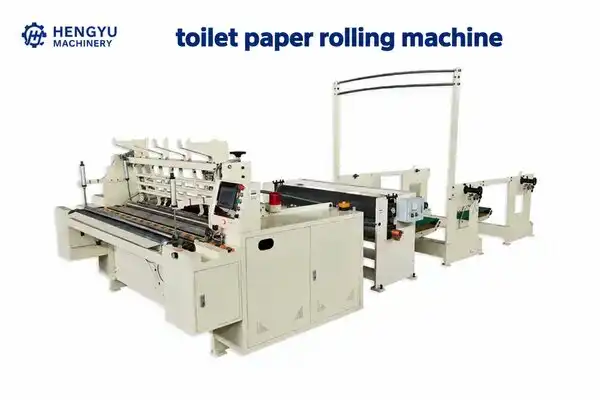
A toilet paper rolling machine — also called a tissue rewinder or rewinding and perforating machine — is industrial equipment that converts large jumbo parent rolls into consumer-ready bathroom tissue rolls. The machine unwinds, embosses, perforates, and rewinds paper at high speed with precise tension control. For any tissue-converting operation, it solves core production challenges: manual labour dependency, inconsistent roll density, and material waste from poor tension management. With PLC-controlled automation, it delivers uniform sheet counts, stable roll diameters, and uninterrupted output — forming the backbone of every efficient tissue-converting line.
Understanding Toilet Paper Rolling Machines: A General Overview
Machine Types and Their Operational Scope
There are three main types of tools used for rewinding tissue: fully automatic, semi-automatic, and human. Manual units work well for very small or hand-made jobs. Semi-automatic tools cut down on work that needs to be done by hand, but they still need to be operated by someone. Fully automatic systems, like the HENGYU industrial rewinder, combine auto core feeding, hydraulic loading, PLC control, and real-time tracking into a single process that runs all the time. The Tissue World Magazine industry overview 2022 says that fully automatic rewinders now make up more than 70% of all new converting lines installed around the world. This shows that the industry is clearly moving toward more automation.
The best option relies on how much you want to produce, how many workers you have, and the types of products you want to make. A small semi-auto machine might work fine for a regional converter, but a business plant that's open 24 hours a day, seven days a week, needs the steady throughput that only a fully automated line can provide.
Key practical perks that procurement managers always list are:
- Labour reduction: Automated core feeding and pneumatic jumbo roll loading get rid of two of the hardest human jobs on a converting line, which significantly reduces the number of people needed to work on it.
- Consistent product quality: PLC-controlled tension control and spiral piercing systems make sure that all finished rolls have the same tear lines and stable roll shape.
- Eco-conscious efficiency: Precise tension management cuts down on broken raw paper and waste that doesn't meet specifications. This lowers the cost of materials per unit and cuts down on the amount of trim waste that ends up in landfills.
These benefits directly lead to lower production costs and better quality products that are ready to be sold, which are both very important in tissue markets where price is important.

How Does a Toilet Paper Rolling Machine Work?
Core Components and Their Roles
Three problems keep happening with manual rolling: uneven wrapping tension that makes rolls telescoping, random perforation spacing that makes it hard to get an accurate sheet count, and constant paper breaking that stops production without warning. Through integrated component design, mechanical rewinding can fix all three of these problems.
The steps in the process are clear. On the unwind stand, you can put a giant parent roll that is up to 1,200 mm in diameter and 2,200 mm wide. The paper moves forward with controlled tension on a pneumatic belt-feeding system. The steel-to-wool roller configuration of the embossing unit adds texture to the paper before it gets to the perforation station, where a spiral blade roller cuts precise tear lines at pitch intervals that can be changed. The next part, rewinding, builds each log to a set width, up to 180 mm. The finished log is then ejected by an automatic device that pulls on the shaft. The outer ply is joined by a tail-sealing glue system, and the log is then taken to the cutting saw to be cut into pieces of the right length.
Every step is coordinated by the PLC processor. If the paper breaks, an intelligent alert stops the line right away, keeping raw materials from going to waste and keeping parts further down the line safe. Chrome-plated rewinding rolls don't rust when they come in contact with moisture, which is very important for businesses that work in cold or damp places where regular steel rolls break down in just a few months.
A tissue converter in Eastern Europe said that they needed 40% less staff after switching from a semi-automatic line to a fully automated rewinding system, including a toilet paper rolling machine. At the same time, their daily output went up by over 30%. Most of those gains came from the mix of real-time breakage reports and auto-core feeding.
How to Choose the Right Tissue Rewinder for Your Business?
Matching Machine Specs to Production Goals
When choosing a tissue rewinder, you need to be honest about your present output goals and how you want to grow. Here are the main things that help you make the right choice:
- Production speed: A rewinder that can handle 220 m/min can handle a lot of commercial work. Machines with lower speeds cost less at first, but they become a problem as demand grows.
- Raw material compatibility: Make sure the machine can handle the GSM range of your paper. The rewinder at HENGYU can handle 12–40 g/m², which includes both standard and premium tissue grades.
- Automation level: Auto core feeding and pneumatic loading lower the cost of labour per roll. When there are a lot of shifts, the investment pays off faster.
- Corrosion resistance: Chrome-plated rewinding rolls and a steel frame make the machine last longer in wet or cold production settings, which is often the deciding factor for converters that work in coastal or northern areas.
- Language and interface support: A PLC touch-screen interface that works with multiple languages cuts down on the time it takes to train operators and the number of mistakes that happen when shifts change.
These factors help you cut down your list of potential suppliers before you hire one. Matching the machine's capabilities to its real production setting, not just the highest specification on a datasheet, will protect your investment and keep it from being wasted, which can be very expensive.
Warranty terms and the availability of parts after the sale should both be taken into account. When parts need to be fixed, a one-year quality guaranty from a supplier with dedicated technical support speeds up the process.
Maintenance Tips and Common Issues
Preventing Downtime Before It Starts
Tissue rewinders are tools that do a lot of work. Continuously running at 220 m/min for two or three shifts a day causes high-contact parts to wear out fast. Preventative maintenance that is done on a regular basis is cheaper than reactive maintenance.
Some common problems and what causes them are
- Paper jamming at the perforation station: When paper gets stuck at the perforation station, it's usually because the perforation blade is dull or not in the right place. Every 500 hours of use, check the condition of the blade and replace it when the quality of the tear lines gets worse.
- Uneven roll winding (telescoping): This usually means that the tension at the unwind stand is off or that the nip rollers are worn out. Re-calibrate the tension settings using the PLC, and every month check the state of the roller surface.
- Motor overheating during long runs: This is usually caused by drive parts that aren't oiled enough or air ducts that are blocked. Do not change the lubrication plan given by the maker.
Keeping the stamping unit and piercing station clean of paper dust on a regular basis stops debris from building up and speeding up blade wear in a toilet paper rolling machine. Chrome-plated roll surfaces only need to be wiped down every so often with the right solvent. They don't need rough cleaning that would damage the anti-rust layer. Having wear parts like cutting blades, nip roller sleeves, and sealing glue pump parts on hand locally cuts down on repair time from days to hours.
Current Trends in Tissue Converting Technology
Automation, IoT, and Sustainable Converting
IoT-enabled tracking systems are being added to the tissue-converting industry. These systems send real-time production data to plant management screens, such as speed, tension, breakage frequency, and roll count. The use of smart manufacturing in tissue converting increased by 28% year-over-year among mid-sized converters, according to TAPPI's 2023 industry technology report. This was mostly due to rising labour costs and the need to standardise quality.
The other main driver is green running. Accurate tension control and breakage-alert systems directly cut down on the waste of raw paper, which in turn lowers the carbon footprint per final roll. This is becoming more important as retailers in North America and Europe demand that tissue providers report on their sustainability efforts.
Trusted Supplier Considerations
What to Verify Before You Commit
When looking for a tissue rewinder provider, the three most important things to look for are CE and ISO 9001 certification (which proves electrical safety and quality management compliance), documented OEM and ODM customisation capabilities, and expert help in multiple languages.
HENGYU has been making tissue-converting equipment for more than 20 years. They have CE and ISO certifications and offer common choices like customising the interface language, the embossing roller design, and the chrome anti-rust treatment. Their equipment comes with full technical documents and online commissioning support, which is helpful for converters that don't work in the same country as the provider.
Conclusion
A tissue rewinder is not a simple item to buy; it is an important piece of equipment for making things, such as a toilet paper rolling machine. The right machine gets rid of manual bottlenecks, keeps product quality stable, and makes every shift more productive. Key choice factors stay the same: level of automation, resistance to corrosion, ease of use of the PLC interface, and the ability of the provider to provide support after the sale. When converters carefully consider these factors before making a purchase, they always report a faster return on investment (ROI) and fewer unexpected stops. If you know what this equipment does physically and operationally, you can bargain better, make better specifications, and use it reliably from the start.

FAQ
How long does a tissue rewinder typically last?
A heavy-duty steel-frame rewinder will work reliably for 8 to 15 years with regular preventative maintenance. Different parts have different life spans. For example, perforation blades may need to be replaced every 6–12 months if the shifts are scheduled normally, but chrome-plated rewinding rolls last a lot longer because the coating on their surface keeps them from rusting.
Can the machine be configured for different roll sizes or ply counts?
Yes. Through the PLC link, you can change the finished roll width (up to 180 mm) and the spacing between the holes. You can change the patterns of the embossing rollers when you place your order, and the machine can work with both single- and multi-ply configurations within a GSM range of 12 to 40 g/m².
What certifications should I require from a supplier?
Any real industry seller needs to have CE certification and follow ISO 9001 standards. These make sure that electricity safety standards are met and that quality management methods are written down. Both of these are necessary for clearing customs in North American and European markets.
Does HENGYU offer multilingual PLC interfaces?
Yes, as part of their ODM service, HENGYU lets you change the language of the operating interface. This is helpful for production teams where English isn't the main language used for work.
What is the standard warranty on HENGYU tissue rewinders?
The HENGYU toilet paper rolling machine comes with a 1-year quality guarantee that covers manufacturing flaws and key mechanical parts. Their service team also offers permanent technical support.
Contact HENGYU—Your Trusted Toilet Paper Rolling Machine Supplier
HENGYU makes industrial tissue rewinders that are built to last, be accurate, and work reliably on continuous shifts. We have been making things for more than 20 years, are CE and ISO certified, and offer full ODM customisation, which includes interface language, embossing patterns, and anti-rust specifications. This lets us set up equipment that works best in your production environment. You can email our expert team at doris@hytissuemachine.com or go to hytissuemachine.com to ask for a video presentation or a full list of features. Within one business day, our team gets back to you. Connect with HENGYU — your reliable supplier of toilet paper rolling machines.
References
1. Tissue World Magazine. (2022). Global Tissue Converting Equipment Market Overview. Tissue World.
2. TAPPI. (2021). Tissue Manufacturing Process and Equipment Standards. Technical Association of the Pulp and Paper Industry.
3. PaperAge. (2022). Preventive Maintenance Best Practices for Tissue Converting Lines. PaperAge Industry Journal.
4. TAPPI. (2023). Smart Manufacturing Adoption in Tissue Converting: Annual Technology Report. Technical Association of the Pulp and Paper Industry.
5. Bureau Veritas. (2023). CE Marking and ISO 9001 Certification Requirements for Industrial Machinery. Bureau Veritas Certification.
6. Risi Paper. (2023). Tissue Industry Outlook: Converting Technology and Sustainability Trends. Risi Inc.
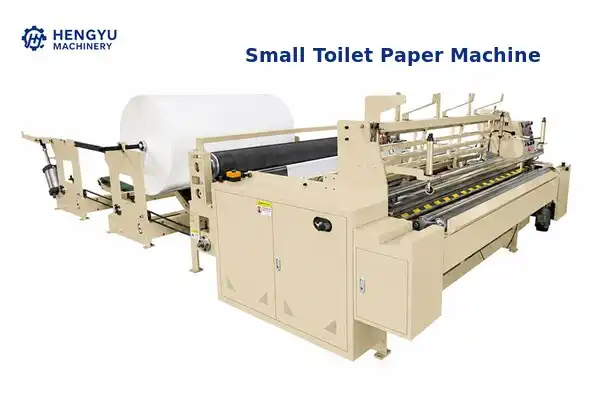
A low-capital entry point into the tissue-converting sector is provided by a small toilet paper machine for new manufacturers. For a fraction of that amount, companies can establish a working production line instead of investing hundreds of thousands in industrial-scale equipment. Everything you need to determine whether a small toilet roll production line matches your budget and your local market is broken down in this guide, including realistic setup costs, important machine features and step-by-step startup preparation.
Understanding Small Toilet Paper Machines: Types, Features, and Production Capacity
What Types Are Available?
There are three main categories of tissue-converting equipment: manual, semi-automatic, and fully automatic. Manual units are the most affordable but require significant labor per shift. Semi-automatic lines offer a balance between investment cost and reduced operator dependency. Fully automatic systems, such as the HENGYU HY-1575, integrate core processes into a single continuous workflow, requiring minimal human intervention while ensuring consistent output.
Key Technical Features That Matter
With an auto-rewinding machine, a paper cutting machine, and a tissue packing machine, the HY-1575 operates as a whole production line. It has a daily capacity of 1.5 tonnes and can process original paper widths up to 1800 mm. The machine can accommodate both retail and large-scale institutional needs by adjusting completed roll diameters between 50 and 280 mm. Compared to major industrial equipment, daily electricity expenditures are still cheap with a total power need of just 5.5kW + 0.75kW.
Scalability and Eco-Efficiency
Compact machinery with modular designs enables operators to boost manufacturing output without having to replace the entire system. Reduced power ratings also assist producers in lowering their carbon footprint and fulfilling the sustainability requirements outlined in FAO publications on the global tissue sector.

Small Toilet Paper Machine Price and Setup Cost Breakdown
What Drives the Price?
The price of a small toilet paper machine depends on its automation level, specific components, and supplier support. A fully automated line like the HY-1575, featuring automatic core feeding, perforation, and trimming, falls into a higher price bracket than a standalone basic rewinder. Adding accessories like embossing units or automatic packing systems increases the initial cost but improves the marketability of the finished product.
Total Setup Cost: Beyond the Machine
Purchasing the equipment is only one part of the startup capital. New operators must account for these essential cost categories:
- Factory space: The HY-1575 requires a footprint of approximately 6,500 × 3,300 mm plus clearance. A total workspace of under 100 square meters is generally sufficient.
- Utility installation: Electrical wiring must be rated for the machine's specific power draw, and a water source is required if pulping or core-making operations are adjacent.
- Raw material inventory: Jumbo parent rolls (13–25 g/m²) represent the primary recurring cost. Stocking 2–4 weeks of supply helps prevent production halts.
- Labor and training: A small team can operate the line. HENGYU offers remote video-guided training, allowing over 95% of customers to complete setup without on-site assistance.
- Spare parts reserve: Maintaining a stock of perforation blades and gluing system components reduces unplanned downtime.
How to Choose the Right Small Toilet Paper Machine for Your Startup?
Match the Machine to Your Output Target
A production capacity of 1.5 T/D is ideal for small factories serving local retail and wholesale markets. If your projected demand exceeds this within the first year, plan for that growth before making a purchase. The finished width range of 50–280 mm on the HY-1575 provides the flexibility to produce various roll sizes on a single machine.
Evaluate Supplier Credibility
Henan Hengyu Machinery Co., Ltd. has over 20 years of manufacturing experience, holding CE and ISO certifications with an extensive export record in South Asia, Africa, and Southeast Asia. Buyers should prioritize suppliers that offer written warranty terms, verifiable customer references, and established after-sales support protocols, including at least a 1-year quality guarantee.
OEM and Customization Options
Factory-direct customization eliminates middleman markups for those needing private label branding or language-specific control panels. HENGYU provides comprehensive OEM/ODM services, including specialized machine configurations, branded packaging design, and localized operating interfaces.
Best Practices for Operating and Maintaining Small Toilet Paper Machines
Daily Operations That Protect Your Output Quality
Consistent quality for small toilet paper machines requires disciplined daily routines. Operators must verify perforation blade alignment and ensure consistent adhesive flow in the gluing system before each run. The dual-blade cutting system requires regular checks for blade sharpness to maintain a clean 150–300mm adjustable pitch.
Preventive Maintenance Schedule
Implementing a structured maintenance rhythm extends equipment life. Key intervals include:
- Daily: Clean gluing nozzles, check rewinding tension, and monitor motor temperature and sounds for abnormalities.
- Weekly: Lubricate all moving components according to the manual and verify the stability of electrical connections.
- Monthly: Inspect perforation blade wear depth and replace them if tear-line quality decreases. Check the alignment of all three paper stands.
Factory Startup Guide: From Planning to Launch
Pre-Launch Planning Checklist
Launching a tissue-converting factory requires sequential steps, including space preparation, electrical capacity verification, and business registration. International buyers should also account for customs clearance and sea freight consolidation, which typically adds 4–6 weeks to the total lead time.
Staff Training and Quality Control
While the HY-1575 automates core feeding, perforation, and rewinding to simplify operation, staff must still be trained on emergency stop protocols and material changeovers. HENGYU provides video tutorials and manuals to support this. Implementing batch inspections—measuring roll diameter, perforation strength, and core adhesion—ensures quality control from day one.
Market Entry and Distribution
Localized manufacturing reduces freight costs and provides pricing advantages in community markets. Rural and peri-urban producers often have a lower structural cost than distributors of imported goods. Building relationships with local wholesalers, kiosks, and institutional buyers like schools and offices before launch helps generate revenue faster.
Conclusion
A compact small toilet paper machine line is a viable, low-barrier entry into tissue manufacturing for small-scale entrepreneurs. The HENGYU HY-1575 combines an accessible power profile, flexible roll diameter output, and a fully automated conversion sequence — all within a footprint manageable for micro-factory setups. Realistic cost planning that covers the machine, workspace, utilities, raw materials, and training gives you an honest picture of your startup investment. With the right supplier partnership, production can begin within weeks of order confirmation.

FAQ
What factors most affect the price of a small toilet paper machine?
Automation level, included peripheral units (embossing, packing), build quality, and after-sales support packages are the primary price drivers. A fully automatic line costs more upfront but typically delivers faster ROI through lower labor costs and consistent output.
How long does delivery take after placing an order?
For most international orders, production and sea freight combined take approximately 30–60 days depending on destination port, customs clearance efficiency, and shipping consolidation schedules.
Can a compact tissue machine operate in areas with unstable electricity?
The HY-1575's total power draw of 5.5kW + 0.75kW is modest by manufacturing standards. Operators in regions with variable supply should still consult a local electrician to confirm stable input voltage before commissioning.
Is technical support available after the warranty period?
HENGYU provides lifetime technical assistance through online channels. Beyond the 1-year quality guarantee, 24/7 video support and spare parts supply remain accessible to all registered customers.
Do I need prior manufacturing experience to run this equipment?
No specialized background is required. HENGYU's remote installation guidance and operator training materials are designed for first-time factory operators with no prior tissue machinery experience.
Start Your Tissue Business with HENGYU — Request a Quote Today
HENGYU has equipped micro-factories and growing manufacturers across multiple continents with reliable, CE-certified compact production lines. The HY-1575 small toilet paper machine offers a practical, scalable solution for entrepreneurs ready to serve their local markets with locally made products. Visit hytissuemachine.com to explore full specifications, or contact our team directly at doris@hytissuemachine.com to receive a configuration recommendation and factory-direct pricing as a verified small toilet paper machine manufacturer. Response within one business day.
References
1. Affonso, R., et al. "Energy Efficiency in Paper Converting Operations." TAPPI Journal, 2021.
2. Food and Agriculture Organization of the United Nations. "Pulp and Paper Capacities Survey." FAO Forestry Paper, 2022.
3. RISI / Fisher International. "Global Tissue Industry Market Outlook." Fastmarkets RISI, 2023.
4. International Organization for Standardization. "ISO 9001:2015 Quality Management Systems — Requirements." ISO, 2015.
5. Smook, G.A. Handbook for Pulp and Paper Technologists, 4th ed. TAPPI Press, 2016.
6. World Bank Group. "Small Enterprise Development in Emerging Markets." World Bank Publications, 2020.
A small toilet paper machine is a compact tissue conversion system that transforms jumbo parent rolls into consumer-ready toilet rolls — covering every step from core feeding to final rewinding. Unlike large industrial lines, it keeps the production footprint tight, the power draw low, and the learning curve short. For micro-entrepreneurs and growing SMEs in South Asia, Africa, and Southeast Asia, this category of equipment opens a realistic path into local tissue manufacturing without demanding heavy capital or a large workforce.
What a Small Toilet Paper Machine Actually Does
Core Mechanism and Workflow
At its core, a small toilet paper machine takes a wide parent roll (the HENGYU HY-1575 can handle up to φ1800 mm) and continuously turns it into finished rolls by automatically feeding the core, perforating, tail-glueing, cutting, and rewinding. The whole process only needs 5.5 kW + 0.75 kW of power, so it can be done even in places where the energy source isn't stable.
An auto rewinding machine, a paper cutting machine, and a tissue packing machine are all built into the HY-1575 production line as a single unit. The finished roll diameters range from 50 mm to 280 mm, and the paper core diameters range from 30 mm to 55 mm. This means that they can fit almost every common store format that is sold in local markets. The machine takes up 6,500 × 3,300 mm of floor space, which means it can fit easily in a small warehouse or family workshop.
Automation Levels and Configuration Flexibility
The level of automation varies from market to market. Operators have to do the core insertion by hand on entry-level semi-automatic units, but fully automated lines like the HY-1575 do it without any help from people. TAPPI's 2022 tissue technology review says that automation in small conversion lines has made operators up to 40% more productive in small-batch settings. Buyers on a tight budget can also make configuration easier by leaving out optional embossing or secondary packaging units. This lowers the initial cost without affecting the quality of the core output.

Versatile Applications Across Different Business Scenarios
A small toilet paper machine is really useful because it can be used in many different business situations. The machine doesn't only move in one direction.
The main situations in which this kind of tool proves useful are listed below:
- Micro and family-scale startups: A workshop with two to eight people can make 1.5 tonnes of finished toilet paper every day, which is enough to supply small businesses, market stalls, and stores in the area. Localised production gets rid of the cost of shipping finished goods from faraway places, which makes store prices more competitive.
- Regional supply for underserved markets: In emerging economies, rural and peri-urban areas often have to depend on expensive rolls that are brought in from other countries. That hole is filled by a tissue-converting line that can be operated locally. Because the HY-1575 only needs a small amount of power, it can work in places where the power grid isn't stable or has limited power. This is a real possibility in many target markets.
- Boutique institutional supply: Hotels, clinics, schools, and government offices sometimes need roll diameters or core sizes that big mills can't make in small batches. The HY-1575's 50–280 mm diameter range can handle this without any technical changes. This means that small makers can serve both retail and institutional customers.
- Vertical integration for existing distributors: A tissue distributor that currently sells rolls that were imported can buy a small rewinding line and start turning rolls that were sourced locally. This keeps the processing profit and gives you direct control over the quality of the product and when it will be delivered.
These situations are not just hypothetical. According to Smithers' 2023/Global Tissue Market Report, autonomous tissue converting in developing markets grew at a rate of about 6.2% per year from 2019 to 2023. This was mainly due to small-capacity machines joining new geographic markets.
These application trends show that the machine is useful in more than one business. The small conversion line can be changed to fit different needs without needing extra capital. It can handle both community-level supply and niche institutional contracts.
Maintenance, Troubleshooting, and Machine Longevity
For a micro-manufacturer, uptime that stays the same is more important than peak speed. A machine that consistently runs six days a week at 1.5 T/D makes more money than a faster machine that breaks down more often.
The HY-1575 is built with a solid weight of 2,000 kg, which keeps it from shaking too much during high-speed rewinding and keeps important parts from wearing out in a small toilet paper machine. This is backed by a one-year quality guarantee from HENGYU that covers problems with the way it was made.
Routine maintenance priorities for a compact rewinding line include:
- Daily: Clean the piercing blades and glue station of paper dust and make sure the core feed is aligned.
- Weekly: Check the tightness of the belt and grease the bearings on the rewinding shaft.
- Monthly: Check the perforation blades' sharpness once a month (dual-blade setup, 150–300 mm pitch) and replace them if the quality of the tear lines gets worse.
Customers can get help from HENGYU's expert team 24 hours a day, seven days a week through online methods, such as video call diagnostics that can fix most operating problems without having to come to the customer's location. Over 95% of installations are finished with just remote direction. This is especially helpful for buyers in places where trained machinery technicians are hard to find.
How to Choose the Right Compact Toilet Paper Machine?
When looking for a tissue rewinding machine for small-scale production, you need to be honest about three things: the amount of floor space you have, the amount of work you want to do each day, and the power capacity in your area.
The HY-1575 is 6,500 × 3,300 mm and has a total power output of 6.25 kW, which makes it a good fit for a small workshop or a storage unit that has been turned into a workshop. Its 1.5 T/D capacity is good for a small producer that wants to serve a town or district market without putting too much capital into production that the market can't handle yet.
When you're comparing providers, you should look at their guarantee terms, the availability of parts, and how easy it is for you to access their paperwork. Repair times are cut down by a large amount when machines use standard, readily available parts. When HENGYU creates the HY-1575, they make sure that many of the parts are the same. This lowers the risk of extended downtime because extra parts aren't available, which is a big worry for buyers in faraway markets.
Sustainable Innovation and Future Direction
The tissue-converting business is moving toward using less energy and working with recycled fibres. It already goes in this way because the HY-1575 is low power. The FAO's 2023 report on sustainable paper production says that in lower-income areas, the fastest-growing type of tissue machinery adoption is compact conversion lines that run on less than 10 kW.
The rewinding mechanism works well with recycled parent rolls that have basis weights of 13 to 25 g/m². This lets operators get cheaper recovered fibre without having to change the machine. This adaptability helps lower costs and care for the environment, two issues that are becoming more important to both institutional buyers and community consumers.
Conclusion
In conclusion, a small toilet paper machine is useful for a lot more than you might think at first glance. It allows local manufacturing in areas that aren't well covered, helps current distributors become more vertically integrated, and takes care of the supply needs of institutions that big mills don't bother with. For a small workshop and a low price, the HENGYU HY-1575 is a fully automatic machine with a 1.5 T/D capacity. It also draws 6.25 kW of power. With a quality guarantee for one year and technical help for life, it gives businesses in South Asia, Africa, and Southeast Asia a practical, low-risk way to start making tissue.

FAQ
What is the minimum space needed to install a small toilet paper machine?
The HY-1575 needs a floor space that is about 6,500 mm x 3,300 mm. A room of 80 to 100 square metres is enough to house the machine, store parent rolls, and prepare finished goods for shipping.
Can the machine handle recycled paper as raw material?
Yes. The rewinding system can handle parent rolls with basis weights ranging from 13 g/m² to 25 g/m². This range includes a lot of recycled-fibre types that are popular in developing markets.
How many operators does the production line require?
The core feeding, gluing, and cutting features that are automatic make it much less necessary to do these things by hand. A two-person team can handle day-to-day tasks well.
What after-sales support does HENGYU provide?
HENGYU provides online technical help 24 hours a day, seven days a week. They also offer video-guided troubleshooting and thorough installation guides. When remote help isn't enough, on-site tech support is offered.
Is the machine suitable for areas with unstable electricity supply?
The overall power need of 6.25 kW is low compared to the output. This means that the machine can work with grid connections that are popular in industrial areas outside of cities and in rural areas.
Start Your Tissue Production Journey with HENGYU
For more than 20 years, HENGYU has helped micro-manufacturers and small businesses grow. The HY-1575 small toilet paper machine for sale has a fully automatic production line that is CE-certified and doesn't use too much power, so it can be used in most workplaces. Go to hytissuemachine.com or email our team at doris@hytissuemachine.com to get a custom configuration proposal, an estimate of the lead time, and full technical documentation.
References
1. TAPPI. (2022). Tissue Technology and Converting Efficiency in Small-Scale Operations. TAPPI Press.
2. World Bank Group. (2022). Doing Business in Emerging Markets: Manufacturing Entry Costs and Local Supply Chains. World Bank Publications.
3. Smithers. (2023). The Future of Global Tissue and Hygiene Products to 2028. Smithers Pira.
4. International Finance Corporation. (2022). SME Equipment Finance in Developing Economies. IFC Publications.
5. Food and Agriculture Organization of the United Nations. (2023). Sustainable Paper and Pulp Production Trends in Lower-Income Markets. FAO Forestry Division.
6. McKinsey & Company. (2023). Consumer Goods in Emerging Markets: Localization and Micro-Manufacturing Trends. McKinsey Global Institute.
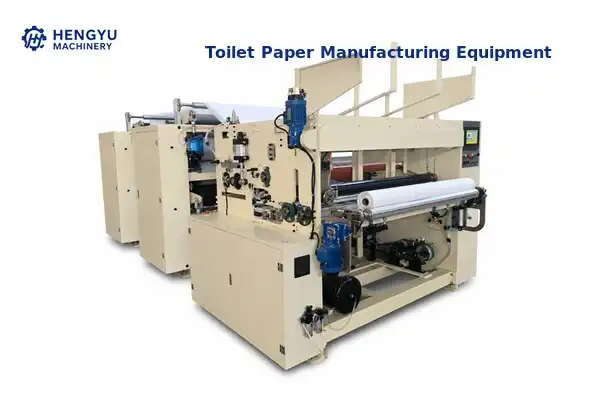
Selecting the right toilet paper manufacturing equipment is one of the most consequential decisions a tissue converter will make. This guide walks through production line components, workflow mechanics, machine comparisons, procurement strategy, and emerging technology trends — giving B2B procurement managers, engineers, distributors, and OEMs a structured foundation for smarter capital investment. Whether you are scaling an existing operation or entering the modern retail supply chain for the first time, understanding these fundamentals directly affects your output consistency, operational cost, and long-term competitiveness.
Understanding Toilet Paper Manufacturing Equipment: Key Components and Processes
Understanding the toilet paper manufacturing equipment: Key Parts and Steps. A tissue converting line is not just one machine; it's a system with several stages that work together to prepare the next one. Skipping a part or not giving enough information about one makes a bottleneck that slows down production and makes the product less consistent.

Core Machinery Along the Production Line
Most of the time, the converting sequence goes through these stations:
- Jumbo roll unwinding: For unraveling a jumbo roll, a pneumatic filling arm places parent rolls that weigh up to two tons. Every step further down the line depends on the web quality being stable. The HENGYU HY-1500 can load jumbo rolls up to 1500 mm in diameter with pneumatics, which makes the job easier for the user and cuts down on switching time.
- Embossing unit: Steel-to-steel edge embossing keeps plies from separating and adds a unique tactile feel. Single and double embossing patterns cater to different price points in retail, such as value, mid-range, and premium. Manufacturers can change their products to fit store planograms without having to retool because the platform has three different embossing setups.
- Rewinding and perforating: Four high-precision screw knives make perforations that are accurate to within ±3 mm. Customizable perforation pitch (85–135 mm or 170–260 mm) meets sheet-count norms in foreign, Middle Eastern, and North African markets.
- Core feeding and coreless winding: Cores with standard sizes of 30–60 mm can be fed automatically by core feeding. An extra coreless module lets you make eco-friendly rolls, which is becoming more important as rules to cut down on plastic get stricter in the GCC and EU.
- Glue spraying, tail sealing, and edge trimming: All three tasks are automatic and controlled by a PLC that keep the finish clean without any help from an operator.
It's like one environment here at these stations. The PLC + Touch Screen (HMI) management design connects them, letting you see the diameter in real time, stopping the machine instantly when a sheet of paper breaks, and getting the same output over long runs. At scale, the amount of automation means a lot. A full-servo line moving at 180–240 m/min can handle a lot more parent roll material per shift than a semi-automatic line, and it can also keep the measurements more accurately, which is necessary for private-label supply contracts with supermarkets.
How Toilet Paper Manufacturing Equipment Works: From Raw Material to Finished Product
Workflow From Parent Roll to Consumer-Ready Tissue
The process starts with getting the parent rolls ready. The unwind stand is run through toilet paper manufacturing equipment jumbo rolls, which are usually 13–30 gsm and one or two ply. The rolls are filled pneumatically. Web tension control at this stage stops tiny tears that would otherwise cause paper to break further down the line. After that, the web goes through the embossing nip. The depth and pattern of the emboss are set based on the product specifications.
The continuous web goes into the rewinding area after being embossed. It is wound onto a cored or coreless mandrel with a controlled width. The HY-1500 can handle finished roll diameters of 90 mm to 150 mm, which is the full range of forms for market bathroom tissue. The web is scored by perforation blades at set times. Checking the blades every 8–12 hours of use and replacing them every 15–30 days, based on how rough the paper is, keeps the separation of sheets clean and reduces customer complaints.
When a log reaches the desired diameter, tail sealing glue is automatically applied, and the log is moved to the bandsaw cutter to be cut into rolls that are the right length for stores. Trimming the edges gets rid of selvage waste. After the rolls are ready, they are packed up. Practical maintenance discipline underpins uptime. Vibration analysis at rated speed finds misaligned shafts before they cause unplanned downtime. Before the toilet paper manufacturing equipment is shipped, it goes through factory acceptance testing (FAT) on the client's own GSM standard. This is usually a steady four-hour run that makes sure the emboss level and glue coverage stay the same.
Comparing Tissue Converting Machines: Making the Right Investment Decision
Evaluating Capacity, Flexibility, and Total Cost of Ownership
In the end, choosing a machine comes down to balancing three factors: the estimated production speed, the freedom of the product configuration, and the total cost of ownership over the next five to seven years. Basic semi-automatic rewinders can handle narrower parent rolls at slower speeds and are good for small and medium-sized converters that are just starting out and don't have a lot of money to spend on equipment. Full-automatic lines like the HY-1500, which can work at speeds of 180–240 m/min and have a working width of 1500 mm, meet the needs of makers who serve current retail chains in terms of throughput and audit readiness.
According to RISI/Fisher International tissue market data, as yearly output rises, high-speed converting lines regularly offer lower per-unit converting costs. OEMs from Europe, like Fabio Perini and Toscotec, are known for making high-end products with precise engineering. The HY-1500 from HENGYU is a unique value because it is CE-certified, ISO-aligned, and has been used in over 20 countries. It also comes with a one-year quality guarantee and 24/7 after-sales support, all of which are important factors for procurement teams going through audits of toilet paper manufacturing equipment. The power to be coreless deserves its own discussion. The global coreless tissue market is growing as stores respond to sustainability and packaging reduction laws. A machine that switches between cored and coreless modes without a full retool protects product portfolio flexibility.
Procurement Strategies for Tissue Converting Equipment
Supplier Evaluation Criteria That Protect Capital Investment
There's more to choosing a tissue machinery supplier than just looking at the specs on a datasheet. These are the things that skilled toilet paper manufacturing equipment procurement teams look for:
- Verified CE and ISO certification: The CE mark shows that the product meets the safety standards of the EU Machinery Directive. ISO 9001 makes sure that the consistency of the manufacturing process is checked by a third party. Both must be met by producers who serve supermarket groups and are subject to factory checks.
- After-sales SLA and spare parts availability: A promise of technical support 24 hours a day, seven days a week, with documented response times keeps production going. Video guidance and remote troubleshooting are both part of HENGYU's lifetime technical support program. Over 95% of setups are ready for production with just remote guidance.
- Factory acceptance testing protocol: Reliable providers test your specific grade of paper with FAT before sending it to you. This method, which is explained in ISO 9001 supplier qualification literature, is the most reliable quality check that buyers can do before the goods are delivered.
- Export experience and logistics coverage: The EXW, FOB, CIF, and door-to-door choices make it easier for buyers to manage payment processes and port-of-entry clearance for letters of credit.
Before signing the contract, the custom design, such as the range of roll diameters, hole pitch, and emboss pattern, should be confirmed in writing. Buying used equipment is cheaper, but it usually doesn't come with a guarantee and may need to be fixed up to meet current safety standards.
Future Trends and Technological Innovations in Tissue Machinery
IoT-enabled condition monitoring is being used in the tissue converting industry. Sensors send data about vibration, temperature, and tension to dashboards that look for problems before they happen. AI-assisted quality vision systems check the stamp depth and accuracy of the perforations at line speed, instead of sampling by hand.
The use of energy is another area of active development for toilet paper manufacturing equipment. Variable Frequency Drives (VFDs) lower the amount of energy that motors need to run during cycles of speeding up and slowing down. This can help with facility energy audits. Coreless production gets rid of the need for and weight of core materials, which lowers the cost of raw materials and the carbon footprint of shipping. These are all good things for manufacturers who are responding to retailers' ESG scorecards. Planning for scalability should start with choosing the right tools. A machine platform that can accept modular upgrades—such as online slitting, more embossing units, and automated packing integration—makes assets last longer and delays the need to buy new ones.
Conclusion
The success of tissue conversion rests on how well the machine's capabilities are matched to the needs of the market. The right production line lowers the cost per unit, lets you differentiate your products with emboss and coreless choices, and can handle the close scrutiny of audits that modern retail outlets demand. The HY-1500 from HENGYU meets these needs with its 180–240 m/min operating range, three embossing configurations, dual core/coreless capability, and full PLC control. The toilet paper manufacturing equipment comes with CE approval and lifetime technical support from a provider with more than 20 years of experience in the field.

FAQ
What production speed should I target for a supermarket supply contract?
Most modern retail buyers expect converting lines to go at least 180 m/min so they can meet their volume obligations. The HY-1500 works at speeds of 180 to 240 m/min, which is fast enough for normal industrial tissue volumes and has room for growth in demand.
How often do perforation blades require servicing?
Every 8–12 hours of use, the condition of the blades should be checked. Depending on the GSM standard and how rough the paper is, the gaps between sharpening or replacing them are usually between 15 and 30 days.
Can one machine produce both cored and coreless rolls?
Yes. These days, rewinding platforms can work in two different modes. The HY-1500 has an extra coreless module that can be used to switch between mandrel-based winding and coreless winding without having to retool the toilet paper manufacturing equipment completely.
What certifications matter most for factory audits?
CE marking and ISO 9001 certification are the basic requirements that most supermarkets and other large buyers look for when they are qualifying suppliers.
What footprint does a full-automatic line require?
A standard fully automatic converting line with a rewinder, a log saw, and packaging needs at least 20 m × 8 m of floor space.
Ready to Scale Your Tissue Production? Contact HENGYU Today
Engineers from HENGYU can look over your production goals, building layout, and desired product specs. With a known global track record as a provider of toilet paper manufacturing equipment, we can make sure that every HY-1500 setup meets your exact converting needs, from the number of holes to the design of the embossing and the ability to work without a core. Reach our technical team directly at doris@hytissuemachine.com or visit hytissuemachine.com to request a detailed quotation and equipment proposal.
References
1. TAPPI — Tissue Converting Operations and Blade Maintenance Guidelines, TAPPI Journal, 2022.
2. Fisher International — Global Tissue Market Outlook: Cost Benchmarking for Converting Operations, 2023.
3. European Commission — Machinery Directive 2006/42/EC: CE Marking Requirements for Industrial Equipment, 2023.
4. PITA (Paper Industry Technical Association) — Smart Manufacturing and IoT Integration in Tissue Production, Paper Technology International, 2023.
5. U.S. Department of Energy — Variable Frequency Drives: Energy Savings in Industrial Motor Systems, Energy Efficiency & Renewable Energy, 2022.
6. ISO — ISO 9001:2015 Quality Management Systems — Requirements, International Organization for Standardization, 2015.
- 1
- 4
- 5
- 6
- 7
_1787294187070.webp)
_1784082301486.webp)