How Much Does Toilet Paper Manufacturing Equipment Cost?
If you're planning to scale tissue converting operations or break into modern retail channels, understanding what drives the cost of toilet paper manufacturing equipment is the first strategic step. Pricing varies widely based on automation level, production speed, machine width, and value-added capabilities like coreless production or multi-mode embossing. A mid-range industrial rewinding line suited for supermarket supply chains typically falls within the $80,000–$200,000 range per unit, while fully automated configurations with integrated packaging push higher. The HY-1500 from Hengyu Machinery sits squarely in this commercial-grade tier, designed for manufacturers targeting consistent, high-volume output.
Understanding Toilet Paper Manufacturing Equipment Costs
What you pay for toilet paper manufacturing equipment depends on a number of factors that affect each other. Getting clarity on each one will keep your budget from being surprised and put you in a better position to negotiate.
Key Pricing Factors to Evaluate
The main things that affect prices across the market are:
- Automation level: Full-servo PLC systems with HMI touchscreens cost more than semi-automatic ones, but they make output more consistent and reduce the need for long-term labor.
- Machine width and speed: A 1500 mm jumbo roll width moving at 180–240 m/min is a standard for industrial use. Narrower, slower machines cost less up front, but they can't be expanded when supermarkets need more volume.
- Customization scope: OEM configurations, coreless printing, choosing the type of embossing, and being able to change the perforation pitch all add to the base price but directly increase the number of products you can sell.
- Certification compliance: To get CE and ISO 9001 certification, there are technical costs that reliable providers add to the price. This keeps you safe during quality checks by retailers.
- Service packages: Service packages include help with setup, training for operators, extra parts, and SLA promises made after the sale. All of these things add to the total cost of ownership, not just the purchase price.
Understanding these factors before requesting quotes allows procurement teams to compare suppliers on equal terms instead of just looking for the lowest price.
Types of Tissue Converting Machines and Their Price Ranges
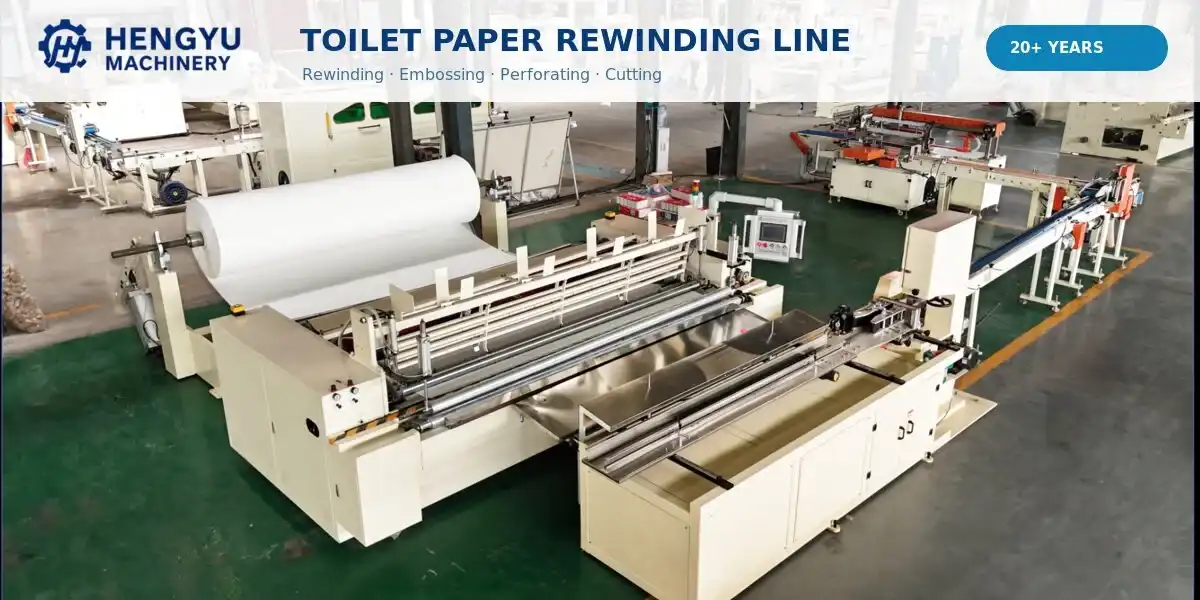
Every rewinding line is used for a different type of business. There are three main operational levels in the toilet paper manufacturing equipment market, and each has its own investment implications.
Semi-Automatic Entry-Level Lines
These tools can rewind and cut simple materials, but they don't do much else automatically. With little money, they're good for startups or manufacturers trying out new product categories. More work needs to be done, and growth is limited by processing caps when order numbers rise.
Mid-Range Automated Rewinders
This is where most producers in the growth stage work. This group of machines has PLC control, automatic core feeding, glue closing, and paper-break recognition. The HY-1500 fits in this category. It can handle 13–30 gsm paper in one or two plies and can run at up to 240 m/min with a 1500 mm large roll width. For manufacturers who supply modern retail channels, this level strikes the best balance between capital expenditure and return on investment.
Fully Integrated High-Speed Production Lines
These full systems come with automatic palletizing, log saws, and packing. They work well for large-scale industrial tissue mills that are open 24 hours a day, seven days a week. The initial investment goes up a lot, but the cost of production per unit goes down a lot as production increases. This means that manufacturers with long-term supply deals with big retailers can still use them.
The right tier relies on how many orders you have now, how fast you expect to grow, and how complicated your product grid is.
Cost Breakdown of a Complete Toilet Paper Production Line
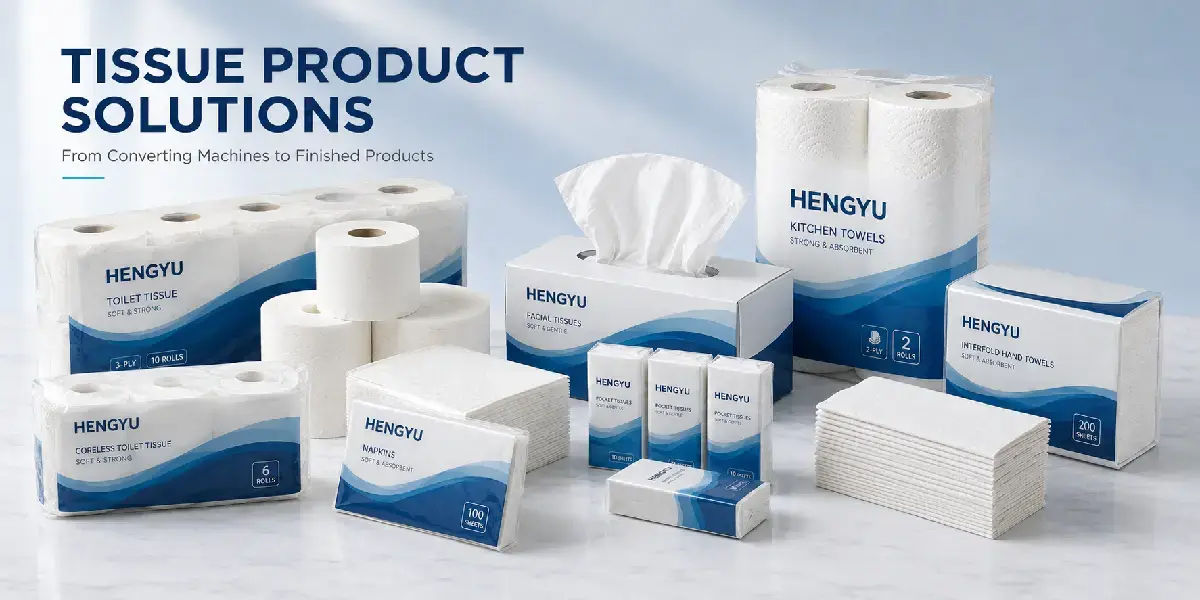
In a factory, there is never just one machine. The total investment for toilet paper manufacturing equipment is made up of several parts, and each has its own cost weight. Expenditure typically distributes across a whole converting setup as follows:
- Rewinding and perforating unit: This is the main machine. This is where most of the money spent on capital goes, and it limits the line's high speed and quality.
- Core making machine: A core-making machine is needed to make cored rolls. Coreless designs get rid of this cost, but the rewinder needs a different mandrel method.
- Log saw and cutting system: Precisely cuts finished logs into rolls that are the right length for store buyers.
- Packaging and labeling systems: Automatic packaging cuts down on work at the output end and gets rolls ready to look good in a supermarket.
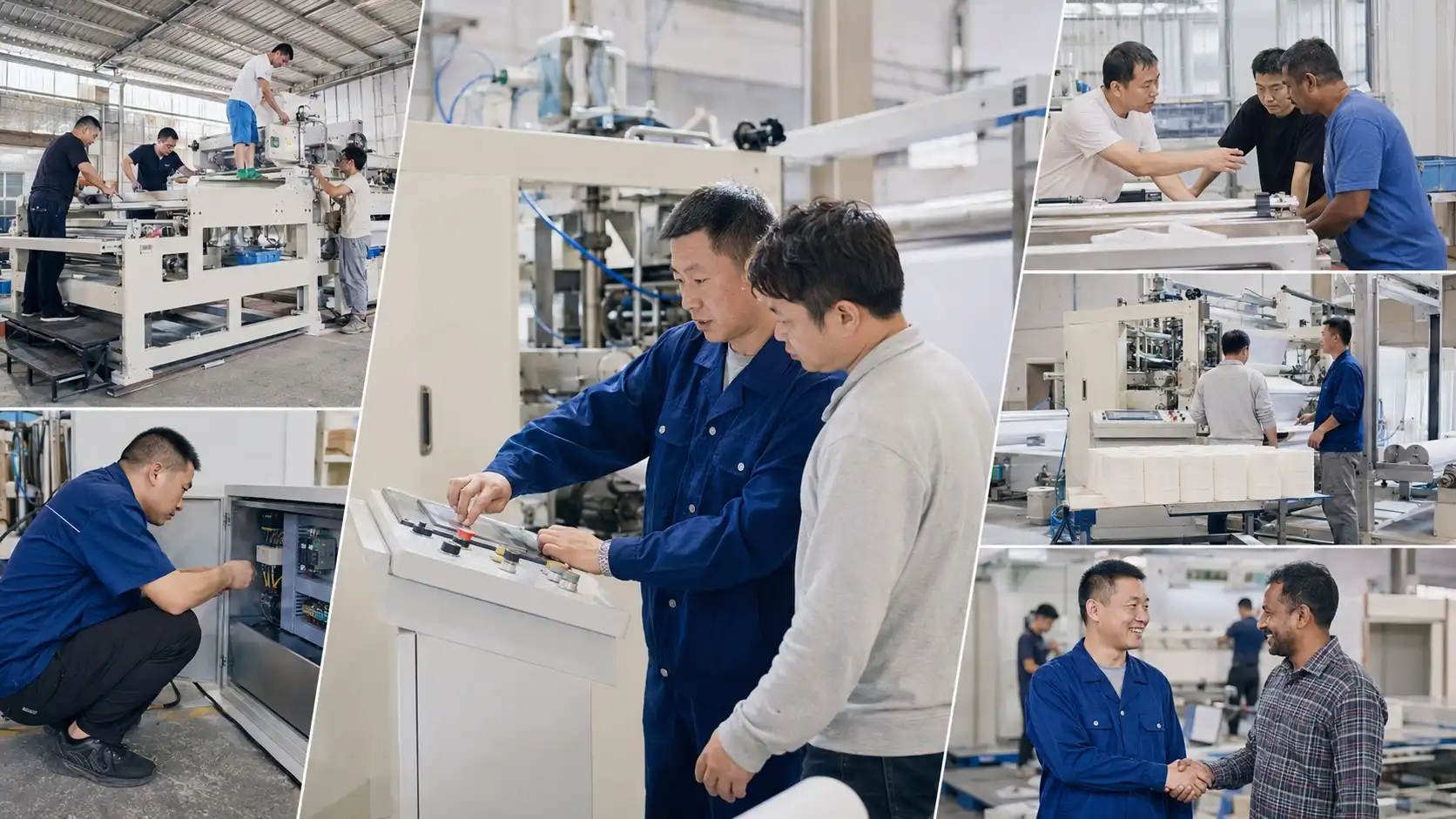
- Installation and commissioning: Expert help on-site or remotely during startup. Over 95% of Hengyu customers finish installation with help from afar, which saves them a lot of money on trip costs.
- Operator training and documentation: A well-trained machine crew has a direct effect on yield rates and cuts down on scrap during the ramp-up phase of production.
- Spare parts inventory: Perforation blades, glue system parts, and drive belts are prices that keep coming up. If you get these from the company that sells your machine, they will be compatible.
When you add up all of these costs, you get your real total cost of ownership. Evaluating each one separately keeps you from going over budget and makes sure that operations can keep going after the project is finished.
How to Choose Tissue Converting Equipment Within Budget?
Sticking to a budget when buying toilet paper manufacturing equipment starts with making sure that the machine's capabilities match actual production needs, not just desired ones.
Define Output Requirements Before Comparing Quotes
Figure out the diameter range, perforation pitch, ply count, and whether your retail customers want coreless or embossed products for the rolls you want to make. The HY-1500 has three different embossing modes: single, double, and steel-to-steel edge embossing. The end roll width can be between 90 and 150 mm, and the perforation pitch can be between 85 and 260 mm (customizable). Because of this, one machine can handle many SKUs instead of needing separate lines for each one.
Evaluate Total Cost of Ownership, Not Just Purchase Price
Energy use should be looked at closely. The HY-1500 only needs 7.5–15 kW of fixed power, which isn't very much for its output level. Lower energy use lowers the cost of running the machine over its lifetime. The real cost of keeping the line running is also affected by how often it needs maintenance, how long it takes to get replacement parts, and the length of the warranty (Hengyu offers a one-year quality guarantee).
Manufacturers who need to manage their cash flow during a capacity growth phase should think about whether to lease or buy. But for companies that want to work with supermarkets and whose products must be consistent enough to pass audits, owning and controlling the production asset is usually the better long-term move.
Current Market Trends and Their Impact on Equipment Pricing in 2025
The market for toilet paper manufacturing equipment is changing in ways that have a direct effect on how manufacturers in growth markets plan their capital spending.
In the Middle East, North Africa, and Southeast Asia, coreless roll technology is becoming more popular because of environmental laws. Retailers in these areas are pushing for eco-friendly packing and less plastic use, which means that coreless production is no longer a niche choice but a way to stand out in the market. Machines that can work in both core and coreless modes, like the HY-1500, cost more at first because they protect your product line from changes in regulations.
In commercial-grade lines, Industry 4.0 integration is no longer an extra, it's becoming the norm. PLC systems with HMI touchscreens can now give you production data in real time, repair alerts that you can plan ahead for, and remote diagnoses. These features cut down on unplanned downtime and help meet the traceability standards that big-box stores are putting more and more pressure on factories to meet during audits.
Established Chinese machinery manufacturers have merged with other suppliers to improve quality consistency and keep prices low compared to European competitors. As the machinery industry that focuses on exports has grown, CE approval has gone from being a nice-to-have to a standard requirement.
Conclusion
The price of toilet paper manufacturing equipment is based on a number of factors, including its technical specifications, level of automation, and value for long-term support. If a manufacturer wants to sell their products in modern retail channels, they need machines that can keep the quality high at commercial speeds, work with both coreless and embossed product formats, and pass the audit requirements of retailers. All of these needs are met by the HY-1500, which falls into a clear investment category. Knowing the total cost of ownership, which is different from the purchase price, is what makes the difference between a good and a bad buying choice.
FAQ
What is a realistic budget for a mid-range tissue converting line?
A commercial-grade rewinding line that can handle 180–240 m/min and a 1500 mm large roll width is good for supermarkets. Investing in mid-range toilet paper manufacturing equipment usually costs between $80,000 and $200,000, based on how much automation is needed and any extra features like coreless capability or edge embossing that are added.
Can one machine produce both cored and coreless rolls?
Yes. Modern rewinding systems, like the HY-1500, can work in both standard and eco-friendly production modes thanks to a switchable mandrel and an air-assisted coreless winding system. This means that makers can use a single machine to serve both types of customers.
How long does installation typically take?
Most Hengyu customers use remote video help to finish installation and initial setup within a few days. If needed, support can be provided on-site. The machine instructions goes into great depth about how to set up the machine.
What after-sales support should I expect?
A trustworthy supplier offers a warranty on the equipment for at least one year, technical support 24 hours a day, seven days a week, spare parts, and training for the operators. Hengyu promises to provide lifetime expert help, which goes far beyond the warranty term.
How does CE certification affect procurement decisions?
Equipment going to markets that require official safety compliance must have CE certification, and retailers are asking for it more and more during plant audits. It shows that the machine meets safety and electromagnetic compatibility standards in Europe.
Get a Custom Quote from HENGYU — Trusted Toilet Paper Manufacturing Equipment Supplier
The HENGYU HY-1500 is designed for companies that want to win and keep supermarket accounts and need to guarantee throughput, multi-mode embossing, and coreless capability. We help you scale with trust because we have over 20 years of experience with toilet paper manufacturing equipment, CE-certified machines, and free expert support for life. To get a personalized technical plan, email our team at doris@hytissuemachine.com or go to hytissuemachine.com.
References
1. TAPPI (Technical Association of the Pulp and Paper Industry). Tissue Technology Handbook. TAPPI Press, 2022.
2. Smithers Pira. The Future of Tissue to 2027. Smithers, 2022.
3. FAO. Pulp and Paper Capacities: Survey 2021–2026. Food and Agriculture Organization of the United Nations, 2022.
4. Euromonitor International. Tissue and Hygiene: Global Industry Overview. Euromonitor International, 2023.
5. PMMI: The Association for Packaging and Processing Technologies. Packaging Machinery Industry Report. PMMI, 2023.
6. Grand View Research. Tissue Paper Market Size, Share & Trends Analysis Report. Grand View Research, 2023.
_1787294187070.webp)
_1784082301486.webp)