Semi Automatic Tissue Paper Making Machine: A Complete Guide
If you're exploring how to launch or scale a facial tissue box production line on a realistic budget, a semi automatic tissue paper making machine deserves serious attention. This guide walks through how these machines operate, what features matter most, how they compare to other options, and how to procure one with confidence. Whether you're a startup factory owner in Nigeria, a family-run tissue plant in Pakistan, or a small converter in Cambodia, this complete guide gives you the grounded knowledge you need before placing an order.
How Does a Semi Automatic Tissue Paper Making Machine Work?
The Core Mechanical Workflow
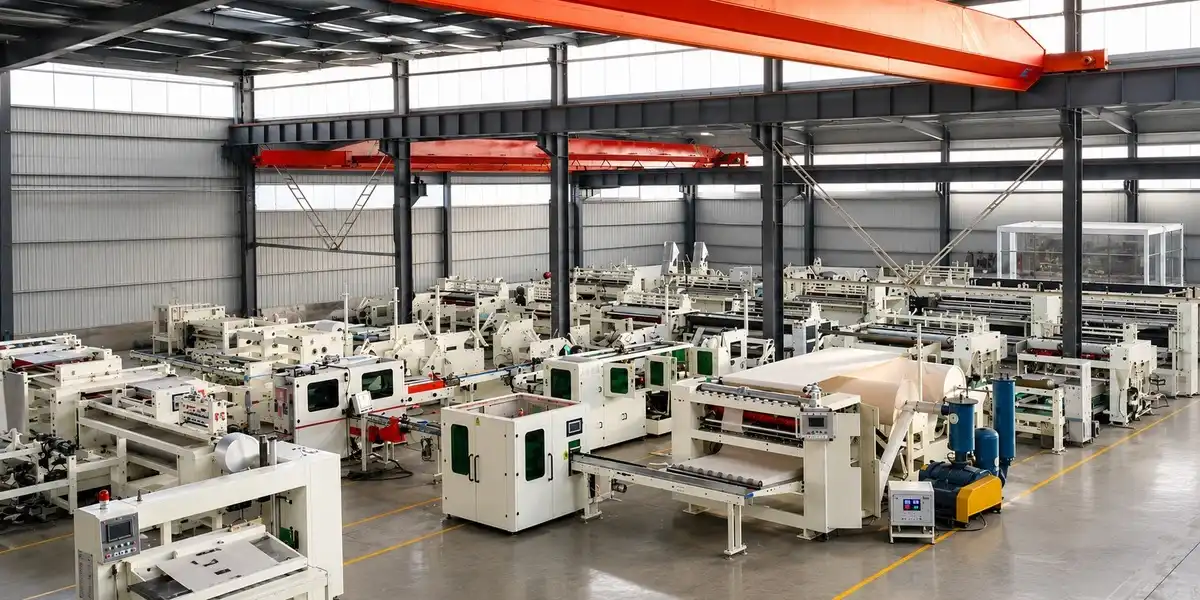
Between labor-intensive manual processes and capital-intensive fully automatic lines, a semi automatic tissue paper making machine fills the gap. It automates the most precise steps, like unwinding, embossing, folding, and cutting, but the biggest rolls can still be loaded by hand, and finished stacks can be moved by hand. Here's an example of how the HENGYU facial tissue line works: electromagnetic speed-controlled unwinding of giant rolls (up to φ1,200 mm, 76.2 mm core); steel-to-steel edge embossing for uniform texture; and 320 cuts per minute pneumatic point cutting.
The 18.5 kW vacuum system keeps the web tension fixed during the folding stage. This stops the uneven density and loose-roll problems that happen when setups are done by hand alone. This leads to a production output of 1,900 to 3,000 kg per 8-hour shift, which is based on real working conditions rather than peak ideal rates.
Tissue Types and Energy Efficiency
These tools make normal toilet paper rolls, napkins, and facial box tissues that are 100x120 mm to 100x210 mm in size. For fully automatic lines, 15–30+ kW of energy are used, while 5.5–8.5 kW (main drive) and 8.5 kW (cutting unit) are used by semi automatic tissue paper making machine lines. For small factories with limited utility funds, that difference adds up over the course of a month of output.
Key Features and Benefits of Semi Automatic Tissue Paper Making Machines
What to Look for in a Production Line?
A good tissue converting machine has four technical bases that set it apart from a bad one: consistent tension control, precise cutting, package integration, and an intelligent control system. This is what the HENGYU semi automatic tissue paper making machine line does best:
- Steel-to-steel edge embossing rollers make patterns clear and sharp across high-volume runs. They get rid of the uneven embossing that causes store returns.
- Pneumatic point cutting system with a 610 mm round knife spinning at 980 rpm, the edges are clean and there are no broken fibers like there are with blade-drag designs. This cuts down on material waste per box.
- PLC programmable control with touch screen interface and PLC customizable control, managers can see the cutting speed, tension, temperature, and output count in real time. This lets them fix problems before they get to the finished goods.
- Automatic box sealing via hot melt glue at 40–50 boxes per minute cuts packaging work by up to 60%. When the cardboard weighs between 250 and 450 g/m², the servo motor makes sure that the cartons are lined up perfectly.
Small tissue companies often lose money because of two things: high labor costs per box and uneven product quality. These benefits fix both of those problems right away. In developing-market power grids, voltage changes are common. The electromagnetic speed control system keeps performance stable during these changes. This is a small but important technical detail that makes a huge difference when your business counts on uptime.
Semi Automatic vs. Fully Automatic and Manual Machines: Which to Choose?
It's not so much about which piece of equipment is the newest that it is about which one fits your current output goals, workforce skill level, and time frame for capital recovery. Manual lines are the cheapest to get started with, but they don't always make good cuts and need a lot more work—usually three to five operators per shift to get the same amount of work done. While fully automatic lines require less human input, they also require a lot more money, a bigger building, and maintenance technicians who are trained to do specific jobs.
For new and developing producers, a semi automatic tissue paper making machine line is the most sensible option. It cuts down on the amount of work that needs to be done by about 60% compared to doing everything by hand, can produce 1,900 to 3,000 kg per day without needing a full engineering team, and can change the shape from 100x120 mm to 100x210 mm in the same production day. Because of this, smaller factories can adapt to changes in seasonal demand and the packaging needs of each retailer without having to buy a second line. For business buyers hoping for a capital recovery period of 12 to 18 months, this setup consistently outperforms both ends in terms of ROI per unit of capital invested.
Procurement Guide: Where and How to Buy Semi Automatic Tissue Paper Making Machines?
Evaluating Suppliers with Confidence
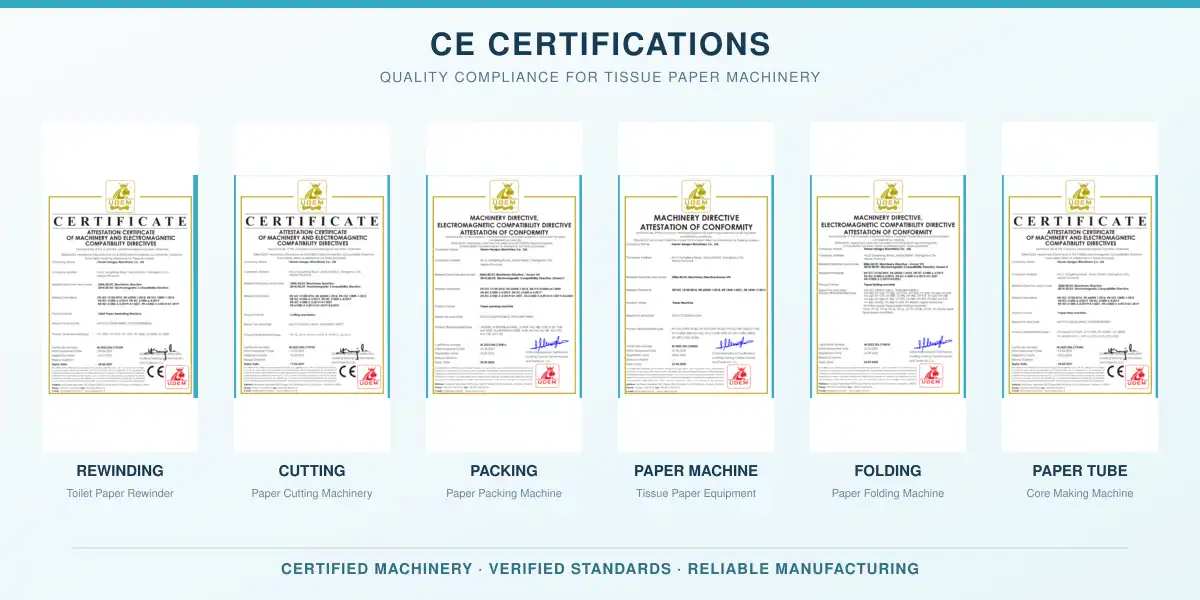
The factors that decide your real production success go far beyond the machine price offered when looking for a supplier of a semi automatic tissue paper making machine. When judging a supplier, you should look at four things: technical certification, the ability to activate the product remotely, power compatibility, and the level of help provided after the sale. The cutting machine runs on 380V/50Hz and the sealing unit runs on 220V/50Hz, which are both standard power configurations in Africa, South Asia, and Southeast Asia. HENGYU machines are certified by CE and ISO. The frequency control method protects against changes in the local power even more.
Remote video installation support is real; more than 95% of HENGYU customers are able to set up their lines without having an engineer come to their location. This is very important for factory owners in Nairobi, Dhaka, or Phnom Penh, where the costs and lead times of international travel really slow down the start-up process. The usual way to buy something is to make an inquiry, then get an official quote, then pay a 30% payment and the remaining 70% before the shipment. After that, there is sea freight, then remote video installation, then trial production, and finally activation of the 12-month warranty. Most buyers start making things within two to three months of their first request.
Troubleshooting Common Issues and Optimizing Machine Performance
Preventing the Problems That Kill Uptime
Problems with converting facial tissue that are the most annoying—knife jams, box misfeeds, and uneven fold registration—are all caused by not controlling tension well enough and keeping blades in good shape. In dry places, static electricity and paper dust speed up the wear on the blade edges and make it impossible for the web to stick to the blade. This is directly dealt with by the HENGYU cutting unit's electric sharpening system with touch screen adjustment, which lets blade repair happen without stopping work.
Misfeeds in the box sealing stage are usually caused by differences in the amount of moisture in the cardboard or an incorrect calibration of the hot melt glue temperature. Temperature changes are reported by the PLC tracking system before they affect the stability of the seal. For the normal 76.2 mm core diameter, HENGYU also works with different core sizes to avoid problems with getting raw materials when local jumbo roll providers use non-standard cores. Checking the hydraulic system's oil-water separator and air filter every month stops valve rust, which is the main reason why semi automatic tissue paper making machines often have strange winding patterns.
Conclusion
A semi automatic tissue paper making machine gives new and growing businesses a financially viable way to make boxed face tissue. The HENGYU answer solves the real problems that small companies have with their operations. It can produce 1,900 to 3,000 kg per day, is precise, works with multiple voltages, and folds, cuts, and cartons all in one line. A 12-month warranty and remote commissioning help make first-line investing much less risky. This is a good place to start if your factory is ready to stop making rolls of tissue and start making boxed tissue instead, which has higher profit margins.

FAQ
What is the typical daily output of this tissue line?
The HENGYU facial tissue line makes between 1,900 kg and 3,000 kg per 8-hour shift, depending on the type of tissue and paper used. This level of output is reasonable under normal conditions; it's not the theoretical peak level.
Can the machine handle both virgin pulp and recycled base paper?
Yes. The semi automatic tissue paper making machine line can process recycled paper by lowering the web tension settings to stop breaks. This is a standard setting that can be changed in the PLC interface.
How long does remote installation typically take?
With HENGYU's video tutorials, WhatsApp support, and multilingual manuals, most customers are able to finish commissioning within 3–7 days. Over 95% of them work without having to be visited in person.
What tissue sizes can this line produce?
The tissue sizes are 100x120 mm to 100x210 mm (within a 2 mm range), and the cartons are 30–100 mm tall and 105–230 mm long.
What voltage standards does this line support?
The cutting machine needs 380V/50Hz; the unit for sealing boxes works on 220V/50Hz. The frequency control method makes things even more stable when the power changes in the area.
Request a Quote from HENGYU — Trusted Semi Automatic Tissue Paper Making Machine Manufacturer
Every production line that HENGYU sends has been made by someone with more than 20 years of experience making tissue machinery. With real remote commissioning results across Africa, South Asia, and Southeast Asia, our semi automatic tissue paper making machine for sale combines CE/ISO compliance, multi-voltage compatibility, and lifetime technical support. You can email our team at doris@hytissuemachine.com or go to hytissuemachine.com to get details and a quote straight from the workshop right now.
References
1. TAPPI — Tissue Paper Manufacturing: Process Technology and Equipment Standards, TAPPI Press, 2021.
2. FAO — Global Pulp and Paper Industry Outlook, Food and Agriculture Organization of the United Nations, 2022.
3. Smithers Pira — The Future of Tissue to 2027, Smithers Pira Market Reports, 2022.
4. RISI (now Fastmarkets RISI) — World Tissue Market Study, Fisher International, 2023.
5. ISO — ISO 9001:2015 Quality Management Systems — Requirements, International Organization for Standardization, 2015.
6. CE Marking Authorities — Machinery Directive 2006/42/EC: Technical Requirements for Industrial Equipment, European Commission, 2020.
_1787294187070.webp)
_1784082301486.webp)