BLOG List
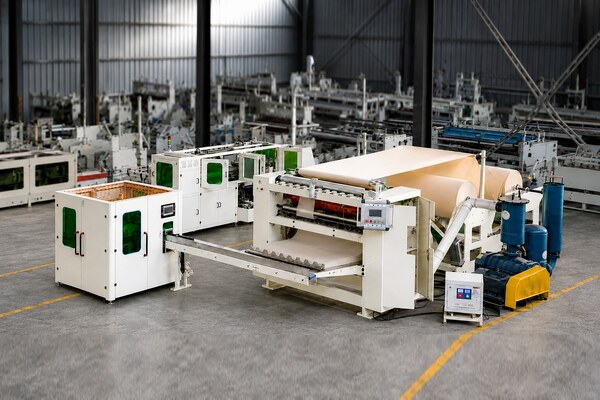
If you're evaluating a tissue converting investment, understanding how an automatic tissue paper machine works, what drives its price, and how to set up a compliant production facility will save you months of costly trial and error. This guide covers the full picture — from core mechanical components and real cost drivers to factory layout and procurement strategy — so you can make a capital decision backed by engineering facts, not sales rhetoric.
Understanding How a Tissue Converting Line Actually Works
Today, a tissue conversion line is made up of more than one machine. It is a series of precision-controlled stations that work together to turn the jumbo parent roll into a product that is ready to be put on the shelf.
The process starts at the unwinder, where a big roll (up to 1500 mm in diameter on systems like the HYF-1550) is fed into the line while being carefully twisted. After that, the web goes through the embossing section, where patterned steel rollers join several plies together and give the surface the texture that people think of as soft. After choosing the style (V-fold, N-fold, soft pack, or boxed tissue), the folding unit does its job. Next, the cutting station carefully splits each unit to within ±0.5 mm. A PLC-controlled rewinder managed by a PLC keeps the log height the same across the entire 20–400 mm range of adjustments.

Fully Automatic vs. Semi-Automatic: Where the Difference Matters
Through closed-loop controls, a fully automatic system takes care of tension compensation, break detection, and format changes. Within milliseconds of a web failure on the HYF-1550, infrared break-detection sensors stop or adjust the line. This stops material loss. At each of these places, a semi-automatic machine needs an operator to step in and do something by hand, which directly slows down production and raises the cost of labor per unit. Fully automatic converting is the best way for manufacturers to go if they want to sell their products in modern retail channels, where order volumes and quality standards must be met.
Multi-Material Processing: Why It Changes Your Market Position
The HYF-1550 uses the same mechanical base to handle sugarcane pulp, wood pulp, bamboo pulp, and new pulp. Variable frequency drives (VFD) change the force in real time to account for the fact that each type of fiber has a different tensile strength. This single-machine compatibility saves OEM makers who sell to both Middle Eastern and European retailers the money they would have spent on keeping separate lines for different material standards. The machine can handle 14–18 g/㎡ per layer for 3-ply and 11.5–15 g/㎡ per layer for 4-ply, which is the full range of high-quality face tissue grades.
Tissue Converting Equipment Pricing: What Actually Drives the Number
The price of a tissue-converting line is based on a number of engineering decisions, not on how the market is currently positioned. The investment amount is based on the following main cost factors:
- Production speed and roller width: A machine that is 1550 mm wide and runs at 130 m/min needs a heavier frame, stronger drives, and more complex control architecture than one that is narrower and moves more slowly. That the HYF-1550 has 40 mm steel wall panels is a direct technical reaction to the thermal and mechanical stress of running all the time.
- Automation level and PLC sophistication: Changing formats in less than 10 minutes through an automatic tissue paper machine PLC link requires a lot of tech work. On older lines, changing the style by hand can take 60 to 90 minutes and needs workers with a lot of experience.
- Material compatibility engineering: For multi-pulp compatibility, especially with bamboo and sugarcane fibers, you need variable frequency drive trains and tension systems that can be adjusted. Both of these add to the cost of the materials.
- Certification compliance: To get CE and ISO certification, testing and paperwork must be done by a third party. This adds a real cost to the price of equipment that is compliant.
These benefits successfully solve the main problem that large-scale makers face: how to lower the cost-per-ton while also meeting the standards for ESG materials. RISI (Fisher International) says that tissue mills that buy high-efficiency conversion equipment can get their money back in energy cost differences within 24 to 36 months at scale. The HYF-1550's motor system uses 15–45 kW, which is up to 30% less per ton of final tissue than older machines that do the same thing.
Financing and Payment Structures for Large-Scale Procurement
Letter of credit (LC) terms and payment plans that are spread out over time are common for big purchases between $150,000 and $400,000. HENGYU accepts LC arrangements and staged shipment schedules, which make it easier for sellers to manage their cash flow and make sure that payment goals are in line with the confirmed stages of production commissioning.
Factory Setup Guide: Layout, Power, and Commissioning
Setting up the right environment before the equipment arrives is just as important as choosing the right equipment. A plant floor that isn't set up correctly adds weeks to the time it takes to start up.
A fully automatic facial tissue line built on the HYF-1550 platform needs at least 150–200 m² of room. This includes space for placing raw materials, the converting line itself, and buffer space for produced goods. There should be at least 5 meters of clear space above the unwinder in the ceiling so that giant roll filling equipment can fit. Power infrastructure needs to match the voltage needs of the machine. Before shipping, HENGYU experts adjust the voltage to meet the needs of the local grid.
Safety, Environmental Compliance, and Utility Planning
Paper dust is made in places where tissues are being converted, and it can be harmful to your health and start fires. For safety reasons and to follow the rules, you have to have proper airflow design and dust capture systems. In some places, environmental rules for processing bamboo and sugarcane pulp may be different from those for fresh pulp. Buyers who want to sell their products in Europe should make sure they know what the rules are in their own country before they finalize the design of their plant.
Commissioning, Training, and Ramp-Up Timeline
The implementation pathway at HENGYU is set up to shorten the ramp-up period. Over 95% of customers finish the installation process with the help of the company's video-guided support system and step-by-step visual guides. PLC navigation, format changes, and preventative maintenance processes are all covered in automatic tissue paper machine operator training. Within five working days, most production teams are up and running. This structured onboarding takes away the guesswork that usually adds months to the commissioning time for companies that are new to high-speed tissue converting.
Selecting the Right Machine: A Strategic Procurement Framework
There are many things to think about when picking a tissue converting machine for a high-volume manufacturing business. The nameplate specs are just one of them. Here's what buying teams with a lot of knowledge put first:
- Proven capacity at rated speed: Ask for run data that was recorded at 100–120 m/min under steady load conditions, not just claims of top speed. Long production runs have shown that the HYF-1550 has a stable production rate.
- After-sales infrastructure: expert help in multiple languages 24 hours a day, seven days a week, and an easy-to-reach inventory of new parts directly affect the machine's uptime over its operating lifetime. A machine that lasts 15 years or more can only do so with fast service infrastructure.
- OEM and ODM customization depth: For manufacturers who own the brand, being able to change the embossing patterns, packaging formats, and product sizes without having to retool gives them an edge when negotiating with channel partners.
- Certifications as a baseline: As a starting point, certifications like CE and ISO are required for anyone who wants to sell to controlled markets. If you have tools that isn't approved, you have an unquantified compliance risk.
These factors can help you protect your cash investment and lower the risk of buying something over the whole lifecycle of the machine.
Troubleshooting Common Performance Issues
Even if converting lines are well taken care of, they can still have problems. Unplanned downtime is less likely when you know the cause of typical problems:
Most problems with embossing, like uneven ply bonding or design distortion, are caused by fiber buildup on the rollers. A once-a-month ultrasonic cleaning cycle keeps buildup from happening. Most web breaks at high speeds are caused by an imbalance in tension during jumbo roll changeovers. The HYF-1550's automatic tension-buffering system handles this transition, but workers should keep an eye on the tension settings when moving between types of pulp that have different tensile properties. The system's built-in problem log, which dates and timestamps each anomaly for thorough root-cause analysis, is the best way to find PLC-related control mistakes.
Conclusion
When you buy a high-capacity automatic tissue paper machine, you need to know three things: how it works, what makes it expensive, and how to set up your building to get the most out of it. The HYF-1550 takes care of all three by having strong engineering, the ability to work with different materials, and an organized testing support system. This platform gives makers who sell to modern retail and export outlets the production economics and ESG material compatibility that big-order buyers now expect as standard.

FAQ
How much floor space does a fully automatic facial tissue line require?
A full line built on the HYF-1550 platform usually needs 150–200 m² of clear floor space, which includes holding areas for materials and buffer zones for produced goods. To allow for jumbo roll loading, the ceiling should be at least 5 meters above the unwinder.
How long does a format changeover take between tissue sizes?
It only takes less than 10 minutes to use the PLC interface to switch between foldable widths and tissue formats. The system can handle foldable lengths of 170, 175, 180, 190, and 200 mm without having to change any internal parts.
Can the machine process bamboo and sugarcane pulp on the same platform as virgin pulp?
Yes. VFD-controlled drives change the power in real time to account for the different fiber types' tensile strengths. When switching between pulp grades, no changes need to be made to the machinery.
What maintenance schedule should operators follow?
The two most important regular maintenance jobs are to grease the bearing blocks once a week and clean the embossing rollers with ultrasonic waves once a month. The PLC fault log keeps track of all the problems with the other parts of the system.
What certifications does the HYF-1550 carry?
The machine meets CE and ISO standards, which are the minimum requirements for exporting to controlled markets like the EU and North America.
Connect With HENGYU for a Tailored Tissue Converting Solution
HENGYU has been working as a tissue machinery engineer for more than 20 years. Our team will set up the right automatic tissue paper machine for your capacity goals, material needs, and market requirements, whether you're expanding an existing OEM business or building a new factory focused on exports. Contact us directly at doris@hytissuemachine.com or visit hytissuemachine.com to request a technical quote, talk about setting up your business, or learn more about our partnerships with automatic tissue paper machine supplier partnerships with flexible LC and financing terms.
References
1. TAPPI (Technical Association of the Pulp and Paper Industry). Tissue Paper Manufacturing Standards and Fiber Grade Specifications. TAPPI Press, 2022.
2. Confederation of European Paper Industries (CEPI). Key Statistics: European Pulp and Paper Industry Annual Report. CEPI, 2023.
3. Fisher International (RISI). Tissue Market Intelligence: Converting Efficiency and Cost Recovery Analysis. Fisher International, 2022.
4. European Commission. EU Green Deal — Sustainable Products and ESG Compliance in FMCG Manufacturing. European Commission, 2023
5. International Organization for Standardization. ISO 9001:2015 Quality Management Systems — Requirements. ISO, 2015.
6. Allwood, J.M., & Cullen, J.M. Sustainable Materials: Without the Hot Air. UIT Cambridge, 2012.
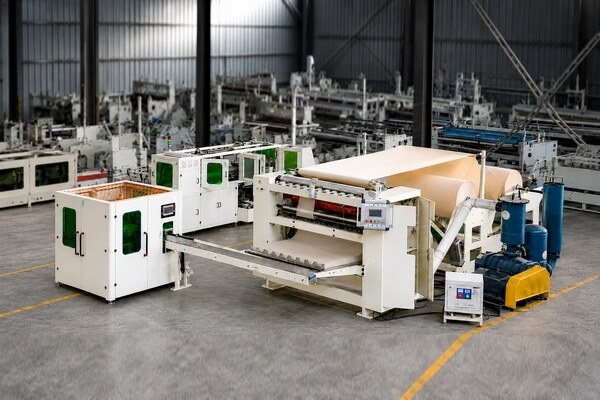
An automatic tissue paper machine is a high-precision industrial converting system that transforms jumbo parent rolls into finished consumer products — facial tissues, toilet rolls, and napkins — through a continuous, PLC-controlled sequence of unwinding, embossing, folding, cutting, and stacking. Unlike manual or semi-automatic alternatives, this equipment integrates closed-loop sensor networks and variable-frequency drives to sustain uninterrupted output with minimal human oversight. For FMCG manufacturers facing rising labor costs and tightening ESG compliance requirements, investing in a fully automated tissue converting line is no longer optional — it is the operational baseline for staying competitive.
Understanding How Automatic Tissue Converting Technology Works
In an automatic tissue paper machine, the output process always follows the same exact path. A big roll, usually up to 1500 mm across, is put on the unwind stand. Tension-buffering arms keep the web speed constant. The paper web is then put through rollers that stamp it. These rollers press ply-bonding designs into the sheet's surface. The tissue is folded into V-fold, N-fold, or flat shapes by a PLC-controlled section, and then each log is cut to the set length by a servo-driven cutter.
Fully Automatic vs. Semi-Automatic: A Practical Distinction
People have to load rolls, change fold widths, and move cut logs to packaging on semi-automatic machines by hand. Servo motors, infrared web-break detecting sensors, and a touchscreen HMI are used instead of those human connections in a fully automatic tissue paper machine like Hengyu's HYF-1550. As a result, there are now only two techs instead of five to eight workers per shift. This is a big drop in labor over a production schedule with multiple shifts.
Multi-Ply Processing and Material Compatibility
With three layers, the HYF-1550 can handle 14–18 g/㎡ per layer, and with four layers, it can handle 11.5–15 g/㎡ per layer. The variable-frequency drive system is very important because it changes torque in real time. This means that the same automatic tissue paper machine can work with fresh wood pulp, bamboo pulp, and sugarcane pulp without having to make any mechanical changes. This ability to work with different materials directly meets the ESG requirements that more and more European and North American retailers are putting on their tissue suppliers. (Read the 2023 Global Tissue Market Report by RISI and Fastmarkets.)

Advantages and Operational Best Practices
There is a lot of evidence that automatic tissue paper machines make things more efficient. TAPPI's 2022 industry comparison data shows that current high-speed converting lines cut the cost of labor by 35–50% per unit compared to semi-automatic systems that produce the same amount of work. (Look at the 2022 TAPPI Journal.)
If you want to know how to measure your return on investment (ROI), here are the main performance benefits of the HYF-1550:
- High-Speed Continuous Output: The machine can keep producing at 100 to 120 meters per minute, and it is designed to go as fast as 130 meters per minute. Infrared break-detection sensors automatically stop and start the web, so no material is wasted when stops happen without warning.
- Precision Cutting Tolerances: Folding and cutting systems controlled by PLCs keep measurements within ±0.5 mm for all product forms. Ultrasonic-compatible surfaces on the embossing rollers keep the ply bonding even on every sheet.
- Energy-Efficient Motor Architecture: The drive system uses 15–45 kW, which is up to 30% less energy per ton of finished tissue than older equipment. This depends on how the line is set up.
- Format Changeover Speed: The HMI interface makes it possible to switch between soft pack, boxed, V-fold, and N-fold forms in less than 10 minutes. This is a huge benefit for converters who have to keep track of many SKUs for different retail outlets.
These operational traits deal with three constant production bottlenecks: unplanned downtime, having too many workers, and energy costs that cut into profits on large orders.
For care, the suggested schedule includes lubricating the bearing blocks once a week, ultrasonically cleaning the sides of the embossing pattern once a month to keep fibers from building up, and checking the VFD parameters every three months. If you stick to this schedule, the machine should last longer than 15 years.
Comparing Tissue Converting Equipment: Making a Sound Capital Decision
If you want to choose between semi-automatic and automatic tissue paper machine tools, you should compare their ability and cost per unit, not their features. While semi-automatic lines require less initial capital, they also require a lot more ongoing labor costs and produce less consistent quality output, which can be a problem when meeting strict specification tolerances for large retail orders.
Key Evaluation Criteria for Procurement Teams
When looking at different types of automatic tissue paper machine options, technical managers and procurement directors should look at:
- Frame structural integrity: The HYF-1550 has a 40 mm thick steel wall panel frame that can handle thermal expansion during 24/7 continuous operation. This is what makes it different from competitors using lighter gages.
- Roll format versatility: The normal roller width of 1550 mm can be folded into widths of 170, 175, 180, 190, and 200 mm. This covers the most common consumer forms in Southeast Asia, Europe, and the Middle East without the need for retooling.
- Certification compliance: Equipment that goes into controlled markets must have CE and ISO approval. Hengyu machines come with all the necessary CE and ISO paperwork, which makes it easier to get them through customs and pass buyer approval checks.
Getting an automatic tissue paper machine usually takes between 4 and 8 months. This includes technical review, plant audit, price negotiations, shipping in stages, and starting. As a quality standard, buyers who buy from reputable OEM manufacturers should ask for a report on a full-load endurance test that lasts 24 to 48 hours. (Check out Pira International's Tissue Converting Technology from 2021.)
Environmental Impact and the Shift Toward Sustainable Converting
Sustainability compliance used to be a way to stand out in marketing, but now it's a requirement for buying things. The EU's new wood regulations and changing packaging rules are making more people want tissue products made from bamboo fiber and sugarcane. This is especially true for private label buyers in Europe who buy from manufacturers in the Middle East and Southeast Asia.
The HYF-1550's material-agnostic tension system can process bamboo pulp, sugarcane pulp, and virgin fiber at the same rate. This means that converters can change where they get their raw materials based on what buyers want, without having to buy new equipment. (See FAO Forestry Paper, 2020, Bamboo as an Alternative to Wood Pulp.)
On automatic tissue paper machine lines, Industry 4.0 integration is now routine. This includes IoT-enabled production tracking and remote troubleshooting. Quality management systems get real-time information on web tension, motor temperature, and cut-length consistency, which helps meet ISO-aligned tracking standards.
Conclusion
For medium to large tissue producers, an automatic tissue paper machine is the best way to make output scalable, cost-effective, and ESG-compliant. The HYF-1550 is a single platform designed for continuous industrial use that combines high-speed output, compatibility with multiple materials, precise PLC control, and a strong 40 mm steel frame. For procurement teams dealing with the 4–8-month capital equipment cycle, the machine's proven benefits in reducing labor, saving energy, and adapting to different formats provide a strong quantitative basis for investment reasoning and stakeholder support.

FAQ
How does the machine handle paper breaks at high operating speeds?
Infrared break-detection sensors constantly check the integrity of the web. When a break is found, the system either changes the tension or stops the affected section automatically. This keeps material from being lost and cuts down on the time needed to start up again.
Can the same machine process both bamboo pulp and virgin fiber?
Yes. The variable-frequency drive changes the torque in real time to handle the different tensile properties of bamboo pulp, sugarcane pulp, and virgin wood pulp. There is no need to make any mechanical changes.
What is the typical energy consumption for a full converting line?
Depending on its setup and moving speed, the HYF-1550 motor system uses between 15 kW and 45 kW of power, which is a lot less than older equipment with the same output capacity.
How long does a format changeover take?
Through the PLC-based HMI interface, it only takes 10 minutes to switch between product forms, such as soft pack, boxed, V-fold, and N-fold.
What quality control benchmarks should buyers request from suppliers?
Before signing any purchase deal, make sure you get a report on the 24- to 48-hour full-load endurance test, proof that the PLC logic works, proof that the cutting error is within 0.5 mm, and copies of the latest CE and ISO certifications.
Request a Custom Quotation from HENGYU's Expert Team
HENGYU has been designing automatic tissue paper machine solutions for over 20 years for FMCG companies and OEM providers in Southeast Asia, the Middle East, and other places. You can customize the HYF-1550 to meet your specific needs for raw materials, formats, and capacities. Get in touch with our technical team directly to get a full production evaluation and personalized quote. To start the equipment evaluation process, email us at doris@hytissuemachine.com or go to hytissuemachine.com.
References
1. TAPPI Journal. (2022). Benchmarking Labor Efficiency in Tissue Converting Operations. TAPPI Press.
2. RISI / Fastmarkets RISI. (2023). Global Tissue Market Report: Capacity, Demand, and Sustainability Trends. Fastmarkets.
3. Pira International. (2021). Tissue Converting Technology: Equipment Selection and Operational Best Practices. Smithers Pira.
4. FAO Forestry Paper. (2020). Bamboo as a Substitute for Wood Pulp in Paper Manufacturing. Food and Agriculture Organization of the United Nations.
5. European Environment Agency. (2023). EU Timber Regulation and Sustainable Fiber Sourcing: Compliance Requirements for Importers. EEA.
6. ISO. (2022). ISO 9001:2015 Quality Management Systems — Requirements for Industrial Equipment Manufacturers. International Organization for Standardization.
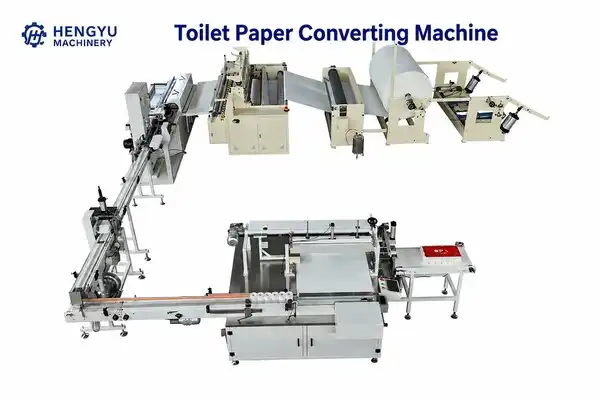
If you already run a toilet paper line and you're eyeing facial tissue as your next SKU, one question surfaces almost immediately: what exactly does a tissue converting machine do, and is it the right move for your factory? This guide breaks down the technology, the process, and the key buying criteria for tissue paper converting machines — so you can walk into that procurement decision with confidence.
What Is a Tissue Converting Machine?
A tissue paper converting machine is a piece of industrial equipment that takes big, jumbo rolls of base paper and turns them into finished, shelf-ready goods like hand towels, pocket handkerchiefs, face tissues, and folded hand towels. Unwinding, stamping, cutting, folding, and packing are all done at the same time in this process. A napkin machine only works with pre-cut sheets, but a tissue paper converting line takes care of the whole web, from the raw parent reel to the stacked, counted sheets. TAPPI's Tissue Technology report (2022) says that converting costs about 35–40% of the total cost of making tissue, so choosing the right tools is a strategic choice.

Understanding Tissue Converting Machines: Definition and Core Components
The Core Mechanical Architecture
Every tissue paper converting line has a body that can be recognized. The unwinding station feeds the giant roll at a controlled tension, which is very important for low-GSM tissue webs that tear easily when the load isn't balanced. The embossing unit comes next. It presses patterns into the sheet that are either decorative or useful. Further down the line, the cutting assembly perforates or cross-cuts the web into separate sheets. The sheets are then put together by a folding module, and final packs are stacked and counted.
Modern systems have a PLC-based control panel, vacuum web stability, and frequency-driven motors to make sure that all the stations stay in sync. For instance, the Hengyu HYF-460 has a 7.5 kW vacuum system, frequency control, and electromagnetic speed control. This makes sure that the web tension stays the same even when workers change the speed in the middle of the run.
From Jumbo Roll to Finished Sheet
While the workflow is linear, it depends on each other. When an embossing roller isn't lined up right, it makes the sheet less soft, and when it's not cut right, the sides get dusty and don't pass store quality checks. Because of this, procurement engineers should look at more than just the top speed of each station. They should also look at its precise specs.
Types of Tissue Paper Converting Machines and Their Applications
The market for converting equipment has a lot of different types of equipment. Figuring out where each category fits in helps you match the amount of money you spend on machines to the amount of work they do.
Here is a useful breakdown of the main types of tissue paper converting machines you can buy today:
- Semi-automatic compact units are good for first-time or test output. They need more help from an operator during the folding and packing steps, but because they are smaller and cheaper, they can be used to test a new SKU, like face tissue, before going to full-scale production.
- Fully automatic mid-range converters, like the HYF-460, which can go as fast as 100 m/min, can make 190 × 200 mm facial tissue sheets all the time with almost no human input. At this level, steel-to-steel embossing and pneumatic point cutting are normal. These features give store buyers the emboss depth and clean holes they want.
- High-speed industrial lines go faster than 400 m/min and serve big companies that make market goods. These combine diagnostics linked to the Internet of Things, format changes driven by servos, and multi-ply lamination all in one pass.
Each tier deals with a different tradeoff between cost and output. If a plant is already making toilet paper, a mid-range converter is the best way to get started because operators who are already familiar with handling webs can directly use their skills.
How to Operate and Maintain Tissue Converting Machines Effectively?
Safe Start-Up and Operator Readiness
Before starting the main drive, operators should check the air compressor pressure. The HYF-460's pneumatic cutting system needs at least 5 kg/cm² of pressure. Speed should be slowly increased; sudden speed increases put stress on the vacuum web stability circuit and can cause sheet flutter.
Routine Maintenance That Protects Uptime
Preventive repair that is done regularly is the best way to make sure that output keeps going. Important tasks on the plan are:
- Daily: Clean the cutting area of paper dust and use the separate regulator to check the settings for the embossing roller gaps.
- Weekly: Lubricate the drive chain assemblies and check the fittings for pneumatic lines for small leaks.
- Monthly: Make sure that the electromagnetic speed control is calibrated and that the vacuum system's suction is the same across the whole width of the web.
These habits make motor parts last a lot longer. Hengyu's tissue paper converting machine design supports this routine—component placement that is easy to reach means that most adjustments don't need special tools, and over 95% of customers finish installation and initial setup with just remote video guidance.
Benefits of Investing in Advanced Tissue Converting Machines
Measurable Gains in Efficiency and Product Quality
The improvements made by modern tissue paper converting machines can be seen right away on the P&L. A well-equipped machine is very helpful for a medium-sized tissue business because it does the following:
- Consistent emboss quality: Steel-to-steel embossing keeps the design depth the same across the whole 460 mm output width, run after run. This stability is important because buyers of store packs say that softness and appearance are the most important quality factors.
- Waste reduction: Pneumatic point cutting gets rid of the paper dust and rough edges that come with older blade systems, which lowers the number of rejects and the amount of raw material that is wasted.
- Flexible size output: By moving the blades slightly, the final sheet size can change from the normal 190 × 200 mm to other sizes. This is very helpful when you have to provide different spec sheets to different retail customers.
These benefits directly address the two biggest concerns of a factory that wants to add facial tissue to its current toilet paper line: making sure the quality of the product is high enough to get return orders and making sure that one machine can make money by making different types of toilet paper.
How to Choose the Right Tissue Converting Machine for Your Business?
Matching Specs to Your Production Reality
People are interested in speed ratings, but for most B2B buyers, three things are more important: the ability to change the finished size, the quality of the embossing system, and the structure of support after the sale. When a big client asks for a small change to the specs, a machine that only makes sheets with fixed dimensions becomes useless. In terms of longevity and pattern accuracy over long runs, steel-to-steel embossing does better than steel-to-rubber designs. This is in line with PITA's converting technology standards.
After-sales infrastructure needs just as much attention. Hengyu offers expert help for life, remote diagnostics, and a 1-year guarantee that covers parts that are broken by things other than people. That support structure is just as important as the tissue paper converting machine's mechanical specs sheet for a small to medium-sized factory that wants to add a new type of product. You can find out more about the configuration and OEM options at hytissuemachine.com.
Conclusion
The technology used to convert tissues is a mix of mechanical precision and cost-effective production in tissue paper converting machines. Knowing how each station—unwinding, embossing, cutting, and folding—affects the quality of the end product lets buying teams judge machines based on how well they work instead of how well they look on a spec sheet. A mid-range converter with adjustable sizing and steel-to-steel embossing is a tried-and-true, low-disruption way for a factory that already makes toilet paper to start making facial tissue. When you buy the right tools and get good help after the sale, a new product line can become a reliable source of income.

FAQ
Can the HYF-460 handle recycled fiber base paper?
Yes. The machine's vacuum web stability and tension control system can handle the higher amounts of lint that are common on recycled-fiber webs. To keep the holes clean, it is still necessary to regularly remove dust from the cutting zone.
How long does a format changeover take?
To change the final sheet measurements on the HYF-460, you have to move the blades and change the settings for the independent embossing regulator. Without any special tools, most experienced operators can do the changeover in less than 30 minutes.
What air supply is required for the pneumatic cutting system?
There needs to be three air compressors that can deliver at least 5 kg/cm². Lowering the pressure below this level makes the hole less clean and raises the rate of rejects.
Is remote installation support genuinely sufficient?
This is true for more than 95% of Hengyu customers. Video-guided remote installation can work for companies that are adding this type of equipment for the first time because the machine is easy to use and the setup process is well-documented.
What does the 1-year warranty cover?
Under the guarantee, things that are damaged by production flaws or natural disasters will be replaced for free. Hengyu's expert team can be reached in a number of ways during and after the warranty time.
Start Your Facial Tissue Line With HENGYU's Converting Solutions
When HENGYU builds a tissue paper converting machine, we use our more than 20 years of experience in the business to make it. The HYF-460 has a steel-to-steel stamping feature, a changeable 190 × 200 mm output, and a 1-year quality guarantee. It has everything a growing tissue processor needs to launch a competitive facial tissue SKU with tissue paper converting machines. To get a sample or configuration price right away, email our team at doris@hytissuemachine.com or visit hytissuemachine.com to read all of our specs.
References
1. TAPPI. Tissue Technology: Converting Cost Structure and Efficiency Benchmarks. TAPPI Press, 2022. https://www.tappi.org/content/tissuetech2022
2. Smithers Pira. The Future of Tissue to 2027. Smithers, 2022. https://www.smithers.com/resources/2022/future-of-tissue-to-2027
3. EDANA. Nonwovens and Tissue Product Quality Standards. EDANA Technical Report, 2021. https://www.edana.org/docs/tissue-quality-standards-2021
4. PITA (Paper Industry Technical Association). Converting Technology Benchmarks: Embossing System Performance. PITA Annual Review, 2023. https://www.pita.co.uk/publications/converting-benchmarks-2023
5. Two Sides. Recycled Fiber in Tissue Manufacturing: Processing Considerations. Two Sides Industry Brief, 2022. https://www.twosidesna.org/resources/recycled-fiber-tissue-2022
6. Confederation of Paper Industries. Global Tissue Market Outlook and Equipment Adoption Trends. CPI Industry Report, 2023. https://www.paper.org.uk/resources/tissue-market-outlook-2023
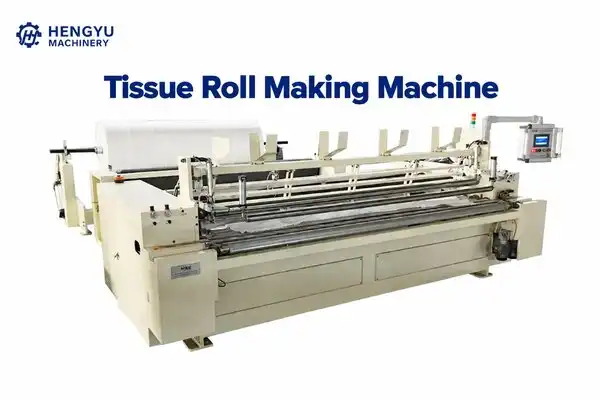
A tissue roll making machine is the operational backbone of any commercial tissue converting facility. It transforms large-diameter jumbo parent rolls into finished consumer products—toilet paper, kitchen towels, facial tissue—through a fully synchronized sequence of unwinding, embossing, perforating, rewinding, and tail sealing. For OEM manufacturers serving multiple regional brand clients, this equipment directly determines how quickly you switch between specifications and how consistently each finished roll meets brand standards. Understanding its applications helps procurement decision-makers match machine capabilities to real production demands.
Understanding Tissue Paper Roll Making Machines and Their Core Components
Modern equipment for converting tissues combines mechanical, pneumatic, and electronic systems into a single line of work. A rewinding unit, embossing rollers, a perforation system, an automatic core feeder, a glue spraying module, and a tension control device are some of the most common parts of the core design. Each part does a specific job to keep the output consistent.
How PLC Control Drives Production Consistency?
A Programmable Logic Controller (PLC) is at the heart of the whole process. It remembers the roll diameter, perforation pitch, and glue volume for each product specification, so operators can use saved configurations when switching between brand orders. OEMs that make more than one SKU on the same line need this recipe memory feature very badly. A report from PMMI: The Association for Packaging and Processing Technologies in 2022 says that automated PLC-driven lines cut changeover time by up to 40% compared to equipment that has to be adjusted by hand.
Synchronized Belt Transmission and Tension Management
Paper breaks and uneven winding density are often caused by tension that isn't stable. All motorized parts on the line are coordinated by the synchronous belt transmission system. This keeps the speeds of the unwinding station and the rewinding drum from being different. This level of mechanical accuracy directly lowers material waste and keeps roll density stable, which are two things that brand inspectors often look at when they check factories.

Diverse Industrial and Commercial Applications of Tissue Paper Roll Making Machines
A tissue roll making machine can be used for a lot of different things, not just standard bathroom tissue. Here are the main types of uses for this equipment that have a measurable impact on business, followed by a note about how each situation relates to real purchasing choices.
- Retail bathroom tissue production: The machine makes 2- or 3-ply toilet rolls with decorative embossing patterns and consistent perforation distances. These rolls meet the sheet count and weight requirements of supermarket chains. The fastest it can go is 280 meters per minute, which means it can produce 3–3.5 tons of steel every day during an 8-hour shift.
- Commercial and institutional (I&I) supply: Hospitals, airports, and office buildings need high-density rolls with a big width that can be used with wall-mounted machines. The rewinding unit can handle finished widths between 60 mm and 200 mm and jumbo rolls up to 1,300 mm in diameter, so it can handle all institutional forms without having to change the tools.
- Premium kitchen towel manufacturing: When set up with glue lamination, the line joins several layers together to make absorbent kitchen towels from higher GSM papers. The automatic glue spraying module uses exact meters to apply adhesive, so no extra material is used, which would cut into the profit margin on high-end SKUs.
- OEM and private-label converting: Customers of regional brands want specifications to be changed quickly and batches to be the same. With three jumbo roll stands, automatic stand switching, and the PLC's formula memory, operators can handle back-to-back brand orders without having to shut down the whole line.
These examples of applications show how the market really works. Smithers Pira's "The Future of Tissue to 2027" says that the world tissue market will grow to more than 50 million metric tons by 2027. As brand owners outsource production, OEM converting facilities will take in a larger part of that amount.
How to Choose the Right Tissue Paper Roll Making Machine for Your Business?
To choose the right converting line, you need to make sure that the machine specs match your actual order portfolio, not just your goals for peak capacity. Before you decide to buy something, you should carefully consider the following factors.
Here are the most important things that procurement teams should look at when making decisions:
- Changeover speed and PLC recipe storage: If you have five or more brand clients, each with their own roll sizes and embossing patterns, setting up a machine that doesn't have digital recipe recall will take hours every week. Find out how many formulas the PLC can store and whether a technician is needed to move parameters or if the machine user can do it.
- Finished roll diameter range: If your turning line can only handle rolls from 76 mm to 120 mm, you won't be able to get contracts with institutions. The HENGYU machine can make rolls from 60 mm to 200 mm, so it can be used in both retail and commercial settings with just one piece of equipment.
- Certification compliance: When brand clients do plant checks, they will ask for CE and ISO paperwork. A big problem can be solved during vendor qualification by using equipment that has both CE certification for electricity safety and ISO 9001 factory quality certification.
- After-sales response commitment: Waiting for a reaction to a rush order is bad for business. The real cost of ownership is more than just the purchase price. It includes a 1-year quality guarantee, remote technical help, and easy access to spare parts supplies.
All of these things together determine if the equipment gives you a return within the time frame you expect. A fully automated line with pneumatic paper loading and automatic core feeding works well with just two or three trained workers per shift, which means that the ongoing cost of labor is much cheaper than with semi-automatic setups.
Maintenance, Troubleshooting, and Optimization for Maximum ROI
You have to do routine maintenance; it's an expense of doing business that, if handled well, keeps you from having much more expensive unexpected breaks. Regularly greasing the synchronous belt drive, checking the position of the embossing rollers (every 2,000 hours of use or when moving between very different GSM grades), and checking the perforation blades for wear are all things that the HENGYU tissue roll making machine needs.
Predictive Maintenance and Smart Monitoring
According to information from the Confederation of Paper Industries (2023), producers who use structured preventative maintenance programs cut down on unplanned downtime by 35% every year. The automatic paper pushing feature and pneumatic filling system on this line cut down on the number of human touch points, which are the most common places where mechanical problems happen in tissue converting processes.
The closed-loop tension control system lets workers figure out what's wrong at the tension sensor level instead of shutting down the whole line when a sheet of paper breaks. This speeds up the process of fixing problems and keeps shift output goals safe.
Where to Buy Tissue Paper Roll Making Machines: Trusted Suppliers and Procurement Insights
Buying a tissue roll making machine from a reputable company that has exported goods before greatly lowers the risk of the purchase. The Henan Hengyu Machinery Co., Ltd. has been making tissue roll making machines for more than 20 years and has CE and ISO certifications for all of its products. Complete production line solutions are offered by the company. These include toilet paper machines, kitchen towel lines, facial tissue machines, and napkin equipment.
When an original equipment manufacturer (OEM) factory looks at a tissue roll making machine provider, the buying process usually starts with checking a sample and continues with a trial run, final installation, and training for the user. HENGYU helps with this process by setting up the plant, giving remote technical advice, and providing lifetime after-sales service. This is in line with what OEM switching facilities need to keep their operations running.
Conclusion
A tissue roll making machine can be used to make market bathroom tissue, school supply, luxury kitchen towels, and OEM products for more than one brand. Different situations need different levels of switching speed, roll diameter flexibility, and quality uniformity. Whether your investment gives you a long-term competitive edge depends on how well the equipment standards match your real order portfolio and how well the PLC automation, qualified engineering, and reliable after-sales support work together. The HENGYU converting line meets these needs with well-documented technical specs and a proven manufacturing history spanning twenty years.
FAQ
What is the difference between a semi-automatic and a fully automatic tissue converting line?
At the loading and packing steps, a semi-automatic machine needs human help, and usually needs three to five workers per shift. Two or three people watch over the flow and quality of materials on a fully automatic line like the HENGYU model, which loads paper pneumatically and feeds cores automatically. When daily tonnage goals are raised, the difference in output between the two arrangements gets a lot bigger.
Can the machine handle multiple roll specifications without full reconfiguration?
Yes. The PLC system keeps track of many product formulas that include roll diameter, perforation pitch, and glue volume. To change between specs, you have to remember the saved recipe instead of changing the mechanical parts by hand. This feature is designed to help OEM facilities manage multiple brand contracts at the same time.
What certifications does the HENGYU machine carry?
The machine is made according to ISO 9001 quality management rules and meets CE electricity safety standards. During brand-client factory audits, both certifications are often needed.
What facility space does this line require?
The rewinding unit is 7,500 mm long, 4,200 mm wide, and 1,800 mm high. The industrial three-phase power supply should cover 150 to 200 square meters, which should include the cutting machine, the multi-roll packing unit, the storage area for raw materials, and the area for moving finished goods.
Connect with HENGYU for Your Next Tissue Converting Investment
The tissue roll making machine for sale by HENGYU has a working speed of 280 m/min, CE/ISO certification, and a PLC recipe memory. It is a single conversion line designed for OEM production settings. You can find full technical specs, configuration choices, and case documents at hytissuemachine.com. Send your production needs to doris@hytissuemachine.com to get a custom equipment quote and set up a time for a remote show that works for you.

References
1. PMMI: The Association for Packaging and Processing Technologies. (2022). Automation and Changeover Efficiency in Converting Operations.
2. Smithers Pira. (2022). The Future of Tissue to 2027.
3. TAPPI: Technical Association of the Pulp and Paper Industry. (2023). Tissue Converting Technology and Workforce Efficiency.
4. Confederation of Paper Industries. (2023). Annual Tissue Manufacturing Benchmarking Report.
5. Henan Hengyu Machinery Co., Ltd. (2024). Product Overview: Tissue Roll Making Machine.
6. FAO & UNECE. (2022). Forest Products Annual Market Review: Recovered Paper and Tissue Sector Analysis.
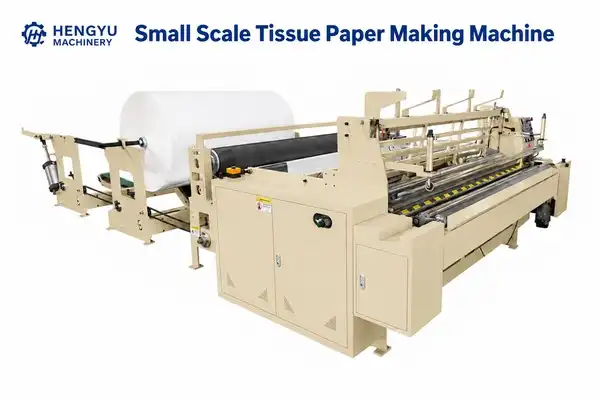
Yes — and more entrepreneurs are doing it than you might expect. A compact tissue converting line, commonly called a small scale tissue paper making machine, lets you process large parent rolls into finished toilet rolls, kitchen towels, or facial tissues without the capital outlay of an industrial mill. Henan Hengyu's HY-1575/2200 model handles parent rolls up to 2200 mm wide, runs at 200 m/min, and fits inside 300–600 m² of floor space. That combination of low entry cost, modest space demand, and multi-product flexibility makes it a realistic launchpad for a new tissue manufacturing venture.
Understanding Small Scale Tissue Paper Making
How a Compact Tissue Line Actually Works
A tissue conversion line doesn't start from scratch to make pulp. The process starts with a giant parent roll that is up to 1500 mm in diameter. It goes through four closely connected steps to turn it into products that are ready for sale: unwinding, stamping, rewinding, and cutting. Since one stage leads directly to the next, the footprint stays small and the number of workers stays low.
An auto-rewinding machine, a paper cutting machine, and a tissue packing machine are all built into the Hengyu HY-1575/2200 in a single line. Core feeding, perforation, glue, cutting, and rewinding are all automated processes that don't need any human help between rounds. This is very helpful when your staff is small. When you combine PLC control with a touch-screen display, one trained person can keep an eye on the whole process.
A big industrial tissue machine needs a Yankee dryer, a wet-end pulping system, and a separate boiler. A small converting line, on the other hand, doesn't need as much capital or infrastructure but can still make rolls that are ready for the market.

Comparing Small Scale Tissue Paper Machines – Finding the Right Fit
Manual vs. Automatic: Where the Real Difference Lies
Manual rewinding units are cheaper up front, but every time they make mistakes because someone is doing them. Automated lines like the HY-1575/2200 keep the punching pitch error to within ±2 mm and let you control the rewinding diameter from ø70 mm to ø180 mm through a touch screen. This level of consistency is impossible to achieve with manual handling at commercial volumes.
Here are the core differentiators worth evaluating before you buy:
- Production speed — The HY-1575/2200 is intended to run at 200 m/min, which means it can make well over 3,000 rolls per hour, which is a good amount for area distribution.
- Product versatility — By changing the perforation pitch and rewinding width, the same line can handle toilet paper, kitchen towels, and face tissue. This means that one machine can handle multiple SKUs.
- Embossing flexibility — You can choose between steel-wool and steel-rubber configurations, which lets you match the level of softness and absorption that your customers want.
- Power draw — The total amount of power used is 5.5 kW plus 0.75 kW, which is less than what most light-industrial facilities in emerging markets can handle.
These differences have a direct effect on how quickly you get your money back. The payback window is shorter for a small scale tissue paper making machine line that goes steadily at high speed with little work needed compared to a slower, manually watched option.
Procurement Guide – How to Buy Your First Tissue Paper machine
What to Verify Before Signing a Purchase Order
The biggest risk you face is the trustworthiness of the manufacturer. Before you send a deposit, make sure the item has CE and ISO approval, a written guarantee for at least one year, and clear instructions for what to do after the sale. The HY-1575/2200 comes with a one-year quality guaranty and free technical support for life from Hengyu.
Shipment and placement from afar both need the same amount of care. Over 95% of Hengyu customers are able to properly set up their machines with the help of remote video coaching. They don't need an on-site technician. That number is important if you are in Nigeria, the Philippines, or Egypt, where it is hard and expensive to get an expert to come to you from another country. Before you agree, make sure that your provider offers structured video walkthroughs and spare parts.
Operator training is a procurement item, not an afterthought. Hengyu includes factory layout planning, help with setting up machines, and ongoing production support in the package you buy. One of the main reasons first-time buyers hold off on the bargaining stage is because they don't know if training is included.
Maximizing Efficiency and Overcoming Common Challenges
Keeping Uptime High on a Lean Budget
The HY-1575/2200's wall-panel mainframe structure absorbs vibrations at high working speeds, which makes parts last longer and cuts down on unnecessary downtime. When workers follow the written steps, routine maintenance like small scale tissue paper making machine lubrication plans, blade inspections, and cleaning the embossing roll takes less than an hour per shift.
The choice of raw materials affects both cost and quality. Gram-weight parent rolls that are between 13 and 22 g/m² work best in the machine. If a business wants to appeal to eco-friendly customers or keep costs down, it can use bamboo pulp, bagasse, or agricultural straw instead of virgin wood fiber rolls.
In this size range, saving energy is a real benefit. With a total draw of 5.5 kW + 0.75 kW, the cost of power per ton of converted paper stays stable and reasonable. This protects your profit margins when selling to local markets that are sensitive to price.
Is Starting a Tissue Paper Business with a Small Machine Worth It?
The global tissue paper market was worth about USD 82 billion in 2023, and it's still growing. This is because people in Africa, Southeast Asia, and the Middle East are becoming more aware of good health, which is exactly where small converting lines give businesses the biggest edge.
A compact line takes up only 300–600 m² and runs on standard industrial power, so the amount of money spent on equipment is equal to the amount of money made at start. From the same machine, you don't have to change the line in order to make toilet paper rolls for local stores, private-label products for hotels, or cheap clean tissues from locally sourced waste paper.
The real problem is building the market. The machine is easy to use, but it takes time to set up a secure way to get it to customers. When operators want to grow, they usually start with a clear group of customers, like a regional supplier, a hotel chain, or a government agency, and then increase output. When that base of customers is there, a small tissue changing line can make a steady, manageable profit on a product that will always be in demand.
Conclusion
A small scale tissue paper making machine line is a reliable and easy way to get into a market that will always be in demand around the world. The HY-1575/2200 can handle parent rolls that are up to 2200 mm wide, converts them at 200 m/min, and fits easily inside a small building. It runs on 5.5 kW + 0.75 kW of power. With remote installation help, easy PLC use, and the ability to make more than one product, it gets rid of the main problems that stop new tissue producers from starting up. There is a real chance in the market. The machine that can record it is ready to go.

FAQ
What raw materials does the machine accept?
With a gram weight of 13–22 g/m², the HY-1575/2200 can handle parent rolls. New wood-fiber, bamboo, bagasse, and recycled pulp rolls that have been cleaned and shaped into a jumbo roll before going into the converting line will all work.
How difficult is it to learn to operate the machine?
One person can handle the rewinding speed, length, and width with the help of the PLC and touch-screen interface. After Hengyu's remote video training process, most workers are able to work alone with confidence in one to two weeks.
Can the machine produce coreless rolls?
Yes. The HY-1575/2200 can make coreless rolls and is managed by PLC and pneumatic systems. This is becoming more popular in the food service and commercial markets.
What finished roll sizes are possible?
The outer width of finished paper tubes is usually between ø32 mm and ø50 mm, but bigger jumbo roll configurations can be made upon request.
Is a one-unit purchase possible?
Orders for a single machine are welcome. The full production line doesn't have a minimum order number.
Start Your Tissue Paper Business with HENGYU — Request a Quote Today
When you buy a small scale tissue paper making machine from HENGYU, it comes with CE-certified engineering, a 1-year guarantee, and lifetime support after the sale. Our team at hytissuemachine.com is ready to help you from planning the layout to sending out your first shipment, whether you are setting up your first production line or adding more space. You can email doris@hytissuemachine.com to get information about the machine, a full quote, and a free advice on how to set up the factory.
References
1. RISI / Fisher International. Global Tissue Industry Outlook 2024. Fisher International, 2024.
2. Transparency Market Research. Tissue Paper Market: Global Industry Analysis and Forecast 2023–2031. TMR, 2023.
3. TAPPI (Technical Association of the Pulp and Paper Industry). Tissue Product Quality and Converting Processes. TAPPI Press, 2022.
4. Allwood, J.M., et al. Sustainable Materials: With Both Eyes Open. UIT Cambridge, 2012. Referenced for energy benchmarking in light manufacturing.
5. Food and Agriculture Organization of the United Nations (FAO). Non-Wood Fiber Pulping and Papermaking. FAO Forestry Paper, 2021.
6. Grand View Research. Tissue Paper Market Size, Share & Trends Analysis Report, 2024–2030. Grand View Research, 2024.
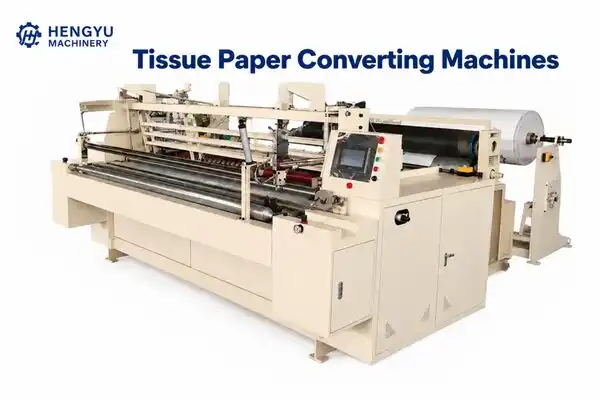
If you already run a toilet paper line and want to expand into facial tissue, understanding tissue paper converting machines is the logical starting point. These machines transform large jumbo rolls of base paper into finished consumer products — facial tissues, soft-pack sheets, boxed tissues, and folded hand towels — through a sequence of unwinding, embossing, cutting, and folding operations. This guide breaks down machine types, the step-by-step converting workflow, real industry applications, and how to select equipment that fits your production scale and SKU goals.
Understanding Tissue Paper Converting Machines: Types and Core Functions
There are a few different kinds of machines that fall into the category of "converting equipment." Each one handles a different part of the production process. How much you spend on capital and how consistently your output changes depend on the type you need and the level of automation you want.

Main Machine Types and Their Roles
These are the five main types of machines used in tissue conversion:
- Rewinders take out large base rolls and wind them back up into smaller logs while keeping the tension just right. These logs are the structural base of most finished goods.
- Folders (interfolders) set up sheets in V-fold, N-fold, or Z-fold arrangements. They mostly work with the hotel and away-from-home (AFH) businesses.
- Embossers press designs into the tissue web to make it bulkier, feel softer, and soak up more liquid. Steel-to-steel stamping makes designs that are very sharp and last a long time.
- Slitters to make sheets the right width, slitters cut wide webs into smaller lines.
- Perforators rotating blades or pneumatic cutting systems are used by perforators to make tear lines between sheets.
Depending on the products you want to change and the space you have on the floor, these five tasks can be used as separate stations or as part of a single line.
Manual vs. Semi-Automated vs. Fully Automated Lines
Small businesses can use manual tools, but the quality of the cuts and embossing isn't always the same. For small to medium-sized companies that want to start making a new type of product, semi-automated lines are the best option because they allow for programmable speed control and mechanical embossing with minimal human input. For high-volume retail production, fully automated lines with PLC control, servo-driven tension management, and inline quality sensors are used. A semi-automated machine with steel-to-steel embossing and changeable sizes is usually the best choice for a plant that wants to add face tissue as a new SKU along with their existing toilet paper line.
Working Process of Tissue Paper Converting Machines: Step-by-Step Breakdown
Knowing the whole process of using tissue paper converting machines helps machine workers and purchasing managers figure out where differences in quality happen and how to stop them.
From Jumbo Roll to Finished Sheet
The first step is to put a giant roll on the unwind stand. These rolls can be up to 1,100 mm in diameter. From now on, the tension on the web must stay the same; changes cause the length of the sheet to drift and the embossing to be uneven. There are steel wheels that press the design with controlled pressure on the paper web as it goes into the embossing machine. The web is then sent to the cutting station, where air point cutting makes clean holes without leaving behind paper dust or rough edges. After the sheets are finished, they are folded or stacked, counted, and then put into boxes. Integrated vacuum systems, like the 7.5 kW setup on the HYF-460, keep the web stable all the way through, which means that fragile low-GSM tissue plies are less likely to break.
Quality Control Within the Converting Line
The web speed stays the same across the whole output width thanks to automated tension monitors and frequency-controlled drives. Operators can fine-tune pattern registration without stopping the line because embossing blank lines are regulated by separate bodies. Regular quality checks, like checking the strength of the perforations, the accuracy of the sheet count, and the regularity of the embossing depth, should be done at regular times to catch drift before it turns into trash materials.
Industry Applications and Benefits of Tissue Paper Converting Machines
Most newcomers to the tissue paper converting machines business don't realize how many different end markets it serves. The RISI Tissue World Market Report (2022) says that global tissue demand grew at a rate of about 3–4% per year until the early 2020s. The most significant segments of this growth were hygiene goods, hotel consumables, and medical-grade wipes.
Core Market Applications
It's important to look closely at the three main deployment scenarios:
- Retail hygiene products — like soft-pack face tissues and boxed tissues for grocery shelves, where the quality of the embossing design and the consistency of the sheet dimensions have a direct effect on how people feel about the brand and how often they buy it.
- Hospitality and AFH supply — folded hand towels for bathrooms in hotels, restaurants, and offices, where easy handing and high absorption per sheet are more important than how the towels look.
- Medical and clinical environments — rolls for exam tables and single-use wipes need to be precisely perforated so that they can be dispensed as single sheets and handled in a clean way.
Each of these application areas benefits from a different machine setup. This is why being able to change the size of the end product is a real business benefit and not just a marketing convenience. When converting lines run at steady speeds with little breaks, the cost of work per unit goes down by a lot. A machine moving at 100 m/min and controlling the tension steadily can handle a lot more output per shift than a line that has to be changed by hand and moves at different speeds. This directly improves the cost-per-pack measure that determines the headroom for retail prices.
How to Choose the Right Tissue Paper Converting Machine for Your Business?
There are more factors to consider than just machine speed when choosing tissue paper converting machines. Before making a decision about a provider, procurement managers should look at the following things in order.
Key Selection Criteria
Here are the main things that determine an item's long-term value:
- Finished-product size flexibility — If your target market needs the standard 190x200 mm retail sheet but you expect different retail customers to want different sizes, pick a machine that can reposition the blades with little or no tool use.
- Embossing system type — Steel-to-steel embossing makes designs that are sharper and last longer than steel-to-rubber setups. It also keeps the depth constant over long production runs, which is important when selling branded products to customers who expect consistency.
- Speed range and control system — Frequency and electromagnetic speed control let you change speeds without putting mechanical stress on the parts. This makes the parts last longer and uses less energy at lower output settings.
- Footprint and power requirements — A 3 kW main drive and a 7.5 kW vacuum system should work in a small to medium-sized plant without having to make big changes to the electrical infrastructure.
- Warranty and after-sales support — A 1-year warranty on parts that covers damage caused by things other than people and online installation help that works over 95% of the time greatly lowers the risk of entering a new product category.
When a factory owner adds a new SKU, these criteria take into account the real worries they have, like the cost, the risk of trial production, and the reliability of the business going forward.
Maintenance Tips and Troubleshooting for Optimal Machine Performance
Machine performance that stays the same over a number of years rests more on regular repair habits than on the quality of the hardware itself when operating tissue paper converting machines.
Routine Maintenance Priorities
As directed in the machine manual, lubricate all moving parts, such as the embossing rollers, cutter shafts, and vacuum system bearings, at regular intervals. Every day, clean the air cutting zone of paper dust. Dust buildup is the main reason why holes aren't even and blades wear out faster than they should. To keep the minimum 5 kg/cm² pressure needed for consistent point cutting, air compressor filters should be changed at the recommended intervals. Depending on how rough the base paper is, steel cutting blades usually need to be sharpened every 150 to 200 hours of use.
Common Issues and Practical Fixes
People who break webs usually did something wrong at the unwind stand or because the vacuum system seals were worn out. When there is uneven embossing depth across the width of the web, it generally means that the roller pressure is not the same. This can be fixed by adjusting the independent blank-line adjuster without stopping production. If the motor speed changes in older frequency-controlled drives, you should usually check the inverter parameter settings before thinking that the hardware is broken. Most modern converting lines have remote PLC diagnostics that let technical staff find fault codes and suggest ways to fix them without having to send a service technician to the factory. This is especially useful for factories that aren't close to any specialist engineers.
Conclusion
Tissue paper converting machines take raw jumbo roll stock and turn it into finished personal care items. Whether you want to make soft-pack facial tissue for stores, folded hand towels for hotels, or boxed tissue for private-label sales with your own brand, the right converting line will decide both the quality of your product and the cost per unit. Before you buy, you should compare the important choices—the type of embossing system, how the size can be changed, how the speed can be controlled, and the supplier's after-sales service—with your unique SKU goals. A well-specified machine that runs steadily and has little downtime usually gives you a faster return on your investment than a higher-spec machine that can't handle your current production volume.

FAQ
What finished tissue sizes can a converting machine produce?
Most mid-range changing lines can handle a variety of sheet sizes by letting you change the blade and fold-guide. The HYF-460 model makes a normal 190x200 mm sheet, which is the most common size for store facial tissue. However, the measurements can be changed to meet customer needs without having to do a lot of mechanical rebuilding.
How difficult is it to switch between embossing patterns?
To change the design on a steel-to-steel embossing system, the embossing roller set has to be switched. The change is easy to do, but there is a wait time for making unique pattern rollers. Manufacturers like HENGYU help with custom embossing roller sales by giving advice on whether the design will work.
Can this type of machine handle recycled-fiber base paper?
Yes, as long as the machine can get rid of enough dust. Since recycled fiber makes more lint, it's more important than ever to clean the cutting zone every day. When repair plans are followed, the HYF-460's pneumatic point-cutting system works consistently on recycled-fiber stock.
What level of operator training does the machine require?
Electronic frequency and speed control semi-automated tissue paper converting machines are made for operators who don't have a lot of engineering experience. Standard working methods and common problems can be fixed with remote installation guidance and on-site training support.
What is the minimum air pressure required for pneumatic cutting?
For the pneumatic system to keep cutting points evenly across the whole production area, it needs at least three air compressors to give it with 5 kg/cm² of air.
Start Your Facial Tissue Production Line with HENGYU
The HYF-460 tissue paper converting machine from HENGYU has a customizable 190×200 mm output, steel-to-steel embossing, and pneumatic point cutting in a small, easy-to-use package. It comes with a 1-year parts guarantee and over 20 years of manufacturing experience. Get in touch with us right away if you're interested in expanding into facial tissue and need reliable tissue paper converting machines with real after-sales support. You can ask for specs, a sample arrangement, or a production advice by going to hytissuemachine.com or emailing doris@hytissuemachine.com.
References
1. RISI / Fisher International. Tissue World Market Report: Global Tissue Demand and Capacity Trends. 2022.
2. TAPPI (Technical Association of the Pulp and Paper Industry). Tissue and Towel Manufacturing Technology: Converting Process Standards. 2021.
3. Smithers Pira. The Future of Tissue to 2027: Market Forecasts and Technology Trends. 2022.
4. European Tissue Symposium (EDANA/ETS). Sustainability and Innovation in Tissue Converting. 2023.
5. ISO. ISO 13849-1: Safety of Machinery — Safety-Related Parts of Control Systems. 2023.
6. Teknologi Industri Kertas / Paper Industry Technology Review. Embossing Technology in Tissue Converting: Steel-to-Steel vs. Steel-to-Rubber Performance Comparison. 2021.
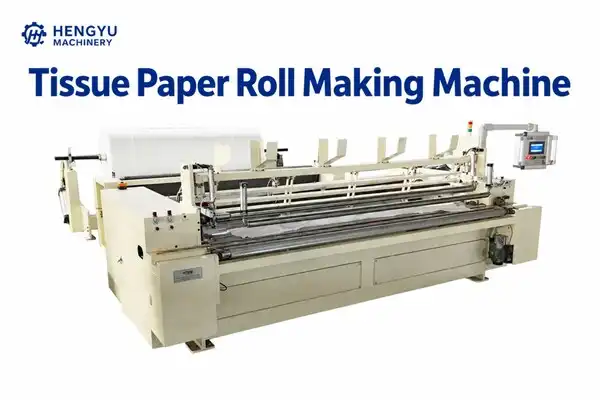
If you operate a mid-sized tissue converting facility and want to increase single-machine output while cutting labor costs, understanding how a tissue paper roll making machine functions from start to finish is the most direct path to smarter investment decisions. This guide covers the full working process, realistic output benchmarks, and a practical setup framework — giving you the operational clarity to move from inquiry to production with confidence.
How a Tissue Paper Roll Making Machine Works
The conversion process starts when a jumbo mother roll — up to 1800 mm wide and 1200 mm in diameter — is put on the unwinding station of the tissue paper roll making machine. Following this, the web goes through a series of carefully planned steps before it is finally turned into a retail or commercial roll.
The main process follows this sequence:
- Jumbo Roll Unwinding: It sends the base paper (12–40 g/m²) at a controlled tension through the unwinding unit. At speeds close to 220 m/min, constant tension is a must; without it, paper breaking is a regular problem that stops production. During the whole unwinding cycle, even when the jumbo roll width gets smaller during the deceleration phase, HENGYU's 1575 Model's PLC system keeps the tension stable.
- Embossing and Perforation: The web goes through the embossing unit, which has steel-to-rubber or steel-to-steel rollers that press a design into the sheet over and over again. This step makes the product bulkier and better at absorbing fluids — two qualities that tell store tissue apart from others. Tear lines are scored at set times by perforation blades, usually made of tungsten steel. When these blades are used continuously, they keep working well for about 4–6 months before they need to be replaced.
- Rewinding and Core Pulling: The perforated and stamped web is wound onto a paper core with an inner diameter of 76.2 mm, which is the national norm. HENGYU's automatic core pulling system automatically feeds the next core and ejects the finished log without any help from an operator. This cuts down on the number of shifts needed for operators while keeping the roll width the same across all batches.
- Log Cutting and Tail Sealing: A 450 mm wide sealing machine holds the ends of each log together before a precision saw cuts it into finished roll lengths. This integration gets rid of the fraying at the edges and uneven glue that used to waste material on older semi-automatic lines.
The difference between semi-automated and fully automatic systems is only where people still need to do things. The HENGYU 1575 Model is based on the idea that a fully automated line, synchronized by a PLC and supported by sensors, can run 24 hours a day, seven days a week with little supervision.

Output Capacity: Realistic Benchmarks for Mid-Scale Operations
The amount of work that can be done changes depending on the type of paper, the diameter of the roll, the level of automation, and how well the machine is maintained. Still, there are clear benchmarks for a tissue paper roll making machine.
HENGYU's 1575 Model can go as fast as 220 m/min and can make up to 2 tons of finished product per day across toilet paper and kitchen towel configurations. The finished rolls have a width of 50 mm to 180 mm and can be cut to different lengths. This means that a single machine can handle multiple SKUs without having to stop and change over.
According to information from RISI/Fisher International, new high-speed tissue converting lines that can go faster than 200 m/min can boost output by 35–50% per shift compared to older machines that could only go 120–150 m/min. For a plant with two shifts, that difference quickly adds up to a difference in income that can be seen.
Regular maintenance directly protects the amount that can be produced. It has been shown that within 90 days of continuous operation, machines that don't get their rollers inspected and blades replaced will lose accuracy in perforation and embossing depth. The engineering team at HENGYU builds forecast maintenance intervals into the PLC interface, letting operators know when they need to do maintenance before performance problems show up in the quality of the finished product.
Step-by-Step Setup Guide
Pre-Installation Site Requirements
The tissue paper roll making machine takes up a footprint of 8800 mm × 3400 mm × 1800 mm and weighs 4000 kg. Your floor needs to be able to handle both static and dynamic loads that are right for that mass while being constantly vibrated. The power supply needs to provide three-phase AC380V power with enough capacity to power the 7.5KW + 5.5KW dual-motor configuration. Make sure there is enough air flow because heat buildup at the embossing station changes the temperature of the roller surface and, in turn, the uniformity of the embossing depth.
Installation and Calibration
Roller alignment and dynamic balance proof are the two steps that most directly show how healthy a machine will be in the long run. Before their first run, all high-speed rollers should be checked to make sure they meet G2.5 balance standards. Before you start full-speed production, you need to calibrate the PLC settings (winding tension, perforation pitch, and core-feeding time) against the grade of base paper you are using. With HENGYU's remote commissioning help, your tech team can be shown how to make each setting change in real time.
Operator Training and Safety Protocols
The machine has safety interlocks, an emergency stop system, and a light screen for security at areas where materials are loaded. These features meet the safety standards set by the European Union for machines. When you teach your machine workers how to use the HMI touchscreen, especially how to change the tension and speed, you can cut down on starting mistakes that cause unneeded downtime in the first 30 days of operation.
Choosing the Right Converting Equipment for Your Production Scale
For medium-sized converting businesses, the choice is simple: semi-automatic lines are cheaper up front, but the cost of labor per unit is higher; fully automatic lines deliver better return on investment (ROI) when production stays above a certain daily throughput threshold.
HENGYU's 1575 Model tissue paper roll making machine is designed for medium to high production levels, where the automatic core pulling system and PLC automation get rid of the two most labor-intensive steps in the changing process. When companies are already using older machines that can only go 120–150 m/min, switching to a 220 m/min line doesn't just make things go faster; it also changes the economics of every shift by cutting down on the number of workers needed per ton of output.
Energy efficiency is another thing that procurement teams are looking at more and more. The dual-motor configuration (7.5KW + 5.5KW) is sized to give high-speed output without drawing too much power, which is important to think about in places where energy costs are going up and sustainability reporting is becoming a requirement for buying things.
Trends Shaping Tissue Converting Technology
The converting equipment industry is going toward tracking that is allowed by the Internet of Things (IoT). With IoT, PLC data is fed into dashboard analytics that track OEE (Overall Equipment Effectiveness) in real time. Mid-range equipment is starting to include AI-driven tension control, which uses formulas to guess how the paper web will behave based on humidity and roll width for tissue paper roll making machines. Modular machine design is becoming more popular among companies that make both consumer and business paper from the same line. This type of architecture lets embossing and perforation units be switched out or skipped. When HENGYU creates its equipment, it keeps these needs for flexibility in mind, supporting custom setups like coreless winding and in-line packaging integration.
Conclusion
The problems that mid-sized converting companies have with production can be fixed with a tissue paper roll making machine that can go 220 m/min, handle 1800 mm jumbo rolls, and do the core pulling and tail closing automatically. To protect output quality and keep downtime to a minimum, the whole working process must work together, from tensioned unwinding to embossing, perforation, rewinding, and log cutting. If a high-spec machine can reach its full capacity on your floor, it depends on how well the site is prepared, how well the PLC is calibrated, and how well the operators are trained. Every unit that HENGYU makes meets these performance standards.
FAQ
How often does a high-speed rewinding machine require scheduled maintenance?
Every 30 to 45 days, if the machine works continuously on two shifts, it should be oiled, the rollers should be checked, and the state of the blades should be evaluated. PLC-equipped tissue paper roll making machines like HENGYU's 1575 Model automatically send out service prompts, which lowers the chance of unexpected downtime.
What is the practical difference between semi-automatic and fully automatic tissue converting lines?
Semi-automatic lines need to have the core inserted and the tail sealed by hand, which makes cycle times less stable and depends more on labor. Fully automatic lines feed the core, pull it, and finish it without any help from an operator — ensuring uniform roll quality and lowering the cost of labor per unit at scale.
Can one machine handle both toilet paper and kitchen towel production?
Yes. The 1575 Model can handle both types of products because the hole pitch, embossing arrangement, and cut-length settings can all be changed. To switch between SKUs, you have to change parameters through the HMI touchscreen instead of switching them mechanically.
Is remote commissioning support available after delivery?
In order to help companies in different time zones with the initial calibration and startup phase, HENGYU offers online debugging support through video and PLC parameter advice.

Get a Custom Quote from HENGYU — Trusted Tissue Paper Roll Making Machine Supplier
For more than 20 years, HENGYU has helped businesses that convert tissues by providing CE- and ISO-certified equipment and full after-sales support. Our engineering team builds solutions based on your output goals and floor plan, whether you need a single high-speed tissue paper roll making machine or a full converting line with integrated packing. Contact us directly at doris@hytissuemachine.com or visit hytissuemachine.com to request specifications, a video demonstration, or a schedule for the factory acceptance test.
References
1. TAPPI (Technical Association of the Pulp and Paper Industry). Tension Control in High-Speed Web Converting Operations. TAPPI Journal, 2022.
2. Converting Magazine. Automation Levels in Tissue Rewinding: Semi-Automatic vs. Fully Automatic Lines. Converting Magazine, 2023.
3. Fisher International / RISI. Global Tissue Industry Benchmarking Report: Speed and Output Capacity in Mid-Scale Converting. Fisher International, 2022.
4. OSHA / International Machinery Safety Standards. Machine Guarding and Installation Requirements for Industrial Paper Processing Equipment. OSHA Technical Manual, 2021.
5. PLC Industry Review. HMI-Driven Operator Training and Its Impact on Startup Error Rates in Tissue Converting. PLC Industry Review, 2023.
6. ICFPA (International Council of Forest & Paper Associations). Energy Efficiency Trends in Tissue Manufacturing and Converting Equipment. ICFPA Annual Report, 2023.
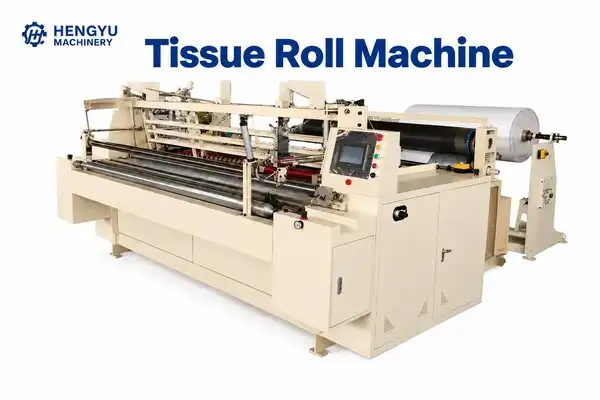
A tissue roll machine is an integrated industrial conversion system that transforms large-diameter jumbo rolls into finished consumer tissue products. The complete line combines a rewinding unit, a toilet paper cutting machine, and a multi-roll packing machine into one synchronised workflow. Using PLC-based automation, servo-driven motors, and pneumatic tension control, the system manages every stage—from paper unwinding and embossing to perforation, cutting, and packaging—with minimal manual intervention. This article explains how the equipment operates, what drives its production efficiency, and how manufacturers can select the right configuration for their factory.
Understanding How a Tissue Roll Machine Works
From Jumbo Roll to Finished Product
An auto pneumatic filling system puts a giant parent roll (up to 1800 mm wide) on one of three paper stands. This starts the production cycle. Before going into the etching unit, the paper web goes through tension control rollers. This makes patterns appear on the surface. Then, every 150–300 mm, the perforation blades make tear lines, and the automatic glue spraying unit seals the end of each log. The simultaneous belt transmission controls movement across all stations, making sure that the web speed stays the same all the way through.
Automatic vs. Manual Configurations
Automatic lines, like the HENGYU full production line, use PLC control to make sure that the rewinder, cutter, and packing machine all work at the same time. On manual or semi-automatic lines, workers have to move logs from one stage to the next, which adds to the workload and makes things less consistent. In a factory with 15–40 workers, an automated line that can automatically feed cores and push paper through it gets rid of the need for manual core placement. This frees up workers to do more important tasks like quality control instead of boring, repetitive physical work.

Production Principles Behind Tissue Roll Machines
Tension Control and Web Handling
Keeping the strain across the paper web steady is important for keeping the roll density constant. Variable frequency drives (VFDs) change the speed of the motor in real time to account for changes in the width of the giant roll as it runs out. This stops tension spikes that cause paper to break, which is a common reason why high-speed lines go down without warning. The HENGYU rewinding machine uses synchronous belt transmission and VFD control to keep the movement of the web straight across all three roll stations at the same time.
Embossing and Glue Spraying Precision
The embossing machine pushes a textured design into the surface of the tissue, which makes it bulkier and more pleasant to touch in a tissue roll machine. Precise automatic glue spraying neatly seals each finished log, making an edge that meets standards for store display. These two things have a direct effect on how customers think about the quality of a product and let companies put their products in high-end markets without having to do any extra work after the fact.
Common Production Challenges and Fixes
Lines that are well taken care of still have problems. Here are the most common problems and how to solve them:
- Paper breaks near the perforation unit usually mean that the speeds of undoing and wrapping are not matched. Most problems can be fixed quickly by recalibrating the VFD timing.
- Inconsistent roll diameter usually stems from worn tension rollers or uneven core feeding, causing rolls to have different diameters. Evenness is restored by replacing old rollers and turning on the automatic core feeding function.
- Glue tailing or incomplete sealing results from the nozzle getting clogged or the adhesive viscosity being wrong, which can cause glue tailing or partial closing. Cleaning the nozzles and checking the thickness on a regular basis keep this from getting worse.
Addressing these issues at the source — rather than treating symptoms — keeps overall equipment effectiveness (OEE) high and reduces material waste.
Industrial Applications and Benefits of Tissue Roll Machines
Serving Multiple Market Segments
A lot more things can be made with tissue-transforming tools than most buyers think at first. By changing the PLC settings for perforation length and final diameter, the same rewinding line can make normal toilet rolls for homes, coreless bathroom rolls for business dispensers, and bigger kitchen towel logs. The HENGYU line can handle finished diameters of 50mm to 180mm and core diameters of 30mm to 55mm, which means it can handle most retail and educational SKUs without having to retool.
Small to medium-sized companies benefit from this flexibility because it lets them serve many customers from a single production line, such as supermarket chains, hospitality providers, and private-label wholesalers. According to RISI's global tissue industry data, one of the most important things that sets small and medium-sized tissue makers apart from bigger regional players is their ability to convert materials in a variety of ways.
Here are the core production advantages this integrated line delivers:
- A daily capacity of 1.5 tonnes supports consistently meeting the needs of mid-sized distribution contracts without putting too much strain on your finances.
- Cutting speed of 80–200 cuts per minute paired with a packing speed of 8–15 packages per minute work together to make a balanced flow that gets rid of bottlenecks between steps.
- Automated core feeding and paper pushing get rid of two of the hardest manual tasks on a normal line, which means that fewer people are needed for each shift.
These advantages directly help small plant owners with their main problem, which is keeping up with rising wages while keeping production levels steady with a tissue roll machine.
How to Choose the Right Tissue Roll Machine for Your Business?
Matching Capacity to Your Operation
When judging a converting line, you need to look at more than just the top speed numbers. A factory with 15 to 40 workers needs a line with the right level of automation for the skills of its workers. The HENGYU PLC control interface manages the rewinder, cutter, and packing machine from a single screen, which makes it much easier for operators to learn how to use the machine. Before you buy, make sure that the machine's electrical requirements (220V 50Hz for the packing unit) match your facility's power source. Also, make sure that the rewinder's footprint of 6,500 × 3,300 × 1,700mm doesn't take up too much room on the floor.
OEM Customisation and After-Sales Support
When looking for a tissue roll machine source for a multi-year production promise, buyers should put infrastructure for after the sale ahead of price alone. HENGYU offers video tutorials for remote installation, technical support 24 hours a day, seven days a week, and detailed maintenance documentation. The company is certified by CE and ISO9001, which meets the requirements for importing goods in most target markets. For buyers who have clear product requirements, OEM customisation is possible. This includes changing the roll measurements, the language used on the HMI, and the way the package is set up with the buyer's brand.
Maintenance and Troubleshooting Guide for Tissue Roll Machines
Consistent output depends on structured preventive maintenance, not reactive repair. The following plan keeps electricity and mechanical systems in good shape:
- Daily: Check the edges of the perforation blades for wear and the glue nozzle for buildup; also, make sure that the pneumatic pressure stays at 0.6 MPa in both the cutter and the packing machine.
- Weekly: Grease the tension roller bearings and synchronous belt guide rails, check the PLC settings against the production logs, and clean the surfaces of the embossing rolls.
- Monthly: Check all the electrical connections and VFD units on the motor; replace any old perforation blades if the quality of the cuts has gone down; check the position of the core feeding mechanism.
When an operator-level fix doesn't fix a mechanical problem, HENGYU's expert team does remote tests before suggesting that a part be replaced. This method prevents downtime that isn't needed because of premature component swaps.
Conclusion
A well-designed tissue converting line combines rewinding, cutting, and packaging into a single system that works together. This saves time and money that would have been spent managing multiple suppliers. The principles of production we've talked about here—tension control, precise embossing, automatic feeding, and synced cutting—have a direct effect on how consistently and profitably your output turns out with a tissue roll machine. Small and medium-sized producers can stay competitive for a long time by choosing a line with real PLC integration, proven after-sales support, and the ability to change the design of the rolls. The entire production line at HENGYU is specifically made to meet these needs on a large enough scale for processing growing tissue.

FAQ
How often does a tissue roll line need maintenance?
When they are used all the time, perforation blades need to be checked every day and replaced every three to six months. Moving parts like belt rails, tension rollers, and core feeding guides should be oiled once a week. Every month, you should do a full electricity and mechanical check. Sticking to this plan every time makes parts last longer and stops the chain failures that cause long periods of downtime.
What is the practical difference between automatic and semi-automatic lines?
The rewinder, cutter, and packing machine on an automatic line are all controlled by a PLC, so there are no handoffs between stages. A semi-automatic line needs to move logs and put cores by hand most of the time. For a factory that wants to make 1.5 tonnes per day, an automatic line with core feeding and paper pushing tasks can do it with just one or two monitors. For the same volume, a semi-automatic configuration usually needs three to four workers.
Are energy-efficient models worth the higher upfront investment?
Yes. There are three units on the HENGYU line, and together they use about 17.75kW of power. Modern systems with VFDs use a lot less power per tonne of output than older single-phase or hydraulically driven lines. Lower running costs per shift add up over the course of a production cycle that lasts several years, which speeds up the return on the initial investment in equipment.
Get a Complete Line Quote from HENGYU Today
HENGYU creates production lines for tissue roll machine manufacturers that include rewinding, cutting, and packing in a single system. These lines are backed by CE certification, ISO9001 quality standards, and 20 years of experience in the converting industry. Our engineering team can help you with everything, from specifying the specs to installing the line. This is true whether you need a standard configuration or an OEM-customised line. Visit hytissuemachine.com or email doris@hytissuemachine.com to get a full proposal that fits the output goals of your business.
References
1. TAPPI (Technical Association of the Pulp and Paper Industry). Tissue Manufacturing and Converting Technology Overview. TAPPI Press, 2021.
2. Food and Agriculture Organization of the United Nations. Pulp and Paper Capacities Survey. FAO, 2022.
3. RISI (now Fastmarkets RISI). World Tissue Report: Production and Capacity Data. Fastmarkets RISI, 2023.
4. Smithers Pira. The Future of Tissue: Global Market Forecasts to 2028. Smithers, 2023.
5. European Committee for Standardisation. CE Marking Requirements for Industrial Machinery: Directive 2006/42/EC. CEN, 2020.
6. International Organization for Standardisation. ISO 9001:2015 Quality Management Systems — Requirements. ISO, 2015.
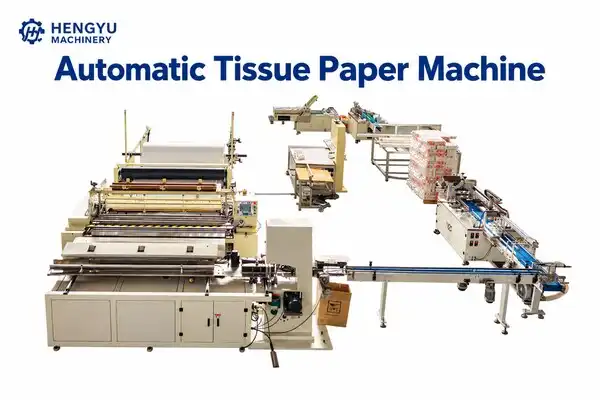
An automatic tissue paper machine is an integrated converting system that transforms jumbo parent rolls into consumer-ready tissue products through a continuous, PLC-controlled process. From facial tissues and toilet rolls to napkins and kitchen towels, this equipment handles the full production cycle — unwinding, embossing, folding, cutting, and stacking — with minimal human intervention. Modern systems like the HYF-1550 from Hengyu support virgin pulp, bamboo pulp, and sugarcane fibre, making them essential for FMCG manufacturers who need consistent output, broad format compatibility, and scalable capacity across global markets.
The Full Production Range: What These Machines Actually Convert
Most people who buy tissue-changing tools think it only works with a few different types of products. The truth is much bigger. From a single jumbo roll source, a well-set-up converting line can make a wide range of finished goods.
Here is a list of the main types of products that a current tissue conversion line can handle:
- Facial tissues (soft pack, boxed, V-fold, N-fold): These are the most popular customer SKUs around the world. The HYF-1550 can fold in widths from 170 mm to 200 mm, and its PLC interface lets it change formats in less than 10 minutes. This is a huge benefit for OEM makers who have to serve many store customers at the same time.
- Napkins and table tissues: Embossing rollers with surfaces that work with ultrasonic waves make clean, uniform napkins quickly. Custom embossing designs let buyers in the hotel and food service industries meet their branding needs without stopping the line.
- Multi-ply speciality tissues: The machine can handle premium products with higher retail earnings by processing 3-ply at 14–18 g/㎡ per layer and 4-ply at 11.5–15 g/㎡ per layer. This is a direct response to ESG-driven customer needs in European distribution channels.
Because of these features, a single converting line can be used for retail, leisure, and export outlets all at the same time. RISI/Fisher International's global tissue market research shows that premium multi-ply groups are growing at a rate of 4–6% per year in developing countries. This shows how important it is to be able to produce in a variety of formats.

How Does Tissue Converting Technology Drive Efficiency and Output Quality?
PLC Automation Eliminates Manual Inconsistency
A folding and cutting device that is managed by a PLC keeps cutting tolerances of ±0.5 mm even during long production runs, making it an automatic tissue paper machine. Infrared break-detection sensors automatically adjust for changes in web tension, which keeps expensive material from being lost during high-speed operation. As a result, every stack has the same dimensions, which is a must for stores with strict shelf-ready packaging rules.
Material Compatibility Expands Your Market Reach
Through an adjustable tension system, the HYF-1550 can work with virgin pulp, wood pulp, bamboo pulp, and sugarcane pulp all at the same time. This ability to work with more than one material directly meets the ESG criteria that retail chains in North America and Europe are now using to choose their tissue suppliers. No longer do manufacturers need to have separate lines of equipment for exporting to eco-friendly buyers and selling to regular people in the United States.
Energy Architecture Reduces Per-Tonne Operating Cost
Depending on how they are set up, modern motor systems on complex changing lines use anywhere from 15 to 45 kW. This means that the cost of energy used per ton of finished tissue will be up to 30% less than with older equipment. Variable frequency drives (VFD) change the force in real time, so they can handle the different tensile properties of bamboo pulp and fresh wood pulp without having to be recalibrated by hand.
Labour efficiency is also very appealing. Five to eight workers are usually needed per shift for manual changing lines. That number drops to two workers for a fully automated system that can keep up a production rate of 100–120 m/min, with a design maximum of 130 m/min. The Confederation of European Paper Industries (CEPI) says that 18–25% of the total cost of making tissue in sites in developing markets goes to labour. This means that a decrease in labour costs is a major factor in figuring out the payback time.
Tailoring Production Scale to Your Business Model
There is a wide range of efficiency for tissue-converting tools. Regional small businesses use entry-level lines that can turn two to three product SKUs at a modest speed. High-capacity systems like the HYF-1550 are aimed at FMCG manufacturers and export-orientated converters who need to work 24 hours a day, seven days a week, and output in multiple formats from a single platform.
The HYF-1550 has a normal roller width of 1550 mm and a changeable log height of 20–400 mm, making it an automatic tissue paper machine. This lets production managers directly control the size of the output without having to change the tools. At the lower end of this range are small hotel packaging forms, and at the higher end are full-size business tissue logs. These two different income streams are served at the same time. The heavy-duty 40 mm steel frame structure can handle heat expansion during long production cycles. This keeps the dimensions accurate even when temperatures change with the seasons, which is common in factories in the Middle East and Southeast Asian manufacturing environments.
Making the Right Procurement Decision
Evaluating Total Cost of Ownership Beyond Purchase Price
When you buy a tissue converting line, the initial cost is only a small part of the long-term costs. The same care should be taken by buyers when looking at machine details as they do when looking at scores for energy use, availability of replacement parts, and after-sales support infrastructure. Over the course of a machine's 15-year or longer operational life, its uptime is directly affected by how well its supplier can provide remote diagnostics, multilingual operator training, and scheduled maintenance protocols.
Certifications and Compliance Requirements
Machines that want to sell in regulated markets or serve global retail customers must first get CE and ISO approval. Structure integrity, electrical safety, and process consistency are all checked by these standards. These are the same things that procurement directors at FMCG companies check during technical audits. The way Hengyu makes its products meets both CE and ISO standards, which makes it easier for goods to get through customs in the places where they are exported to.
For big converting lines, the buying process usually takes four to eight months. This includes technical review, plant proof by video or in person, price negotiations, and shipping in stages. Suppliers who offer pre-installation layout analysis, voltage customisation for local power lines, and organised testing support help buyers meet this deadline. Customers can go from setting up the factory to full production with Hengyu's implementation pathway in just a few weeks, and over 95% of them finish the installation with the help of a structured video-guided support system.
Conclusion
A modern line for converting tissue paper makes a lot of different kinds of products. It is the backbone of any successful tissue production business because it can work with a wide range of formats and materials and can be automated with great accuracy, making it an automatic tissue paper machine. The HYF-1550 shows how these features can lead to a measured return on investment (ROI) through lower labour costs, access to multiple market channels, and energy-efficient output. A well-designed converting line is the easiest way for makers to make consistent, large-scale products for retail, hotel supply, or foreign markets.
FAQ
What raw materials can a tissue paper converting machine process?
These days, conversion devices can work with new wood pulp, recycled fibre, bamboo pulp, and sugarcane pulp. The HYF-1550 can handle paper weights ranging from 11.5 to 18 g/㎡ per layer without having to make any changes to the tools.
How many operators does a fully automated line require?
A fully automated converting line only needs two techs per shift, while semi-automatic systems need five to eight. PLC controls take care of format changes, tension tracking, and break recognition on their own.
What tissue formats can one machine produce?
Soft pack, boxed, V-fold, and N-fold facial tissues can all be made on the HYF-1550. Format switching through the digital interface takes less than 10 minutes, and it works with production schedules that have more than one SKU.
What certifications should buyers verify?
CE and ISO approvals are the standard for tissue-converting equipment that is sold all over the world. For controlled market entry, these prove electricity safety, structural stability, and process consistency.
How long does commissioning typically take?
Most of Hengyu's customers reach full production within a few weeks of installation thanks to their structured help route. Within five days of the first start-up, operators who have been trained become proficient in production.

Connect With HENGYU's Automatic Tissue Paper Machine Team Today
HENGYU has been changing tissues for more than 20 years and brings that experience to every job. The HYF-1550 automatic tissue paper machine for sale has a design speed of 130 m/min, can work with multiple materials, and is CE/ISO-certified. It was made for high-volume FMCG makers. Whether you are expanding a current line or building a whole new one, our team can help with planning the installation, teaching the operators, and providing technical support 24 hours a day, seven days a week. You can ask for a detailed technical proposal by emailing doris@hytissuemachine.com or going to hytissuemachine.com.
References
1. Fisher International / RISI. Global Tissue Market Outlook: Capacity, Demand, and Premium Segment Growth. 2023.
2. Confederation of European Paper Industries (CEPI). Annual Statistics Report: Tissue and Hygiene Paper Production Costs. 2023.
3. Henan Hengyu Machinery Co., Ltd. HYF-1550 Product Documentation and Installation Support Protocol. 2024.
4. Smithers Pira. The Future of Tissue Paper to 2027: Market Forecasts and Converting Technology Trends. 2022.
5. TAPPI (Technical Association of the Pulp and Paper Industry). Tissue Manufacturing Process Standards and Energy Benchmarks. 2023.
6. Grand View Research. Tissue Paper Market Size, Share & Trends Analysis Report by Product, by Region, 2023–2030. 2023.
- 1
- 2
- 3
- 4
- 7
_1787294187070.webp)
_1784082301486.webp)