How to Choose the Right Facial Tissue Paper Machine for Your Factory
Choosing the right facial tissue paper machine is one of the most consequential decisions a tissue manufacturer can make. The equipment you select will directly shape your production capacity, product quality, and profit margins for years ahead. Whether you are scaling up from a single semi-automatic line or building a mid-sized converting operation from scratch, this guide walks you through every critical evaluation layer — from technical specifications and folding technology to supplier reliability and long-term maintenance planning.
Understanding Your Factory's Requirements and Decision Criteria
You should be honest about where your factory is now and where you want it to be in three to five years before you compare any equipment.
Define Your Baseline Production Goals
First, make a plan for what you want to achieve. How many packs do you need to make each shift to meet orders? What kinds of folds do your retail and trade customers want? V-fold, N-fold, boxed, or soft-pack? What size sheets and number of plies do people in your market expect? These answers set your professional floor that you will not compromise on.
Think about energy infrastructure as well as numbers. In places like Southeast Asia, the Middle East, and Eastern Europe, factories often have to work with grid conditions that change often. When the voltage changes, a machine that needs a stable 380V/50Hz source works very differently. Before making a purchase, make sure that the electrical components will work together.
Weigh Automation Against Investment Pacing
The amount of automation is not a need that can't be met. Operational data from changing equipment users in growing markets shows that a fully automated line cuts direct labor costs by 40–50% compared to semi-automatic options. But the initial cash investment is bigger. Choose an automation level based on your current cash flow and the amount of time you expect to need to get your money back, which is usually between 18 and 36 months for medium-sized purchases.
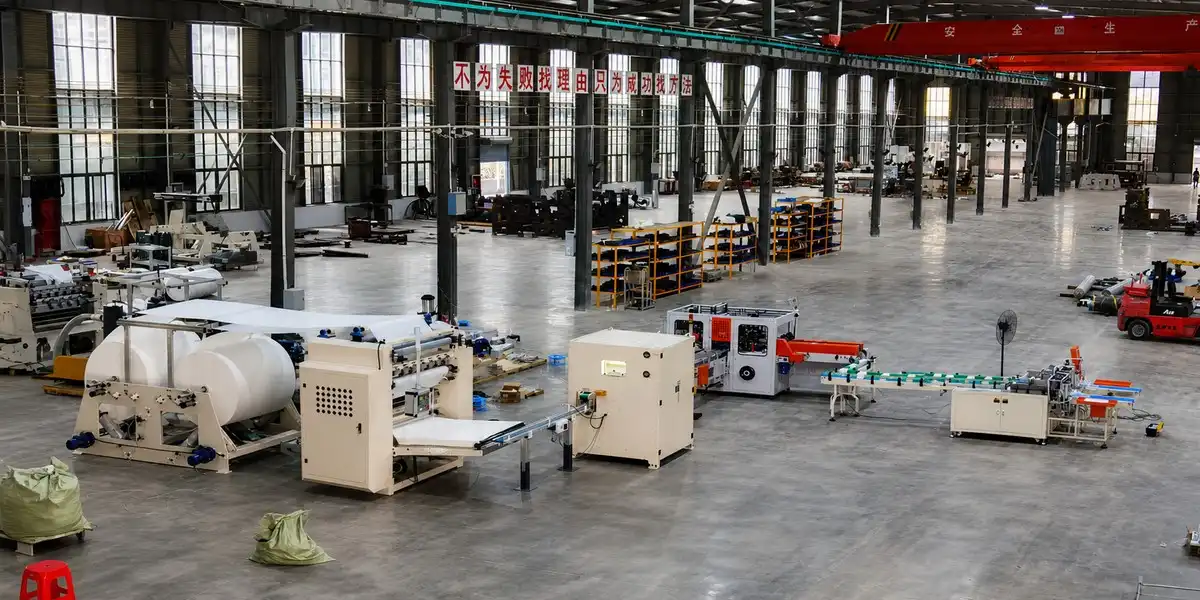
Types and Technologies of Facial Tissue Paper Machines Explained
Folding Technology: Mechanical vs. Vacuum Adsorption
In older mechanical interfolding systems, each fold is made by touching the finger and roller together. At high speeds, this method causes sheets to be misaligned, torn, and stacked at different heights, which causes waste and makes retailers complain.
These problems are fixed at their source by vacuum adsorption folding. The method keeps accurate sheet registration even when 500 to 1,000 sheets per minute are being folded in a row. This is done by using negative-pressure air to guide each sheet through the fold path. The stack is now clean and even, and it breaks much less often. For factories that supply branded retail channels, this level of consistency isn't just for looks; it protects the products on the shelves and the relationships with customers.
Embossing Configurations and Product Versatility
The stamping unit of a facial tissue paper machine decides both how nice the product looks and how well it is built. Four front units and four rear units make up a 4+4 embossing configuration. This lets manufacturers use the same machine for different pattern combinations. This means that you don't have to replace the whole embossing system in order to make plain tissues, lightly embossed economy grades, and high-end decorative designs.
Quick-change roller systems cut down on the time needed to switch patterns by a large amount. This means that the same production line can serve more than one type of customer or do yearly advertising runs.
Comparing Leading Tissue Converting Equipment Options in the Market
Total Cost of Ownership, Not Just Purchase Price
Total cost of ownership is always seen as a more accurate measure by procurement workers in the tissue converting industry than sticker price. Some important cost factors are the amount of energy used per 1,000 packs made, how often the bearings and rollers need to be replaced on average, the availability of remote support, and the lead time for spare parts. A machine that is cheap to buy but not well backed after it is delivered can cut into profits in ways that are much worse than the initial savings.
When looking at suppliers, find out how they handle their spare parts inventory. Can important parts be shipped in seven days? Is a written list of parts given at handover? Answers to these questions set serious makers apart from transactional sellers.
When you make a short list of suppliers, here are the main things you should check:
- Remote installation track record: If a supplier has a documented remote commissioning success rate of above 95%, you won't have to rely on expensive technician visits from other countries, which can be hard to arrange in many markets.
- Multilingual operator interface: A PLC interface that is available in your local language cuts down on operator error during starting and shortens the time it takes for new line staff to learn how to use it.
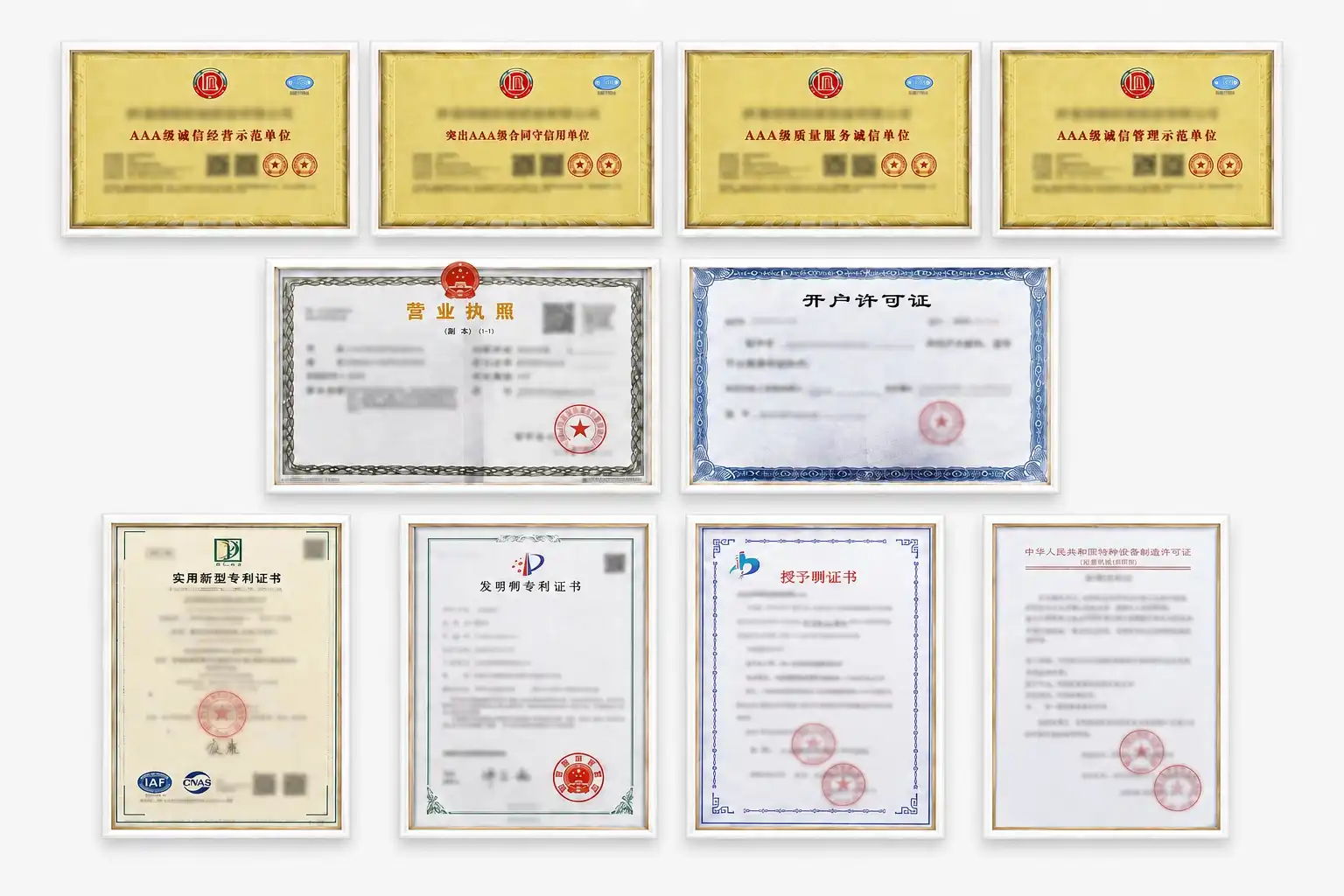
- Compliance documentation: CE and ISO certifications are basic needs for equipment that wants to enter controlled markets, and business lenders often ask for them during reviews of equipment financing deals.
- Electrical compatibility: Make sure the machine works with the power source in your area, whether it's 220V, 380V, 50Hz, or 60Hz. Also, find out what voltage stability methods are recommended for places where the power supply isn't stable.
The HY-1300: A Mid-Scale Converting System Built for Growth
Specifically built for producers moving from entry-level single-line operations to multi-line mid-scale production, the HENGYU HY-1300 is a type of facial tissue paper machine. It can handle jumbo rolls that are up to 1,600 mm in diameter and 900 mm wide, and it can fold and emboss 500 to 1,000 sheets per minute per row using vacuum adsorption and a 4+4 unit layout. The machine has a 4 KW main unit power draw, a footprint of 6,000 × 2,100 × 1,900 mm, and can handle V-fold, N-fold, boxed, and soft-pack formats from a single chassis.
This plan is great for factories that are growing because it hits a good mix between being able to serve both retail and wholesale outlets at the same time without having to invest in a full industrial-scale line. This means that the HY-1300 is a real asset for growth and not just a stopgap purchase.
Maintenance, Troubleshooting, and Ensuring Long-Term Performance
Build a Proactive Maintenance Schedule
Repairing broken equipment after it breaks down is the main cause of unplanned downtime in tissue conversion centers. Most of this risk is taken away by an organized inspection process. Every day, you should check the vacuum pressure (keep it above 4 kg/cm²), the tension of the belt, and the cleanliness of the sensors. Every week, the alignment of the embossing roller and the integrity of the pneumatic fittings should be checked. PLC troubleshooting logs and motor bearing lubrication should be done once a month.
Depending on how hard the material is and how many hours they are used nonstop, slitting blades usually need to be fixed every 15 to 20 days when they are used all the time. By planning ahead, this prevents stops in the middle of shifts.
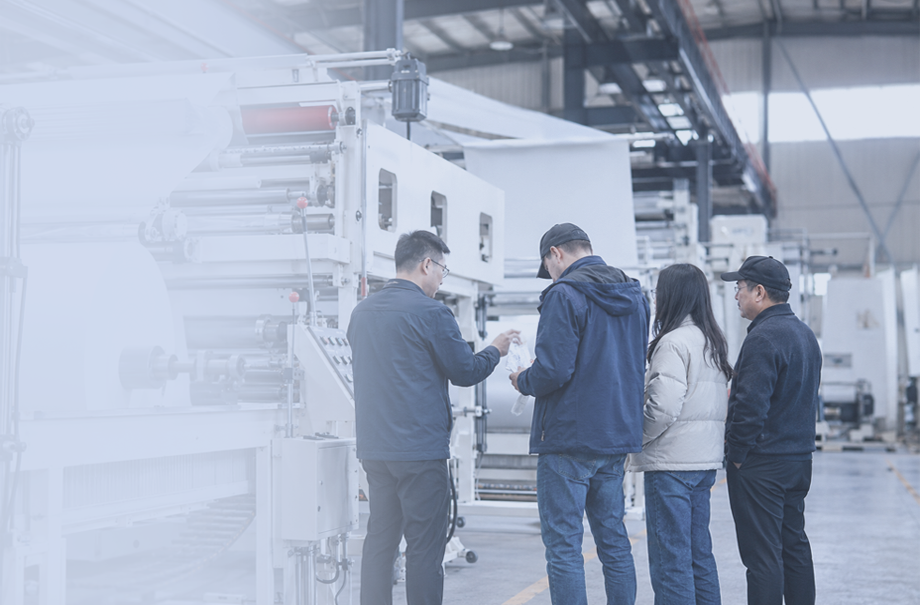
When you work with a provider that offers organized after-sales support like video-guided troubleshooting, a 12-month warranty, and lifetime remote expert access, maintenance goes from being an unknown cost to a doable operating routine.
Environmental and Economic Benefits of the Right Equipment Choice
A lot of progress has been made in making tissue-converting equipment more energy efficient. Older relay-logic machines use a lot more power per unit of output than newer servo-driven folding systems. With a main unit power of 4 KW, the HY-1300 is well within the efficiency range for equipment that changes current.
Besides saving energy, reducing waste is important. Vacuum adsorption folding makes fewer broken and misfolded sheets than mechanical folding, which means that less raw material is lost for every 1,000 packs that are made. In places where the price of basic tissue paper changes a lot, this less waste leads to a per-pack cost advantage over the course of a production year.
Conclusion
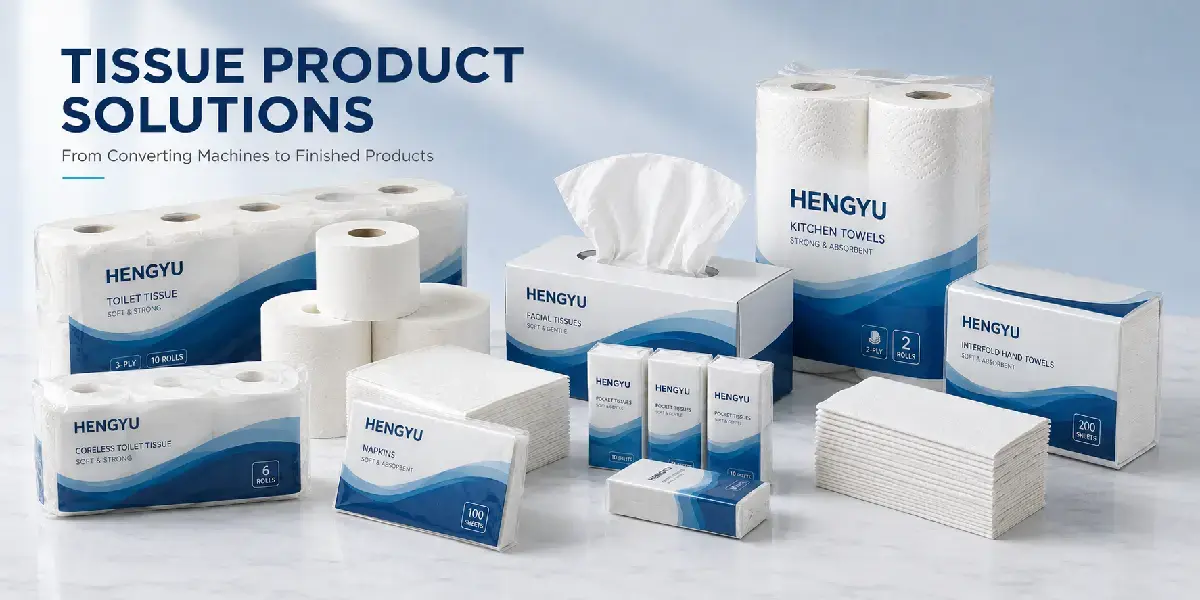
To choose the right facial tissue paper machine tissue-converting tools, you need to make sure that the technical capabilities match the growth path of your business. Don't just look at the purchase price; also look at the folding technology, the freedom of the embossing, the electrical connection, the provider support infrastructure, and the total cost of ownership. The HENGYU HY-1300 perfectly fills the need for a middle-market product: it's strong enough for multi-channel retail and trade supply, and it's useful enough for companies that are growing without putting too much strain on their capital. With more than 20 years of experience making things and a success rate of over 95% for remote commissioning, HENGYU builds machines that will work well for a long time.
FAQ
What production speed should I expect from a mid-scale tissue folding machine?
A facial tissue paper machine like the HY-1300 can fold between 500 and 1000 pieces of paper per minute in each row. The actual throughput is based on the type of paper, how it is folded, and how well it is maintained.
How does vacuum adsorption folding differ from older mechanical systems?
Negative pressure guides each sheet through the fold path in vacuum adsorption. This gets rid of the imbalance and sheet breaks that happen with mechanical finger-and-roller systems. This makes the stack more even and cuts down on material waste.
Can one machine handle multiple fold formats?
The V-fold, N-fold, boxed tissue, and soft-pack formats can all be used with the HY-1300. When switching between forms, the tools need to be adjusted, but you don't have to buy any new equipment.
What electrical supply does the HY-1300 require?
The machine can work with both 50Hz and 60Hz 220V and 380V power sources. In places where the grid voltage isn't stable, it's best to add a voltage stabilizer to protect the main motor and PLC.
What after-sales support is available?
To make sure the machine keeps working, HENGYU offers a 12-month guarantee, lifetime remote technical help, video-guided installation, and a written list of spare parts.
Connect With HENGYU for a Tailored Facial Tissue Paper Machine Solution
It has been more than 20 years since HENGYU has sold tissue-converting equipment to companies in Southeast Asia, the Middle East, Eastern Europe, and Latin America. Get in touch with our technical team for a free chat and sample show if you are looking for a facial tissue paper machine provider for your next production line. To get specs and a video of the factory case, email doris@hytissuemachine.com or go to hytissuemachine.com.
References
1. TAPPI — Tissue Paper Manufacturing Technology and Equipment Standards, 2022.
2. Smithers Pira — The Future of Tissue to 2027: Global Market Forecasts and Technology Trends, 2022.
3. FAO/UNIDO — Energy Efficiency in Small and Medium Industrial Enterprises, 2021.
4. European Committee for Standardization (CEN) — CE Marking Requirements for Industrial Machinery: Directive 2006/42/EC, 2020.
5. McKinsey & Company — Automation in Emerging Market Manufacturing: Adoption Patterns and ROI, 2023.
6. RISI (now Fisher International) — Global Tissue Industry Outlook: Capacity, Cost, and Competition, 2023.
_1787294187070.webp)
_1784082301486.webp)