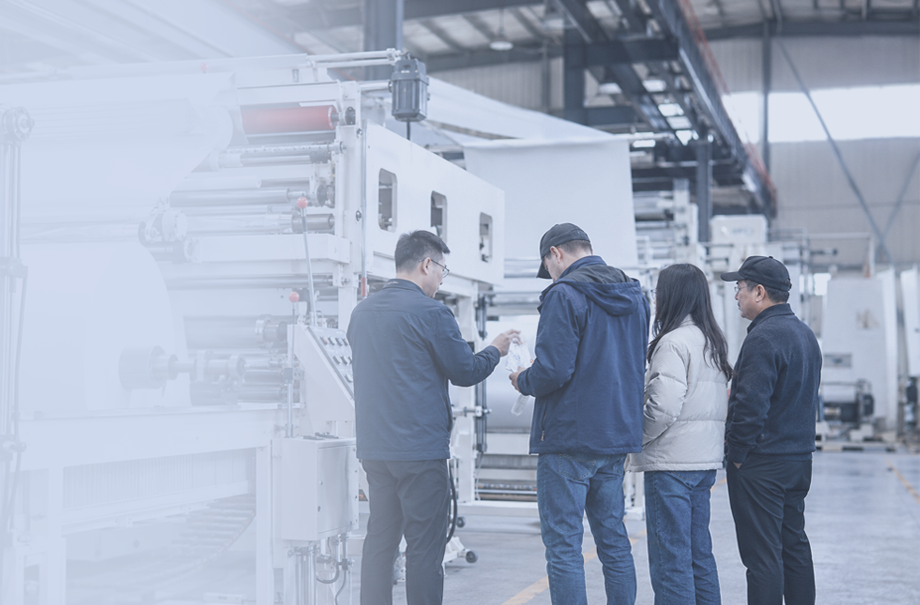
Toilet Paper Rolling Machine vs. Manual Toilet Paper Processing: Which Is Better?
When choosing between a toilet paper rolling machine and manual processing, the answer depends on your production scale and long-term business goals. For small, low-volume operations, manual methods may serve short-term needs. However, for any serious tissue converting business, automated rewinding equipment delivers measurable advantages in output speed, roll consistency, and cost per unit. Based on over 20 years of industry experience at HENGYU, automated tissue rewinders consistently outperform manual workflows across nearly every key production metric.
Understanding Manual Toilet Paper Processing
Processing by hand has traditionally been useful for small workshops and new producers. It doesn't need a lot of expensive tools, but it does require a lot of hard work and close operator attention.
What Manual Processing Involves
Workers feed parent rolls by hand, cut sheets, and wind finished rolls by hand or with some simple mechanical help. Each step depends on the skill of the operator, which adds variation.
Limitations That Affect Output Quality
Uneven or soft rolls are caused by inconsistent winding tension. Sheet counts change from batch to batch. Tear lines aren't always the same, which makes customers unhappy and causes them to return the goods.
Labor Costs Accumulate Fast
Most of the time, a manual line needs more people per shift than an automatic line. When the cost of labor goes up, handling things by hand quickly loses its cost edge. This makes relying on workers a real financial risk.

Overview of Toilet Paper Rolling Machines
These days, tissue rewinders do everything automatically, from loading the parent roll to ejecting the finished log. The range of equipment includes entry-level types that are partially automatic and high-speed lines that are fully automatic and good for big converting plants.
How Automated Rewinders Work
A tissue rewinding toilet paper rolling machine takes a large parent roll off of a core, runs the sheet through stations for cutting and embossing, and then winds it back onto a new core at a controlled speed and tension. The whole process is controlled by PLC systems.
Key Components That Drive Performance
The piercing blade makes tear lines that are all the same. With the embossing unit, you can add texture and bulk. Chrome-plated rewinding rolls keep their hardness on the outside and don't rust in humid factories.
HENGYU's Industrial Rewinding Solution
HENGYU's tissue rewinder has a 7.5+5.5 KW drive system and can go up to 220 m/min. It can handle paper weights between 12 and 40 g/m² and raw paper lengths up to 2200 mm. The touch PLC screen has controls in multiple languages, including Russian, so workers in Eastern Europe and the CIS can easily use it.
Comparing Manual Processing and Machine Rolling: Key Metrics for B2B Buyers
There are four things that determine whether to do processing by hand or automatically: how efficient it is, how consistent the quality is, how much it costs to do by hand, and the long-term return on investment.
Production Speed and Volume
A line that is run by hand can only make a small amount of what an automatic rewinder can. At 220 m/min, the HENGYU machine can work 24 hours a day, seven days a week with very little staff, which is not possible with manual methods.
Roll Quality and Uniformity
With automated tension control and spiral perforation technology, each batch has the same number of sheets and the same diameter of rolls. For automated packing lines further down the line and store buyers who expect standard specs, this consistency is needed.
Cost Analysis Over Time
Here is a direct comparison of costs in three important areas:
- Labor expenditure: Automated machines reduce the number of operators needed per shift significantly. The auto paper core feeding system and pneumatic loading eliminate the most physically demanding tasks, cutting staffing requirements.
- Material waste: The intelligent paper-break alert system detects tears immediately and pauses the line, preventing wasted parent roll material. Manual operators often miss early-stage breaks, losing meters of paper before stopping.
- Maintenance investment: Chrome-plated rewinding rolls and heavy-duty steel frame construction reduce wear and extend component life, keeping long-term maintenance costs predictable.
Over the course of a year's worth of production, these differences in cost add up to a big difference that makes the case for automated equipment.
Maintenance and Troubleshooting: Ensuring Machine Longevity and Optimal Performance
For equipment to last a long time, it needs to be maintained regularly and have quick access to spare parts and expert help, especially in facilities that are far away.
Routine Inspection Schedule
The cutting blades, stamping rollers, and conveyor belt tension of a toilet paper rolling machine are some of the most important parts that need regular maintenance. Under normal eight-hour shifts, tungsten steel piercing blades should be checked every three months and replaced every six to twelve months, based on the type of paper used.
Handling Cold and Humid Environments
Corrosion resistance is an important specification for buildings that are in cold or damp places. HENGYU directly addresses this issue with chrome-plated rewinding rolls that don't rust or lose their surface even in places with low temperatures and high humidity, like Eastern Europe and northern industrial zones.
Supplier Support and Spare Parts Access
It costs money to be down. All of HENGYU's machines come with a one-year quality guaranty, free technical support for life, and trained after-sales techs who can help you on-site or online. Long production stops are less likely to happen when spare parts are easy to get and communication lines are clear.
Making the Right Choice: Manual vs. Machine Toilet Paper Processing for Your Business
How you want your business to grow and where you want it to be in three to five years will help you choose the right tools.
Small-Scale or Entry-Level Operations
Semi-automatic tissue rewinders may be a good first step for businesses that don't have a lot of floor area or a lot of money to spend. These setups strike a good balance between automation and low initial cost, while still providing better consistency than only manual methods.
Mid-Size and Growing Converting Plants
A fully automatic tissue rewinding machine makes a factory with 10 to 50 workers much less reliant on labor while still being able to handle multiple product lines from a single machine. Because the opening pitch can be changed, the same machine can handle both normal toilet paper rolls and kitchen towel rolls.
Customization for Specific Market Needs
HENGYU lets OEM and ODM customers change the language of the interface, the designs of the stamping rollers, and the surface treatment options. Buyers in CIS markets can ask for PLC connections that work with Russian, and sites in tropical or seaside areas can ask for better corrosion protection on all touch surfaces.
Conclusion
Processing toilet paper by hand is only useful for small businesses with low throughput needs. Automated toilet paper rolling machine equipment is the best choice for any business that wants to keep output steady, quality high, and labor costs low. The HENGYU tissue rewinder has chrome-plated anti-rust parts, PLC precise control, automatic paper-break detection, and a multilingual interface. It is all in one machine that is ready for production. Whether you work in a warm climate or a cold, damp factory, the technical specs and customization choices take into account real-world workplace conditions.

FAQ
How fast does an industrial tissue rewinder operate compared to manual rolling?
The industrial tissue rewinder made by HENGYU can go as fast as 220 m/min. A person who works by hand can only make a few rolls per minute at most.
Can manual processing meet large-volume orders consistently?
In real life, the answer is no. Order uniformity, shift variability, and physical limits on output are all problems that manual lines have. Most big-box stores and institutional clients need specification sheets that can't be reliably made by hand.
What after-sales support does HENGYU provide?
HENGYU provides a one-year warranty on machines, free technical support in multiple languages, and technical advice for life. Engineers can help with setup, teaching operators, and figuring out what's wrong. Spare parts come with written wait times that help buyers plan their repair schedules.
Does the machine handle both cored and coreless roll production?
These days, fully automatic rewinders can work with both setups. Through the PLC touchscreen interface, the core-loading system can be changed so that output can be switched between cored and coreless without having to make any big mechanical changes.
What power supply does the machine require?
The rewinder at HENGYU runs on AC 380V, 50Hz, and has 13 kW of fixed power. This works with normal electrical systems for businesses in most places.
Get in Touch with HENGYU — Trusted Toilet Paper Rolling Machine Manufacturer
For more than 20 years, HENGYU has helped companies that turn tissue into other materials. When you buy our toilet paper rolling machine, it comes with full setup support, translated interface choices, and expert support for life. You can email our team at hengyu@hytissuemachine.com or go to hytissuemachine.com to get specs, a video presentation, or a production consultation that is specifically made for your location.
References
1. Food and Agriculture Organization of the United Nations. Pulp and Paper Capacities Survey. FAO, 2022.
2. TAPPI (Technical Association of the Pulp and Paper Industry). Tissue Manufacturing Process Standards and Equipment Guidelines. TAPPI Press, 2021.
3. Smithers Pira. The Future of Tissue to 2027. Smithers, 2022.
4. AFRY Management Consulting. Global Tissue Market Outlook and Converting Technology Trends. AFRY, 2023.
5. International Finance Corporation. Improving Manufacturing Efficiency in Small and Medium Enterprises. IFC World Bank Group, 2020.
6. European Tissue Symposium. Sustainability and Automation in Tissue Converting Operations. ETS Annual Report, 2023.