2026 Guide to Choosing the Best Tissue Roll Making Machine for Global Buyers
If you run an OEM tissue converting factory and serve multiple regional brands, selecting the right tissue roll making machine in 2026 is one of the most consequential decisions you will make. The global tissue paper market continues to expand, with RISI projecting steady annual capacity growth through the decade. This guide walks you through machine types, selection criteria, supplier evaluation, and emerging innovations — giving you a practical framework to match equipment to your exact production and compliance requirements before committing your capital.
Understanding Tissue Roll Making Machines: Types, Processes, and Benefits
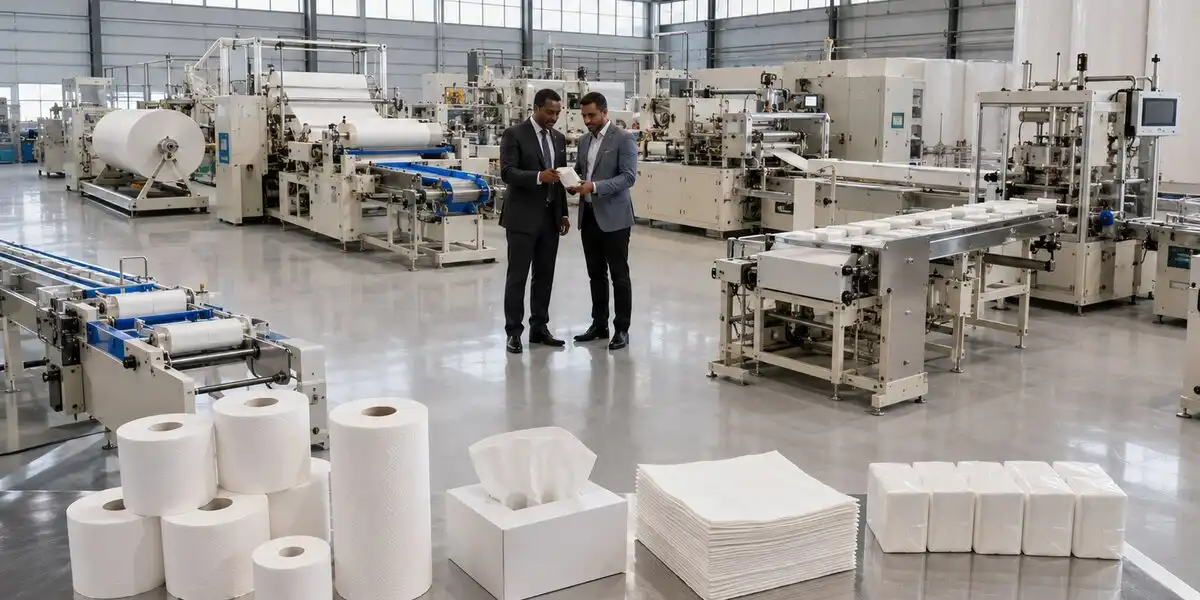
A tissue roll making machine unwinds, embosses, perforates, glues, cuts, and packages big giant parent rolls in a synchronized process so that they are ready to sell as toilet paper or kitchen towel rolls. To get consistent roll density and sheet count, each stage must keep the tension and speed in perfect alignment. These are two quality measures that brand clients look at closely during plant reviews.
Automatic, Semi-Automatic, and Manual: Which Fits Your OEM Workflow?
Automatic lines can move up to 280 m/min and handle 3–3.5 tons per eight-hour shift. They only need two or three operators and can quickly switch between jobs thanks to PLC recipe memory. This makes them perfect for OEM factories that have to deal with different brand specifications. Semi-automatic configurations require three to five workers per shift and changeover times are longer, but they require less capital. Manual tools work well for small businesses just starting out, but they can't really meet the number or consistency needs of brand clients. An automatic line is the only choice for OEM businesses that need to be ISO or CE-certified.
Three things that brand inspectors look for are stable glue measurement, consistent perforation pitch, and consistent coil density. During the whole production process, machines with closed-loop tension control and servo-driven perforation systems keep those pillars safe.
How to Choose the Best Tissue Roll Making Machine: Key Criteria for Global Buyers
At this level of spending, purchasing choices should use an organized screening model instead of putting price first. The following factors are based on how OEM converting companies actually work.
Before putting down a deposit, every buyer should carefully consider these main factors:
- Production capacity alignment: Make sure that the machine's daily output rating fits the brand amounts you agreed to. A line that is too small leads to delivery defaults, while a line that is too big wastes capital.
- PLC recipe memory and changeover speed: OEM companies that work with many brands need to be able to switch between formats quickly. One PLC system stores the perforation pitch, roll diameter, and glue volume by job code. This makes changeover much faster, from hours to minutes.
- Certification coverage: CE and ISO 9001 paperwork directly helps brand-client factory audits. Qualification steps make the sales cycle longer if you don't use them.
- After-sales response commitment: Make sure the seller writes down how long it will take to do remote diagnostics and send out spare parts. When a single-line business is down, it loses a lot of money.
- Warranty terms: An industry standard is a quality guaranty that lasts at least one year and covers a wide range of issues.
These factors together show if an investment in a tissue roll making machine gives a long-term return or causes constant operational problems. Once you've matched your needs to each point, choose the best two or three types and ask for sample runs.
Comparing Tissue Converting Equipment: Features, Costs, and Usability
Automatic lines are more expensive to buy than semi-automatic ones, but factories that run two or more shifts usually get their money back faster because they save money on labor, increase throughput, and lower scrap rates. The PMMI 2023 packaging machinery study says that automated converting systems cut the cost of labor by 30–45% per unit compared to semi-automatic setups with the same output rates.
Henan Hengyu Machinery Co., Ltd. has created an automatic rewinding line that combines the steps of rewinding, cutting, and packing into a single, streamlined process. The rewinding unit can work with paper that is up to φ2800 mm wide and make rolls that are 60 mm to 200 mm in diameter. The automatic cutting machine can make 80–100 cuts per minute, and the multi-roll packing machine can make 8–15 packages per minute. This gets rid of the need for manual transfers, which slow down output on lines that aren't linked.
In terms of sustainability, the main rewinding unit uses only 12.5 kW, which is very little energy for a line with this much output. Frequency inverters handle start-up load spikes, which lowers the high demand on the electrical infrastructure of your building.
Procurement Process and Supplier Selection: Navigating the Global Marketplace
There's more to choosing a supplier of a tissue roll making machine than just comparing specs. Verified CE and ISO approval, written installation schedules, training programs, and the ability to get extra parts for a long time are all things that affect how reliable something is after it has been put into use.
The normal steps for an OEM to buy something are sample approval, trial production, purchase order, installation, and operator training. For domestic deals, this process usually takes one to two months, but it can take a little longer for projects that cross borders. When buying on sites like Alibaba or at industry shows, buyers should ask for proof of plant audits and contact information for current customers who work for similar OEMs.
Hengyu has been making things for more than 20 years and offers one-stop plant setup help, global logistics management, and expert service for life. These features lower the risk of integration that smaller OEM factories face when they put in new equipment but don't have a lot of engineering staff on staff.
Innovations and Future Trends in Tissue Roll Making Machines
The path that tissue conversion technology will take through 2026 is based on three developments. In real time, IoT-enabled predictive maintenance units check the temperature of the bearings, the patterns of vibration, and the tension of the belt. If anything seems off, they let you know before they cause unexpected stops. AI-assisted quality vision systems check the regularity of perforation and embossing registration at line speed. This cuts down on mistakes at the end of the line without adding more staff. Adding converting stations without replacing the core rewinding unit is one way that modular machine architecture lets factories increase their capacity. This is a cost-effective way for factories to go from having one brand client to five.
Equipment design is also affected by government rules about how much energy is used and what kinds of packaging can be recycled. It's no longer a special standard for a tissue roll making machine to be able to handle 100% recycled-fiber parent rolls; these machines need to have hardened blade systems and better dust extraction.
Conclusion
To pick the correct tissue roll making machine in 2026, you need to make sure that the machine's capabilities match the OEM's operational realities. This means that you need fast changeover, certified quality documentation, and reliable support after the sale. For companies that work with more than one brand, automatic lines with PLC recipe memory, built-in cutting and packing modules, and confirmed CE/ISO credentials are the best choice. The investment level is low, the return on investment (ROI) path is clear, and the technology roadmap includes IoT diagnostics, AI quality inspection, and modular scalability. Buyers who choose platforms that are compatible with future technology will be rewarded.
FAQ
What daily output should I expect from a fully automatic rewinding line?
A well-set up automatic line moving at 280 m/min handles about 3–3.5 tons of finished tissue product every eight hours. The actual output varies on the GSM of the paper, the roll width settings, and how often the format is changed between jobs of different brands.
How does PLC recipe memory benefit an OEM factory?
The perforation pitch, winding tension, glue volume, and roll width factors can be saved by job code in the PLC recipe store. The operator doesn't have to re-calibrate each axis by hand when you change brands. Instead, they use the saved recipe. This cuts down on the time it takes to switch over and gets rid of the operator-dependent quality difference that makes brand customers complain.
What certifications should I require from a tissue machinery supplier?
CE certification makes sure that electricity safety rules are followed for foreign markets. ISO 9001 shows that the seller of a tissue roll making machine has a method for managing the quality of their manufacturing. Both of these things are usually asked for during brand-client factory qualification audits, and the originals should be given instead of copies.
Can the machine process recycled-fiber parent rolls?
Yes, but the line needs blades made of hardened tungsten steel and a stronger dust collection system to deal with the higher levels of fiber dust and abrasives in recycled raw material. Check with your seller about this requirement before placing an order.
What facility space and power supply does the complete line require?
Plan for 150 to 200 square meters of floor space for the material flow corridors, cutting machine, rewinding unit, and packing machine. The main rewinding unit needs an industrial power source with three phases and a rating of 12.5 kW. The cutting (7.5 kW) and packing (3.5 kW) parts can use extra power.
Connect with HENGYU — Your Trusted Tissue Roll Making Machine Supplier
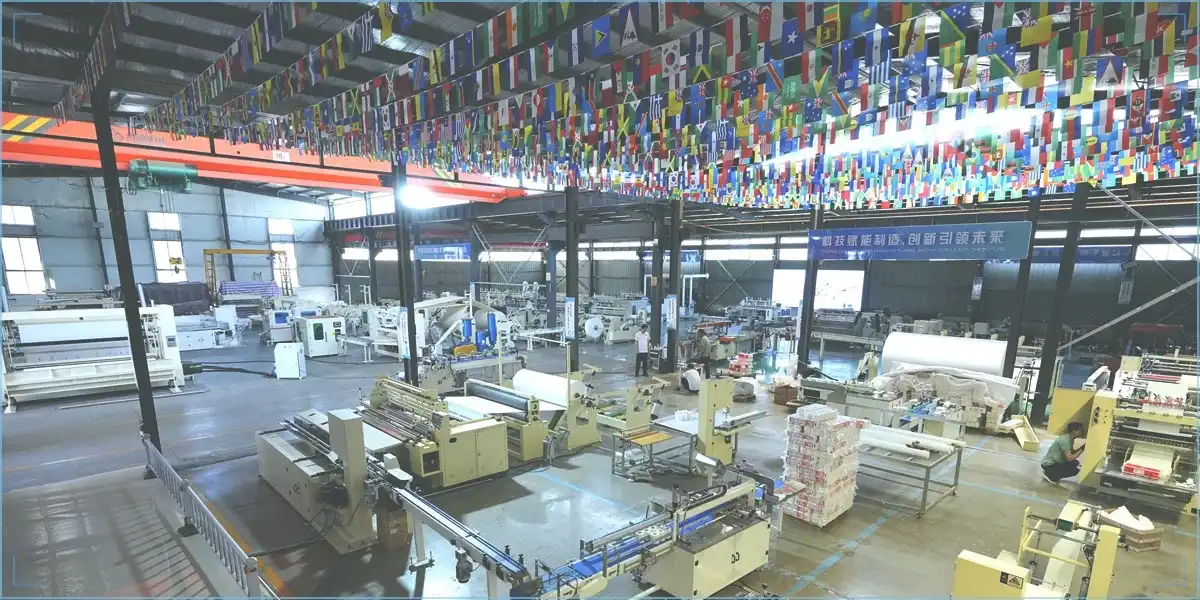
HENGYU offers tried-and-true options for tissue roll making machines. They have been making machines for more than 20 years, are CE and ISO certified, and offer lifetime technical support. Our engineering team will make sure that you get the right setup for your output goals, whether you are increasing OEM capacity or entering new brand markets. You can get a product catalog and a custom advice by going to hytissuemachine.com or emailing doris@hytissuemachine.com.
References
1. RISI (now Fastmarkets RISI). World Tissue Report. 2023.
2. PMMI: The Association for Packaging and Processing Technologies. Packaging Machinery Industry Report. 2023.
3. Smithers Pira. The Future of Tissue to 2027. 2022.
4. FAO. Pulp and Paper Capacities Survey. 2023.
5. TAPPI. Tissue Manufacturing Technology Review. 2022.
6. Freedonia Group. World Tissue Demand. 2023.
_1787294187070.webp)
_1784082301486.webp)