BLOG List
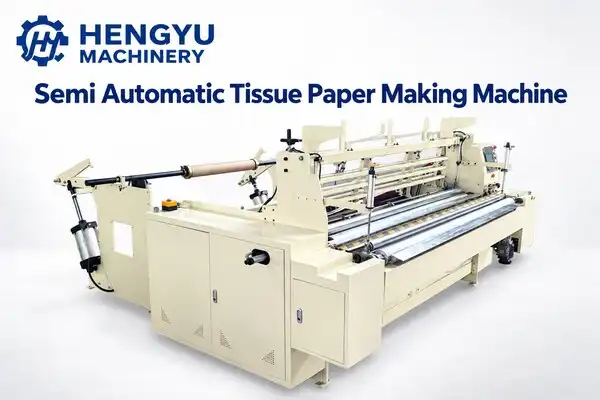
Choosing the right semi automatic tissue paper making machine is one of the most consequential decisions a startup tissue manufacturer will make. The right equipment directly determines your cost per kilogram, your daily output, and your ability to recover your investment within 12–18 months. A quality facial tissue production line integrates folding, embossing, cutting, and box sealing into a cohesive workflow — reducing labor dependency by up to 60% compared to purely manual operations. This guide walks you through the evaluation criteria, supplier vetting, and procurement process you need to make a confident, well-informed decision.
Understanding Semi Automatic Tissue Paper Making Machines
What These Machines Actually Do
Between fully manual processes and high-capital fully automated lines, a semi-automatic tissue paper making machine holds a practical middle ground. It automates the most precise steps, like unwinding, embossing, cutting, and box sealing, but people can still watch over the loading and transfer points. Small to medium-sized tissue factories that need consistent output quality but don't want the space or power needs of a fully automatic system should use this architecture.
There are three steps in the Hengyu facial tissue production line: electromagnetic-speed-controlled folding with steel-to-steel edge embossing; high-speed pneumatic rotary cutting at 320 cuts per minute; and PLC-controlled automatic box closing at 40–50 boxes per minute. The daily output is between 1,900 kg and 3,000 kg per 8-hour shift, which is a good amount for a first production line.
This machine can work with both new wood pulp base paper and recovered base paper that comes on big rolls with a core diameter of 76.2 mm and a width of up to 1,200 mm. The size of the tissue can be changed from 100x120 mm to 100x210 mm, which means that the same line can serve different store box forms in different regions.

Core Criteria for Choosing the Right Machine
Matching Machine Capabilities to Your Production Goals
Before you look at any specification sheet, you need to be clear on three business factors: how much you want to produce each day, what kind of electrical infrastructure you have access to, and what kinds of tissue formats the local retail market wants. These three things will quickly get rid of models that don't work together and help you focus your evaluation.
Here are the core technical criteria that experienced semi automatic tissue paper making machine tissue machinery buyers prioritize:
- Cutting precision and blade stability: A well-designed pneumatic point-cut system makes clean cuts without tearing fibers. A 610 mm rotary blade that spins at 980 rpm and an electric sharpening system that can be adjusted by touch screen keep the quality of the cuts high over long production cycles without having to stop the line for manual blade maintenance.
- Tension control and web consistency: The jumbo roll unwinding tension stays the same all the way down to the core, which is 1,200 mm in diameter, thanks to electromagnetic speed regulation. Loose rolls, uneven density, and more waste are all caused by inconsistent tension, which cuts directly into your per-kilogram margins.
- Power supply compatibility: Make sure the machine's frequency control system can handle voltage changes if your facility runs on 220V/50Hz or has voltage fluctuations. The cutting machine on the Hengyu line runs on 380V/50Hz and the box sealing unit on 220V/50Hz. For voltage security in new markets, frequency control is built into the machine.
- Format changeover speed: A line that can handle tissue sizes from 100x120 mm to 100x210 mm with little retooling time lets you switch between retail sales quickly and cheaply.
These criteria collectively determine whether a machine will deliver reliable output from day one or become a source of recurring downtime and repair costs.
Brand, Supplier, and After-Sales Service Insights
Why Supplier Credibility Matters More Than You Think?
There are a lot of different companies that make tissue machinery. The most dangerous thing a new factory can do when buying things is to put short-term price over long-term help reputation. When a machine arrives without the right remote installation instructions, multilingual operating manuals, or quick technical support, it can sit there for weeks without being used, which is bad for any small business's cash flow.
For over 20 years, Henan Hengyu Machinery Co., Ltd. has been making tools for turning tissues into other types of materials. Their history of remote installations shows that more than 95% of customers are able to get their equipment up and running without having a tech come to their site. This is very important if your plant is in Nigeria, Bangladesh, or Cambodia, and traveling between countries will cost you money and take longer than planned to get up and running.
Check that the real equipment paperwork, not just marketing materials, for CE and ISO compliance when you are evaluating any provider. Make sure the warranty covers mechanical parts for at least a year, and make sure that technical support via WhatsApp or video chat is available after the system is up and running, not just during installation.
Troubleshooting, Maintenance, and Operational Tips
Preventing the Most Common Production Failures
Most of the unplanned downtime on facial tissue lines is caused by a few problems that keep happening. If you know about them before you put them into service, you can set up preventative habits right away.
One of the most common problems with a semi automatic tissue paper making machine is blades getting stuck in dry or dusty places. Thin tissue sheets stick to the cutting device instead of feeding easily because of static buildup. This type of failure is much less likely to happen if the cutting zone is regularly purged of air and the workshop stays wet (above 45% RH, if possible).
Stoppages in box sealing are often caused by using the wrong carton board weight or feeding the cartons in the wrong way. The Hengyu automatic box sealer can handle cardboard weights between 250 and 450 g/m². However, if you feed cartons that are heavier than this, the hot melt glue application will not line up correctly, leaving behind boxes that are not sealed or are not sealed well enough to pass retail quality checks.
Monthly maintenance should include inspection of the air filter and oil-water separator on the pneumatic circuit, verification of embossing roller surface condition, and confirmation of PLC parameter settings against the factory baseline. The Hengyu line's touch screen shows cutting speed, tension, and temperature in real time. This lets supervisors see any drift right away, before it gets bad enough to stop the line.
How to Procure the Best Semi Automatic Tissue Paper Making Machine?
A Practical Sourcing Checklist for B2B Buyers
Most people in Africa, South Asia, and Southeast Asia who want to buy tissue tools do so through Alibaba International or by sending a direct message to a seller through WhatsApp. Usually, the buying process starts with a request, then there is a video tour of the plant, an official quote, a 30% deposit, shipping by sea freight, and remote commissioning.
Before signing any purchase agreement, work through this pre-purchase verification checklist:
- Confirm the paper core inner diameter: Make sure that the standard 76.2 mm inner diameter of the machine's paper core matches the requirements set by your local jumbo roll supplier, or ask for a custom core adapter.
- Verify the electrical source specs: Make sure that the electrical source specs (380V/50Hz for cutting and 220V/50Hz for sealing) match up with the power system in your building.
- Request video proof of performance: Ask for video proof of the exact model going at the speed that was advertized for production, not an alternative model or an older version.
- Confirm the warranty period: Write down the length of the warranty, which parts are covered, and how replacement parts will be sent.
- Ask for regional references: Ask customers in your area who have successfully ordered the same type from afar for examples.
Avoid purchasing used tissue converting equipment as your first production line. The lower costs are canceled out by the fact that the wear history of the cutting and stamping blades and rollers is unknown. These are the two parts that are most important to the quality of the finished product and cost the most to repair.
Conclusion
Buying a semi automatic tissue paper making machine face tissue production line is an investment that will last for a long time. Before you can make consistent, profitable production, the machine's specs, your supplier's support system, and your factory's electrical and space readiness all need to be in sync. Pay attention to how well the machine cuts, how reliable the tension control is, how flexible the formats are, and how good the remote installation support is. Any small difference in the initial price is not worth it if the supplier has a proven history of successful remote commissioning in your area.

FAQ
What daily output can I realistically expect from a semi automatic facial tissue line?
Under normal conditions, the Hengyu facial tissue production line can make 1,900 to 3,000 kg of tissue per 8-hour shift. The actual result relies on the tissue weight (GSM), the size format, and how skilled the operator is.
Can this equipment handle different tissue sizes without replacing major components?
The cutting range can be changed from 80 mm to 210 mm, and the tissue dimensions can be changed from 100 mm by 120 mm to 100 mm by 210 mm. This means that the format can be changed during the same production day.
What power supply specifications does the line require?
The automatic box closing machine runs on 220V/50Hz, and the rotating cutting machine runs on 380V/50Hz. Voltage changes that happen a lot in developing markets are handled by the frequency control system.
How is remote installation managed for overseas buyers?
The technical team at Hengyu gives step-by-step video instructions through WhatsApp or video calls. More than 95% of foreign customers are able to do business without having to visit the company in person.
What maintenance tasks are most critical in the first year?
Most preventive maintenance tasks can be done by checking the pneumatic air filter, oil-water separator, embossing roller surfaces, and PLC baseline parameters once a month.
Request a Quote from HENGYU — Your Trusted Semi Automatic Tissue Paper Making Machine Supplier
HENGYU offers tested semi automatic tissue paper making machine face tissue production lines backed by more than 20 years of manufacturing experience, CE/ISO approval, and free technical support for life. Our team offers clear pricing, bilingual remote commissioning, and a 12-month guarantee, no matter if you are looking for your first box tissue line or want to grow an existing business. Send us an email at doris@hytissuemachine.com or go to hytissuemachine.com to get a personalized output plan.
References
1. Food and Agriculture Organization of the United Nations — Pulp and Paper Capacities Survey, FAO, 2022.
2. TAPPI — Tissue Manufacturing Technology and Quality Standards, TAPPI Press, 2021.
3. Smithers Pira — The Future of Global Tissue to 2027, Smithers, 2022.
4. Grand View Research — Tissue Paper Market Size, Share & Trends Analysis Report, Grand View Research, 2023.
5. International Organization for Standardization — ISO 9001:2015 Quality Management Systems — Requirements, ISO, 2015.
6. European Committee for Standardization — CE Marking and Machinery Directive 2006/42/EC, CEN, 2006.

A toilet paper packaging machine is automated industrial equipment that bundles finished tissue rolls into retail, family, or wholesale packs through continuous feeding, bagging, sealing, and discharge cycles. For tissue manufacturers scaling from a single SKU toward multi-format product lines, selecting the right bundle packer directly shapes production efficiency, packaging cost per unit, and channel readiness. This guide walks through core machine features, real-world applications, a practical buying framework, and emerging industry trends—giving procurement professionals a clear foundation for evaluating tissue bundle packaging solutions.
Understanding Toilet Paper Packaging Machines
These days, toilet paper packaging machines do a lot more than just put rolls of paper into bags. A PLC control system makes sure that the roll setup, film tension, pneumatic sealing, and release speed all work together as one seamless process.
How Does the Automation Cycle Work?
This is well shown by the HY-4424A from Henan Hengyu Machinery. When rolls come in from the upstream log saw, the machine counts them and arranges them in the right way—anywhere from 2 to 18 rolls per pack—then it puts in pre-made OPP/PE composite bags, seals both ends under steady pneumatic pressure (0.5 to 0.8 MPa), and sends out 6–10 finished packages per minute. The whole cycle runs without any help from a person, so one operator can watch over several lines at once.
Single-Layer vs. Double-Layer Configurations
This difference is more important than most people think at first. When shelf display density is important, single-layer packaging works best for small retail formats (max 680 × 360 × 120 mm). Double-layer packing (max 680 × 360 × 240 mm) makes the vertical stack more stable during ocean freight. This is very important for companies sending to Eastern Europe, Southeast Asia, or the Middle East, where package problems are common because of transit vibration. Both setups can be used on the same frame with the HY-4424A, so you don't need two different machines.
Vertical vs. Horizontal Packing Modes
Automatic palletizing and warehouse stacking systems work well with vertical packing. Horizontal packing is similar to how store shelves are usually set up. Being able to switch between the two modes on the same machine lets manufacturers serve both modern trade and traditional wholesale channels without having to buy new equipment.

Applications and Benefits of Tissue Bundle Packaging Equipment
Toilet paper packaging machines are used in three main settings: medium-sized converting factories that make a wide range of products for stores; OEM packing lines that serve buyers from other countries; and bulk distribution operations that provide routes for government or community purchases.
For producers who are growing, these are the main practical benefits that make them want to adopt:
- Multi-roll flexibility on a single machine: The HY-4424A can handle anywhere from 2 to 18 rolls per pack, so it can handle 4-roll packs for convenience stores, 10-roll packs for families, and 18-roll bundles for distributors without needing different tools for each style. This gets rid of the regular line changes that slow down shift work.
- Consistent sealing quality across formats: Automated bag placement and pneumatic sealing keep the closing strength the same no matter the pack size or number of layers. This lowers the number of defects that raise the cost of packing each unit.
- Low energy overhead: The machine uses only 3 kW of power, so even when it's working in two shifts nonstop, the costs of running it stay low. Compared to competitive units with higher wattages, the total amount of energy saved over a 12-month period is significant for producers with limited OPEX funds.
- Compact footprint for existing factory layouts: The machine fits into most factory floors without having to be structurally changed. Its small size (7,800 × 1,600 × 1,600 mm) cuts down on installation time and site preparation costs.
All of these benefits work together to solve the main problem that regional tissue brands are having, which is moving from making the same single-SKU product to making the variety of formats that modern retail and trade outlets need.
Regular routine maintenance, like checking the pneumatic fittings, bag guide rails, and closing heads on a regular basis, keeps the above-mentioned flow gains and protects the machine's 12-month guarantee.
Comprehensive Buying Guide for Toilet Paper Packaging Machines
Instead of just looking at price, choosing the right toilet paper packaging machine requires looking at a number of factors that are all connected.
Key Procurement Criteria
Pack range and changeover time should be the first screening filter. A machine that says it can handle 2–18 rolls but needs the tools to be changed between formats for more than 40 minutes is not as useful as one where size changes can be made in a single shift. Check the switching processes while the video factory is being checked.
Certification compliance is a must for buyers who want to export. Most countries accept CE and ISO certifications. For customs review in the Middle East, PVOC compliance is needed. Before signing a contract, check the certificate's expiration dates and the organization that issued it.
Upstream signal compatibility is a problem that a lot of people have. Correct roll-count signs must come from the log saw to the bundle packer. Before finalizing the specification, check with the company that sells you the cutting equipment to make sure that the PLC communication protocols are correct.
Spare parts transparency protects long-term running costs. At the quote step, ask for a list of individual spare parts with their corresponding unit prices. When used continuously, sealed pneumatic parts and bag guide assemblies wear out the fastest.
Payment structure and delivery timeline affect cash flow planning. For this type of tools, the standard terms are a 30% deposit and 70% before shipping, which is 50%/50%. Check the FCL loading measurements against the machine's weight (1,000 kg) and size to get the most out of each container and avoid getting charged extra for freight that you didn't expect.
Comparing Tissue Packaging Machine Configurations
Fully automatic toilet paper packaging machines like the HY-4424A can handle more packs per hour and cost less to run than manual machines. This makes them the best choice for companies that make more than 150,000 packs per month or have a lot of different orders to handle. For new businesses or factories that aren't making enough to justify the cost of full automation yet, semi-automatic units are still a good option.
Within fully automatic models, the features that set them apart are the ability to handle two layers, the ability to choose between vertical and horizontal packing modes, and the security of the PLC under long-term load. When budget units cut back on PLC response, it shows up as inconsistent sealing during format changes, which is exactly what makes multi-SKU production less efficient.
Instead of two different packing systems, there is now one machine that can handle both retail and wholesale bundle forms on a single frame. This capital consolidation is a big plus for companies that want to enter new distribution channels.
Future Trends in Tissue Bundle Packaging Technology
The toilet paper packaging machine industry is moving toward remote diagnostics that are allowed by the Internet of Things. With this, PLC performance data comes to the manufacturer's service team in real time, letting them take action before mechanical problems cause unplanned downtime. This feature directly solves the problem of online installation that buyers from other countries have after delivery.
Sustainable packaging materials are also changing how things are bought. PE film is still the most popular type, but more and more European retailers are asking for films that are compatible with PLA or that can be recycled. When companies buy bundle packers now, they should make sure that the film compatibility specs are clear with their equipment supplier so that they don't have to pay a lot of money to fix things later on when material standards get stricter.
Modular machine designs, in which each station can be updated separately, are becoming more popular because they let companies add new automation features without having to replace whole lines.
Conclusion
A well-designed toilet paper packaging machine is the most important piece of equipment that regional paper manufacturers need to stop making just one type of product and start competing in retail, family, and wholesale channels at the same time. The HY-4424A shows that a small, industrially durable frame can have 2–18 roll flexibility, dual-layer capability, vertical/horizontal packing modes, and 3 kW energy efficiency. When making this kind of purchase, it's best to carefully consider the pack range, switching speed, certification compliance, upstream compatibility, and long-term access to extra parts. These are the things that determine the real cost of ownership, not just the purchase price.

FAQ
How long does a format changeover take on the HY-4424A?
The HY-4424A has size adjustment mechanisms that let workers change pack shapes quickly and easily. For example, they can go from a 4-roll retail pack to a 10-roll family pack. The exact time varies on how well the user is trained and how familiar they are with the machine. That's why Hengyu offers online training in both Chinese and English during the commissioning phase.
What packaging materials does the machine support?
The OPP/PE hybrid bags used by the HY-4424A are already made and have a film thickness of 5.5C. When getting a quote from Hengyu, buyers who want to sell films in European stores that have stricter rules on sustainable film should talk to the technical team about PLA-compatible or recyclable PE alternatives.
Does the machine integrate with existing log saw equipment?
A confirmed procurement checkpoint is that the PLC signal must work with the cutting equipment upstream. Before signing the contract, buyers should give Hengyu's tech team information about their present log saw model and how they want the control interface to work. This will ensure that the lines will work together smoothly for the toilet paper packaging machine.
What certifications does the HY-4424A carry?
The machine meets CE and ISO standards, which means it can be exported to most countries around the world. Buyers sending goods to Middle Eastern outlets that need PVOC inspection should check with Hengyu about the paperwork needed before setting up a shipment.
What after-sales support is available post-installation?
Hengyu offers online troubleshooting help through PLC connection, bilingual operator training, a 12-month guarantee, and an easy-to-read list of spare parts with prices. Buyers who want to increase their production ability can get second-phase expansion advice.

Partner with HENGYU for Your Next Tissue Packaging Line Investment
It has been more than 20 years since HENGYU has sold tissue-converting equipment to companies in Southeast Asia, the Middle East, Eastern Europe, and Latin America. Hengyu sells the toilet paper packaging machine, which is CE/ISO compliant, has a 3 kW energy footprint, and can handle multiple bundle formats. It is designed to help factories move toward multi-channel distribution. You can email our technology team at doris@hytissuemachine.com or go to hytissuemachine.com to get details, a movie of the facility, or a custom quote.
References
1. PMMI: The Association for Packaging and Processing Technologies. State of the Industry: U.S. Packaging Machinery Report. 2023.
2. Freedonia Group. World Tissue Paper to 2026: Demand and Sales Forecasts, Market Share, Market Size, Market Leaders. 2022.
3. Packaging World Magazine. Automation Trends in Consumer Goods Packaging. 2023.
4. TAPPI (Technical Association of the Pulp and Paper Industry). Tissue Technology International: Converting and Packaging Advances. 2022.
5. McKinsey & Company. Sustainability in Packaging: Inside the Minds of Global Consumers. 2022.
6. ProPak Asia Exhibition Report. Emerging Automation Trends in Asian Tissue and Hygiene Product Packaging Lines. 2023.
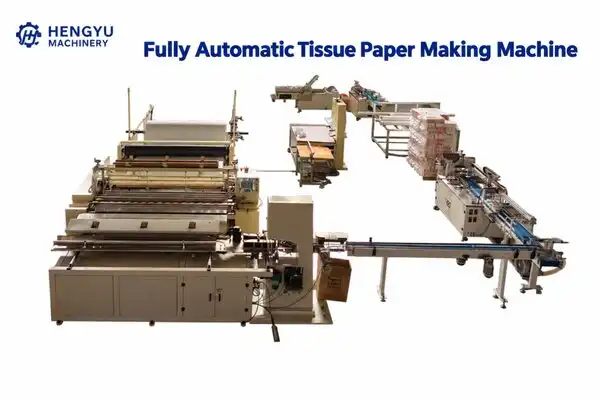
If you are planning to launch a tissue paper production line or replace aging semi-automatic equipment, a fully automatic tissue paper making machine delivers measurable advantages in labor efficiency, product consistency, and long-term return on investment. This integrated converting system—combining an auto rewinding machine, paper cutting machine, and tissue packing machine—transforms jumbo parent rolls into retail-ready products with minimal manual intervention. For entrepreneurs and factory owners in emerging markets, this technology represents a practical pathway to building a competitive, scalable manufacturing operation from day one.
Understanding Fully Automatic Tissue Paper Machines
These days, toilet paper conversion machines are much more complex than simple mechanical rolls. Modern automated systems use PLC controls, servo motor drives, and precise sensors to make sure that every step of the conversion process is done at the same time, from unwinding the parent roll to closing the final product.
How the Conversion Process Works?
Parent rolls up to 2200 mm wide and 1500 mm in diameter can fit in the HENGYU HY-1575 model. Raw paper goes through an embossing unit and then automatic stations for perforation, core filling, glue, trimming, and rewinding. All of this happens in a small space (4300 x 3320 x 1700 mm). At its intended speed of 200m/min, the whole line keeps a cutting pitch error of ±2mm, which is a level of accuracy that semi-automatic machines rarely reach without the help of a skilled operator.
What Separates Automatic from Semi-Automatic?
On semi-automatic lines, workers usually have to do things like inserting the core, closing the tail, and moving the rolls by hand. Roll tightness, perforation alignment, and cycle time can change because of this dependency. A fully automatic tissue paper making machine gets rid of these places of contact, which means that only two to four operators are needed instead of ten or more workers.

Key Benefits of Running a Fully Automatic Production Line
When you switch to a fully automatic tissue paper making machine, you get real practical benefits that grow over time. The benefits include less work for everyone, more consistent products, better use of energy, and more market flexibility.
Here are the main benefits that factory owners always say they get after upgrading:
- Dramatically reduced labor dependency: The automated core feeding system gets rid of the need for manual handling, so production can keep going without stopping. Most operators oversee the running of machines and the packaging of finished goods instead of doing physical work. This means that a small team of two to four people can work continuous shifts.
- Consistent roll quality across every cycle: The 240mm steel-wool embossing unit and the 3mm:1mm perforation line ratio work together to make rolls that are evenly tight, have clean ends, and have clear tear-off lines. This uniformity is noticed by buyers at stores and wholesale markets, which helps private-label contracts and return sales.
- Low energy consumption for the output delivered: With a total power setup of 4kw, the system can handle high speeds without using as much energy as older, bigger machines. Utility costs are regular, which is good for manufacturers with production plans that last a month.
- Rapid product changeover for multi-SKU operations: The touch screen control panel lets workers change the rewinding diameter (40–150mm), the inner core diameter (30–50mm), and the hole pitch without having to retool mechanically. This makes it possible to switch between different SKUs quickly. During the same shift, contract manufacturers who work with more than one retail client can change the specifications.
These benefits solve the main problem tissue paper business owners face: making professional-quality paper without hiring a lot of people, learning a lot of skills, or paying a lot of money for energy.
Features That Make This Equipment Stand Out
Modularity and field stability were not afterthoughts when the HENGYU HY-1575 was being designed.
Embossing Unit Flexibility
The embossing station can be set up with steel-wool, steel-rubber, or a special bonding system. This means that a factory in Nigeria that makes household rolls for Nigerian supermarkets can make them with an embossed design, while a factory in Vietnam that makes rolls for exporters can switch to a plain or lightly embossed design by switching the units on the same machine.
Coreless Roll Capability
The fully automatic tissue paper making machine comes with the ability to make rolls without a core as standard. With a suggested minimum paper width of 1300mm for coreless output, operators can make a type of product that can stand out on the shelf in many developing markets where lower material costs are a driving force behind buying.
Voltage and Power Adaptability
The machine works with 220V, 380V, and 415V, and it can handle both 50Hz and 60Hz. This solves one of the main problems buyers have in places where the power grid isn't always reliable.
Solving Real Challenges for Emerging Market Manufacturers
A lot of first-time tissue paper investors are worried about how to set up their machines after they arrive without having local technical help. This is directly dealt with by HENGYU, which offers English-language operation manuals, remote video installation help, and lifetime online technical support. The standard wall-panel core structure and 2.5-ton machine weight are meant to make assembly on-site easier with simple hand tools.
Reducing Production Risk for New Factories
When entrepreneurs are setting up their first production line, the biggest risk is that the equipment will arrive broken or needing special local service. The HENGYU line ships as a single unit, including a rewinding machine, a cutting machine, and a packing machine. It comes with a one-year quality guaranty and a package of extra parts, which lowers the chance of unexpected downtime during the most important time for making money.
If a tissue paper company converts jumbo rolls in-house instead of buying finished goods already packed, it can save a lot on material costs per unit. According to industry figures, they can save 40–60% compared to buying finished rolls at wholesale prices. This narrowing of the profit margin is what makes technology economically sensible, even for small purchases at first.
Choosing the Right Fully Automatic Tissue Paper Machine Supplier
Buying tissue-converting equipment shouldn't be based on promises in a catalog, but on criteria that can be checked. When choosing a maker of a fully automatic tissue paper making machine, look for CE and ISO 9001 certification, proven production capacity at rated speed, documented coreless and embossing changeover processes, and clear FOB/CIF price and payment terms.
Because HENGYU has been making things for more than 20 years and can customize products for ODM and OEM customers, buyers can choose the language of the working panel, the size of the finished roll, and the stamping patterns without having to buy parts from different suppliers. There are recognized foreign logistics rules that support delivery within a standard 30–45 day window.
Conclusion
A fully automatic tissue paper making machine line gets rid of the three things that keep small and medium-sized tissue manufacturers from growing: the cost of labor, inconsistent products, and complicated equipment. The HENGYU HY-1575 combines rewinding, cutting, embossing, and packing into a single tested system. It was made for users in markets with little technical support and short return on investment (ROI) periods. Automatic tissue production is a clear way to increase profits and make your business more competitive in the market, whether you are opening your first factory or replacing an old semi-automatic line that isn't keeping up with demand.

FAQ
How many workers does this machine require to operate?
The line is meant to work with two to four workers who will watch over the machines, add raw materials, and move finished goods. Compared to semi-automatic systems, which usually need eight to twelve workers to do the same amount of work, this is a big drop.
Can the machine produce both cored and coreless tissue rolls?
Yes. Standard on the HY-1575 is the ability to make rolls without a core. The core-feeding module can be changed so that operators can switch between cored and coreless production. For coreless output, the minimum recommended paper width is 1300mm.
What power supply configurations are supported?
The machine works with 220V, 380V, and 415V at both 50Hz and 60Hz, so it can be used in most of Africa, Southeast Asia, the Middle East, and Central Asia without the need for a special transformer.
What after-sales support is provided?
HENGYU offers English-language operation manuals, remote video installation help, a spare parts package, a one-year quality guaranty, and online technical support for life. If you ask, you can get videos of factory inspections and customer references from the same area.
Is customization available for roll dimensions and embossing?
The inner core diameter can be changed from 30mm to 50mm, and the finished roll diameter can be changed from 40mm to 150mm. When you place your order, you can choose whether the embossing units are made of steel wool, steel rubber, or glue systems.
Start Your Tissue Paper Production Line with HENGYU
For more than 20 years, HENGYU has sold fully automatic tissue paper making machines to companies in Africa, Southeast Asia, and the Middle East. Our CE and ISO 9001-certified integrated production lines are made to be reliable in places where there isn't a lot of expert help available locally. Visit hytissuemachine.com or email doris@hytissuemachine.com to get a confirmed video of the machine, customer case references, and a clear CIF/FOB quote. We can help you set up a production line that works right away.
References
1. TAPPI (Technical Association of the Pulp and Paper Industry). Tissue Manufacturing and Converting Technology Review. TAPPI Press, 2021.
2. Smithers Pira. The Future of Global Tissue to 2026. Smithers, 2021.
3. Food and Agriculture Organization of the United Nations. Pulp and Paper Capacities Survey. FAO, 2022.
4. International Finance Corporation (IFC). SME Investment in Light Manufacturing: Emerging Market Case Studies. World Bank Group, 2020.
5. RISI (Resource Information Systems Inc.). Global Tissue Industry Outlook and Demand Analysis. Fisher International, 2022.
6. International Organization for Standardization. ISO 9001:2015 Quality Management Systems — Requirements. ISO, 2015.
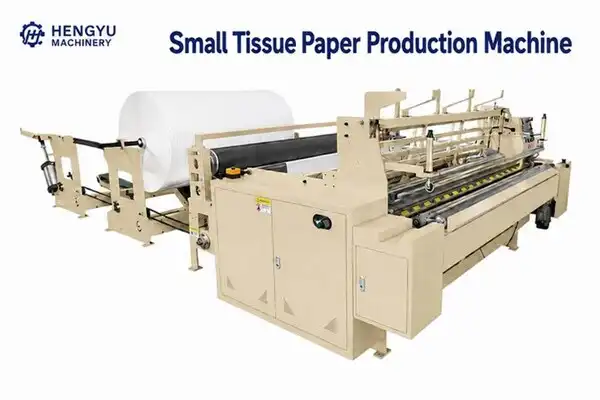
A small tissue paper production machine can generate measurable profit for startups when matched correctly to local demand. Unlike large industrial lines that require heavy capital and sprawling factory space, compact facial tissue converting equipment lets early-stage manufacturers enter the market with lower overhead, faster setup, and a realistic path to break-even. The global tissue paper market exceeded $70 billion in 2023 (Statista), signaling sustained demand. With the right machine configuration, disciplined cost management, and a reliable equipment partner, profitability is not aspirational — it is achievable.
Understanding Small Tissue Paper Machines and Their Profit Potential
What Makes These Machines Commercially Viable?
Modern facial tissue converting lines are not toy versions of industrial systems. For example, HENGYU's high-speed facial tissue converting line works at 50–150 m/min, can handle jumbo rolls up to 1450 mm wide and φ1100 mm in diameter, and produces finished sheets that are 200×200 mm with a variation of only ±2 mm. That level of accuracy is on par with what machines twice its size can do. With frequency modulation and a PLC intelligent control system, operations stay stable without the need for a specialist operator at each station.
Emerging manufacturing regions — including Eastern Europe, the Middle East, Latin America, and North Africa — have used this level of equipment to build businesses that depend on volume without having to pay for full industrial lines. The small size of the machine (5150 × 1400 × 1920 mm) means it can be put to use in areas as small as 70 to 100 square meters, which immediately lowers the facility rental costs from day one.
How Output Translates to Revenue?
One converting line can make thousands of tissue packs in a shift at 150 m/min. When you compare the cost per sheet to local retail or OEM prices, the margin window gets significantly bigger. This is especially true in countries where importing finished tissue carries a logistics premium. When using electromagnetic speed control, less energy is lost during ramp-up and slowdown cycles, which directly lowers your cost per unit of production over long shifts.

Comparing Small vs. Large Tissue Paper Machines: What Fits Startups Best?
The Case for a Mid-Tier Converting Line
Large converting systems, with a web width of 2.7 m or more and multiple lanes of output, are made for businesses that run 24/7 and have dedicated repair teams. That level of scale is financial excess for a new business or a factory adding its second or third production line. A well-defined facial tissue line in the 1450 mm web-width class occupies the productive middle ground, offering almost industrial output within a building size that works for a converted warehouse or a medium-sized factory bay.
Another decision point is between manual and automatic small tissue paper production machine systems. While manual systems are cheaper to buy, they introduce differences in quality and labor variability that eat away at profit margins over time. Automatic folding, pneumatic rotary cutting, and vacuum-assisted web control (built into HENGYU's system with its 7.5 kW vacuum unit and three dedicated air compressors at 5 kg/cm²) make the system less reliant on an operator while maintaining the quality of the cuts.
Each napkin line and facial tissue line serves a different business-to-business market. Choosing the right product group before you define the machine prevents expensive reconfiguration costs later on.
Profitability Factors for Startups Using Small Tissue Paper Machines
Several factors affect whether your converting business makes a consistent profit or loses money because it is not running efficiently.
Here are the main factors that affect success that you should look at before you invest money:
- Raw material sourcing: The price and availability of jumbo rolls determine your cost floor. HENGYU's φ1100 mm roll capacity and 76.2 mm core diameter (customizable) are the same as the standard jumbo roll specifications from nearby paper mills, making it easier to find rolls and buy them in bulk at good prices.
- Energy consumption: About 3 kW of power is used by the main converting line, and an extra 7.5 kW is added by the vacuum system. Compared to older semi-automatic equipment, the electromagnetic speed regulation cuts down on idle-state consumption by a large amount, meaning you'll spend less on utilities each month per ton of output.
- Uptime and maintenance discipline: A line that is up 95% of the time or more makes more money. HENGYU ensures that important parts are easy to view. With tool-free access panels and clearly marked pneumatic lines, your maintenance team only needs minutes to do standard checks instead of hours. The automatic rotary cutter has an electric sharpening system that can be adjusted on a touchscreen, making the blade last longer and reducing unplanned stoppages.
- Quality consistency: Pneumatic point-cut technology and PLC-coordinated folding get rid of the web-break and sheet-burst issues that happen a lot with entry-level 100 m/min machines, protecting both customer happiness and yield rate.
These things affect whether or not your per-pack production cost is low enough to allow for a good profit margin after distribution and packaging.
How to Procure the Right Small Tissue Paper Machine for Your Startup?
Evaluating Suppliers Beyond Price
The purchase price is just a gateway, not a destination. The real return is based on the total cost of ownership, which includes setup, training, spare parts, remote support, and eventual tooling changes. As soon as the container is unloaded, a small tissue paper production machine supplier who only gives you the machine and a basic manual starts to shift hidden costs onto your team.
The way HENGYU structures procurement is set up to remove those friction points. Over 95% of customers finish installation with the help of remote video coaching without requiring an on-site engineer visit. Operators are taught how to do daily tasks like adjusting tension, replacing blades, and using the PLC. The one-year warranty includes free repair of parts that aren't damaged by humans, and the relationship continues after the warranty period ends with lifetime expert support.
Customization and Compliance Considerations
CE and ISO compliance are important when you sell to regulated retail channels or work with large buyers who conduct vendor audits. You can change the configuration of the embossing rollers, the language of the PLC interface (English, Russian, or Arabic), and the electrical specifications (voltage, frequency) while the machine is being made, not as aftermarket modifications. Make sure these needs are clear during the RFQ so there are no gaps in specifications on arrival.
Case Studies: Startups Successfully Profiting with Small Tissue Paper Machines
A middle-sized converting company in Turkey upgraded from a single semi-automatic line to a high-speed 1450 mm class facial tissue converting line. In its first year of operation, the facility increased output per shift by more than 60% while lowering the cost of labor per sheet. The PLC-based quality log made it easy for a new retail chain buyer to document compliance.
In Egypt, an OEM seller set up a similar configuration to help clients in the hospitality industry who needed unique embossed designs. Because the business could switch out embossing rollers without extended downtime, it could meet the needs of different hotel brands from the same line, which helped it get more customers without adding floor space.
A Colombian tissue company that was growing added a second converting line to meet the needs of a regional supermarket chain that wanted private-label tissue. Because it had a small footprint — fitting perfectly in a 90 m² production bay — no facility expansion was needed. The team learned significantly faster thanks to the online installation help and multilingual PLC interface.
Conclusion
The small tissue paper production machine occupies an extremely important position in the industrial world. They produce output similar to an industrial facility, but with a footprint and cost of capital that startups and expanding businesses can realistically handle. Profitability is not guaranteed by the machine alone; you also need to be careful about where you get your raw materials, ensure consistent uptime, check the quality of the output, and find a buying partner who will help you with installation, training, and more. When those things line up, the path from the first shift to a positive margin is shorter than many operators expect.

FAQ
How long does it typically take to recover the initial investment?
Recovery times depend on the number of shifts, structure, and price changes in the market. In areas with moderate jumbo roll prices, operators who run two shifts usually report reaching operational break-even within 12 to 24 months.
Can these machines handle recycled fiber jumbo rolls?
Yes. Both virgin pulp and recycled paper rolls can be used with tension control systems that can be adjusted. Proper tension calibration during setup prevents web breaks when running recycled-fiber stock.
What floor load capacity does the machine require?
The line that HENGYU uses to change facial tissue weighs 2800 kg. Standard industrial floor specifications usually support this load, but older buildings with light-duty slabs should confirm the supporting capacity before installation.
Is the PLC interface available in languages other than Chinese?
Yes. The PLC interface is available in English, Russian, and Arabic, and the operating manual is available in many languages to help diverse operator teams.
What ongoing maintenance does the embossing unit require?
Under normal operating conditions, the steel embossing rollers maintain pattern definition reliably. A deep-clean inspection every 500 operating hours is standard practice for preserving the quality of the emboss.
Request Your Facial Tissue Converting Line Quote from HENGYU
The HENGYU small tissue paper production machine is designed for businesses that need industrial-level output without industrial-scale overhead. With 20+ years of machinery expertise, CE/ISO compliance, multilingual PLC interfaces, and a verified 95%+ remote installation success rate, HENGYU is a trusted supplier serving clients across four continents. Contact our team directly at doris@hytissuemachine.com or visit hytissuemachine.com to request specifications, a factory walkthrough video, or a tailored production line quote.
References
1. Statista Research Department. Global Tissue Paper Market Revenue, Statista, 2024.
2. RISI/Fisher International. World Tissue Market Outlook, Fisher International, 2023.
3. Confederation of European Paper Industries (CEPI). Key Statistics: European Pulp and Paper Industry, CEPI, 2023.
4. Grand View Research. Tissue Paper Market Size, Share & Trends Analysis Report, Grand View Research, 2023.
5. Smithers Pira. The Future of Tissue to 2027, Smithers, 2022.
6. TAPPI (Technical Association of the Pulp and Paper Industry). Tissue Manufacturing: Operational Benchmarks and Energy Efficiency, TAPPI Press, 2022.
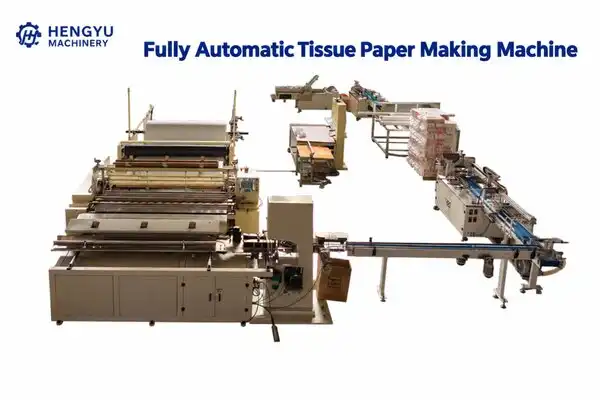
A fully automatic tissue paper making machine is an integrated production line that converts jumbo parent rolls into finished retail products—toilet rolls, kitchen towels, or coreless tissue—with minimal manual input. Unlike semi-automatic setups, this system handles every stage autonomously, from core feeding and embossing to perforation, trimming, and rewinding. For investors entering the tissue converting industry, this technology eliminates excessive labor dependency, reduces per-unit production cost, and delivers consistent roll quality at scale. This guide covers how these machines work, what to look for when buying, and how HENGYU's HY-1575 model supports new and upgrading factories worldwide.
How Does a Fully Automatic Tissue Paper Making Machine Work?
Knowing the steps in the production process helps buyers decide if a machine will work with the way they run their business. Understanding this workflow is essential when investing in a fully automatic tissue paper making machine.
The Core Conversion Workflow
A parent roll up to 2200 mm wide and 1500 mm in diameter is put on the unwinding stand to start the process. Paper web goes through the embossing machine, where designs are pressed into the sheet to make it softer and better at absorbing water. After that, it goes through the perforation station, which makes precise tear lines. After the holes are punched, the rewinding unit wraps the web around a paper core (with an inner diameter of 30–50 mm, which can be changed) or makes rolls with no core at all. Finally, the log goes through the cutting machine, which cuts it into rolls with a finished width of 40–150 mm. The line is finished by the tissue packing machine.
Automation Technologies Inside the Machine
A PLC-based control architecture keeps the HY-1575 from HENGYU in sync with all of its functional units through a touch-screen panel. Variable frequency drives keep the web tension even when the speed changes. This keeps the web from tearing when it's being rewound at up to 200m/min. The auto core feeding method places the cores precisely mechanically, so you don't have to do it by hand between rounds. When a piece of paper breaks, infrared sensors stop the line right away, before the materials start to pile up. The length of the rewind, the number of rolls per log, and the pitch of the perforations are all set digitally, and changes are made in seconds.

Key Features and Benefits of Fully Automatic Tissue Paper Machines
People who are buying machines often only look at the numbers on paper. The difference in daily production output, scrap rates, and user tiredness levels over the course of a full shift show what the difference is in real life. These fully automatic tissue paper making machines offer significant operational advantages.
- High-speed output with low power draw: The machine can reach its top speed of 200m/min while using only 4kw of power. This mix keeps energy costs low even during long production runs, which is a big plus for factories that are trying to make ends meet.
- Precision perforation at ±2mm pitch error: The 3 mm:1 mm perforation line ratio makes sure that every roll has clean, even tear lines. When rolls tear unevenly at retail, it hurts how people think of the brand. This specification directly stops that from happening.
- Coreless roll capability as standard: The machine comes ready to make coreless rolls, which is a type of product that gets higher prices in a number of new retail markets, so you don't have to buy an extra attachment.
- Three embossing configurations: There are three different types of embossing methods that can be customized: steel-wool, steel-rubber, and glue. With the same base machine, makers can aim for different selling price points because each setup creates a unique surface texture and bulk profile.
These benefits directly address the two biggest problems that small and medium-sized converting plants say they have: needing a lot of staff and not knowing what the quality of the rolls will be. When only two to four people are needed to run the whole line, the cost of labor per ton goes down a lot compared to semi-automatic systems that need eight to twelve workers.
Fully Automatic vs. Semi-Automatic Tissue Paper Machines: Which Is Right for Your Business?
To be honest, the answer depends on your monthly volume goal and the amount of money you have available, not on which type of machine sounds more advanced. Choosing a fully automatic tissue paper making machine represents a major shift in production scale.
Where Semi-Automatic Equipment Still Makes Sense?
Semi-automatic lines are easier to buy up front and work well in places where labor is cheap and stable and where the production rate is less than 50 tons per month. By intervening manually between stations, operators can be flexible during irregular production runs or when switching products often without having to re-program.
When Full Automation Pays for Itself?
Once monthly production goals reach 80–100 tons, the difference in labor costs on a semi-automatic line usually becomes bigger than the price difference between the two types of machines within 12–18 months. The HY-1575's touch-screen rewinding length control lets you quickly change formats without having to make any mechanical changes. This makes it useful for private-label makers who have to meet the needs of many clients with different roll specs. The clearest case for upgrading is a factory that processes 100 to 300 tons of material per month on old, semi-automatic equipment. The ROI window is short, and the practical increase starts right away.
How to Choose and Procure a Fully Automatic Tissue Paper Making Machine?
Define Your Production Requirements Before Contacting Suppliers
Figure out what you need for production before you call suppliers. Figure out how many tons you want to produce each day, what width range of finished rolls your market needs, whether coreless production is important to you, and how much floor room you have available. The fully automatic tissue paper making machine takes up 4300 x 3320 x 1700 mm, which is a manageable amount of space in a mid-size industrial bay. Before you ask for a price, make sure you know what your local power source standard is (220V, 380V, or 415V, 50–60Hz). Electrical compatibility affects how long it takes to install.
Evaluate Suppliers on Verifiable Criteria
Use criteria that can be checked to judge suppliers. Ask for CE and ISO 9001 certificates with registration numbers that can be checked when evaluating a supplier. Ask for a video of the plant showing the exact model moving, not just a picture of it in the store. Case studies from clients in the same market are more reliable than general testimonials, so ask for examples from clients in your country or area. HENGYU is certified by CE and ISO 9001, and buyers who can't visit the factory can do pre-shipment video inspections instead.
Understand the Full Cost Structure
Know how much everything costs. A clear quote should list the price of the machine, the cost of shipping it to the port, the FOB or CIF charges, and any extra units that are needed, such as an embossing configuration or a spare parts package. For this type of item, standard payment terms are T/T with a 30% deposit due when the order is confirmed. From the time the deposit is confirmed, the HY-1575 takes 30 to 45 days to be delivered. There is remote video installation help, an English-language user guidebook, and lifetime online technical support. This means that there is no need for local engineering resources during commissioning.
Maintenance Tips and Best Practices for Fully Automatic Tissue Paper Machines
Daily and Weekly Maintenance Tasks
Regular maintenance keeps your investment safe and stops unplanned downtime. At the start of each shift, make sure that all the moving parts and chain drives are well oiled. Once a week, check the edges of circular blades for wear and change them before the obvious damage affects the quality of the cut. At the end of each production day, clean the surface of the embossing roller so that fibers don't build up and lose their depth over time. A fully automatic tissue paper making machine requires consistent care to maintain peak efficiency.
Preventive Maintenance Schedule
Every 500 hours of use, the embossing unit should be deep cleaned, the calibration of the tension monitor should be checked, and the PLC wire harness should be looked at for wear caused by heat. HENGYU offers a quality guaranty for one year and an extra parts package to cover the parts that wear out the fastest during the first few months of use. When an unfamiliar fault code shows up on the touch-screen panel, HENGYU's technical team answers via video call to figure out what's wrong and fix it without having to wait for a worker to arrive on-site. This cuts down on downtime.
Conclusion
Buying a fully automatic tissue paper making machine is a practical and cost-effective way to start making tissues. The HENGYU HY-1575 combines rewinding, cutting, and packing into a single line. It runs on 4kw power and needs 2–4 staff, and it comes with all the paperwork, CE/ISO certification, and online installation support. Whether you are starting your first production line or replacing old semi-automatic equipment, the machine's coreless capability, customizable core diameter, and embossing options will help you make your products stand out from the start.

FAQ
How much floor space does this production line require?
It's 4300mm long, 3320mm wide, and 1700mm high. You should leave more space around the machine so that you can move workers, store raw materials, and move finished goods. A good rough guess for a single-line setup is a total bay area of about 80 to 120 square meters.
Can the machine handle different paper weights?
The machine can handle parent paper with gram weights of 13 to 22g/m². The PLC-controlled tension control system changes the draw speed to adapt to changes within this range. This lowers the chance that the web will break when the grade changes.
What voltage configurations are available?
The machine can work with power supplies that are 220V, 380V, or 415V, and it can handle both 50Hz and 60Hz. When you ask for a quote, make sure you include your facility's supply specifications. This way, the electrical panel will be set up properly before it is shipped.
Is coreless roll production included as standard?
Yes. The HY-1575 comes with the ability to make coreless rolls as standard, so you don't have to buy an extra one. For coreless mode, the minimum parent roll width that should be used is 1300mm.
What does the after-sales support package include?
HENGYU offers a one-year warranty on the machine, a spare parts package with high-wear parts, an English-language operator manual, and free video call technical support for life.
Request Your Custom Quote from HENGYU — Trusted Fully Automatic Tissue Paper Making Machine Manufacturer
Everyone that HENGYU ships a machine to has worked on making tissue machines for more than 20 years. When you buy the HY-1575 fully automatic tissue paper making machine from hytissuemachine.com, it comes with CE and ISO 9001 certification, remote video installation help, and free technical support for life. Send your manufacturing needs and power source details to doris@hytissuemachine.com, and you'll get a full CIF/FOB quote that fits your factory setup.
References
1. TAPPI — Tissue Product Manufacturing: Process Technology and Equipment Overview, TAPPI Press, 2021.
2. Smithers Pira — The Future of Tissue to 2027, Smithers Pira Market Intelligence Report, 2022.
3. FAO — Pulp and Paper Capacities: Survey 2021–2026, Food and Agriculture Organization of the United Nations, 2022.
4. PITA (Paper Industry Technical Association) — Paper Technology Journal: Automation in Tissue Converting, Vol. 63, 2022.
5. Grand View Research — Tissue Paper Market Size, Share & Trends Analysis Report, Grand View Research, 2023.
6. EUCEPA — European Paper Week Technical Proceedings: Energy Efficiency in Tissue Machinery, European Confederation of Pulp, Paper and Board Industries, 2021.
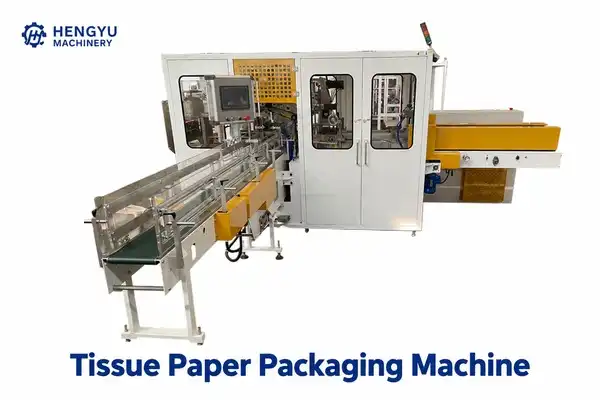
A tissue paper packaging machine is a high-precision automated system designed to wrap, seal, and bundle finished paper products — including facial tissues, napkins, V-fold hand towels, and toilet rolls — into retail-ready formats. In modern tissue converting facilities, these machines eliminate critical bottlenecks: high labor dependency, inconsistent seal quality, and sluggish throughput that manual packing simply cannot resolve. By integrating advanced servo motion control, optical sensing, and PLC-driven automation, today's wrapping equipment ensures every pack is uniformly sealed, hygienically protected, and shelf-ready for competitive retail and hospitality markets worldwide.
Understanding Where Tissue Paper Packaging Machines Are Applied
Automation in tissue paper packaging machines can be used for a lot of different types of products. High-speed soft-pack lines for face tissues are needed by store chains. Hotels and planes want unique wraps for amenity packs that are small and look good. For configurations with more than one roll of toilet paper, industrial distributors need strong secondary bundling. To meet hygiene standards, healthcare facilities put hermetic sealing at the top of their list of priorities.
Modern film wrapping systems are really flexible because they can work in all of these areas on a single base. A factory that makes face tissues for export in the morning can quickly change the set-up of the same line to make V-fold hand towels within 15 to 20 minutes, without having to change any tools. Because they can work with different types of tissue, big tissue makers in Southeast Asia, South Asia, Latin America, and the Middle East are improving the facilities for packing tissues that come after them.

Types and Features of Tissue Paper Packaging Machines
Not every tissue paper packaging machine is the same. There are three main levels of automation on the market, and each one is best for a different size of operation. Manual and semi-automatic systems require significant operator involvement in feeding, positioning, and sealing. They suit low-volume or startup operations but cannot sustain the OEE targets demanded by facilities running multiple shifts. Fully automatic lines, by contrast, handle feeding, wrapping, cutting, and ejection without human intervention — making them the standard for any factory processing thousands of packs per hour.
Horizontal flow wraps are the most common type of machine used to make soft-pack face tissues because they are fast and good at using film. Sleeve wrappers help bundle more than one roll. Some napkin or pocket tissue sizes can be handled by vertical configurations because gravity-assisted feeding makes the consistency better.

The HENGYU HY-T300V exemplifies what a high-performance fully automatic system delivers. Here are the core technical capabilities that define it:
- 13-Axis Full Servo Control: All of the motion axes work together perfectly, including feeding, film pull, making, closing, and cutting. This gets rid of the mechanical time drift that makes cam-driven old systems rejects.
- Up to 80 Packs/Min Stable Throughput: The machine keeps this rate even during 24 hours a day, seven days a week, matching the output of folding equipment further up the line to avoid jams.
- 3D Soft Pack Wrapping with CPP Film: The system uses biodegradable PLA film configurations and CPP heat-sealing film that is 0.035 to 0.05 mm thick to make packages that look tight and are hermetically sealed.
- Intelligent Fault Detection: Optical sensors and PLC logic find double-feeds, paper jams, and changes in height in real time, stopping the machine right away to protect material output.
These features collectively address the most common failure modes that equipment directors cite when justifying capital replacement decisions.
Benefits of Using a Tissue Paper Packaging Machine for B2B Clients
The fastest return on investment is in making production more efficient. When compared to hand-packing, an automated tissue paper packaging machine cuts the amount of work that needs to be done by hand by up to 70%. This is backed up by HENGYU customer installations in multiple markets. When operators are freed from doing the same wrapping jobs over and over, they can work on things like quality control, inventory management, and logistics planning.
Consistency in packaging directly protects the value of a business. Every pack made by a servo-driven device has the same seal security, fold alignment, and size accuracy. This level of uniformity is a must for OEM providers that work with European retail groups or hotel procurement offices; buyers spell it out in the contracts.
Sustainability compatibility is becoming more and more of a must-have for purchases. The HY-T300V's PID-controlled sealing system can work with eco-friendly films that have narrower thermal windows. This means that factories can switch from standard CPP to materials that can be recycled or broken down naturally without having to buy new equipment. This future-proofs capital investments as regional rules on packaging get stricter in the EU, North America, and some parts of Southeast Asia.
The cumulative effect of labor savings, reduced material waste from intelligent fault detection, and lower reject rates typically places the payback period for a fully automatic line within 18–24 months — a threshold that satisfies most manufacturing finance approval processes.
Key Considerations When Procuring a Tissue Paper Packaging Machine
At this level, many people have a say in the tissue paper packaging machine procurement choice. Equipment directors look at OEE and OPEX measures, manufacturing VPs accept the capital case, and finance controllers carefully look over the ROI model. To deal with all three, the way you buy things needs to be based on checked technical data instead of store specs.
Aligning production ability is the first step. The output of the packaging machine must be the same as or slightly higher than that of the folding equipment upstream. Even a 10–15% difference can cause buildup further downstream, which hurts the efficiency of the whole line.
Documentation that shows compliance with regulations is very important for producers who want to sell. Getting into the European market requires CE approval. UL compliance takes into account the needs of North America. Before choosing a supplier, factories that serve global retail outlets should ask for full compliance dossiers.
After-sales equipment needs just as much attention. Total cost of ownership over a 7–10 year equipment lifecycle depends on things like remote diagnosis, having a three-year supply of spare parts on hand, bilingual HMI and user instructions, and the supplier's track record in your area.
Maintenance Tips and Troubleshooting for Sustained Machine Performance
Structured preventive maintenance, not reactive repair, is what makes sure that tissue paper packaging machines are always up and running. As part of daily tasks, you should clean the film guides and sealing bar surfaces to get rid of any leftover adhesive. You should also check the optical sensors for paper lint buildup and make sure the tension controller is calibrated. Weekly checks cover lubrication points on servo drive mechanisms and inspection of cutting blade wear. Monthly audits should assess PLC parameter logs for repeated trouble codes that could mean a part is wearing out before it breaks.
High-speed film wrapping equipment often has problems with film tracking drift (usually roll misalignment or inconsistent tension), intermittent seal failures (temperature controller drift or contaminated bars), and double-feed events (optical sensor sensitivity recalibration). Instead of waiting for outside help, operators who have been trained on these diagnostic paths can fix most problems in minutes.
HENGYU's remote support infrastructure resolves over 95% of installation and operating problems without the need for an on-site visit. This is especially useful for sites in Latin America, South Asia, and Southeast Asia, where European competitors' response times can take weeks.
Conclusion
Automated tissue paper packaging machine technology has become the backbone of competitive tissue manufacturing around the world. The right package system gets rid of the problems that limit output, raise labor costs, and make it hard to keep products consistent, whether it's for high-volume retail soft-pack production, hotel gift wrapping, or industrial multi-roll bundling. The HY-T300V from HENGYU has been tested and proven to work at 80 packs per minute with 13-axis servo precision, intelligent fault detection, and multi-film compatibility — meeting all B2B packaging needs with a proven return on investment within 24 months.

FAQ
Can the machine handle biodegradable or PLA films?
The HY-T300V has PID-controlled sealing elements that can work with eco-friendly films that have narrower thermal sealing windows. Facilities that switch from normal CPP to biodegradable materials don't have to buy new tools to do it.
What is the typical size changeover time?
The servo-driven format recall system lets operators change between tissue dimensions (120–360 mm length range) in 15–20 minutes, without having to make any manual tooling changes.
What certifications does the machine carry?
The HY-T300V meets the requirements of CE and ISO9001. Facilities that serve retail markets in Europe, North America, and other countries can get full compliance documents.
How does HENGYU support customers in remote regions?
HENGYU offers lifetime remote technical support, which includes video guidance, real-time diagnostics, and HMI interfaces that can be used in multiple languages. On-site engineering setup is offered for the first installation and training of operators.
What is the expected sealing knife lifespan?
When set to the right temperature and maintained according to the manufacturer's instructions, high-chromium steel sealing knives can usually be used for 6 to 12 months before they need to be fixed.
Get a Customized Packaging Solution from HENGYU
HENGYU specializes in high-performance tissue paper packaging machine solutions built for serious production environments. The HY-T300V delivers 80 packs per minute, 13-axis servo precision, and intelligent automation trusted by tissue manufacturers across four continents. As a leading manufacturer with more than 20 years of engineering expertise, we offer CE-certified equipment, lifetime technical support, and tailored configurations for your specific SKU needs. Contact our technical team at doris@hytissuemachine.com or visit hytissuemachine.com to request a sample pack test or project consultation.
References
1. TAPPI (Technical Association of the Pulp and Paper Industry). Packaging Technology and Converting Equipment Standards. TAPPI Press, 2022.
2. Smithers Pira. The Future of Tissue to 2027: Market Forecasts and Technology Trends. Smithers Group, 2022.
3. Pack Expo International. Advances in Automated Packaging Machinery for Consumer Paper Products. PMMI, 2023.
4. Tissue World Magazine. Global Tissue Converting and Packaging Technology Review. Tissue World, 2023.
5. McKinsey & Company. Automation and Labor Productivity in Consumer Goods Manufacturing. McKinsey Global Institute, 2022.
6. ISO. ISO 9001:2015 Quality Management Systems — Requirements for Machinery Manufacturing. International Organization for Standardization, 2015.
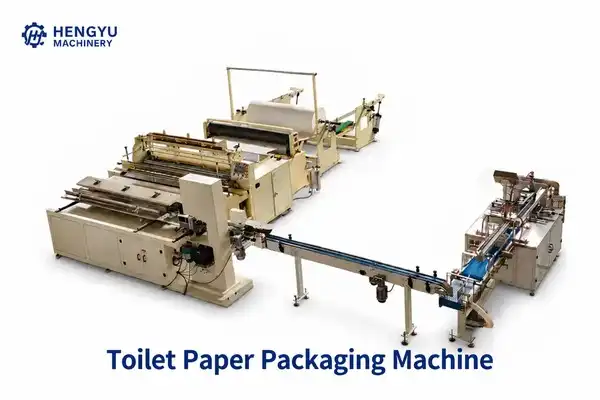
A toilet paper packaging machine is automated industrial equipment that groups finished tissue rolls into retail or wholesale bundles, then seals them inside protective film bags. The process moves through several coordinated stages: roll infeed, count grouping, bag insertion, sealing, and discharge. Modern systems use PLC controllers to synchronize each stage, which keeps cycle times consistent and reduces material waste. Machines like the HENGYU HY-4424A handle 2 to 18 rolls per pack at 6–10 packs per minute, supporting both single and double-layer configurations for retail supermarket packs, family multi-packs, and bulk distribution bundles.
Understanding the Toilet Paper Packaging Process
Before you judge a bundle packer, it's helpful to know what goes on inside the machine during each production cycle.
Step-by-Step Workflow
Rolls come in from the log saw conveyor belt and go into the infeed lane. A counting and grouping unit puts them in the right order, like 2x3 for a retail pack of 6 rolls or 3x4 for a family pack of 12 rolls. The group then moves on to the bagging station, where an OPP/PE composite bag that has already been made is opened and wrapped around the bundle. The open end is sealed with a heat-sealing bar, and the final pack moves to the outfeed belt. A shared PLC time signal makes sure that no step moves faster than the next.
Machine Types at a Glance
Fully automatic systems are the usual choice for medium to large converting companies because they handle everything from feeding in to feeding out without any help from an operator. Semi-automatic models need to be loaded by hand, but they cost less up front and are better for smaller jobs or test runs. When you stack rolls vertically, they stand up straight, which works well with storage robots that move pallets, but when you stack rolls horizontally, they lie on their sides, which looks good on standard store shelves. Which of these orientations you choose will depend on the needs of your downstream logistics and retail partners.

Benefits of Using an Automatic Tissue Bundle Packer
When you switch from manual or semi-automatic bagging to a fully automatic roll packaging system, such as a toilet paper packaging machine, you can see improvements in cost, quality, and labor. Here are the main practical benefits you should think about:
- Labor efficiency: One person can oversee the whole packing line because the machine packs, seals, and groups the items on its own. This directly cuts down on the number of people needed on the packaging floor and moves skilled workers to more important jobs.
- Packaging consistency: Variability that comes with hand-packing is taken care of by automated tension control and heat-seal time. Every bundle that comes out of the machine has the same seal integrity and bag tightness, which is important for how the brand looks in stores and for export compliance.
- Low energy draw: The HY-4424A uses only 3 kW of power, which is about the same as a home device, but it has industrial output. That level of efficiency means that the cost of electricity per pack is much lower over the course of a full production shift.
- Reduced film waste: Systems that use pre-made bags only use the film they need for each cycle, while shrink-wrap systems cut from a roll and often use too much material around the edges.
Key Features and Technologies Behind Modern Packaging Equipment
The quality of the control system and mechanical parts of an automatic bundle packer determines how reliable it is.
PLC Control and Touchscreen Interface
A Programmable Logic Controller (PLC) controls the speed of the motors, the timing of when the bags open, the temperature of the seal bars, and the speed of the discharge conveyor in real time. Users connect with an HMI touchscreen, which lets them choose from saved product recipes for different pack combinations. So, there is no need to make any mechanical adjustments by hand, and the changeover time is cut down by a lot.
Multi-Format Flexibility
The HY-4424A can handle packages from 240 mm x 240 mm x 120 mm (small retail) to 680 mm x 360 mm x 240 mm (bulk wholesale). It can also switch between vertical and horizontal modes and single and double layers. That range means that one machine can do the work of two or three specialized tools. Using two layers of packing makes bigger bundles more rigid, which lowers the risk of damage during shipping by sea. This is an important detail for traders who are sending goods to faraway markets.
Eco-Compatible Packaging Materials
The machine can handle OPP/PE hybrid bags, and the method for feeding the bags can be changed to work with a toilet paper packaging machine for PLA-based or other biodegradable film types as target markets' environmental laws change. It's getting more and more important for brands that sell in the European Union or North America to stay on top of packing material regulations.
How to Choose the Right Bundle Packer for Your Operation?
Match Capacity to Order Volume
About 360 to 600 packs can be made by a machine that can do 6 to 10 packs per minute. Before making a decision, compare that result to your current log saw speed and the number of pallets that can be made downstream. If one stage moves faster than the next, the bottleneck moves upstream or downstream.
Evaluate Footprint and Integration
The HY-4424A takes up 7,800 x 1,600 x 1,600 mm of space, which isn't very big for a machine that can handle this range of formats. If the infeed height doesn't line up with your current log saw conveyor, you may need to pay a lot of money for special bridge conveyors. Before installation, you should also make sure that the signals from the packing machine's PLC will work with your cutting tools. When looking for providers, give more weight to those that offer video factory checks, written lists of spare parts with clear prices, CE and ISO certification, and online diagnostic help. For long-term operational stability, a 12-month warranty with a clear path to escalation is more important than the machine's price tag.
Maintenance Tips to Ensure Longevity and Optimal Performance
Regular maintenance keeps your toilet paper packaging machine working at full capacity and avoids unplanned breaks during busy production times.
Daily tasks include wiping down the seal bar and bag-open fingers to remove adhesive residue, checking the pressure in the pneumatic line (the goal is 0.5 to 0.8 MPa), and making sure the infeed conveyor belt moves in the right direction.
Weekly tasks cover lubricating guide rails and chain drives, checking the state of heat-seal elements, and looking through PLC error logs for any fault codes that keep showing up. Problems like a weak seal are generally caused by a worn seal element or the wrong temperature setting, not by a big mechanical failure. Most of the time, feeding jams happen because the HMI recipe chooses the wrong bag size. Dealing with these issues at the software or consumable level keeps you from having to replace parts that aren't needed. When problems are too big for an operator to fix, call the manufacturer's technical team for remote PLC diagnostics before setting up a visit.
Conclusion
For a converting factory to be able to serve retail, family, and wholesale channels from the same line, they need a well-designed toilet paper packaging machine. The process—from feeding the rolls to grouping, bagging, sealing, and releasing them—works smoothly when there is a strong PLC design and long-lasting mechanical parts. Growing tissue brands need machines that can handle 2 to 18 rolls per pack, work in both vertical and horizontal modes, and use little power. These machines give them the flexibility and cost-effectiveness they need. Picking the right tools and regularly maintaining them saves both the quality of the finished result and the value of the investment over time.

FAQ
How fast does a toilet paper packaging machine run?
The HENGYU HY-4424A can make between 6 and 10 packs per minute, based on how the packs are set up and the size of the rolls. Because grouping and putting the bag in takes a little more time, bigger packages with more rolls per pack usually run a little slower than smaller retail packs.
Can one machine handle both retail packs and bulk wholesale bundles?
Yes. The HY-4424A can pack anywhere from 2 to 18 rolls at a time and can change between single-layer and double-layer setups. In that range, you don't need a different machine for each style, like 4-roll packs for convenience stores, 12-roll packs for families, or bulk packages for distributors.
How much power does an automatic bundle packer consume?
The HY-4424A only uses 3 kW of power, which is very little for a machine with this much power. Running a full 8-hour shift uses about 24 kWh of electricity, which is a low enough cost that the business can still make money even when it's busy every day.
Is the machine compatible with eco-friendly packaging film?
Depending on the film thickness and tensile requirements, the bag-feed system can be tested to see if it can be used with PLA-based biodegradable bags instead of OPP/PE bags.
Get a Tailored Quote from HENGYU — Trusted Toilet Paper Packaging Machine Manufacturer
For more than 20 years, HENGYU has been designing and building machinery for factories that turn tissue into other materials in both new and old markets. The toilet paper packaging machine for sale through hytissuemachine.com comes with a 12-month guarantee, a clear list of spare parts, and remote PLC diagnostic help. It is also CE and ISO certified. Please email our technical team at doris@hytissuemachine.com to talk about your pack formats, production volume, and integration requirements.
References
1. Packaging Technology and Science — Wiley, 2022
2. TAPPI Journal: Tissue and Nonwovens — TAPPI, 2021
3. Food and Consumer Packaging Machinery: Market Intelligence Report — PMMI, 2023
4. Automation in Packaging: PLC Integration and Industry 4.0 Readiness — Packaging World Magazine, 2022
5. Global Tissue Market Outlook and Converting Equipment Trends — Smithers Pira, 2023
6. Flexible Packaging Association: Material Sustainability and Film Compliance Guide — FPA, 2022
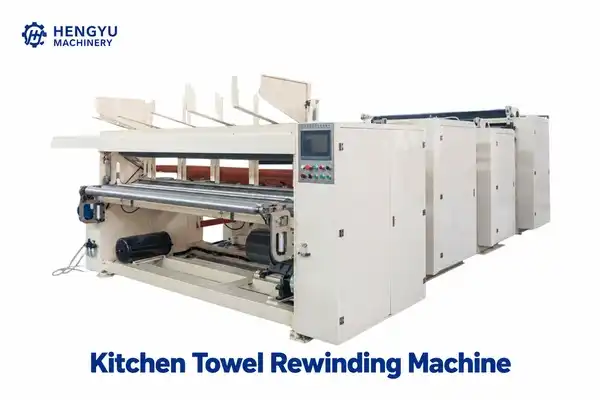
Choosing the right kitchen towel rewinding machine directly shapes your factory's output capacity, labor costs, and product consistency. For mid-scale converting facilities running 20–50 tons per day, the decision involves much more than comparing price tags. You need to evaluate working width, control system intelligence, dual-product switching capability, voltage compatibility, and after-sales coverage — all at once. This guide walks procurement managers, process engineers, and OEM partners through every layer of that decision, with reference to the HENGYU HY-1575 as a concrete benchmark.
Understanding Kitchen Towel Rewinding Machines and Their Core Features
The most important part of any converting line is the kitchen towel rewinding machine. At a steady high speed, it unwinds large-diameter giant rolls, embosses and perforates the paper, and then rolls it back up into consumer-sized logs.

What Happens Inside the Machine?
A big roll (up to 1500 mm) is fed into the embossing unit through tension-controlled zones by the unwinding section. Steel-to-steel and steel-to-rubber embossing tools add structure and hold plies together. It has a perforation station with tungsten-grade anvil blades that cuts sheets to the same length, and a rewinding mandrel that shapes the finished log to the right diameter before the log saw cuts it to length.
Automatic vs. Semi-Automatic Configuration
Rewinding, cutting logs, and wrapping are all done at the same time on fully robotic lines, which are run by a PLC. For semi-automatic setups, moving logs from one place to another must be done by hand. Full automation is the standard for sites that want to move 20 tons or more per day. This gets rid of the need for people to move between stations and the variation that causes roll-diameter drift.
Important technical standards that you should ask any seller for before making a choice are:
- Working width: 1800 mm, which is the width of most large rolls used by converts in North America and Europe.
- Production speed: The production speed of 100 to 250 m/min is good for medium-sized jobs without making the machine too specific.
- Perforation accuracy: For retail-grade products, the industry standard is for sheet-length tolerance to be within ±1mm.
- Control system: Delta PLC with HMI touch panels lets you remember parameters between products.
- Finished roll diameter range: 80–150 mm; one machine can handle SKUs for retail, food service, and business restrooms.
These standards are based on what converters actually need, not on possible maximums. TAPPI (2022) says that tension instability during high-speed rewinding is the main reason why roll density isn't right in tissue converting operations.
Key Criteria to Evaluate When Choosing a Tissue Roll Rewinder
There are more things on the buying list for a kitchen towel rewinding machine than just horsepower and output. Upstream compatibility and facility limits should both be given the same amount of weight.
Dual-Product Switching Efficiency
Changeover time between SKUs is a straight cost line for companies that make both kitchen towels and toilet paper. Check how fast the embossing units can be switched out, whether changing the hole pitch requires changing tools or is controlled by parameters, and how long it takes for the line to settle down after the core diameter is changed. A Delta PLC-controlled machine can save pre-set recipes and quickly call them up, which virtually eliminates waste during changeovers.
Electrical and Facility Compatibility
Three-phase 240V/60Hz is what most businesses in North America use. A step-up transformer or a motor specification that was made by the mill is needed for standard machine power of 380V/50Hz. Make sure of this before you sign any buy contracts. To exactly deal with this, the HY-1575 lets you change the voltage settings. Other building needs include a 3HP air compressor that delivers at least 5 kg/cm², a floor that can hold a 5.5-ton machine, and enough space around a 5800x1900x1920mm footprint.
Certification and Compliance Requirements
The basic requirement to enter the European market is to have a CE mark. For installations in North America, UL and CSA certifications are important. Make sure that the supplier's certificate of compliance covers the model and configuration you want to buy, not just a general plant certificate.
Comparing Leading Tissue Converting Equipment in 2025
Suppliers from Italy, Germany, China, and Taiwan are in the global tissue machinery market. Italian and German names are more expensive and have strong after-sales networks across Europe. In the last ten years, Chinese makers have made a lot of progress in closing the technology gap. Their low prices now make full-line automation possible for mid-scale converters.
The HY-1575 from HENGYU is in the middle to high speed range. It has a working width of 1800 mm, a top speed of 250 m/min, two embossing units, and Delta PLC control, which are all features that are similar to European equipment but require a lot less capital. Concerns about after-sales service have generally made it harder for Western markets to buy Chinese machinery. The 1-year guarantee with free part repair and lifetime remote technical help take care of those issues.
For OEM partners that make Amazon private-label brands, the kitchen towel rewinding machine's perforation length can be changed from 90 to 110 mm, finished core sizes can be changed from 38 to 55 mm, and embossing patterns can be switched out. This means that a single asset can be used for multiple retail programs without having to spend money on new tools.
Maintenance, Troubleshooting, and Operational Safety
A kitchen towel rewinding machine should have preventative maintenance plans that take care of four things: the tension roller bearings, the piercing blade wear, the alignment of the embossing cylinder, and the tuning of the PLC sensors. If you don't do any of these, the others will happen faster.
In a normal two-shift work environment, tungsten piercing blades need to be inspected every 4–6 months. When the temperature changes a lot, the pressure settings on the embossing wheel move around. This is a regular problem in places that don't have climate control. On the HY-1575, the Delta PLC system keeps track of operational parameters, which lets you find drift before it makes product that doesn't meet specifications.
To meet safety standards, all nip points must have physical guarding around them, emergency stop circuits must be able to be reached from multiple operator positions, and photoelectric sensors must stop the line if paper breaks while it's moving. These improvements are not extras that can be chosen, they are basic needs for CE approval and come with the HY-1575.
Procurement and Sourcing Considerations for B2B Buyers
When you buy a kitchen towel rewinding machine from the maker directly, you skip the middleman and get direct access to tech help during configuration. Authorized area dealers can get extra parts to you faster, which is more important once the machine is up and running than when you first bought it.
When looking at different suppliers, make sure you ask for a live video demonstration of the material you want to use, not just a sample. Get a list of installed machines in the area you want to go to and talk to at least two running sites about them. Make sure that spare parts for wear items like blades, embossing sleeves, and PLC modules are available. Check to see if the supplier's engineering team can do remote diagnostics through a video link during business hours, taking into account different time zones.
When you place an order for this kind of gear, you usually pay a deposit, then make two payments over the course of production, and finally pay the balance against the bill of lading. Letters of credit are often used for first-time purchases.
Conclusion
For medium-sized changing businesses, it's smart to buy a kitchen towel rewinding machine that can handle both kitchen towels and toilet paper on the same run. Dual-product switching efficiency, electrical compatibility, control system intelligence, certification coverage, and the ability of the supplier to help after the sale are the most important factors. The HENGYU HY-1575 can handle all of these in a single, well-known configuration. Use the criteria in this guide to make sure that any machine you're thinking about meets them, and talk to a seller who can show you how well their machine works with your material before you make a decision.
FAQ
Can one machine produce both kitchen towels and toilet tissue?
Yes, both types of products can be made on the kitchen towel rewinding machine with a customizable perforation pitch, interchangeable stamping units, and a finished diameter range of 80 to 150 mm. The HY-1575 is intended to produce two different types of goods without needing a second conversion line.
What electrical supply does the machine require in North America?
At 380V/50Hz, this is how it normally works. The seller must set up the motor and control panel so that they work with 240V/60Hz three-phase facilities in North America. Before you place an order, make sure you have this detail in writing.
How long does a changeover between product types take?
It takes less than 30 minutes to change parameters when you use Delta PLC recipe saving. Depending on the operator's experience, physical stamping unit swaps take an extra 1–2 hours, which includes stability time.
What kinds of licenses do I need?
CE is needed for markets in Europe. Installations in North America need to be certified by UL or CSA. Ask for the actual certificate papers, not just a promise to give them to you.
Is remote installation support enough?
More than 95% of HENGYU customers finish installation with the help of remote video guidance. For complicated multi-line setups, testing can be done on-site.
Get a Customized Quote from HENGYU — Trusted Kitchen Towel Rewinding Machine Manufacturer
Since more than 20 years ago, HENGYU has helped tissue conversion businesses in North America, Europe, Southeast Asia, and the Middle East. With its 1800mm working width, Delta PLC intelligence, dual embossing, and voltage customization, the kitchen towel rewinding machine HY-1575 has everything a mid-sized converting facility needs to run two SKUs on a single asset. To get a technical quiz and live example, email doris@hytissuemachine.com or go to hytissuemachine.com and ask for them.

References
1. TAPPI — Tissue and Nonwovens Technology Division Annual Report, 2022.
2. Packaging Digest — Automation Trends in Tissue Converting Operations, 2023.
3. European Committee for Standardization (CEN) — EN ISO 11148: Machine Safety Standards for Paper Converting Equipment, 2021.
4. Tissue World Magazine — Global Tissue Machinery Market Review, 2023.
5. AFNOR / ISO — ISO 9001:2015 Quality Management Systems — Requirements, 2015.
6. ProPak Asia Conference Proceedings — Flexible Converting Lines for Dual-SKU Tissue Production, 2023.
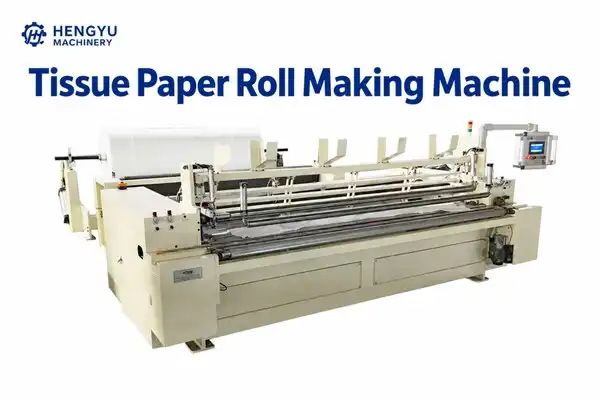
Choosing the right tissue paper roll making machine requires matching your daily output targets, automation needs, and total cost of ownership with the right converting equipment. Whether you run a 30-person rewinding plant in India or a growing tissue-converting operation in Southeast Asia, the machine you select determines your labour costs, product consistency, and long-term profitability. This guide walks through every factor that matters — from production speed and PLC automation to after-sales support — so you can make a confident, well-informed procurement decision.
Understanding Your Business Needs and Decision Scenarios
You need to be honest about where your business is now and where you want it to be in two years before you look at any conversion tools.
First, figure out how much work you need to do each day. Most mid-sized rewinding factories aim for between 1.5 and 3 tonnes per day. It's possible to make up the difference with a high-speed rewinder that works at 220 m/min without adding more workers. A report from 2022 by the RISI tissue industry says that 18–25% of all operating costs in Asian converting facilities are related to labor. This means that automation pays for itself faster than most operators think.
Planning a budget should include more than just the price of the item. Take into account how much energy is used, how easy it is to get extra parts, and how much unexpected downtime really costs. A machine that costs less up front but breaks down a lot will eat away at profits faster than a more expensive one that needs to be serviced at regular times.
Last, figure out what your product mix is. Do you need a machine that can do both paper towels and toilet paper? Can it handle both standard cored forms and rolls that don't have cores? Answering these questions before you ask for quotes will help you avoid costly problems where machine capabilities don't match market demand.

Key Criteria to Evaluate Tissue Paper Roll Making Machines
Once you know what you need, use these technical and operational standards to judge the machines that you are considering.
Automation Level and Throughput
Manual rewinders need constant attention from the operator and make the diameter of each batch different. Some routine jobs are cut down by semi-automatic models, but core changes still need to be made by humans. Fully automatic tissue-converting lines with PLC clever automation can unwind, control tension, feed cores, seal tails, and cut logs with little to no help from a person. When comparing comparable shift hours, the difference in output between fully automatic and fully manual setups can be more than 40%.
Critical Mechanical Components
Three parts of a tissue paper roll making machine rewinder are very important to its dependability: the unwinding unit (which keeps the tension stable at high speeds), the embossing and perforation station (which keeps the design the same across the width of the roll), and the log saw or saw-cutting device (which keeps the dimensions accurate at high throughputs). Dynamic-balance-verified rollers rated to G2.5 vibration standards make machines run more quietly, wear out more slowly, and make finished rolls that are more uniform.
Energy Consumption and Sustainability
Modern changing lines use a lot less power because they have energy-efficient drives and regenerative brakes. In places like India, the Middle East, and Vietnam, where the cost of energy is going up, buyers should ask for certified figures on how much power is used per ton of output, not just the total number of installed kilowatts.
Comparing Popular Types and Equipment Configurations
Rewinding Machines vs. Napkin Converting Lines
Some mechanical parts of tissue paper rewinders and napkin machines are the same, but they work with very different SKUs. A rewinder takes large-format giant mother rolls and turns them into toilet paper rolls or kitchen towel logs for regular people. A napkin line cuts, folds, and stacks paper goods. If both types of products are in your sales mix, you should plan for two separate lines instead of one line that can be used for both.
Manual vs. Fully Automatic Converting Lines
Startups with little money and low daily output can use manual and semi-automatic tools. When daily production goals are higher than one ton and workers are hard to find, fully robotic lines become the most cost-effective option. The HENGYU 1575 Model rewinder can go up to 220 m/min and has an automatic core pulling system. It is made for medium-sized companies that want to increase output without hiring more people.
Jinhao, Geset, Fuji, and Valmet are some well-known companies in this area. They all have their own skills when it comes to servo control, energy management, and regional after-sales networks. As important as the top speed specs are the guarantee terms, the uptime rates that have been recorded, and the wait times for spare parts.
Practical Considerations for Procurement and After-Sales Support
When people look for a tissue paper roll making machine converting line on sites like Alibaba International or at trade shows like the China International Paper Technology Exhibition, they can directly contact many suppliers. For foreign buyers, video factory acceptance testing (where the supplier shows the machine going at its rated speed with your paper grade) is now a normal step before the shipment.
Before you sign, here are the main procurement checkpoints you should make sure of:
- Export documentation and CE compliance: Machines that are going to be sold in countries that check imported goods need to be marked with an approved CE mark and be correctly classified by HS code.
- Spare parts availability: Check to see if spare parts, like cutting blades, embossing rollers, and closing tape heads, can be bought locally or will be shipped within a certain amount of time.
- Remote commissioning capability: If your supplier has engineers who can help your machine operator set up via video call, you won't have to pay for expensive on-site visits for routine calibration issues.
- Voltage compatibility: Make sure that the machine's electrical requirements (AC380V, 50Hz is common in most Asian markets) are compatible with the power source at your facility so that you don't need to buy a transformer.
These checkpoints can stop the most common problems that happen after installation and hurt ROI in the first year of use.
Case Studies and Real-World Applications
A medium-sized turning company in Maharashtra, India, switched from a semi-automatic rewinder that could handle 120 m/min to a fully automatic line that could handle 220 m/min in 2023. Within three months of opening, the plant cut the amount of work needed per roll by about 35%, and daily output went from 1.2 tons to just under 2 tons on a single shift. It wasn't just the speed rate that made the difference; it was the automatic core pulling system that got rid of the backlog at the core-change station.
High-density winding for jumbo roll tissue (JRT) dispensers was switched on by a commercial tissue converter in the UAE that works with hotels. By setting up their rewinder for coreless formats with tighter winding tension, they were able to make each roll last longer in bathrooms with a lot of use and cut down on the number of times they had to be changed, which was an immediate selling point for their hotel clients.
Buyer's pre-purchase checklist:
- The daily output goal was checked against the machine's estimated speed and efficiency factor.
- Raw paper grade (GSM range, width) checked against machine specs
- The types of products (toilet paper, kitchen towels, coreless, and cored) and how they can be set up on the machine
- After-sales terms, like guarantee time, remote help, and price for spare parts, are written down in the contract.
- Before the deposit is made, the payment and shipping terms (FOB, CIF, inspection procedure) are agreed upon before the deposit is made.Conclusion
Choosing the right tissue paper roll making machine is a very important business choice that will have long-lasting effects on output, labor efficiency, and product quality. The best way to move forward is to match your daily volume, product mix, and level of automation readiness to a machine that has been shown to have stable speed, reliable PLC control, and a provider that will be there for you after the machine is up and running. With a production speed of 220 m/min, a capacity of 1800 mm for large rolls, and an automatic core pulling system built in, HENGYU's 1575 Model rewinder is perfect for mid-sized turning businesses that want to grow without hiring more people.

FAQ
How do I calculate the right production capacity for my factory?
To find the machine's net efficiency rate, which is usually 75–85% of its stated speed in real life, multiply your daily output goal in kilograms by the number of hours you plan to run it. Up to two tons of paper can be produced each day by a 220 m/min rewinder that works at 80% efficiency for eight hours. This depends on the width of the rolls and the weight of the paper.
What maintenance tasks reduce unplanned downtime most effectively?
Regular checks for piercing blade wear, cleaning of high-speed shafts, and tension roller alignment catch the most common failure modes before they stop the machine. When they are used all the time, tungsten steel piercing blades usually need to be fixed every four to six months.
How does PLC automation affect product consistency?
Tension management controlled by a PLC keeps the pressure constant during the whole unwinding and rewinding cycle. This stops the difference in density between the inner and outer layers of a finished roll that can't be safely avoided by adjusting the tension by hand. This directly improves the uniformity that sellers and store customers see.
Partner with HENGYU for Your Next Tissue Converting Upgrade
Manufacturer of tissue paper roll making machines HENGYU has more than 20 years of experience in the business. They offer CE-certified, fully changeable conversion lines that are made for medium to large-scale tissue operations. The 1575 Model has a proven 4,000 kg industrial frame and can go at 220 m/min. It is also automated with a PLC and has automatic core pulling. When you buy a machine, it comes with lifetime technical support and remote setup help. Reach out to our team at doris@hytissuemachine.com or visit hytissuemachine.com to get a technical plan that fits your business needs.
References
1. RISI / Fisher International. Tissue Market Intelligence Report. Fisher International, 2022.
2. ISO. ISO 1940-1:2003 — Mechanical Vibration: Balance Quality Requirements for Rotors. International Organization for Standardisation, 2003.
3. ASSOCHAM India. FMCG and Paper Products Industry Outlook Report. ASSOCHAM, 2023.
4. Henan Hengyu Machinery Co., Ltd. Tissue Paper Roll Making Machine — Product Specification (1575 Model). HENGYU, 2024.
5. TAPPI. Tissue Paper Manufacturing and Converting: Technical Guidelines. TAPPI Press, 2021.
6. Smithers Pira. The Future of Tissue to 2027. Smithers, 2022.
- 1
- 2
- 3
- 4
- 7
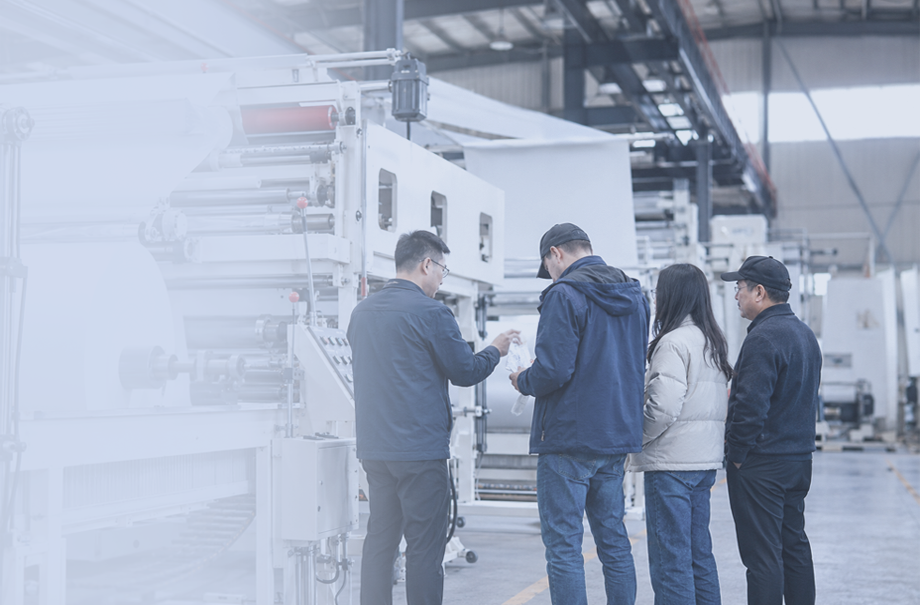
_1787294187070.webp)
_1784082301486.webp)