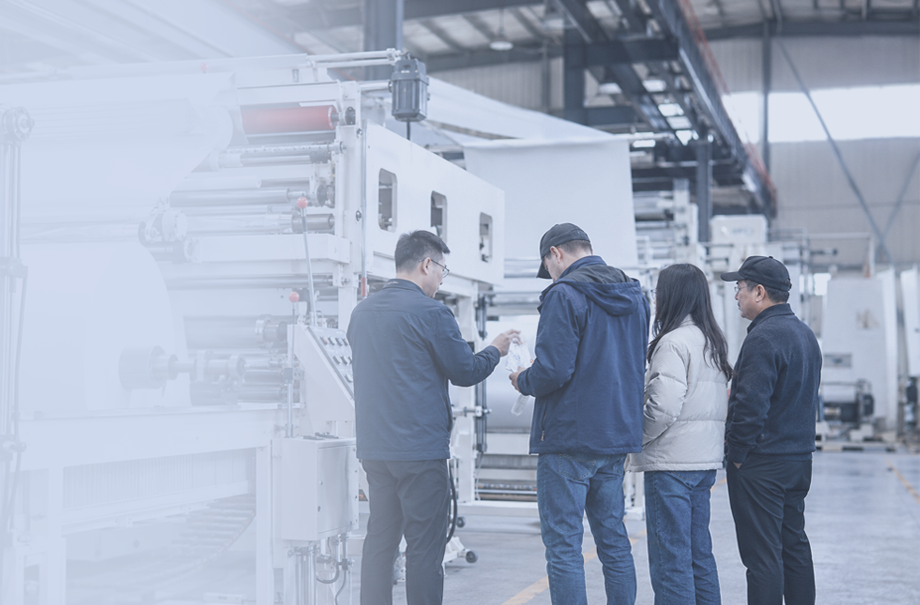
How does a facial tissue machine work?
A facial tissue machine takes a big jumbo roll of tissue paper and transforms it into folded, cut, and stacked tissues ready for packaging. The roll is unwound at constant tension and passed through embossing rollers. Then it goes to a folding area, where vacuum and mechanical pieces interleave each sheet with the next. Stacks are measured on a counter, and the saw and packing equipment finish the product. I prepared this tutorial for tissue converters who want to know all the steps before they compare devices. We’ll take you through the process from roll to pack, and then we’ll look at components, capacity, configuration, and servicing.
What Is a Facial Tissue Machine and Where Does It Fit?
A Machine, a Folding Unit, and a Full Line
There are three different ways to use the phrase "facial tissue machine," so let me start by making it clear what it means. A folding machine that stands alone only folds and weaves the web together. Counting, cutting, and stacking are also part of a full facial tissue production line. The stacks are also wrapped or put in boxes by a line that does it automatically. This is how the flow works in general: Unwinding the Jumbo Roll, Embossing It, Folding It, Cutting It, and Packing It. With each new section, less work needs to be done by hand, but there is more floor space, utilities, and upkeep to do. It's hard to compare quotes when these three scopes are mixed up, so choose which one you need before you ask for prices.
Products the Line Can Make
Several finished goods are made with the same kind of tools. The HYF-1050 can make V-fold tissue, N-fold tissue, soft pack facial tissue, and boxed facial tissue. If the market calls for it, converters also use 2-ply and 3-ply types made from new pulp or recovered paper. Creping is how paper makers make soft paper, so the parent roll you buy is the best you can get. That quality is kept safe by the converting machine, which folds and cuts the fibers without tearing or crushing them. Private label makers often make more than one format at the same time for various retail customers. This makes format flexibility an important factor when buying.
Why Configuration Shapes Your Choice
There are four things that affect the choice of equipment: output, product format, level of automation, and availability of labor. The private label plant needs to be able to quickly change the size and design of the sheets it embosses for a number of different store brands. A large plant needs to be able to run continuously 24 hours a day, seven days a week, and have a connection to automatic cartoning. A new business might want a line that is easy to run with just a few people. First, write down the sheet size, pack count, and weekly amount you want to reach. Then, connect those numbers to a line. There is no need to buy speed or line that you won't use because of this order.

How Does a Facial Tissue Machine Work Step by Step?
Step 1: Unwinding and Tension Control
The HYF-1050 can handle rolls that are up to 1,050 mm wide and 1,500 mm in diameter. The roll is unwound by tension control rollers that keep the web tight but not stretched. Because folding takes time, stable tension is important. If the web sags or surges, the sheets and folds will land in different places. When there is too much stress, thin paper can tear quickly. The PLC makes sure that the line speed is in sync with the rest of the facial tissue machine, and the operators change the tension for each type of paper.
Step 2: Embossing and Ply Bonding
The web then goes through the rollers that make the embossing. Steel-to-steel embossing is used by the HYF-1050. Engraved steel rollers press a pattern into the paper. The design makes all the sheets feel the same and gives them more bulk. When you run 2- or 3-ply tissue, it also helps the plies stick together. Here, pressure is important. When there is too little, the plies come apart, and when there is too much, the sheet becomes weak and less soft. People who buy under a private name often want their own patterns. To find out how roller changes work on your line and how long they take, ask any provider.
Step 3: Folding, Cutting, and Packaging
The web goes into the folding section after being embossed. With the help of a Roots vacuum pump, the tissue is held against the folding rollers so that each sheet fits between them. This job is done by a 15 kW Roots pump in the HYF-1050. With its two lobed blades and positive displacement, a Roots pump moves a steady amount of air. At speeds of up to 1,000 sheets per minute, that steady force helps the folds stay in place. The sheets are kept track of by a counter, and the stack is cut to the set count by a log saw. After the stacks are made, the paper is wrapped or put in boxes.
Main Components and Production Capacity
Mechanical, Pneumatic, and Electrical Parts
The parts of a facial tissue machine are grouped by what they do. The giant roll stand, guide rollers, embossing and laminating units, folding rollers, elevators, and the log saw are all in the mechanical group. The vacuum system keeps the sheets in place while they are being folded. The customer gives the pneumatic group compressed air that is at least 0.6 MPa. The HYF-1050's body is made of an integrated steel plate connected by square steel bars. This makes the machine run more steadily and with less shaking. The list is finished with counting sensors and packaging devices. There should be no bias when you compare quotes from different suppliers. Ask each one to clearly mark which things are included and which are not.
PLC and HMI Coordination
That's right, the PLC and the HMI touch screen are now in charge. There is a PLC that controls the speed, fold, and cutting times of the machine. If anything gets out of range, it sounds a warning. On the touch screen, operators can change things like the speed and length of the sheet. You can set the HYF-1050 to print anywhere from 0 to 1,000 sheets per minute because it has frequency conversion speed control. When there are changes in orders, good controls are most important because an operator who can change settings quickly wastes less time between jobs. Ask your provider for a video of a real parameter change before you make up your mind.
What Determines Production Capacity
Speed claim and output for sale are not the same thing. The number of sheets per minute, packs per minute, and large rolls used are all different. There are many things that can change the outcome, such as sheet length, sheets per pack, changeover time, operator skill, and packaging speed. It's easy to figure out: rated output ÷ operating hours ÷ utilization rate ÷ (1 - reject rate). For instance, a facial tissue machine that can print 1,000 sheets per minute has an average of 784 sellable sheets per minute when 80% of the sheets are used and 2% are thrown away. A top speed is not enough. You should also ask for sample-based performance statistics on your own paper.
Configurations, Raw Materials, and Selection
Automatic or Semi-Automatic
Automatic lines reduce the amount of manual labor you have to perform, and the outputs are more consistent – suitable for continuous demand and continual production. Most of the time, semi-automatic systems are cheaper to set up and may operate for new firms or marketplaces with limited traffic. Don't simply look at the pricing; compare them on the effort, the energy consumed per completed pack, waste from packing, maintenance, and consistency of production. Consider elements like manufacturing space, money, and your team’s technological know-how, as well. Single line configuration consumes less space, double line system enhances capacity but increases expense and maintenance. Choose the option that matches your growth objectives and anticipated demand.
Raw Material and Product Specifications
Know what the huge roll requires before you place the order. Consider thickness, core size, foundation weight, moisture, ply structure, strength, and softness. The HYF-1050 can process paper up to 1,050 mm wide and 1,500 mm tall. Consistent rolls are critical for suppliers since a roll that is irregular in strength or moisture might break quickly. Recycled paper is not the same as virgin pulp. Recycled webs may be weaker and dustier, which makes them harder to clean and emboss. List sheet size, number of sheets per pack, fold style, and material used for packaging. The rated power requirement is 4kW at 380V and 50Hz but may be supplied at lower levels as well.
How to Choose a Supplier and Compare Quotations
Make a checklist of items to consider, such as capacity, product format, raw material, automation, footprint, energy consumption, safety, delivery, installation, training, and replacement parts. Then ask vendors for technical drawings, a video or sample test of the goods in use, and explicit warranty conditions. Quality control is vital since private label consumers will frequently visit your plant. ISO 9001 sets forth criteria for quality management systems. Henan Hengyu Machinery said their equipment fulfills CE and ISO requirements. Compare bids that cover everything from tools and shipping to installation and items that aren’t included in the pricing to get the lowest price. A low-ball offer with a lot of small print might cost you more in the long run.
Maintenance, Problems, and Supplier Support
Daily and Weekly Maintenance
Care that maintains the line clean. Every day, clean the paper dust from the vacuum area, sensors, and rollers. Also check the belts and the safety alarms. Check saw blades for damage, grease the working components, and make sure everything is aligned correctly once a week. OSHA’s guidelines require lockout and tagout before any service begins. To make sure the equipment doesn't start up on its own during maintenance. Always keep spare parts such as blades, bearings, belts, sensors, sealing parts, and electrical and gas parts. Having a replacement blade or sensor sitting on the shelf reduces the time it takes to stop. Look at the wait periods for additional parts before you purchase them.
Common Operating Problems
Most difficulties come from the settings, the materials, or the upkeep. Uneven folding is typically caused by unstable web tension or poor suction. Dirty sensors will frequently give you an inaccurate count on the sheets. If the pressure is improper, or the rollers are worn, the bonding or embossing of the ply may not be satisfactory. It might be that the PLC settings are incorrect or that there is an issue with the packaging. Commissioning test using your genuine tissue grade and packing film. Don't rate the line on a brief test run, judge it on how smoothly it works continually and how much it can create. Scrape fast, and you scrape straight into the private label margins.
What Support to Expect from HENGYU
Henan Hengyu Machinery has been engaged in tissue machine manufacturing for over 20 years. ODM and OEM services. We can adjust the design of the machine, the size of the product, the brand name, and the working language. The HYF-1050 allows you to easily change paper sizes and print patterns. We’ll advise a configuration depending on your output objectives, and then provide technical training and installation, on-site or remote. Over 95% of our clients complete the job with aid from abroad. We also provide lifelong technical assistance, 24/7 online help, video lessons, and remote troubleshooting. Damage not caused by humans is covered by a one-year guarantee, and parts are replaced at no charge.
Conclusion
A facial tissue machine takes a huge roll and transforms it into finished tissue by carefully unwinding it, embossing and gluing steel-to-steel and ply, vacuum-assisted folding, counting, saw cutting, and packaging. Because each stage influences the next, you need a solid tension and the proper amount of embossing pressure so that the folds are straight and gentle. The line runs as steadily as the PLC settings, HMI settings, and the Roots vacuum pump allow. The utilization and reject rate, not only rated speed, influence how much of the product can be sold. Things should be arranged according to demand, manpower, space, and raw supplies. The roll standards are matched, and maintenance and replacement parts are prepared, and testing is done with genuine materials, thereby lowering the chance of downtime and scrap. Clear supplier support rounds out the image from the requirements to long-term service cycles.

FAQ
1. How does a facial tissue machine fold tissue?
The jumbo roll is unwound, the web is raised, and the sheets are stacked between vacuum and folding rollers. Then, a counter and a saw make stacks that can be packed.
2. Can one line make different sizes for private label clients?
The HYF-1050 lets you quickly switch between different tissue sizes and embossing designs, and you can also change the size of the final product. Let us know your sizes and colors so we can make sure the setup is right.
3. What is the real output of a 1,000 sheets per minute machine?
The highest score is that number. Utilization, reject rate, sheet size, packaging speed, and operator performance all affect how much output can be sold.
4. What should I send to request a quotation?
Send your desired capacity, sheet size, number of sheets per pack, ply count, paper type, fold format, style of packing, voltage requirements, and shipping needs.

Contact HENGYU for a Facial Tissue Machine Manufacturer Quotation
Get ready to match a line to your orders with your own brand. The company HENGYU has been making facial tissue machines for more than 20 years. The HYF-1050 can print up to 1,000 sheets per minute and comes with a 15 kW Roots vacuum system, PLC + HMI control, and free technical support for life. Email us at hengyu@hytissuemachine.com with your sheet size, ply count, and voltage, and we'll come up with a design.
References
1. Handbook for Pulp & Paper Technologists, 2016
2. Handbook of Paper and Board, 2013
3. ISO 12625-1: Tissue Paper and Tissue Products – Vocabulary, 2019
4. ISO 9001: Quality Management Systems – Requirements, 2015
5. Directive 2006/42/EC on Machinery, 2006
6. OSHA Publication 3120: Control of Hazardous Energy (Lockout/Tagout), 2002