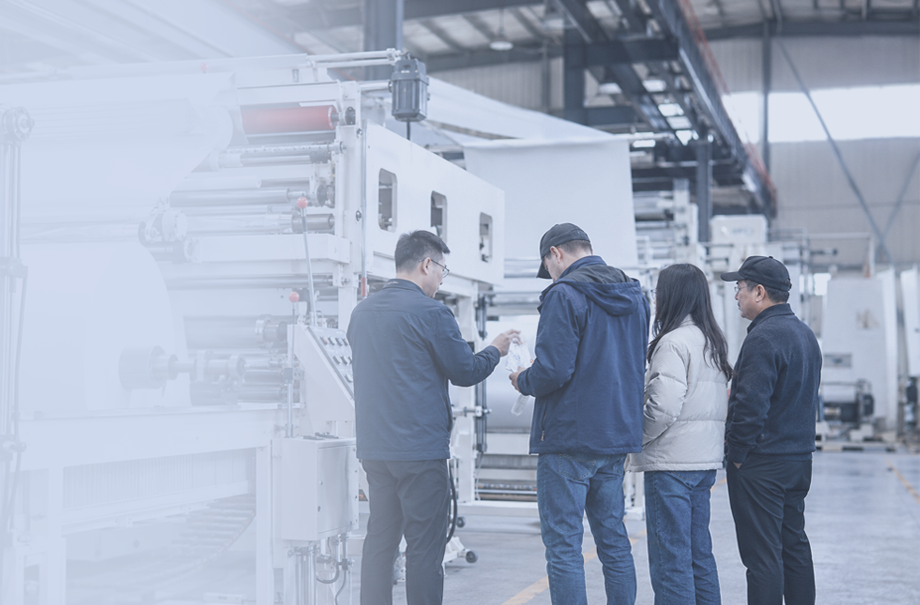
What's the difference for toilet paper machine and facial tissue folding machine ?
If you are sourcing tissue converting equipment, understanding the distinction between a toilet paper machine and a facial tissue folding machine is the first step toward a sound investment. A toilet paper machine winds parent rolls into core-based rolls for bathroom use, while a facial tissue folding machine converts jumbo rolls into interfolded or V-fold sheets for hand towel and facial use. The two machines serve different end markets, require different mechanical configurations, and produce outputs that meet entirely different hygiene and performance expectations in retail, HoReCa, and medical settings.
Overview of Toilet Paper Machines and Facial Tissue Folding Machines
What Does a Toilet Paper Machine Do?
A toilet paper rewinding machine takes a big parent roll and winds it around a paper core at a controlled strain. It then cuts the parent roll into smaller rolls for each customer. The result is a core-wound roll that can be used in normal toilet dispensers. When it comes to quality, the most important factors are process parameters like sheet count, roll width, and hole spacing.
What Does a Tissue Folding Machine Produce?
A tissue folder, which is also sometimes called a hand towel folder or interfolding machine, folds large rolls of paper towels into flat sheets. V-fold, Z-fold, and N-fold are all common ways to fold. The final product comes out of a wall-mounted or countertop box one sheet at a time. This style is used in hotels, bars, hospitals, and office buildings.
Why the End Product Determines the Machine?
There are different ways to buy toilet paper and folding hand towels, and they are judged by different quality standards. For toilet paper, softness and tear strength are the most important things. When people buy and use industrial hand towels, the first things they notice are the wet strength, fold accuracy, and ply bonding quality.

Key Technical Differences Between Toilet Paper Machines and Facial Tissue Folding Machines
Core Mechanical Process
A mandrel, tension bars, and a log saw are the main parts of a toilet paper machine that are used for wrapping. The hardest thing for them is keeping the density the same across the roll without telescoping. Facial tissue folding machines, on the other hand, use vacuum suction, folding blades, and servo-driven dividers to stack sheets perfectly from a continuous web. The technical requirements are very different.
Folding Precision and Ply Bonding
A toilet paper rewinder doesn't need any more ply adhesive than simple embossing. Two layers of tissue must be glued together without affecting the ability to breathe or the feel of the paper in your hand. Point-to-point glue lamination technology, which is used in HENGYU's V-Fold production line, only puts glue on specific contact points. This keeps the paper's natural texture and ability to absorb ink. This is what makes high-end hotel hand towels different from regular store-bought ones.
Automation Architecture
Modern toilet paper lines use PLCs to control the speed of the spinning and the time of the log saw. Some of the best tissue folding lines, like those with Leadshine EtherCAT motion controls, coordinate every axis with microsecond-level accuracy. This includes unwinding, stamping, laminating, folding, and stacking. At speeds of up to 130 m/min, this level of control is needed to keep the shape of the folds without web breaks or wrinkles.
Comparing Performance Metrics: Which Machine Suits Your Business?
Production Speed and Capacity
Toilet paper rewinders usually work at 200–350 m/min for winding logs, but the steps of sawing the logs and packaging them slow down the cycle. The V-Fold hand towel line at HENGYU moves at 100–130 m/min and does everything in one pass: folding, laminating, embossing, and stacking. This combined throughput directly translates to order fulfillment ability for OEM makers that make business hand towels.

Energy and Labor Efficiency
In a real production setting, these two types of machines are different in how efficiently they work because of the following:
- Toilet paper lines require separate stations for rewinding, cutting, wrapping, and packaging, which multiplies both labor headcount and floor space requirements.
- HENGYU's tissue folding line combines four processes — folding, glue lamination, embossing, and automatic servo stacking — in a single machine footprint, with one to two operators per shift managing full output.
- The 22 kW vacuum pump maintains consistent suction across the 1270 mm web width, preventing missed folds that would otherwise jam downstream packaging equipment.
These improvements in efficiency lower the cost of labor per unit for a facial tissue folding machine and give manufacturers a real edge when they are competing for contracts to supply institutions.
Maintenance Considerations
Toilet paper machines need to have their blades changed on a regular basis, and the core glue system needs to be checked on a regular basis. Tissue folding machines need you to keep an eye on the vacuum filter, the position of the embossing rollers, and the glue nozzles. HENGYU makes sure that all of its service points are easy to get to. For example, replacing a vacuum filter takes less than ten minutes, and all of the important parts are made with standard industrial parts that can be found all over the world.
Procurement Considerations for B2B Buyers
Evaluating Specifications Against Your Market
Before you ask for quotes, you should match the result you want to the machine's specs. A buyer who makes V-fold hand towels for hotels in Europe needs a machine that can handle 14–20 gsm two-ply paper and is up to 1270 mm wide. The machine also needs to be CE certified. A buyer who makes toilet paper for stores has a completely different list of requirements. When these needs are mixed up, expensive equipment mistakes happen.
Certifications and Documentation
For OEM companies that want to sell their products in Europe, getting CE approval is a must. For North American customers, UL/CSA compliance is more common. It is important to note that HENGYU's machines meet CE and ISO standards. The company also offers full technical documentation packages, which include operation instructions and compliance records, to help customers with their quality assurance processes and private label client checks.
Supplier Reliability and After-Sales Support
When looking at a supplier of facial tissue folding machine tissue machinery, the infrastructure they have in place after the sale is just as important as the initial specification sheet. Some important things to look at are the supplier's track record with customers in your area, their ability to do remote diagnostics, and their ability to get spare parts through local distributors. Over 95% of HENGYU's installations have been helped by online advice, and the company offers lifetime technical support. For more complicated commissioning situations, a paid on-site worker can be sent to the site.

Why Choose an Automatic Tissue Folding Machine Over Manual or Toilet Paper Machines?
An automatic tissue folding line is a great way for companies that want to sell high-end hand towels to businesses and consumers. It also saves time and money. The uniformity of folds and speed needed for university supply contracts can't be achieved by folding by hand. Toilet paper makers don't make sheets that are interfolded in the way that HoReCa vending systems need them to.
The best things about HENGYU's automatic V-Fold production line are these:
- Automatic servo stacking forms neat stacks up to 200 mm in height and transfers them via side push conveyor, eliminating a manual handling station entirely.
- Point-to-point glue lamination preserves paper breathability and softness — a quality attribute that premium retail and medical buyers pay a price premium to obtain.
- Leadshine EtherCAT motion control synchronizes all drive axes for stable, wrinkle-free web transport at full production speed, reducing raw material waste from web breaks.
- Steel-to-rubber embossing with a 260 mm roller diameter delivers deep, consistent patterns without fiber damage, supporting brand differentiation for private label clients.
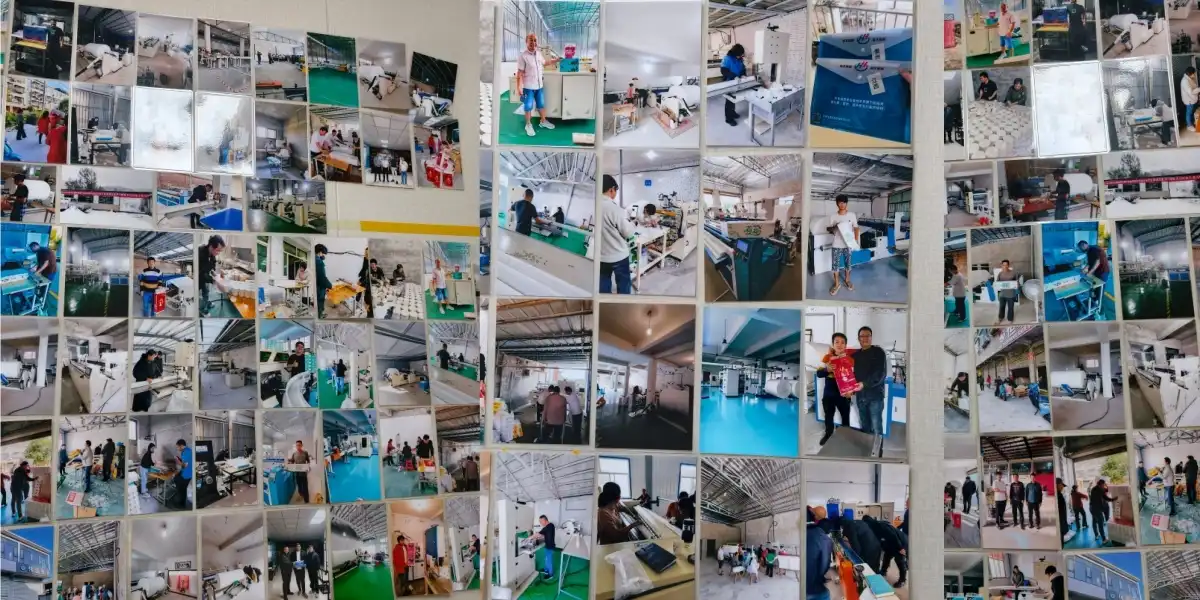
These benefits directly meet the buying needs of OEM companies that supply retail and home goods stores in Europe. When buyers can show their decision-makers a solid ROI case that includes less reliance on manual labor, consistent fold quality, and proof of CE compliance, they can make a strong case for buying.
Conclusion
Facial tissue folding machine and tissue folding machines are each designed to work with a specific product, market, or set of needs. Before you can choose the right tools, you need to know what you want to make and who you want to sell it to. An automatic tissue folding line with point-to-point lamination and servo stacking gives companies that make V-fold hand towels for business, retail, or hospital buyers the quality products and production speed that the market wants. Because HENGYU has been making tissue machines for more than 20 years, buyers can trust that they will be a good technical partner for this investment.
FAQ
Can a toilet paper machine produce folded hand towels?
No, toilet paper rewinders are only made for making core-wound rolls. They don't have the folding, ply-bonding, or stacking features needed to make interfolded sheets. If you want to make V-fold or Z-fold hand towels, you need a machine that is just for that.
What paper weight is compatible with a tissue folding machine?
The V-Fold line from HENGYU can handle paper bases with weights ranging from 14 to 20 gsm in a two-ply design. It can handle cheaper to more expensive product grades. Paper that isn't in this range might make it harder to fold and clean.
How many operators does an automatic tissue folding line require?
With servo stacking and conveyor output, all production can be run by one or two operators per shift. For the same amount of work, manual lines usually need three to five workers, which makes the cost of labor per unit much higher.
Is remote installation feasible for EtherCAT-controlled machines?
More than 95% of HENGYU users finish the installation with help from a live feed. HENGYU's engineers offer step-by-step help with EtherCAT axis calibration and parameter setup, and on-site dispatch can be arranged for an extra fee.
What certifications does HENGYU's tissue folding machine carry?
The machine has CE approval, which means it meets the standards of the European Machinery Directive. Along with the usual technical package for all export sales, documentation that shows ISO compliance is also sent.
Request a Quote from HENGYU — Trusted Facial Tissue Folding Machine Manufacturer
For more than 20 years, HENGYU has been making tools for converting tissue for OEM companies, private label producers, and HoReCa supply lines in the US, Europe, and other places. Our V-Fold line of hand towels has point-to-point lamination, EtherCAT precise control, and CE-certified engineering all in one package that is ready for production. Get in touch with our team to talk about your needs, ask for example output, or set up a video plant tour. You can email us at hengyu@hytissuemachine.com or go to hytissuemachine.com to see all of our tissue machinery options.
References
1. TAPPI — Tissue and Nonwovens Division: Converting Technology Review, 2022.
2. Tissue World Magazine — Global Tissue Market Equipment Trends Report, 2023.
3. European Committee for Standardization (CEN) — EN ISO 11612: Machinery Safety Standards for Paper Converting Equipment, 2021.
4. PIMA (Paper Industry Management Association) — Operational Efficiency in Tissue Converting Lines, 2020.
5. Smithers Pira — The Future of Tissue Manufacturing to 2027, 2022.
6. AFNOR / ISO — ISO 9001:2015 Quality Management Systems — Requirements for Machinery Manufacturers, 2015.