BLOG List
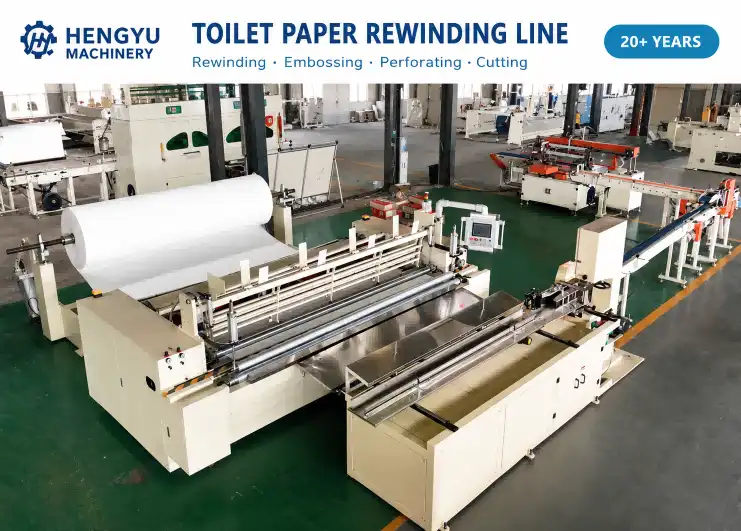
When thinking about what tools to buy next, it's important to know what makes a great toilet paper converting machine. With the right system, precise rewinding, embossing, perforation, and cutting processes can turn raw jumbo rolls into products that are ready for the market. A good toilet paper converting machine gives you consistent roll sizes, low waste, and reliable throughput, all of which have a direct effect on your brand's reputation and profits. Touchscreen controls, automatic core feeding, and pneumatic tension systems are all parts of modern converting lines. This lets workers change parameters quickly while keeping production consistent. If you're opening a new facility or growing the size of an existing one, you should choose equipment that balances automation, durability, and service support. This will help your business grow in a tissue market that is becoming more and more competitive.

Understanding Automatic Toilet Paper Converting Machines
The Toilet Paper Converting Machine has changed a lot in the last ten years. People want faster speeds, more freedom, and cheaper work. Big rolls of toilet paper (often up to 1500 mm in diameter) are fed into an automatic machine that cuts them down to sizes that can be sold in stores or by institutions.
Core Components That Drive Production Efficiency
The stand for unwinding keeps the parent roll in place and has tension control to keep the feed steady and stop web breaks. Modern ones have magnetic powder brakes or closed-loop sensors that change the tension on their own when the roll width gets smaller. Embossing units add patterns that can be used to make the product softer and bigger, or they can just be there for looks. People who make these units can change the thickness and strength of the ply ties by connecting steel to steel or steel to rubber. The cutting and piercing units come next. These have rollers with spiral-shaped holes in them and surface knives that cut straight lines at set distances, usually 110 mm, but this can change from market to market. The last step is the rewinding part, which winds finished logs onto cores. Most of the work is done immediately by tail-sealing and log-ejection systems, so people don't have to do much.
Production Speeds and Capacity Considerations
These days' tools can go between 150 and 450 meters per minute, depending on the job and the type of paper. Most entry-level systems made for new businesses run at 200 m/min, which is a good speed for both output and upkeep. Based on the size of the roll and the number of sheets, this speed means 30 to 40 finished logs per hour. Lines with more capacity that serve well-known makers can move faster than 400 m/min, which lets them make enough to power regional distribution networks. To find out how much a machine can hold, buyers should look at the parent roll GSM. For regular toilet paper, this is usually between 13 and 22 g/m². Because heavier types might need slower speeds to keep the holes and embossing clear.
Automation Levels and Control Systems
One very important thing to think about is the control system. All the parts of a fully automatic system—from wrapping the log to ejecting it—work together thanks to PLC logic, which is usually based on Siemens or Delta platforms. It's easy for operators to change the length of the rewind by changing the speed profiles, section count, and perforation pitch on touchscreens. This is done without making any mechanical changes. For alternatives that are only partly automatic, cores must still be loaded and finished logs must be handled by hand. This lowers the initial investment but raises the cost of work. Control tools that use pneumatics run the production of coreless rolls. Stores are making more of these things because they want to use less wrapping paper. It will help your equipment last longer as production needs change if you check how reliable the control system is, how easy it is to change settings, and how well it works with planned future automation updates.
Top Features and Benefits Buyers Should Evaluate
When you buy a Toilet Paper Converting Machine, you should carefully think about the features that will affect how well it works, how consistent the products are, and how much it costs in the long run. These are the main reasons why you should buy an advanced automatic system:
Builders who use 20 mm steel plate wall panels and heavy-duty frames can make machines that can handle the constant shaking and mechanical stress that comes with changing speeds quickly. It is less likely for the web to break when the base is stable, and the engraving stays accurate over long production runs. When machines weigh at least 2.5 tonnes, they are stable enough to run 24 hours a day, seven days a week. Businesses that want to get their money back quickly need to pay attention to this.
Modern machines that turn paper into toilet paper can work at 200 meters per minute and can handle different kinds of paper, from new pulp to recycled mixes. They can also work with roll forms that have or don't have cores. Because of this, companies can quickly adjust to new tastes or seasonal demand spikes without having to buy new tools. With one machine setting, you can make finished rolls with widths from 40 mm to 180 mm. This lets you sell more items and reach more people.
Easy to Use and Set: Touchscreens let workers change the rewinding speed, hole gaps, and log length on their own, which saves time that needs to be spent setting up before each production run. Being able to set settings on your own is very useful when working with various SKUs or making changes to products for private-label clients. Supervisors can find waste before it costs a lot of money to shut down by watching the production counters, web tension, and motor load in real time.
Precision Perforation and Quality Assurance: Spiral rollers and surface knives are examples of high-accuracy perforation devices that make sure punching pitch errors are less than ±2 mm. This makes sure that tear lines are straight and meet customer standards. Because the perforation ratio is exact (3 mm cut to 1 mm raw), it is easy to separate sheets without damaging their structure. This makes sure that sheets don't tear too quickly when they are being handled or pulled. Customers are more likely to stick with a brand when the quality doesn't change. This is especially true in stores with a lot of competition.
Making things often has issues like lost material, uneven roll density, and changeovers that need a lot of work. These features work together to fix these issues. Buys lower operational risks and speed up the time it takes to start making money by giving priority to machines that have been shown to work well in these areas.
Safety and Maintenance Protocols
To meet the standards for CE approval, safety interlocks and emergency stop mechanisms must be used to keep people from being hurt by moving or fast parts. Maintenance tasks like re-grooving the blades every three to six months and checking the pneumatic system help the production run easily and make parts last longer. Manufacturers that offer full repair manuals and remote diagnostic help make it easier for expert teams in-house to learn. This means that there is less downtime when service is needed.
Comparing Leading Automatic Toilet Paper Converting Machines
There are a lot of different options in the tissue converting market, from small single-line tissue paper converting machines that are great for new businesses to large, fully integrated production complexes that serve regional distributors. It is very important to know how the different types of machines fit in with your business's size and growth plans.
Industrial-Grade Systems Versus Entry-Level Solutions
Large producers put output and automation at the top of their list of priorities. They often choose machines that can move at speeds of 300 m/min or more and have packing built in. Dual-unwinding stands allow these systems to work continuously, servo-driven stamping keeps multiple layers in sync, and laser sensors allow for automated quality checking. On the other hand, small and medium-sized businesses and startups benefit from simplified designs that work reliably at 150 to 200 m/min. These designs include manual packing stations that take less initial capital while still leaving room for future automation updates.
Fully Automatic Versus Semi-Automatic Configurations
Fully automatic lines don't need people to add cores or move logs by hand; instead, pneumatic conveyors and robotic arms move final goods to packing stations. This setup works well for businesses with a lot of work where the cost and quantity of workers make it hard to make money. Semi-automatic systems require operators to place cores and remove finished logs by hand. This makes the equipment simpler and lowers the initial investment by 20 to 30 percent. The effects on labor vary by region. Facilities in areas where it's easy to find workers may prefer semi-automatic setups, while those that are having trouble finding workers or are seeing wages rise will get a better return on investment with full automation.
Evaluating Warranty and Service Support
The warranty period is usually one year and covers mechanical problems and parts that wear out too quickly. But the real value is in the support after the warranty period. Manufacturers who offer lifetime technical support, on-site training, and fast delivery of spare parts lower long-term operating risks. Ask for examples from clients in similar areas and production sizes when you are comparing suppliers. Feedback on reaction times, how well problems are fixed, and the availability of parts shows how good the relationship will be after the sale.
Procurement Strategies for B2B Buyers
Comparing specs isn't enough to buy the right equipment; you need to work strategically with suppliers, do your research, and make sure that the terms of the purchase fit with your operational timeline and budget.
Supplier Evaluation and Certification Standards
Give more weight to makers who have ISO 9001 quality management approval and CE compliance, which show they follow international standards for safety and performance. Check for export experience by looking at project profiles from places where logistics are hard to manage or where import rules are very strict. Suppliers with a history in the Middle East, Africa, and Southeast Asia show they can handle customs paperwork, coordinate freight, and provide local installation support, all of which are important to avoid delays that cost a lot of money.
Customization and Turnkey Solutions
With OEM and ODM options, buyers can change the parent roll width, stamping patterns, piercing standards, and control interface languages to make the tissue converting machine fit the needs of their local markets. Turnkey solutions include delivering the equipment, supervising the installation, teaching the operators, and helping with the first production run. This makes the starting process easier for clients who don't have their own professional staff. When negotiating contracts, make sure everyone knows who is responsible for electrical integration, compressed air supply, and environmental controls. This way, everyone will know what is expected of them and what they are supposed to deliver.
Lead Times and Payment Structures
Lead times usually last between four and eight weeks, but this depends on how complicated the customisation is and how long the production queue is. Usually, you have to pay a deposit when you accept the order, progress payments based on manufacturing goals, and the full amount before the shipment. Buyers should look into financial options, like leasing tools or getting credit from suppliers, to keep their cash flow under control and keep working capital for stocking up on raw materials and growing the market.
Setting up clear lines of communication with your supplier speeds up the resolution of problems and encourages teamwork in solving them. Throughout the procurement cycle, regular updates on progress, factory acceptance testing, and pre-shipment inspections build trust and strengthen quality assurance.
Case Studies and Buyer Insights
Examples from real life show how smart investments in tools can lead to measured business results. A medium-sized company in Eastern Europe switched from a semi-automatic line to a fully automatic HY-2500 type. This increased daily output by 35% and cut the number of full-time jobs needed by two. The touchscreen control system made it easy to switch between SKUs quickly, so the client could fill custom orders for hospitality clients without any production problems. Greater throughput and lower waste rates meant that the investment paid for itself in just 18 months.
In a different case, a new business in Southeast Asia chose a small 200 m/min Toilet Paper Converting Machine along with hand packing equipment. The modular approach let the client start making things within six weeks of receiving the equipment. This let them get into the market quickly, while competitors had to wait for installations that were too detailed. As sales went up, the client added an automatic log saw and a machine for packing, which improved automation gradually without stopping normal business.
Practical Checklist for Procurement Decisions
Before you decide on a piece of equipment, make sure it meets the following criteria: the parent roll capacity should match the requirements of your raw material supplier; the configuration of the embossing unit should match the positioning of your target product (economy versus premium); the perforation standards should match what consumers in your area expect; the control system should be able to be integrated with future packing and palletising equipment; the supplier should provide full training on operation, maintenance, and basic troubleshooting; the warranty terms should include clear steps for filing claims and getting replacement parts; and finally, make sure that the after-sales service network will respond quickly in your operating region.
This checklist will help you make sure that your choice about what to buy meets both short-term production needs and long-term strategic goals. This will lower the chance of costly mistakes or limits that you didn't expect.
Conclusion
To choose the right automatic Toilet Paper Converting Machine, you need to carefully look at the technical specs, the reputation of the provider, and the framework for long-term support. Machines like the HY-2500 Toilet Paper Converting Machine are a good example of how to balance strong construction, operational flexibility, and control systems that are easy for anyone to use. Buyers set up their companies to stay competitive by learning about key components, comparing levels of automation, and working with providers who can provide custom solutions. Investing in good equipment now will lead to consistent product quality, lower operating costs, and the ability to quickly adapt to changing market needs. These are the things that make tissue manufacturing businesses successful in a wide range of global markets.
FAQ
What routine maintenance tasks are essential for automatic converting machines?
Every day, operators should check the settings for web tension, the sharpness of the perforation knives, and the amounts of air pressure. Lubricating the bearings and chain drives once a week keeps them from wearing out too quickly, and calibrating the touchscreen parameters once a month makes sure that the output settings are always the same. Depending on production volume and paper GSM, tungsten steel blades usually need to be reground every three to six months. Scheduled repair arrangements with providers often include remote diagnostics and yearly checks at the customer site. This cuts down on unplanned downtime and increases the life of the equipment.
How do automatic and semi-automatic models compare in terms of cost and output?
Automatic systems require a bigger initial investment, but they are better at reducing labour costs and maintaining consistent throughput. This makes them perfect for high-volume operations that want to see a quick return on their investment. Twenty to thirty percent less money is needed up front in semi-automatic configurations, but core loading and log handling still need to be done by hand. Both achieve similar speeds, so the differences in output aren't as noticeable. However, automatic lines can keep up peak performance with fewer workers, which cuts down on long-term labour costs and human mistake.
What financing options are available for tissue converting equipment?
Buyers often lease equipment and spread out their payments over three to five years. This way, they can keep their cash on hand for marketing and stocking up on goods. Supplier credit facilities may let you pay later if you meet certain production or revenue goals. Sometimes, regional development banks and export credit agencies offer good loans for investments in industry that create jobs in the area, especially in developing markets. Talking to financial advisors and equipment sellers early on in the buying process helps you understand your choices and set terms that will work with your projected cash flow.

Partner with HENGYU for Reliable Toilet Paper Converting Machine Solutions
Henan HENGYU Machinery has been making Toilet Paper Converting Machines for more than 20 years and works with new manufacturers, makers that are growing, and distributors all over the world. Our HY-2500 Toilet Paper Converting Machine shows how dedicated we are to strong engineering, operating freedom, and quick customer service. Our production lines are CE and ISO certified, and they can handle different types of paper, cored and coreless roll formats, and custom embossing configurations that fit the way you want to market your brand. We offer full turnkey solutions, which include helping with the layout of the factory, installing equipment, training operators, and providing technical support for life. This makes sure that the start-up goes smoothly and that productivity stays high. Whether you're new to the tissue market or want to increase the amount of tissue you can make, our team is ready to provide you with customised gear, quick wait times, and reliable service after the sale. Email doris@hytissuemachine.com right away to talk about your output goals, get more information, or set up a virtual show. Learn how working with a reliable Toilet Paper Converting Machine supplier can hasten your path to success and market leadership.
References
1. Industrial Tissue Paper Production: Technology, Equipment, and Market Trends (2023), Journal of Manufacturing Process Engineering.
2. Comprehensive Guide to Toilet Paper Converting Machinery: Performance Metrics and Selection Criteria (2024), Global Tissue Industry Review.
3. Automation in Tissue Converting: Evaluating ROI and Operational Efficiency (2023), International Paper Technology Association.
4. Quality Standards and Certification Requirements for Tissue Converting Equipment (2024), CE Compliance and Safety Guidelines.
5. Strategic Procurement in the Tissue Paper Industry: Supplier Evaluation and Contract Negotiation (2023), B2B Manufacturing Insights.
6. Case Studies in Tissue Converting Equipment Implementation: Lessons from Global Markets (2024), Tissue World Magazine.
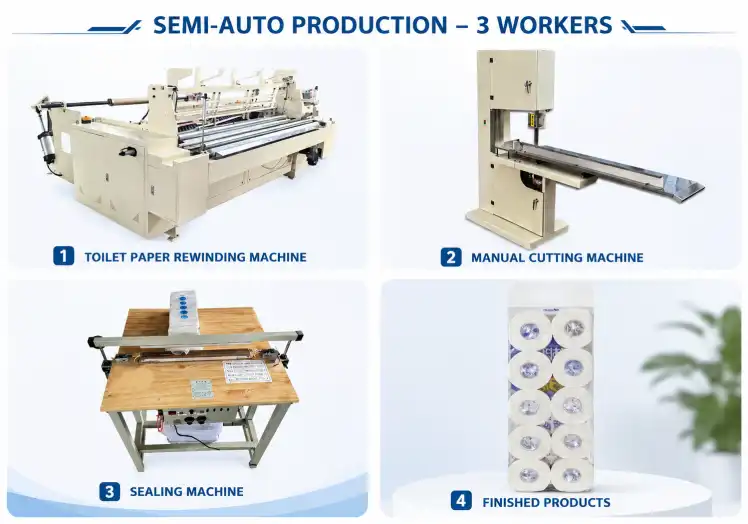
When choosing equipment for your tissue manufacturing operations, understanding the difference between a toilet paper rewinding machine and a complete rewinder system becomes crucial. A standalone toilet paper rewinding machine transforms jumbo parent rolls into consumer-sized products through integrated processes like unwinding, embossing, and perforation. Meanwhile, full rewinder systems represent comprehensive solutions that combine multiple synchronized machines, offering streamlined workflow integration. The better choice depends entirely on your production volume, budget constraints, and operational goals—with standalone units serving startups and expansion projects effectively, while integrated systems suit high-capacity facilities demanding continuous operation.

Understanding Toilet Paper Rewinding Machines and Rewinder Systems
To turn raw jumbo rolls into finished store goods, the tissue conversion business relies on a lot of specialized equipment. Differentiating between single rewinding units and complete system packages helps procurement teams make smart purchases.
What Is a Toilet Paper Rewinding Machine?
Large jumbo parent rolls, which typically weigh several hundred kilograms, are transformed into smaller, easier-to-handle logs by a Toilet Paper Rewinding Machine, a specialized industrial piece of machinery. The machine does several things at the same time: it unwinds the parent roll while controlling tension, embosses the paper to make it softer and more absorbent, perforates sheets at regular intervals, and then rewinds the processed paper onto cardboard cores. Modern automatic models have PLC control systems that run these processes without constant human input. Depending on the setup and features of the paper, they can reach production speeds of 150 to 250 meters per minute.
The HENGYU Model HY-1575 fully automatic Toilet Paper Rewinding Machine is a good example of this type. It can handle original paper lengths of up to 1800 mm and can handle 1.5 tonnes of paper per day. The machine makes final rolls with diameters from 50 mm to 280 mm, which can fit paper cores between 30 mm and 55 mm. Its working size is 6500 x 3300 x 1700 mm, and its 2000 kg weight makes it stable even when it's running at high speeds.
How Rewinder Systems Differ from Standalone Machines
Rewinder systems are integrated ways to make things that go beyond what a single machine can do. In these setups, the rewinding unit is usually paired with other machines that work together, like automatic log saws for cutting finished parent rolls into individual consumer units, tail closing devices for safe finishing, and package machines that work together. The biggest benefit is that the process is coordinated so that paper doesn't have to be handled by hand or stored in between steps. This cuts down on labor costs and the risk of contamination.
These kinds of systems have centralised control interfaces that let workers keep an eye on several tools at once using touchscreen HMI panels. For performance analysis, production data is automatically logged. This includes the amount of output, the reasons for downtime, and quality metrics. When switching between product specifications, the integration makes it easy to make quick changes because adjustment commands are sent to all connected equipment at once, instead of having to be reconfigured on each machine separately.
Key Technical Specifications That Matter
When deciding between the two options, there are a number of factors that directly affect how well they will work. If the equipment can meet your volume needs, you can check its production capacity, which is given in tonnes per day or meters per minute. The HY-1575 can handle up to 1.5 tonnes of paper per day and stays accurate when working with different types of paper, such as bamboo, sugarcane, and standard wood pulp. Core diameter flexibility is very important. Having tools that can handle a bigger range of core sizes (30–55mm) lets you expand your product line without spending more money.
The amount of energy used has a big effect on ongoing operational costs. The HY-1575 toilet paper rolling machine runs on 5.5kw plus 0.75kw total power, which is a more energy-efficient use of power than older machines that need twice as much electricity. Adjustable ranges from 100 to 300 mm for perforations give makers the freedom to make goods that meet the needs of different markets, from high-end soft tissue that needs to be perforated more often to economy rolls with longer sheet lengths.
Key Performance and Operational Differences
How well your chosen tools meet practical needs affects how well your products are made and how efficiently they are made. When you look at success traits, you can see differences that affect how things are done every day.
Production Speed and Output Capacity
Most stand-alone rewinding machines only work in certain speed ranges that are best for their mechanical design and control systems. Small facilities usually have semi-automatic models that run at 80 to 120 meters per minute and need to be tended to by an operator every so often to add the core and remove the log. Fully automatic units like the HY-1575 can maintain speeds of 150 to 200 meters per minute by feeding the core and ejecting the finished log automatically. This greatly reduces the amount of work that needs to be done by hand.
Integrated rewinder systems keep these speeds and make sure that all the equipment further down the line is in sync. To avoid production bottlenecks, the log saw cuts at the same speed as the packing units, which wrap produced goods at the same speed. This coordination gets rid of the breaks in production that happen when machines are running at different speeds, which increases real throughput by 15–25% compared to units that are only weakly coordinated with each other.
Quality Control and Roll Consistency
The precision of the tools has a direct effect on roll uniformity, which is a very important quality measure. Tension control systems make sure that the paper stays tight while it is being rewound, and pneumatic brake systems on the parent roll stands make it easy to change the resistance as the width of the giant roll changes. The HY-1575 uses synchronous belt drive technology to make sure that the rewinding drum and embossing rollers are moving at the same speed. This keeps the paper from stretching or compressing, which can change its density.
The quality of the perforation has a big effect on how happy the customer is. How well sheets separate along hole lines without tearing each other depends on how accurately the blade is placed. The HY-1575 keeps normal holes at 120 mm ± 10 mm and has settings that can be changed between 100mm and 300mm to meet the needs of both standard and custom products. Integrated systems add quality control further down the line by automatically measuring diameter and weight and rejecting units that don't meet standards before they are packed.
Maintenance Requirements and Downtime
Different types of tools have very different maintenance needs. Standalone machines need regular maintenance in a few key areas: the embossing rollers need to be cleaned of paper dust every week, the bearing housings need to be oiled every month, and the tension sensors need to be calibrated every three months. The HY-1575's heavy-duty 2000 kg construction reduces vibration-related wear, which makes parts last longer than on lighter frameworks that are more likely to break under stress.
When a part fails in any subsystem of an integrated system, the whole production line stops. This means that repair schedules need to be organised. Because of this vulnerability, you need to keep extra spare parts on hand and maybe even backup tools for important tasks. On the other hand, well-kept integrated systems have less unplanned downtime because synchronised operation lowers the mechanical stress peaks that happen when products are moved by hand between machines that aren't working together.
Cost Analysis and ROI for Business Procurement
Making investment decisions requires a full financial analysis that looks at more than just the original purchase price. It also looks at the total costs of ownership and the possibility for making money.
Initial Investment Comparison
Equipment prices vary depending on automation and features. Company-friendly semi-automatic rewinding machines cost $15,000–$35,000. They have limited speed control and hand core loading. PLC control, automatic core feeding, and variable speed operation make the Toilet Paper Rewinding Machine a mid-tier investment.
Full integrated systems with rewinding, cutting, and packaging start at $80,000 and can cost over $200,000 for big configurations. This greater price is due to the engineering work required to synchronize units, set up centralized control systems, and combine several machines into a turnkey solution. New plant owners should consider if their initial output will cover the costs of an integrated system or whether they should buy equipment in stages, starting with a capable stand-alone unit, to better manage their cash flow.
Long-Term Operational Costs
Energy is a constant business cost that builds up to a hefty bill over time. The HY-1575 uses 6.25kw, which costs $3.50 to $5.00 per eight-hour shift, depending on local energy prices. Modern, efficient designs cost 30–40% less than 10-year-old equipment without variable frequency drives or optimized motor selection.
Labor costs vary greatly with technology. Semi-automatic machines need a constant operator for core loading, log removal, and process tracking. Two workers each shift are typical. Full automation reduces this to one supervisor monitoring numerous machines on the HY-1575. This saves 50% on direct labor and frees up people for quality control and maintenance.
Maintenance costs include planned preventative measures and unexpected repairs. Having reliable vendors ensures speedy spare part access. HENGYU supports parts, ships them abroad, and guarantees quality for a year to protect the initial investment. Standards-based machines feature cheaper long-term parts costs and less supplier dependence.
Calculating Return on Investment
ROI calculations must consider many revenue and cost aspects to determine return. A factory that employs the HY-1575 to create 1.5 tonnes of excellent retail toilet paper daily makes more than an economy bulk products factory. Premium commodities that earn $1,200 per tonne against $600 per tonne of raw materials and operating costs earn $900 per day, so the equipment will pay for itself in 12 to 18 months assuming production and sales remain stable.
Increasing production efficiency boosts ROI. Better maintenance or more reliable equipment can reduce downtime from 15% to 8%, increasing daily output from 1.275 tonnes to 1.38 tonnes, or 0.105 tonnes worth $95 per day at top product margins. These enhancements speed up payback and lengthen tool life when totalled up over a year.
Choosing the Right Solution for Your Production Needs
To choose the best equipment, you need to make sure that its technical skills are a good fit for your operations, output goals, and long-term business goals.
Matching Equipment to Business Scale
Starting with capable standalone units that don't cost much and have capacity for growth is optimal when investing in a new tissue-making factory. Start with the HY-1575 configuration, which can handle 1.5 tonnes of freight per day, enough for the local market to grow, and includes full automation to make learning easy for new workers. End paper width can be varied from 50 to 280 mm, and core compatibility is 30 to 55 mm. This enables product lines to test multiple sizes to see what the market wants before buying specialized equipment.
Small and medium-sized tissue producers must consider many factors to grow. Existing facilities often need to add equipment to expand. This implies the new equipment must fit current workflow and production requirements. Newer automatic rewinding machines like the HY-1575 may be better for manufacturers than buying more old ones. Higher unit prices are usually covered within two years by efficiency gains and decreased labor costs.
Integrated rewinder systems are suitable for large enterprises that produce tons of paper daily. When work is so high that eliminating human handling saves multiple full-time jobs, coordination and output become economically attractive. Complex, coupled equipment can be supported by these shops' technical expertise and repair tools.
Evaluating Supplier Reliability and Support
Without a reliable provider, knowing how to operate equipment is useless. Henan Hengyu Machinery has made tissue machinery for over 20 years and offers entire production line solutions for a variety of clients. Our R&D and ODM/OEM customization services allow us to tailor machine settings, product sizes, branding, and working languages to each market. Makers serving areas with differing product standards or rules benefit from this.
Certification ensures quality for international business. HENGYU's safe, CE- and ISO-certified instruments make customs clearance easier worldwide. Certified instruments are less likely to cause regulatory or insurance issues than uncertified ones.
The quality of after-sales servicing for tissue paper machine determines equipment longevity. HENGYU provides lifelong technical assistance, including remote troubleshooting, on-site installation, and operator training to boost production. Fast delivery and global logistics support help reduce production launch delays caused by long lead periods. Effective procurement communication generates trust, which is crucial for multinational cooperation.
Customization and Flexibility Considerations
Business and producer output needs vary greatly. The HY-1575 may create rolls with or without a core, utilizing multiple core feeding arrangements. This suits diverse product sectors. Regional tastes can be accommodated by changing the hole length from 100mm to 300mm. North American markets prefer 114mm (4.5 inch) sheets, while European standards require 100mm.
Customizing the embossing design changes a product's appearance and market position. With various embossing roller designs, producers can create distinctive patterns that boost brand recognition and quality. OEM customization from suppliers ensures that your equipment generates competitive items rather than generic ones.
Maintenance, Troubleshooting, and Best Practices
To keep equipment working well, it needs to be maintained properly, and problems need to be fixed quickly so that production doesn't stop.
Establishing Preventive Maintenance Routines
Systematic repair programs prevent minor issues from becoming costly. To keep perforation blades sharp and in place, embossing rollers spinning smoothly, and air systems at the appropriate pressure, inspect daily before each shift. Weekly deep cleaning removes paper dust surrounding the rewinding drum and tail-sealing glue applicators, which affects product quality.
Lubricating bearing housings and drive chain sections monthly prevents premature wear and downtime. The HY-1575's synchronous belt drive system needs frequent tension checks. Too much tension promotes belt wear, while too much slack causes timing errors that misalign holes. To ensure extended production runs and roll quality, tension control sensors and PLC encoder settings must be calibrated every three months.
Resolving Common Production Issues
Uneven stress between the releasing parent roll and the rewinding drum causes most paper breakage during rewinding. Changing the parent roll stand's air stop pressure fixes most tension-related breaks. However, changes in paper grade—especially when using bamboo or sugarcane pulp—may require recalculation of tension values to account for varying tensile strengths.
Workers and customers dislike inconsistent hole spacing. When the timing belt slides or the encoder isn't calibrated, the cutter blade spins out of time with paper feed. Tightening the timing belt and resetting the PLC encoder via the HMI interface restores the correct spacing. In case one blade dulls or breaks, the HY-1575 includes two. Second blade works until replaced during maintenance windows.
Uneven log diameter over the machine width indicates mismatched rewinding rollers or tension distribution. Make sure the parent roll is straight on its stand to fix a common issue. High-speed spinning cylinder dynamic balance testing identifies vibration sources that cause winding discrepancies. Fixed immediately, these issues slow bearing wear and prevent mechanical failures.
Upgrading and Retrofitting Options
New technologies can be used without replacing equipment. Many firms can upgrade older machines' control systems. Instead of relay-based controls, they utilise PLCs with bespoke logic, data logging, and remote monitoring. Adding automatic core feeding systems to semi-automatic machines reduces effort while retaining mechanical parts.
Replacing the embossing brush is a cheap approach to distinguish the product. Changing to deeper embossing patterns or more sophisticated designs can make a product premium without buying new machinery. Quick-change perforation blade assemblies reduce the time needed to swap product requirements, increasing operational flexibility without spending a lot of money on new equipment.
Conclusion
Whether you choose a Toilet Paper Rewinding Machine or an integrated rewinder system depends on how much you produce, how much automation you want, and how fast you want to grow. Standalone automatic units like the HENGYU HY-1575 are a great deal for new manufacturers and facilities that are growing because they offer full automation, operational flexibility, and low investment costs. Integrated systems are best for high-volume businesses that want to maximize output and minimize labor. This is why they cost more. No matter what you decide, putting source dependability, licensing compliance, and full after-sales support at the top of your list of priorities will protect your investment and speed up production that makes money. By carefully looking at technical specs, total ownership costs, and customization options, you can make sure that the equipment you choose meets both your short-term and long-term business goals.

FAQ
How do automatic rewinding machines enhance production efficiency?
Automatic Toilet Paper Rewinding Machines get rid of the need for people to do repetitive tasks like loading the core, cutting the log, and taking out the finished product. PLC control systems consistently keep the optimal tension and speed levels, which lowers the number of mistakes that happen because of human error. Compared to semi-automatic alternatives, manual work is about 50% less necessary, which frees up workers to do more valuable tasks while keeping or even growing output amounts.
What distinguishes standalone machines from integrated rewinder systems?
The main job of standalone rewinding machines is to change large rolls into consumer-sized products. However, the next steps, like cutting and packing, need to be done by hand or with separate equipment. Integrated systems use centralized controls to time rewinding with automatic cutting, tail sealing, and packing. This creates a continuous workflow that gets rid of the need for human handling between process steps and boosts output by 15 to 25 percent.
Can rewinding equipment accommodate customized production requirements?
These days, machines can be changed in a lot of ways. The HENGYU HY-1575 can handle cores between 30 and 55 mm in diameter and finished roll diameters between 50 and 280 mm. This makes it possible to meet a wide range of product requirements. The length of the holes changes from 100 to 300 mm to accommodate the needs of different markets. Customizing the embossing pattern, the ability to do coreless rolls, and custom control interface languages are all options that allow manufacturers to make unique products that meet the needs of their target market.
Partner with a Trusted Toilet Paper Rewinding Machine Manufacturer
HENGYU is ready to help you reach your goals of making tissue with its reliable tools and all-around service. As a seller of specialized toilet paper rewinding machines with more than 20 years of experience in making things, we offer full production line options that are made to fit your needs. Our HY-1575 automatic rewinding machine is built to last and weighs 2000 kg. It comes with CE and ISO standards and is fully automated with a PLC. It can also be customized in a number of ways. We offer expert support for life, fast global shipping, and one-stop plant setup help that turns buying equipment into running a successful production line. You can email us at doris@hytissuemachine.com to talk about how our Toilet Paper Rewinding Machine for sale can help your business succeed faster by giving you reliable technology and a dedicated partner.
References
1. Thompson, R. (2021). Tissue Converting Equipment: Technology and Selection Criteria. Industrial Paper Machinery Publishers.
2. Martinez, J. & Chen, L. (2020). "Automation in Tissue Manufacturing: ROI Analysis and Implementation Strategies." Journal of Paper Converting Technology, 45(3), 112-128.
3. European Tissue Symposium. (2022). Best Practices in Tissue Machine Maintenance and Operation. Brussels: ETS Technical Committee.
4. Andersson, K. (2019). Complete Guide to Toilet Paper Production Lines. Stockholm: Nordic Paper Machinery Institute.
5. Zhang, W. (2023). "Comparative Analysis of Rewinding Technologies in Modern Tissue Converting." International Paper Manufacturing Review, 18(2), 67-84.
6. Industrial Tissue Equipment Association. (2022). Standards and Specifications for Rewinding Machinery. Chicago: ITEA Publications.
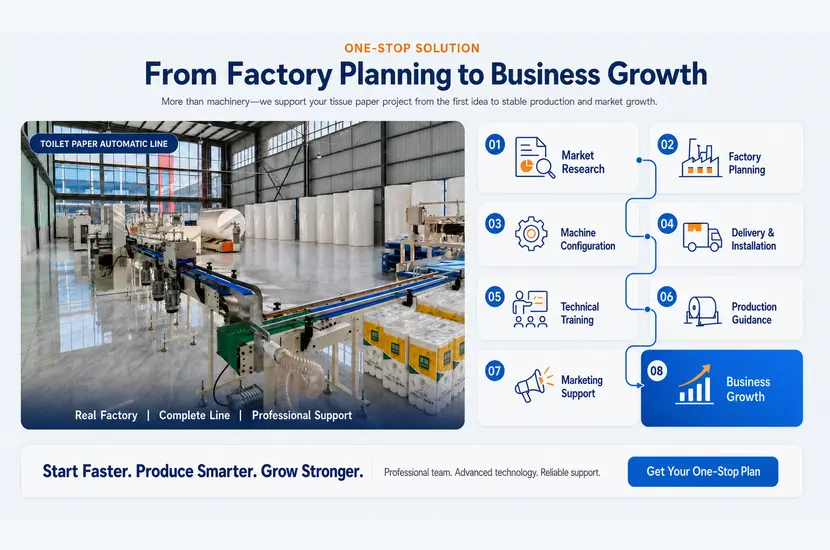
When you grab a roll of toilet paper, you're carrying the end of a very well-planned manufacturing process. A toilet paper production machine takes big rolls of tissue paper and turns them into ready-to-sell items using a system that includes rolling, embossing, rewinding, cutting, and packing. This toilet paper production machine solves some of the biggest problems in manufacturing, like cutting waste, making sure the quality of the rolls stays the same, and using less labor while still producing things quickly. Modern machines use advanced technology to make sure that every roll meets quality standards while keeping production costs low. This makes them necessary for companies that want to stay ahead in the market today.
Understanding the Toilet Paper Production Machine: Process and Components
From raw materials to finished goods, there are several steps that are all linked and work well together.
The Core Components Working in Harmony
At the center of every toilet paper production machine is the unwinding stand, which holds the parent jumbo roll. These are usually bought from paper mills that make tissue from new pulp, recovered fibers, or bamboo, which is becoming more popular as an option. Tension control systems in the unwinding process keep the paper feed rates steady, which keeps the low-GSM (grams per square meter) paper from tearing. As production goes on, magnetic powder brakes or servo motors make changes in real time as the width of the giant roll shrinks.
The next part is the embossing unit, which has steel wheels with patterns etched into them that press images into the paper. Embossing isn't just for looks; it makes the fabric bulkier and more absorbent by making air holes between the plies. For even designs, some machines offer point-to-point embossing. For extra softness, layered embossing is also available. It's important to get the pressure just right—too much will crush the fibers, and too little will not bond multi-ply goods well.
From Rewinding to Final Product
The final rolls are made by the rewinding head after the stamping head. The HENGYU Model HY-1575 is an example of current rewinding technology because it can handle original paper thicknesses of up to φ2200 mm. This machine automatically feeds cardboard cores with a diameter of 30 to 55 mm, applies glue strips for ply bonding, perforates sheets at set intervals, cuts the edges for smooth finishes, and winds the paper into logs with a diameter of 50 to 350 mm. The whole process goes on all the time, and each eight-hour shift can produce up to 2.5 to 3 tonnes.
At the cutting station, air or servo-driven saws cut these logs into individual rolls. Cutting with a range of within ±0.5mm makes sure that rolls fit standard machines and look the same on store shelves. Ventilation systems remove the paper dust that builds up to keep the workplace clean and protect the health of workers.
Packaging machines put labels on final rolls, wrap them in plastic film or paper bags, and arrange the items so they can be packed in bulk. Toilet paper production machines cut down on human work, speed up production, and keep up with hygiene standards that are important for consumer goods.
Machine Types for Different Production Scales
Based on how much they want to make, manufacturers pick from automatic, semi-automatic, and high-speed options. Semi-automatic machines need workers to add cores and take out finished logs by hand. These machines are good for businesses that want to test the market or make small batches of specialty products. Toilet paper production machines, like HENGYU's full production system, can feed cores, reverse, cut, and pack with little help from a person. This makes them perfect for established makers who want to expand their operations.
Toilet paper production machines can go faster than 280 meters per minute and are made for large factories that serve big store chains. The toilet paper production machine can handle different needs, like extra-soft luxury tissues, recycled paper with shorter fiber lengths, or big rolls for businesses. Each type of machine is designed to handle different types of raw materials and end products.
A complete business environment is made up of these parts that work together. Machine settings are affected by the type of material used. For example, recycled wood needs to be handled more gently than fresh fibers, and the perforation spacing on bamboo-based paper may need to be changed. Manufacturers can choose equipment that fits their quality standards and market placement better when they know how each part affects the end product.
Advantages and Performance Factors of Automatic Toilet Paper Production Machines
Moving to automation changes the costs of production and the consistency of the products in ways that can be measured.
Efficiency Gains That Impact Your Bottom Line
Toilet paper production machines are much better for operations than the old ways of doing things. When core filling, glue application, and log removal are done by machines without constant control, labor costs drop by a huge amount. Through centralized HMI touchscreens, a single operator can keep an eye on multiple stages of production. This frees up workers to do more valuable jobs like quality control or maintenance.
Because toilet paper production machines don't have to worry about people's pace, throughput goes up. With a total power consumption of only 5.5kW + 0.75kW, the HY-1575 is a very energy-efficient machine that can make up to three tonnes of steel every day while keeping electricity costs low. This efficiency directly leads to competitive prices in markets where profit margins are always getting smaller.
When machines handle important factors, the quality of the product is always the same. Automated tension systems stop wrapping from being too loose or too tight, which can damage rolls. Precisely applying glue makes sure that the plies stay together during shipping and handling. Customers can always count the same number of sheets when the hole spacing is the same. This builds trust in the brand.
Performance Metrics Manufacturers Monitor
The most important thing for buyers to look at is production ability. Small to medium-sized businesses can use toilet paper production machines with 2.5T to 3T per day to get a foothold in the market or test out new product lines. For larger businesses to meet distribution needs easily, they need tools that can make five tons or more.
The amount of energy used has a big effect on ongoing operating costs. Modern machines have variable frequency drives that change the speed of the motors based on the needs of the production line at any given time. This cuts down on waste during start-up, slowdown, and product changes. Compared to older fixed-speed models, energy-efficient designs can save thousands of dollars over the course of a year of continued use.
Precision in the machine is needed for good rolls. Chrome-plated rollers don't rust in wet factories and keep their smooth surfaces so they don't leave marks on paper. Frames made of reinforced steel keep vibrations from happening that could lead to uneven winding or bad cutting. When buyers do factory acceptance tests, they make sure that the dynamic balance on the high-speed rollers is correct, that the stamping depth is the same across the whole web width, and that the cutting precision meets the required standards.
Maintenance Practices That Extend Equipment Life
Maintaining machines on a regular basis keeps them running well and avoids costly downtime. Paper dust and glue residue build up on embossing rollers, which need to be cleaned once a week to keep the pattern clear. Every 500 hours of use, mechanical bearings need to be oiled so that heat doesn't build up and speed up wear. For pneumatic systems to work consistently, seals and pressure controls need to be checked on a regular basis.
During maintenance times, help from suppliers is very important. You can feel safe with HENGYU's one-year quality promise and lifetime expert service, but how quickly production can start up again after a part fails depends on how easy it is to get spare parts. Manufacturers that do business in markets that are far from their suppliers' offices should check where their parts inventory is kept and how long it usually takes to ship during the buying talks.
In terms of money, preventative upkeep is better than reactive fixes. Planning to repair parts based on what the maker says is cheaper than stopping production lines in the middle of an emergency. By teaching workers to spot early warning signs like strange noises, changes in vibration, or quality differences, you can take quick action that causes as little trouble as possible. Because of these benefits, toilet paper production machines are more like strategic investments than just capital costs. This is especially true for companies that want to grow over the long run.
How to Choose the Right Toilet Paper Production Machine for Your Business
To choose the right toilet paper production machine, you need to carefully look at your current wants and your plans for growth in the future.
Assessing Production Scale and Budget Parameters
The machine's specs depend on how much power you want. When new companies join the market, they often start with semi-automatic machines that make 1-2 tons of goods every day. This helps them keep their original investment low while they learn how to run the machines properly. As the market grows, switching to automatic systems like the HY-1575 improves output without having to completely redesign the facility. Its small footprint of 6200 x 3200 x 1900 mm makes it easy to fit into existing plant spaces.
Budget planning includes more than just the price of the item. Figure out the total cost of ownership, which should include installation, training for operators, energy use, repair materials, and a collection of spare parts. It's possible that machines that cost more up front but use less energy will be worth more in the long run than cheaper machines that use too much power. Suppliers' financing choices can help you spread out your capital needs over time, which makes it easier to handle your cash flow during the start-up phase.
Reliability of suppliers should be carefully checked out. HENGYU has been making things for more than 20 years, and their CE and ISO certifications show that they follow set quality standards. Ask current users in similar markets for references. Their operating experiences can tell you a lot about how reliable the machine is, how quickly support responds, and any hidden costs that the specs don't show.
Evaluating Customization and Value-Added Services
As market needs change, production needs to be able to adapt. Manufacturers can adapt to changing customer tastes without having to buy new equipment when their machines have changeable roll diameters, perforation spacing, and core sizes. OEM/ODM features allow customization of branding elements like control panel languages, safety signs, and machine colors. This is useful for companies that sell equipment or do business in areas with a lot of different languages.
Time-to-production is cut down by installation and training services. Full packages come with setting up the equipment, teaching the user how to use it, and test production runs to make sure everything works well before the seller leaves. Video troubleshooting, software updates, and diagnostic help are all examples of remote support that can be very helpful when technology problems happen outside of normal business hours or in places where there isn't a lot of local knowledge.
The built-in features of the HY-1575 make this value offer very clear. Auto core giving gets rid of the need to handle cores by hand, which slows down production and puts stress on the body. Multiple process steps can be done in one machine thanks to built-in perforation, glueing, and cutting functions. This saves floor room and makes operator training easier. This kind of all-in-one smart operation speeds up work processes for companies that don't have a lot of experience with manufacturing.
Balancing Performance with Long-Term Support
Total ownership costs are greatly affected by how long a machine lasts. The HY-1575 weighs 2500 kg, which shows that it is built to last and be used continuously in industry. Heavy-gauge steel frames can handle practical loads better than lighter frames that may need to be fixed more often or replaced too soon.
Different sellers have very different ways of providing service after the sale. Some give a basic warranty and help for a fee later, while others, like HENGYU, offer free technical support for life. For new factory investors who don't have their own repair staff, full ongoing help is worth the extra cost because it lowers business risks and speeds up problem-solving.
Professionals in charge of buying things should ask for full specs, output samples from demo machines, and clear information on when the goods will be delivered. Global transportation skills make sure that equipment comes on time, which is very important when planning when to build a facility, hire workers, and start a new product on the market. These choice factors work together to make tools either a competitive benefit or a source of operational frustration.
Sustainable and Waste Management Practices in Toilet Paper Manufacturing
Environmental duty affects buying choices and following the rules more and more.
Eco-Friendly Machine Features Reducing Resource Consumption
Modern toilet paper production machines use technologies that have less of an effect on the world. Motors that are energy-efficient use less electricity. The HY-1575's small 6.25kW total power is a good example of this. Instead of running at full capacity all the time, variable speed controls change the output to match the demand. This cuts down on waste during product changes or repair times.
Processing recycled wood directly helps reach environmental goals. Machines made to work with 100% recycled content can handle shorter fibre lengths that tear more easily than fresh pulp. Specialized tension controls and kinder handling systems keep the material from breaking, which would otherwise turn it into scrap. Using salvaged materials lowers the need to cut down on trees and often lowers the cost of raw materials, which is good for both the environment and the economy.
Upstream paper production uses a lot of water and chemicals, which has a big effect on total sustainability. However, turning machinery only uses a small amount of liquids. Systems that exactly control the amount of glue used stop extra glue from being used that doesn't help the joining process. When less glue is used, costs go down and volatile organic compound pollution in factories goes down as well.
Managing Production Waste Effectively
Even processes that are very efficient make trash that needs to be dealt with properly. Edge trimming makes narrow paper strips that make up 2 to 4 percent of the material that goes in, based on the width of the jumbo rolls and the requirements for the finished product. Reliable makers collect these waste materials and send them back to paper mills to be re-pulped and used in new production processes.
Defective rolls—those that aren't rolled correctly, cut correctly, or pass quality checks—need to be thrown away or recycled in a planned way. Setting up quality control checkpoints helps find problems quickly, which keeps waste from building up. Some companies find secondhand markets for goods that don't meet their standards and sell them at lower prices to customers with less strict requirements instead of throwing away usable material.
Core loss is another thing to think about. After rolls are used up, cardboard tubes end up in the trash, though more and more makers are using core materials that can be recycled or broken down naturally. It's important to make sure that machines can work with eco-friendly cores because some alternative materials have different surface properties that can affect how they feed and how well they stick to glue.
Compliance and Certification Advantages
Environmental laws are different around the world, but they are becoming tougher over time. CE approval shows that a product meets the safety and environmental standards of the European Union. This lets you sell your products in markets with stricter rules. The ISO 14001 environmental management certification shows organized ways to reduce the damage to the environment. This is a valuable badge that boosts a company's image and attracts customers who care about the environment.
Energy efficiency ratings and carbon footprint paperwork help companies show their commitment to sustainability to customers who are making more and more buying decisions based on environmental factors. Machines that support green production methods have benefits for both operations and marketing. This is especially true in developed markets where demands for sustainability are growing. These practices help manufacturers be good corporate citizens while also taking care of real business issues. This makes it possible for environmental responsibility and wealth to go hand in hand.
Conclusion
Manufacturers can make smart equipment investments when they know how a toilet paper production machine turns raw materials into finished goods. Modern automatic systems offer measured benefits such as higher output, uniform quality, less reliance on manual labor, and better use of resources. The process of making a choice takes into account the needed production size, the budget, the dependability of the supplier, and the ability to provide long-term assistance. As sustainability becomes both a legal requirement and a business expectation, environmental factors become more important in choosing tools. In a field where quality and efficiency are key to success, picking the right production line—whether it's a semi-automatic system for new businesses or a fully integrated automatic solution for established ones—has a direct effect on how competitive a company is, how much it costs to run, and where it stands in the market.
FAQ
What production capacity should I target for a new tissue manufacturing facility?
New businesses usually start out with a toilet paper production machine that can produce 2.5 to 3 tonnes per day, which is the same amount that the HY-1575 can. This amount lets you test the market without building up too much inventory, and it keeps the original investment manageable. Adding second jobs or changing to machines with more capacity is a systematic way to increase output as demand rises.
How much factory space does a complete production line require?
The HY-1575 is 6200×3200×1900 mm in size, so it needs about 20 square meters of floor space, plus extra space for storing materials, placing finished goods, and moving the user. Depending on the amount of automation and the way the storage is set up, a full facility with packing tools usually needs 200 to 300 square meters.
What after-sales services should I expect from equipment suppliers?
Full support includes overseeing the installation, teaching operators, helping with test production, and ongoing expert advice. HENGYU offers expert support for life and a one-year quality warranty that covers problems with the way the products were made. During the buying process, make sure you know about reaction times, remote help, and the availability of spare parts in your area.
Partner with HENGYU for Your Toilet Paper Production Success
With more than twenty years of engineering expertise, HENGYU is a reliable toilet paper production machine manufacturer. Our full production line solutions, including the efficient HY-1575 auto rewinding system and cutting and packing tools, meet the needs of both new businesses looking for turnkey factory sets and existing businesses wanting to increase their capacity. We make sure that the machine setups, running languages, and branding elements we use are exactly what your market needs. Our equipment is CE and ISO approved, so you can be sure it will work well. It also comes with global logistics support and full expert service. Our team gives you the advice you need to get the most out of your investment, whether you're starting a new business or improving an old one. Get in touch with doris@hytissuemachine.com right away to get full specs, production samples, or to set up a meeting that will help you find equipment that fits your manufacturing goals.
References
1. Thompson, R. (2022). Industrial Tissue Converting: Modern Equipment and Process Optimization. Manufacturing Technology Press.
2. Chen, L. & Martinez, P. (2023). "Automation Impact on Tissue Product Quality and Manufacturing Costs." Journal of Paper Technology and Industrial Processing, 45(3), 178-194.
3. Global Tissue Association. (2024). Tissue Manufacturing Equipment Standards and Best Practices Guide. Industry Publication Series.
4. Anderson, K. (2023). Sustainable Manufacturing in the Tissue Paper Industry: Equipment Selection and Waste Reduction Strategies. Environmental Industrial Press.
5. Zhao, W. & Johnson, M. (2022). "Comparative Analysis of Automatic versus Semi-Automatic Tissue Converting Equipment Performance." International Manufacturing Review, 38(2), 112-129.
6. European Paper Machinery Consortium. (2023). Technical Specifications for Toilet Paper Rewinding and Converting Machinery. Standards Documentation Volume 12.
- 1
- 6
- 7
- 8
- 9
_1787294187070.webp)
_1784082301486.webp)