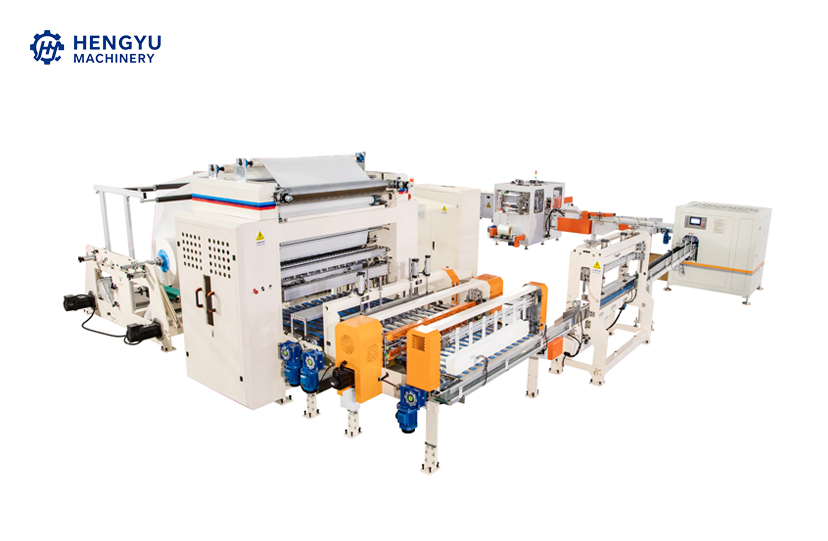
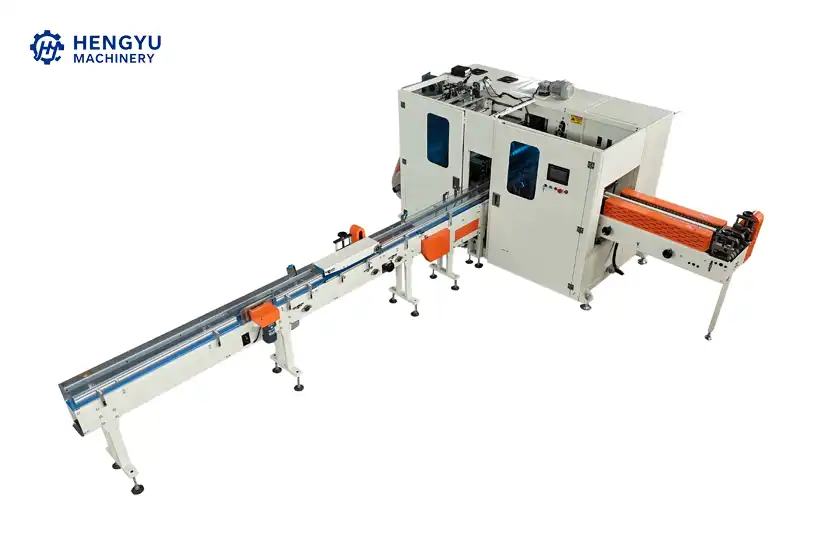
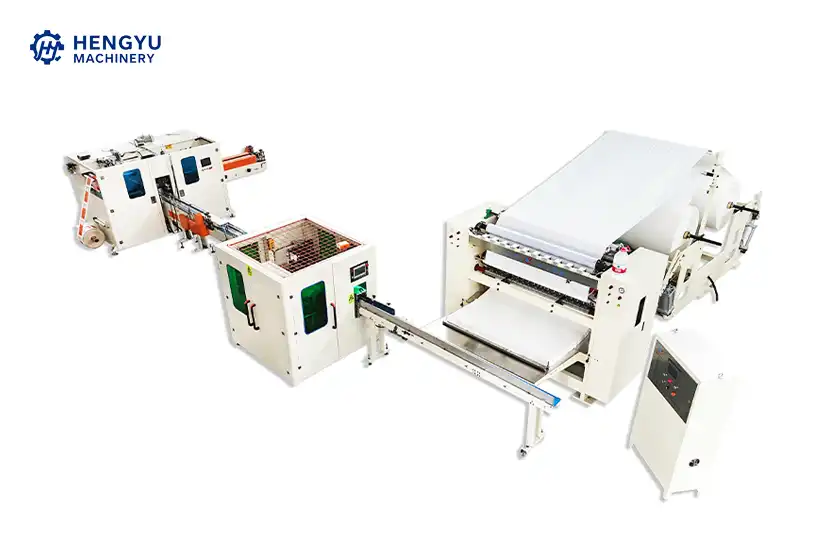
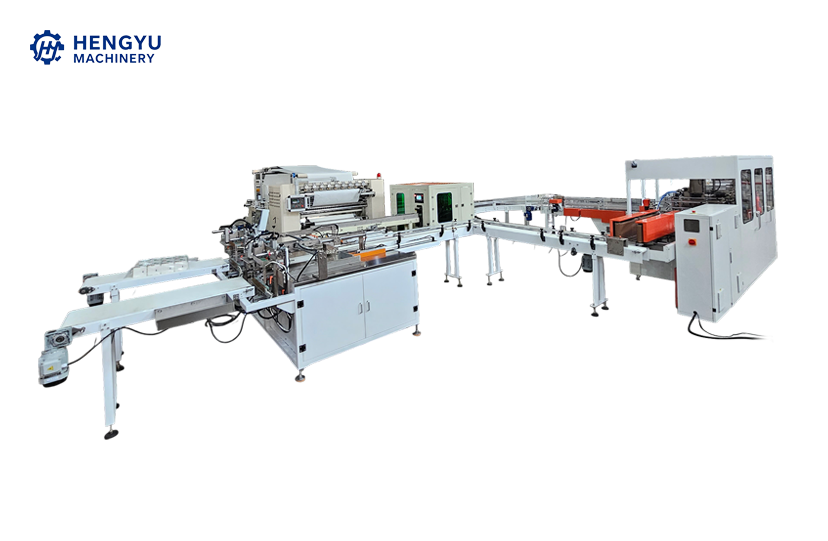
Facial Tissue Converting Machine
690 mm Jumbo Roll Capacity
Custom Tissue Sizes Available
Precision Timing Belt Drive
7.5 kW Vacuum Folding System
Compact Design, Only 3.7 m Length
Easy Operation & Low Maintenance
Ideal for Small and Medium Tissue Manufacturers
Facial Tissue Converting Machine | High-Speed Production Solution
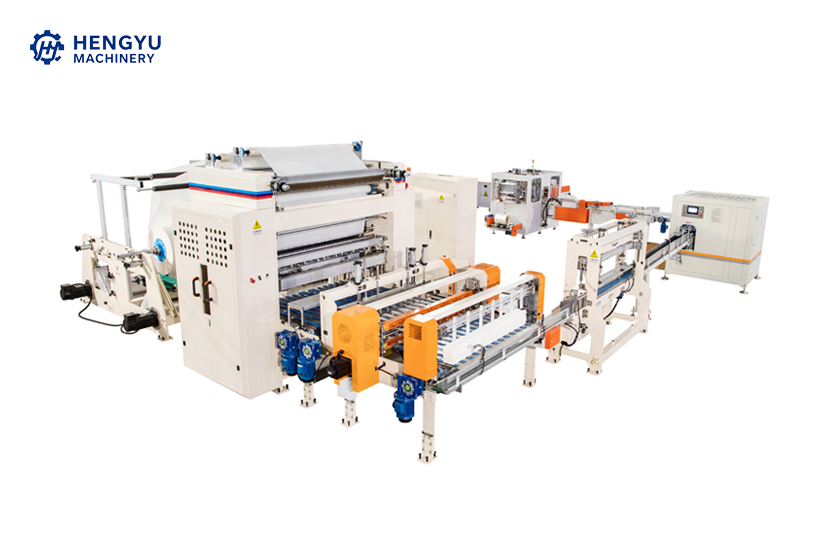
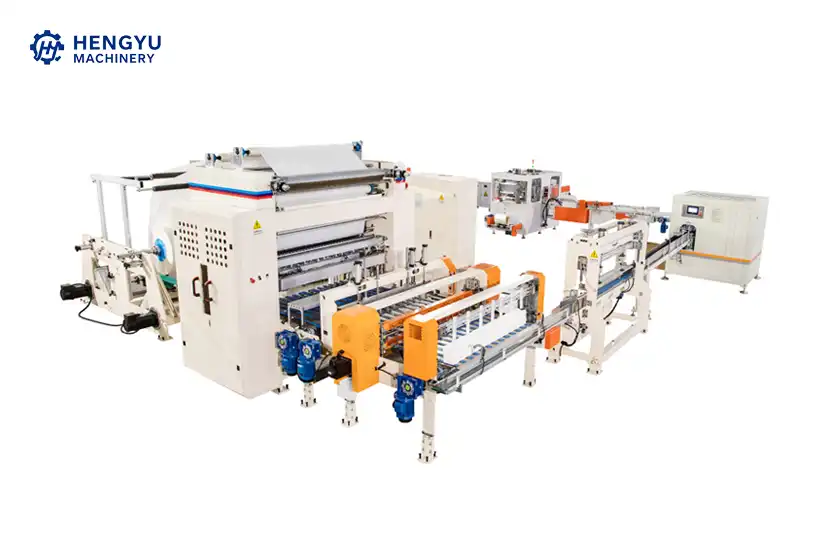
Henan Hengyu Machinery's Facial Tissue Converting Machine delivers enterprise-grade performance with a stable production output of 80–90 m/min. Designed with a precision timing belt drive and a 7.5 kW vacuum folding mechanism, this little equipment is only 3.7 m long and can handle jumbo roll widths of 690 mm and diameters up to 1100 mm.
With conventional fold dimensions of 105 x 230 mm, the machine allows for bespoke tissue size. Its low-maintenance design, driven by a 3.0 kW main motor, making it ideal for small and medium tissue manufacturers seeking solid production efficiency without excessive floor area requirements or difficult operational protocols.

Technical Specifications Overview
| Parameter | Specification |
|---|---|
| Model | 3L-690mm Facial Tissue Converting Machine |
| Fold Product Size | 105×230 mm (customizable) |
| Product Open Size | 210×230 mm (customizable) |
| Max Jumbo Roll Width | 690 mm |
| Jumbo Roll Diameter | 1100 mm |
| Jumbo Roll Tube Diameter | 76.2 mm |
| Production Capacity | 80–90 m/min (stable speed) |
| Main Motor Power | 3.0 kW |
| Roots Blower Motor | 7.5 kW, 23 kPa |
| Pneumatic System | 3 HP air compressor, min 5 kg/cm² |
| Driving System | Timing belt |
| Machine Dimensions | 3700×1500×1900 mm |
| Weight | 2.0 T |
Why Choose Our Facial Tissue Converting Solution
Compact Yet Powerful Design
Your production floor space is valuable. Our Facial Tissue Converting Machine fits into facilities with limited square footage while maintaining commercial-grade output.
The 3.7-meter length allows you to integrate this equipment seamlessly into existing workflows. You won't need costly facility expansions to start professional tissue production.
Consistent High-Speed Performance
Variations in speed cause waste materials and interfere with manufacturing schedules. Our machine operates steadily at 80–90 m/min, guaranteeing consistent daily output for your company plans.
Vibration and mechanical stress are reduced by the precise timing belt drive system. This results in more productive hours per shift and fewer unplanned shutdowns.

Flexible Product Customization
Different client categories and geographical areas have different market demands. To accommodate local preferences, fold size beyond the typical 105 x 230 mm layout can be readily adjusted.
Whether your clients prefer soft pack facial tissues or packaged types, our conversion equipment adapts to numerous product formats. This versatility protects your investment as market trends evolve.
Energy-Efficient Operation
Your profit margins are immediately impacted by rising electricity bills. With a total power usage headed by a 3.0 kW main motor and 7.5 kW vacuum system, you will maintain competitive production costs.
A 3 HP air compressor operating at 5 kg/cm² pressure is all that is needed for the pneumatic system. Even with prolonged production runs, your operating costs are still controllable.
Core Manufacturing Advantages
Steel-to-Steel Embossing Technology
Premium tissue quality begins with expert embossing. Our steel-to-steel embossing method produces uniform patterns that improve absorbency and aesthetic appeal.
Plies are firmly bonded together without using a lot of adhesive thanks to the two-layer glue lamination technique. Even discriminating consumers will be satisfied with your final products because they will meet quality standards.
Low-Noise Synchronous Transmission
Both worker comfort and regulatory compliance are impacted by factory noise levels. When compared to chain-driven options, the synchronous belt transmission runs more silently.
There is less wear and mechanical friction when there is less noise. Longer component lifecycles and fewer maintenance intervals are what you will get.
Pneumatic Broken Paper Separation
Paper breaks happen occasionally in any converting process. The pneumatic separation system quickly removes defective material without manual intervention.
This automated quality control feature minimizes production interruptions. Your operators can focus on monitoring output rather than constantly clearing jams.
Dual Color Glue Lamination Capability
Our Facial Tissue Converting Machine differentiation helps your brand stand out in crowded markets. The dual color glue lamination device enables decorative edge treatments that enhance perceived value.
This feature is particularly valuable if you're targeting premium market segments. It allows you to command higher prices without investing in entirely separate equipment.
Ideal Applications and Production Scenarios
Small to Medium Manufacturing Operations
If you're launching a tissue business or expanding from distribution into manufacturing, this machine scales appropriately to your current capacity needs.
The 2.0-ton weight and standard power requirements mean you won't need specialized infrastructure. Most industrial facilities can accommodate installation with minimal preparation.
Multi-Product Tissue Businesses
Perhaps you already produce toilet paper or napkins and want to add facial tissues to your product portfolio. This converting machine integrates easily with existing jumbo roll inventory from your paper mill suppliers.
The ability to produce soft pack, boxed, V-fold, and N-fold tissues from one platform maximizes your production flexibility. You can respond quickly to changing customer orders without equipment changeovers.
Private Label and Contract Manufacturing
If you manufacture tissues for retailers or hospitality clients under their brand names, customization capabilities become essential. The adjustable sizing and embossing patterns let you fulfill diverse specifications.
Your clients will appreciate consistent quality across production batches. This reliability helps you secure long-term contracts and stable revenue streams.

Frequently Asked Questions
Q1: What type of tissue products can be produced?
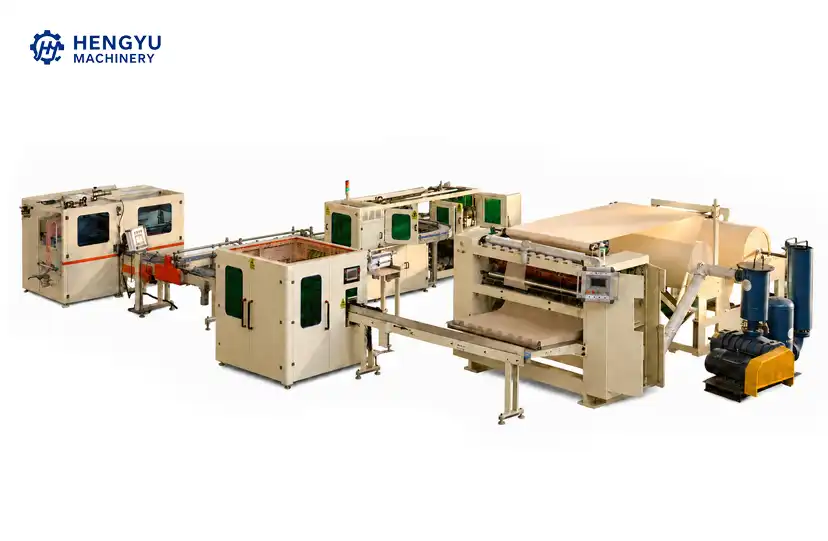
A: You can manufacture soft pack facial tissue, boxed facial tissue, V-fold tissue, and N-folding tissue. The machine handles multiple configurations to meet different market requirements.
Q2: How much factory space is required?
A: Small production lines require approximately 70-100 square meters. This includes space for the converting machine, raw material storage, and finished product staging areas.
Q4: What is the difference between semi-automatic and fully automatic facial tissue lines?
A: Semi-automatic lines require manual transfer of folded tissue stacks to packaging stations. Fully automatic lines integrate folding, cutting, packaging, and cartoning in a continuous process, significantly reducing labor costs and improving production speed.
Q5: What information should I provide before getting a quotation?
A: To recommend the best tissue production line for your needs, please share: which product you want to produce (toilet paper, facial tissue, hand towel, napkin, pocket tissue, or kitchen towel), your estimated budget, available factory area, local labor costs, target daily production capacity, and voltage requirements. This information helps us configure the optimal solution for your specific situation.
Q6: How does the machine handle material waste during setup?
A: The precision timing belt drive and pneumatic control systems minimize material waste during startup and adjustments. Most operators achieve efficient production within the first hour of each shift after initial training.
Get Started with Professional Tissue Manufacturing
Our Facial Tissue Converting Machine represents proven technology that balances performance and affordability.Ready to explore how this converting solution fits your production goals? Contact our team: doris@hytissuemachine.com.
_1786962247965.webp)
_1787294187070.webp)
_1784082301486.webp)