Shrink Wrap Tunnel vs. Heat Gun: Which Is Better for Packaging?
A shrink wrap tunnel is the better choice for most repeat production, while a heat gun fits occasional, oversized, or irregular jobs. A tunnel controls temperature, airflow, and conveyor speed, so every pack gets the same heat exposure, and it keeps pace with a sealing machine. A heat gun costs little and goes anywhere, but the result depends on the operator's hand. I wrote this guide for paper converters, private label packers, and small contract shops that want retail-looking packs without paying for pre-made bags. Below, I compare both tools and share how our team at HENGYU approaches the decision.
What Is a Shrink Wrap Tunnel and How Does It Work?
Before comparing tools, I want to define the equipment clearly.
How a Shrink Wrap Tunnel Creates a Uniform Package
There is a warm room inside a shrink wrap tunnel. First, the item goes through a machine that seals it by covering it with a thin film and cutting off the ends. The pack is then moved into the room by a moving belt. There, blowers move hot air over the whole film. Shrink film is stretched while it is being made, but heat makes it return to its original shape and stick to the product. The pack gets out of the tunnel, cools down, and is now ready to be boxed. The air and the belt both run at set speeds, so the first pack and the thousandth pack get the same care.
Temperature, Conveyor Speed, and Dwell Time
This is what you get when you change three settings: the temperature of the chamber, the speed of the conveyor, and the dwell time, or how long a pack stays in the heat. When you speed up the belts, the dwell time goes down. If you don't raise the heat, the film stays loose. Boxes that move more slowly could get burn marks or be warped. ASTM D2732 explains how labs check if plastic film shrinks freely at a certain temperature. This is why each film has a different range of temperatures it can be used in. A 15–30 m/min chain rod conveyor moves on the HENGYU HYN5030SL through a 1200 × 500 × 300 mm tunnel. Before you lock it in, I suggest that you change one setting at a time and check a few packs.
Shrink Wrap Tunnel Film Compatibility
The movie you choose affects everything else. Because it is clear and shrinks at moderate heat, POF film is often used for retail packs. You can also get PVC and PE films, but they need different temperatures. PE films usually need more heat and cooling at the end. Our system uses POF shrink film, so before you buy, I suggest making sure you have enough film. Ask the company that sells you the film what the temperature range is for shrinking and how thick it is. Then, test a piece on some real boxes. A test done during your wettest season tells you more than a data sheet because paper does change with heat and humidity.
Shrink Wrap Tunnel vs. Heat Gun: Key Performance Differences
Process control is the biggest hole, and it can be seen in three places.
Output Consistency and Packaging Quality
The distance, angle, and speed of the person using the heat gun are all important. If you move too slowly, the film will burn or pit, and if you move too quickly, the wrinkles will stay. Skill sets wear out after a few hundred packs, and quality goes down. Each pack gets the same amount of airflow and dwell time in a shrink wrap tunnel. This makes sure that the film tightness and clarity are the same from the first box to the last. Retail buyers quickly judge a pack based on its loose corners, which are also known as "dog ears." These corners make a product look cheap. You can also record the settings for each product in a tunnel, so the next shift doesn't have to guess what the first shift did.
Production Capacity and Conveyor-Based Workflow
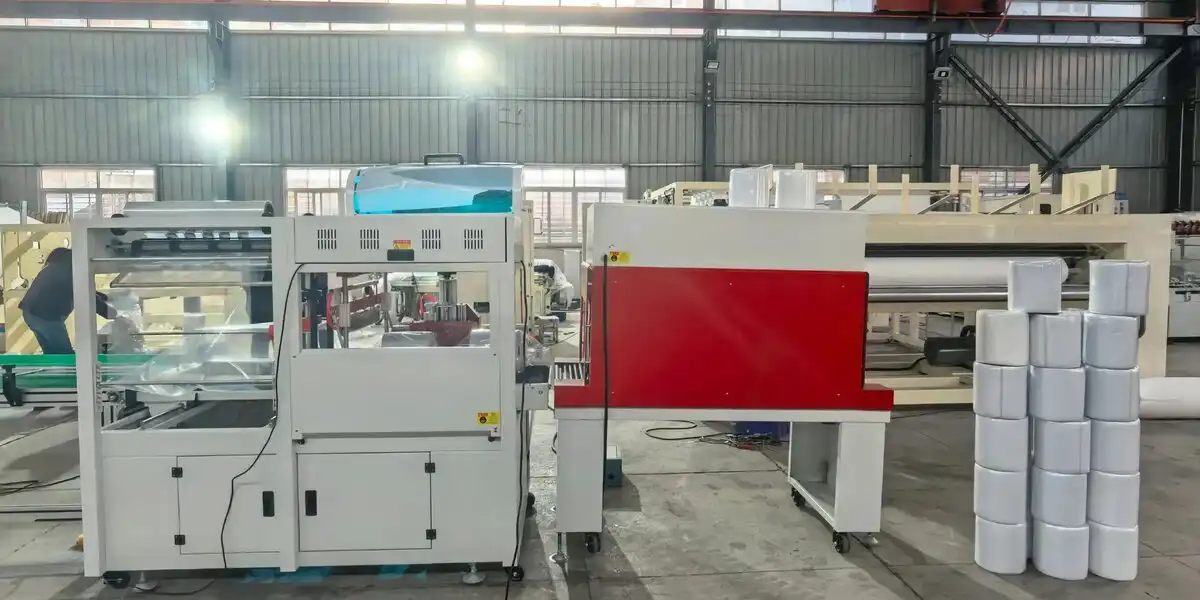
One person with a heat gun handles each pack at a time, turning or holding it. Sealing, shrinking, and cooling are all done in steady steps along a conveyor-fed line. The HENGYU HY-550A L-bar sealer and HYN5030SL tunnel can work together to seal up to 30 packs per minute. Photoelectric sensors find each item and instantly seal it. Workers don't have time to heat each pack because they are so busy loading goods and moving finished packs. If you're a tissue or paper converter who fills bulk orders, that rhythm helps you keep your delivery dates. An order is harder to plan when you use a heat gun because it can't keep a steady rate.
Labor, Energy, and Safety
Every time a worker packs a heat gun, they have to pay full attention to it because the hot nozzle is close to their hands and the film. Someone has to load and check the tunnel, and guards make sure that people don't touch the hot parts. An energy story is not a simple one. The HYN5030SL is rated at 11 kW, which is a lot more than a handheld gun. However, it works on packs all the time, so as the volume goes up, the energy per pack usually goes down. A gun uses less total power when it is very quiet. No matter which way you choose, OSHA's advice on safeguarding equipment (OSHA 3170) can help you make sure you cover all the moving parts and conveyor pinch points.
When Is a Heat Gun the Better Choice?
It's never my job to tell people that a heat gun is a bad tool. In some situations, it wins.
Low-Volume and Occasional Packaging Applications
A heat gun is worth the money if you wrap a few dozen things a week. There's no need for a conveyor belt or floor space, and it's easy to set up. It can also be stored in a box. A lot of stores use them to make sample runs, holiday sets, or to fix a pack that got lost. The cost is time and the grade of the end. Each pack is different, and what happens depends on who has the gun. Keep track of the hours you spend on heating in case your weekly count goes up or if customers start asking for a uniform look. That number often tells you when a small shrink wrap tunnel will pay for itself.
Irregular, Oversized, or Non-Conveyor-Friendly Products
Some things don't fit in a tunnel. The HYN5030SL can handle items up to 400 × 250 mm in size and up to 20 kg in weight. With the HY-550A, you can seal items that are between 500 mm and 600 mm long and wide altogether. These limits don't apply to bigger boxes, longer pieces, or packs with strange shapes. With a heat gun, you can shrink film around handles or protrusions that a set airflow might miss. If most of your range looks like this, the only way to go is with a hand tool or a tunnel that is built just for you.
Situations Where Flexibility Matters More Than Throughput
Sometimes, contract shops that switch goods every hour want to do no shift. There are no buttons on a heat gun. Just pick it up, wrap it, shrink it, and move on. It can also be used in places where an 11-kW tunnel doesn't have power, like a trade show booth or a client building. But I still tell owners to weigh that freedom against how consistent they are. Our system changes sizes with a handwheel, so big parts don't have to be taken out to switch formats. Time the effects as you use both ways on your three most-used products. Most of the time, the numbers make it easy to decide.
When Is a Shrink Wrap Tunnel the Better Choice?
When the same order comes in twice, the balance shifts toward robots.
Repetitive Commercial and Industrial Packaging
Every day, people who change tissue, make stationery, and pack small appliances use the same formats. They can count on a shrink wrap tunnel to give them consistent cycle times and a smooth, clear finish that sells well. Toilet paper rolls, kitchen towels, napkins, and facial tissue can all be handled by our system. The same line can also wrap stationery sets and other household items. Even if the order is small, wholesalers and small supermarkets often want packs that look like they are ready to go to the store. We have found that using POF film instead of pre-made bags can save you up to 40% on material costs. The film also shrinks around the product, making it more secure.
High-Volume Packaging with Consistent Quality Requirements
Being consistent keeps your image safe. The HY-550A has a constant-temperature sealing system that keeps the seals strong over long runs. The light sensors also make it less likely that packs will be missed. There will be less film trash and rework if there are fewer fails. You need fewer workers per shift because operators mostly watch the line, and video training covers operation. One maintenance tip that needs to be told the truth: paper dust can cover photoelectric sensors, so make sure you wipe them down regularly. Also, heat and humidity can change how paper cartons work, so as the seasons change, make changes to the settings and write down what works best.
Packaging Lines Requiring Conveyor Integration
A tunnel works best when it's part of a line. It weighs 350 kg and has a closing area of 650 x 550 mm. The HY-550A is 1750 x 900 x 1450 mm. The HYN5030SL is 1600 mm long, 860 mm wide, and 760 mm high. It weighs 100 kg, and its small size makes it easier to set up in a workshop. Before you do anything else, check the utilities. The sealer needs 5–7 bar of compressed air and 220V at 1.5 kW, and the tunnel can handle 220–380V. If your site uses a different power, like in the US, please let us know so we can confirm it will work before you ship it. When the packs are done, they leave the tunnel cool and can go straight into cartons or onto pallets.
How to Compare Shrink Wrap Tunnels Before Buying
The spec sheet only tells you part of the story, so please check these points.
Tunnel Size, Opening Dimensions, and Product Clearance
Measure your largest pack after you seal it, since the film makes it bigger. Check that size against the shrink wrap tunnel opening as well as the item itself. The HYN5030SL has a tunnel that is 1200 × 500 × 300 mm and a product size capacity of 400 × 250 mm. This means that you should leave room for film tails and new formats. Also, check the width of the conveyor belt, the maximum load, and the distance between packs. Packs that are too close to each other may shrink unevenly. Ask the supplier for a test video using your own boxes and film, and send them samples or photos with measurements.
Maintenance, Spare Parts, and Service Support
Find out who will be there when something breaks. Heating elements, belts, rollers, and sensors all wear out over time, so make sure the seller has parts in stock and can ship them abroad. There is a one-year warranty on parts that are broken by anything other than human error at HENGYU. There is also video training on how to use and maintain the equipment, and expert help is available 24 hours a day. Over 95% of our customers finish the work with our help from a distance. Still, on a small team, one person should be in charge of cleaning, changing films, and regular checks. The machine should have written settings next to it.
Cost, Procurement, and Supplier Capability
Check out not only the machine quote but also the total cost of delivery. Costs like shipping, security, import taxes, setup, training, extra parts, energy, film, and more should be included. Invoices, delivery dates, and written documents should all be asked for. Pay extra attention to the film supply because changes in prices and shipping times can have a bigger effect on your profit margin than the machine itself. For more than 20 years, HENGYU has been making tissue machines. They offer ODM/OEM customization of setups, product sizes, and programming languages. Our machines meet CE and ISO standards, which makes it easier for exports to go through. One way to save money is to buy used machines, but you should carefully check the warmth, settings, and safety features.
Conclusion
When flexibility and a small footprint are most important, like with low-volume, oversized, or irregular packaging, a heat gun can help. However, how well it works depends on how skilled and tired the operator is. A shrink wrap tunnel manages temperature, airflow, and dwell time so that shrinkage is even, output stays steady, and repeat production requires less work per pack. An L-bar sealer and a heat shrink tunnel work together in the HENGYU system to make up to 30 packs of POF film per minute. The system uses photoelectric detection and can save up to 40% of the material used to make pre-made bags. When buying something, people should compare the pack size to the tunnel hole, the power and air supply, the availability of film, the effects of humidity on paper, and the support for extra parts. The best way to make a choice is to test samples with real goods. The total cost, which includes film and labor, is more important than the cost of the machine itself.
FAQ
1. Is a shrink wrap tunnel more efficient than a heat gun?
Yes, for continuous, repeated packing because it saves time and makes sure that the products are the same every time. A heat gun might be cheaper in the long run for one-time use or very small amounts.
2. Can a shrink wrap tunnel replace a heat gun completely?
Not all the time. Things that are too big or don't fit right may not fit through the shrink wrap tunnel, so many shops keep a heat gun on hand for repairs and special tasks.
3. What film can a shrink wrap tunnel use?
Tunnels can usually handle POF, PVC, or PE, but you should make sure they'll work together. POF shrink film is used in the HENGYU method.
4. What information should I send for a quotation?
Send the size, weight, film type, voltage, goal output, air supply, and location of the product. Then we suggest a good setup.
Get the Right Shrink Wrap Tunnel Solution from HENGYU
Not sure if a heat gun or a shrink wrap tunnel will work for your business? HENGYU has been making shrink wrap tunnels for more than 20 years and has experience with tissue machinery. They can look at your products, film, output target, and power supply and then suggest a configuration that will work best for you, with remote installation support. You can email your information to hengyu@hytissuemachine.com to see the whole selection.
References
1. Plastics Packaging: Properties, Processing, Applications, and Regulations, 2004
2. Food Packaging: Principles and Practice, 2012
3. Handbook of Paper and Paperboard Packaging Technology, 2013
4. The Wiley Encyclopedia of Packaging Technology, 2009
5. ASTM D2732: Standard Test Method for Unrestrained Linear Thermal Shrinkage of Plastic Film and Sheeting, 2014
6. OSHA 3170: Safeguarding Equipment and Protecting Employees from Amputations, 2002