BLOG List
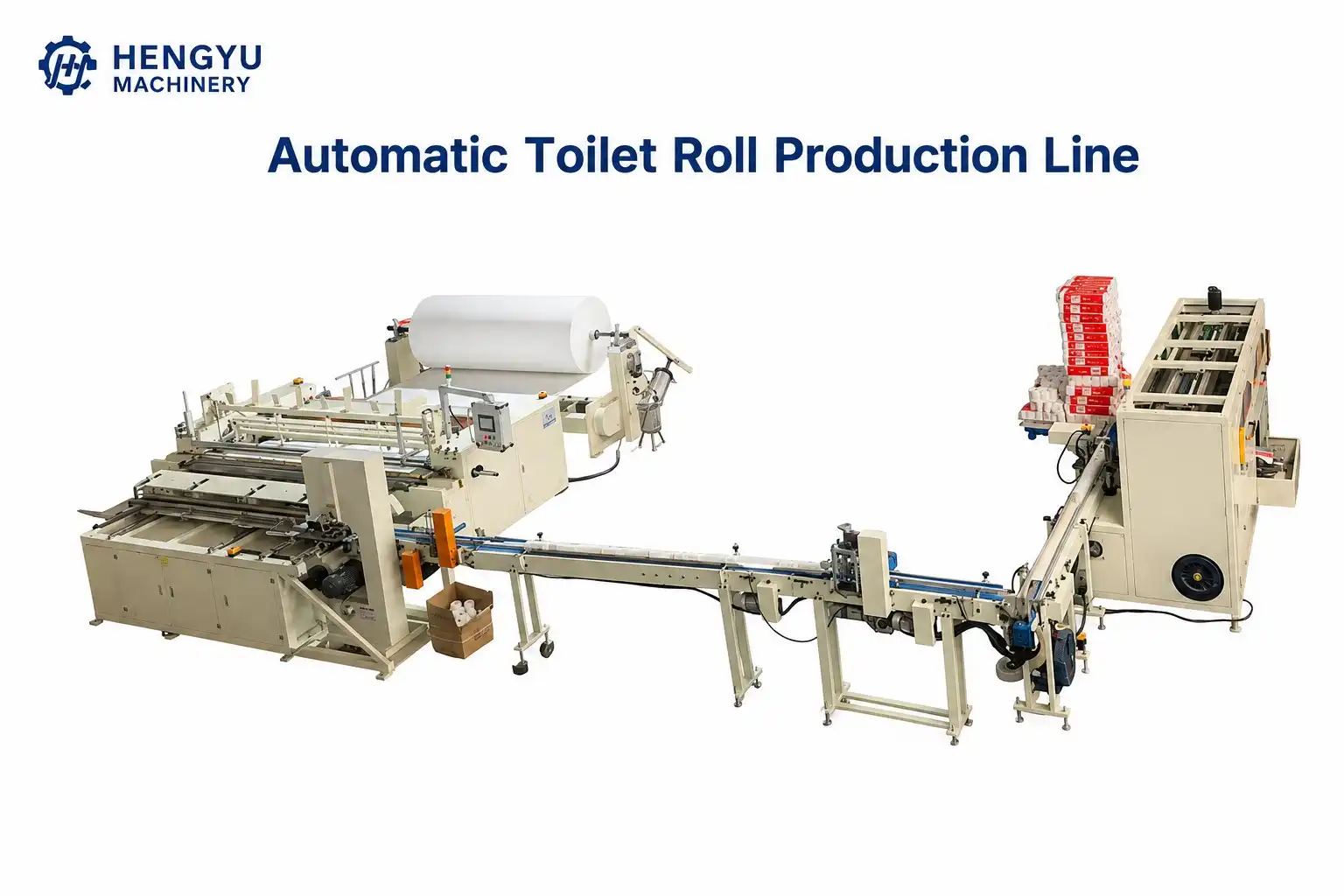
Getting your tissue production tools from the right provider will determine whether your investment pays off over time or turns into a costly burden. When looking at automatic toilet paper making machine providers, you should pay attention to how well they can offer integrated production line solutions, how long they've been in business, and how committed they are to providing help after the machine is installed. The best supplier knows that you're not just buying one piece of equipment; you're starting a relationship that will affect how efficiently you make things, how consistently good your products are, and how you can scale up or down operations based on market demand for the entire lifecycle of your manufacturing facility.
Understanding the Core Needs of Your Toilet Paper Manufacturing Business
You need to be clear on what your business needs from a production line before you call any suppliers. This clarity stops expensive mismatches between what the equipment can do and how it is actually used.
Defining Production Capacity and Output Goals
Every piece of tools you buy is based on your daily output goals. A new company that wants to make 50,000 rolls per day needs very different equipment than a well-known company that wants to make 200,000 rolls per day. Figure out how much you want to make by thinking about how much space you have, how much you can store, and how you will get it to people. Scalability is something that many new plant owners don't think about enough. Choosing equipment that can handle a 30–40% increase in capacity without needing a full line replacement will protect your investment as your business grows. When talking to providers about capacity, you should not only say your maximum output but also what your minimum efficient production run should be. This is because some high-speed systems don't work well at lower capacities.
Technical Specifications That Matter
Production productivity is directly linked to machine speed, but speed doesn't mean much without regularity. The HY-3000 model is intended to work at 280 meters per minute and can turn jumbo rolls into final goods at a rate of more than 3,000 rolls per hour when set up correctly. In addition to speed, you should also look at how automated the whole production line is. Automatic cutting, perforation, embossing, and sending of the core cut down on the amount of work that needs to be done and the chance of mistakes. Energy use is a big ongoing cost. Systems that have separate motor control for each function (rewinding, piercing, cutting, and trimming) can precisely manage power, which cuts down on waste during times of inactivity or partial operation.
The base paper suitability range is very important. The ability of equipment to handle 13–22 g/m² paper weights and up to three customizable layers lets you make different product grades without having to change the equipment. The ability of jumbo rolls to hold parent rolls up to 1,500 mm in diameter also changes the operating flow. Machines that can handle these rolls reduce the number of changeovers needed, which keeps production going during times of high demand.
Budget Analysis Beyond Purchase Price
The initial cost of the tools is only one part of the total cost of ownership. A complete budget includes costs for setting up the equipment, training the operators, keeping spare parts on hand, regular upkeep, and tracking how much energy the equipment will use over its predicted lifetime. Some sellers offer "turnkey" options that include all of these parts. This makes it easier to budget because you can predict how much each part will cost. To figure out your expected return on investment, divide the expected yearly profit growth by the total first-year costs, which should include tools, installation, training, and working capital for stocking up on materials. Under normal working conditions, most tissue production lines pay for themselves in 18 to 36 months. However, this can change depending on the prices in the local market and how well the lines are run.
Key Criteria for Evaluating Automatic Toilet Paper Machine Suppliers
Selecting an automatic toilet paper making machine supplier takes a thorough analysis of many factors that show how reliable they are and how likely they are to be a long-term partner.
Certifications, Warranties, and Service Networks
International licenses, such as CE approval and ISO9001 quality management standards, show that a piece of equipment meets certain standards for safety and performance. These certificates aren't just pieces of paper; they show how the product was designed, what materials were used, and how it was made in a way that lowers the risk of failure. The terms of the warranty show how confident the supplier is in their goods. A normal quality guarantee of one year should cover all important parts and spell out exactly how long it will take to respond and replace parts. Check to see if the seller has service technicians in your area or works with trained service providers in your area. When your equipment breaks down, you lose money on production. Suppliers who can provide quick service help you avoid these losses.
Product Portfolio and Technology Integration
Suppliers who only sell tools for changing tissues usually know more about how things work than suppliers who sell a wide range of machines. Check to see if the provider offers full production line options instead of just machines. Integrated systems from a single maker make sure that all of the parts work together and make fixing easier. Advanced control systems show how technologically advanced they are. For example, PLC control with touch screen HMI interfaces lets workers change the perforation pitch, rewinding speed, and roll width using simple digital controls instead of making mechanical changes by hand. When controlling the rewinding diameter, pneumatic pressure adjustment methods give more uniform product measurements than mechanical ones. This means that quality differences between production batches are lessened.
Pricing Transparency and Purchase Terms
Suppliers you can trust give you detailed quotes that include the prices of the tools, shipping, installation, and training. This openness lets you make a good budget and stops you from having to pay for things you didn't plan for. Flexible payment terms that work with project deadlines, like a deposit when the order is confirmed, part payment before shipping, and final payment after the installation is accepted, spread out the money needs over the course of the project. Some suppliers let you finance or lease tools, which lets you keep your operating cash for things like raw materials and operational costs while you're getting started.
After-Sales Support and Spare Parts Availability
The need for maintenance has a direct effect on your ability to keep running. Suppliers should give full training to operators that includes how to use the equipment every day, how to do regular upkeep, and how to fix common problems. This training gives your team the skills they need to fix small problems without outside help, which cuts down on downtime. Make sure that important wear parts like cutting knives, piercing blades, and stamping rollers are easy to get and don't take too long to arrive. Some sellers keep extra parts in regional distribution centers so that they can be sent out quickly when they are needed. Lifetime technical support, which includes remote troubleshooting and consultation services, is very valuable because it gives you professional advice for as long as your equipment works.
Comparing Popular Automatic Toilet Paper Machine Types and Their Matching Suppliers
Knowing the different ways that tools can be set up can help you find the right technology for your business needs and working situation.
Fully Automatic Systems for High-Volume Production
Fully automatic production lines do rewinding, stamping, perforating, cutting, and even packing all at the same time, with very little help from a person. The higher starting cost of these systems is worth it in high-volume factory settings where consistent quality and labor economy are important. The HY-3000 Automatic Toilet Paper Making Machine is a good example of this type of machine because it has automatic core feeding that gets rid of the need to manually position the cores, pneumatic paper break detection that stops production right away if the web breaks, and frequency inverter speed control that keeps all stages of production running at the same speed.
When these systems are used by manufacturers, they usually make standard goods for retail sales, where the regularity of the products has a direct effect on the image of the brand. Touch-screen control makes sure that every roll is the right size by letting you set the exact perforation pitch within ±2 mm and change the final roll widths from 50 mm to 180 mm. This level of uniformity cuts down on customer complaints and returns, which hurt profits.
Semi-Automatic and Manual Alternatives
Semi-automatic equipment needs help from a user for some tasks, like loading the core or taking off the roll, but it does the real converting itself. For smaller businesses where labor costs are low and production rates aren't high enough to support fully automatic systems, these machines work well. Manual machines are becoming less common in business production, but they are still used in certain situations or on a very small scale when flexibility is more important than speed. When weighing these options, you should think about more than just present labor costs. You should also think about how wages will rise and how many workers will be available in your area in five years.
Compact and Energy-Efficient Solutions
Some companies offer small machine setups that work well for places that don't have a lot of room or that make a lot of different kinds of products and need to switch between pieces of equipment all the time. As the price of power goes up and environmental rules get stricter, saving energy has become more important. Power management is very accurate when each function's motor is controlled separately, such as the 2.2kW rewinding motor, the 4kW perforation and embossing motor, the 0.37kW cutting motor, and the 0.75kW trimming motor configuration. When not in use or during repair, motors that aren't needed can be turned off. This saves energy compared to systems with a single large motor that drives all tasks through mechanical links.
Real-Life Case Studies: Successful Procurement Strategies and Supplier Collaborations
By reading about other people's experiences, you can avoid common mistakes and find out what makes supply relationships work.
Mid-Sized Manufacturer Scaling Production
A company in East Africa that sells tissue goods chose to build its own factory so it wouldn't have to rely on imports and could make more money. Because they didn't have experience making things, they teamed up with an OEM source that could give them complete answers. Based on the client's market research, the provider evaluated the facility and suggested the right equipment capacity. They then provided a full production line with jumbo roll unwinding stands, automatic rewinding and cutting systems, and packing equipment further downstream. In addition to delivering the equipment, the provider sent technicians to set it up on-site and gave the operators two weeks of intense training that covered how to use the machines, how to do quality control, and how to do preventative maintenance.
Because of this all-around automatic toilet paper making machine solution, the client could start making money within eight weeks of receiving the system. During the first few months, the supplier's ongoing technical support helped them find the best output parameters. As operators got experience, efficiency slowly rose from 60% of rated capacity to over 85% of rated capacity. The relationship went from being a simple transaction to a partnership, and now the client talks to the provider about plans to increase output or offer a wider range of products.
Cost Optimization Through Strategic Equipment Selection
A North American tissue converter that had been using semi-automatic equipment for fifteen years had to deal with rising labor costs and problems keeping the quality of their work consistent. Instead of buying the newest high-speed tools, they carefully thought about what they needed to make and how they wanted to place themselves in the market. Working with an experienced provider, they chose reasonably priced automatic equipment that would fit their current production needs and have room for a 40% increase. This strategy method kept them from investing too much in capacity that they didn't need, and it got rid of the problems with their older equipment, like inefficient labor and varying quality.
Because the supplier's prices were clear, they were able to use the rest of the budget to pay for thorough training for operators and an initial stock of extra parts, which made sure that operations ran smoothly from the start. Within fourteen months, higher productivity and lower labor costs helped the company fully recover its investment. Quality changes also helped strengthen its relationships with store customers.
Practical Maintenance and Support Factors to Confirm Before Supplier Commitment
Maintenance methods and help tools play a big role in how long equipment lasts and how well it works all the time.
Scheduled Maintenance Plans and Technician Training
With preventive maintenance, small problems don't get worse and turn into big breakdowns. Suppliers should give thorough repair schedules for each system component that list the daily, weekly, monthly, and yearly service needs. As part of daily upkeep, the perforation blades are usually cleaned, the air pressure levels are checked, and the belt tension is checked. Every week, you might have to lubricate the drive chains and check the sharpness of the cutting knives. Electrical connections, motor bearings, and the tuning of the control system are often checked thoroughly once a month as part of routine maintenance.
Your repair team can do these jobs right because they have had full training. Not only should the training cover the steps, but also the reasons behind them. This way, technicians will understand how certain upkeep actions stop certain types of failure. They can spot early warning signs of problems before they stop production because of this information.
Common Issues and Troubleshooting Protocols
Even equipment that has been well taken care of sometimes stops working. Knowing about common problems helps you judge the quality of provider support. Uneven rewinding density is often caused by wrong pneumatic pressure settings or bad synchronization between the winding rollers. These issues can be easily fixed by making changes to the control panel if workers understand how the machine works. When paper breaks, it could mean that there is too much stress, dull piercing blades, or incorrect embossing pressure. When the perforation pitch isn't constant, it's usually because the perforation knife roller drive system is worn out or the wrong gears were chosen.
Problems can be fixed faster when suppliers offer thorough debugging guides with diagnostic flowcharts. When technicians can access machine control systems through the internet, they can look at operating data and help local staff fix things. This is called remote diagnostics, and it greatly reduces downtime compared to waiting for service techs to come to the site.
Environmental Compliance and Sustainability
Regulatory standards are having a bigger impact on manufacturing processes. Equipment that meets foreign standards for the environment makes following local rules easier. Energy-efficient designs cut down on running costs and help companies reach their climate goals, which is important to customers who care about the environment. Some providers offer machine sets that are best for handling recycled fiber, which helps circular economy efforts. Emissions of water and air from the embossing and tail-sealing processes need to be managed properly. Suppliers should tell customers what environmental control systems they need and how to connect them to production tools.
Conclusion
To find the best provider, you need to carefully look at their technical skills, dedication to customer service, and possibility for a long-term relationship. When investing in an automatic toilet paper making machine, clearly define your production needs and total ownership costs, not just the original price. Check out providers based on their licenses, how well they understand technology, how clear their prices are, and how well they offer support services. Learn from the successful ways other people have bought equipment and match the types of equipment to your individual working needs. Make sure that there will be enough repair help and extra parts to keep operations going for a long time. With the right supplier connection, buying equipment stops being a one-time thing and turns into a long-term partnership that helps your business grow and runs smoothly for as long as your production building is in use.

FAQ
How can I verify a supplier's reputation and reliability?
Ask for customer recommendations from companies in your area that run similar output levels. Talk to these references directly about how they felt about the performance of the tools, how responsive the provider was, and the quality of the continued support. Look at how long the provider has been in business. Companies that have been making tissue machines for more than twenty years have shown that they can stay in the market, which means they will be able to provide solid support for the life of your equipment. Membership in industry associations and attendance at major trade shows are signs of active involvement in the industry and a dedication to upholding professional standards.
What advantages do fully automatic machines offer over semi-automatic systems?
Fully automatic systems greatly lower the amount of work needed per unit of output while also making the quality of the result more consistent. Automatic core feeding, air control systems, and built-in quality tracking get rid of the differences in size and quality that come from human error. With speeds of 280 meters per minute and outputs of more than 3,000 rolls per hour, this machine is much faster than semi-automatic ones and costs less per unit. Protective covers and automatic material handling that limit the amount of time workers are exposed to moving machines make things safer. In medium- to high-volume businesses, the higher starting investment is usually paid back within two years by lower labor costs and higher output.
Can suppliers customize equipment for specific requirements?
Manufacturers with a good reputation let you customize everything from the machine setup to the end product dimensions, embossing patterns, and even the languages used for the control system. Customization could include special rollers with your brand's name that emboss, changes to fit odd core diameters or roll widths, or connecting to other equipment in your building that works upstream or downstream. Talk about your customization needs early on in the buying process, since big changes could affect delivery times and costs. Make sure that customized features don't void standard guarantees or make it harder to get parts in the future.
Partner with HENGYU for Your Tissue Production Success
Choosing the right automatic toilet paper making machine provider will affect how well your business runs and how much money you make for years to come. Henan Hengyu Machinery has more than 20 years of experience making tools for changing tissues. They can design a full production line that fits your needs. Our HY-3000 model shows that we are dedicated to merging reliable old technology with modern automation. It can produce over 3,000 rolls per hour thanks to smart PLC control, pneumatic precision systems, and strong wall-panel construction that is designed to work 24 hours a day, seven days a week.
Of course, we know that buying production tools is a big investment. In addition to reasonable prices, we offer full support, which includes help with plant layout, installation of equipment by experienced technicians, thorough training for operators, and technical support for life. Our CE and ISO9001 certifications make sure that our products meet international quality standards, and our global transportation network gets your goods to you quickly and easily. Email our team at doris@hytissuemachine.com to talk about your output goals and get a thorough quote. As a well-known maker of automatic toilet paper-making machines, we want to help you set up a profitable and effective tissue production business.
References
1. Morrison, David L. Industrial Tissue Converting: Technologies and Best Practices for Modern Production. Paper Industry Technical Association, 2022.
2. Chen, Xiaoping, and Roberts, Michael. "Automation in Tissue Manufacturing: Performance Analysis and ROI Metrics." Journal of Manufacturing Systems Engineering, vol. 45, no. 3, 2023, pp. 187-203.
3. International Standards Organization. ISO 9001:2015 Quality Management Systems—Requirements for Machinery Manufacturing. ISO Publications, 2021.
4. Thompson, Sarah. Global Tissue Paper Market Analysis: Equipment Trends and Procurement Strategies. Market Research International, 2023.
5. Williams, Robert, and Kumar, Anand. "Predictive Maintenance in Tissue Converting Lines: Reducing Downtime Through Data-Driven Approaches." Industrial Maintenance Quarterly, vol. 28, no. 2, 2023, pp. 56-72.
6. European Committee for Standardization. CE Marking for Industrial Machinery: Compliance Guidelines for Tissue Processing Equipment. CEN Technical Publications, 2022.
.webp)
A toilet paper rewinding machine is specialized industrial equipment that converts large jumbo tissue rolls into consumer-ready, smaller-sized toilet paper rolls through automated unwinding, embossing, perforating, and rewinding processes. This technology addresses critical manufacturing challenges including labor inefficiencies, inconsistent product quality, and material wastage, enabling tissue manufacturers to achieve high-speed production while maintaining roll uniformity and softness. Understanding how these machines function and their operational requirements is essential for any business looking to establish or expand tissue paper production capabilities in today's competitive market.

Understanding Toilet Paper Rewinding Machines
When I saw toilet paper production lines for the first time many years ago, what amazed me most was how these machines turned huge rolls of paper into goods that people know and love. The main job is to cut large rolls of toilet paper into precisely sized logs that are ready for sale and can be further cut into individual rolls.
Core Components and Their Functions
The unwinder part holds and controls the big parent roll, keeping the tension just right so that the high-speed action doesn't tear the roll. Tension controllers make sure that the pressure stays the same during the rewinding process, which is very important for getting a uniform roll density. Modern systems have air adjustments that take into account changes in the tensile strength of the paper. This is especially important when working with alternative fibres like bamboo or sugarcane pulp. The cutting units have precise blades that are synced with the speed of the paper feed through PLC encoders. This makes sure that clean perforations are made at the right times.
Automation Levels and Production Capacities
Operators have to load cores and watch each cycle on manual models, which makes them good for businesses that are just starting out and don't have a lot of money. Automating core feeding in semi-automatic setups cuts down on the amount of work that needs to be done, but quality checks still need to be done by hand. Fully automatic lines work without any help from a person, combining cutting saws and packing systems in a smooth way. Production speeds vary a lot—entry-level machines work at about 150 meters per minute, while industrial units can go over 250 meters per minute. This has a direct effect on daily output amounts and timelines for making money.
Maintenance Fundamentals for Longevity
Cleaning the paper dust off of the embossing rollers on a regular basis keeps the pattern from wearing away and the strength of the bonds between the layers of multi-layer products. Checking the tension of the timing belt once a week makes sure that the cutting and feeding systems are in line, which gets rid of the annoying problem of uneven perforation spacing. Lubricating bearing housings once a month keeps them from getting damaged by friction, which can stop production without warning. High-speed spinning cylinders should be tested for dynamic balance every three months to keep them from vibrating, which shortens their mechanical life and makes the output less uniform.
Benefits and Efficiency of Toilet Paper Rewinding Machines
Modern rewinding technology makes the tissue turning business more efficient, which gives them a clear edge over their competitors. If manufacturers know about these benefits, they can buy tools that will help them grow in the ways that they want to.
Labor Cost Reduction and Quality Consistency
With automated rewinding, there is no need for multiple operators to watch over each stage of production. This frees up workers to focus on quality control and packing. PLC-controlled systems make sure that the tension and perforation are always correct across thousands of rolls every day, which is something that long shifts of human operators can't do. This automation benefit is best shown by the HENGYU HY-1575 model. Its auto core feeding, perforation, glueing, and cutting features let a single person manage production that used to need three to four workers. This efficiency in labour is especially useful in markets where the cost of skilled labour keeps going up.
Speed and Energy Efficiency Impact
The speed of production of Toilet Paper Rewinding Machine has a direct effect on how quickly you get your money back and how many large orders you can fill. Small to medium-sized businesses use machines that process 1.5 tonnes of material every day, while large machines that process 3–5 tonnes of material every day serve established manufacturers that are trying to get a bigger share of the market. Energy use varies a lot. For example, the HY-1575 only needs 5.5kw of power, plus 0.75kw for extra functions. This means that even during long production runs, electricity costs are manageable. Modern frequency conversion speed regulation makes the best use of power by changing the output of the motor to fit the needs of production at any given time, rather than leaving it going at full capacity all the time.
ROI Considerations Across Machine Types
Compact models require less money to buy at first, and they usually pay for themselves in 18 to 24 months when they're working at a moderate level of capacity. Industrial-grade systems need more money up front, but they pay for themselves faster—often in 12 to 16 months—because they have higher output and lower production costs per unit. Long-term ROI estimates take maintenance costs into account a lot. The 2000 kg structure on HENGYU's machines, which has synchronous belt drives and chromium-plated wheels, makes them more durable so they don't need as many fixes due to wear and tear. A Toilet Paper Rewinding Machine with a quality promise for one year gives you extra financial security during the crucial starting phase, when unexpected problems could throw off your business plans.
How to Choose the Right Toilet Paper Rewinding Machine?
By choosing a Toilet Paper Rewinding Machine that fits your specific production needs, you can avoid costly misalignments between what you can do and what the market wants. It's been hard for businesses because they bought machines that weren't right for their needs.
Assessing Production Goals and Capacity Needs
First, figure out how many tonnes of work you want to do each day, taking into account both present sales and growth you expect over the next 24 to 36 months. If you want to start a tissue business that serves local hotels and caterers, you'll need a machine that can handle 1.5 tonnes of tissue per day and come in different roll sizes. If an established maker wants to increase their capacity, they should figure out if the present bottlenecks are in rewinding speed, perforation quality, or packaging integration. If they are, they should choose equipment that fixes those specific problems instead of upgrading all systems at once.
Critical Technical Specifications
The range of finished roll diameters of toilet paper rolling machine affects the number of products. Machines that can handle diameters from 50 mm to 280 mm can make a wide range of products, from small business rolls to big residential rolls. Which suppliers you can get cardboard cores from depends on how compatible the paper core diameter is, which is usually between 30 and 55 mm. This affects material costs and logistics. People often forget how important it is to be able to change the length of the perforations. The HY-1575 has a 100-300mm range with standard 120mm±10mm accuracy, which meets the needs of a wide range of customers in different markets. Two paper stands let the machine run continuously by loading the next jumbo roll before the current one runs out. This means that there is no downtime while the rolls are being changed.
Customization and After-Sales Support Value
OEM and ODM features let you change the configuration, localise the working language, and change the branding of your goods to make them stand out in competitive markets. Manufacturers with more than 20 years of experience, like HENGYU, can make custom solutions to meet the needs of each production line. For example, they can integrate with current cutting equipment or change to fit parent rolls with non-standard lengths. How quickly you fix practical problems depends on how good the after-sales help is. Lifetime expert support, the ability to do diagnostics remotely, and on-site installation training all help to avoid expensive downtime that hurts profits. When equipment has CE and ISO certifications, it means it meets international safety standards. This protects workers and your business from liability risks.
Procurement Guide: Buying and Leasing Options
In order to get things bought, you have to balance short-term budget needs with long-term operational goals. There are several ways to get the technology your business needs from the tissue production tools market.
New Equipment from Trusted Manufacturers
When you buy new machinery from a well-known company like HENGYU, you get a guarantee, the ability to customise it, and the newest robotic technology for toilet paper rolling machine. When you buy new tools, you don't have to worry about how it was used in the past, which could affect its durability. The HY-1575 total production line includes rewinding, cutting and packing tools. It comes with standard dimensions of 6500mm x 3300mm x 1700mm, which are suitable for most plant layouts, and full paperwork to help with operator training. When you deal directly with a maker, you often get help with installation and better help when technical problems happen.
Evaluating Used Equipment Options
Businesses with limited start-up funds can make tissue because they don't need as much money to buy new machines. However, this method comes with risks, such as critical parts like embossing rollers and tension control systems wearing out faster than expected. If you're looking at used equipment, make sure you get full maintenance records, test the dynamic balance of rotating assemblies, and make sure that PLC systems haven't had program corruption. Most used machines don't come with guarantees from the maker, so you have to pay for any repairs as soon as you buy them.
Leasing as a Flexible Solution
Leasing agreements help businesses keep their cash flow steady so they can buy raw materials and make marketing investments in the early stages, when it's most important. This choice is good for companies that aren't sure how much they will need to produce in the long term or that want to try out new product lines before committing to permanent capacity expansion. Maintenance terms are usually part of a lease, which transfers some practical risk back to the equipment owner. However, over long periods of time, the total amount of lease payments often exceeds the cost of buying the item outright, which makes this method more expensive in the long run.
Delivery and Installation Considerations
How quickly you can start making things after getting orders depends on how well your global logistics work for tissue paper machine. Because HENGYU has exported goods to other countries before, they know how to make sure they have the right paperwork for customs clearance and how to work with goods forwarders who handle big industrial equipment. Professional installation teams adjust tension systems, sync cutting mechanisms with paper feed rates, and teach your workers the right way to do things. These services make startup a lot easier. Allow enough time for installation and testing; rushing this step leads to ongoing operating issues that lower the efficiency of production.
Maximizing Performance: Operation and Maintenance Best Practices
Having the right tools is only half the battle. To get the most value out of them, you need to follow strict operational procedures and do regular preventative maintenance.
Essential Operational Procedures
When loading, operators must make sure that the jumbo rolls are perfectly in the middle so that there is even tension across the width of the paper. This keeps the paper from tearing, which stops production and wastes material. The HMI interface lets you change the roll width, the spacing between the holes, and the speed of rewinding in real time. However, these changes should be made according to standard processes, not just by winging it. Automatic tail-sealing systems need the right glue thickness and spray nozzle placement; when sealing isn't done right, customers will complain and the brand's image will suffer. As part of safety rules, workers must know how to use the emergency stop, properly guard moving parts, and not reach into operating areas during machine processes.
Preventive Maintenance Schedules
Every day, you have to clean the paper dust off of the embossing rollers and check the sharpness of the puncture blades, which slowly loses its edge and impacts the quality of the tears. As part of the weekly duties, the timing belt tension must be checked according to the manufacturer's instructions. The HY-1575 uses synchronous belt drives, which need to be adjusted from time to time as the parts settle down during the first few months of operation. Lubricating bearing housings with certain grades once a month stops premature wear that leads to expensive part replacement. Full checks should be done every three months to keep track of vibration levels, the orientation of cutting parts, and the stability of the pneumatic system pressure.
Troubleshooting Common Issues
Most of the time, inconsistent hole spacing is caused by encoder calibration drift or timing belt stretch. Recalibrating the PLC encoder settings brings the cutter speed and paper feed rate back into sync. Paper breaking at high speeds means that the tension in the unwinding section isn't even. Make sure that the air brakes are balanced and that the giant roll is sitting in the middle of the unwind shaft. If the embossing patterns become less clear, check the roller surfaces for paper residue and make sure the embossing pressure settings are right for the type of paper being used. If the finished rolls have different diameters across their width, make sure that the tension control adjusts evenly and that the winding rollers are not out of place.
When to Seek Technical Support
Even with the best maintenance practices, there are times when you need to talk to the manufacturer. If your electrical systems show error codes that aren't explained in the operator guides, if mechanical changes don't fix quality problems that keep happening, or if production drops for no clear reason, you should contact technical support. Because HENGYU guarantees lifetime technical support, experienced engineers can do online diagnostics or send help to your site if the problems are too big for your team to handle. Setting up this connection early on keeps small problems from getting worse and stopping production completely.
Conclusion
Toilet Paper Rewinding Machines are the technological backbone of successful tissue converting businesses. They use exact automation to turn large rolls of tissue into market goods. You can choose equipment that fits your output goals and your budget if you know about the machine's parts, amount of automation, and maintenance needs. The benefits of efficiency—lower labour costs, constant quality, and better energy use—have a direct effect on when a business can make money and where it stands in the market. Careful buying choices that weigh the pros and cons of new equipment against the risks of used equipment, along with focused work habits, make it possible for a business to keep growing. As the need for tissue products continues to grow around the world, investing in reliable rewinding technology will help your business take advantage of market opportunities while still meeting the high quality standards that customers expect.
FAQ
What is the typical lifespan of a toilet paper rewinding machine?
If you keep your rewinding machines in good shape, they should work well for 10 to 15 years. Industrial-grade machines with strong build last even longer. Regular routine maintenance, such as greasing, component checks, and replacing wear parts like perforation blades when they wear out, makes operations of a Toilet Paper Rewinding Machine last a lot longer. Heavy-duty structures, like HENGYU's 2000 kg frame with chromium-plated wheels, can handle the mechanical loads of continuous use better than structures that aren't as strong.
Can rewinding machines integrate with my existing production line?
Through standard interfaces and adjustable conveyor heights, modern rewinding equipment is made to work with cutting saws and packaging systems that are already in use. The HY-1575's dimensions (6500mm x 3300mm x 1700mm) make it easy to place in most plant plans, and skilled manufacturers can help you with the process no matter what your layout is. Talk to sellers about the specs of your present equipment during the buying process to make sure they will work with the new equipment.
How do modern machines compare to older models in energy efficiency?
Modern rewinding machines use 20–30% less energy than older models that use constant speeds because they have frequency conversion speed regulation and motor designs that are better. The HY-1575 only needs 5.5kw of power to run, which shows how efficient it is. This lowers running costs during long production runs while keeping output high.

Partner with HENGYU for Your Tissue Production Success
HENGYU has been making machinery for making tissue paper for more than 20 years and can give you full turnkey solutions that cover every step of your production needs. Our HY-1575 Fully Automatic Toilet Paper Rewinding Machine combines heavy-duty construction with PLC-controlled automation to process 1.5 tonnes of paper per day while requiring very little maintenance and labour. As a reliable maker of Toilet Paper Rewinding Machines, we offer CE and ISO-certified machines that can be customised in terms of size, branding, and how they work to meet the needs of your market. Our global shipping network makes sure that deliveries are made on time all over the world, and your investment is protected from the start with lifetime technical help and full operator training. Get in touch with our team at doris@hytissuemachine.com to talk about how our tried-and-true tissue-converting solutions can help your business grow and run more smoothly.
References
1. Kumar, S., & Patel, R. (2022). Advanced Tissue Converting Technologies: Principles and Applications. Industrial Press.
2. Morrison, J. (2023). "Automation in Paper Converting: ROI Analysis and Implementation Strategies." Journal of Manufacturing Efficiency, 18(3), 145-162.
3. Zhang, L., & Thompson, M. (2021). Complete Guide to Tissue Paper Production Equipment. Manufacturing Technology Publishers.
4. Rodriguez, C. (2023). "Preventive Maintenance Protocols for High-Speed Rewinding Systems." Paper Industry Technical Review, 29(4), 78-95.
5. Williams, D., & Chen, H. (2022). Global Tissue Manufacturing: Equipment Selection and Market Analysis. International Business Press.
6. Anderson, K. (2024). "Energy Efficiency Improvements in Modern Paper Converting Machinery." Sustainable Manufacturing Quarterly, 12(1), 34-51.
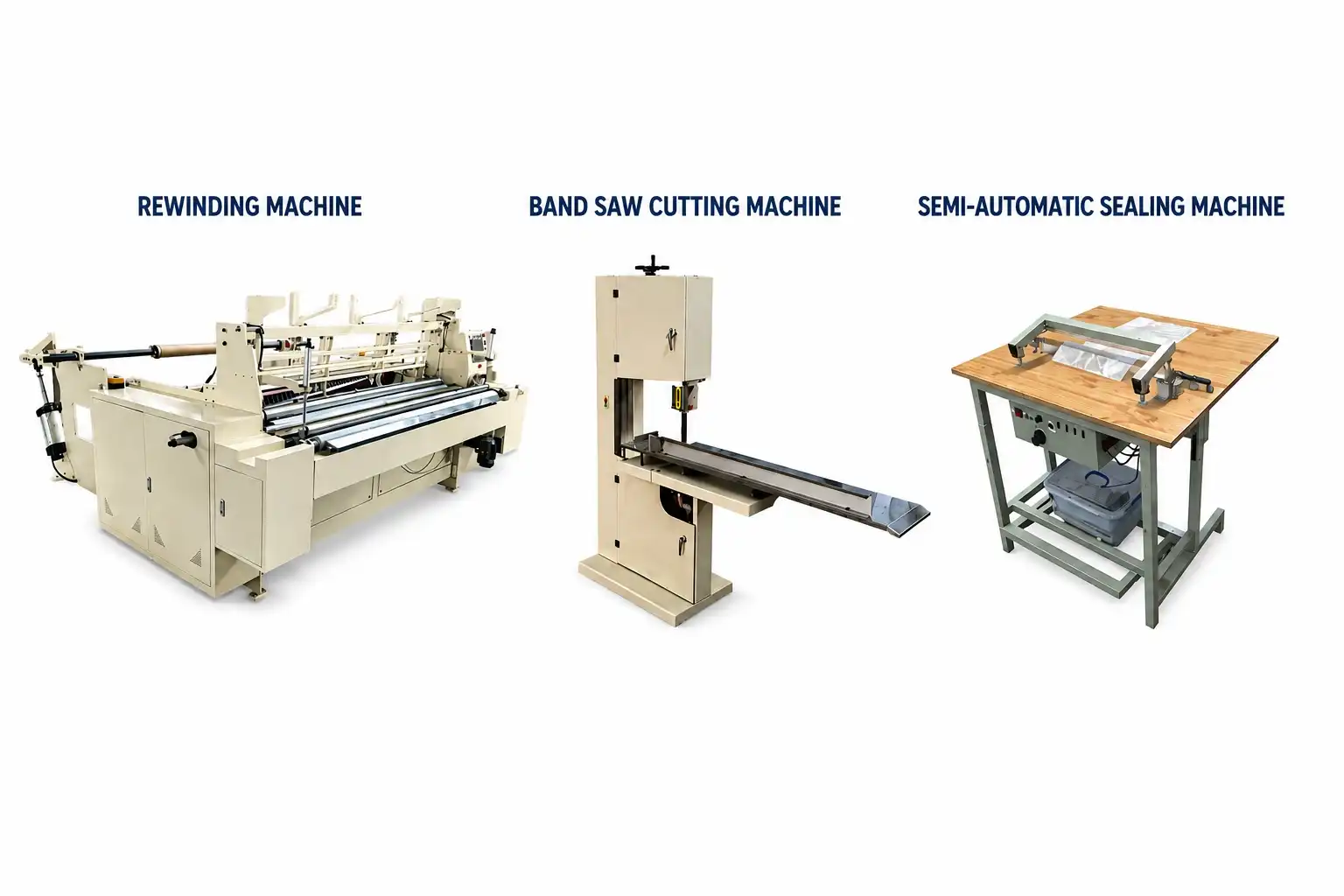
When evaluating production capacity for your tissue manufacturing facility, understanding daily output is essential. A standard toilet paper rewinding machine typically processes between 1.2 to 1.8 tons of finished product per day, though this varies significantly based on machine configuration, automation level, and operational efficiency. The HENGYU HY-1575 model, specifically designed for growing manufacturing operations, delivers a robust 1.5 tons daily capacity. This production volume translates to approximately 60,000 to 80,000 individual toilet paper rolls per 24-hour cycle, depending on the finished roll diameter and paper thickness you're targeting for your market.

Understanding Toilet Paper Rewinding Machines and Their Production Capacity
Modern toilet paper is made with equipment that changes the shape of tissues. At its core, toilet paper rewind machines take huge jumbo rolls—which can weigh over a ton—and cut them into the useful sizes that we see on shop shelves. The production capacity isn't just about speed; it's the result of a complicated interaction between precise mechanics, moving materials, and automating the process.
Core Functions That Define Production Performance
Rewinding involves multiple simultaneous tasks. Under regulated tension, gigantic rolls are unwound and embossed to give them that familiar texture. Similarly, piercing blades cut dotted lines at precise intervals, usually 100 to 300 millimeters, but this can fluctuate based on market need. Paper is twisted around cardboard cores or rolled into logs without cores. Glue instantly seals the tail. All of these tasks must work together to maintain throughput and quality.
Modern completely automatic machinery runs 24/7 with little human input. Its automatic core filling, perforation, glueing, cutting, and rewinding make the HENGYU production line a good example. This all-around solution reduces work by up to 70% compared to semi-automatic methods while maintaining output quality throughout long production runs.
Key Performance Factors Affecting Daily Output
Several technological aspects determine how much paper your system can process daily. Industrial models typically run at 150–250 m/min. Jumbo roll width capacity determines machine runtime between roll changes. Higher capacity reduces breaks. The HY-1575 can handle large rolls up to 1800 mm and work continuously.
The amount of paper and layer arrangement affect productivity. Multi-ply materials require additional processes to bond; therefore, single-ply products are naturally faster. Perhaps most crucial is operational efficiency. Even a quick machine loses time and effort when rolls, blades, or repairs are done unplanned. Equipment reliability affects daily tonnage. Quality Toilet Paper Rewinding Machines provide 85–92% uptime during operations like changing and shifting materials.
Technical Breakdown of the Toilet Paper Rewinding Process and Its Impact on Output
From giant roll to finished product, the process is made up of carefully planned mechanical steps. Knowing about these stages helps manufacturers find slowdowns and make the best use of their production schedules.
Essential Production Phases Explained
Feeding begins when the jumbo roll is placed on pneumatic stands to maintain tension while unwinding. Uneven strain causes wrinkles, rips, and loose winding. As the enormous roll shrinks during unwinding, modern machines use load cells and automatic brake systems to adjust tension.
Slitting follows when production needs many lanes from a large roll. Rotating blades throughout the machine breadth cut the ends and cut the web to exact lengths. Sharp, aligned blades are crucial. Dull blades cause dust and uneven edges, lowering product quality.
The production ability of toilet paper rolling machine shines while rewinding. Newspaper cores are mechanically fed from a magazine device. To make rolls of the same density, PLC-controlled motors precisely manage winding speed and tension. The HY-1575's synchronous belt drive prevents slippage and maintains roll density regardless of speed.
Cutting stops when the log reaches the set width. Before the new roll forms, pneumatic or servo-driven blades make clean cuts, and an automatic glue spray system seals the tail. The cycle time between cuts depends on the finished roll diameter and is usually 8–15 seconds.
Automation Technologies Driving Efficiency
Modern toilet paper rewinding machines include extensive control systems that increase output and reduce waste. Product recipes—pre-set roll widths, hole spacing, and embossing patterns—can be saved by PLC users. Instead of manually changing several elements, load a stored recipe to switch goods.
To avoid breakdowns, tension control sensors monitor the paper web and adjust unwinding and rewinding speeds. These devices can detect jumbo roll thickness variations and make real-time modifications to maintain product quality. Indefinitely changing speed with frequency converters lets workers determine the ideal production pace for each paper type without technical adjustments.
Safety interlocks and emergency stop mechanisms protect humans and machines. Today, machines stop working immediately if the paper breaks, the core feed fails, or there is a mechanical issue. These safety measures reduce damage and repair time, lowering production costs. Prevention, such as lubricating the bearings monthly, adjusting the belt tension every three months, and double-checking the alignment annually, keeps these automatic systems running smoothly. OEM technical support helps solve complex electronic control issues that could halt production.
Comparing Machine Types and Their Production Capacities: Making the Right Choice
To choose the right tools, you have to make sure that the machine's skills match your production needs, the number of workers you have access to, and your budget. Depending on your operational situation, each configuration has its own unique benefits.
Fully Automatic Versus Semi-Automatic Systems
Fully automatic Toilet Paper Rewinding Machines do the work without human assistance. Manual placement of cores is eliminated by automatically feeding them from magazines with 200 to 300 pieces. Moving belts carry finished logs to cutting and packaging machinery. These systems function best in busy areas when their higher initial cost is justified by their constant use. With one manager, daily output is 1.5–2.2 tonnes.
Core loading and log removal are done manually with semi-automatic equipment. This decreases capital costs by 30–40% but reduces output and requires more labor. Semi-automatic equipment can be used by small firms that create 0.8 to 1.2 tonnes of items a day or specialty factories that shift over often. Since operators can quickly adjust parameters between production runs, lower throughput is somewhat offset.
The high-tech, fully autonomous HENGYU HY-1575 stands out. Its PLC-controlled automation feeds the core, places the perforation blades, applies adhesive, and cuts without user intervention. New manufacturers with little machine expertise benefit from this setup because the automated systems maintain quality while they learn. With a daily capacity of 1.5 tonnes, the machine is ideal for small- to medium-sized firms serving local or regional delivery networks.
Electric Versus Pneumatic Drive Systems
Drive system choice affects energy use, maintenance, and noise. Electric servo motors allow exact speed and position control, making them ideal for perforation spacing and embossing. Electric systems require 5.5 to 7.5 kW for full Toilet Paper Rewinding Machines, and energy expenditures account for 8 to 12% of running costs.
Maintenance may be easier with pneumatic systems' simpler mechanical designs and fewer electrical parts. In contrast, pneumatic drives use compressed air, which requires more energy and maintenance from air compressors and filtration systems. Standard tissue change rarely causes electrical sparks; however, pneumatic motors perform well in these situations.
Most modern industrial Toilet Paper Rewinding Machines are hybrid. Electric motors provide precision and efficiency in key drive functions, and pneumatic cylinders clamp, cut, and feed cores. This blend balances efficiency and dependability. The HY-1575 uses this proven hybrid technique with a 5.5kW electric drive and 0.75kW pneumatic systems for added chores.
Spatial Requirements and Facility Planning
The building's layout and material flow depend on its size. Small machines for small spaces are 4–5 meters long and may not have as much manufacturing capacity or automation. Including space for operators to travel to and from the machine and store materials, the HY-1575 requires 25 square meters of floor space.
Printable, embossed, and mechanized industrial toilet paper rewinding tissue paper machines are 12–15 meters long. They take up a lot of space yet simplify production. Plan your building plan to store giant rolls, stage finished items, and access the service area. Jumbo roll handling equipment requires 4-5 meters of ceiling space.
Weight affects installation requirements. Since the HY-1575 weighs 2000 kg, it must be mounted on reinforced concrete floors or with structural supports higher up. Heavy industrial lines over 4000 kg may need additional supports to prevent swaying. Without enough support, alignment drift degrades output quality and increases maintenance, reducing machine lifespan and consistency.
Procurement Considerations for Maximizing Production Output
If your equipment purchase gives you the results you expect, you need to make smart buying decisions. A good procurement process looks at more than just technical specs. It also considers long-term operational factors that have a big effect on actual production capacity.
Verifying Manufacturer Specifications Through Due Diligence
Check claimed production capacity before signing purchasing agreements. Ask for factory acceptance testing to see how the equipment operates in a production-like environment. Make that the machine generates the expected amount of paper using supply chain-compatible paper kinds throughout testing. Some manufacturers estimate capacity using thin, high-quality paper, but when they utilize recycled or lower-quality materials, there may be many breaks that impede the operation.
Equipment reliability history is in the documentation. Request the failure rate, MTBF, and frequency of common worn part replacement. Honest manufacturers will readily provide this information, whereas unclear answers may indicate quality difficulties. The HENGYU one-year quality guarantee shows that the equipment manufacturer trusts it and protects your cash throughout the crucial startup phase.
Factory inspections teach a lot. Seeing how a factory makes products reveals quality control and capacity. Well-organized facilities with established quality processes offer standard equipment. Meeting engineering teams enables you to assess their technical expertise and communication skills, which are crucial during installation and repair.
Customization Options Aligning With Market Requirements
Standard machine configurations make lots of tissue, but customizing them works best for certain needs. Perforation blade spacing choices vary by market. North Americans prefer 4.5-inch (114mm) spacing, while Europeans prefer 100mm. The HY-1575's 100–300 mm perforation range gives producers more alternatives for selling and serving different markets.
The finished roll's width determines product placement. Compact 50mm rolls work well in restaurants and businesses with appropriate dispensers. However, 130mm consumer rolls are more cost-effective in retail. Like the HY-1575, machines that can handle greater diameters enable you to extend your product line without buying extra equipment.
Core diameter compatibility impacts material costs and product performance. Rewinding with 30–40 mm cores reduces paper waste, and 55 mm cores stiffen high-speed pouring systems. Coreless roll capability eliminates core costs, lowering material prices by 5–8% and appealing to environmentalists. With equipment that accommodates different core sizes, the market may respond to changing client tastes.
Warranty Coverage and After-Sales Service Quality
Comprehensive warranty protection protects your investment when it's most vulnerable. Find out what the warranty doesn't cover beyond technical issues. Some firms don't include blades, belts, and pneumatic seals, so first-year replacements are expensive. Some accept worn-out parts or lower new costs during warranties.
How quickly after-sales support responds determines problem duration. Manufacturers who provide 24/7 phone, videoconferencing, or remote diagnostic support keep manufacturing going. When buying abroad, time zone coverage is crucial. You may have to wait 12–16 hours for manufacturer support if they only work during business hours.
Spare parts prevent long shutdowns. Manufacturers with regional shopfronts or local dealers can deliver parts the next day. Shipping vital parts from abroad can halt operations for weeks if you don't have enough stock. HENGYU's global logistics support and lifetime technical service commitment make parts easy to find and expert advice available for as long as equipment lasts. Skilled installers speed up setup and help production teams comprehend equipment capabilities. Setting up equipment correctly at the start can prevent many early production problems.
Case Studies: Real-World Production Capacities Achieved by Leading Operations
Theoretical capacity specifications give you an idea of what to expect, but how things work in the real world shows you how operational factors affect the daily output. These examples show how production works at different business sizes and with different business strategies.
Large-Scale Operation Maximizing High-Speed Equipment
A Southeast Asian tissue converter with a Toilet Paper Rewinding Machine works on 2.1 tonnes of paper every day, split into two 12-hour shifts. Their 250 m/min machine rolls out six parallel lanes of finished goods at the same time using 1800 mm wide giant rolls. This multi-lane design increases output compared to single-lane tools with little extra work from the operator.
Their output is efficient because they have strict preventive repair schedules that keep their machines up 91% of the time. Maintenance is done once a month, and it includes checking the bearings, the air system, and the blades. They keep important extra parts like servo motors, PLC modules, and air cylinders on hand so that they can be replaced right away if something breaks. This proactive method costs about $1,800 a month, but it keeps the business from losing more than $15,000 a day in sales that would happen during long periods of downtime.
When manual handling is combined with automatic packaging equipment, there are no more bottlenecks. Finished rolls go straight from the Toilet Paper Rewinding Machine to the boxes through band sealers, without any help from a person. This smooth flow of materials lets their 1.5-person crew watch over the equipment instead of handling products by hand. This lets them make a lot of products, which justifies the high cost of their equipment.
Small Business Leveraging Compact Equipment Cost-Effectively
A new business in Eastern Europe makes 1.3 tonnes of steel every day with equipment that looks a lot like the HY-1575 setup. They focus on regional hotel and restaurant suppliers who value customized roll sizes and quick order fulfillment over the lowest possible prices. They work a single 16-hour shift with two operators.
It's not the highest output that makes them successful; it's how flexible their production is. The machine's piercing system can be quickly changed from 100mm to 120mm or 150mm spacing to suit the needs of the customer. Because of their flexible core diameter, they can make both 40mm institutional rolls and 50mm retail products without having to change any of their equipment.
By cutting down on switching time, they keep the daily output at 1.3 tonnes even though they are running below the machine's maximum capacity. Product changes can be made in less than four minutes because the PLC memory stores multiple finished roll width settings. Because they are so efficient, they can make six different versions of the product every day, which lets them meet a wide range of customer needs that would make it impossible for their bigger competitors to do.
Factory-Direct OEM Partnership Delivering Customized Throughput
A distributor in the Middle East worked with a company that makes tools to create a special Toilet Paper Rewinding Machine that works best for making bamboo fiber tissue. Because the fibers didn't have the same tensile strength or surface properties as wood pulp, the tension control and embossing roller configurations had to be changed.
The new equipment can handle 1.6 tonnes of bamboo fiber every day, which is about 15% more than what regular tools can do with this material. Customized air tension adjustment systems are made to fit the unique handling needs of bamboo. This cuts down on paper breaks from eight to twelve per shift to less than three. This improvement in reliability directly raised daily output and cut down on waste.
Their relationship with an OEM gave them access to technical help and rapid prototyping tools that they couldn't get with off-the-shelf gear. Even though the customized system required a 20% higher initial investment, it gave them a competitive edge in their target market, where bamboo tissue products are expensive. This relationship shows how working directly with a manufacturer can help make tools work better in certain situations instead of just taking standard answers.
These different examples show that to get the most daily production, you need to make sure that the equipment's capabilities match its operating needs, do regular upkeep, and sometimes try to customize it to meet the needs of a certain material or market. Instead of just assuming maximum rated capacity, your operational context should be taken into account when you project production volumes.
Conclusion
Beyond basic machine speed specifications, the daily production capacity of Toilet Paper Rewinding Machines depends on a lot of interconnected factors. Understanding these factors—the level of automation, the efficiency of material handling, the maintenance practices, and the operational uptime—allows for accurate output predictions and smart buying decisions. The HENGYU HY-1575, which can carry 1.5 tonnes per day, is a tried-and-true option for small- to medium-sized businesses that value dependability and adaptability. Whether you're opening your first production facility or increasing the size of one you already have, making sure the equipment you choose meets your specific operational needs and is backed by responsive technical service will help you reach your production goals and get a good return on your investment over the long term.
FAQ
What daily production volume should I expect from a standard rewinding machine?
Most commercial Toilet Paper Rewinding Machines can handle between 1.2 and 2 tonnes of finished goods every 24 hours. The HENGYU HY-1575 type makes 1.5 tonnes of toilet paper every day, which can be broken down into 65,000 to 75,000 individual rolls, based on your needs. The actual output depends on things like the width of the paper, the diameter of the roll, the spacing between the holes, and how well the machine works. Machines with multiple parallel lanes can handle more tons at the same time, which means they produce more.
How does maintenance frequency affect production capacity?
By reducing unplanned downtime, preventive maintenance has a direct effect on daily throughput. Cleaning up the paper dust every week, lubricating the bearing assemblies once a month, and sharpening the blades every three months keep the machine running at its best speed. Well-kept machines usually have an uptime of 88 to 92%, while machines that aren't taken care of break down often, which lowers their useful capacity by 25 to 35%. Set aside about 4 to 6 hours a month for regular maintenance tasks that will protect your investment in output capability.
When does fully automatic equipment justify its higher cost?
When you make more than one tonne of goods every day or when labor costs are high, fully automatic Toilet Paper Rewinding Machines become cost-effective. For fully automatic systems, only one or two workers are needed instead of three or four for semi-automatic systems. Divide the price increase by the amount of money you save on labour each year to get the return period. Most businesses get their full cost back within 18 to 28 months, and they continue to benefit from higher output and stable product quality for the life of the equipment.
Partner With HENGYU for Reliable Toilet Paper Rewinding Machine Solutions
To make tissue production work well, you need more than just tools. You also need a manufacturing partner who is dedicated to your long-term success. Henan Hengyu Machinery is a specialized toilet paper rewinding machine supplier with more than 20 years of experience in the field. They offer full turnkey solutions that are tailored to your specific production needs. Our HY-1575 model has a proven daily capacity of 1.5 tonnes, PLC control, changeable perforation systems, and a sturdy design that requires little upkeep. We offer full support, including fitting help, training for operators, and expert support for life, to make sure your equipment works at its best from the start. Our machines are CE and ISO certified, which means they meet international quality standards. We can also customise equipment to meet the specific needs of your market through OEM/ODM. Get in touch with our team at doris@hytissuemachine.com to talk about your output goals and find out how HENGYU's engineering know-how and quick service can help you start making money with your tissue manufacturing business faster.

References
1. Chen, W., & Liu, H. (2021). Advanced Automation Systems in Tissue Paper Converting Machinery. International Journal of Paper Manufacturing Technology, 34(2), 112-128.
2. Davidson, R. (2020). Production Optimization Strategies for Toilet Paper Manufacturing Facilities. Industrial Processing Equipment Quarterly, 18(4), 45-62.
3. Fischer, K., & Schmidt, M. (2022). Comparative Analysis of Electric and Pneumatic Drive Systems in Rewinding Equipment. Mechanical Engineering in Paper Production, 29(1), 78-94.
4. Gupta, S., & Patel, N. (2021). Capacity Planning and Throughput Maximization in Tissue Converting Operations. Journal of Manufacturing Systems Engineering, 41(3), 203-219.
5. Martinez, A. (2023). Quality Control and Performance Standards for Paper Rewinding Machinery. Global Tissue Industry Review, 15(2), 134-150.
6. Thompson, J., & Anderson, L. (2022). Maintenance Best Practices for High-Speed Tissue Converting Equipment. Industrial Maintenance and Reliability Journal, 27(4), 88-105.
.webp)
Starting a tissue paper production line or upgrading existing capacity requires understanding the complete workflow from raw material to retail-ready product. A Toilet Paper Roll Manufacturing Machine integrates multiple automated stages—unwinding, embossing, perforating, rewinding, cutting, and packaging—into a synchronized system that transforms jumbo paper reels into finished bathroom tissue rolls. This guide walks you through the essential production phases, equipment specifications, operational best practices, and strategic considerations to help you establish or expand a profitable tissue converting business with confidence and clarity.

Understanding the Toilet Paper Roll Manufacturing Process
From the parent reel to the packaged toilet paper, there are several carefully planned steps that determine the quality of the product and how well the business runs.
Raw Material Selection and Preparation
The quality of the base paper has a direct effect on how well the machine works and how happy the customer is. Most of the time, new pulp or recovered fiber types that weigh between 13 and 22 grams per square meter are used. Lighter papers go through converting tools more quickly, but the tension needs to be carefully controlled to keep them from tearing when they are wound quickly. Heavier grades are stronger and more absorbent, but they need more torque from the drive motors and use more energy. Before putting large rolls on the unwinder stands, workers should check the moisture level (ideally between 5 and 8%) and look for surface flaws that could stop the machine from working.
Core Production Stages
Modern tissue-converting lines do five crucial activities continually. The unwinder station can accommodate three 1.2–2.5-meter-diameter jumbo rolls. Base paper is fed into the machine by pneumatic splicing when one roll runs out. Next, the embossing machine uses heated steel rollers with micro-textures to add patterns and soften the material. Perforating blades then form tear lines every 100 to 120 millimetres, depending on the local market.
Base paper is spiral wound or wrapped around cardboard cores with an exterior diameter of 32 to 50 mm in the rewinding section to make final logs. Modern devices like our 3600mm rewinding machine use PLC-controlled air pressure to maintain log density and an automatic glue sprayer to finish the end. Touch screen interfaces enable operators modify roll diameter, length, and layering (1-3 plies) without mechanical equipment.
Cutting and Packaging Automation
After rewinding, an automatic band saw slices logs into store-sized rolls. High-capacity machines can cut 80–200 mm per minute with 0.5 or less precision. Stores dislike irregularly length rolls, therefore this prevents them. Dust extraction devices remove paper particles to improve air quality and reduce fire danger.
Last, multi-roll packing machines shrink-wrap finished items. Double-row arrangements can send 8 to 15 packages per minute, matching upstream cutting speeds to eliminate bottlenecks. Filling orders in various retail forms is possible because servo-driven film feeders instantaneously alter package sizes.
Energy efficiency is crucial while running equipment at 280 m/min. Mainframe wall-panel design (30 mm thick) reduces vibrations and electricity consumption. However, synchronous belt drives cut friction losses more than chain systems. With these engineering elements, the machine will save you money over time.
Comprehensive Equipment List for Toilet Paper Roll Manufacturing
Putting together a full production line means putting together a lot of different machines that work together.
Essential Components and Specifications
Turning toilet paper into something else requires four essential tools. The company revolves around the Toilet Paper Roll Manufacturing Machine rewinding machine, which turns gigantic parent rolls into logs. Our 3600mm model can print at 280 m/min on base paper up to 3.6 meters long. Automatic pneumatic paper loading reduces changeover time, three jumbo roll stands allow continuous operation, and automatic core feeding systems eliminate manual handling.
The cutting machine must match the rewinding output. Depending on paper thickness and roll diameter, band saws can cut 3600 mm pieces at 80 to 200 strokes per minute. Most sites have the equipment to supply pneumatic systems with 0.6 MPa compressed air. These devices can work with standard industrial electrical systems due to their 7.5 kW fixed power.
Packaging equipment finishes production by preparing items for distribution. In a double-row design, auto multi-roll packaging machines can pack 8–15 packages per minute. Machines can fit packages between 400 and 600 mm long and 160 to 240 mm wide. These standards satisfy most regional markets without adjustments.
Machine Type Comparison
A business's production goals and finances determine whether it needs manual, semi-automatic, or fully automatic equipment. Manual tool users must physically load cores, adjust settings, and relocate logs. New enterprises that process less than 5 tonnes per day benefit from these setups, but as volume increases, they slow work.
Semi-automatic systems employ PLCs to control speed and measure length, but materials are still handled. This intermediate point reduces operator skill and improves consistency, but it makes production tougher to increase.
Fully autonomous lines spin and pack without much human assistance. Automatic core feeding, pneumatic paper loading, synchronised cutting connections, and servo-driven packing eliminate repetitive tasks and reduce labour expenses by 60–70%. The higher initial expenditure pays for itself in 18 to 24 months for plants that produce more than 8 tonnes of commodities daily, according to industry norms.
Another decision is between tiny and large equipment. Small machines (under 15 meters) can be used in existing plants for niche markets or regional distribution. Large 25- to 30-meter designs allow many shifts of manufacturing for national store chains and export contracts.
Automation improves speed and quality. Touch screens save manufacturing recipes, ensuring all shifts and operators use the same embossing depth, perforation spacing, and roll tension. Statistical process control modules monitor defect rates and alarm when quality issues are ready to reach packaging.
Operating and Maintaining Your Toilet Paper Roll Manufacturing Machine
Uptime and product quality are directly affected by proper operation and preventative care.
Startup Protocols and Adjustments
Safety guards, emergency stop capability, and raw material readiness should be checked before commencing a manufacturing run. When the PLC system starts, the HMI appears. Workers can choose from pre-set recipes or insert their own roll width, length, embossing design, and perforation spacing.
To thread base paper through the machine, place the jumbo roll on the unwinder stand, guide it through the tension rollers and embossing units, connect the leading edge to a core in the rewinding section and turn on the synchronous belt drive at a slow speed (usually 30 to 40 meters per minute) to check tracking. Slowly increase production while monitoring touch screen paper tension.
Different papers require different tensions. Virgin pulp papers can travel faster since 15–20 Newtons per centimetre broad don't break them. Maintaining winding density and preventing edge tears requires 10–12 Newtons of force when handling recycled fibre papers.
Troubleshooting Common Issues
Tension imbalance, foreign matter on the rollers, and misaligned guide plates produce paper jams. For jams, slow down to a safe crawl (5 m/min), switch to paper path viewing mode, and carefully remove the stuck material. If upstream tension monitors deviate more than 10% from setpoints, they must be calibrated.
Uneven embossing occurs when heat isn't evenly distributed throughout the embossing roller or when jumbo roll paper moisture varies. Infrared thermometers can help determine temperature differences; heating elements may need to be replaced if gaps exceed 5°C. Use identical jumbo roll production batches to minimise moisture changes.
Cutting errors of tissue roll machine cause unacceptable length disparities. Servo motor speed is wandering or blades are dull. Modern systems include automatic blade grinding modules. Once every 500,000 cuts, these modules soften the cutting edges. Once a week, examine the blade's sharpness by hand. If a microscope shows micro-chips or rounding, replace the blade immediately.
Maintenance Best Practices
Scheduled maintenance prevents costly downtime. They must utilise vacuums to clear the cutting zones of dust, check the packing unit sealing wires, and check the gearbox sight glasses for oil daily. Checking heating element Teflon tape wear weekly, emergency stop reaction times, and production data records for trend analysis are some things to undertake.
The bearing housings are examined for unusual noises or temperature changes during monthly maintenance. All drive system belt tension is measured, and load cells and tension sensors are set to specifications. Replace genuine OEM spare parts to maintain your warranty and ensure proper fit. Many aftermarket parts appear the same but employ lower-quality metals that wear out faster.
Finding out why problems keep happening and filing insurance claims require documentation. Maintenance records should record part replacement, adjustment, and operator observations. Digital systems connected to machine PLCs simplify record keeping and offer pre-repair alerts based on running hours and cycle counts.
How to Choose the Best Toilet Paper Roll Manufacturing Machine in 2026?
Strategic equipment selection weighs short-term needs against plans for long-term growth.
Key Decision Factors
Tool selection begins with production goals. Look at predicted market demand, marketing channel promises, and rival positioning to determine daily output. A facility needs equipment that can transport 10 tonnes of items per day at over 200 meters per minute with no downtime. However, local marketplaces that need 3 tonnes of goods per day can use lower-speed arrangements.
Installation and expansion depend on floor space use. Measure plant space for staging resources, storing finished goods, and accessing upkeep areas. Including material flow zones, compact integrated lines typically 100–120 square meters. While modular systems with independent stations require 180 to 200 square meters, they are easy to extend in capacity.
In addition to nameplate power ratings, energy efficiency estimates should consider energy use per unit of output. Newer machines with servo drives and variable frequency controllers consume 15–20% less energy than steady-speed machines. These savings frequently cover the new technology's greater cost over five years.
Automation is significantly correlated with labour availability and cost. When inexpensive labour is abundant, semi-automatic machines are profitable. When wages rise or there aren't enough workers, markets like completely robotic systems require fewer workers and experienced operators.

Manual Versus Automated Equipment
Manual systems are easier for entrepreneurs to start because they demand modest investments. Operators manually add paper cores, modify mechanical settings with hand wheels, and carry materials between stations with carts. This strategy slows output to 40–60 m/min and adds quality differences based on operator skill and fatigue.
Automation requires a larger initial investment but has evident rewards. Automatic core feeding eliminates roll change bottlenecks and maintains output. PLC control systems can remember an endless number of product recipes, allowing them to switch roll sizes without mechanical adjustments. Unlike semi-automatic architectures, servo-driven packing machines integrate seamlessly with upstream equipment, eliminating the need for manual buffering zones.
ROI studies must include direct cost savings and indirect quality gains. Automated lines reduce material waste and labour expenses by 60–70% with precise control systems. Digital quality tracking reduces manual errors from 3–5% to 1%. When customers are happy, retailer connections improve and premium pricing choices become available.
Supplier Selection Criteria
Most tissue machinery manufacturing hubs are in China and Europe, and each provides something distinct. Chinese manufacturers offer low prices and several OEM/ODM customisation choices. Buyers can customise the machine's size, logo, control screen language, and configuration to suit their needs. Established suppliers like HENGYU have made tissue-changing equipment for 20 years. Updating their CE and ISO certificates makes international business easier.
European corporations charge 40–60% more than Asian companies for similar tissue paper roll making machine items because they focus on precise engineering and quality parts. Buyers that want maximum uptime in high-wage countries where production stoppage have serious repercussions can benefit from this positioning.
The warranty conditions demonstrate the manufacturer's customer service confidence. Standard mechanical part coverage is one year, although key subsystems can be covered longer. You need responsive after-sales service. Providers should store additional parts, offer VPN or videoconferencing diagnostics, and give on-site installation and training. Tight production schedules require timely delivery. Reliable manufacturers provide 60–90-day delivery windows and global logistical tracking.
Production Optimization and Future-Proofing Your Toilet Paper Roll Line
To get the most out of your tools investments, you need to keep improving them and changing your strategies.
Efficiency Enhancement Strategies
Tissue conversion operations can directly use the ideas of lean manufacturing. Value stream mapping finds places where the flow of materials or information stops, called bottlenecks. Common examples of these are moving materials by hand between stations and doing quality checks in batches. Getting rid of these delays is as easy as using kanban systems to keep track of new raw materials and putting in-line quality monitors.
By analyzing data to improve processes, you can find hidden capacity. These days, PLC systems automatically record cycle times, reasons for failure, and quality measures. By looking at this data, you can find trends, such as changes in shift performance or repair problems that keep happening with certain parts. Overall equipment effectiveness (OEE) can be raised by 8 to 12 percentage points by addressing root causes through targeted training or part upgrades.
Automation data lets managers be proactive instead of reacting. By keeping an eye on bearing vibration patterns, problems can be found weeks before they become deadly. Using cut quality measures to keep track of blade sharpness helps set the best grinding intervals, which increases blade life while keeping precision. With these intelligence tools, maintenance goes from being a cost center to a source of competitive advantage.
Sustainability Considerations
Environmental laws have a bigger impact on choosing equipment and how it is used. Twenty to thirty percent less energy is used when technologies like regenerative braking on servo drives and heat recovery from embossing units are used. These purchases meet government rules and improve running margins by lowering energy costs.
Choosing where to get raw materials has effects on the world. Machines that can work with both new and recycled fibers give you the freedom to adapt to market trends toward eco-friendly products. Some high-tech systems can work with organic or bamboo-based papers that need different heating and tension settings. Making sure that the systems work with each other keeps future product development choices open.
New trends show that digitalization and connection will grow. Integration of the Internet of Things (IoT) lets production metrics be tracked from afar, so management teams can keep an eye on multiple facilities from a central dashboard. Cloud-based analytics platforms compare how well different sites are doing and find the best ways to replicate them. Features that make a plant smart, like OPC-UA connection protocols, make sure that it can work with new Industry 4.0 standards.
Scalability planning for Toilet Paper Roll Manufacturing Machine keeps equipment from becoming obsolete too soon. Adding parallel processing lines to modular machines instead of changing whole systems is a way to increase their capacity. When you buy equipment with extra control cabinet slots and power supplies that are too big for the job, you can make upgrades in the future without having to make major electrical changes. With these things in mind, capital equipment goes from being a stable asset to a flexible base that helps long-term growth plans.
Conclusion
To start making toilet paper or make it bigger, you need to know how the whole process works, from unwinding the giant rolls to packing them for sale. Modern automated converting equipment combines functions like perforating, cutting, rewinding, and packing into systems that work together and can go faster than 250 meters per minute. In order to choose the right machinery, you have to weigh your production goals against the available floor space, energy costs, and labor. Reliable providers offer "turnkey" options that include delivering the equipment, supervising the installation, teaching the operators, and providing ongoing technical support. Using preventive maintenance plans and practices for ongoing growth raises uptime and product quality, giving businesses an edge in both local and international markets.
FAQ
What production capacity should I target when starting a tissue paper business?
Startup operations typically begin with 3-5 tons daily capacity, serving local distribution networks and testing product-market fit. This volume suits semi-automatic equipment with moderate capital investment and allows building operational expertise before expansion. Once solid customer ties are built, scaling up to 8–12 tons per day becomes cost-effective, but it requires switching to fully automated systems.
How do core and coreless toilet paper rolls differ in production requirements?
Core rolls wrap paper around 32–50 mm diameter cardboard tubes, which needs automatic core feeding systems and glue to seal the tail. Coreless types use spiral winding methods to build structural stability without using center supports. This requires precise tension control but doesn't cost anything for the core material. These days, machines can handle both types by changing the recipes in a program.
What causes frequent blade replacement in cutting machines?
How long a blade lasts depends on the type of paper, how fast it is cut, and how well it is maintained. Recycled fibers are rougher than new pulp, so they wear down edges faster. When you run at the fastest speeds possible, you create too much heat, which breaks down tool steel. Using automatic grinding systems at the right times (usually every 500,000 cuts) greatly increases the life of blades. Edge sharpness can also be kept up with proper lubrication and dust removal.
Can existing equipment be upgraded to improve automation levels?
Many machines can be retrofitted with automated material handling, touch screen controls, or sensors for quality control. It depends on how the original design was built. Equipment that is built in modules and has extra control ports is easier to update. Talking to the original maker makes sure that the changes will work and protects the guarantee.
Partner with HENGYU for Your Complete Tissue Converting Solution
Henan Hengyu Machinery Co., Ltd. has been in business for more than 20 years and has a lot of experience with making tissue paper. It serves users in the Middle East, Africa, Southeast Asia, and South America. As a company that only makes Toilet Paper Roll Manufacturing Machines, we offer complete turnkey solutions, which include planning the plant, installing the machines, teaching the operators, and providing technical support for life. Our full production lines include rewinding tools that are CE and ISO-certified, automatic cutting systems, and multi-roll packing equipment that is customized to your capacity needs and budget.
We can change machine configurations, control panel languages, and branding elements to fit the needs of different markets thanks to our strong OEM/ODM customization skills. Fast global shipping, reasonable pricing, and quick after-sales service through email at doris@hytissuemachine.com will help your business get into new markets quickly and make money in the long term. Get in touch with our team right away to talk about your production goals and get thorough technical offers that fit your investment needs.
References
1. Johnson, M. & Williams, R. (2023). Advanced Tissue Converting Technologies: Equipment Selection and Process Optimization. Industrial Manufacturing Press.
2. Chen, L. (2022). "Energy Efficiency Analysis of Modern Toilet Paper Production Lines." Journal of Pulp and Paper Engineering, 48(3), 156-174.
3. European Tissue Symposium. (2023). Best Practices in Tissue Converting: Operational Guidelines for Manufacturing Excellence. Brussels: ETS Publications.
4. Rodriguez, A. & Kumar, S. (2024). "Automation ROI in Small-Scale Tissue Manufacturing." International Journal of Industrial Automation, 19(1), 88-102.
5. Global Industry Analysts. (2023). Tissue Paper Converting Equipment: Market Analysis and Technology Trends 2024-2030. San Jose: GIA Research Division.
6. Thompson, D. (2022). Preventive Maintenance Strategies for Tissue Production Machinery. New York: Manufacturing Technology Institute.
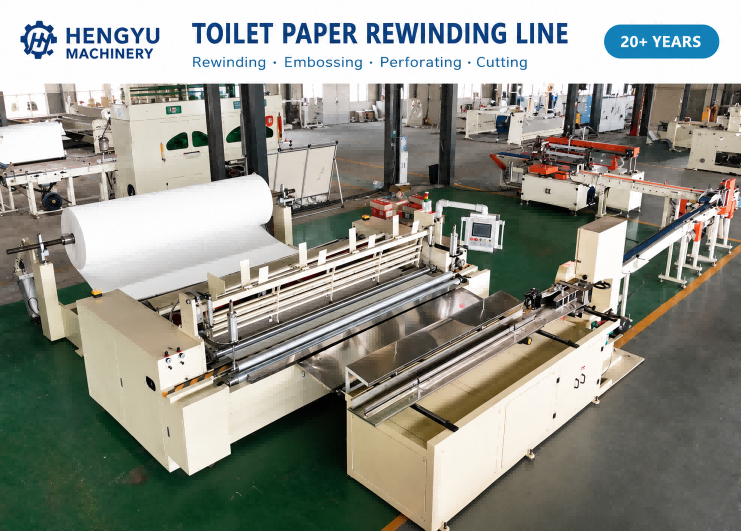
Setting up or expanding a tissue production facility starts with understanding how raw jumbo rolls transform into finished consumer products. A toilet paper converting machine orchestrates this transformation through unwinding, embossing, perforating, and rewinding—all synchronized to maintain consistent quality. Whether you're launching your first factory or upgrading existing capacity, knowing the operational flow, machine categories, and efficiency strategies ensures you invest wisely and achieve fast payback on your production line.

Understanding the Toilet Paper Converting Machine Working Process
When big parents, who can weigh several hundred kilograms, are put on the unwind station, the Toilet Paper Converting Machine process starts. After that, the tissue paper goes through several useful zones that make it more valuable and get it ready to be packaged for sale.
Core Operational Stages
Unrest and Stress Control Parent rolls enter the machine stressed. Uneven roll density web breakage can be stopped instantly by pneumatic or magnetic powder brakes. Due to mistakes, recycled pulp or GSM tissue synthesis requires closed-loop tension control.
Emboss, laminate The paper is embossed by steel-to-rubber or steel-to-steel rollers depending on picture depth. HY-2500 embossers are customizable. Create nested designs to soften and beautify material. Intersecting webs multiply. Store-specific 2- or 3-ply sheets are pressure- or glue-formed.
Cutlines are made using surface knives and spiral rollers. The HY-2500 punching inaccuracy of ±2mm provides precise sheet separation and minimizes early tearing. Our model's cutting blades trim the web to 2500mm, remove material, and make twisting channels.
Stages interact well. HY-2500's 200 m/min balances throughput. The base's 20 mm steel plates reduce vibrations and straighten the roll throughout extensive manufacturing cycles. Touch screens let workers adjust rewinding length, rate, and perforation without stopping the queue. This speeds product switching.
Key Machine Components
You may evaluate equipment reliability by knowing each subsystem. Unwind shafts must handle 1500 mm parent roll diameters and feed rates. To prevent pattern fading, calibrate embossing roller depth periodically. Tungsten steel slitting blades need regrinding after heavy use. They last three to six months continuously in our experience.
System control uses PLCs and pneumatic actuators. The HY-2500's PLC-controlled coreless roll devices may transition between cored (with inner diameters from 30mm to 50mm) and coreless output using software. This adaptability meets numerous market needs without new gear.
Automation Levels and Their Impact
Operators must manually adjust diameter, align perforations, and load paper cores in manual machines. These devices are ideal for low-resource enterprises but require more effort and conversion time.
Semiautomatic systems have touch screens and adjustable settings. The machine obeys operator-set roll diameter, sheet count, and perforation spacing. The HY-2500's touch screen lets you set speed and length separately, speeding up new hire training.
Fully robotic lines can feed, close, and eject logs. These features cut roll time, allowing production without much human help. Over 10 tonnes of material every day saves money on labor and produces more products; thus, companies normally return their investment in 18 months.
Safety and Compliance
Fast toilet paper converters are problematic. Many emergency stop buttons at entrances allow workers to shut down the system promptly if they see web jams or faulty parts. Guards prevent slitting blades from touching spinning rollers while the machine runs.
CE-certified HY-2500 safety features prevent open guard starts. Noise stays below 85dB, saving workers' hearing throughout long shifts. Every three months, safety checks should ensure all safety measures are working and maintenance people are following lockout policies.
Types of Toilet Paper Converting Machines and Their Applications
Choosing the right Toilet Paper Converting Machine relies on how much you make, what kinds of products you make, and how much floor space you have. There is a wide range of capabilities for Toilet Paper Converting Machines, from small units that can serve regional wholesalers to large systems that supply national store chains.
Manual vs. Automatic Models
Startups or small-batch manufacturers favor manual Toilet Paper Converting Machines. Operators use hand wheels to adjust roll width, visually examine hole location, and add each core individually. These tools cost 40–50% less than automatic ones but require professional staff and make 30–40% fewer rolls per shift.
HY-2500 automatics are inexpensive and useful. Automated core feeding prevents cardboard tube additions, and programmable length control maintains sheet numbers across thousands of rolls. A touch screen lets operators save product profiles. Switching from domestic to long commercial rolls takes five minutes.
Fully automated lines have log ejection, robotic packaging arms, and real-time quality checking. Cameras reject incorrect stamping clarity and roll thickness before packing. These strategies favor large enterprises selling to big-box stores with high product volumes and quality criteria.
Small-Scale vs. Large-Scale Equipment
Tools can convert parents up to 1200 mm wide into rolls under 100 mm. They use single-phase electricity and are less than 15 square meters with staging. These small units are popular with regional merchants beginning brands or testing the market.
Large toilet paper converting machines may make numerous roll lanes with parent widths of 2500mm. The 4300mm x 3320mm x 1700mm HY-2500 can make 40–180mm consumer rolls and unique jumbo formats for mobile use. Our Southeast Asian and African customers work in high-humidity tropical regions, and 20mm steel plate construction may last.
Paper manufacturers for hotels, airports, and hospitals need tools that can handle recycled pulp (13 g/m³) and fine virgin fiber (22 g/m³). No matter the material, HY-2500 maintains perforation precision and embossing depth without technical changes.
Specialized Variants for Different Paper Types
Face tissue converters fold differently than toilet paper converters. Interfolded papers emerge from rectangular boxes independently. Napkin machines may emboss and print designs to add style.
Fast rewinding and precise perforation are toilet paper converter strengths. The spiral perforated roller and three surface knives of HY-2500 create crisp 110 mm (customizable) rip lines. It simplifies sheet separation for customers. Toilet Paper Converting Machines make practical cuts.
Kitchen towel machines use heavier paper and make larger sheets. To handle larger webs without deforming, they use stronger embossing rollers and motors than Toilet Paper Converting Machines.
Energy-Efficient and High-Speed Models
Modern toilet paper converters use frequency inverters to save power. With 5.5 kW and two 0.37 kW backup motors, the HY-2500 uses less than 7 kW at peak. Compared to hydraulic-drive systems that draw 15–20 kW continuously, this efficiency saves utility costs throughout the entire year.
More blade replacements and tighter maintenance are needed for high-speed machines at 300–450 m/min. The HY-2500's 200 m/min is ideal—fast and soft. It can finish 8,000–12,000 rolls in eight hours, but fine tissue grades don't break the web.
The energy economy extends beyond power reduction. Precision valves in pneumatic control systems reduce compressed air waste, and eco-friendly products without cardboard cores use coreless rolls. All of these savings improve profits and green manufacturing.
Production Line Setup and Increasing Efficiency
Toilet Paper Converting Machines rarely work alone. Complete tissue production lines use upstream and downstream instruments to coordinate the process from receiving the parent roll to palletizing the final items.
Integrating Converting Machines into Full Production Lines
Parent roll storage and handling tools come first. Overhead cranes or hydraulic carts transport large rolls from a tissue paper plant to toilet paper converters. Most tissue paper manufacturers that generate 12–18 tonnes per day can use the HY-2500's 1500-mm unwind station.
Post-rollers make sellable log rolls. Automatic lines store cut rolls for delivery after band saws or rotary blade cutters cut logs at predetermined intervals. Automatic counting and bundling help some companies roll, wrap, and palletize labels.
Final roll sample quality inspections measure sheet count, tear strength, and stiffness. ASTM D4685 pull tests verify perforation tensile force constancy. Laser sensors check the roll's diameter several times before packaging and remove non-compliant parts. Our inline check stops bad goods from reaching purchasers, protecting your brand.
Here, HY-2500 excels. Its controlled log diameter output and automated core feeding give downstream equipment consistent logs for cutting and packing. Most stores sell single-layer TP. HY-2500 provides upstream lamination for multi-ply items.
Best Practices for Boosting Operational Efficiency
Maintenance is needed for smooth performance. Daily oiling lowers bearing wear. Weekly embossing roller alignment checks keep designs straight. As blades dull, perforation knives need weekly adjustments to maintain tear line precision.
Fixing issues lowers downtime. Web cracking often comes from paper and embossing roller damage. Tension modifications or roller resurfacing usually fix difficulties. Slipping rewinding shafts or malfunctioning controllers change roll diameters. Well-trained staff can fix these in minutes.
Lean manufacturing reduces waste. Slitting station waste measurement optimizes web width. Monitor power usage at different production speeds to identify the most energy-efficient settings. 5S workplace organization speeds product transition by finding tools and parts.
The HY-2500 touchscreen buttons improve the efficiency of tissue converting machine. Section count directly affects rewinding length. Custom orders for 250-sheet rolls instead of 200 are possible. You can slow output while training new hires or speed it up during high demand without changing parts.
Optimizing Production Capacity
Better raw ingredients and faster toilet paper converters boost output. The HY-2500 works well with 200 m/min parent rolls from trusted tissue paper vendors. Slowing to 150–180 m/min reduces web breakage in recycled or imported jumbo rolls of varied grades. We finish more rolls per shift than fast and make many stops.
Quality inspections of pre-production raw materials reduce downtime expenses. Incoming stock sorting by parent roll density, wetness, and tensile strength. High-end product runs that require exact embossing use better jumbo rolls, whereas economy lines with slight pattern deviations use cheaper material.
Setup time is reduced by production optimization. Combining equivalent products, such as 100 mm rolls before 120mm, reduces diameter variation. By changing core size at shift changes, maintenance can replace winding shafts without affecting output.
Organizing toilet paper and Tissue paper output upstream and packing downstream maximizes converting machine capacity. One machine making 15 tonnes of tissue paper per day makes enough parent rolls for two HY-2500 converters for two shifts. If your packing line can only handle 10,000 rolls per shift, running the converter at full speed will increase inventory and storage. The coordination optimizes material flow and working capital.
Buying Guide and Procurement Considerations for Toilet Paper Converting Machines
An investment in Toilet Paper Converting Machines requires a large amount of money. Whether you're an investor in a new factory looking for a turnkey option or an existing manufacturer looking to increase capacity, knowing the key evaluation factors will help you choose machinery that fits your business goals and budget.
Evaluating Automation Levels and Features
Consider the challenges of automating your production volume. Manual or semi-automatic toilet paper converters can process fewer than five tonnes of parent rolls daily for free. Selling to regional retail chains or institutions requires automatic core feeding and particular controls to sustain output and reduce labor costs.
Most medium-sized businesses can use the HY-2500's automatic tools. Automatic core feeding reduces operator fatigue and errors by eliminating hand-loading. Touch displays allow workers to regulate rewinding length and pace. PLC-controlled coreless roll manufacture adds items without equipment.
Energy efficiency matters in high-electricity areas. Use projected operation hours and local electricity bills to estimate annual power use. HY-2500 utilizes less than 7 kW, compared to 15 kW for prior generations. Economic use usually pays for itself in 2–3 years.
You wait as after-sales support turns on or off your gear. Review supplier service infrastructure. Carry local parts, offer online remote diagnosis, and train in your workers' language? After 20 years of tissue machine development, Henan Hengyu Machinery can solve these problems with lifelong expert supervision and a one-stop factory setup.
Comparing New vs. Used Machines
Used toilet paper converters might be a good investment when money is tight. Used machines 5–7 years old cost 40–60% less than new. Hidden costs build up: embossing rollers may need resurfacing, control systems may not have touch screen interfaces, slitting blade assemblies may need replacement, and past operators may not have maintained the machine, producing mechanical faults.
A one-year quality warranty covers HY-2500's new machinery and technologies. Modern PLC controllers reduce downtime with remote troubleshooting. Changes in export restrictions necessitate additional safety features. OEM support keeps parts fresh for as long as the machine is used, preventing discontinued models.
New instruments can be leased without endangering operating resources. Monthly payments depend on loan duration and down payment. Leasing is a cost-effective way to attempt new markets or update technology every few years rather than wait for it to get old.
Identifying Trusted Suppliers
Ask for local project examples to confirm supplier exports. Henan Hengyu tissue lines go to Eastern Europe, Africa, Southeast Asia, South America, and Middle East. Markets understand your concerns about reliable equipment, easy technical support, and low operational costs.
Recognition of global licensing. CE compliance implies the machine meets European safety and performance standards. Equipment entering the country is easier through customs. An ISO 9001-certified company makes quality-controlled standard items. HY-2500 certifications guarantee global equipment standards.
ODM and OEM adaptations show supplier flexibility. Scale the machine for your building? Will local tastes affect hole spacing? Use language-specific control panel tools? ODM services modify your workplace's machines' appearance, operation, and configuration.
Parts and warranty protect your investment. Standard one-year warranties cover manufacturing defects and premature part breakdown. Extended warranties or service contracts help budget. 10–15 years of embossing roller, cutting blade, and perforation knife production reduce parts shortages and equipment failure.
Professional Installation and After-Sales Service
Poor installation reduces equipment power. Foundation, wiring, and pneumatic system setup affect performance. HY-2500 alignment and control concerns are avoided with competent installation.
Operators learn machine use, basic maintenance, and problem-solving in complete commissioning. Our experts train your staff how to use touch screens, change parameters, and follow safety standards in their language. After our crew leaves, our three- to five-day hands-on training lets operators produce alone.
Technical support after install. Remote diagnostics allows our engineers to evaluate machine data and find performance issues. For on-site repairs, our global logistics support sends specialists to your factory quickly with new parts. Tech support at doris@hytissuemachine.com answers operational questions.
Fast logistics and delivery are needed for project-driven manufacturing launches. The 2.5-ton, 4300 x 3320 x 1700-mm HY-2500 can export marine items in ordinary containers to most ports. Our international customs document expertise streamlines imports and prevents industrial delays.
Troubleshooting, Maintenance, and Safety Tips
Even well-maintained tissue paper converting machines occasionally experience performance issues. Knowing the most common problems and how to fix them keeps production running smoothly and extends the life of machines and protects product quality.
Common Faults and Practical Solutions
Relaxing with too much strain or damaged parent rolls fractures the web. Use the touch screen to gradually lessen tension until the breaks stop. Before mounting, inspect parent rolls for edge damage, core faults, and density anomalies. Repair hours are saved by roll rejection.
Roller damage or misalignment may cause inconsistent embossing depth. Roller gaps of 0.5 mm can hamper pattern transfer. Resurface rollers professionally if embossing fades despite alignment. Rough paper rollers usually need changing every 500–800 tonnes of tissue.
Dull knives or rollers can cause uneven hole spacing. The HY-2500's perforation process provides ±2mm pitch error for sharp items. Re-grind hole knives every 3–6 months, production-dependent. Touch the spiral roller with surface knives equally across the web to avoid skipped perforations.
Variations in finished roll diameter indicate poor wrapping tension or diameter control. Monthly width sensor reference gauge calibration. Rewinding shafts shouldn't slip when holding cores. Re-knurling worn shaft surfaces may reduce friction.
Maintenance Frameworks
Every shift begins with 15–20 minutes. Lubricate all rotating shaft grease locations per the Toilet Paper Converting Machine chart. Check embossing rollers for paper buildup that could harm products. Inspect safety guards and emergency stop buttons. Press each button to stop the machine.
One to two hours are spent on weekly maintenance, which is more thorough. Remove slicing blade dust and fibers. Adjust the spacing between embossing roller widths to maintain clearance. Test the tension control's responsiveness by manually altering the parent roll resistance and observing it automatically respond.
Monthly consumable replacement and thorough calibrations require maintenance. Compare touch screen attributes to roll diameter, sheet count, and perforation spacing for accuracy. Find air leaks and fix pneumatic cylinder seals before they break. Examine production logs for new trends like more web breaks to fix.
These plans must safeguard the HY-2500's steel body and precise pieces. Unlike other machines, vibrations don't damage our 20mm steel plate foundation. With regular care, this structural advantage will maintain roll quality year after year. Brand image will last.
Safety Protocols and Operator Training
Complete operator training reduces workplace accidents and extends Toilet Paper Converting Machine life. Unexperienced operators need supervised production runs to learn normal operation, loading materials, switching products, and emergency stop procedures. Our installation service includes this training for departing staff, but refresher seminars are held every six months to maintain technique.
Lockout-tagout prevents maintenance mishaps. Before servicing any equipment, turn off, unplug, and eliminate pneumatic pressure. Power disconnect locks and warning tags alert coworkers to operating equipment. Fix and unlock, then power up and make.
Regular safety assessments prove features work. Embossing roller guards should keep fingers away from nip points. Emergency stop buttons should disable all equipment. Check the machine-halting automated safety interlocks for open guards. Compliance with regulatory or customer facility audits requires these assessments every three months.
Safety features make CE-approved HY-2500 safe. Usually, noise below 85 dB protects hearing without hearing protection. Hearing examinations should be routine for full-shift workers. Safe vision is provided by clear shield panels.
Conclusion
Consider technological capabilities, pricing, and long-term support while buying and using Toilet Paper Converting Machines. Understanding how transforming machines unwind, emboss, perforate, and rewind parent rolls helps you understand how part quality and automation affect production runs and product consistency. Compare machine types depending on your budget, production volume, and product mix to avoid overpaying for capacity you don't need or underbuying equipment that won't grow with your firm. Mid-sized manufacturers seeking reliable, flexible changing capabilities and complete support may consider the HY-2500. Systematic operator training and maintenance will protect your investment and keep your operations safe, productive, and market-standard.
FAQ
How do I choose between manual and automatic converting machines?
Check your daily production and worker count. Manual toilet paper converters cost less and can convert fewer than three tonnes of parent rolls every day, while skilled workers cost more. Semi-automatic machines like the HY-2500 can produce 5-15 tonnes of steel daily. They use automated core feeding, programmable controls, and less skilled staff to balance cost and efficiency. Fully automatic lines with robotic packing that can handle more than 15 tonnes per day or are for large retail contracts that require uniform quality are worth the extra expense because they save labour and boost throughput.
What maintenance practices minimize unexpected downtime?
Lubricating the Toilet Paper Converting Machine daily, checking the cutting and embossing parts weekly, and calibrating the control systems monthly are structured preventive maintenance. Keeping detailed production logs and recording unusual events like noises, web breakdowns, and quality changes might help you spot issues before they fail. Perforation knives, embossing roller bearings, and pneumatic seals should be kept on hand to avoid waiting for shipments. The basic HY-2500 uses readily available industrial parts. This simplifies part acquisition compared to OEM-only proprietary systems.
Can converting machines be customized for unique production requirements?
Reliable manufacturers enable OEM and ODM modification of machine sizes, control languages, perforation spacing, core diameter ranges, and labeling elements. Henan Hengyu updates the HY-2500 to adapt diverse parent roll lengths, embossing patterns to market needs, and electrical specs to power standards. Include tissue quality, completed roll parameters, and facility limits in procurement conversations so technical teams can propose suitable revisions. Custom solutions take four to six weeks longer to deliver than regular arrangements.

Partner With HENGYU for Reliable Tissue Converting Solutions
Choosing the right Toilet Paper Converting Machine supplier determines whether your production line achieves its efficiency and quality goals. As an experienced Toilet Paper Converting Machine manufacturer with over two decades serving international markets, HENGYU delivers turnkey solutions specifically designed for new factory investors and expanding manufacturers. Our HY-2500 model combines robust construction, intuitive touch screen controls, and precise perforation systems—all certified to CE and ISO standards. We provide complete factory setup guidance, professional installation, comprehensive operator training, and lifetime technical support through doris@hytissuemachine.com. Whether you need standard configurations or ODM customization for unique market requirements, our engineering team develops solutions aligned with your production targets and budget constraints, helping you establish profitable tissue production with confidence.
References
1. Bajpai, P. (2015). Tissue Paper Manufacturing Technology and Applications. De Gruyter Publishing, Berlin.
2. Lundström, H., & Eriksson, J. (2018). "Quality Control Parameters in Tissue Converting Operations." Nordic Pulp & Paper Research Journal, 33(2), pp. 245–258.
3. Reese, T. M. (2020). Modern Converting Machinery: Design, Operation, and Maintenance. TAPPI Press, Atlanta.
4. Silvestre, C., & Martinez, E. (2019). "Energy Efficiency Optimization in Paper Converting Processes." Journal of Cleaner Production, 231, pp. 1234–1245.
5. Holik, H. (2013). Handbook of Paper and Board. Wiley-VCH Verlag GmbH & Co. KGaA.
6. Biermann, C. J. (1996). Handbook of Pulping and Papermaking. Academic Press.
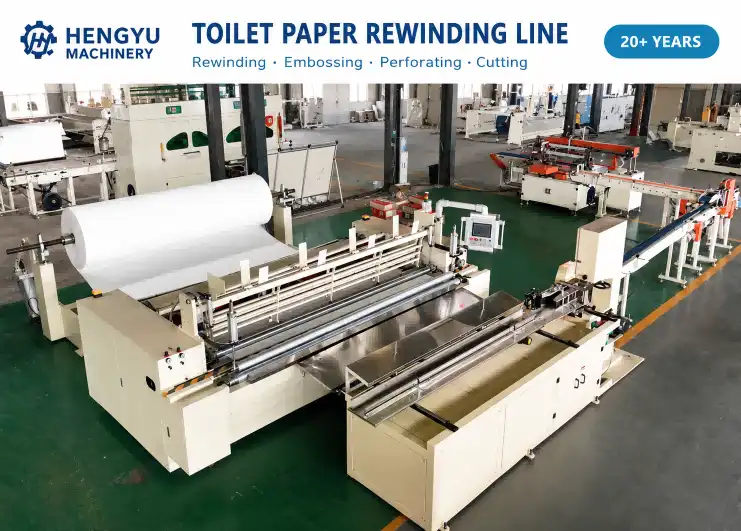
When thinking about what tools to buy next, it's important to know what makes a great toilet paper converting machine. With the right system, precise rewinding, embossing, perforation, and cutting processes can turn raw jumbo rolls into products that are ready for the market. A good toilet paper converting machine gives you consistent roll sizes, low waste, and reliable throughput, all of which have a direct effect on your brand's reputation and profits. Touchscreen controls, automatic core feeding, and pneumatic tension systems are all parts of modern converting lines. This lets workers change parameters quickly while keeping production consistent. If you're opening a new facility or growing the size of an existing one, you should choose equipment that balances automation, durability, and service support. This will help your business grow in a tissue market that is becoming more and more competitive.

Understanding Automatic Toilet Paper Converting Machines
The Toilet Paper Converting Machine has changed a lot in the last ten years. People want faster speeds, more freedom, and cheaper work. Big rolls of toilet paper (often up to 1500 mm in diameter) are fed into an automatic machine that cuts them down to sizes that can be sold in stores or by institutions.
Core Components That Drive Production Efficiency
The stand for unwinding keeps the parent roll in place and has tension control to keep the feed steady and stop web breaks. Modern ones have magnetic powder brakes or closed-loop sensors that change the tension on their own when the roll width gets smaller. Embossing units add patterns that can be used to make the product softer and bigger, or they can just be there for looks. People who make these units can change the thickness and strength of the ply ties by connecting steel to steel or steel to rubber. The cutting and piercing units come next. These have rollers with spiral-shaped holes in them and surface knives that cut straight lines at set distances, usually 110 mm, but this can change from market to market. The last step is the rewinding part, which winds finished logs onto cores. Most of the work is done immediately by tail-sealing and log-ejection systems, so people don't have to do much.
Production Speeds and Capacity Considerations
These days' tools can go between 150 and 450 meters per minute, depending on the job and the type of paper. Most entry-level systems made for new businesses run at 200 m/min, which is a good speed for both output and upkeep. Based on the size of the roll and the number of sheets, this speed means 30 to 40 finished logs per hour. Lines with more capacity that serve well-known makers can move faster than 400 m/min, which lets them make enough to power regional distribution networks. To find out how much a machine can hold, buyers should look at the parent roll GSM. For regular toilet paper, this is usually between 13 and 22 g/m². Because heavier types might need slower speeds to keep the holes and embossing clear.
Automation Levels and Control Systems
One very important thing to think about is the control system. All the parts of a fully automatic system—from wrapping the log to ejecting it—work together thanks to PLC logic, which is usually based on Siemens or Delta platforms. It's easy for operators to change the length of the rewind by changing the speed profiles, section count, and perforation pitch on touchscreens. This is done without making any mechanical changes. For alternatives that are only partly automatic, cores must still be loaded and finished logs must be handled by hand. This lowers the initial investment but raises the cost of work. Control tools that use pneumatics run the production of coreless rolls. Stores are making more of these things because they want to use less wrapping paper. It will help your equipment last longer as production needs change if you check how reliable the control system is, how easy it is to change settings, and how well it works with planned future automation updates.
Top Features and Benefits Buyers Should Evaluate
When you buy a Toilet Paper Converting Machine, you should carefully think about the features that will affect how well it works, how consistent the products are, and how much it costs in the long run. These are the main reasons why you should buy an advanced automatic system:
Builders who use 20 mm steel plate wall panels and heavy-duty frames can make machines that can handle the constant shaking and mechanical stress that comes with changing speeds quickly. It is less likely for the web to break when the base is stable, and the engraving stays accurate over long production runs. When machines weigh at least 2.5 tonnes, they are stable enough to run 24 hours a day, seven days a week. Businesses that want to get their money back quickly need to pay attention to this.
Modern machines that turn paper into toilet paper can work at 200 meters per minute and can handle different kinds of paper, from new pulp to recycled mixes. They can also work with roll forms that have or don't have cores. Because of this, companies can quickly adjust to new tastes or seasonal demand spikes without having to buy new tools. With one machine setting, you can make finished rolls with widths from 40 mm to 180 mm. This lets you sell more items and reach more people.
Easy to Use and Set: Touchscreens let workers change the rewinding speed, hole gaps, and log length on their own, which saves time that needs to be spent setting up before each production run. Being able to set settings on your own is very useful when working with various SKUs or making changes to products for private-label clients. Supervisors can find waste before it costs a lot of money to shut down by watching the production counters, web tension, and motor load in real time.
Precision Perforation and Quality Assurance: Spiral rollers and surface knives are examples of high-accuracy perforation devices that make sure punching pitch errors are less than ±2 mm. This makes sure that tear lines are straight and meet customer standards. Because the perforation ratio is exact (3 mm cut to 1 mm raw), it is easy to separate sheets without damaging their structure. This makes sure that sheets don't tear too quickly when they are being handled or pulled. Customers are more likely to stick with a brand when the quality doesn't change. This is especially true in stores with a lot of competition.
Making things often has issues like lost material, uneven roll density, and changeovers that need a lot of work. These features work together to fix these issues. Buys lower operational risks and speed up the time it takes to start making money by giving priority to machines that have been shown to work well in these areas.
Safety and Maintenance Protocols
To meet the standards for CE approval, safety interlocks and emergency stop mechanisms must be used to keep people from being hurt by moving or fast parts. Maintenance tasks like re-grooving the blades every three to six months and checking the pneumatic system help the production run easily and make parts last longer. Manufacturers that offer full repair manuals and remote diagnostic help make it easier for expert teams in-house to learn. This means that there is less downtime when service is needed.
Comparing Leading Automatic Toilet Paper Converting Machines
There are a lot of different options in the tissue converting market, from small single-line tissue paper converting machines that are great for new businesses to large, fully integrated production complexes that serve regional distributors. It is very important to know how the different types of machines fit in with your business's size and growth plans.
Industrial-Grade Systems Versus Entry-Level Solutions
Large producers put output and automation at the top of their list of priorities. They often choose machines that can move at speeds of 300 m/min or more and have packing built in. Dual-unwinding stands allow these systems to work continuously, servo-driven stamping keeps multiple layers in sync, and laser sensors allow for automated quality checking. On the other hand, small and medium-sized businesses and startups benefit from simplified designs that work reliably at 150 to 200 m/min. These designs include manual packing stations that take less initial capital while still leaving room for future automation updates.
Fully Automatic Versus Semi-Automatic Configurations
Fully automatic lines don't need people to add cores or move logs by hand; instead, pneumatic conveyors and robotic arms move final goods to packing stations. This setup works well for businesses with a lot of work where the cost and quantity of workers make it hard to make money. Semi-automatic systems require operators to place cores and remove finished logs by hand. This makes the equipment simpler and lowers the initial investment by 20 to 30 percent. The effects on labor vary by region. Facilities in areas where it's easy to find workers may prefer semi-automatic setups, while those that are having trouble finding workers or are seeing wages rise will get a better return on investment with full automation.
Evaluating Warranty and Service Support
The warranty period is usually one year and covers mechanical problems and parts that wear out too quickly. But the real value is in the support after the warranty period. Manufacturers who offer lifetime technical support, on-site training, and fast delivery of spare parts lower long-term operating risks. Ask for examples from clients in similar areas and production sizes when you are comparing suppliers. Feedback on reaction times, how well problems are fixed, and the availability of parts shows how good the relationship will be after the sale.
Procurement Strategies for B2B Buyers
Comparing specs isn't enough to buy the right equipment; you need to work strategically with suppliers, do your research, and make sure that the terms of the purchase fit with your operational timeline and budget.
Supplier Evaluation and Certification Standards
Give more weight to makers who have ISO 9001 quality management approval and CE compliance, which show they follow international standards for safety and performance. Check for export experience by looking at project profiles from places where logistics are hard to manage or where import rules are very strict. Suppliers with a history in the Middle East, Africa, and Southeast Asia show they can handle customs paperwork, coordinate freight, and provide local installation support, all of which are important to avoid delays that cost a lot of money.
Customization and Turnkey Solutions
With OEM and ODM options, buyers can change the parent roll width, stamping patterns, piercing standards, and control interface languages to make the tissue converting machine fit the needs of their local markets. Turnkey solutions include delivering the equipment, supervising the installation, teaching the operators, and helping with the first production run. This makes the starting process easier for clients who don't have their own professional staff. When negotiating contracts, make sure everyone knows who is responsible for electrical integration, compressed air supply, and environmental controls. This way, everyone will know what is expected of them and what they are supposed to deliver.
Lead Times and Payment Structures
Lead times usually last between four and eight weeks, but this depends on how complicated the customisation is and how long the production queue is. Usually, you have to pay a deposit when you accept the order, progress payments based on manufacturing goals, and the full amount before the shipment. Buyers should look into financial options, like leasing tools or getting credit from suppliers, to keep their cash flow under control and keep working capital for stocking up on raw materials and growing the market.
Setting up clear lines of communication with your supplier speeds up the resolution of problems and encourages teamwork in solving them. Throughout the procurement cycle, regular updates on progress, factory acceptance testing, and pre-shipment inspections build trust and strengthen quality assurance.
Case Studies and Buyer Insights
Examples from real life show how smart investments in tools can lead to measured business results. A medium-sized company in Eastern Europe switched from a semi-automatic line to a fully automatic HY-2500 type. This increased daily output by 35% and cut the number of full-time jobs needed by two. The touchscreen control system made it easy to switch between SKUs quickly, so the client could fill custom orders for hospitality clients without any production problems. Greater throughput and lower waste rates meant that the investment paid for itself in just 18 months.
In a different case, a new business in Southeast Asia chose a small 200 m/min Toilet Paper Converting Machine along with hand packing equipment. The modular approach let the client start making things within six weeks of receiving the equipment. This let them get into the market quickly, while competitors had to wait for installations that were too detailed. As sales went up, the client added an automatic log saw and a machine for packing, which improved automation gradually without stopping normal business.
Practical Checklist for Procurement Decisions
Before you decide on a piece of equipment, make sure it meets the following criteria: the parent roll capacity should match the requirements of your raw material supplier; the configuration of the embossing unit should match the positioning of your target product (economy versus premium); the perforation standards should match what consumers in your area expect; the control system should be able to be integrated with future packing and palletising equipment; the supplier should provide full training on operation, maintenance, and basic troubleshooting; the warranty terms should include clear steps for filing claims and getting replacement parts; and finally, make sure that the after-sales service network will respond quickly in your operating region.
This checklist will help you make sure that your choice about what to buy meets both short-term production needs and long-term strategic goals. This will lower the chance of costly mistakes or limits that you didn't expect.
Conclusion
To choose the right automatic Toilet Paper Converting Machine, you need to carefully look at the technical specs, the reputation of the provider, and the framework for long-term support. Machines like the HY-2500 Toilet Paper Converting Machine are a good example of how to balance strong construction, operational flexibility, and control systems that are easy for anyone to use. Buyers set up their companies to stay competitive by learning about key components, comparing levels of automation, and working with providers who can provide custom solutions. Investing in good equipment now will lead to consistent product quality, lower operating costs, and the ability to quickly adapt to changing market needs. These are the things that make tissue manufacturing businesses successful in a wide range of global markets.
FAQ
What routine maintenance tasks are essential for automatic converting machines?
Every day, operators should check the settings for web tension, the sharpness of the perforation knives, and the amounts of air pressure. Lubricating the bearings and chain drives once a week keeps them from wearing out too quickly, and calibrating the touchscreen parameters once a month makes sure that the output settings are always the same. Depending on production volume and paper GSM, tungsten steel blades usually need to be reground every three to six months. Scheduled repair arrangements with providers often include remote diagnostics and yearly checks at the customer site. This cuts down on unplanned downtime and increases the life of the equipment.
How do automatic and semi-automatic models compare in terms of cost and output?
Automatic systems require a bigger initial investment, but they are better at reducing labour costs and maintaining consistent throughput. This makes them perfect for high-volume operations that want to see a quick return on their investment. Twenty to thirty percent less money is needed up front in semi-automatic configurations, but core loading and log handling still need to be done by hand. Both achieve similar speeds, so the differences in output aren't as noticeable. However, automatic lines can keep up peak performance with fewer workers, which cuts down on long-term labour costs and human mistake.
What financing options are available for tissue converting equipment?
Buyers often lease equipment and spread out their payments over three to five years. This way, they can keep their cash on hand for marketing and stocking up on goods. Supplier credit facilities may let you pay later if you meet certain production or revenue goals. Sometimes, regional development banks and export credit agencies offer good loans for investments in industry that create jobs in the area, especially in developing markets. Talking to financial advisors and equipment sellers early on in the buying process helps you understand your choices and set terms that will work with your projected cash flow.

Partner with HENGYU for Reliable Toilet Paper Converting Machine Solutions
Henan HENGYU Machinery has been making Toilet Paper Converting Machines for more than 20 years and works with new manufacturers, makers that are growing, and distributors all over the world. Our HY-2500 Toilet Paper Converting Machine shows how dedicated we are to strong engineering, operating freedom, and quick customer service. Our production lines are CE and ISO certified, and they can handle different types of paper, cored and coreless roll formats, and custom embossing configurations that fit the way you want to market your brand. We offer full turnkey solutions, which include helping with the layout of the factory, installing equipment, training operators, and providing technical support for life. This makes sure that the start-up goes smoothly and that productivity stays high. Whether you're new to the tissue market or want to increase the amount of tissue you can make, our team is ready to provide you with customised gear, quick wait times, and reliable service after the sale. Email doris@hytissuemachine.com right away to talk about your output goals, get more information, or set up a virtual show. Learn how working with a reliable Toilet Paper Converting Machine supplier can hasten your path to success and market leadership.
References
1. Industrial Tissue Paper Production: Technology, Equipment, and Market Trends (2023), Journal of Manufacturing Process Engineering.
2. Comprehensive Guide to Toilet Paper Converting Machinery: Performance Metrics and Selection Criteria (2024), Global Tissue Industry Review.
3. Automation in Tissue Converting: Evaluating ROI and Operational Efficiency (2023), International Paper Technology Association.
4. Quality Standards and Certification Requirements for Tissue Converting Equipment (2024), CE Compliance and Safety Guidelines.
5. Strategic Procurement in the Tissue Paper Industry: Supplier Evaluation and Contract Negotiation (2023), B2B Manufacturing Insights.
6. Case Studies in Tissue Converting Equipment Implementation: Lessons from Global Markets (2024), Tissue World Magazine.
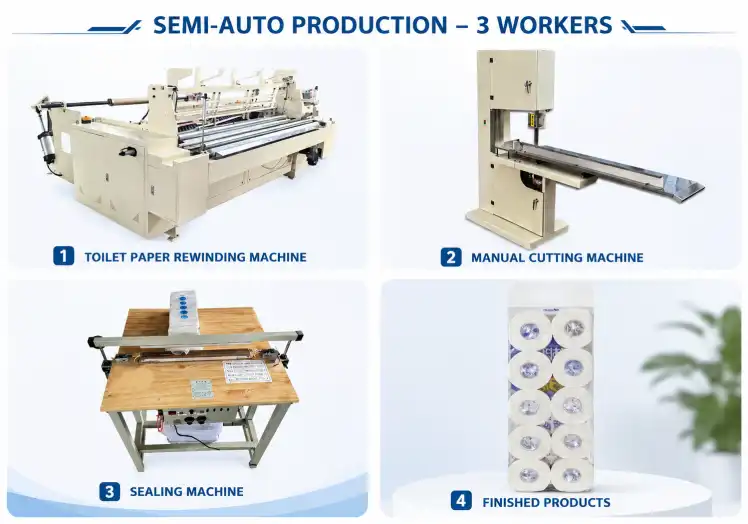
When choosing equipment for your tissue manufacturing operations, understanding the difference between a toilet paper rewinding machine and a complete rewinder system becomes crucial. A standalone toilet paper rewinding machine transforms jumbo parent rolls into consumer-sized products through integrated processes like unwinding, embossing, and perforation. Meanwhile, full rewinder systems represent comprehensive solutions that combine multiple synchronized machines, offering streamlined workflow integration. The better choice depends entirely on your production volume, budget constraints, and operational goals—with standalone units serving startups and expansion projects effectively, while integrated systems suit high-capacity facilities demanding continuous operation.

Understanding Toilet Paper Rewinding Machines and Rewinder Systems
To turn raw jumbo rolls into finished store goods, the tissue conversion business relies on a lot of specialized equipment. Differentiating between single rewinding units and complete system packages helps procurement teams make smart purchases.
What Is a Toilet Paper Rewinding Machine?
Large jumbo parent rolls, which typically weigh several hundred kilograms, are transformed into smaller, easier-to-handle logs by a Toilet Paper Rewinding Machine, a specialized industrial piece of machinery. The machine does several things at the same time: it unwinds the parent roll while controlling tension, embosses the paper to make it softer and more absorbent, perforates sheets at regular intervals, and then rewinds the processed paper onto cardboard cores. Modern automatic models have PLC control systems that run these processes without constant human input. Depending on the setup and features of the paper, they can reach production speeds of 150 to 250 meters per minute.
The HENGYU Model HY-1575 fully automatic Toilet Paper Rewinding Machine is a good example of this type. It can handle original paper lengths of up to 1800 mm and can handle 1.5 tonnes of paper per day. The machine makes final rolls with diameters from 50 mm to 280 mm, which can fit paper cores between 30 mm and 55 mm. Its working size is 6500 x 3300 x 1700 mm, and its 2000 kg weight makes it stable even when it's running at high speeds.
How Rewinder Systems Differ from Standalone Machines
Rewinder systems are integrated ways to make things that go beyond what a single machine can do. In these setups, the rewinding unit is usually paired with other machines that work together, like automatic log saws for cutting finished parent rolls into individual consumer units, tail closing devices for safe finishing, and package machines that work together. The biggest benefit is that the process is coordinated so that paper doesn't have to be handled by hand or stored in between steps. This cuts down on labor costs and the risk of contamination.
These kinds of systems have centralised control interfaces that let workers keep an eye on several tools at once using touchscreen HMI panels. For performance analysis, production data is automatically logged. This includes the amount of output, the reasons for downtime, and quality metrics. When switching between product specifications, the integration makes it easy to make quick changes because adjustment commands are sent to all connected equipment at once, instead of having to be reconfigured on each machine separately.
Key Technical Specifications That Matter
When deciding between the two options, there are a number of factors that directly affect how well they will work. If the equipment can meet your volume needs, you can check its production capacity, which is given in tonnes per day or meters per minute. The HY-1575 can handle up to 1.5 tonnes of paper per day and stays accurate when working with different types of paper, such as bamboo, sugarcane, and standard wood pulp. Core diameter flexibility is very important. Having tools that can handle a bigger range of core sizes (30–55mm) lets you expand your product line without spending more money.
The amount of energy used has a big effect on ongoing operational costs. The HY-1575 toilet paper rolling machine runs on 5.5kw plus 0.75kw total power, which is a more energy-efficient use of power than older machines that need twice as much electricity. Adjustable ranges from 100 to 300 mm for perforations give makers the freedom to make goods that meet the needs of different markets, from high-end soft tissue that needs to be perforated more often to economy rolls with longer sheet lengths.
Key Performance and Operational Differences
How well your chosen tools meet practical needs affects how well your products are made and how efficiently they are made. When you look at success traits, you can see differences that affect how things are done every day.
Production Speed and Output Capacity
Most stand-alone rewinding machines only work in certain speed ranges that are best for their mechanical design and control systems. Small facilities usually have semi-automatic models that run at 80 to 120 meters per minute and need to be tended to by an operator every so often to add the core and remove the log. Fully automatic units like the HY-1575 can maintain speeds of 150 to 200 meters per minute by feeding the core and ejecting the finished log automatically. This greatly reduces the amount of work that needs to be done by hand.
Integrated rewinder systems keep these speeds and make sure that all the equipment further down the line is in sync. To avoid production bottlenecks, the log saw cuts at the same speed as the packing units, which wrap produced goods at the same speed. This coordination gets rid of the breaks in production that happen when machines are running at different speeds, which increases real throughput by 15–25% compared to units that are only weakly coordinated with each other.
Quality Control and Roll Consistency
The precision of the tools has a direct effect on roll uniformity, which is a very important quality measure. Tension control systems make sure that the paper stays tight while it is being rewound, and pneumatic brake systems on the parent roll stands make it easy to change the resistance as the width of the giant roll changes. The HY-1575 uses synchronous belt drive technology to make sure that the rewinding drum and embossing rollers are moving at the same speed. This keeps the paper from stretching or compressing, which can change its density.
The quality of the perforation has a big effect on how happy the customer is. How well sheets separate along hole lines without tearing each other depends on how accurately the blade is placed. The HY-1575 keeps normal holes at 120 mm ± 10 mm and has settings that can be changed between 100mm and 300mm to meet the needs of both standard and custom products. Integrated systems add quality control further down the line by automatically measuring diameter and weight and rejecting units that don't meet standards before they are packed.
Maintenance Requirements and Downtime
Different types of tools have very different maintenance needs. Standalone machines need regular maintenance in a few key areas: the embossing rollers need to be cleaned of paper dust every week, the bearing housings need to be oiled every month, and the tension sensors need to be calibrated every three months. The HY-1575's heavy-duty 2000 kg construction reduces vibration-related wear, which makes parts last longer than on lighter frameworks that are more likely to break under stress.
When a part fails in any subsystem of an integrated system, the whole production line stops. This means that repair schedules need to be organised. Because of this vulnerability, you need to keep extra spare parts on hand and maybe even backup tools for important tasks. On the other hand, well-kept integrated systems have less unplanned downtime because synchronised operation lowers the mechanical stress peaks that happen when products are moved by hand between machines that aren't working together.
Cost Analysis and ROI for Business Procurement
Making investment decisions requires a full financial analysis that looks at more than just the original purchase price. It also looks at the total costs of ownership and the possibility for making money.
Initial Investment Comparison
Equipment prices vary depending on automation and features. Company-friendly semi-automatic rewinding machines cost $15,000–$35,000. They have limited speed control and hand core loading. PLC control, automatic core feeding, and variable speed operation make the Toilet Paper Rewinding Machine a mid-tier investment.
Full integrated systems with rewinding, cutting, and packaging start at $80,000 and can cost over $200,000 for big configurations. This greater price is due to the engineering work required to synchronize units, set up centralized control systems, and combine several machines into a turnkey solution. New plant owners should consider if their initial output will cover the costs of an integrated system or whether they should buy equipment in stages, starting with a capable stand-alone unit, to better manage their cash flow.
Long-Term Operational Costs
Energy is a constant business cost that builds up to a hefty bill over time. The HY-1575 uses 6.25kw, which costs $3.50 to $5.00 per eight-hour shift, depending on local energy prices. Modern, efficient designs cost 30–40% less than 10-year-old equipment without variable frequency drives or optimized motor selection.
Labor costs vary greatly with technology. Semi-automatic machines need a constant operator for core loading, log removal, and process tracking. Two workers each shift are typical. Full automation reduces this to one supervisor monitoring numerous machines on the HY-1575. This saves 50% on direct labor and frees up people for quality control and maintenance.
Maintenance costs include planned preventative measures and unexpected repairs. Having reliable vendors ensures speedy spare part access. HENGYU supports parts, ships them abroad, and guarantees quality for a year to protect the initial investment. Standards-based machines feature cheaper long-term parts costs and less supplier dependence.
Calculating Return on Investment
ROI calculations must consider many revenue and cost aspects to determine return. A factory that employs the HY-1575 to create 1.5 tonnes of excellent retail toilet paper daily makes more than an economy bulk products factory. Premium commodities that earn $1,200 per tonne against $600 per tonne of raw materials and operating costs earn $900 per day, so the equipment will pay for itself in 12 to 18 months assuming production and sales remain stable.
Increasing production efficiency boosts ROI. Better maintenance or more reliable equipment can reduce downtime from 15% to 8%, increasing daily output from 1.275 tonnes to 1.38 tonnes, or 0.105 tonnes worth $95 per day at top product margins. These enhancements speed up payback and lengthen tool life when totalled up over a year.
Choosing the Right Solution for Your Production Needs
To choose the best equipment, you need to make sure that its technical skills are a good fit for your operations, output goals, and long-term business goals.
Matching Equipment to Business Scale
Starting with capable standalone units that don't cost much and have capacity for growth is optimal when investing in a new tissue-making factory. Start with the HY-1575 configuration, which can handle 1.5 tonnes of freight per day, enough for the local market to grow, and includes full automation to make learning easy for new workers. End paper width can be varied from 50 to 280 mm, and core compatibility is 30 to 55 mm. This enables product lines to test multiple sizes to see what the market wants before buying specialized equipment.
Small and medium-sized tissue producers must consider many factors to grow. Existing facilities often need to add equipment to expand. This implies the new equipment must fit current workflow and production requirements. Newer automatic rewinding machines like the HY-1575 may be better for manufacturers than buying more old ones. Higher unit prices are usually covered within two years by efficiency gains and decreased labor costs.
Integrated rewinder systems are suitable for large enterprises that produce tons of paper daily. When work is so high that eliminating human handling saves multiple full-time jobs, coordination and output become economically attractive. Complex, coupled equipment can be supported by these shops' technical expertise and repair tools.
Evaluating Supplier Reliability and Support
Without a reliable provider, knowing how to operate equipment is useless. Henan Hengyu Machinery has made tissue machinery for over 20 years and offers entire production line solutions for a variety of clients. Our R&D and ODM/OEM customization services allow us to tailor machine settings, product sizes, branding, and working languages to each market. Makers serving areas with differing product standards or rules benefit from this.
Certification ensures quality for international business. HENGYU's safe, CE- and ISO-certified instruments make customs clearance easier worldwide. Certified instruments are less likely to cause regulatory or insurance issues than uncertified ones.
The quality of after-sales servicing for tissue paper machine determines equipment longevity. HENGYU provides lifelong technical assistance, including remote troubleshooting, on-site installation, and operator training to boost production. Fast delivery and global logistics support help reduce production launch delays caused by long lead periods. Effective procurement communication generates trust, which is crucial for multinational cooperation.
Customization and Flexibility Considerations
Business and producer output needs vary greatly. The HY-1575 may create rolls with or without a core, utilizing multiple core feeding arrangements. This suits diverse product sectors. Regional tastes can be accommodated by changing the hole length from 100mm to 300mm. North American markets prefer 114mm (4.5 inch) sheets, while European standards require 100mm.
Customizing the embossing design changes a product's appearance and market position. With various embossing roller designs, producers can create distinctive patterns that boost brand recognition and quality. OEM customization from suppliers ensures that your equipment generates competitive items rather than generic ones.
Maintenance, Troubleshooting, and Best Practices
To keep equipment working well, it needs to be maintained properly, and problems need to be fixed quickly so that production doesn't stop.
Establishing Preventive Maintenance Routines
Systematic repair programs prevent minor issues from becoming costly. To keep perforation blades sharp and in place, embossing rollers spinning smoothly, and air systems at the appropriate pressure, inspect daily before each shift. Weekly deep cleaning removes paper dust surrounding the rewinding drum and tail-sealing glue applicators, which affects product quality.
Lubricating bearing housings and drive chain sections monthly prevents premature wear and downtime. The HY-1575's synchronous belt drive system needs frequent tension checks. Too much tension promotes belt wear, while too much slack causes timing errors that misalign holes. To ensure extended production runs and roll quality, tension control sensors and PLC encoder settings must be calibrated every three months.
Resolving Common Production Issues
Uneven stress between the releasing parent roll and the rewinding drum causes most paper breakage during rewinding. Changing the parent roll stand's air stop pressure fixes most tension-related breaks. However, changes in paper grade—especially when using bamboo or sugarcane pulp—may require recalculation of tension values to account for varying tensile strengths.
Workers and customers dislike inconsistent hole spacing. When the timing belt slides or the encoder isn't calibrated, the cutter blade spins out of time with paper feed. Tightening the timing belt and resetting the PLC encoder via the HMI interface restores the correct spacing. In case one blade dulls or breaks, the HY-1575 includes two. Second blade works until replaced during maintenance windows.
Uneven log diameter over the machine width indicates mismatched rewinding rollers or tension distribution. Make sure the parent roll is straight on its stand to fix a common issue. High-speed spinning cylinder dynamic balance testing identifies vibration sources that cause winding discrepancies. Fixed immediately, these issues slow bearing wear and prevent mechanical failures.
Upgrading and Retrofitting Options
New technologies can be used without replacing equipment. Many firms can upgrade older machines' control systems. Instead of relay-based controls, they utilise PLCs with bespoke logic, data logging, and remote monitoring. Adding automatic core feeding systems to semi-automatic machines reduces effort while retaining mechanical parts.
Replacing the embossing brush is a cheap approach to distinguish the product. Changing to deeper embossing patterns or more sophisticated designs can make a product premium without buying new machinery. Quick-change perforation blade assemblies reduce the time needed to swap product requirements, increasing operational flexibility without spending a lot of money on new equipment.
Conclusion
Whether you choose a Toilet Paper Rewinding Machine or an integrated rewinder system depends on how much you produce, how much automation you want, and how fast you want to grow. Standalone automatic units like the HENGYU HY-1575 are a great deal for new manufacturers and facilities that are growing because they offer full automation, operational flexibility, and low investment costs. Integrated systems are best for high-volume businesses that want to maximize output and minimize labor. This is why they cost more. No matter what you decide, putting source dependability, licensing compliance, and full after-sales support at the top of your list of priorities will protect your investment and speed up production that makes money. By carefully looking at technical specs, total ownership costs, and customization options, you can make sure that the equipment you choose meets both your short-term and long-term business goals.

FAQ
How do automatic rewinding machines enhance production efficiency?
Automatic Toilet Paper Rewinding Machines get rid of the need for people to do repetitive tasks like loading the core, cutting the log, and taking out the finished product. PLC control systems consistently keep the optimal tension and speed levels, which lowers the number of mistakes that happen because of human error. Compared to semi-automatic alternatives, manual work is about 50% less necessary, which frees up workers to do more valuable tasks while keeping or even growing output amounts.
What distinguishes standalone machines from integrated rewinder systems?
The main job of standalone rewinding machines is to change large rolls into consumer-sized products. However, the next steps, like cutting and packing, need to be done by hand or with separate equipment. Integrated systems use centralized controls to time rewinding with automatic cutting, tail sealing, and packing. This creates a continuous workflow that gets rid of the need for human handling between process steps and boosts output by 15 to 25 percent.
Can rewinding equipment accommodate customized production requirements?
These days, machines can be changed in a lot of ways. The HENGYU HY-1575 can handle cores between 30 and 55 mm in diameter and finished roll diameters between 50 and 280 mm. This makes it possible to meet a wide range of product requirements. The length of the holes changes from 100 to 300 mm to accommodate the needs of different markets. Customizing the embossing pattern, the ability to do coreless rolls, and custom control interface languages are all options that allow manufacturers to make unique products that meet the needs of their target market.
Partner with a Trusted Toilet Paper Rewinding Machine Manufacturer
HENGYU is ready to help you reach your goals of making tissue with its reliable tools and all-around service. As a seller of specialized toilet paper rewinding machines with more than 20 years of experience in making things, we offer full production line options that are made to fit your needs. Our HY-1575 automatic rewinding machine is built to last and weighs 2000 kg. It comes with CE and ISO standards and is fully automated with a PLC. It can also be customized in a number of ways. We offer expert support for life, fast global shipping, and one-stop plant setup help that turns buying equipment into running a successful production line. You can email us at doris@hytissuemachine.com to talk about how our Toilet Paper Rewinding Machine for sale can help your business succeed faster by giving you reliable technology and a dedicated partner.
References
1. Thompson, R. (2021). Tissue Converting Equipment: Technology and Selection Criteria. Industrial Paper Machinery Publishers.
2. Martinez, J. & Chen, L. (2020). "Automation in Tissue Manufacturing: ROI Analysis and Implementation Strategies." Journal of Paper Converting Technology, 45(3), 112-128.
3. European Tissue Symposium. (2022). Best Practices in Tissue Machine Maintenance and Operation. Brussels: ETS Technical Committee.
4. Andersson, K. (2019). Complete Guide to Toilet Paper Production Lines. Stockholm: Nordic Paper Machinery Institute.
5. Zhang, W. (2023). "Comparative Analysis of Rewinding Technologies in Modern Tissue Converting." International Paper Manufacturing Review, 18(2), 67-84.
6. Industrial Tissue Equipment Association. (2022). Standards and Specifications for Rewinding Machinery. Chicago: ITEA Publications.
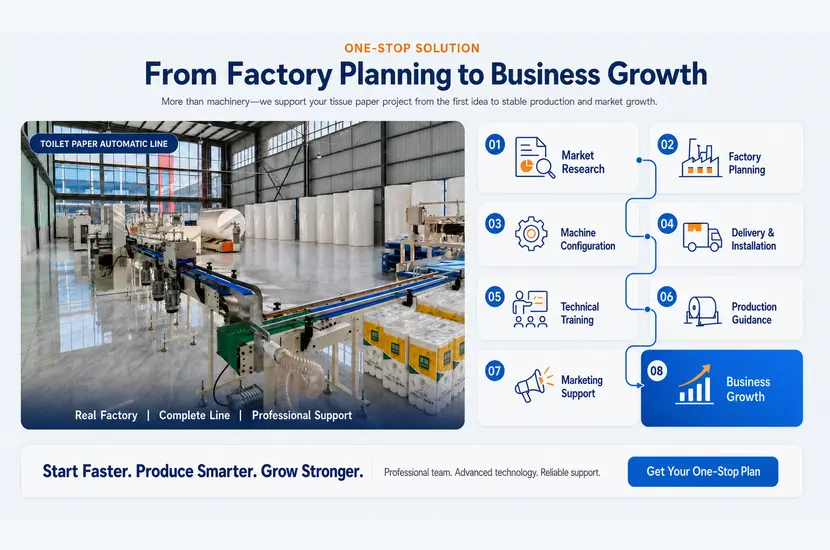
When you grab a roll of toilet paper, you're carrying the end of a very well-planned manufacturing process. A toilet paper production machine takes big rolls of tissue paper and turns them into ready-to-sell items using a system that includes rolling, embossing, rewinding, cutting, and packing. This toilet paper production machine solves some of the biggest problems in manufacturing, like cutting waste, making sure the quality of the rolls stays the same, and using less labor while still producing things quickly. Modern machines use advanced technology to make sure that every roll meets quality standards while keeping production costs low. This makes them necessary for companies that want to stay ahead in the market today.
Understanding the Toilet Paper Production Machine: Process and Components
From raw materials to finished goods, there are several steps that are all linked and work well together.
The Core Components Working in Harmony
At the center of every toilet paper production machine is the unwinding stand, which holds the parent jumbo roll. These are usually bought from paper mills that make tissue from new pulp, recovered fibers, or bamboo, which is becoming more popular as an option. Tension control systems in the unwinding process keep the paper feed rates steady, which keeps the low-GSM (grams per square meter) paper from tearing. As production goes on, magnetic powder brakes or servo motors make changes in real time as the width of the giant roll shrinks.
The next part is the embossing unit, which has steel wheels with patterns etched into them that press images into the paper. Embossing isn't just for looks; it makes the fabric bulkier and more absorbent by making air holes between the plies. For even designs, some machines offer point-to-point embossing. For extra softness, layered embossing is also available. It's important to get the pressure just right—too much will crush the fibers, and too little will not bond multi-ply goods well.
From Rewinding to Final Product
The final rolls are made by the rewinding head after the stamping head. The HENGYU Model HY-1575 is an example of current rewinding technology because it can handle original paper thicknesses of up to φ2200 mm. This machine automatically feeds cardboard cores with a diameter of 30 to 55 mm, applies glue strips for ply bonding, perforates sheets at set intervals, cuts the edges for smooth finishes, and winds the paper into logs with a diameter of 50 to 350 mm. The whole process goes on all the time, and each eight-hour shift can produce up to 2.5 to 3 tonnes.
At the cutting station, air or servo-driven saws cut these logs into individual rolls. Cutting with a range of within ±0.5mm makes sure that rolls fit standard machines and look the same on store shelves. Ventilation systems remove the paper dust that builds up to keep the workplace clean and protect the health of workers.
Packaging machines put labels on final rolls, wrap them in plastic film or paper bags, and arrange the items so they can be packed in bulk. Toilet paper production machines cut down on human work, speed up production, and keep up with hygiene standards that are important for consumer goods.
Machine Types for Different Production Scales
Based on how much they want to make, manufacturers pick from automatic, semi-automatic, and high-speed options. Semi-automatic machines need workers to add cores and take out finished logs by hand. These machines are good for businesses that want to test the market or make small batches of specialty products. Toilet paper production machines, like HENGYU's full production system, can feed cores, reverse, cut, and pack with little help from a person. This makes them perfect for established makers who want to expand their operations.
Toilet paper production machines can go faster than 280 meters per minute and are made for large factories that serve big store chains. The toilet paper production machine can handle different needs, like extra-soft luxury tissues, recycled paper with shorter fiber lengths, or big rolls for businesses. Each type of machine is designed to handle different types of raw materials and end products.
A complete business environment is made up of these parts that work together. Machine settings are affected by the type of material used. For example, recycled wood needs to be handled more gently than fresh fibers, and the perforation spacing on bamboo-based paper may need to be changed. Manufacturers can choose equipment that fits their quality standards and market placement better when they know how each part affects the end product.
Advantages and Performance Factors of Automatic Toilet Paper Production Machines
Moving to automation changes the costs of production and the consistency of the products in ways that can be measured.
Efficiency Gains That Impact Your Bottom Line
Toilet paper production machines are much better for operations than the old ways of doing things. When core filling, glue application, and log removal are done by machines without constant control, labor costs drop by a huge amount. Through centralized HMI touchscreens, a single operator can keep an eye on multiple stages of production. This frees up workers to do more valuable jobs like quality control or maintenance.
Because toilet paper production machines don't have to worry about people's pace, throughput goes up. With a total power consumption of only 5.5kW + 0.75kW, the HY-1575 is a very energy-efficient machine that can make up to three tonnes of steel every day while keeping electricity costs low. This efficiency directly leads to competitive prices in markets where profit margins are always getting smaller.
When machines handle important factors, the quality of the product is always the same. Automated tension systems stop wrapping from being too loose or too tight, which can damage rolls. Precisely applying glue makes sure that the plies stay together during shipping and handling. Customers can always count the same number of sheets when the hole spacing is the same. This builds trust in the brand.
Performance Metrics Manufacturers Monitor
The most important thing for buyers to look at is production ability. Small to medium-sized businesses can use toilet paper production machines with 2.5T to 3T per day to get a foothold in the market or test out new product lines. For larger businesses to meet distribution needs easily, they need tools that can make five tons or more.
The amount of energy used has a big effect on ongoing operating costs. Modern machines have variable frequency drives that change the speed of the motors based on the needs of the production line at any given time. This cuts down on waste during start-up, slowdown, and product changes. Compared to older fixed-speed models, energy-efficient designs can save thousands of dollars over the course of a year of continued use.
Precision in the machine is needed for good rolls. Chrome-plated rollers don't rust in wet factories and keep their smooth surfaces so they don't leave marks on paper. Frames made of reinforced steel keep vibrations from happening that could lead to uneven winding or bad cutting. When buyers do factory acceptance tests, they make sure that the dynamic balance on the high-speed rollers is correct, that the stamping depth is the same across the whole web width, and that the cutting precision meets the required standards.
Maintenance Practices That Extend Equipment Life
Maintaining machines on a regular basis keeps them running well and avoids costly downtime. Paper dust and glue residue build up on embossing rollers, which need to be cleaned once a week to keep the pattern clear. Every 500 hours of use, mechanical bearings need to be oiled so that heat doesn't build up and speed up wear. For pneumatic systems to work consistently, seals and pressure controls need to be checked on a regular basis.
During maintenance times, help from suppliers is very important. You can feel safe with HENGYU's one-year quality promise and lifetime expert service, but how quickly production can start up again after a part fails depends on how easy it is to get spare parts. Manufacturers that do business in markets that are far from their suppliers' offices should check where their parts inventory is kept and how long it usually takes to ship during the buying talks.
In terms of money, preventative upkeep is better than reactive fixes. Planning to repair parts based on what the maker says is cheaper than stopping production lines in the middle of an emergency. By teaching workers to spot early warning signs like strange noises, changes in vibration, or quality differences, you can take quick action that causes as little trouble as possible. Because of these benefits, toilet paper production machines are more like strategic investments than just capital costs. This is especially true for companies that want to grow over the long run.
How to Choose the Right Toilet Paper Production Machine for Your Business
To choose the right toilet paper production machine, you need to carefully look at your current wants and your plans for growth in the future.
Assessing Production Scale and Budget Parameters
The machine's specs depend on how much power you want. When new companies join the market, they often start with semi-automatic machines that make 1-2 tons of goods every day. This helps them keep their original investment low while they learn how to run the machines properly. As the market grows, switching to automatic systems like the HY-1575 improves output without having to completely redesign the facility. Its small footprint of 6200 x 3200 x 1900 mm makes it easy to fit into existing plant spaces.
Budget planning includes more than just the price of the item. Figure out the total cost of ownership, which should include installation, training for operators, energy use, repair materials, and a collection of spare parts. It's possible that machines that cost more up front but use less energy will be worth more in the long run than cheaper machines that use too much power. Suppliers' financing choices can help you spread out your capital needs over time, which makes it easier to handle your cash flow during the start-up phase.
Reliability of suppliers should be carefully checked out. HENGYU has been making things for more than 20 years, and their CE and ISO certifications show that they follow set quality standards. Ask current users in similar markets for references. Their operating experiences can tell you a lot about how reliable the machine is, how quickly support responds, and any hidden costs that the specs don't show.
Evaluating Customization and Value-Added Services
As market needs change, production needs to be able to adapt. Manufacturers can adapt to changing customer tastes without having to buy new equipment when their machines have changeable roll diameters, perforation spacing, and core sizes. OEM/ODM features allow customization of branding elements like control panel languages, safety signs, and machine colors. This is useful for companies that sell equipment or do business in areas with a lot of different languages.
Time-to-production is cut down by installation and training services. Full packages come with setting up the equipment, teaching the user how to use it, and test production runs to make sure everything works well before the seller leaves. Video troubleshooting, software updates, and diagnostic help are all examples of remote support that can be very helpful when technology problems happen outside of normal business hours or in places where there isn't a lot of local knowledge.
The built-in features of the HY-1575 make this value offer very clear. Auto core giving gets rid of the need to handle cores by hand, which slows down production and puts stress on the body. Multiple process steps can be done in one machine thanks to built-in perforation, glueing, and cutting functions. This saves floor room and makes operator training easier. This kind of all-in-one smart operation speeds up work processes for companies that don't have a lot of experience with manufacturing.
Balancing Performance with Long-Term Support
Total ownership costs are greatly affected by how long a machine lasts. The HY-1575 weighs 2500 kg, which shows that it is built to last and be used continuously in industry. Heavy-gauge steel frames can handle practical loads better than lighter frames that may need to be fixed more often or replaced too soon.
Different sellers have very different ways of providing service after the sale. Some give a basic warranty and help for a fee later, while others, like HENGYU, offer free technical support for life. For new factory investors who don't have their own repair staff, full ongoing help is worth the extra cost because it lowers business risks and speeds up problem-solving.
Professionals in charge of buying things should ask for full specs, output samples from demo machines, and clear information on when the goods will be delivered. Global transportation skills make sure that equipment comes on time, which is very important when planning when to build a facility, hire workers, and start a new product on the market. These choice factors work together to make tools either a competitive benefit or a source of operational frustration.
Sustainable and Waste Management Practices in Toilet Paper Manufacturing
Environmental duty affects buying choices and following the rules more and more.
Eco-Friendly Machine Features Reducing Resource Consumption
Modern toilet paper production machines use technologies that have less of an effect on the world. Motors that are energy-efficient use less electricity. The HY-1575's small 6.25kW total power is a good example of this. Instead of running at full capacity all the time, variable speed controls change the output to match the demand. This cuts down on waste during product changes or repair times.
Processing recycled wood directly helps reach environmental goals. Machines made to work with 100% recycled content can handle shorter fibre lengths that tear more easily than fresh pulp. Specialized tension controls and kinder handling systems keep the material from breaking, which would otherwise turn it into scrap. Using salvaged materials lowers the need to cut down on trees and often lowers the cost of raw materials, which is good for both the environment and the economy.
Upstream paper production uses a lot of water and chemicals, which has a big effect on total sustainability. However, turning machinery only uses a small amount of liquids. Systems that exactly control the amount of glue used stop extra glue from being used that doesn't help the joining process. When less glue is used, costs go down and volatile organic compound pollution in factories goes down as well.
Managing Production Waste Effectively
Even processes that are very efficient make trash that needs to be dealt with properly. Edge trimming makes narrow paper strips that make up 2 to 4 percent of the material that goes in, based on the width of the jumbo rolls and the requirements for the finished product. Reliable makers collect these waste materials and send them back to paper mills to be re-pulped and used in new production processes.
Defective rolls—those that aren't rolled correctly, cut correctly, or pass quality checks—need to be thrown away or recycled in a planned way. Setting up quality control checkpoints helps find problems quickly, which keeps waste from building up. Some companies find secondhand markets for goods that don't meet their standards and sell them at lower prices to customers with less strict requirements instead of throwing away usable material.
Core loss is another thing to think about. After rolls are used up, cardboard tubes end up in the trash, though more and more makers are using core materials that can be recycled or broken down naturally. It's important to make sure that machines can work with eco-friendly cores because some alternative materials have different surface properties that can affect how they feed and how well they stick to glue.
Compliance and Certification Advantages
Environmental laws are different around the world, but they are becoming tougher over time. CE approval shows that a product meets the safety and environmental standards of the European Union. This lets you sell your products in markets with stricter rules. The ISO 14001 environmental management certification shows organized ways to reduce the damage to the environment. This is a valuable badge that boosts a company's image and attracts customers who care about the environment.
Energy efficiency ratings and carbon footprint paperwork help companies show their commitment to sustainability to customers who are making more and more buying decisions based on environmental factors. Machines that support green production methods have benefits for both operations and marketing. This is especially true in developed markets where demands for sustainability are growing. These practices help manufacturers be good corporate citizens while also taking care of real business issues. This makes it possible for environmental responsibility and wealth to go hand in hand.
Conclusion
Manufacturers can make smart equipment investments when they know how a toilet paper production machine turns raw materials into finished goods. Modern automatic systems offer measured benefits such as higher output, uniform quality, less reliance on manual labor, and better use of resources. The process of making a choice takes into account the needed production size, the budget, the dependability of the supplier, and the ability to provide long-term assistance. As sustainability becomes both a legal requirement and a business expectation, environmental factors become more important in choosing tools. In a field where quality and efficiency are key to success, picking the right production line—whether it's a semi-automatic system for new businesses or a fully integrated automatic solution for established ones—has a direct effect on how competitive a company is, how much it costs to run, and where it stands in the market.
FAQ
What production capacity should I target for a new tissue manufacturing facility?
New businesses usually start out with a toilet paper production machine that can produce 2.5 to 3 tonnes per day, which is the same amount that the HY-1575 can. This amount lets you test the market without building up too much inventory, and it keeps the original investment manageable. Adding second jobs or changing to machines with more capacity is a systematic way to increase output as demand rises.
How much factory space does a complete production line require?
The HY-1575 is 6200×3200×1900 mm in size, so it needs about 20 square meters of floor space, plus extra space for storing materials, placing finished goods, and moving the user. Depending on the amount of automation and the way the storage is set up, a full facility with packing tools usually needs 200 to 300 square meters.
What after-sales services should I expect from equipment suppliers?
Full support includes overseeing the installation, teaching operators, helping with test production, and ongoing expert advice. HENGYU offers expert support for life and a one-year quality warranty that covers problems with the way the products were made. During the buying process, make sure you know about reaction times, remote help, and the availability of spare parts in your area.
Partner with HENGYU for Your Toilet Paper Production Success
With more than twenty years of engineering expertise, HENGYU is a reliable toilet paper production machine manufacturer. Our full production line solutions, including the efficient HY-1575 auto rewinding system and cutting and packing tools, meet the needs of both new businesses looking for turnkey factory sets and existing businesses wanting to increase their capacity. We make sure that the machine setups, running languages, and branding elements we use are exactly what your market needs. Our equipment is CE and ISO approved, so you can be sure it will work well. It also comes with global logistics support and full expert service. Our team gives you the advice you need to get the most out of your investment, whether you're starting a new business or improving an old one. Get in touch with doris@hytissuemachine.com right away to get full specs, production samples, or to set up a meeting that will help you find equipment that fits your manufacturing goals.
References
1. Thompson, R. (2022). Industrial Tissue Converting: Modern Equipment and Process Optimization. Manufacturing Technology Press.
2. Chen, L. & Martinez, P. (2023). "Automation Impact on Tissue Product Quality and Manufacturing Costs." Journal of Paper Technology and Industrial Processing, 45(3), 178-194.
3. Global Tissue Association. (2024). Tissue Manufacturing Equipment Standards and Best Practices Guide. Industry Publication Series.
4. Anderson, K. (2023). Sustainable Manufacturing in the Tissue Paper Industry: Equipment Selection and Waste Reduction Strategies. Environmental Industrial Press.
5. Zhao, W. & Johnson, M. (2022). "Comparative Analysis of Automatic versus Semi-Automatic Tissue Converting Equipment Performance." International Manufacturing Review, 38(2), 112-129.
6. European Paper Machinery Consortium. (2023). Technical Specifications for Toilet Paper Rewinding and Converting Machinery. Standards Documentation Volume 12.
- 1
- 4
- 5
- 6
- 7
_1787294187070.webp)
_1784082301486.webp)