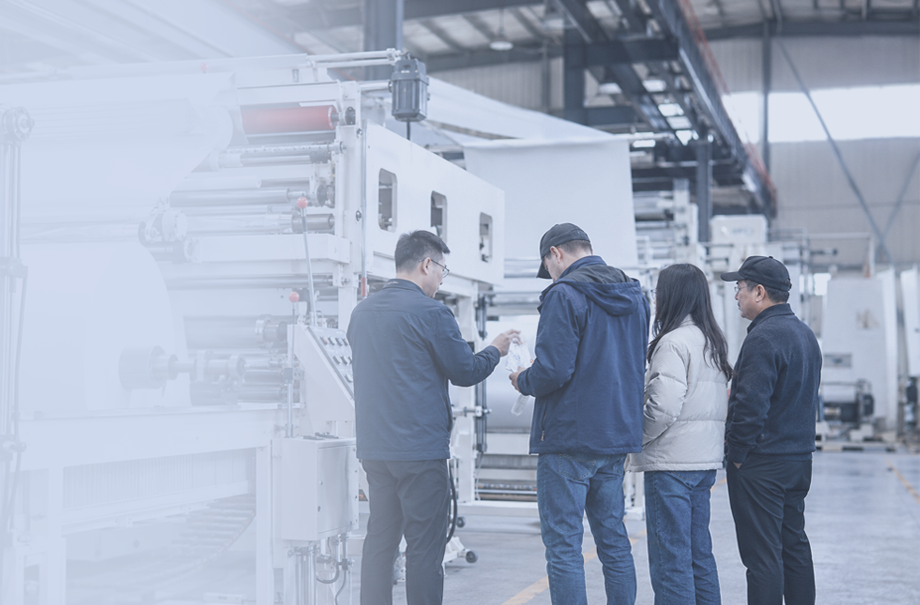
How a Tissue Paper Folding Machine Works
A tissue paper folding machine works by pulling a jumbo roll through a controlled path, embossing and bonding the plies, folding the web into a set pattern, and stacking the finished sheets for packing. In a facial tissue folding machine, servo motors keep tension steady, vacuum suction holds each sheet in place, and sensors correct drift. At HENGYU, we build a V-fold line that runs jumbo rolls up to 1270 mm wide at up to 130 m/min. In this guide, I walk through each step, compare options, and show what to check before you buy.
What a Facial Tissue Folding Machine Does
What Is a Facial Tissue Folding Machine?
A facial tissue folding machine takes big parent reels and cuts, folds, counts, and stacks the tissue folds. It can work by itself, as part of a line making tissues, or with others that pack things. Common goods include face paper in boxes, hotel supplies, industrial towels, pocket packs, and goods with your own brand name on them. Automation makes the size of the sheets more stable, the work cleaner, and less work needs to be done by hand. HENGYU makes a line of V-fold hand towels that can be stacked, folded, laminated, and embossed all in one step. When you buy something from a U.S. company, make sure you look at the goods, the paperwork, the safety features, and the long-term expert support.
Folding Patterns and Product Formats
How a sheet comes out of the hopper depends on how it was folded. With the V-fold, you can fold dispenser towels into each other. You can stack and pull things in different ways with the N-fold, Z-fold, and C-fold. How you fold a piece also affects how high it stacks, how much it packs, and what your packing line can hold. Our machine makes V-fold hand towels. It's 230 × 1270 mm when it's open and 115 × 1270 mm when it's folded. The paper is 14–20 gsm in two plies. Before you buy real paper, you should always try it out first. The ply count, softness, printing, and grammage can all affect how quickly and easily it folds.
Automatic vs. Semi-Automatic Machines
With fully automatic tools, you don't have to do much to feed reels, fold, stack, or move things. They are often chosen by OEMs and contract converters that make a lot of goods because they keep output steady and don't need as much work. Small businesses and new businesses can buy semi-automatic tools for less money at first because they don't need to be loaded, stacked, or packed by hand. Pick the best one based on your product range, worker prices, growth goals, and sales. Our line is in the group of automatic lines. A side push conveyor moves the stacks out of the way. The stacks are made by an automatic servo separator. In other words, the line only needs one or two workers each shift. Not just the item's price, but also how much it costs to own it all together.
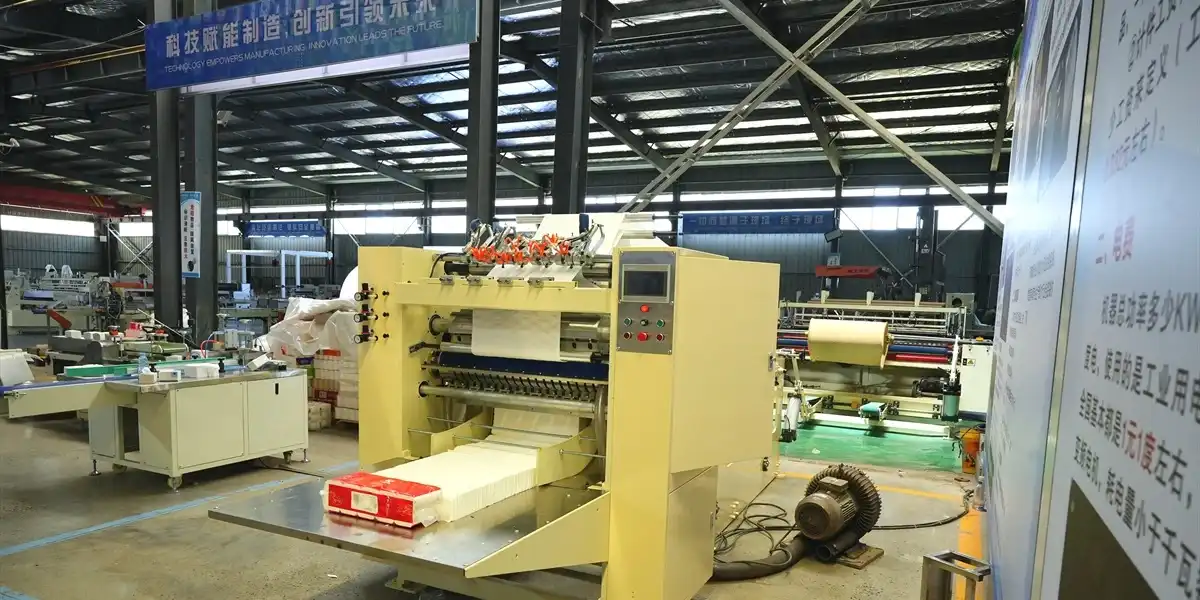
How a Facial Tissue Folding Machine Works Step by Step
Unwinding, Embossing, and Point-to-Point Glue Lamination
Two 1.5 kW unwinding motors feed paper from big rolls that are up to 1200 mm in diameter. For steel-to-rubber embossing, a 260 mm roller is used to press the design into the rubber without breaking the fibers. Then, point-to-point glue lamination connects the layers only at certain points on the surface, not all the way across. The sheet stays soft, bulky, and able to breathe because the glue only covers a small area. People who buy high-end goods can often tell the difference by touching it. As long as the line is moving at speeds between 100 and 130 m/min, the method keeps the amount of glue the same. During the test samples, make sure that our experts agree with the glue you pick. The glue and the tool must work together.
Vacuum Folding and EtherCAT Motion Control
It holds the web across its whole 1270 mm width with a 22 kW vacuum system while the V-fold forms. Strong, even suction keeps the edges straight at high speeds. It's important to make clean folds because sheets that aren't folded right can get stuck in packing facial tissue folding machines, which slows them down. One of the drives is managed by a Leadshine EtherCAT motion driver. The EtherCAT Technology Group says that EtherCAT is a real-time Ethernet fieldbus with distributed clocks. This makes it good for multi-axis timing that is very close. Each unwinding motor and the main drive motor (7.5 kW) work together to even out the stress. This keeps the paper from getting wrinkly or breaking. For quick size changes, a 10-inch HMI shows settings and keeps recipes.
Servo Stacking and Output to Packing
An automatic servo separator will stack the sheets up to 200 mm high if you fold them. A side-push machine then moves the stacks to your packing stand. A servo makes sure that the stack's density doesn't change. During automated packing, this cuts down on waste and makes the pack look better when it's done. Hand-stacked units take workers away from quality checks, so getting rid of them saves a lot of work. The steps go from rolling to stamping to laminating to vacuum folding to servo stacks to rolling out on a conveyor belt. There is no need to move the web by hand from one place to the next because it is sent to the next step automatically.
Capacity, Specifications, and Machine Comparison
Rated Speed vs. Real Output
Yes, rated speed doesn't always mean output that lasts. You can show capacity in terms of lanes per hour, stacks per hour, sheets per minute, or packs per minute. It depends on the type of paper, the number of layers, the base weight, the fold design, the number of changes, and the time it takes to make the thing. What is the fastest speed the machine can go? How much output do they promise under certain conditions? With saved recipes, our line can change size every minute and move at a speed of 100 to 130 m/min. First, I think you should test your own paper slowly and write down any stops or waste. Then you can make a plan for your monthly volume.
HENGYU V-Fold Line Specifications
These are the most important specifications for the HENGYU line. Large rolls can be up to 1270 mm wide and 1200 mm in diameter. The paper is 14–20 gsm in two plies. It moves at 100–130 m/min and can stack things up to 200 mm high. The vacuum pump is 22 kW, the main drive is 7.5 kW, and each of the two unwinding motors is 1.5 kW. Steel is pulled through a 260 mm roller and turned into rubber. A side push conveyor sends the final product to the next step. The main things that are needed are three-phase power and compressed air, so your team can plan ahead for how to get those things.
Comparing Facial Tissue Folding Machine Solutions
Each machine has a different fold type, speed, engraving, and support. High-speed types make more, but they need more work and skilled maintenance to stay in good shape. For high-end looks, embossed and lacquered designs work best. For public or low-cost items, non-embossed designs work best. People who buy new machines usually get service and a warranty. But if you buy a used machine, you should carefully check its electrical systems, instructions, production history, and parts supply. Put the same things in the same order when you compare providers from different areas: speed, how the plies are joined, how accurate the stacks are, the type of controller, how easy it is to get parts, and training. Point-to-point lamination and servo stacking are the first two things I would consider.
Buying Guide: Choosing, Costing, and Complying
How to Choose the Best Facial Tissue Folding Machine
The goal product, the monthly demand, the fold pattern, the paper grade, the floor space, the labor, and the packing needs should all be part of the production situation. Next, write down how you would rank the following factors: capacity, safety, extra parts, cost to own, energy use, and amount of automation. Look at how well a provider can make things, how long they've been shipping, their engineering staff, how they test and train their workers, their warranty, and how fast they can serve you. HENGYU built tissue machinery more than 20 years ago. Item sizes, brands, and the language used for ODM and OEM orders can all be changed, as well as how the facial tissue folding machines are set up. Write down all the terms that were agreed upon in the contract so that everyone can read the same numbers.
Price and Cost Considerations
The quote only talks about a small part of the investment. Costs depend on how automated it is, how much it prints, how it folds, how it embosses, what safety features it has, and how it is made to order. You should think about more than just the price. You need to plan for shipping, insurance, duties, setup, training, power, compressed air, paper waste, repairs, and downtime. Work is easier when servos are stacked on top of each other, and each drive only uses the right amount of power for its job thanks to accurate motor sizing. To get a proper price, please send the sheet size, ply, base weight, fold type, goal output, box style, and country of destination. Ask for different prices on things like shipping, extra tools, and backup parts.
Compliance and Documentation for U.S. Buyers
OSHA rules in the US say that places where you work with machines, nip points, and parts that spin must be watched. Under 29 CFR 1910, Part O, you can find these rules. Guards, emergency stops, and electrical plans that work with the power in your area will be important for your safety team to know. HENGYU machines meet both CE and ISO standards. "CE" stands for the EU Machinery Directive 2006/42/EC. Anyone can use it to trade anywhere in the world. On paper-contact areas, materials that are safe for food are used. Make sure you get guidelines, electrical drawings, lists of spare parts, and conformity documents before you pay. Then, have your mechanic make sure they follow the rules in your area.
Maintenance, Production Lines, and Verification
Maintenance, Spare Parts, and Troubleshooting
Good care will keep the folds straight. Every day and every week, you need to clean the paper dust off of the vacuum lines, rollers, sensors, and belts. It is done once a month to check the bearings, lubrication, tension, and fasteners. Most of the time, skewed folds, wrinkles, tears, and jams are caused by bad paper, worn rollers, or wrong tension. The vacuum filters on our machine can be changed in less than 10 minutes, and most of the parts are standard business items that can be found anywhere. More than 95% of our clients finish the work with help from outside the company. We teach operators through videoconferencing and are always there for them with manuals and tech support.
From Folding Machine to Complete Production Line
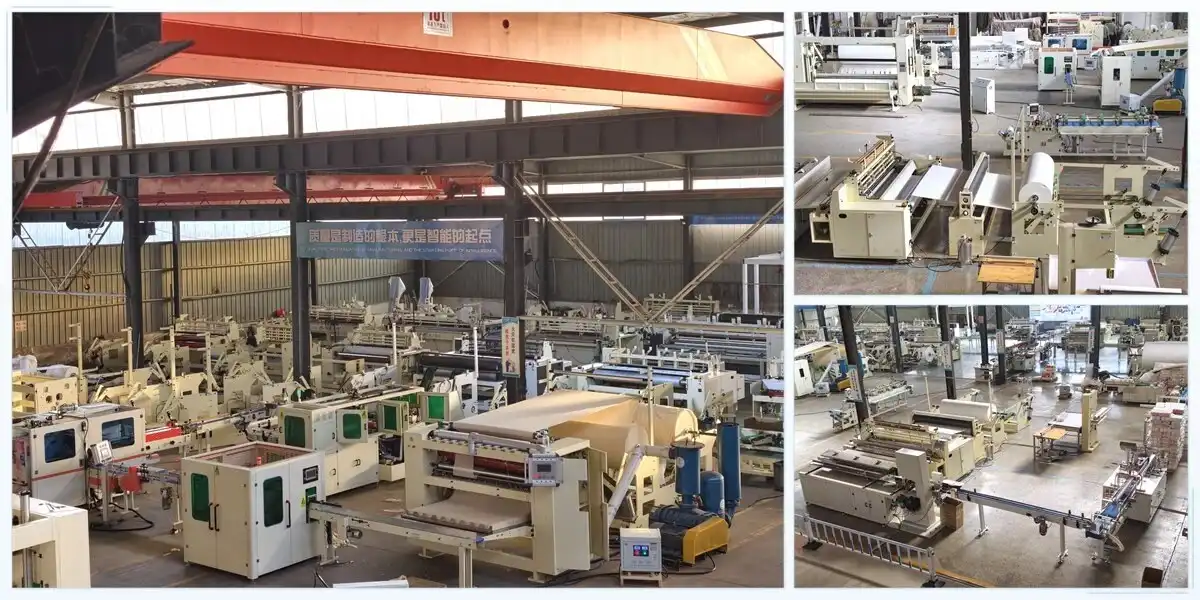
Most of the time, a facial tissue folding machine is in the middle of a longer line. For different kinds of goods, it can connect to counting units, conveyors, bagging tools, box packers, and case packers. The machine can keep running smoothly when folding and packing are done at the same time. Less work needs to be done by hand. The side-push machine takes your stacks directly to where you pack them. If you want to grow, you might want to think about separate sections, extra lines, and shared parts. Many people start with just one line and add more as their business grows. The toilet paper, napkin, and kitchen towel makers from HENGYU can be used together to make a one-stop plant.
Verification Before You Buy
Before you ship, ask for a test to be written down. To find out how safe the machine is, how fast it works, how well it folds and stacks, how much paper it wastes, and how well it fits in the box, check these things. Because you want samples in the size, ply, and fold design that you want, you should send your own paper. Then look at how it looks, how it's dispensed, how stable it is, and how often it's rejected. Your team doesn't have to go anywhere to watch the video of the run to see the stack height, breakage, and fold quality. To do this, you should also look over the instructions, drawings, spare part lists, and electrical needs for your country. This proof makes it possible for your engineers and managers to agree on the choice.
Conclusion
Big rolls of facial tissue are fed into a facial tissue folding machine that folds, embosses, bonds, vacuum-suction-folds, and stacks them. The machine is controlled by servos and sensors. The fold pattern, the number of plies, and the basic weight determine how the pieces are arranged. Always output and rated output are different, so for test runs, use your own paper. Point-to-point laminate keeps the softness and airflow, and servo stacking makes it easier to work with. People should look at more than just price when they compare tools. They should think about things like the total cost of ownership, the amount of space it takes up, the controls it has, and how easy it is to get extra parts. There are also safety guards, electrical drawings, maintenance plans, and written tests that show how steady a line goes after it is set up.
FAQ
1. How does a facial tissue folding machine work?
It takes apart big rolls, presses and sticks the plies together, folds the web with vacuum suction, and stacks the sheets to pack them. Placement and force stay the same thanks to servo drives and sensors.
2. What makes point-to-point lamination different?
The glue only touches the set points between the plies. When you use full-surface glue on paper, it can feel harder, but this method keeps the softness, bulk, and airflow of the sheet.
3. Can I install the machine remotely?
More than 95% of our clients finish the work with help from outside the company. Videos and guides are available to help you learn how to change settings for better paper marks. Our tech support team is also available 24/7.
4. What paper does the HENGYU line accept?
It comes in big rolls that are up to 1270 mm wide and 1200 mm in diameter. The paper is 14–20 gsm in two plies.
Request a HENGYU Facial Tissue Folding Machine Quotation
Looking for a facial tissue folding machine manufacturer that offers remote installation and lifetime technical service? HENGYU's V-fold line can glue point-to-point, stack with servos, and be controlled by Leadshine EtherCAT. Based on the specs of your paper and the outcome you desire, our engineers will suggest a setup. Go to hengyu@hytissuemachine.com to find out more about our type of tissue machines.
References
1. Handbook for Pulp & Paper Technologists, 2016
2. Directive 2006/42/EC on Machinery, European Parliament and Council, 2006
3. Concepts and Techniques of Machine Safeguarding (OSHA 3067), Occupational Safety and Health Administration, 2002
4. EtherCAT – The Ethernet Fieldbus, EtherCAT Technology Group, 2020
5. ISO 12625-1 Tissue paper and tissue products, International Organization for Standardization, 2019
6. Tissue Paper Market Size, Share & Trends Analysis Report, Grand View Research, 2023