What Factors Affect the Quality of Tissue Products During Converting?
Tissue quality during converting depends on six linked factors: parent roll quality, machine design, process settings, factory conditions, quality control, and maintenance. Even a good base sheet turns into weak or uneven tissue when tension drifts, embossing pressure runs too high, or blades go dull. Tissue paper converting machines turn jumbo rolls into finished facial tissue, and every adjustment shows up in softness, bulk, sheet size, and perforation. I wrote this guide from a machine builder's view. It will help you spot problems early, ask better questions, and choose equipment that fits your products.
Raw Material Quality: The Foundation of Finished Tissue Performance
How Fiber Grade Shapes Softness and Runnability
Following a conversion line, parent rolls made of new fiber, used fiber, and mixed fiber act in various ways. Most of the time, a sheet made from brand-new fabric is smoother and cleaner. It is common for recycled grades to lose more dust and lint, which then gets stuck on the stamping machine's rollers and blades. There are grades that fall between those two ranges. Test sheets from your paper source are the first thing you should do because a conversion line can't fix a weak base sheet. Pick the right grade of fiber for the job if you want to get the most out of it. A face towel should be soft, but a food towel should be strong when it's wet. First, choose the correct grade. Then you won't have to change the machine in ways that don't fix the real issue.
Specifications to Verify Before Production
Make sure you check each parent roll's number before you load it. The basis weight, the moisture level, the caliper, the reel width, the outer diameter, and the core size are the things that change how the web runs. The standard way to measure tissue weight in grams is ISO 12625-6. This means that both your lab and your supplier can use the same method to check the results. The HENGYU HYF-460 can handle a 460 mm wide large roll that is up to 1100 mm tall. The inside diameter is 76.2 mm, and it also comes in other sizes. By making sure these sizes match, you can keep the shaft from slipping and the spinning even. It can also mess up the edges at the embossing nip if the roll doesn't come in at the right width.
Storage and Incoming Inspection
H2O changes the tissue paper converting machines before it even gets to the machine. When ISO 187 tests something, the normal conditions are 23 °C and 50% relative humidity. This is because paper takes in water from the air. In order to make fair comparisons, labs use that standard. Wrap rolls up and keep them off the floor and away from damp walls in your building. When you get it, check for edges that are rough, cores that are too long, uneven winding, and weak spots. Each answer should have a lot number from the seller next to it. Those records will tell you whether the trouble was with the paper or the line when it happens weeks later. They also tell you things to talk about with the seller.
Machine Design and Process Parameters
Core Components That Decide Consistency
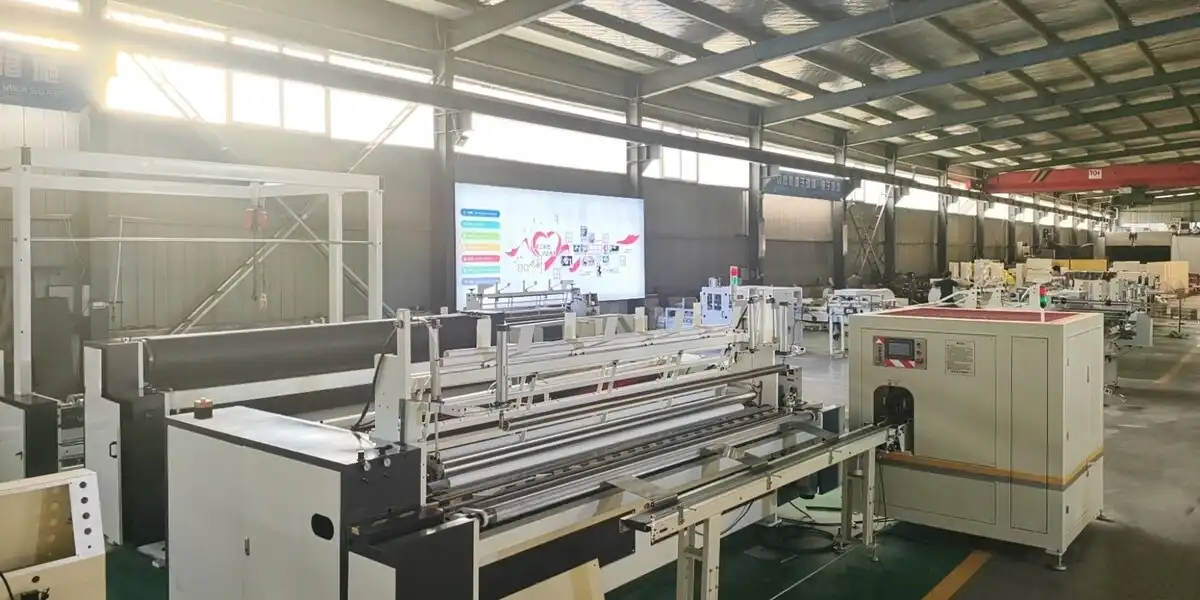
There is only one weak spot in a converting line. There are five major parts: the vacuum system, the etching unit, the tension control, and the drilling and cutting system. The steel roller end of the HYF-460 rolls steel against steel. You can also change the blank lines separately because they are made of steel on steel and have their own control. The line is run by a 3 kW main drive, and the 7.5 kW vacuum system keeps the web tension steady. Each unit has to move at the same time. The speeds of spinning, stamping, and cutting are all in sync when the design is right. This keeps wrinkles and breaks to a minimum.
Speed, Tension, and Cutting Settings
The speed that you can use is different from the speed that is rated. On the HYF-460, the frequency plus electromagnetic speed control lets users pick the speed that works best for the paper. From 0 to 100 m/min, it can go. If it goes too fast, the web can break, mistakes can happen with the holes, and the winding might not be stable. A steady, slower run makes more sheets that can be sold than a fast run with lots of stops most of the time. The air source is important because the machine cuts with pneumatic points. The specs say that there should be three air engines that can move at least 5 kg/cm³ of air per minute. When you turn on the machine, check the gauges every time because low air pressure can make it cut less well. Write down the settings that give you good samples, and then use those settings again to get that grade.
Embossing Pressure, Sheet Size, and Softness
This process gives the sheet its shape and thickness. But if you push too hard, the sheet can break, which makes it less soft and absorbent. When you stamp steel on steel, the pattern has the same depth all the way across the 460 mm width. This makes the name stand out. The HYF-460's finished size is 190 × 200 mm, but you can change it based on the customer's wants by setting the blade. That helps when one customer wants a normal store size, and someone else wants something different. Lightly press on it at first and feel how it feels and how thick it is in your hand. After that, slowly raise the pressure. ISO 12625-4 says to do a tension test on the sheet to see if the shape made it weaker.
Operating Environment, Quality Control, and Troubleshooting
Factory Conditions and Daily Procedures
Sticky things and dust are worse when the humidity is low, and wrapping and glue don't work right when the humidity is high. Make sure that the temperature and humidity in the converting hall stay the same. Check these things every day. To load rolls, start up, set the tension, change blades, fix problems, and shut down, write down simple steps. Before each run, make sure the first piece is okay. Also, keep a sample from each lot and plan when to clean. Pick someone to handle each check. Every operator can get the same result every shift if there is a clear standard. This works best for smaller teams.
Measuring Quality at Three Stages
You should test in three steps, because eye checks aren't enough to catch all the problems. Make sure the rolls that are coming in are thick, dry, and have a base weight. As the item is being made, check the sheet size, alignment, embossing, perforation, ply bonding, and embossing a lot—every hour at least. To finish, use ISO 12625-4 to check the size, sheet count, and tensile strength of the finished tissue. According to ISO 12625-8, you should also check how long it takes to soak up water and how much it can hold. Also, pay attention to waste, web breaks, slowdowns, and switching times. When you use these numbers to find the truth, you don't need to guess. The records should be put down in a simple log that the sales lead and the person running the machine can both read.
Common Defects and Their Root Causes
Link each sign to the reason that seems most likely. A roller that isn't lined up right or force that isn't even can cause wrinkles. Something is wrong with the parent roll if a web breaks. This could be because of a lot of speed or stress spikes. Most of the time, bad embossing is caused by rollers that are worn out or the wrong amount of pressure. Rough punctures are often caused by dull blades or low air pressure. Slippage or setting drift can make the length of the sheet change over time. Too much dust can be made by recycled fiber, dull blades, or dirty rollers. Change one number at a time, then check to see what is going on. That is, you can't just treat the sign and ignore the cause.
Choosing Tissue Paper Converting Machines and Comparing Suppliers
Match the Machine to Your Product
You can see that different tools are needed for toilet paper, cooking towels, face tissue, napkins, and interfold products. Before you buy face paper, think about the style, sheet size, and printing design. You can change the HYF-460's size (190 × 200 mm) and use it to make both soft pack and boxed facial tissues. You can use this model to give a plant that already makes toilet paper a face tissue SKU. Check out how much work, output, moving time, and consistency choices that are semi-automatic and automatic need. A small business might do better with an easy-to-use machine than one that they can't figure out.
Verify Real Capacity and Specifications
Not just the top speed, but also the amount that can be sold. When you ask for a capacity number, you need to include the type of paper, the sheet size, and the length of the shift. Then look at the different sizes of the reels, the final product, the embossing options, the utilities, the safety features, the energy use, the extra parts, and the technical plans. For the vacuum system, the HYF-460 needs 7.5 kW, the main power needs 3 kW, and it needs compressed air. Make sure the supplier knows what voltage your plant needs before you ship. Have some of the product and a video of the machine that works with paper like the one you use sent to you. A guide isn't as useful as a machine that works.
Compare Suppliers by Total Cost of Ownership
While all three types of businesses offer different levels of technical depth, direct producers are the most technical. Check to see how many times the factory has exported goods, and ask about paperwork, installation help, training, and how they handle warranty claims. Add up all the costs of owning it, like shipping, insurance, gas, work, supplies, repairs, and time when it's not being used. Also, look at the Incoterms, the wait time, and the customs papers. For more than 20 years, Henan Hengyu Machinery has been in the tissue paper converting machine business. For more than 15 years, they have been shipping goods around the world. They can ship EXW, FOB, or CIF, and they can bring the goods right to your door. More than 95% of our users use remote directions to set up our goods. If parts of tissue paper converting machines are broken by something other than people during the first year, they will be replaced for free.
Maintenance and Continuous Improvement
Preventive Maintenance Routine
It is safe for both uptime and product consistency to do preventative maintenance. Every day, make sure to clean the vacuum area, rollers, and sensors of dust. Also, check the guards and air pressure. Every week, check the pressing rollers' sides, blades, and belts. Every month, do what the instructions say and lubricate, check the bolts, and adjust the sensors and measuring tools. Do not put oil on the tissue path. This will help keep things clean. When you link your repair records to your crash and downtime logs, you can see trends. Separate controls and parts that are easy to get to on the HYF-460 make regular adjustments faster.
A Five-Step Improvement Method
It's best to do continuous improvement in a way that can be done again and again. First, decide how soft, how big the sheets should be, or how good the holes should be. Second, find the part that is the hardest. Third, only make one change at a time. Fourth, check the answer with data to make sure it's right. Before and after the change, look at the break rate, waste, output, and energy use. Fifth, make the setting that worked a normal part of how you do things. This way, a small group stays on track and doesn't make changes that undo the progress they've already made.
Training and After-Sales Support
The people who work there decide if places that are good stay good. Show them how to turn it on, change the tension, change the cutting, and know what to do if something goes wrong. Also, keep a short list of things that wear out on hand. The help of the provider is important here. There are several ways that HENGYU can help you plan your factory, set up your machines, help with installation, train your operators, and get technical support for life. Thanks for your help. It speeds up the process of making new tissue lines and gives your team someone they can talk to when they need to.
Conclusion
Some controlled factors work together to decide how good the tissue paper converting machines are during conversion. First, we look at the fiber grade, basis weight, moisture, and storage of the parent roll. How well the paper turns into finished tissue depends on how the machine is built, how fast it works, how the strain is controlled, how it is cut, and how hard it is stamped. The results are always the same thanks to written procedures, stable humidity, and three stages of testing that follow standard ISO methods. This also helps find the cause of problems when they happen. People who look at utilities, costs of ownership, and output that can be sold are better able to choose tools than people who only look at speed. That quality stays the same over time thanks to regular upkeep, trained workers, and small changes made to one factor at a time.
FAQ
1. Which factor affects tissue quality the most?
No one wins. The best parent roll quality is the best, but even a good sheet can be damaged by unstable tension or the wrong embossing pressure.
2. How do I check the real capacity of a machine?
Ask for work that can be sold with a certain kind of paper, sheet size, and shift length. Ask for a movie or some examples as proof.
3. How often should I maintain the line?
Check the air pressure and clean it every day. Every week, look at the blades and belts, oil them, and fix them. Every month, do all of these things again.
4. Can the sheet size change?
Yes. The HYF-460 can make 190 × 200 mm tissue, and the blades can be changed to fit the needs of the customer.
Contact HENGYU for Tissue Paper Converting Machines
Going to add face tissue paper converting machines to your list of things you sell? Get in touch with hengyu@hytissuemachine.com and tell them about your parent roll, the sheets' size, and how much you want to print. As a tissue paper converting machine manufacturer, we can help you choose the best configuration, show you pictures or videos of the machine, and go over the installation, warranty, and service terms.
1. Handbook of Paper and Board, 2013
2. Pulp and Paper Chemistry and Technology, Volume 3: Paper Products Physics and Technology, 2009
3. ISO 12625-6: Tissue paper and tissue products — Determination of grammage, 2005
4. ISO 12625-4: Tissue paper and tissue products — Determination of tensile strength, stretch at maximum force and tensile energy absorption, 2022
5. ISO 12625-8: Tissue paper and tissue products — Water-absorption time and water-absorption capacity, basket-immersion test method, 2010
6. ISO 187: Paper, board and pulps — Standard atmosphere for conditioning and testing, 2022