What Factors Affect the Cost of a Tissue Paper Packaging Machine?
The cost of a tissue paper packaging machine depends on seven main factors: packaging format, speed and automation level, film and product specifications, build quality and components, customization and line integration, delivery and support, and long-term running cost. Two machines that look alike can carry very different prices because one holds stable output across many SKUs and the other does not. I recommend judging every quote by total cost of ownership and cost per finished pack, not by the equipment figure alone. This guide explains each factor and shows how to compare offers fairly.
Why Tissue Paper Packaging Machine Prices Vary So Widely
Machine Price, Landed Cost, and Total Cost of Ownership
Buyers often don't notice when they compare three numbers. The "ex-works" price of a machine is it's value. The landed cost includes packing for export, freight, insurance, taxes, and transport within the country. Installing, training, extra parts, labor, film use, energy, upkeep, and downtime are all things that add up to the total cost of ownership over the machine's life.
Even if the price of a machine seems low, it may have hidden costs. Everyone who works on a machine that jams wastes film and time every shift, and this goes on for years. Before I talk to a plant manager about a project, I ask how much it will cost per packed unit and how long it will be up and running. The real value of a deal is much clearer from those two numbers than the top value.
Machine Type and Packaging Format
This is the first big cost driver: the format of the product. Different types of facial tissue, V-fold hand towels, napkins, pocket tissues, and multi-roll bundles need different ways to be fed, counted, grouped, and sealed. A soft-pack face tissue wrapper and a bundler for 6, 12, or 24 toilet rolls do not use the same parts.
Manual and semi-automatic equipment is less expensive to buy, but it needs more people to run it and makes covers that aren't as constant. The initial cost goes up for an automatic tissue paper packaging machine because it has more sensors, servo drives, and control logic. Custom pack sizes, odd materials, and OEM requirements all take more time to design. Because of this, I think you should be clear about the pack format, size, and number of packs before you ask for a quote.
Production Capacity and Automation Level
The cost of a machine goes up as its speed goes up because it needs stronger frames, faster sealing, precise synchronization, and servo motion. Rated speed and stable output for business use are not the same, though. Use annual demand, operating hours, shifts, and the number of times the shifts happen to figure out how much hourly output you need. Then, add a reasonable amount of room for growth.
Also, check the folding machine that comes before it. If the packer doesn't match its output, the bottleneck will just move downstream. Smart feeding, fault detection, PLC control, and HMI recipes are some of the more expensive parts of automation. However, they pay for themselves by cutting down on stops and work. Nakajima's work on Total Productive Maintenance talks about how plants often use OEE to measure this because it multiplies availability, performance, and quality.
Materials, Construction, and Customization Shape the Specification
Packaging Film and Product Requirements
What kind of film you choose changes how the tissue paper packaging machine works. There are different types of films, such as biodegradable, reusable, CPP, and BOPP. Each has a different closing window, stiffness, and static behavior. When it comes to eco-friendly films, PID-controlled sealing is important because windows with tight seals need better temperature control.
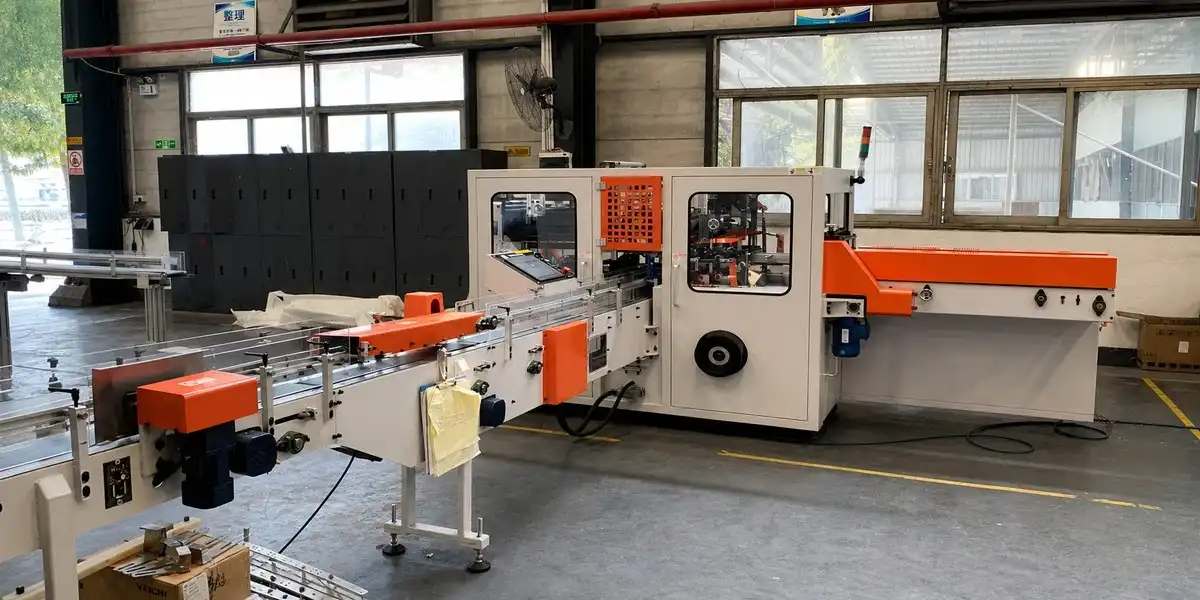
A quote should include the size of the item, the number of packs, the type of film, the thickness, and the width. The HY-T300V can run CPP heat-sealing film from 0.035 mm to 0.05 mm thick, and the widest film it can handle is 500 mm. It can also be set up to work with recyclable or organic materials. Before placing an order, I always suggest trying a sample with the real film, especially if a customer in a store asks for eco-friendly packaging.
Machine Construction and Component Quality
Frame material, touch areas, and key parts determine how long something lasts and how much it costs to maintain. Painted carbon steel, partial stainless steel, and full stainless steel are all priced differently and don't handle humidity and paper dust the same way. Both the price and the availability of spare parts depend on the grade of the PLCs, servo motors, sensors, bearings, gearboxes, and pneumatic parts.
Electricity and safety features are also important. People in the US should find out what standards the electrical design follows. NFPA 79 covers the electrical parts of industrial machinery, and ISO 12100 lays out basic rules for making machines safe. HENGYU says that its tools meet the requirements of CE and ISO. Before you sign, make sure you have written copies of the papers, the replacement wait times, and the guarantee terms.
Customization and Line Integration
When one machine has to handle a lot of SKUs or connect to other equipment, customization costs a lot. More testing and engineering work is needed to connect to machines that fold tissues, pack cases, make cartons, or move things along conveyors. It takes more time and parts to build custom infeed units, counting systems, and servo pushers.
Costs go up for many machines because they need tooling and format parts. Servo control makes that easier. In about 15 to 20 minutes, the HY-T300V can switch between sizes. This is helpful for plants that make a lot of different goods in small batches. HENGYU also lets ODM and OEM customers change the way machines are set up, the size of products, the company's name, and the language used for operations. It's better to have clear written specifications than to have secret costs and project delays later on.
Delivered Cost: Installation, Shipping, Spare Parts, and Support
Installation and Training
The price of installation changes based on who does the work. Since travel, lodging, and waiting time add up, sending an engineer costs more than giving advice from afar. Preparing the site is also important. Things like pipes, power, compressed air, and floor space should all be set up before the machine comes.
More than 95% of HENGYU's buyers finish the installation with help from afar. If a buyer wants an engineer to be there, we can also set up, test, and train the operator on-site. Good training cuts down on waste during start-up and stops damage that could have been avoided. When you compare prices, make sure that training, instructions, and commissioning are all included in the price or shown as different costs.
Shipping, Incoterms, and Duties
Cost of shipping depends on distance, export packing, container loading, insurance, and the size and weight of the machine. Who pays for each leg is set by the Incoterms rule. Under FOB, the buyer takes care of the main freight. When you sell something CIF, the seller pays for the shipping and security to the port of arrival. Under DDP, the seller sends the goods that have been cleared to be imported, and the price includes the duties.
In Incoterms 2020, the International Chamber of Commerce spells out these roles. If you are bringing goods into the US, you should ask your customs broker about taxes and tariffs, as rates can change. If you don't compare all of the quotes on the same Incoterm, the numbers will lead you astray.
Spare Parts and After-Sales Support
Planning for spare parts saves service. Over time, sealing knives, heating elements, belts, sensors, bearings, and pneumatic parts will wear out. Ask for a list of suggested spares and when they can be delivered. You should also ask for software files and operator and repair instructions.
Check the terms of the warranty. HENGYU provides a one-year warranty that covers parts that are broken by accident and can be replaced for free. We also offer professional support for life through online help, how-to guides, and troubleshooting from afar. Response time is just as important as coverage, especially for plants that are open all the time. A provider that responds quickly and keeps records of its work can save you more than just a little money on the tissue paper packaging machine.
Operating Cost, Payback, and Fair Quotation Comparison
What Running Costs Include
The cost of running the business includes things like staff, film, power, compressed air, repairs, and downtime. Automation cuts down on the need for staff. HENGYU says that the HY-T300V cuts the work of packing by up to 70% compared to packing by hand. Correctly feeding and sealing the film also cuts down on waste.
In terms of energy, you should look at both connected power and normal operating load. It says that the HY-T300V can handle a total of 15.47 kW of power. The machine stops when it finds a double feed, a paper jam, or the wrong package height. This keeps film and product from piling up as waste. Repair times are cut down with modular parts and standard spares.
A Simple Payback Model
Most plants can use a simple ROI model. The annual net benefit is the amount of money saved on labor, materials, and earnings from more output minus the cost of running and maintaining the business. To find the payback time, divide the total cost of the project by its net gain each year.
Real use should be used, not a best case. It takes longer for a machine to pay for itself when it doesn't run as long as planned. The project cost should include the cost of landing, installation, training, and spare parts. Write these down because your finance team will check them. Plants that have a lot of scrap, a lot of manual work, or a bottleneck in the packing process tend to see the clearest returns. Plants that don't make as much may see less.
Comparing Quotations and Avoiding Common Mistakes
Make sure that all of your suppliers have the same information, such as product samples or drawings, pack sizes, goal speed, film specifications, voltage, certifications, site address, delivery date, and Incoterm. Then, look at what each quote includes, like warranty terms, installation, training, spare parts, form parts, automation functions, and payment terms.
Some mistakes that people often make are taking a low price that doesn't include feeding or safety systems, getting more capacity than needed, not figuring out how long changeovers will take, and not doing tests with real film and tissue. You should bring your products, films, and target speed to the factory for an acceptance test. A low bid doesn't always mean it's the best deal. The right tissue paper packaging machine manufacturer gives steady results and clear help.
Choosing the Right Machine: A Practical Decision Model and the HY-T300V
A Weighted Evaluation Model
Score each provider from 1 to 5 on the things that mean most to you: product and film compatibility, stable output, total cost, automation, flexibility, service quality, and expected payback. Put more weight on the things that hurt the most when they break. A plant with many SKUs might have the longest switching time, while a plant with only one product has the fastest stable speed.
Equipment that is small or partly automatic may work well for small plants. A lot of the time, growing converters need PLC control, automatic counting, and packing. For high-volume plants, servo-driven machines that feed and check the quality of the product automatically are usually needed. Engineers, producers, and money people can all agree on a choice after a long argument thanks to a simple score sheet.
HY-T300V Specifications at a Glance
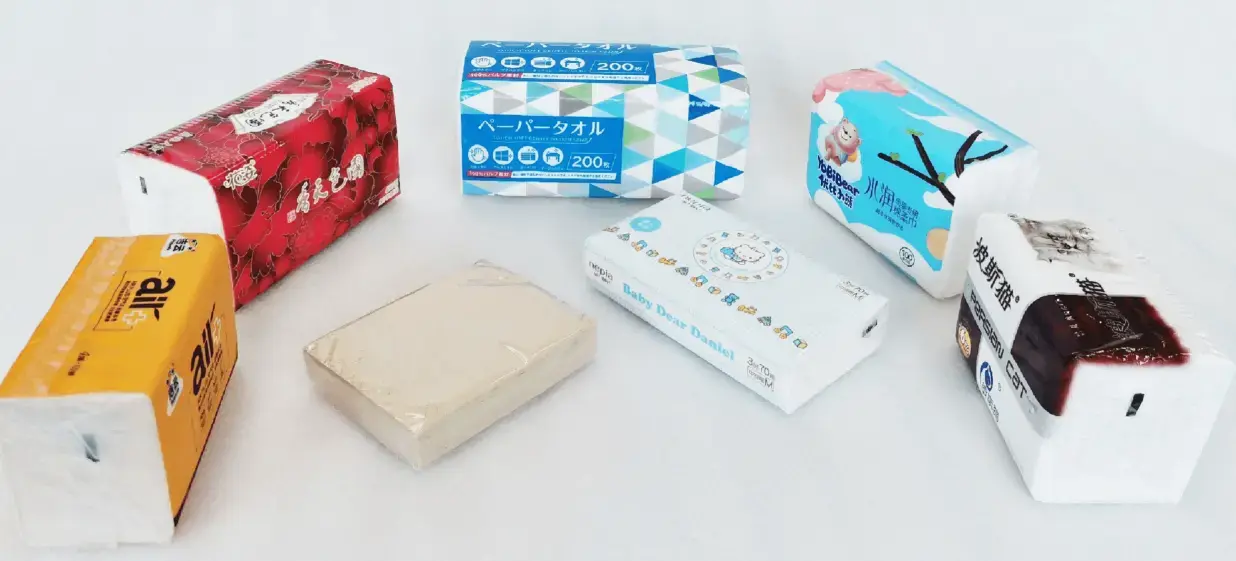
Up to 80 packs can be made per minute with the HY-T300V from HENGYU. This is the steady speed at which it works. It has an automatic smart feeding system with visual sensors and 13-axis full servo control. It makes 3D soft packs for napkins, facial tissues, and hand towels that fold in a V shape.
The machine can work with pieces of tissue that are 120–360 mm long, 90–200 mm wide, and 40–170 mm high. The settings are controlled by a PLC and a tablet. The listed source is 380V/50Hz, so people in the US should call us to make sure they understand the voltage, frequency, and electricity needs in their area before placing an order.
Where It Fits in a Cost Plan
Each part of this tissue paper packaging machine is linked to a cost line. Smart feeding and servo control cut down on rejects and stops. A 15- to 20-minute size change helps plants that have a lot of SKUs. Finding faults keeps film and goods safe. When customers ask for environmentally friendly packs, CPP film support with PID temperature control for biodegradable or recycled film configurations is helpful.
Before you make a decision, test some film and tissue samples and make sure that the speed of your folding machine is right. Also, ask for a list of spare parts and the instructions. HENGYU has been making tissue-converting tools for more than 20 years, so they can give you a quote on the whole job so that your comparison is fair.
Conclusion
There is a lot more to the cost of a tissue paper packaging machine than just the tools themselves. Base prices are based on the type of packaging, the speed, and the level of automation. The type of film, the quality of the build, the parts, and any customizations all affect the specs. The supplied cost is based on the shipping terms, taxes, spare parts, support, and installation. Then, the running cost and payback are calculated by adding up the time, money, energy, film waste, repairs, and downtime. Buyers can judge value instead of price by comparing quotes on the same terms, trying real samples, and giving providers scores based on clear criteria. Most of the time, the lowest cost per finished pack comes from a machine that works with the chosen film, fits the folding line, and keeps output fixed across SKUs.
FAQ
1. Why do tissue paper packaging machine prices differ so much?
Prices vary based on format, speed, automation, film compatibility, component grade, customization, and the level of support. Quotes for two different services and items may cover very different things.
2. Is it worth it to buy an automatic machine instead of a semi-automatic one?
When labor costs, scrap, or output limits hurt your plant, you should think about it. Figure out the payback based on how it will be used before making a decision.
3. What should be in a quotation?
It should include the format parts, parts of the machine that are set up, functions of the automation, installation, training, spare parts, warranty, shipping terms, and payment terms.
Request a Tissue Paper Packaging Machine Quotation from HENGYU
Give HENGYU, a tissue paper packaging machine manufacturer with over 20 years of experience, samples of your products, pack sizes, target output, film information, and the location where the machine will be installed. Our team will suggest a configuration and make a clear quote for the project. You can email hengyu@hytissuemachine.com to talk about the HY-T300V, sample testing, installation, user training, and help after the sale.
References
1. Incoterms 2020 Rules, International Chamber of Commerce, 2019
2. Introduction to TPM: Total Productive Maintenance, Seiichi Nakajima, Productivity Press, 1988
3. ISO 12100: Safety of Machinery – General Principles for Design – Risk Assessment and Risk Reduction, International Organization for Standardization, 2010
4. NFPA 79: Electrical Standard for Industrial Machinery, National Fire Protection Association, 2021
5. Directive 2006/42/EC on Machinery, European Parliament and Council of the European Union, 2006
6. 29 CFR 1910.147: The Control of Hazardous Energy (Lockout/Tagout), Occupational Safety and Health Administration, 1989