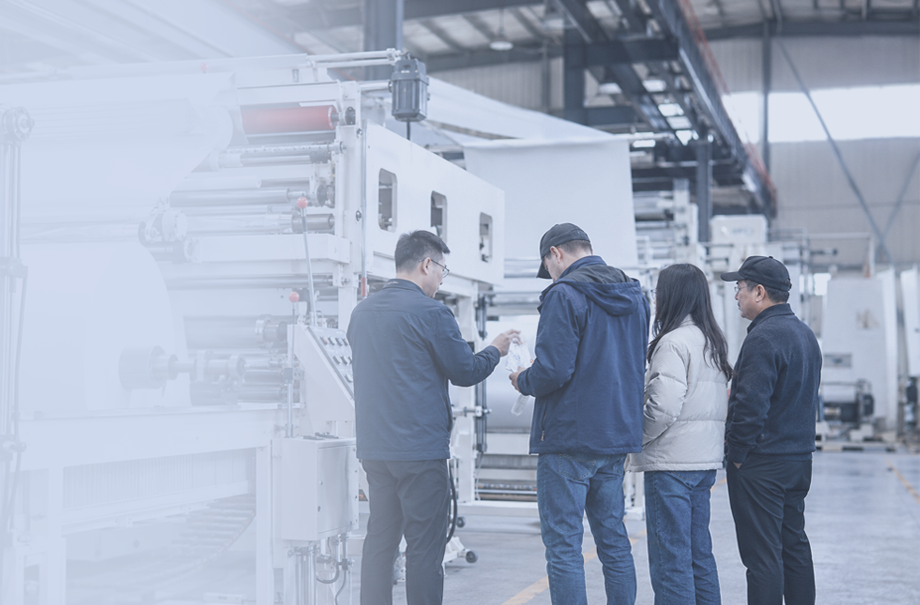
How Does a Semi Automatic Tissue Paper Making Machine Work?
A semi-automatic tissue paper making machine works by unwinding a jumbo tissue roll under controlled tension, embossing the sheet, folding it, cutting it to length, and passing the stacks to a box sealing unit. Operators still load rolls, adjust settings, move product between stations, and check quality, while the machine handles the repetitive steps. This mix lowers labor compared with manual work and costs less than a fully automatic line. In this guide, I explain each stage, the main specifications, the buying factors, and the maintenance habits, using the HENGYU facial tissue box line as my example.
What Is a Semi-Automatic Tissue Paper Making Machine?
A Converting Machine, Not a Pulp Mill
Because the name might confuse new buyers, this is where I start. In a semi-automatic tissue paper making machine, wood cannot be used to make paper. This machine takes large "parent" rolls of tissue made by a paper mill and adds finishing touches. Some of these things are toilet paper, facial tissue, kitchen towels, napkins, and paper that you can fold in half. The machine does the important steps of changing, like folding, cutting, and pressing. People who work on the machine load rolls, move them, adjust them, and check them. Because the work is spread out, the system is easier to run and fix than one that does everything itself.
Semi-Automatic vs. Manual vs. Fully Automatic
Manual machines need the most work and don't always work right, but they can be useful for small shops that don't have a lot of money. For fully automatic lines to be worth the extra money, they need steady demand, more technical know-how, and more money. They can connect packaging, counting, and converting. There is a tissue-converting machine in the middle that works partly on its own. You can choose from different output formats and get faster and more accurate results than if you did it by hand. A small team can still do maintenance, which is important when one problem could mean you lose all your money.
Who Gets the Most Value From This Equipment
Three groups get the most out of what I've seen. The first group includes new tissue shops and family-run businesses that already sell plain rolls of tissue but want to add boxes of facial tissue. Private-label brands and sellers need to keep making things without having to hire a lot of people. They are in the second group. Third, there are OEM converters who help different clients by changing the size. It can handle tissue that is 100 mm x 120 mm to 100 mm x 210 mm. This line is good for companies that make box face tissue. As your business grows, you can add more tools without having to make a big investment at the start if you want to start small.
How the Production Process Works Step by Step
Stage One: Unwinding, Embossing, and Folding
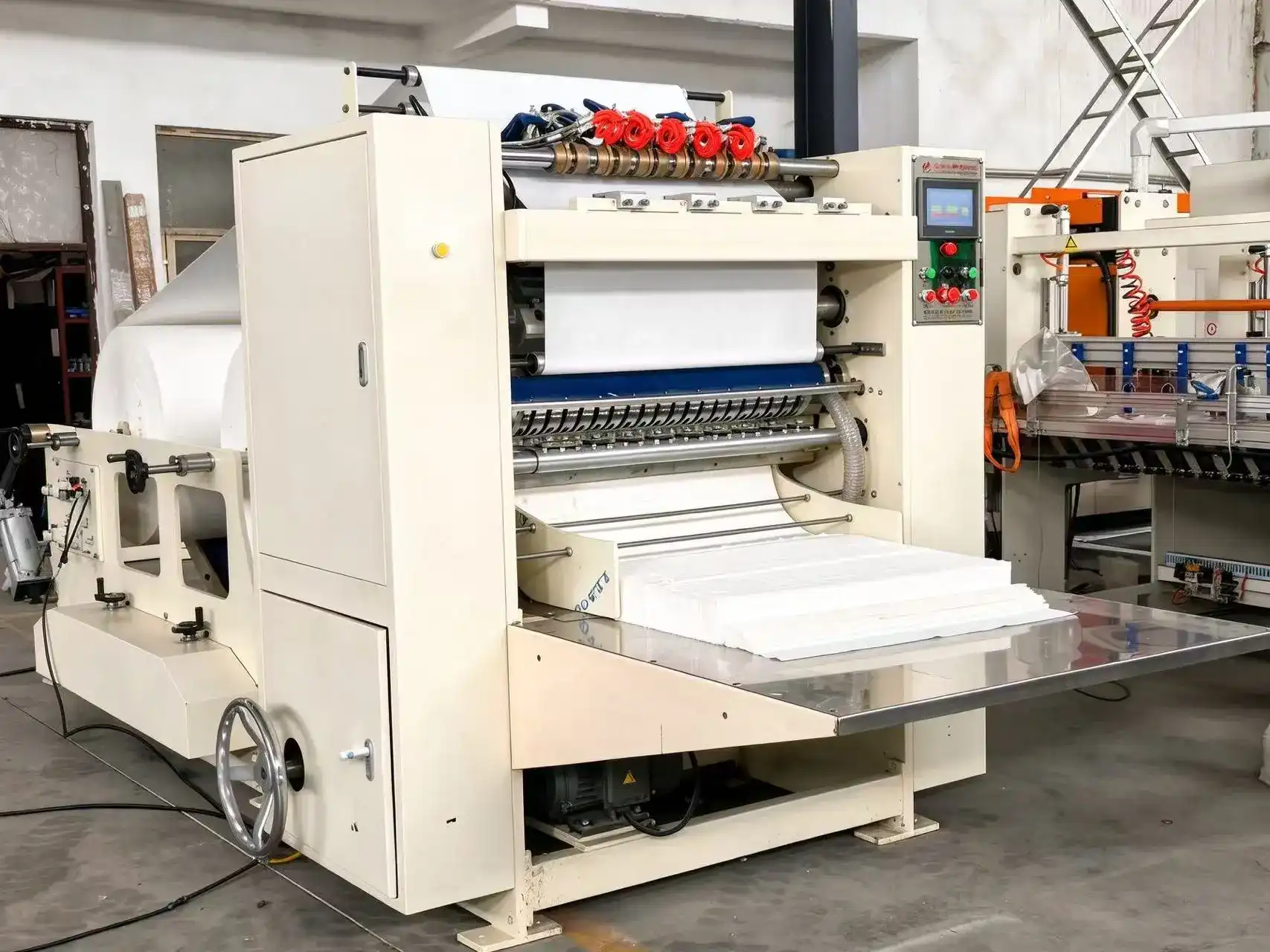
The process starts at the machine that makes tissues for faces. A big roll is put on the unwind stand. One end of this roll is 76.2 mm wide, and the other end can be up to 1,200 mm across. With electromagnetic speed control, the tension stays the same. This also helps keep the rolls from coming loose and the density from being uneven. After that, the sheet is run through steel-to-steel edge embossing rollers, which give the edge of the tissue a clean look. Pressure holds the sheet in place, and a hydraulic point cut cuts it in half. The raised sheet is bent by the machine into the shape used for face tissue boxes, which is made up of several folds.
Stage Two: High-Speed Rotary Cutting
Next, the folded web is put into the semi automatic tissue paper making machine that cuts in a circle. A round knife with a diameter of 610 mm and a speed of 980 rpm cuts the web into stacks. The range of cuts is 80 to 210 mm, and the cutting speed is fixed at 320 mm per minute. You can tell if the cut is good or not here because a dull or out-of-place knife will tear the paper and make the sides rough. An electric cutting device that can be changed with a touch screen is provided by HENGYU. This way, your team won't have to do a lot of work by hand to keep the blades sharp. It can cut rolls of both toilet paper and facial tissue.
Stage Three: Box Sealing and the Operator's Role
Take the stacks and go to the machine that seals the boxes for you. Each stack is lined up with a pouch that has already been made by a stepper motor, and the edges are sealed with hot melt glue. Someone controls the process with a PLC, which lets them see what's going on and spot problems early. Every minute, 65 boxes are made as planned, and every minute, 40 to 50 boxes are made. People are still important in this place. They feed boxes, move stacks from one place to another, and put rolls of paper on the machine. When the work is done, they check the boxes. With the sealing function, about 60% less work needs to be done than when packaging is done by hand.
Main Components and Specifications
Facial Tissue Machine With Edge Embossing
I always tell people who buy something to read the back of the box to see what it says. This machine can make tissue that is 100 mm wide and 120 to 210 mm tall with an accuracy of ±2 mm. In an 8-hour shift every day, 1,900 to 3,000 kg are made. Main power is 5.5 kW, vacuum system power is 18.5 kW, and air is supplied at 5 kg/cm² or less by a 3 HP air compressor. Frequency control and electromagnetic speed control are used to run the drive. The core diameter comes in 76.2 mm sizes, but you can also get it in other sizes. Keep in mind that set power only shows how much electricity is being used, not how much you use every day.
High-Speed Rotary Cutting Machine
The cutting edge can handle paper widths of 50 to 105 mm and process heights of 30 to 150 mm. The process must be at least 500 mm long and have 8.5 kW of power at 380V/50Hz and 0.5 MPa of air pressure. It's 1300 mm long, 1300 mm wide, and 1650 mm tall. It has to have a strong base and enough space on the floor because it weighs 1,500 kg. Make sure these numbers work for your workshop before you order. When the machine gets to the job site, it might not work if it doesn't have enough power or compressed air. Some lines may look cheap on paper.
Automatic Box Sealing Machine
The machine that seals boxes needs cardboard that is 105 to 230 mm long, 100 to 120 mm wide, and 30 to 100 mm high. The board should also weigh 250 to 450 g/m². The PLC can manage a 2.4 kW hot melt glue machine, a 0.75 kW stepper motor, and a 0.4 kW motor. The power is 220V/50Hz. A hydraulic feed of 0.3 to 0.7 MPa is provided by the buyer. It's 3000 mm long, 1300 mm wide, and 1450 mm high, and it weighs 1,400 kg. As soon as possible, shape your box to fit these dimensions. The size and weight of the board affect how well the machine works.
How to Choose the Right Semi-Automatic Tissue Paper Making Machine
Start With Your Product and Demand
Before you ask for a quote, you should know what you want to sell. Write down the final tissue's size, ply, GSM, style of embossing, box format, and how much you think it will cost each month. Then, connect those needs with real work hours, shifts, and people who can be reached. A lot of the people I see only look at the advertized speed. A better way to do it is to guess how much output can be sold after waste, downtime, and changes in size. This line lets you change the tissue's size during the same production day, which is useful if you have customers who buy in bulk and those who buy under their own brand. A seller can quickly help you find the right setup if you tell them exactly what you need.
Price Factors and Procurement Details
Semi-automatic tissue paper making machine prices depend on how much they can make, how automated they are, how the pressing and folding are set up, the electrical parts, how they can be customized, and how well they pack. Send information about the product, such as the parent roll's size, its goal capacity, voltage, certification requirements, shipping location, and the spare parts that are expected. This will help the quote be more accurate. Ask the seller to make a list of things that the price does not include, such as fitting help, training, or extra parts. When you sell something to someone in another country, you should also check the Incoterms, shipping measurements, export papers, instructions, and electrical drawings. Before you buy used equipment, find out about its history, condition, and the parts that are available.
Power, Paper Rolls, and Site Conditions
A lot of projects fail because of power. This line's cutting needs 380V/50Hz, and the machine that seals needs 220V/50Hz. Make sure these prices are right for your area by calling your seller before you place your order. To make sure the wiring in the US fits the rules, have a qualified electrician check it out. Also, check to see if the machine guards meet OSHA requirements. Also, make sure that your parent roll fits the 76.2 mm core. Sharp knives can get stuck in dry places because of static electricity and paper dust. Make sure the workshop is clean and has the right amount of humidity. The gear that HENGYU makes meets CE and ISO standards, and frequency control helps the line deal with changes in power.
Operation, Maintenance, and Support
Daily Startup and Maintenance Routine
Things that you can count on start to happen before the first roll. Make sure the air pressure is right, load the parent roll straight, line up the web, and set the tension. Then, do a controlled test and keep an eye on the first batch. Record output, waste, downtime, and quality problems. Check the belts and knives, grease the right places, and test the emergency stops at the end of each shift. Clean the cutting area of paper dust. Every so often, you should check the air parts, sensors, electrical links, bearings, and embossing rollers. Most quick stops don't happen because of these habits, which don't cost much.
Troubleshooting Common Problems
A lot of problems are brought on by settings, wear, too much food, or food that isn't stable. Sometimes uneven folding means that the webs are not lined up right or that the tension is not even. A bad roll or too much tension is what breaks most of the paper. If the etching is weak, it means that the wheel pressure is off or there is wear. You should check the knife and sharpen it if the cuts are rough or not straight. A motor can get too hot if it is overloaded or if airflow is blocked. The machine that seals sometimes gets stuck because the board is too big or the pre-formed boxes are broken. If the problem happens again, write down the settings and give them to the seller. This will help them figure out what went wrong quickly.
Tracking Efficiency and Working With HENGYU
Keep track of how much work is done every hour, how much can be sold, how much is wasted, how much downtime there is, how long it takes to switch between tasks, how much energy is used, and how many complaints you get from customers. There's more to learn here than just the speed. Setting up each size of the product on a written sheet helps new workers do a good job over and over again. We have machines for toilet paper, facial tissue, napkins, and kitchen towels. For more than 20 years, HENGYU has been making tools that make tissue. You can get help from our team to plan how your factory will be set up, watch over the installation from afar, and learn how to run the machines, do basic maintenance, and fix problems. We don't need an engineer to come to your place more than 95% of the time to set up your tools. It comes with a warranty that lasts for one year and free technical support for life.
Conclusion
The semi-automatic tissue paper making machine controls unwinding, stamping, folding, rotary cutting, and box closing. It takes bought parent rolls and turns them into finished tissue products. People do the loading, moving, and checking. It is more stable to have this medium position than to have people work on it, and it costs less than a fully automatic line. The HENGYU box machine can make 40 to 50 boxes per minute, which shows how the specs fit together. Every day, it can make between 1,900 kg and 3,000 kg. Before you buy something, make sure that the size, shape, power, and conditions of the workshop are all right. They will affect how well it works. It's easier to figure out what's wrong and keep production stable after installation if you clean every day, set up carefully, and keep track of waste and downtime.

FAQ
1. How much labor does this line save?
With PLC control and the automatic box-closing feature, about 60% less work needs to be done than when everything is done by hand. People still load rolls, move stacks, feed cartons, and check boxes that are done.
2. What tissue sizes can the line produce?
While being off by just 2 mm, the line can cut tissue from 100x120 mm to 100x210 mm. The machine can close boxes that are 105 to 230 mm long, 100x120 mm wide, and 30 to 100 mm high.
3. Can I install it without an engineer on site?
More than 95% of our customers set up their equipment without having a worker come to their site. This is because HENGYU helps with installation from away. We also teach people how to run the business and provide technical support for life.
Request a Semi-Automatic Tissue Paper Making Machine Quote From HENGYU
Are you all set to make your first box line? HENGYU is a semi-automatic tissue paper making machine manufacturer with more than 20 years of experience, machines that are CE- and ISO-compliant, remote installation help, and lifetime technical support. You can send an email to hengyu@hytissuemachine.com with the information about your tissue size, parent roll, voltage, and goal output.
References
1. Handbook of Paper and Board, Wiley-VCH, 2013
2. Handbook of Pulp, Wiley-VCH, 2006
3. Safeguarding Equipment and Protecting Employees from Amputations, OSHA, 2002
4. ISO 9001:2015 Quality Management Systems – Requirements, ISO, 2015
5. Directive 2006/42/EC on Machinery, European Parliament and Council, 2006
6. NFPA 70: National Electrical Code, NFPA, 2023