How to Choose the Right Tissue Paper Packaging Machine for Your Factory
To choose the right tissue paper packaging machine for your factory, start with your products, target output, and packaging film. Then test real samples before you decide. Judge stable speed rather than peak speed, confirm film compatibility, and review the controls, safety documents, and service terms. Compare total project cost, not only the machine price. Finally, ask for a trial run with your own tissue. HENGYU has built tissue converting equipment for over 20 years, and I wrote this guide to help equipment directors and plant managers compare options with clear criteria.
Define Your Needs and Compare Machine Types
Start with Your Factory's Packaging Requirements
Write down what you want first. This will help you make a good choice. Note down the things you bring, like extra toilet paper, napkins, facial tissue, hand towels with a V-shape, and other things. Write down how long, wide, and tall the item is, how many packs there are, how many shifts there are each day, how much floor space there is, how much power there is, and how many workers are available. Send this to the supplier before you ask for a price quote. Think about the next three to five years too. Now you need to say whether you'll add a second line or pack types. If you know exactly what you need, you won't buy something that works today but will stop your business from growing tomorrow. It's also simple to look at different quotes.
Understand the Main Types of Tissue Paper Packaging Machines
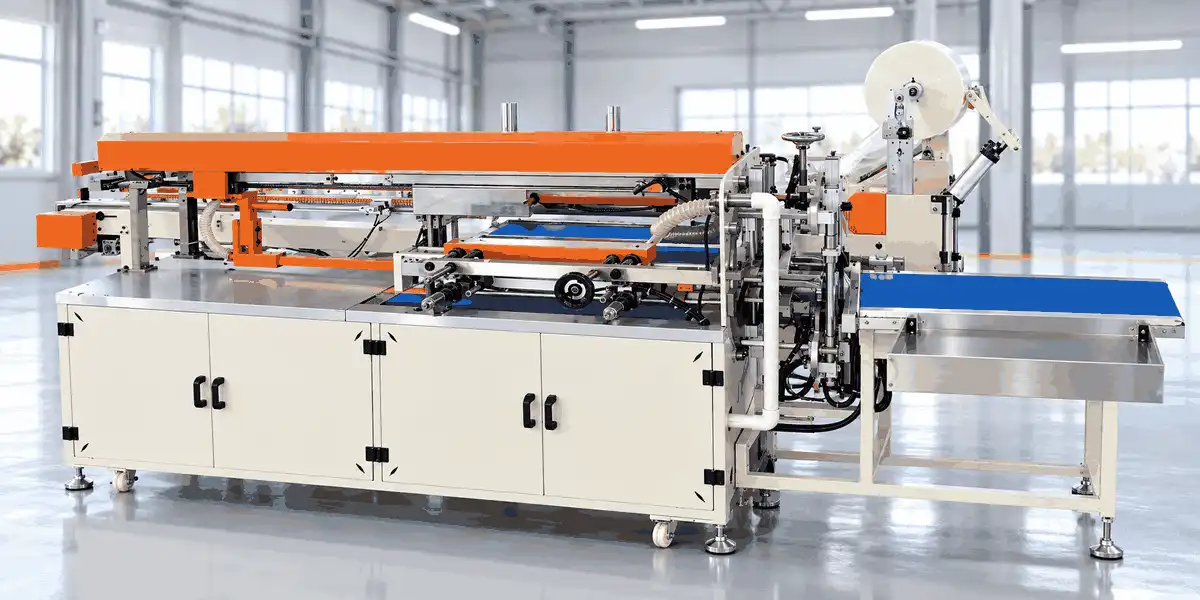
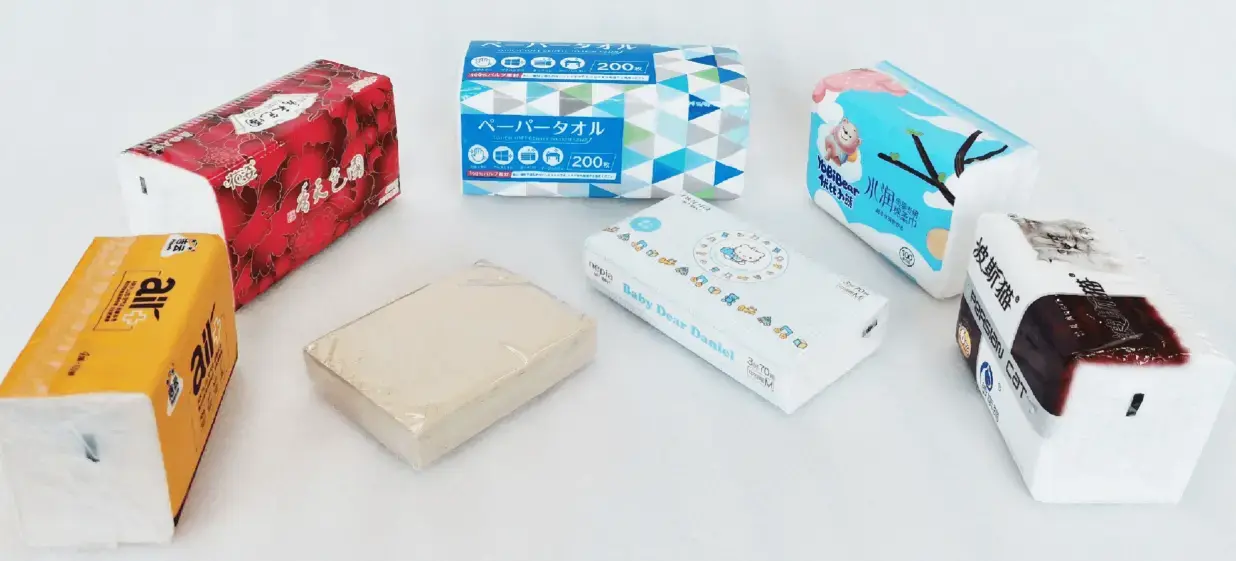
There are different kinds of goods and ways to package them, and each machine can handle a certain amount. A fully automatic machine takes in goods, sorts them, counts them, wraps them, closes them, and then sends them on their way. The user doesn't have to do much. This kind of unit costs less, but someone has to do more work to get it going. As well as toilet paper, wipes, and paper towels, make sure the machine can handle them. Compare plans for one lane and plans for more than one lane. In big plants, it's common for packers to be asked to check items, label them, pack cases, and put them on pallets. It can make 3D soft packs of facial tissue, V-fold hand towels, and napkin tissue. Our HY-T300V is a fully automatic machine. If you know about these groups, you can get the gear you need.
Compare Automatic and Semi-Automatic Solutions
Which one you choose will rely on your income, growth goals, traffic, labor costs, and the number of goods you sell. Automatic machines can often make more, pack better, need less work, and are simple to connect to folding machines further up the line. They do ask for more training and planned upkeep. These tools can be helpful for small businesses, projects that want to expand into new markets, or stores that often change what they sell. For the most part, automation is better when an old plant gets stuck at the packing step. More people are needed to pack by hand than to use the HY-T300V. This means that the workers can now ship the goods and check that they are safe. Work, energy, film waste, repairs, downtime, setup, and new parts are all things you should think about when you figure out the total cost of ownership.
Match Performance, Materials, and Technology
Match Machine Performance to Your Production Goals
It's not clear from a paper's top speed how much power it can still produce. It depends on the film, the type of tissue, how the pack is set up, how often the rolls are changed, and whether there are breaks for the operator or short stops. Divide your daily goal by the number of hours you need to work to get an idea of how much you should be paid per hour. Then, ask the seller to show you test results for things that are the same as the one you want to buy. At its fastest speed, the HY-T300V can pack up to 80 packs per minute. This is also its best speed. There is a lot of work to be done, so it has to work quickly to keep up. You should talk about how fast your tissue paper packaging machine should work. How well does the seal work? How many rejects are there? How much energy is used? How much film trash is there?
Select Suitable Packaging Materials and Technology
The type of film you choose will determine how well it closes, covers, looks, and costs to run. Paper wrap, film that can be returned, sealed plastic film, and plastic film are all options. Talk to the seller about how thick the film is, how long the roll is, how the heat seals will work, and what the registration marks look like. A CPP heat-sealing film that is between 0.035 and 0.05 mm thick and up to 500 mm wide is used by the HY-T300V. These serps help keep the quality stable even when the temperature or humidity changes because they control how tight the film is. You can keep better track of export and private-label work with group printing, barcode scans, and vision inspection. Make sure that the film source can always give you the width and thickness you need before you make your choice.
Test Eco-Friendly Films Before You Commit
Some buyers now want packaging that is made from used materials or that breaks down on its own. A lot of the time, these materials need different speeds, temperatures, and forces because they close with smaller holes. Set up the HY-T300V to work with either plastics that break down on their own or materials that have already been used. It's also small enough to fit through holes. I still think you should watch the movie before you buy it. Watch out for cracks, wrinkles, and weak seals. Before adding "biodegradable" or "compostable" on a package if you sell in the US, you should read the FTC Green Guides. Because things said about the world need to be backed up.
Evaluate Technical Details Before You Buy
Build a Technical Evaluation Checklist
Having a written plan makes it easier to compare things and buy something with less risk. Talk about the size of the product, the kinds of materials that can be used, how the lanes are set up, the changes that can be made, and any new shapes that might be possible. Check the PLC and HMI to see if they have safety interlocks, let you choose the language, store recipes, set alarms and counts, and let you troubleshoot from afar. Check the frame, the sensors, the motor drives, the pneumatics, the guards, and the way to get to the broken parts. Ask for proof that the rules were followed, as well as instructions, wiring plans, and lists of extra parts. Bring up the ANSI/PMMI B155.1 safety rules and NFPA 79 electricity rules as soon as possible. In the US, these rules are often run on machines first. The rules that CE and ISO set are followed by our machines. Before you ship, ask the factory to test the film and tissue with your own.
Look Closely at Servo Control and Fault Detection
Moving things along a line and finding problems are what make it work well. The HY-T300V has full 13-axis servo control, so it can feed, wrap, and cut all at the same time. Time mistakes that lead to rejects are less likely to happen with this. If it finds problems like double feeds, paper jams, or the wrong package height, it stops the machine and sounds a warning. This keeps things from being thrown away. The visual sensors in an automatic smart feeding system keep an eye on the tissue that comes in and change the speed when the supply goes up or down. Find out how their system finds problems, how fast it stops, and what the person in charge sees on the computer.
Check Size Range, Changeover, and Controls
Changeovers take longer when a company has a lot of small-batch SKUs. The HY-T300V can work with tissue that is 120–360 mm long, 90–200 mm wide, and 40–170 mm high. A few tools and parts need to be switched out to change the size. These things can be done with servo positioning. They can change the settings right away when they connect to a PLC. The power source is 380V/50Hz and 15.47 kW is being used. People in the US should check that the power adapter works with the plugs in their country before they buy it. You can also use different working languages. Teams from around the world can now work together on the same line.
Evaluate Suppliers, Quotations, and Service
Compare Tissue Paper Packaging Machine Suppliers and Manufacturers
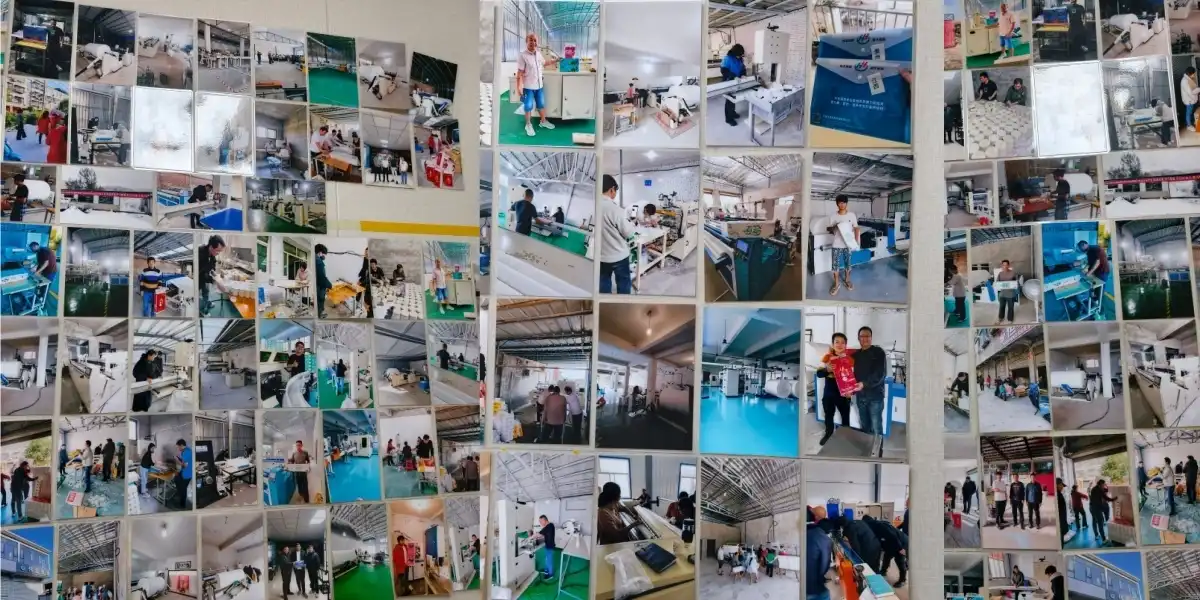
It's said that the provider's strength is just as important as the specs. Check out the plant, the engineering team, quality control, the freedom to make changes, the standards for testing, and how much they know about sending goods abroad. Making changes to the power, packing to send abroad, planning installations, starting from away, teaching operators, and sending extra parts are all things that a good partner can help with. You should get in touch with past customers, watch videos of the factory, and look at projects that used the same products. Henan Hengyu Machinery Co., Ltd. has been making tools for more than 20 years to convert tissue. We can change the brand, the size, the business name, and the language the tissue paper packaging machine speaks through ODM and OEM. If you hire a private label provider, make sure they can change the way things are laid out and coded. Write down each answer so the test is fair.
Request and Compare a Complete Machine Quotation
Like the model, the use, the output, the range of products, the measures, the power use, the compressed air needs, the options, the warranty, the payment terms, and the day and time of delivery, a good offer has all of this information. Getting the site ready, shipping, insurance, taxes, conveyors, coders, inspection systems, tools, extra parts, shipping, and things like that can all add up to the total cost of the project. This is not the same as the machine's price. Ask how old the used gear is, if it's been fixed up, tested, and if there are replacement parts available. Also, make sure the machinery comes with a warranty. It's more accurate to look at the total cost of the job rather than just the most expensive parts. Parts that are covered by our free one-year guarantee are not broken.
Plan Installation, Maintenance, and Spare Parts
You can still buy things after they've been delivered. Make sure the structure, base, power supply, compressed air, operator access, product flow, safety clearance, and storage are all in good shape before you put it in place. Plan to clean the areas that will be covered, check the sensors and blades, grease the moving parts, check the belts and air parts, and make sure the film is tight. You should know ahead of time what important extra parts you will need, like sensors, belts, bearings, valves, switches, blades, and heaters. You should ask for troubleshooting guides, drawings of the machine's electrical and pneumatic systems, and directions on how to use it. We'll help you with tech issues for free for life. This includes direct support, how-to tips, and online help to fix issues. We help more than 95% of our customers finish the installation from afar. On the job spot, they also hire people, test them, and teach them.
Apply Your Choice to Real Factory Conditions
Match Machine Configurations to Different Factory Scenarios
This will rely on how big your business is, what you want to sell, and how you want to reach your buyers. It's best for small plants to stay small, be easy to care for, and not cost a lot to start. People who make a lot of things need review, good service, and steady speed. When they make private-label goods, they need to be able to make changes quickly and have all of the goods look the same. A company that sells goods abroad should plan ahead for spare parts, paperwork, and help from far away. The HY-T300V makes covers that keep things clean and soft for grocery stores that use retail lines. To make a catering napkin brand stand out as a high-end one, make sure the fold and seal are matched up correctly. Before you switch to 3D soft packs, give them to your customers to make sure they like the format.
Avoid Common Selection Mistakes
A narrow study can get you into a lot of trouble. If the price is very low, there may be extra costs for setup, code, new parts, training, shipping, and warranty support. When the pack size, tissue thickness, or film changes, you might not get the same steady output as at top speed. If you don't test the film, it might get twisted, out of place, or have trouble with the seal. It's also a trap to leave line balance alone. How fast does your gear fold up? This will help you choose whether to get a new packer or keep the old one. Don't forget to think about extra things and help after the sale. It is better to wait to order until a professional study and test of the material have been done. This will cut down on delays and long-term risk.
Make the Final Purchase Decision
Rate each chosen provider on how well they meet your needs in terms of technical performance, product fit, automation, quality, flexibility, running cost, service, replacement parts supply, and total cost of ownership. The teams that are in charge of the money and the gear can also look at the payback period and OEE, which show how fast, well, and commonly the gear is used. Make sure that the full offers you get have exact details about how much the system can hold, when it will be delivered, and how it will be set up and running. Before you sign, make sure you understand the installation tasks, training, payment goals, guarantee, acceptance criteria, end setup, and the range of spares that are available. There are times when the fastest or cheapest machine isn't the best one for the tissue paper packaging machine. This is the one that will keep your business going and add value over time.
Conclusion
To help you choose a tissue paper packaging machine, make a list of the things you need to pack, how much you want to pack, how much film you need, and how much space you have. Then, pick the machine type and level of automation that will work best for your job and the people who need to do it. Make sure the pictures you want to use are stable, even ones that are good for the environment. This will help you decide how fast to go. Some of the things that are covered on the written technical test are motor control, fault recognition, switching time, controls, and safety papers. This is done so that it's fair to compare. The price can change based on a full quote, how reliable the supplier is, and a plan for setup, maintenance, and spare parts. The machine doesn't change the price. You won't make the same mistakes when you use scenario fit and early sample tests. The machine that gives steady output and the best long-term value will win in the end, not just the one that is the cheapest or fastest.
FAQ
1. How do I choose a tissue paper packaging machine for a small business?
Write down how much you cost, how much you make each day, and the size of the things. It might work with a small or semi-automatic one. Ask for a test to help you prepare and a way to improve over time.
2. What is the difference between automatic and semi-automatic machines?
It's easy to feed, wrap, seal, or take something out of an automatic machine. People have to do more work with some tools that cost less at first.
3. How much does a tissue paper packaging machine cost?
The price is based on the film type, speed, options, and shipping method. We'll give you a full price after you tell us about your needs.
4. Can one machine handle several products?
It can hold 120 to 360 mm long and 90 to 200 mm wide facial tissue, V-fold hand towels, and napkin tissue.
5. What after-sales support should I expect?
Get information about the guarantee, directions, and a list of extra parts. Then, ask for help from us. We give you free computer help for life, and our warranty lasts for a year.
Request a Tissue Paper Packaging Machine Recommendation
HENGYU wants you to send a technical request for the next tissue paper packaging machine you will make. As well as the pack sizes, film needs, output goal, and energy standard, give some examples or numbers of your product. For twenty years, we've been making tissue paper packaging machines. We can give you a full quote and suggest a set-up, such as the 13-axis servo HY-T300V. Hit hengyu@hytissuemachine.com to get in touch.
References
1. International Organization for Standardization, ISO 9001:2015 Quality Management Systems – Requirements, 2015
2. European Parliament and Council of the European Union, Machinery Directive 2006/42/EC, 2006
3. PMMI, ANSI/PMMI B155.1 Safety Requirements for Packaging Machinery and Packaging-Related Converting Machinery, 2016
4. National Fire Protection Association, NFPA 79 Electrical Standard for Industrial Machinery, 2021
5. Seiichi Nakajima, Introduction to TPM: Total Productive Maintenance (Productivity Press), 1988
6. Federal Trade Commission, Guides for the Use of Environmental Marketing Claims (Green Guides), 2012