2026 Best Tissue Paper Machine Features and Buying Guide?
The best small tissue paper production machine for 2026 matches your real output, your paper rolls, and your floor space, not just a top speed on a brochure. Look for steady web tension, clean folding and cutting, PLC control, flexible embossing, and a supplier that supports installation and training. In this guide, I walk through machine types, features, capacity, operating economics, and supplier checks. I also show how the HENGYU High-Speed Facial Tissue Converting Line, which runs up to 150 m/min on 1450 mm jumbo rolls, fits growing facial tissue factories that want a second or third line.
Small Tissue Paper Machine Basics: Definition, Process, and Types
What Is a Small Tissue Paper Production Machine?
A small tissue paper production machine is suitable for a business that wants to make a moderate amount of tissue paper, offer a range of product formats, and save money on the initial investment compared to a large industrial line. This word has three sets. One is a machine that makes toilet paper and paper. Those reels can also be used to make toilet paper, facial tissue, napkins, or kitchen towels in a machine. The third stage is a single line that connects the first two. These steps are used by everyone in the same area who buys OEM goods: wholesalers, new businesses, mills, and private-label companies. People should buy a setup that only changes the parent reels. People should buy a full papermaking line, on the other hand, if they want to control the fiber and basic weight.
How Does a Small Tissue Paper Production Machine Work?
Making things starts with either getting the stock ready or taking the parent reels that were bought off. In a line for making paper, fibers are rolled into a web. After the water is squeezed out, the web is dried and wrinkled by a machine. Then it is wound on big reels. Next are machines that stretch, stamp, fold, cut, and package the tissue. Base weight, moisture, web tension, reel hardness, and the size of the product are some of the things that operators keep an eye on. Fully automatic systems make it easier to keep things in order and figure out what's wrong. A system that is only partly automatic might be cheaper and more adaptable for small shops that need to do a lot of work by hand. The line that changes facial tissue has a unit that cuts the sheets to the right size, a unit that folds the sheets, and a unit that designs the web.
Types of Small Tissue Paper Machines Available in 2026
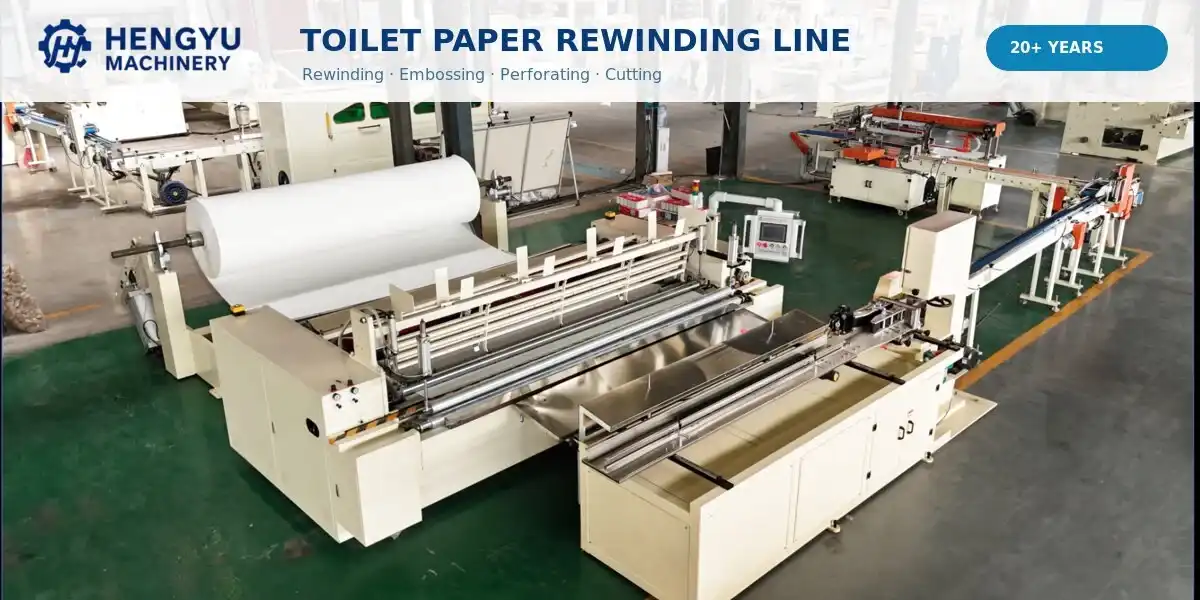
If you go shopping in 2026, you can find modular and specialized tools that make kitchen towels, napkins, toilet paper, facial tissue, and other goods that fold in half. Lines that make toilet paper cut, emboss, rewind, and package are their main jobs. People who work with napkins and facial tissues need to be very careful when they fold and handle sheets. You can pick between automatic and semi-automatic setups based on how much work you need to do. Modular systems let you add to or mix parts over time so you can open, fold, pack, print, move, and add to them. Custom builds can be made to fit different sizes of goods, types of packing, voltage needs, brand names, and plant plans. A mill can add a new style without having to switch sources because HENGYU makes toilet paper, face tissue, napkins, and kitchen towels.
Features, Specifications, Capacity, and Cost
2026 Best Small Tissue Paper Machine Features to Look For
A good machine should have the right amount of capacity, product quality, energy use, safety, and ease of maintenance. Not only how fast it can go, but also how much business it can do. Check to see if the small tissue paper production machine can correctly adjust the tension, have clean perforation and even printing, store recipes, sound fault alarms, and, if possible, let you fix problems online. Also, the phrase used for work is important. They learn faster when they can read the screen. You need to find out how much energy it takes to make one ton, which is equal to 1,000 finished pieces. Like ISO 12100 and IEC 60204-1 systems, safety guards and emergency stops should all be given the same amount of weight when it comes to electrical systems. Fast changeovers let you work with many SKUs without long breaks if you sell your own brand of goods. Not just a list of these features, each supplier needs to show how they work.
Key Specifications of the HENGYU High-Speed Facial Tissue Converting Line
It can handle raw paper that is up to 57 inches (1450 mm) wide and 43 inches (φ1100 mm) across. The 76.2 mm core can be changed to fit your needs. You can change the speed from 50 to 150 m/min. The line is run by a PLC, which can also change the frequency. You can either etch the edges or the whole thing. The sheets are cut apart by a pneumatic point cut. Most of the time, they are 200x200 mm ±2 mm, but you can ask for other sizes. The web is kept tight by a 7.5 kW vacuum system, and it is folded and cut by three air fans working at least 5 kg/cm². The main power source is 3 kW. This machine can cut at a speed of 20 to 260 cuts per minute and can cut things 30 to 130 mm tall. At 380V/50Hz, it has 11 kW of power.
Capacity, Space, and Labor Requirements
In order to plan your capacity, write down the amount of demand for each month, the busiest times of the year, product details, expected waste, downtime, and how often the switchovers will happen. Add up the number of finished goods you need to the parent reel's nameplate capacity to get the amount of use you need. Then don't use stated capacity, but use practical usage instead. Then, look at the site and make sure you note any utilities, storage areas, packing areas, drainage, airflow, forklift routes, and ways for maintenance workers to get to the site. This machine is 5150 mm long, 1400 mm wide, and 1920 mm high. It is part of the HENGYU face tissue line. There is room for 70 to 100 square meters, which is 750 to 1,075 square feet. It's about 6,170 lb, or 2800 kg. If the building is old, you should ask an expert to check the floor loads. It's important to have trained workers, service techs, and good staff even on automated lines. Plan ahead when you hire people.
Cost and Operating Economics
A small tissue paper production machine's price depends on many factors, such as the types of products it can print, how it can fold, cut, and package them, how much it can print, how computerized it is, how easy it is to use, and how much technical support it has. A good business review is more than just the price from the factory. It also looks at the warranty, training, installation, freight, insurance, who is responsible for what, and extra parts. Family reels, boxes, energy, compressed air, labor, fixes, and trash are some of the things that cost money. The people who handle your loans and the people who make the sheets will be able to compare how much they cost to make with how much they sell for. One with low demand, one with normal demand, and one with high demand. Always use the right amount of use in all of them. EMF speed regulation and frequency control change how the motor works when the HENGYU line speed changes. This keeps the power on.
Buying Decisions: Selection, Supplier Checks, and Procurement
How to Choose the Best Small Tissue Paper Production Machine
First, make a list of your business plan, the products you want to sell, how much demand you expect, the state of your plant, the cost of labor, and how you plan to grow. Business people want to be able to change things quickly and with little risk most of the time. A mill that adds a second or third line usually needs to be able to make more things and keep running during more than one shift. Rate each choice based on how useful it is, how reliable it is, how much energy it uses, how long it takes to switch between choices, how automated it is, how often it is stocked, how good the service is, and how many extra parts it comes with. It is still fair to compare with a weighted score. Check out how well the rolls fit together too. The small tissue paper production machine should be able to handle the diameter and core size of the big rolls used in your country. It is possible to change the HENGYU line's capacity to handle φ1100 mm rolls and a 76.2 mm core if needed.
Small Tissue Paper Machine Supplier and Manufacturer Due Diligence
Don't just look at how much the tool costs. Check out the company's history of making things, the things it has exported, its technical know-how, how it checks the quality of its products, and examples of raw materials and products that are similar to yours. Discover the guaranteed output, the sizes that can be used, the guarantee terms, the training, the spare parts, the response time, and the way that problems can be fixed from afar. Check to see if they have CE and ISO. The EU Machinery Directive 2006/42/EC says that things must have CE marking. ISO 9001 sets the rules for a way to manage quality. The terms of trade, such as EXW, FOB, CFR, and CIF, make it clear who pays for what. Ask for a live video tour of the workshop, the area where things are put together, test runs, and a sample run on your own paper if you can't go in person.
Common Buying Mistakes and How to Avoid Them
Tools are more likely to break because you chose the wrong things to buy than because of anything else. For tools, packing, installation, spare parts, service, or the lowest price you can find, you may have to pay more. It's important to try your product on raw materials to find the best speed and the most that can be sold. Make sure it works with the type of fiber, parent rolls, base weight, moisture, and ply structure you have. Before you ship it, make sure there is power, compressed air, pipes, airflow, a storage room, and a way to load it from the floor. It's also a good idea to see how easy it is to switch out the tools and roller for adding patterns. This is the last part of the deal. It has information about quality, writing speed, trash rate, energy use, safety features, and accepted standards. Leaving this step out could lead to trouble when they get there.
Recommended Procurement Process for a Small Tissue Paper Production Line
When it comes to technical, financial, and maintenance risk, it's safer to use a method that is put together. First, write down everything you need. This list should include size, weight, ply, packaging, capacity, utilities, room, and compliance. Second, get full prices that include the price of the equipment, all of its options, setup, training, extra parts, shipping, and a guarantee. That way, you can compare them fairly. Third, look at some examples of output, references, energy use numbers, delivery dates, and the total cost of ownership. Before you pay, you can send your own paper to be tested and ask for video proof. Here are some things you should check before you ship the goods: the drawings, the directions, the tools, the extra parts, the export packing, the insurance, and the customs information. Each step gives the lender more proof.
Installation, Maintenance, and Long-Term Support
Installation, Commissioning, Training, and After-Sales Service
Before you sign the deal, write down who is in charge of delivery. Save some cash to help with building the base, connecting the power and air lines, moving air, lifting, traveling, and hiring people from the area. Most of the time, the first part of commissioning is checking the site and utilities. Later, there will be testing without materials, testing with materials, making changes, and acceptance testing. Operators and repair staff should be taught how to clean, fix issues, and do preventive maintenance. Also, new employees should do the same. Once you learn something in class, everyone is at a different level of skill. So take some time to work on your own projects. If a worker needs help, our techs make videos with tips. More than 95% of our customers finish the installation with our help. Before you choose a supplier, make sure they offer manuals, wiring diagrams, spare parts packages, quick response times, and support hours that work for people in different time zones.
Maintenance and Troubleshooting Guide
It is possible to protect work, quality, and machine life with preventive maintenance. Every day, you should clean, grease, check the safety features, tune, listen for strange noises, and look for signs of wear. Three times a week and once a month, you should check the belts and chains, sensors, electrical cabinets, tension controls, and pneumatic parts. A lot of problems happen, such as uneven roll density, web breaks, weak closure, folding mistakes, engraving that doesn't work right, and extra waste. First, look at how good the raw products are. Next, check the warmth, speed, tension, wetness, and temperature. Last, make one change at a time. The power system on our rotary cutter can be changed with a touch screen. The main parts are kept close by too, making it easy to check them. Please take any problems you have with power or safety to people who know how to fix them.
Why a Professionally Supported Compact Tissue Paper Solution Can Be the Preferred Choice
A compact line needs less capital and space than a full plant. Here are the core advantages:
- Flexible output and formats: The line can go from 50 to 150 m/min, so you can keep up with sales. Every sheet is 200x200 mm (±2 mm), but you can make them any size you want. The body can be any size, and stamps can be put on the edges or the whole thing. This lets you meet the wants of many different OEM and retail customers.
- Compact footprint and power control: A normal production line only needs 70 to 100 square meters of space. This helps plants that don't need a lot of space save money on building rent. Controlling the frequency and EMF speed changes how well the motor works right away when the speed changes. So, the line doesn't lose power when it speeds up or slows down.
- Warranty and support: The 1-year promise covers parts that are broken by things other than people and will be changed for free. After that, video guides and online troubleshooting will be there to help you for free for life. We also set up the rollers that will print your logo and the electrical parts that will connect to the local power. We also handle the export paperwork and freight under EXW, FOB, CFR, or CIF terms.
Together with 20+ years of tissue machinery experience, these points address space limits, energy use, and after-sales worries.
Conclusion
By comparing the real output, roll size, floor area, and labor to a setup that works well for making or turning paper, it is possible to find a small tissue paper production machine in 2026. It was shown in this book that stable web tension, clean folding and cutting, flexible embossing, settings that are easy to read, and clear energy data are more important than top speed. The price should cover everything: shipping, setup, training, extra parts, a guarantee, and the cost of running each pack. The power should come from how it will be used in real life. It's safer to buy from someone if you check them out with written acceptance criteria, sample trials, video proof, and CE and ISO papers. At its fastest, the HENGYU face tissue line can move 150 m/min. It has a width of 1450 mm, PLC control, and a 70–100 square meter area.

FAQ
1. What space does a small tissue paper production machine need?
A normal HENGYU face tissue line spans 70 to 100 square meters. The main machine is 5150 mm long, 1400 mm wide, and 20 mm thick. It's 2800 kg heavy. First, I believe you should have an engineer check out all of your floor loads.
2. Can the line run my local jumbo rolls?
It can handle raw paper that is up to 1,450 mm long and 1,100 mm wide. You can change the size of the heart. It's 76.2 mm long. Once you send us your roll information, we'll let you know if it works.
3. How do you help buyers who cannot visit the factory?
With our online help, more than 95% of our customers are able to finish the work. We can also train operators and give them video tips and free online help for life.
4. Which embossing options are available?
You can raise either the sides or the whole page. We can also make printing tools that match your brand.
5. Does the line meet CE and ISO standards?
Yes. Because all of HENGYU's tools meet CE and ISO standards, they are easy to ship abroad. We also cover parts broken by things other than people for a year.
Get Your 2026 Small Tissue Paper Production Machine Quote from HENGYU
Are you all set to add one more line? HENGYU, a small tissue paper production machine maker, has more than 20 years of experience, follows CE and ISO standards, provides online installation assistance, a 1-year guarantee, and lifetime technical support. Our team will help you set up the machine if you email hengyu@hytissuemachine.com with the roll sizes, product sizes, voltage, and where and how you want to use it.
References
1. ISO 9001:2015 Quality Management Systems — Requirements, International Organization for Standardization, 2015
2. Directive 2006/42/EC on Machinery, European Parliament and Council of the European Union, 2006
3. ISO 12100:2010 Safety of Machinery — General Principles for Design — Risk Assessment and Risk Reduction, International Organization for Standardization, 2010
4. IEC 60204-1:2016 Safety of Machinery — Electrical Equipment of Machines — Part 1: General Requirements, International Electrotechnical Commission, 2016
5. Incoterms 2020 Rules, International Chamber of Commerce, 2019
6. Handbook of Paper and Board, Wiley-VCH, 2013