How to Choose the Best Mini Tissue Paper Making Machine for Your Needs
To choose the best mini tissue paper making machine, start with the product you plan to sell. Then match the machine's speed, size, power, and packaging to your sales volume and factory space. Check what the equipment does: most compact lines convert purchased jumbo rolls into finished tissue instead of forming paper from pulp. Compare running costs, request a written specification sheet, and confirm installation, training, and spare parts support. Finally, calculate payback from realistic sales, not from maximum rated output. I wrote this guide to help you make that decision with confidence.
Startups and Small Local Producers
You don't have to build a big factory if you want to keep an eye on quality and size when you switch from selling tissues to making your own brand. Most small makers want something that is simple to use, doesn't use a lot of power, and doesn't take up a lot of room. Either 3 kW or 5.5 kW is the main power for the HENGYU soft tissue line. One that does everything on its own needs 150 to 200 square meters. To find out how much soft pack face tissue people in the area want before you add more, that's a good place to start.
Distributors and OEM Buyers
Most of the time, wholesalers want steady output, quick changes in size, and packing that is done automatically so that orders leave on time. Brand-name and OEM buyers care more about getting the right size, making sure the embossing looks good, and making sure their name is on the package. Through ODM and OEM, HENGYU lets you change things like how the machine is set up, the size of the tissue, the brand name, and the working language. Face tissue comes in 180 × 200 mm sizes, but you can get it in any size you need. If a store asks you to, you don't have to change your item to fit the machine.
International Importers, Including U.S. Buyers
If you are bringing tools in, make sure you know what you are signing before you do it. The auto-cutting HENGYU machine is set to 380V/50Hz, and the bagging machine is set to 380V. So make sure you know the right power and frequency. In the US, the grid runs at 60 Hz. How does the wood box meet ISPM 15 standards? Learn how to install it from afar and send extra parts. HENGYU says that online help with installation helps more than 95% of its customers finish. Make sure you have written proof that the electricity is set up.
Define Your Production Requirements and Understand the Process
Define Your Product and Output Targets
Make a list of your product first. For example, it could be cooking towels, toilet paper, or paper towels. These are the steps that are needed to emboss, fold, cut, and pack each one. Then, look at the working hours, shifts, breaks, and maintenance time to get a good idea of how much work was actually done. The daily output of a machine isn't always the same as its top speed, so when you plan, use a low number. Being a good operator is also important. Because your team hasn't done this before, choose a line with PLC controls and a touch screen. Then, make sure that everyone is trained before the first production run.
See How a Mini Tissue Paper Making Machine Works
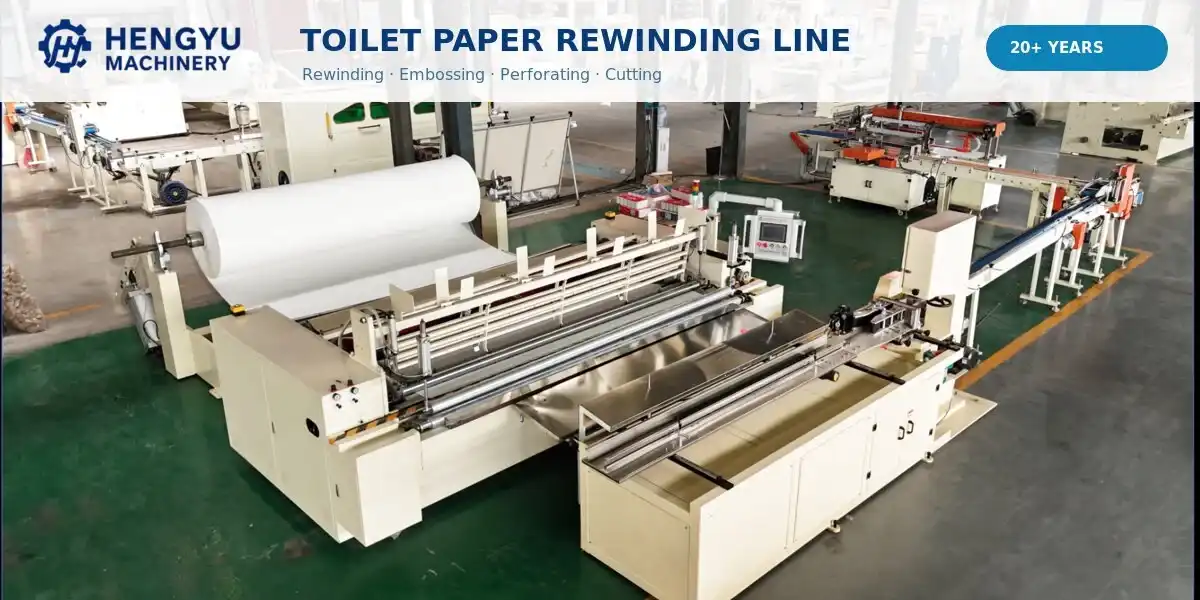
You can see that most short lines start with a big roll. It is possible to direct the web, unwind the roll, and raise the paper. After that, they fold, cut, and stack the paper on a line of toilet paper. There are three things I always keep separate: an assembly line, a mini tissue paper making machine, and a mini tissue paper making machine that changes tissue into something else. It has a core that is 76.2 mm wide and can handle parent rolls that are up to φ1100 mm wide. You have a choice of raw materials because you can buy those rolls from more than one person.
Check Your Facility and Utilities
How to get from the loading dock to the production hall? Find the floor space, ceiling height, door width, and path. It's 3500 mm long, 1700 mm wide, and 2500 mm high, and it weighs 2400 kg. It's 5600 mm long, 2500 mm wide, and 1200 mm high, and you can change how high it is. The hydraulic system has three air pumps that hold at least 5 kg/cm² of pressure. Ask for a plan drawing and a utility list before you sign off on the order. If you work in the US, you should also read OSHA's rules on machine guarding before you put them in place.
Match Specifications and Compare Your Options
Specifications That Decide Fit
Check the roll's thickness, the width of the paper, the core's size, the speed, the power, and the air supply. If you know these things, you can quickly rule out a bad match. Don't add extra functions unless they are important to the plan for your product. With each extra feature, the price goes up, and more work needs to be done to keep it working. For a formal list of the features that come with it and those that aren't included, ask for a sheet of specifications. ISO 12625-1 gives you a list of terms that all of your sellers can use when they talk about your goods.
HENGYU Fully Automatic Facial Tissue Line at a Glance
Based on what its specs say, here are the major perks of this line.
- Speed control: AMF speed control lets you set the line to move at 0 to 100 m/min, and the auto-cutting machine can make 20 to 260 cuts per minute. You can change the speed to fit each type of paper and order size, so it's easy to go from small to large orders.
- Embossing and cutting: Either a pneumatic point-cut system or edge cutting can be used to make clean holes and patterns that stay the same during production. The cutting tool has a 610 mm knife that spins at 980 rpm. The company that made it says that this shape keeps the cuts sharp and makes the blade last longer. The people who work there make sure that all of the finished tissues have straight lines.
- Integrated finishing: The process of folding, cutting, and wrapping all takes place on the same line. The automatic machine that seals and bags items can pack twenty to twenty-five packs per minute. That means your team doesn't have to carry as many things by hand. It can handle packs that are 95 to 200 mm long, 90 to 100 mm wide, and 50 to 90 mm high.
New vs. Used, Standard vs. Customized
Going with a used one might save you money, but it might have old settings, no records of care, and parts that are tough to find. Getting a new standard machine makes it easier to buy and ships faster. It makes sense to have a personalized line when you need odd sizes, private-label packages, or a certain running language. A mini tissue paper-making machine line takes up less room and costs less than a big industrial tissue machine. It also lets you check out the market before going big. No matter what you choose, make sure that the details are written down and that there is a professional check.
Count Operating Costs, Labor, and Return on Investment
Energy Use and Labor Needs
It's possible to see a difference between the output when everything is normal and the fixed power. HENGYU says the main power can be 3 or 5.5 kW, the vacuum power can be 7.5 or 11 kW, the auto-cutting mini tissue paper making machine can be 11 kW, and the bags machine can be 3.5 kW. By changing the frequency, the device can change how much power is used at different speeds. This machine folds, cuts, and packs all at once, so you might not need as many people to do the same work. Even so, you should still hire operators, packers, people to move things, people to check the quality, and people to keep things in good shape.
Total Cost of Ownership
The budget only has one line item for the cost of the machine. Count up the costs of shipping, insurance, import taxes, setting up, getting the building ready, raw rolls, packing film, power, extra parts, and maintenance. Sometimes, a more expensive machine will cost less to run because it works better, has less downtime, and wastes less. What worn parts do you get with the machine? How long does it take to get new ones? You might lose sales if you have to wait weeks for a blade or valve. Make a list of everything on one sheet before you compare prices.
A Simple Way to Calculate ROI
Plan around how many sales you can make, not how many people you can hold. Figure out how much money the packs you want to sell will bring you every month. Take out the costs of the raw rolls, the work, the power, the shipping, the upkeep, and the labor. Divide how much you spent on the business by how much money it makes each month to find the payback time. Do three different tests: one that is safe, one that is expected, and one that has a lot of people using it. If the project only works in the best case, look for ways to make it less risky or scale it back. Not too big of a line with parts that are easy to get to is generally better for a first plant than one that is too big.
Verify the Supplier, Compare Quotes, and Decide
Verify Supplier Strength
Check out how long the company has been making things, its engineering team, its history of exporting, and how it tests its products. For more than 20 years, Henan Hengyu Machinery Co., Ltd. has been making machines for making tissue paper. It sells towels, toilet paper, face tissue, and machines that make food towels. That its machines meet CE and ISO rules is what it says. Making sure that machinery has the CE mark is based on Directive 2006/42/EC, and ISO 9001:2015 is about quality management systems. Ask to see the certificates and a video of the workshop. Also, get written promises that they will install, train, and provide extra parts.
Request and Compare Quotations Properly
Providers should all receive the same RFQ. Type of product, size, ply, raw rolls, goal output, automation level, voltage and frequency, packing, and where the goods are going should all be in the report. Ask for different options, packing tools, extra parts, training, installation, freight, insurance, and the machine itself. For the main machine, ask for its own lines. As well as the wait time, payment terms, and acceptance tests, make sure you agree to the Incoterms 2020, such as FOB or CIF. Early problems can be found with a test run or video review that shows how well the product works and how good it is before it is shipped.
Use a Decision Matrix
You can give each provider a score from 1 to 5 based on how well their products meet your needs, how flexible they are, how well they put their products together, how long their warranties last, and how much experience they have going abroad. Things that are important to you should get more attention. People who want to start their own business usually think about how much money they need to spend and how simple it is to run. As an OEM buyer, you should look at quality that can be repeated, while a distributor should look at delivery time and flexibility. Each score should be backed up by a paper, test result, or written term, not a sales claim. Make a list of any risks that haven't been fixed yet, like voltage problems or the arrival of spare parts, before you give the go-ahead.
Conclusion
You should know what you want to make and what the mini tissue paper making machine does before you look for the best mini tissue paper making machine. The machine takes big rolls of paper that you buy and makes them into finished tissue. When making a choice, the most important things are product needs, specs, floor space, utilities, running costs, and payback based on expected sales rather than expected capacity. Before you compare new or used machines, normal or special ones, you should write down the specs and have a technician check them out. The comparison is fair because licenses, checks on the suppliers, listed quotes, agreed Incoterms, and a weighted decision matrix were all used. Start-ups, resellers, and OEM buyers all care about these things in different ways. The cheapest machine isn't always the best. You need to make sure it fits your product, space, power source, and sales rate.
FAQ
1. What does a mini tissue paper making machine do?
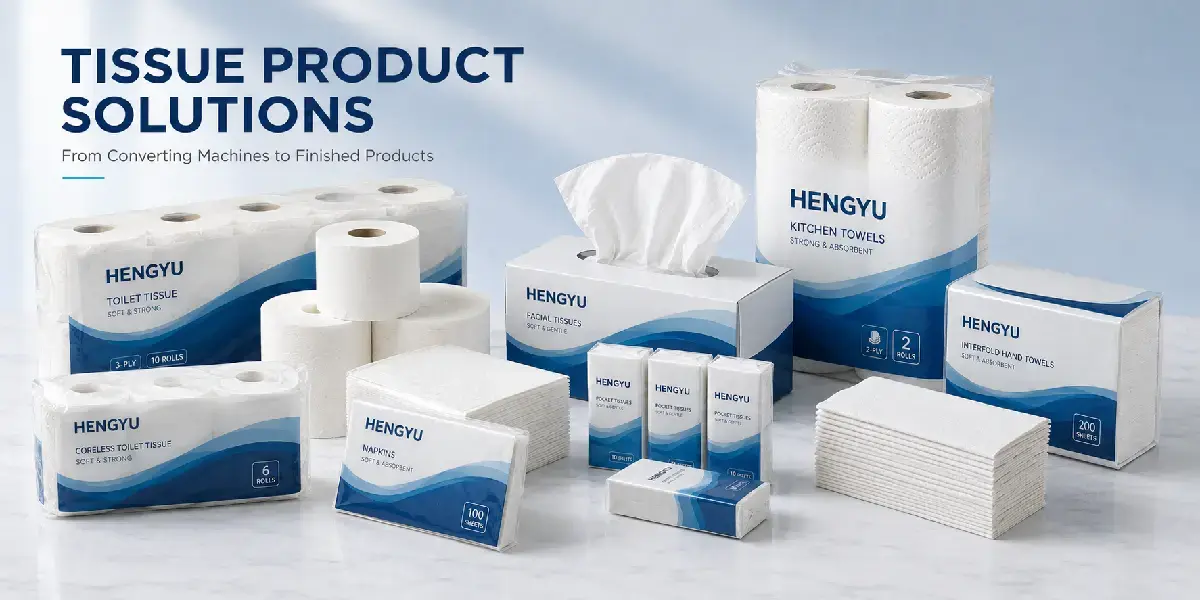
What it does is finish off jumbo rolls of paper that you buy. At speeds of up to 100 m/min, the HENGYU line can cut, fold, groove, and pack soft pack facial tissue. You can sell something already made instead of making your own paper from pulp.
2. Can I change the tissue size?
Yes. It comes in 180 × 200 mm, but you can get it in any size you need. It can cut paper up to 110 mm wide, and the size of the cut can be changed by moving the blades around.
3. What power supply does the line need?
Either 3 kW or 5.5 kW is the main power. Both the auto-cutting machine and the packing machine use 380V/50Hz. Electricity and radio waves are different in each country. 60 Hz is used in the US. Send your local supply to HENGYU so that the team can check it and make sure it's set up right.
4. How does installation work without a technician on site?
HENGYU lets you get skilled help and tips online. More than 95% of its customers finish construction with help from away, the company says. Get a written copy of the work schedule and installation plan before you sign.
Request a Customized Mini Tissue Paper Making Machine Quotation from HENGYU
Want to find a mini tissue paper making machine maker with more than 20 years of experience in the tissue machinery business? Tell HENGYU what size tissue you want, how much power you want, and where you want it to go. Then, our staff will help you choose a face tissue line that works for you. Please email hengyu@hytissuemachine.com for more information about the service and specs. HENGYU has CE- and ISO-compliant equipment, custom forms, online installation help, and lifetime support from experts.
References
1. International Chamber of Commerce, Incoterms 2020 Rules (2019)
2. FAO/IPPC, ISPM 15: Regulation of Wood Packaging Material in International Trade (2018)
3. International Organization for Standardization, ISO 9001: Quality Management Systems – Requirements (2015)
4. European Parliament and Council of the European Union, Directive 2006/42/EC on Machinery (2006)
5. Occupational Safety and Health Administration, Safeguarding Equipment and Protecting Employees from Amputations (2007)
6. International Organization for Standardization, ISO 12625-1: Tissue Paper and Tissue Products – Part 1: General Guidance on Terms (2019)