Efficient Usage of Mini Tissue Paper Making Machine
Efficient usage of a mini tissue paper making machine starts with three habits. Match the machine to one clear product, track real output instead of rated speed, and keep a simple daily maintenance routine. A mini tissue paper making machine is a compact converting line that turns jumbo parent rolls into finished tissue, such as soft pack facial tissue. Folding, cutting, and packaging run in one workflow. In this guide, I explain how the process works, how to calculate real capacity, how to control power and space, and how to choose a supplier with confidence.
Understanding the Mini Tissue Paper Making Machine and Its Production Scope
Converting Machine or Manufacturing Machine?
When people buy tools, they often mix up two different kinds. That's why I start here. The fibers for parent rolls come from recycled or pulped paper. A machine takes these big rolls of toilet paper and turns them into napkins, food towels, toilet paper, and face tissue. The HENGYU mini tissue paper making machine is in this group. It starts with a store-bought jumbo roll and ends with a bag of face tissue. Your budget will change because of this difference. Providers sell you parent rolls, so you don't need to run a pulping business. The start-up costs are low because of this. Before you ask for prices, make this area clear. It's not possible to compare machines that are not the same, and the costs will be clear at the end.
What the HENGYU Facial Tissue Line Includes
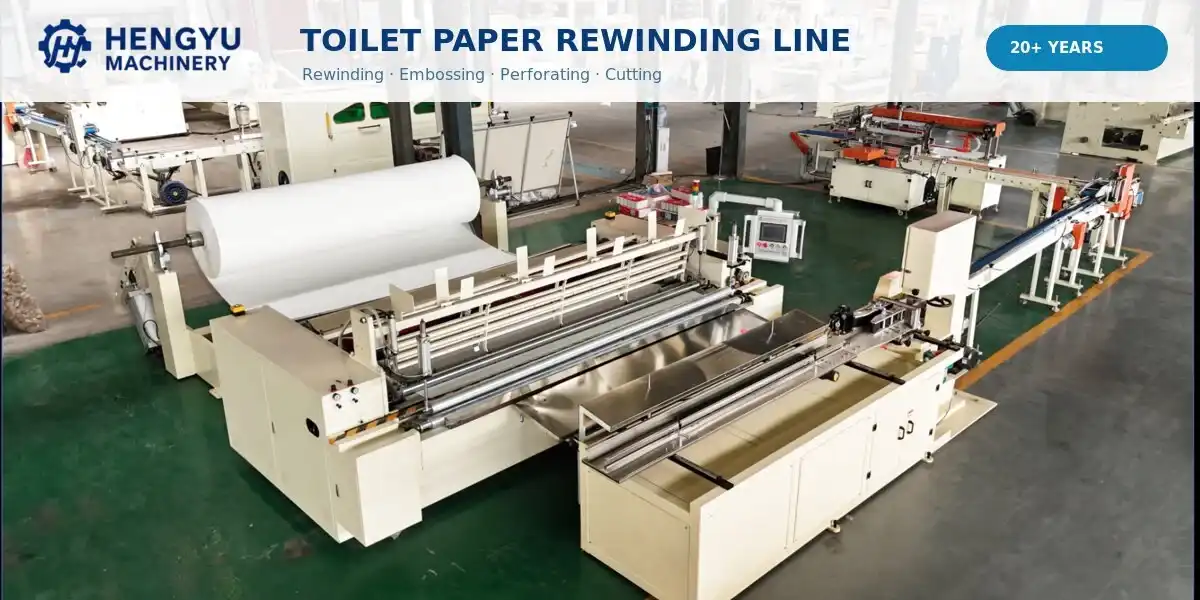
The HENGYU mini tissue paper making machine is like a factory that makes face tissue. It is fully automatic and made for soft pack tissue. It cuts face tissues and bags and automatically closes them. This machine does three things at once. If you want a different size, you can ask for it. The standard size is 180 × 200 mm. High-tech edge embossing makes sure that each sheet has the same pattern, and the speed can reach 100 m/min. There is no need for workers to move stacks by hand because they are all folded, cut, and packed at the same time. The settings can be changed from a single panel that has a touch screen and PLC keys. This small design is good for startups that need to do work at an industry level in a small area.
Raw Material and Product Fit
The raw materials need to fit together well for the line to move quickly. The machine can handle jumbo rolls that are up to φ1100 mm in diameter and up to 76.2 mm in diameter on the inside. You can change both of these sizes. One store sells both of these sizes, so you can get parent rolls from more than one place. The auto-cutting machine can cut paper that is 70 to 110 mm wide and 30 to 130 mm high. This lets different types of packs work. It's still important to have good rolls. If the line isn't tight enough, is wound too loosely, or has broken ends, it will break and waste. I think you should check each batch of jumbo rolls as soon as it comes in and keep track of which provider's work you trust the most.
Measuring Real Output and Improving the Production Process
Rated Speed Versus Sellable Output
You don't sell what a machine can do best every shift. Rate of speed tells you that. It takes time away from the actual capacity to clean, set up, change rolls, take paper breaks, and reject packs. This formula is easy to use: Actual Output = Rated Speed ÷ Operating Time ÷ OEE. OEE stands for "overall equipment effectiveness," and it improves output, performance, and availability. To give you an idea, a line that runs at 100 m/min for 480 minutes at 60% OEE moves 28,800 m of web. At 70% OEE, the same shift moves 33,600 m. More often than not, making small changes to the uptime setting can bring in more work than speeding things up.
Finding the Common Bottlenecks
Lost money can be caused by just a few things. First, I look for bad jumbo rolls, unsteady web tension, dull blades, bad alignment, operators who haven't been trained well, and a crowded work area. For two to four weeks, write down how much work was done, how much energy was used, how much was wasted, how much rest there was, how many rejections there were, shift times, and worker hours. They tell you what makes you the most money. A line that stops a lot for breaks needs a tension and roll check. Check the blade and balance if the ends of a line are rough. First fix the biggest loss, and then take another measurement before you make any other changes.
Stable Settings and a Daily Routine
Making a mini tissue paper making machine secure means setting it up so that it always works the same way. Before each shift, check the safety guards, air supply, lubrication spots, cores, jumbo rolls, and wrapping film. You can change the settings for cutting, packing, and embossing so that they work with the base weight, ply, and softness of the paper. After that, write down every setting that made clean packs. Group things that are the same together to cut down on changes, and set up things before the line stops. Sort, set in order, shine, standardize, and keep are some simple 5S habits that can help. A clean station with tools that are easy to find keeps the line running longer because people don't have to look for them or make mistakes.
Choosing the Right Automation and Comparing Mini with Full-Size Lines
Automatic or Semi-Automatic?
Your business should have the right amount of automation based on its size, cost of labor, and types of products it sells. Most of the time, semi-automatic tools are easier to keep up and cost less to set up. Automatic equipment makes things more regular, cuts and measures things faster, and requires less work. The HENGYU line of facial tissues can be used by itself. It is run by a PLC, an electromagnetic frequency speed controller, and a gas point-cut device. Things will stay the same from shift to shift if you want to keep getting orders from grocery stores and local stores. Do you still not know what volume to use? Before you decide, talk to our team about your plan.
Embossing, Cutting, and Packing Details
In this case, the quality of the end output is based on three modules. Cutting the edges of the sheet makes it look better and stronger. The form stays the same, and there are blank lines made of steel on steel that are managed by different controllers. The air-jet cut helps keep the dust down and makes clean holes in the paper. For cutting, a 610 mm wide knife spinning at 980 rpm is used. The speed of the cuts can be between 20 and 260 per minute. At the end of the line is a two-deck machine that automatically bags and seals items. It makes 20–25 packs per minute. It can hold packs that are 95 to 200 mm long, 90 to 100 mm wide, and 50 to 90 mm high. They help you make sure that each section fits with the client's chosen pack.
Mini Line Versus Full-Size Line
As the size of the line gets bigger, it makes more things and saves money. It needs more money, tech know-how, people, power, and room on the floor. A mini tissue paper making machine is a safer way to put your money to work because it lets you test the market more quickly and change products more easily. Private-label work, regional distribution, and places with little space all work well with it. When people still want to buy, I tell them to start with the smaller line. As you look at different prices, you should think about the whole package, such as the level of automation, the electricity standard, shipping, installation, training, warranty, and extra parts. It might look like a better deal at first if the price doesn't include these things, but it might cost you more in the long run.
Managing Power, Workspace, and Operating Costs
Installed Power Versus Real Consumption
Installed power and real consumption are not the same thing. Installed power tells you how much power you need to give. What makes a difference is how fast the machine is going, how full it is, how the cutting is set up, the fans, and the packing tools. The HENGYU line has 3 kW of power, or 5.5 kW, and the vacuum system has 7.5 kW of power, or 11 kW. This machine cuts on its own and runs on 380V/50Hz. 380V/50Hz power this machine that bags things. How much power is used at each speed can be changed by the frequency box. Let us know what your power and frequency are before you place your order. So, we can be sure that the wiring is set up correctly. Someone should help you get power protection if your grid isn't stable.
Floor Space and Layout
A setup that does everything automatically needs 150 to 200 square meters of space. The auto cutting machine is 3500 mm long, 1700 mm wide, and 2500 mm high, and it weighs 2400 kg. The bagging mini tissue paper making machine is 5600 mm long, 2500 mm wide, and 1200 mm high, and you can change how high it is. Check the floor load, door width, loading direction, and space around each machine for maintenance. Every roll change takes longer when the floor is busy. There should be enough space for both jumbo rolls and full packs. The plan is made up of separate parts that can fit around columns and loading docks. Before the installation starts, we also help figure out how the factory will be set up.
Counting the Total Operating Cost
You can't just buy machine power and spend money. Part of the total cost is the jumbo rolls, packaging film, work, repairs, extra parts, waste, freight, setting up, and starting up. For the pneumatic system, you also need three air pumps that can hold at least 5 kg/cm² of pressure. You should think about how much energy they use and how much care they need. To be fair, you shouldn't just compare the amount of energy used per hour, but also the amount of energy used per finished pack. Watch out for trash, because every pack that gets thrown away loses paper, film, and work. Every month, write down these numbers and figure out your unit cost again after each change.
Maintenance, Supplier Selection, and Implementation
Daily and Periodic Maintenance
Things stay in good shape and last longer when you check on them every day. There are many things to check, such as the paper dust, sensors, belts, rollers, blades, emergency stops, and the electrical connections. Sensors, lubrication, drive systems, fasteners, and bearings are checked once a week and once a month, as instructed by the supplier. To start up, shut down, switch between systems, clean, and fix problems, simple steps should be written down. Broken paper, uneven folds, weak embossing, and bad cuts are usually caused by tension, alignment, worn-out blades, or paper that isn't the same all the way through. Do not send out new parts right away for old ones that are broken. Keep important extra parts, like blades, on site instead.
Selecting a Supplier You Can Trust
You should judge a supplier by how well they can make things, how much experience they have exporting, how well they handle paperwork, how well they check quality, and how well they treat customers after the sale. For more than 20 years, HENGYU has been making mini tissue paper making machines. All of our machines meet CE and ISO standards. As with any supplier, get a written quote that spells out the product's size, how much it can really hold, how many raw materials it needs, the machine's size, when it will be delivered, the warranty, training, and spare parts. Before they are shipped, ask to see videos, live demos, and checks of the output, safety features, controls, and packing lists. Support from afar is useful when your site is far from the factory. With our online help, more than 95% of our customers are able to finish the installation. We also offer professional training and support for life.
A Four-Step Implementation Plan
Here are four steps you can take to turn your idea into a steady business. First, write down your products, monthly sales, staff, budget, space needs, and growth plans. Second, set up the machine for what it needs to do, not what it says it can do the fastest. Third, plan how to set up the line and keep track of the first data on yield, waste, power use, downtime, labor, and quality. Fourth, keep an eye on the biggest loss, look at the results often, and make one change at a time. Change how you normally do things and recalculate the unit cost after each increase. Because of this, there is more room to work with, and it's easier to meet delivery times.
Conclusion
When someone gets a mini tissue paper making machine, they should use it to change a single clear product. If you measure speed, you're not really making as much as you think you are. Most of the losses come from tension, blade state, alignment, and the quality of the jumbo roll. Follow the 5S rules, keep the setting the same, and check the line often to keep it going. The level of automation, the module specs, the power load, the floor space, and the total cost of running the business should all be looked at together. If there isn't much room and a lot of people want to buy, the mini tissue paper making machine format works better than the full-size line. The equipment can be used to make steady, measurable production with a four-step plan, remote support, and a careful review of the supplier.

FAQ
1. How much can a mini tissue paper making machine produce?
A lot depends on the product size, the width of the paper, the length of the sheet, the speed, and the service. The HENGYU line can go up to 100 m/min and packs twenty to twenty-five packs every minute. To find your output, I believe you should use your own OEE number instead of just the estimated speed.
2. Does the machine need special electrical power?
380V/50Hz is what the machine that cuts and the machine that bags need to work. We need to know the voltage and frequency where you live before you place your order. And then they'll make sure the wiring is set up right for your spot.
3. Can I install it without a technician on site?
Nearly all of our clients finish their work with our help over the phone. This means that even after the line is up and running, you will still be able to get help from us.
Request Your HENGYU Mini Tissue Paper Making Machine Quote
Ready to plan your facial tissue production? For more than 20 years, HENGYU has been making mini tissue paper making machines. They can help you find a configuration that works with your product's size, voltage, and space. Our team will get back to you with a clear technical plan, information on how to get trained, and terms for help if you email your needs to hengyu@hytissuemachine.com.
1. Introduction to TPM: Total Productive Maintenance, 1988
2. Handbook of Paper and Board, 2006
3. Lean Production Simplified, 2007
4. ISO 9001:2015 Quality Management Systems – Requirements, 2015
5. Directive 2006/42/EC on Machinery, 2006
6. ISO 12100:2010 Safety of Machinery – General Principles for Design, 2010