Toilet Paper Packaging Machine: A Complete Guide for Manufacturers
If you run a tissue converting factory and want to scale from a single SKU to multiple pack formats, understanding how a toilet paper packaging machine works is the first step. This guide covers everything from machine types and selection criteria to maintenance, procurement, and what the next generation of bundle packers looks like. Whether you serve retail supermarkets, family wholesale buyers, or bulk distributors, this guide will help you make a confident, well-informed equipment decision.
Understanding Toilet Paper Packaging Machines
What These Machines Actually Do?
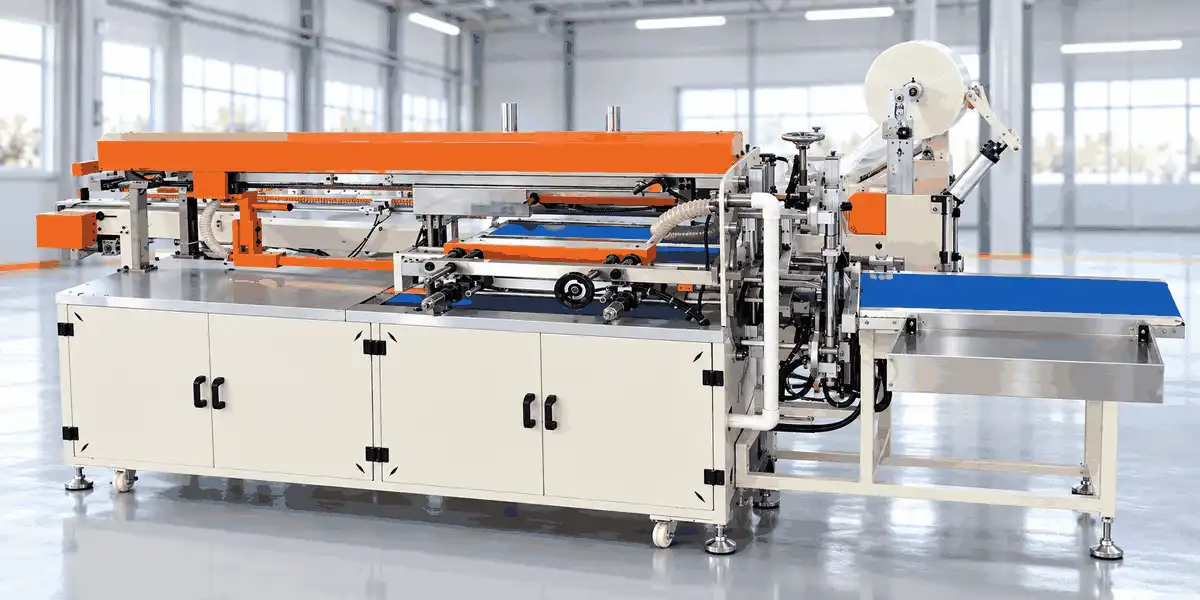
A tissue bundle packer takes finished toilet paper rolls from the log-saw stage and uses ready-made OPP/PE composite bags to wrap them into packages that are ready to sell. Within seconds, the system sorts the rolls into the right number and orientation, puts the bag inside, seals it with heat or pressure, and then releases the finished package. Modern automatic systems can do this whole process without any human help, which directly cuts down on the need for work and inconsistent packing.
Automatic vs. Semi-Automatic Systems
A person has to physically place rolls or feed bags on semi-automatic machines, which slows them down and makes mistakes more likely. Fully automatic devices, like the HENGYU HY-4424A, take care of the whole process, from setting up the rolls to releasing them at the end. Automatic machines can handle 6 to 10 packs per minute, which is a lot more than semi-automatic units can handle on a large scale. The difference in output is big for any mid-sized company that works with more than one shift.
Common Packaging Formats and Machine Types
There are three main types of tissue packing used in the industry: single-roll wraps for hotel amenities, multi-roll bundles for retail and family buyers, and jumbo bulk packs for wholesale sales. All three are taken care of by a flexible bundle packer. The HY-4424A can handle two to eighteen rolls per pack, packages items in both vertical and horizontal positions, and can work with either a single or double layer configuration. This means that it can do the work of two or three separate machines.
How to Choose the Right Tissue Bundle Packer?
Match Machine Capability to Your SKU Range
Make a list of all the pack formats your customers currently order and any formats they might want in the next two years before you start looking at sellers. When a big store asks for 12-roll family packs, a toilet paper packaging machine that can only handle 4-roll and 6-roll packs will slow down. The HY-4424A can handle pack sizes ranging from 240 × 240 × 120 mm to 680 × 360 × 240 mm, which is almost every common retail and wholesale style used around the world.
Key Technical Criteria to Compare
These are the things that matter most for long-term ROI when looking at tissue roll packing equipment:
- Pack range and changeover time: A machine that takes two hours to switch from a 4-roll format to a 10-roll format will drain daily output. Look for adjustable size mechanisms that operators can manage without specialist tools.
- Energy consumption: The HY-4424A runs at 3 kW total power. At continuous operation, this keeps electricity costs predictable and low—a measurable advantage over higher-draw machines.
- Footprint vs. capacity: At 7,800 × 1,600 × 1,600 mm, this unit fits inside most existing factory layouts without structural modifications.
- Compliance certifications: For export-oriented manufacturers, CE and ISO certification directly affects whether your finished product clears customs in target markets.
These four things affect both your daily operating costs and your ability to serve a wide range of buyers without stopping production.
Automatic vs. Manual: A Practical Trade-Off
Manual and semi-automatic machines are cheaper to buy at first, but the labor costs per pack are higher, and the quality of the seals changes over time. The HY-4424A can be run by one person who can watch over the whole packaging process. A manual line with the same output would need three to five workers. The automatic system pays for itself faster than the price of purchase suggests for tissue plants in places where the cost of labor is going up or where there aren't enough qualified workers.
Optimizing Operation and Maintenance for Peak Performance
Daily Operating Practices That Reduce Downtime
Fixing problems after the fact isn't as good at keeping machines running well as consistent daily habits. Before each shift, operators should make sure that the air pressure is between 0.5 and 0.8 MPa, that pre-made bag rolls are loaded properly, and that the heat-seal temperature meets the current film standard. It only takes five minutes to do these three checks, and they keep most of the mid-shift stops that tissue plants report from happening.
Preventive Maintenance Schedule
A structured maintenance schedule makes equipment last a lot longer. As part of your weekly chores, you should clean the sealing bar, check the air lines for leaks, and clean out the roll-arrangement channel. Every month, the PLC parameters should be checked, the conveyor belt should be tightened, and the moving parts should be oiled. Plants that stick to written maintenance schedules have fewer unplanned shutdowns and lower repair costs each year than plants that only rely on breakdown response.
Operator Training and Remote Support
Operators who have been taught well find problems before they become fails. HENGYU offers training materials in both Chinese and English, and expert teams can find problems without having to go to the site to do so with remote diagnostic help through PLC tracking. For manufacturers in Southeast Asia, the Middle East, or Latin America, being able to control things from afar is not just a nice-to-have feature; it's a direct defense against long periods of production downtime during the warranty period and after.
Procurement and After-Sales Considerations
Evaluating Suppliers Before You Commit
It's just as important who makes the toilet paper packaging machine as the machine itself. Make sure the company has CE and ISO certifications, can give you an honest list of spare parts with prices, and has a history of sending equipment to the area you want to reach. HENGYU has been making tissue machinery for more than 20 years and has sent full production lines to markets in Latin America, Southeast Asia, Eastern Europe, and the Middle East.
Payment Structures and Logistics Planning
Standard payment terms for tools used to package tissues are 30% down and 70% due at delivery or 50% down and 70% due at delivery plus interest. Before you sign, make sure you understand the supplier's wait time and sea freight plan. The HY-4424A is 1,000 kg heavy and 7,800 × 1,600 × 1,600 mm long. These are the right sizes for lifting containers quickly and cheaply. Manufacturers should also check with the seller to see if they handle customs paperwork and PVOC inspections when needed.
After-Sales Support That Protects Your Investment
A standard warranty lasts for 12 months, but service after the sale can be very different in quality after that time. Give more weight to providers who keep spare parts kept, offer video-guided installation help, and have a clear way for technical problems to be escalated. HENGYU's after-sales service includes remote installation help, trial production support, and planned second-phase expansion advice. This is designed to help manufacturers who want to add more SKUs over time.
Innovations and Future Trends in Bundle Packaging Equipment
IoT Monitoring and Predictive Diagnostics
Monitoring of new tissue packing systems is done by PLCs, which record real-time data on how well the machines are working. This lets maintenance teams find wear patterns before they lead to failures, instead of finding out about problems after production has stopped. This clear data visibility cuts down on waste and unplanned downtime in high-volume plants with three shifts.
Sustainable Packaging Material Compatibility
Single-use plastics are coming under more and more regulatory pressure in the EU, the UK, and a number of Southeast Asian countries. Manufacturers who are looking to the future are already trying replacements to OPP, such as films made from PLA and composites made from recycled PE. When choosing a bundle packer, make sure that the closing system can be changed to work with thinner or bio-based films without affecting the structure of the pack. This will protect your machine investment as standards for materials change.
Modular Design for Future Scalability
Modular machine design is the most useful trend in automating the packing of tissue. With a flexible line, makers can add a log-saw upstream or palletizing downstream without having to replace the whole system. The HY-4424A is made to work with existing log-saw and rewinding machines. This lowers the cost of integration when production capacity is increased.
Conclusion
Choosing the right tissue roll packaging method will affect how much it costs to make, how many SKUs you can have, and how many buyer outlets you can serve from a single line. The best way for growth companies to go from single-SKU output to multi-channel marketing is to use machines that can handle 2 to 18 rolls per pack, work with both vertical and horizontal formats, and use little energy. With the right tools, regular upkeep, and a dependable partner after the sale, the toilet paper packaging machine turns into a long-term production asset instead of a cost center that needs to be paid for over and over again.
FAQ
How often does a tissue bundle packer need maintenance?
It takes less than five minutes a day to check the air pressure and load the film. Most mid-shift stops can be avoided by cleaning the sealing bar and pneumatic connections once a week. The machine always works the same way because it is checked every month for PLC settings, belt tension, and joint cleaning. Breakdown-response maintenance is much less common in plants that follow a written schedule than it is in plants that don't.
What factors affect the price of a multi-roll packaging machine?
The price depends on the amount of automation, the pack range, the speed, the complexity of the PLC, and the after-sales assistance that is offered. A machine with two to eighteen rolls that can pack both vertically and horizontally will cost more than a fixed-format single-layer unit, but for plants that serve more than one buying channel, the extra freedom usually makes up for the cost.
Can the same machine handle both toilet paper and kitchen towel rolls?
Yes. The HY-4424A can handle circular tissue goods in all of their sizes. Changing from toilet paper rolls to kitchen towel rolls only requires a format change, not a machine change. This saves money on capital costs and floor space for companies that make a lot of different products.
What certifications should I require from a packaging machine supplier?
Check for CE and ISO certifications at the very least. Manufacturers who want to sell their goods in the Middle East should also make sure they follow PVOC rules. These licenses show that the equipment meets international standards for quality and safety, and it will also pass customs checks in most of the places where it is meant to be exported.
Get a Custom Quote from HENGYU — Trusted Toilet Paper Packaging Machine Supplier
The HY-4424A from HENGYU makes it possible for tissue makers to package in more than one format without having to add more machines to the floor. It is made for plants that are ready to serve retail, family, and wholesale outlets from a single toilet paper packaging machine line. It has CE and ISO approval, a 3 kW energy footprint, and the ability to pack 2 to 18 rolls. Get in touch with our team right away to ask for specs, set up a video plant tour, or talk directly about your production needs. You can email us at hengyu@hytissuemachine.com or go to hytissuemachine.com.
References
1. Packaging Technology and Science — Advances in Automated Flexible Packaging Systems for Consumer Goods, Wiley, 2022.
2. PMMI: The Association for Packaging and Processing Technologies — State of the Industry: U.S. Packaging Machinery, PMMI Business Intelligence Report, 2023.
3. Food and Packaging Machinery World — Energy Efficiency Standards in Industrial Packaging Equipment, FPMW Industry Review, 2023.
4. Smithers Pira — The Future of Sustainable Packaging to 2027, Smithers Pira Market Report, 2022.
5. International Journal of Advanced Manufacturing Technology — PLC-Based Control Systems in High-Speed Packaging Lines, Springer, 2021.
6. Packaging Digest — Industry 4.0 and Smart Monitoring Integration in Tissue Packaging Lines, Informa Markets, 2023.