Kitchen Roll Making Machine Manufacturer: What to Consider Before Buying
Choosing the right kitchen roll making machine manufacturer is one of the most consequential decisions a tissue paper investor or production manager can make. Whether you are setting up a new factory or expanding an existing line, the machine you select directly affects your output quality, operational costs, and return on investment. This guide walks you through the key factors, common mistakes, and practical comparisons to help you make a confident purchasing decision.
Understanding Kitchen Roll Making Machines: An Overview
What Is a Kitchen Roll Making Machine?
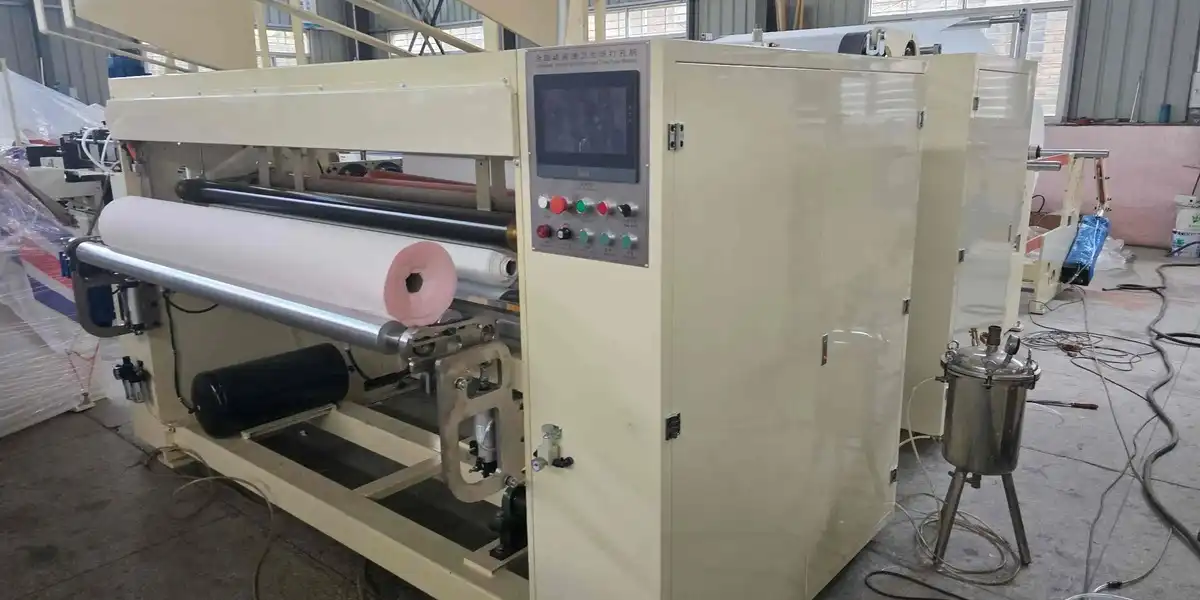
A kitchen roll making machine is a very accurate industrial system for changing big parent rolls into kitchen towels that are ready to be sold. Multiple processing steps are combined into a single automated production line. These steps are unwinding, embossing, glue lamination, perforation, rewinding, and cutting. The end result is a roll product that is ready to be packed up for sale or use in an institution.
Types of Machines Available
There are fully automatic, semi-automatic, and small types on the market. Fully automatic lines work well in high-volume sites because they don't need much help from an operator. Semi-automatic tools need more work to be done by hand, and smaller businesses or businesses that are just starting out tend to choose them. There are also eco-friendly options for makers who want to sell to markets that care about sustainability.
Key Components and Production Workflow
The parent roll is fed into the etching unit from the rolling stand, which is the first step in the work process. The web then goes through the glue lamination station, the piercing section, and the rewinding unit. Finally, it is cut to the length that was asked for. Knowing this workflow helps buyers decide if a machine will help them reach their production goals before they sign a purchase agreement.
Core Factors to Consider Before Purchasing a Kitchen Roll Making Machine
Production Capacity and Operational Scale
Match the machine's stated speed with the amount of work you want to get done. The tissue converting line at HENGYU works at 180–240 m/min and can handle parent roll widths of 1,200–3,000 mm. A new business that needs to process 20 tons per month has very different needs than a manufacturer that wants to process 100 tons. If the line is too big, money is wasted, and if it's too small, it causes problems.
Automation Level vs. Labor Cost
Fully automatic lines greatly reduce the need for labor. The kitchen roll making machines made by HENGYU have a PLC control system with a touch screen display, paper feeding that happens automatically, and core placement that happens automatically. These features lower the cost of training and cut down on mistakes made by people, which makes them especially useful in industries where it's hard to keep skilled workers. Some businesses can still use semi-automatic choices if they are on a tight budget and have workers available.
Energy Consumption and After-Sales Support
Power needs vary from 7.5 kW to 30 kW, based on how the line is set up. Not only the buying price, but also the energy costs over the next three to five years. Quality of service after the sale is also very important. Before making a decision, make sure that the seller offers on-site installation, user training, online technical help, and a reliable chain of spare parts suppliers.
Comparing Kitchen Roll Making Machines: Market Options & Pricing
New vs. Used Equipment
There are warranties from the manufacturer on new machines, as well as the most up-to-date control systems and full technical documentation. Used equipment may seem like a good deal at first, but repairs for worn-out embossing rollers, perforation blades, and rewinding shafts can add up quickly. If an investor wants to get into the tissue converting business for the first time, buying new tools from a reputable maker is the safer option.
OEM Customization and Brand Flexibility
Leading companies in this field offer OEM and ODM services that include setting the language, roll size, embossing designs, and perforation spacing, as well as painting the final roll in one to four colors. This is very important for distributors who are making their own brands of goods or for companies that have many store customers with different needs.
Online Suppliers vs. Direct Manufacturers
Buying directly from the manufacturer cuts down on the costs of middlemen and makes communication more efficient. When looking at suppliers, make sure they have export records that you can check, CE and ISO certifications, and project references from markets that are similar to the one you want to work with. Online stores may have low prices, but it's harder to be sure of their after-sales service when you don't have a direct contact with the maker.
Matching Your Business Needs with the Right Tissue Converting Equipment
Small to Medium Factory Requirements
The most important thing for a small or medium-sized plant is a kitchen roll making machine that is fast, reliable, and easy to maintain. The HENGYU production line can handle finished roll core diameters of 30 to 90 mm and reeling diameters of 90 to 300 mm. This gives them enough freedom to serve customers in retail, food service, and hospitality without having to set up different machines for each type of customer.
Customization Features That Drive Market Competitiveness
This is the main set of technical traits that give makers an edge over their competitors:
- Adjustable embossing options: Single embossing, double embossing, steel-to-rubber, and steel-to-steel configurations let producers match absorbency and texture to market preferences.
- Precise perforation system: A high-precision screw-type punching mechanism with 4 knives supports perforation distances of 85–135 mm (4-knife) or 170–260 mm (2-knife), with custom sizes available.
- Point-to-point glue lamination: This design creates internal air pockets between plies, which can increase liquid absorption capacity by up to 30%, a significant selling point for premium kitchen towel products.
When there are gaps in quality, customers often choose imported brands. These features fill those gaps directly, giving local manufacturers a useful way to compete on product performance.
Long-Term Operating Cost Evaluation
The standard power source is 380V/50Hz, and the machine weighs between 2.8 and 12 tons, based on how it is set up. Before you buy, you should check the floor area, electrical infrastructure, and air supply (≥0.6 MPa). A machine that fits your building's plan and services cuts down on installation delays and costs that were not expected.
Avoiding Common Pitfalls When Sourcing Paper Towel Manufacturing Equipment
Misreading Machine Specifications
People often make the mistake of choosing a machine based only on its peak speed. In perfect conditions, a line rated at 240 m/min may actually have a lower throughput, depending on the type of paper, the diameter of the roll, and how skilled the operators are. Instead of a controlled demonstration, you should always ask for data from a continuous production trial.
Overlooking Total Cost of Ownership
The price of the item being bought is just one line item in a much longer list of costs. The amount of energy your machine uses when it's fully loaded, the maintenance plans, and how often you change the embossing rollers all affect your monthly running cost. People who only look at the price of the machine often end up spending a lot more in the first two years than they thought they would.
Skipping Factory Acceptance Testing
Before sending the goods out, make sure they pass a factory acceptance test (FAT) that includes a high-speed run that doesn't stop for at least 24 hours, checks for vibrations on the embossing unit, and checks for stable tension at all rewinding stages. Before the machine leaves the production floor, this step checks for alignment problems and broken parts.
Conclusion
To choose the best paper towel production line, you need to weigh the technical requirements, the dependability of the provider, and the long-term cost effectiveness. Speed, embossing options, perforation accuracy, and the PLC control system of the kitchen roll making machine are all important, but so is the ability of the manufacturer to help you after installation. It is important to protect your investment and keep your production line going smoothly by checking certificates, testing in real life, and figuring out the total cost of ownership.
FAQ
How do I calculate the production capacity I actually need?
First, figure out how many tons of work you want to do each month. Then, use the machine's rated speed, paper weight (gsm), and planned operating hours to work backward. A line that runs at 200 m/min for 20 hours a day on 20 gsm paper makes a lot of different tons than a line that runs at the same speed on 30 gsm stock. Leave 15–20% of capacity empty at all times.
What maintenance practices extend the life of embossing rollers?
The two most important steps are to clean often to get rid of paper dust and keep the air pressure set. If the pressure settings change, steel-to-rubber roller pairs will wear differently. In high-speed situations, it is best to check them once a week.
Why does my perforation line sometimes appear inconsistent?
This typically happens when the perforation blades are worn out or when the rewinder and the perforation head are out of sync. Changing the blades and recalibrating the encoders usually fix the problem.
Can these machines process recycled or bamboo pulp paper?
Yes, but to control the unique fiber behavior and dust production of different raw materials, you need tension systems that can be adjusted and better dust extraction.
Partner with HENGYU for Your Kitchen Roll Making Machine
Over the past 20 years, HENGYU has sold equipment for turning tissues into other materials to companies in the Middle East, Africa, Southeast Asia, South America, and Eastern Europe. As a provider of kitchen roll making machines, we offer full production line configuration, OEM customization, CE and ISO-certified equipment, on-site installation, and expert support for life. We match you with the right answer for your size and market, whether you are a new investment or a producer with a long history.
Get a price or talk to an expert right away by emailing hengyu@hytissuemachine.com or calling hytissuemachine.com.
References
1. TAPPI (Technical Association of the Pulp and Paper Industry). Tissue and Nonwovens Manufacturing Fundamentals. TAPPI Press, 2021.
2. Food and Agriculture Organization of the United Nations. Global Forest Products Facts and Figures: Paper and Paperboard. FAO, 2022.
3. European Committee for Standardization. CE Marking Requirements for Machinery Directive 2006/42/EC. CEN, 2020.
4. International Organization for Standardization. ISO 9001:2015 Quality Management Systems — Requirements. ISO, 2015.
5. Smithers Pira. The Future of Tissue to 2027: Market Forecasts and Strategic Insights. Smithers, 2022.
6. converting magazine. Advances in Rewinding and Perforation Technology for Tissue Converting Lines. Converting Magazine, 2023.