How to Maintain Tissue Paper Converting Machines for Long-Term Performance?
Proper maintenance of tissue paper converting machines is the single most effective way to protect your production investment. In my experience working with facial tissue converting equipment, machines that follow a structured care schedule run longer, produce cleaner cuts, and deliver more consistent embossing patterns. Whether you operate a compact line like the HENGYU HYF-460 or a larger setup, the same principle holds: small, regular actions prevent big, expensive failures. This guide walks through the practical steps every operator and factory owner should know.
Understanding Common Problems in Tissue Paper Converting Machines
You have to find problems early on before you can fix them. Most changing lines fail in the same ways, and finding them before they get worse saves time and money.
Jamming and Paper Tearing
Paper jams are generally caused by feed tracks that aren't lined up right, worn nip rollers, or jumbo rolls that aren't being tensioned evenly. When things tear during production, it's usually because the gas cutting pressure isn't right or the blade tips have worn down. On a machine that works with rolls up to 1100 mm in diameter, even small positioning problems put extra stress on the web.
Embossing Pattern Degradation
When the surface contact pressure stays within a certain range, steel-to-steel stamping rollers keep the design clear. The emboss depth isn't even when roller bearings wear out or when dirt and dust build up between the steel roller faces. This is immediately noticeable to customers as less softness and an uneven sheet texture, which has a direct effect on the shelf appeal of your product.
Motor and Drive Irregularities
Frequency and electromagnetic speed control systems in tissue paper converting machines need clean electrical lines and drives that are properly tuned in order to work. Strange noises, changes in speed, or sudden stops are often signs of loose wires, dirty contacts, or a motor capacitor that is failing. It is much cheaper to find these signs during a regular check than to have to stop production without warning.
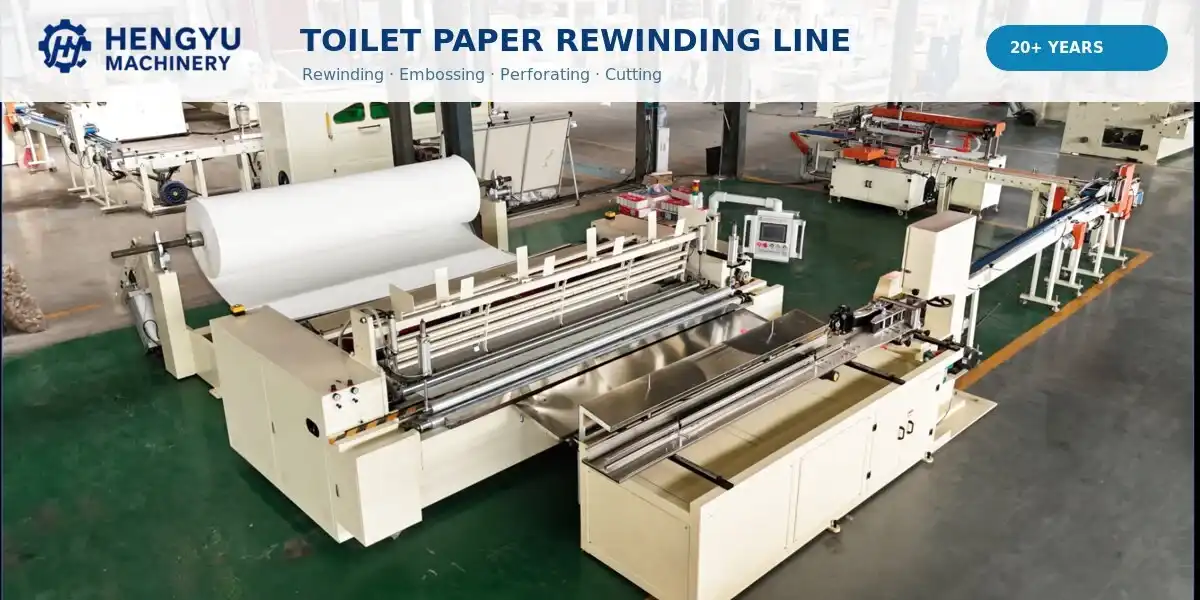
Essential Maintenance Practices for Tissue Paper Converting Machines
A good upkeep plan is not a drag; it's a tool for getting things done. When factories write down and stick to these routines, they report fewer emergency fixes and longer component lives.
Here are the main things that every operator should do every day, every week, and every month:
- Daily: Wipe down rollers, sensors, and exposed blade guides to remove paper dust. Check vacuum system suction (rated at 7.5 kW on the HYF-460) and confirm air compressor pressure stays at or above 5 kg/cm²Pa. Inspect lubrication points on the main drive and cutting assembly.
- Weekly: Test all sensors and confirm PLC response times are within normal range. Tighten any loosened mechanical fasteners and review the blank-line independent regulator settings. Log any abnormal sounds or vibration levels.
- Monthly: Replace or sharpen cutting blades based on run hours. Measure roller diameter tolerances and compare against baseline specs. Review frequency drive firmware for any pending updates.
Following this plan is easy, and because the HYF-460's parts are laid out in a way that makes them easy to reach, most changes can be made without any special tools. Consistency is important—checks that don't happen at the right times are almost as bad as none at all.
Components That Require Special Attention
Some parts break down more often and cause more damage when they do. Maintenance time is used well when you know where to put your attention.
Mechanical Wear Parts
Continuous mechanical stress is put on rollers, air cutting blades, moving belts, and web tensioners. When a line is moving up to 100 m/min, the blade tips wear down faster than crews think. Options for tungsten carbide blades last a lot longer than regular steel blades, so they are a good choice for high-volume runs. Every week, check roller surfaces for holes or scoring.
Electrical and Control Systems
On the HYF-460, the frequency and electromagnetic speed control technology keeps tissue paper converting machines production steady even when speeds change. Every month, you should test the sensors and wires. Every time the PLC settings are changed, they should be saved again. This step must be taken, because a single damaged parameter file can cause hours of downtime.
Lubrication and Cooling
More bearings fail because of the wrong grade of lubricant than because they aren't oiled at all. Always make sure that the lubricant fits the type of bearing and the temperature at which it will be used. During long runs, the 3kW main drive motor makes heat, so make sure there is enough air flow around the motor housing to keep it cool. The damage caused by heat is slow and quiet until it isn't.
Latest Technologies Supporting Smarter Maintenance
Modern converting equipment has technology that makes planning maintenance easier and less of a guesswork job.
IoT-Based Condition Monitoring
Newer machines have sensors built in that can keep real-time records of vibration, temperature, and current draw. This information lets you know about problems that are starting to happen, like a bearing starting to fail, before they show any obvious signs. Technical teams can look at data without going to the plant floor thanks to industrial VPN routers that allow remote access. This is especially helpful for smaller businesses that don't have a lot of technical staff on staff.
Energy-Efficient Upgrades
Systems like the HYF-460 already have variable frequency drives that make speed changes use less energy. When possible, switching to motors with higher efficiencies lowers running costs and lowers heat output, both of which make parts last longer. The U.S. Department of Energy says that upgrading motor systems in factories can cut energy use by 10–25%, based on the type of load.
Advanced Surface Coatings
Coatings of industrial hard chrome and ceramic on cutting and embossing parts of tissue paper converting machines greatly reduce surface wear. You can now get these materials as aftermarket updates, and they can make the time between service for high-contact parts twice as long.
Maintenance Strategies Tailored to Different Business Sizes and Machine Types
Maintenance plans should take into account the fact that not every plant has the same tools.
Small and Medium Operations
For a factory with 10 to 30 employees, it makes financial sense to hire an OEM-certified technician to do deep inspections on a regular basis. Daily and weekly tasks are done by employees in the company, but complicated calibration tasks, like resetting the pressure on the embossing roller or the cutting force on the pneumatic system, are done by professionals. Over 95% of HENGYU's remote installations go smoothly, showing that video-guided technical support can usually take the place of in-person visits.
High-Volume and Multi-Shift Facilities
Larger businesses with continuous shifts need inspection plans that are tailored to each shift. Each team gives a finished log to the next, making a record that can be tracked and that shows how machine settings change over time. OEM service contracts give you priority access to spare parts and fixed repair visits, which lowers the chance of unplanned shutdowns during times of high demand.
Manual vs. Automatic Machine Differences
Because they can't find problems automatically, manual machines need to be checked by an operator more often. Fully automatic lines keep their own error logs, but workers still need to be trained on how to read them properly. Putting money into operator training—which HENGYU does as part of its setup support—pays off in less misuse and better fault reaction.
Conclusion
It's not hard to keep a tissue paper turning line running with tissue paper converting machines, but you have to be consistent. Your equipment should be cleaned every day, inspected once a week, and have parts checked every month to make sure it runs at its fastest speed and makes tissue sheets with the printing quality your customers expect. Putting rollers, blades, drives, and lubrication points at the top of the list of parts that are under the most stress will protect both your output quality and your bottom line. These tips will work for you whether you only sell one type of face tissues or want to add more.

FAQ
How often should cutting blades be replaced on a tissue converting machine?
Standard steel blades typically need sharpening or replacement every 150 to 200 operating hours. Tungsten carbide blades can last significantly longer depending on paper grade and production speed. Track blade performance by monitoring cut edge quality and paper dust volume.
Can I run 100% recycled fiber paper through a standard converting line?
Yes, but you need an effective dust extraction system. Recycled fiber paper produces more lint and debris, which accelerates roller and blade wear if not managed properly.
What lubricant grade is correct for embossing roller bearings?
Always follow the machine manufacturer's specification. Using the wrong viscosity grade—either too light or too heavy—accelerates bearing wear regardless of application frequency.
How do I know when the pneumatic cutting pressure needs adjustment?
Watch for ragged perforations, paper dust on the output sheet, or inconsistent tear-line force. These are reliable signs that cutting pressure or blade condition is off specification.
Is remote technical support effective for PLC issues?
Yes. Most modern converting equipment supports remote diagnostics via industrial VPN. HENGYU provides lifetime technical support through multiple channels, and more than 95% of customers complete installation and troubleshooting remotely.
Start Your Facial Tissue Production Line with HENGYU
HENGYU's HYF-460 tissue paper converting machine for sale is made for small and medium-sized businesses that need flexible sizes, good embossing, and reliable support after the sale. With steel-to-steel embossing and pneumatic point cutting, the machine can turn jumbo rolls with a diameter of up to 1100 mm into finished 190 × 200 mm sheets. It comes with a 1-year quality guaranty and over 20 years of manufacturing experience. To get a sample or product video right away, email our team at hengyu@hytissuemachine.com or go to hytissuemachine.com.
References
1. Tappi Journal — Tissue Manufacturing Technology and Maintenance Standards, 2022.
2. PITA (Paper Industry Technical Association) Annual Review — Mechanical Reliability in Converting Operations, 2021.
3. U.S. Department of Energy, Industrial Technologies Program — Motor Systems Upgrade Guide for Manufacturing Facilities, 2020.
4. Pulp & Paper International Magazine — Predictive Maintenance Adoption in Tissue Converting Lines, 2023.
5. ISO 13849-1: Safety of Machinery — Safety-Related Parts of Control Systems, International Organization for Standardization, 2015.
6. RISI (Resource Information Systems Inc.) Tissue World Report — Equipment Performance and Maintenance Benchmarking in Tissue Production, 2022.