How to maintain an automatic tissue paper machine?
To maintain an automatic tissue paper machine, follow a fixed routine. Inspect safety guards and sensors before each shift. Clean tissue dust and paper scraps after each shift. Lubricate and check wear parts weekly. Calibrate folding, cutting, and counting monthly. Record every alarm and repair. Keep critical spares on hand, and train operators to spot early signs such as noise, vibration, and tension drift. This preventive approach limits unplanned stops, protects tissue quality, and keeps energy use close to rated levels. Below, I explain each step and show how it applies to the Hengyu HYF-1550.
Understand Your Automatic Tissue Paper Machine Before You Maintain It
Why Maintenance Shapes Uptime, Quality, and Cost
You keep track of uptime, tissue quality, energy use, and on-time delivery every week. Every one of these numbers can change during maintenance. When the knife is dull, it changes how long the sheet is. When the bearings are dry, the motor has to work hard. If the sensor is dirty, a line that worked fine an hour ago might not work at all. Each stop makes the shipping time longer for customers who use exchangers that do a lot of work. Buyers, production engineers, maintenance teams, original equipment manufacturers (OEMs), and distributors can all use this guide. You need to follow a plan for an automatic tissue paper machine to stay in good shape, because gaps are different for each shift pattern, speed, and type of paper.
How Tissue Moves From Jumbo Roll to Package
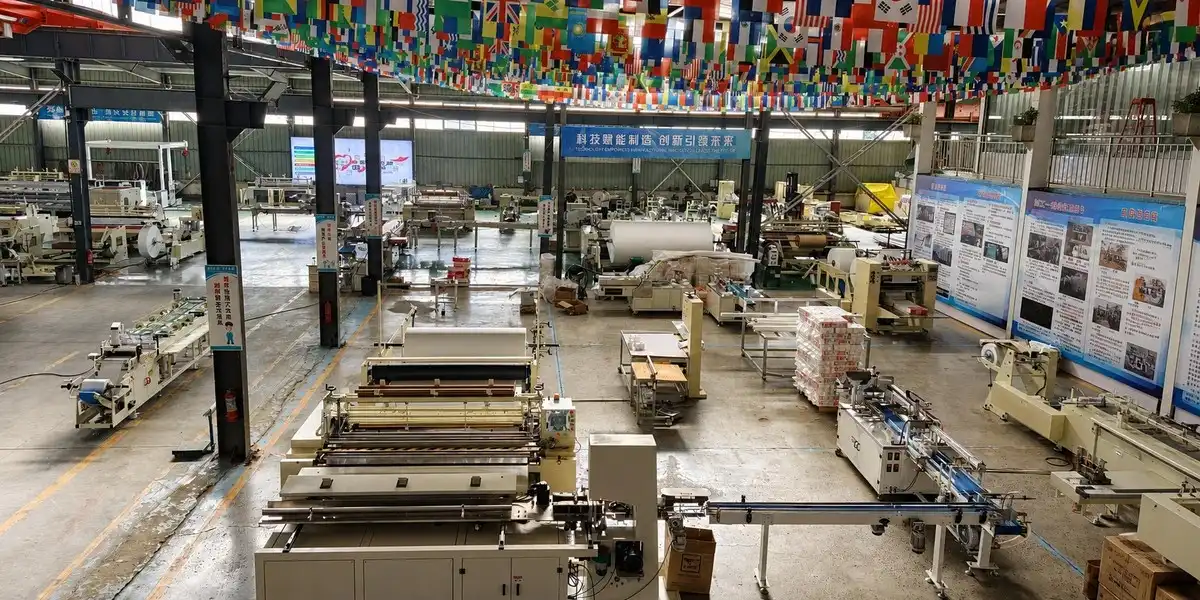
To make different shapes out of tissue, a machine unwinds the big roll, changes the tension, folds or rewinds, counts, cuts, stacks, and packs the tissue. It also marks and laminates the layers. In every stage, there are spots where it gets worn down. If the tension isn't right, the paper can break, and if the sensor isn't lined up right, you can mess up when you count or pack. You can put big rolls up to 1500 mm wide on the HYF-1550. At 100–120 m/min, it can also run 3-ply and 4-ply facial tissue. When it was brand new, it went 130 m/min. Small changes happen very quickly at that speed. You can keep the automatic tension cushions and infrared break sensors clean and in place to protect the web.
Components That Need Regular Inspection
There are four groups of checking points that I use: controls (like the PLC, sensors, and safety devices); air and motor parts; rollers and pressing units; knives and folding plates. On the HYF-1550, keep an eye on the drive and motor temperature alarms because VFDs let you see how the power changes in real time. You should still check to make sure that none of the screws are loose, though. At high temperatures, the 40 mm steel frame can handle long runs. Some small tools might only need to be checked once. Because heat and shaking can build up faster, a high-speed facial tissue machine needs to be set up and checked more often.
Set Up Daily, Weekly, and Monthly Maintenance Routines
Before Startup and During Production
Before the start of the shift, I check the emergency stops, safety guards, huge roll size, core fit, lube spots, air pressure, electrical connections, and the way the sensors are lined up. For OSHA, it is very important that safety guards and other tools are in place and working before an automatic tissue paper machine is used. People who work on the line keep an eye on things like noise, temperature, stress, the quality of the product, and alarms while the product is being made. While the line is moving, they never touch the moving parts or switch out the guides. They lock everyone in the plant out and turn off the machine when they think something is wrong. Then they check it out. Making this a habit keeps people safe and helps you find flaws fast.
End-of-Shift Shutdown and Cleaning
When your shift is over, make sure you shut down the right way. Then they clean the rollers, closet vents, folding plates, sensors, and tissue dust off of them. When dust gets on sensors, it can trap heat around motors. When they need to, they clean out air lines and drain water from lines that touch the web. Besides that, they keep track of each product, fixes, and warnings. As a general rule, you should clean up after each shift. Bamboo or sugarcane stock are two types of fibers that make your plant see more dust. Clean it more often and change how you do things to fit if it moves fast.
Weekly and Monthly Preventive Checks
Ran checks aren't as thorough as checks that are done once a week. As mechanics, it's their job to look for damage and wear in things like knives, chains, gears, bearings, joints, folding plates, guides, and belts, chains, and gears. They also look for leaks in the hydraulic pressure, filters, valves, and pistons as well. Hengyu says that the running parts should be oiled once a week and that ultrasound waves should be used to clean the pattern once a month. This keeps the threads from getting too thick. Techs check the speed of the machine, the length of the sheets, and how they are folded, cut, and counted every month. It is built into the HYF-1550 so that it can make a cutting mistake of ±0.5 mm. Compare your results to that number and the amount of power your setup uses to the 15–45 kW range.
Maintain Key Sections and Fix Common Problems
Unwinding, Embossing, and Folding Units
Make sure the turning shaft is clean, straight, and tight. Also, pay attention to the brakes and how the automatic tightening is set up. In the stamping unit, make sure the blade is straight and the roller pressure is correct if you have a 3- or 4-ply package. Each piece has to be stuck together by the rollers. In the area where you will fold, check the plates for damage and make sure the paper guides are lined up correctly. This can be done in less than 10 minutes with the automatic tissue paper machine PLC link. It can be folded into pieces that are 170, 175, 180, 190, or 200 mm long. Every time you make a switch, I think you should quickly go over the guides and settings. So, a quick change won't hide something that isn't strong.
Cutting, Counting, and Packaging Equipment
Everything is clean, and the knives are sharp, so the sheet counts are correct. Once a week, you should check the edges, alignment, and stack control of your knives. You should get new ones if they get dull before the cuts get worse. When you check out the moving and packing tools, make sure you check the film tracking, sealing temperature, guide alignment, sensor response, and state of the conveyor. You should arrange the towels, toilet paper, facial tissue, and dish towels in different ways so that they stack correctly. Always check the stack size setting after changing the format. The HYF-1550 can work with logs that are 20 to 400 mm tall. The stack size is often wrong, which leads to bad packing.
Troubleshooting Paper Breaks, Noise, and Counting Errors
A parameter check and a safe stop should always come first in a review. The rollers are out of place, the paper is too wet, or the stiffness is wrong. The cutting is also under too much pressure. There are a lot of breaks like this. In order to count and cut, many things can go wrong, such as knives that are dull, sensors that are dirty, plates that are worn out, or connections that are loose. A lot of the time, noise, shaking, or heat are signs that the bearings, gears, or parts are worn out and faulty. Usually, issues with packaging are brought on by dirt on the sensor, film that is too tight, the wrong stack size, or the temperature at which the lid closes. Make one change at a time and record what that does. That way, the next shift will know what worked.
Plan Spare Parts, Track Data, and Train Your Team
Build a Maintenance Schedule and Spare Parts Plan
Everyday chores, weekly checks, monthly calibrations, every six months servicing, and a safety and performance review once a year should all be on your plan. Remember to have important spare parts for your automatic tissue paper machine on hand, such as sensors, pneumatic seals, chains, knives, electrical modules, encoder parts, folding guides, and sealing elements. Figure out how fast the machine is, how many hours it works, how long it takes to get supplies, and how much it costs to make an emergency stop. Make sure the company you buy from can work with your model, give you part numbers, paperwork, a guarantee, fast shipping, and help you fix problems from afar. Because Hengyu sells extra parts, the machine can last for at least 15 years.
Use Maintenance Logs and Condition Data
A good log keeps track of breaks, alarm codes, issues, parts that were replaced, and the number of hours the machine was used. Besides that, it keeps track of the output, speed, energy used, and stops. The same heading, sensor, and alarm show up very quickly. ISO 17359 tells you how to generally check on machines and figure out what's wrong with them. The rules are the same for a change line. Watch out for the motor's temperature, vibration, noise from the bearings, power use, and how often the alarm goes off. When numbers change from the average, you need to do something. R. Keith Mobley has done work on maintenance planning ahead of time. Because of friction or being out of line, the motor load can go up. This means that increased power use is a useful clue.
Train Operators and Use Hengyu Support
Trouble is found first by people who have been trained to be controllers. It's important to learn how to clean, do emergency stops, start up and shut down, and know when to call a professional. As an operator, your job is to clean, check, and do simple things. The work is done by people who know a lot about PLCs, servos, electricity, gearboxes, and important calibration tasks. Teams learn from Hengyu how to change forms, use the PLC interface, and follow maintenance plans for safety. In five days, teams will be ready to start making things. You can get help in two languages, seven days a week, 24 hours a day. Video tutorials and step-by-step pictures help more than 95% of customers finish the installation process. That's the kind of help plants need right away when they don't want to wait for a site visit.
Link Maintenance to Total Cost and Buying Decisions
Check Maintenance Support Before You Buy or Upgrade
When you buy something, you should be able to set up upkeep. Check with each provider to see if they have safety paperwork that follows the rules for risk assessment in ISO 12100. This should include service guides, lists of extra parts, and maintenance schedules. When you consider automatic tissue paper machines and semi-automatic lines, you should think about more than just purchase price. Cost of ownership as a whole is the most important thing. This includes things like labor, energy, breaks, supplies, parts, training, and so on. With the HYF-1550, only two workers are needed instead of five to eight per shift. It can work with your power grid and with fresh pulp, bamboo, and sugarcane tissue. Hengyu makes tools that are up to CE and ISO standards. Talk about the warranty and find out how long it will take for someone to answer.
How Maintenance Lowers Operating Costs
Repairs that are done before they happen save money because they cut down on unexpected stops, scrap, quality problems, and power waste. While a customer order is being made, change an old knife, belt, or piece of gear before it breaks. It's better to have stable tension, alignment, folding, and cutting so that you can get rid of waste and count sheets correctly. The ENERGY STAR energy guide for the pulp and paper business from the Lawrence Berkeley National Laboratory says that motor systems can be made to use less energy. You should check the motors' load just like you would with any other piece of equipment. Hengyu makes the HYF-1550 motor sets from 15 to 45 kW. One ton of finished tissue costs up to 30% less than it did with older machines, according to the people who work there.
Practical Maintenance Checklist for Production Managers
For starters, use this list as a guide. Then, change it to fit your model, paper type, speed, and the way your plant works.
- Daily: You should check the pressure, sensors, sounds, safety stops, roll installation, and grease spots every day. When your shift is over, clean up the trash and dust. Write down how good the things are, any downtime, and any changes you make. Make sure the line is off before you touch the rollers or guides. Also, if you hear or feel something strange, tell help right away.
- Weekly: Every week, make sure the nuts, belts, chains, bearings, gears, knives, and folding and pressing tools are all in good shape. Check the gas lines for leaks and make sure the monitors are where they should be. When you're done with the embossing, follow the directions and grease the wheels. Look over the alarms and extra parts that are already there and order things that will take a long time to arrive before they run out.
- Monthly and annual: Choose how long the sheets should be, how to count, fold, cut, and when to run the motor for each month and year. The motor should have the same temperature, power use, and output as it says in the instructions. Note how long each part will last, and make sure the safety locks and gears work. Also, pay attention to alarms that go off over and over. Once a year, they should make sure it is safe and that everything works.
Conclusion
To keep an automatic tissue paper machine in good shape, all you need is a set of preventative steps that you can use again and again. For their safety, safety sensors, rollers, and other tools are checked and cleaned every day at the end of each shift. The HYF-1550 needs to be set up and checked once a month at first, and then once a week after that. It can cut up to 0.5 mm off. When you fold, cut, or count, this makes sure that the tolerances are met. As you unwind, stamp, fold, cut, and pack, pay close attention to every step. Make a plan for how you will find and fix mistakes like paper breaks, noise, and wrong counts. To find wear before it leads to failure and cut down on unplanned stops, it's helpful to plan for extra parts, keep repair logs, gather condition data, and train operators. It's important to think about the total cost of ownership, which includes repairs, when you buy new or used gear. For this reason, repair changes costs such as parts, labor, energy, and downtime. The amount of work done, the quality, and the dates of delivery all stay the same because it's easy to keep track of everyone and everything.

FAQ
1. How often should I clean the machine?
It should be cleaned up after every shift, though. If the machine moves quickly or there is a lot of dust from certain fibers, it may need to be cleaned more often. Clean the fans, sensors, folding plates, and rollers in the cabinet to get rid of paper dust.
2. Which parts wear out first?
Bearings, belts, chains, sensors, air plugs, guides, and packing units are some of the parts that need to be changed most of the time. The service life depends on how fast an automatic tissue paper machine is used, how many hours it is used, and what kind of paper it is used on. Write down how much wear and tear you see.
3. Can operators handle maintenance alone?
There are people who can clean, check, and do simple checks. Only trained technicians should be able to work on the PLC, motor, electrical, engine, and important tests.
4. What support does HENGYU provide after installation?
They offer professional support for life, bilingual help 24 hours a day, seven days a week, training for operators, and access to extra parts. To finish the installation, more than 95% of people watch a video.
5. How long does a format change take?
The HYF-1550's PLC interface makes it easy and quick to switch between soft pack, boxed, V-fold, and N-fold forms.
Contact HENGYU for Your Automatic Tissue Paper Machine Maintenance Plan
Henan Hengyu Machinery Co., Ltd. is a professional automatic tissue paper machine manufacturer with over 20 years of experience. They are CE- and ISO approved, and as an ODM or OEM, they can make changes to your order. Our techs will help you choose the best setup and service plan if you email hengyu@hytissuemachine.com with the type of product, the size of the jumbo roll, your capacity goal, and the date you need the machine.
References
1. Mobley, R. K., An Introduction to Predictive Maintenance, Butterworth-Heinemann, 2002
2. Smith, R. and Mobley, R. K., Rules of Thumb for Maintenance and Reliability Engineers, Butterworth-Heinemann, 2008
3. Lawrence Berkeley National Laboratory, Energy Efficiency Improvement and Cost Saving Opportunities for the Pulp and Paper Industry: An ENERGY STAR Guide for Energy and Plant Managers, 2009
4. U.S. Occupational Safety and Health Administration, Safeguarding Equipment and Protecting Employees from Amputations (OSHA 3170), 2007
5. International Organization for Standardization, ISO 17359: Condition Monitoring and Diagnostics of Machines — General Guidelines, 2018
6. International Organization for Standardization, ISO 12100: Safety of Machinery — General Principles for Design — Risk Assessment and Risk Reduction, 2010