Facial Tissue Machine Maintenance Guide: Tips for Efficient Production
A facial tissue machine stays productive when you inspect it early, service it on a fixed schedule, and check every repair against production data. We rely on three habits to protect output. Operators clean dust and vacuum paths every day, technicians replace wear parts on a plan, and trained crews follow written procedures. This guide applies those habits to a high-speed line such as the HYF-1050 from Henan Hengyu Machinery, which runs up to 1,000 sheets per minute on a 1,050 mm jumbo roll. Use it to cut unplanned stops, keep folding accurate, and protect private-label quality.
Understand the Facial Tissue Machine Production Process Before Maintenance
Follow the Parent Roll From Unwind to Packing
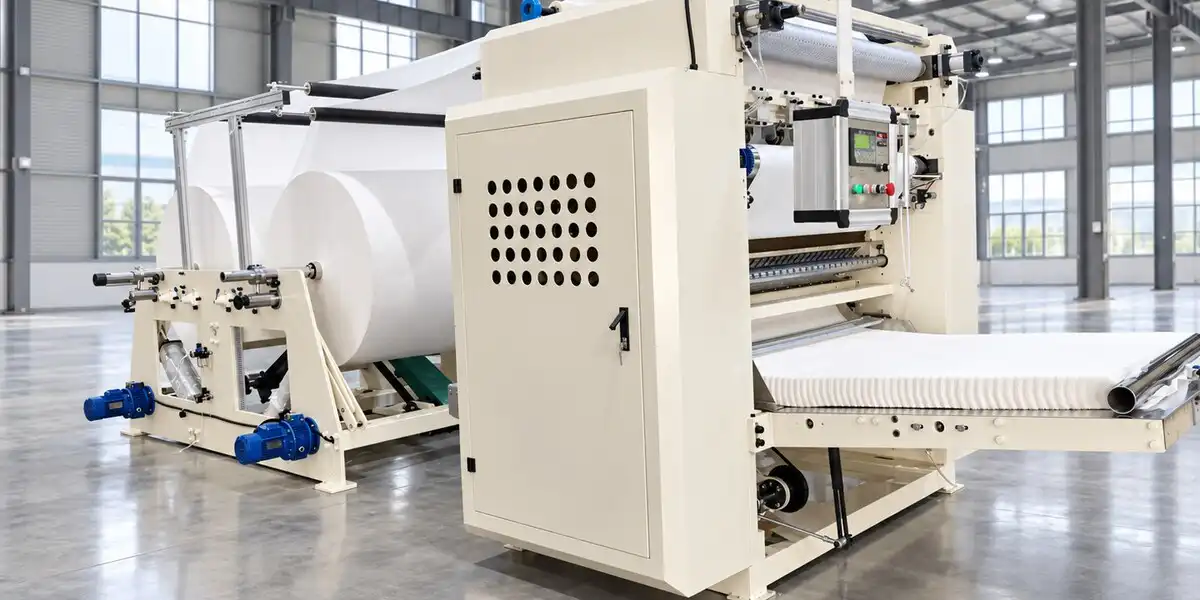
Before you can do good maintenance, you need to know how paper moves. A big roll goes through many steps, such as unwinding, tension control, web guiding, embossing, folding, cutting, counting, stacking, and packaging. The next step might have issues or downtime because they are linked like a chain. For instance, a shift in tension during the unwind can show up later as uneven folds or wrinkles. As techs, we teach them to first figure out what's wrong before making any changes. People don't make the same changes over and over that hide the real problem because of that habit. It gets to the root of the problem faster than treating the symptom where it shows up.
Know the Main Inspection Areas
Different parts of a facial tissue machine should be checked often. These include the vacuum parts, cutters, pneumatic lines, sensors, the PLC, and the packing units. Because the HYF-1050 has a steel plate base and square steel links, it shakes less. This helps the alignment stay steady over long runs. That's why the filters and suction paths on the 15 kW Roots vacuum pump should be on every list. Rollers for embossing make contact with steel, so the quality of the pattern depends on how clean and straight the rollers are. For any technician to be able to tell the difference, you should write down each area, give it a name, and explain how it should be.
Match Service Frequency to Speed and Format
Service times are different at each plant. When speeds go up, shifts get longer, and there are more style changes; wear goes up. The HYF-1050 can print between 0 and 1,000 sheets per minute, and you can change how long each sheet is. You can also change the 200 mm finished width (100 mm folded). A plant that makes more than one product and changes sizes and embossing patterns more than once a week is more likely to reach adjustment points than a plant that only makes one product. It's also important that the raw materials are good, since sensors and vacuum paths get dirty more quickly on dusty or wet paper. Start with the manufacturer's instructions and then use the time you've spent on other things to fine-tune each interval.
Build a Preventive Maintenance Schedule for Efficient Production
Daily Checks That Take Minutes
Every day's work should be short and steady. The folks who work on the facial tissue machine clean the area where the papers fold, the sensors, and the openings where tissue dust comes in. They also listen for weird sounds and make sure the air pressure stays at or below 0.6 MPa, which is the limit of the machine. They also look at sample sheets to make sure the folds, cuts, and clarity of the embossing are right. Many pneumatic alarms can be stopped by quickly checking the pressure and filters at the start of each shift. This type gets its compressed air from the customer. Before the shift ends, workers should write down anything that doesn't seem right. A short note today can often explain why work will stop next week.
Weekly and Monthly Tasks
When things happen once a week or once a month, they mean more. Make sure the rollers are lined up correctly, use the right oils, and check the filters and safety features like emergency stops and guard interlocks. Technicians also adjust how tight the belts and chains are. They also look for damage on the cutting blades and make sure there is enough space between them. Blades that are dull make the edges rough and create more dust. Check out the HMI too, as it can show you a number of alerts while the work is still being done. Each task should have a named owner and a sign-off line so that no one has to remember what to do. To make sure delivery times are met, schedule these jobs to run during planned switchovers.
Quarterly and Annual Reviews
Things that break down slowly have cycles that last longer. Review the PLC alarm history and replace any parts that are almost out of their useful life. Also, make sure the electrical connections are tight and the sensors are calibrated. You can keep a repair log on paper or on a computer that records the operating hours the machine was used, any faults, corrective actions, and downtime. That log will show you which jobs keep things from going wrong and which parts break the most after a year. It also provides proof to your purchasing team when they order spare parts. Private-label buyers often look at recorded maintenance control when the factory does checks. Having a clean background helps with those trips.
Maintain Core Components and Troubleshoot Common Problems
Unwinding and Embossing Units
Up to 1,050 mm wide and 1,500 mm in diameter rolls can be used with this unwind. It must keep the tension stable. Check the brakes and guide rollers, and inspect the axles for signs of wear. If the embossing pattern is weak or irregular, it may be because the rollers are unclean, out of line, or damaged. The HYF-1050 is steel-to-steel embossed, thus routine roller cleaning and alignment checks are crucial for consistent patterns and sheet quality. Check roller surfaces regularly and ensure sure they are clean each time the design is changed. Immediately note any damage, since a marked roller will cause every single sheet to have the same fault.
Folding, Vacuum, and Cutting Systems
It is crucial that the force be steady for folding. You should follow the methods in the manual while you are repairing the 15 kW Roots vacuum pump. Clean the input lines and inspect the belts. If ports are blocked or belts wear out, the suction drops lower. This makes the interleaving less even. The format settings must match the tissue type — soft pack, boxed, V-fold, or N-fold. The folding plates must be kept clean and straight. You’ll need sharp tools, the precise spacing between components, and consistent timing to cut and stack them. Clean the blades, check for dust build-up, rough edges, or stacker jams before you alter the speed.
A Simple Troubleshooting Sequence
If you make a mistake, then always do the same thing. Read the notice on the HMI and discover the defective module. Then check power, sensors, air pressure, and mechanical impediments. Test the line gently after the repair is done. There are various variables that may destroy a web – unwind strain, moisture fluctuations, or improper roll wrapping. Uneven folds are often due to vacuum pressure, worn belts, or incorrect form settings. Repeatedly resetting alarms without identifying the underlying cause can lead to recurring faults and unplanned downtime. If the situation continues, HENGYU's live support will work with your technicians to examine video and alarm data.
Improve Efficiency Through Data, Spare Parts, and Operator Training
Track Downtime and OEE
Visual inspections alone won’t always show persistent production issues, but downtime data may indicate trends and root causes. Identify where production is lost and what changes are required by categorising each stop as operator-related, changeover, cleaning, packing, or mechanical. Keep track of the quantity of work done, the waste, the energy utilized, and the time taken to switch formats.” Another technique to assess the efficiency of the full repair process is the overall equipment effectiveness (OEE). That way, things are improved as far as availability, performance, and quality. If OEE is low, these 3 things reveal where the loss is. Plants could discover they spend more time in changeovers than in breakdowns. They need to improve their setup processes, not patch additional stuff. When you finish a significant service, compare these data to the following month and determine whether your hard work paid off.
Plan Spare Parts by Impact
Sort the excess bits by what's wrong with them. Blades, belts, bearings, sensors, valves, and relays are important items that will fail. Important pieces often slow things down. Here you may easily locate substitutes for popular stuff. People acquire items for export, and lead time is typically more important than unit cost. That’s why it’s crucial to acquire plenty of critical stuff before the initial run. Check the machine model, serial number, component size, electrical rating, and PLC compatibility before purchasing replacement parts to ensure they match your equipment. When you are talking about the contract, you should ask the vendor for a list of suggestions for your facial tissue machine, not after the first breakdown.
Train Operators and Follow Lockout/Tagout
No strategy can prevent more errors than experienced hands can make. Teach them how to clean and lubricate the blades using safe chemicals, how to change formats, and how to interpret basic alerts. The U.S. OSHA lockout/tagout standard is 29 CFR 1910.147. It states that corporations have to regulate harmful energy while it is in service. Release the trapped air before opening the guards. This will separate mechanical, electrical, and pneumatic energies. If technicians have done it previously, then they should just work on electrical boxes, PLCs, and blades. Over 95% of our clients complete the installation procedure with remote mentoring. This also allows the personnel to learn how to run the computer while it is being installed.
Choose a Supplier and Match Maintenance to Your Production Scenario
What to Check in a Supplier's Support
It’s not only the speed that makes you want to purchase. Ask about remote troubleshooting, on-site installation and setup, operator training, additional parts, warranty conditions, and response times. The total cost of ownership includes costs such as delivery, setup, operation, personnel, maintenance, and any downtime. Henan Hengyu Machinery has over 20 years’ experience in manufacturing face tissue machines. They provide free expert assistance for life and online support, 7 days a week, 24 hours a day. They also provide a one-year guarantee that covers non-human-damaged parts with free replacement. And then for individuals from other nations who want to purchase our equipment, it’s simpler for them to acquire the documentation they need to ship it to other countries.”
Maintenance Priorities for Private-Label Producers
Private-label plants are built to suit the demands of various shop customers and come in all forms and sizes. Those who want to purchase will look at samples, and they look at the facilities, so you have to have rapid changes, uniform folding, and tidy packing. Make a list of tasks to be done before the transfer. For example, build a trial stack, clean the embossing rollers, and set the sheet length. Make a note of each product code so that the following run may start with settings already checked out. Plants that run a lot and are open 24 hours a day should have spare parts available and add condition-based inspections to those that are slowing them down. The HYF-1050 was intended for simple operation and maintenance for easy start-ups.
How the HYF-1050 Fits a Maintenance Plan
The HYF-1050 is equipped with a PLC and an HMI touch screen. This allows you to specify settings and alter frequencies to regulate speed. It can produce up to 1,000 sheets per minute from large rolls up to 1,050 mm width. It requires 4 kW at 380V and 50 Hz, although you may use alternative voltages. It can be linked to automation cartoning lines for large-scale operations. Before we ship, make sure our engineers know the airflow and voltage so that the maintenance plan is appropriate for your location. The HMI keeps settings in one location, so technicians can log and utilize the same settings across all of them.
Conclusion
To maintain a facial tissue machine in excellent condition, you have to understand how the paper travels through the line and then follow a well-defined list of daily, weekly, monthly, quarterly, and annual activities. The core components need to be inspected for various things, including unwinding, embossing, folding, vacuuming, and cutting. A predetermined troubleshooting sequence takes the guesswork out of the process. OEE and downtime statistics will tell you where the losses are. Stocking spare parts in order of frequency of breakage saves them from sitting around for lengthy periods of time. The lockout/tagout and trained personnel are safety measures that keep people and machinery safe. Long-term cost is not just rated speed. Training, remote support, and warranty periods all affect the cost of a provider. For private-label producers, consistent folding quality and efficient product changeovers are essential for maintaining production efficiency and meeting customer requirements.
FAQ
1. How often should I check a machine that makes facial tissues?
Every shift, check the noise level, the cleanliness, and the airflow. Then there are tasks for every week, month, three months, and year. To change the intervals, look at the machine speed, working hours, paper quality, and the directions from the maker.
2. First, what extra parts should I keep on hand?
Start with parts that can stop the machine, like blades, belts, bearings, sensors, valves, and relays. Make sure that the model, serial number, and electrical details are agreed upon by both you and the supplier before you place your order. The parts will fit when they get there this way.
3. What kind of help does HENGYU give after the installation?
We teach you how to use the technology and give you free technical support for life. You can get help online 24 hours a day, seven days a week, watch videos to learn, and fix problems from far away. During our one-year guarantee, we will fix for free any parts that are damaged by people.
4. Can different kinds of tissue be used in the same machine?
The HYF-1050 can make soft pack, boxed tissue, V-fold, and N-fold. The sheets can be changed in size, so know what style you need before technical talks.
Contact HENGYU for a Facial Tissue Machine Maintenance and Production Plan
What kind of product, sheet size, folding pattern, voltage, and output goal do you want? Tell HENGYU, and our engineers will come up with a good setup and a list of extra parts. We can build, train, and provide long-term service for facial tissue machines because our company has made them for a long time. Email hengyu@hytissuemachine.com to talk about a new line or an update.
References
1. Occupational Safety and Health Administration, Control of Hazardous Energy (Lockout/Tagout), OSHA 3120, 2002
2. Seiichi Nakajima, Introduction to TPM: Total Productive Maintenance, Productivity Press, 1988
3. R. Keith Mobley, An Introduction to Predictive Maintenance, Butterworth-Heinemann, 2002
4. International Organization for Standardization, ISO 22400-2: Key Performance Indicators for Manufacturing Operations Management, 2014
5. Herbert Holik (ed.), Handbook of Paper and Board, Wiley-VCH, 2006
6. Packaging Machinery Manufacturers Institute, ANSI/PMMI B155.1: Safety Requirements for Packaging Machinery and Packaging-Related Converting Machinery, 2016